88+ DIY Home Lighting Ideas That Actually Change How Your Space Feels
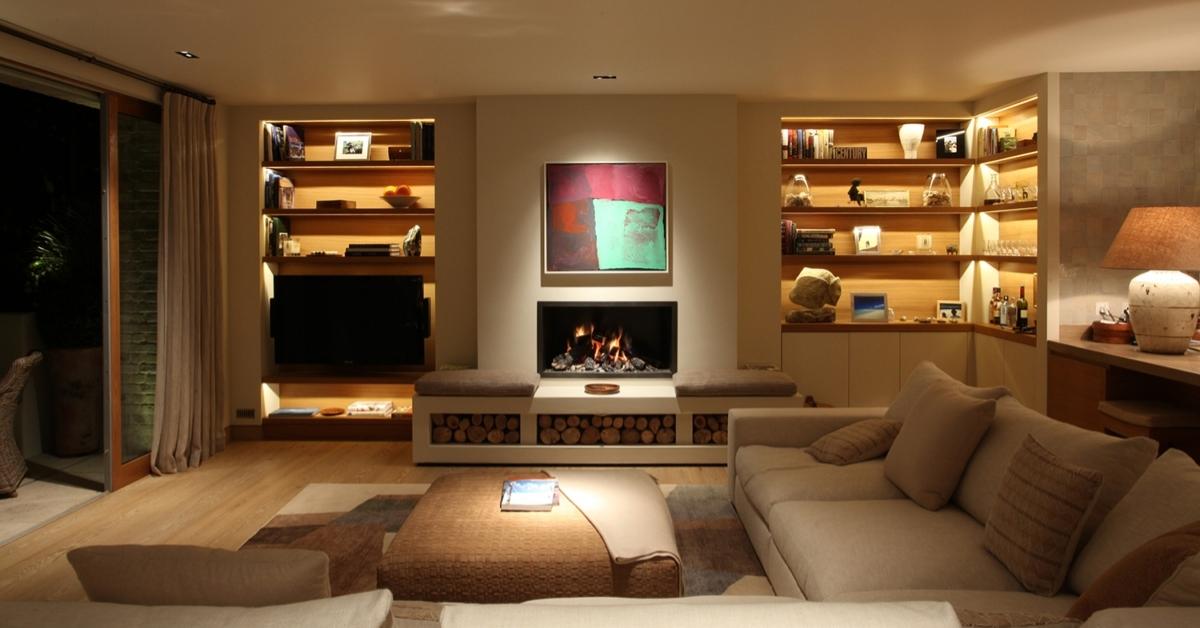
Lighting is probably the most underestimated tool in a home. People swap furniture, repaint walls, add rugs and then wonder why the room still feels flat. In most cases, the real culprit is a single overhead fixture doing all the heavy lifting, creating one uniform, shadowless tone across the entire room. That’s not the ambiance. That’s a waiting room.
The good news is that layering light doesn’t require an electrician or a renovation budget. Most of these DIY home lighting ideas use plug-in fixtures, simple hardware, and creative placement to completely shift how a room reads spatially and emotionally. If you’re working with a rental, a tight budget, or just a room that feels “off” despite being well-furnished, this is where to start.
Rope Light Shelf Underlighting for a Warm Glow Without the Bulk
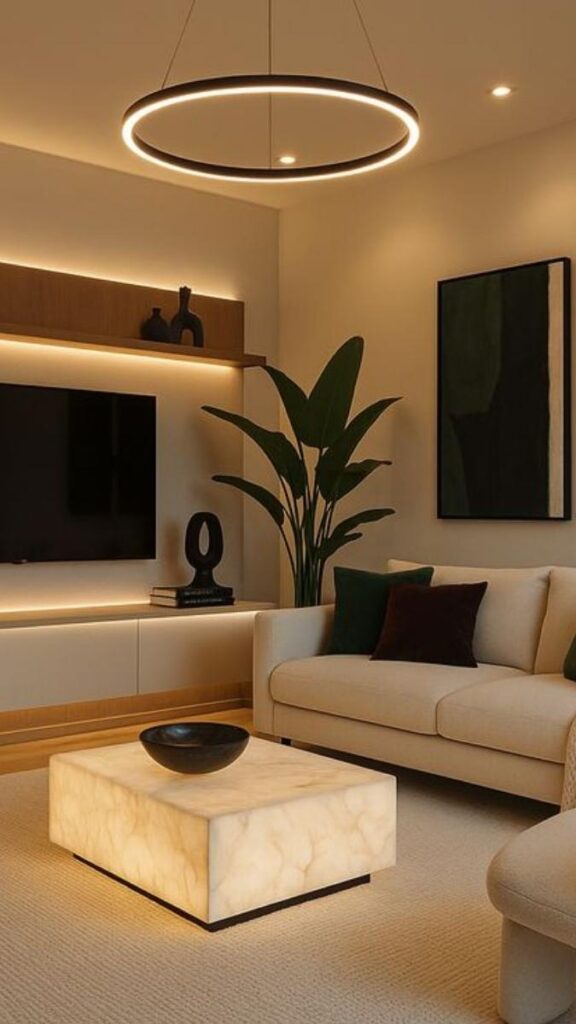
Mounted underneath a floating shelf, a continuous run of warm-white rope light does something that most people don’t expect: it makes objects on the shelf below look intentional. The light pools downward in a soft gradient, highlighting the surface texture of wood, linen, or ceramic without the harshness of a spotlight. It’s adhesive-backed, runs off a standard outlet, and takes about 20 minutes to install.
This setup works best in living rooms or home offices where you want visual weight on a wall without adding more decor. It solves the “empty shelf syndrome” problem while also adding the kind of layered lighting that high-end interiors rely on.
Clip-On Bedside Reading Lights Instead of Table Lamps
If your bedroom is too small for nightstands or you just don’t want them, clip-on reading lights mounted directly onto the headboard solve both the furniture crowding and the lighting gap at once. A brass or matte black finish clip light reads as a deliberate design choice rather than a workaround.
Positioned at shoulder height when sitting up, they direct light exactly where it’s needed without washing the whole room in brightness. This is especially practical in studio apartments or shared rooms where each person needs independent light control. It also frees up floor space that a lamp base would otherwise consume.
Mason Jar Pendant Cluster Over a Dining Table
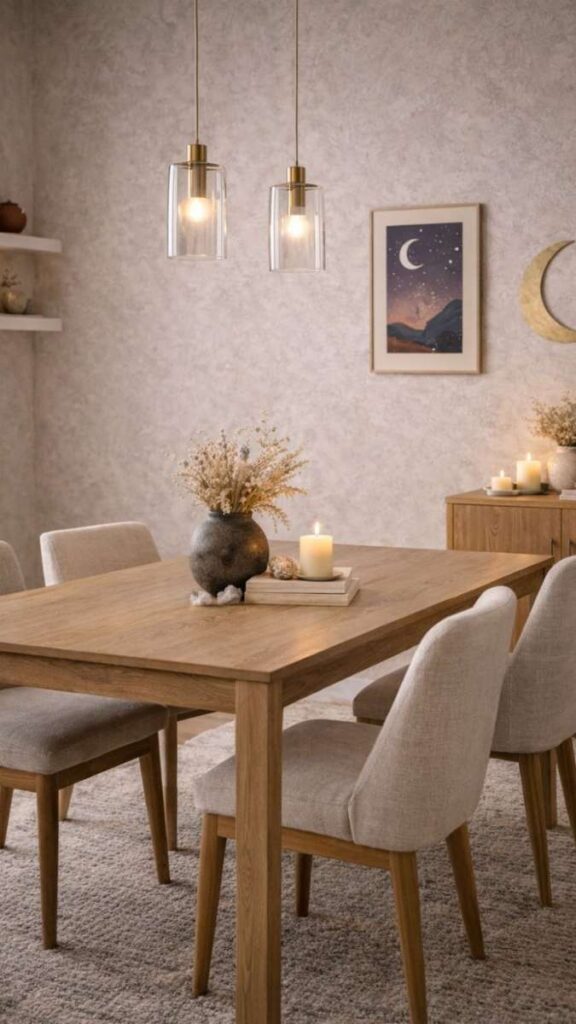
A cluster of mason jar pendants hung at varying heights over a dining table creates the kind of depth that a single chandelier rarely achieves. The jars themselves diffuse the Edison bulbs gently enough to soften shadows without losing that warm, amber quality
. Wire the pendants using plug-in pendant kits (no hardwiring needed) and hang them from a ceiling hook or a canopy mount. Stagger the heights by 6–8 inches for a more dynamic look. This works best in spaces with 8+ foot ceilings and an open, relaxed aesthetic. It draws the eye upward, which visually lifts the ceiling height.
LED Strip Lights Behind a TV for Bias Lighting
[Image: modern living room with flat-screen TV mounted on wall, soft blue-white LED strip behind the TV, dark wall, sofa in front, evening setup]
Bias lighting the term for placing a light source behind a screen isn’t just aesthetic. It reduces eye strain during long viewing sessions by bringing ambient light levels closer to the screen’s brightness.
A USB-powered LED strip adhered to the back of the TV frame takes about 10 minutes to set up and connects directly to a USB port on the TV itself, turning on and off automatically. Warm white works for a cozy feel; daylight or cool white reduces contrast fatigue better. In darker rooms with no natural evening light, this is genuinely useful, not just trendy.
Paper Lantern Pendant Light for High-Ceilinged Rooms
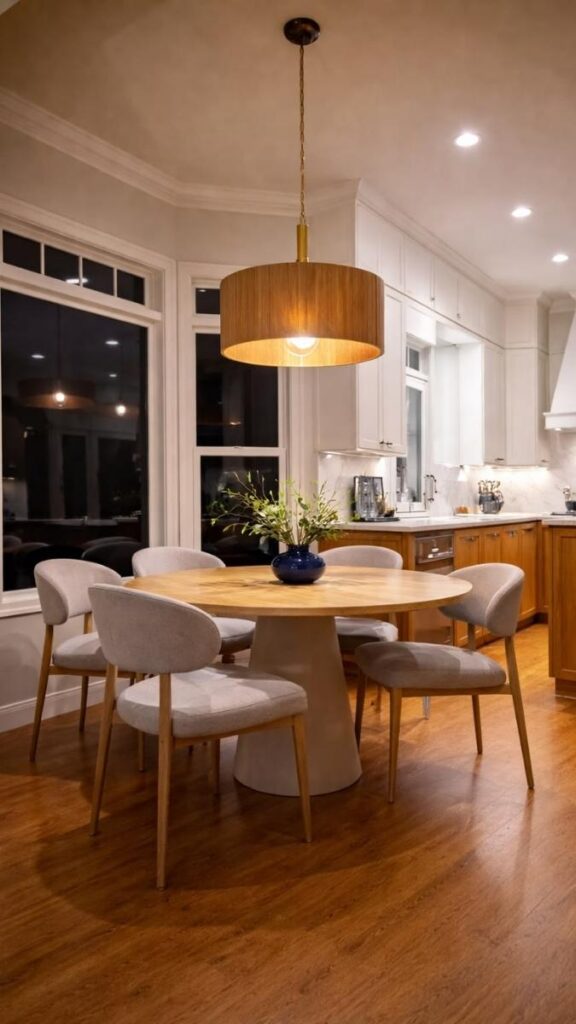
In a room with a high ceiling and a sad, bare bulb dangling from the center, a large paper lantern shade (the kind with a wire frame you assemble yourself) is one of the most cost-effective fixes available. A 16-inch or 20-inch white lantern diffuses light across the entire ceiling plane, eliminating harsh shadows and creating an even, ambient glow.
The diffusion is soft enough to make the room feel finished without competing with other light sources. This is especially effective in rental apartments where you can’t replace fixtures the lantern slips right over the existing socket.
Read More About: 87+ Apartment Decor Ideas That Make Small Spaces Feel Bigger
Washi Tape + Fairy Light Wall Panel as a Bedroom Headboard
If you don’t have a headboard or don’t want one, a geometric fairy light arrangement on the wall behind the bed functions as both a focal point and a soft ambient light source. Use washi tape to map out your grid or pattern first, then run the wire along the tape lines.
It’s removable, renter-friendly, and adds warmth to a plain wall without committing to art or paint. The key is keeping the bulbs warm white (2700K or lower) and spacing them evenly so the overall shape reads as intentional. This works especially well on textured walls where the light catches the surface.
Copper Pipe Floor Lamp with a Linen Shade
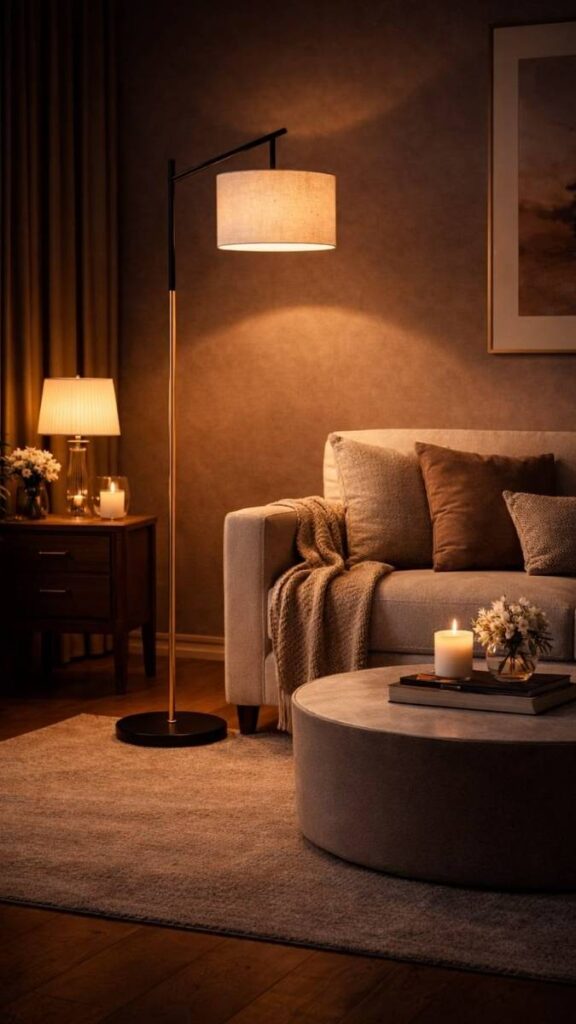
Building a floor lamp from copper pipe fittings is one of those projects that looks far more complicated than it is. Standard ¾-inch copper pipe, a few elbow joints, a lamp kit from a hardware store, and a drum shade total build time is about two hours. The result is a warm-toned, matte metal fixture that reads as custom furniture.
In my experience, this works best next to a reading chair or in a corner that needs both light and visual weight without adding a piece of furniture. Copper also ages naturally, developing a slightly darker patina over time that most people find more attractive, not less.
Woven Basket Pendant Light for Textural Interest
A large woven basket with a hole cut in the base for a pendant cord kit becomes a pendant shade with texture that no mass-market fixture can replicate. Seagrass, rattan, and wicker all create a dappled light pattern on surrounding walls and ceilings when lit from inside, an effect that photographs beautifully and feels very intentional in person
. This is one I’d actually recommend trying first if you’re going for a warm, organic aesthetic, because it’s low-cost, low-effort, and high-visual-impact. It works best in dining rooms, entryways, or over a coffee table anywhere a single pendant serves as a focal point.
Battery Operated Puck Lights Inside Deep Cabinets
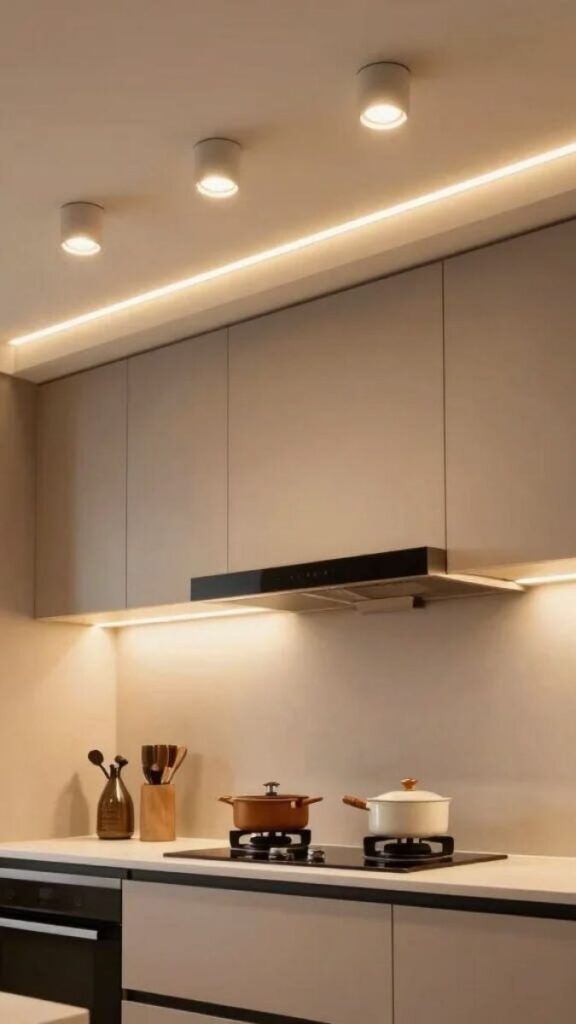
Deep cabinets with no interior lighting are one of the most annoying functional problems in a kitchen or pantry. Adhesive battery-operated puck lights solve this without any wiring. Mount one at the front inner edge of each shelf, pointed slightly downward, and the contents of even the deepest cabinet become visible at a glance.
Motion-activated versions are especially practical; they switch on the moment you open the door. This is a pure usability improvement that also makes a kitchen look more intentional when the cabinets are open.
Caged Industrial Pendant Light from Upcycled Metal Wire
A wire whisk or a simple metal wire cage bent around a pendant socket creates an industrial-style pendant shade with a texture that plays well against brick, concrete, or raw wood surfaces. The exposed filament bulb through the cage gaps creates an interesting shadow pattern on the ceiling and upper walls.
The key is making sure the cage is large enough that the bulb doesn’t create a heat issue at least 4 inches of clearance around a standard Edison bulb. This setup is best in kitchens or home offices where the raw aesthetic fits the rest of the space’s material language.
Fairy Lights in a Glass Vase as a Living Room Side Table Lamp
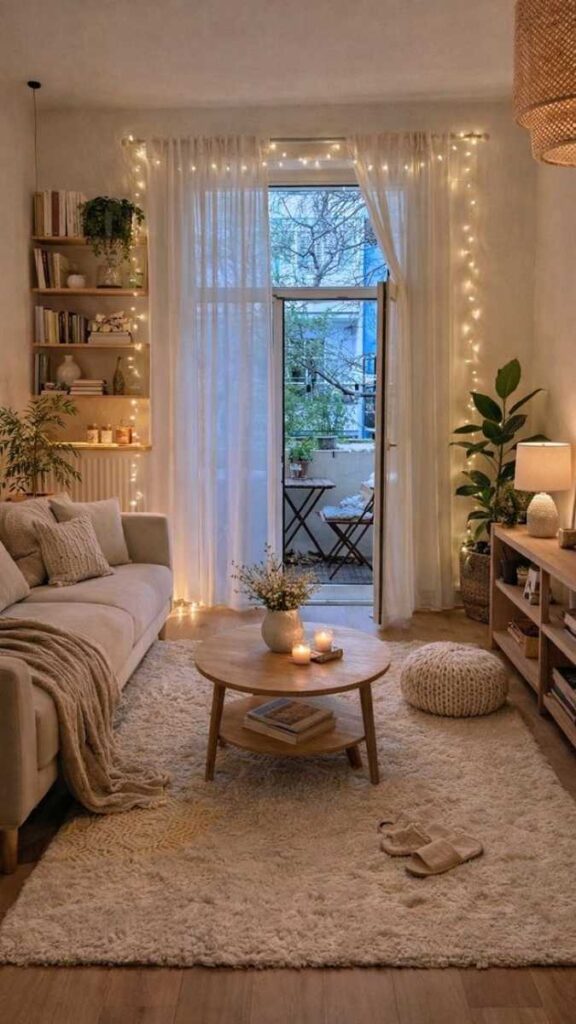
A tall glass vase or a large glass jar filled with a battery-operated fairy light strand is genuinely one of the simplest ways to add a warm light source to a table or shelf without buying a lamp. The glass refracts the light in a way that looks different from multiple angles.
It’s not a dramatic effect, but it’s warm and layered. Use a vase with some height (12 inches or more) so the light distributes upward rather than pooling at the base. Warm white, always. This is especially effective on console tables, bookshelves, or any surface that needs visual interest without adding visual clutter.
Read More About: 86+ DIY Hidden Storage Ideas That Keep Your Home Clean, Calm,
Pegboard with Integrated LED Strips for a Home Office
A pegboard wall organizer with an LED strip mounted along the top edge solves two problems simultaneously: wall storage and task lighting. The strip points light directly onto the desk surface below, reducing glare compared to overhead lighting while keeping the workspace clearly illuminated. Warm white reduces eye strain during long work sessions.
The pegboard itself is inexpensive, easy to install, and easy to reconfigure. For a home office that needs to function in low-light conditions or evening work sessions, this setup significantly improves usability without taking up desk space.
Macramé Lamp Shade as a Boho Pendant Accent
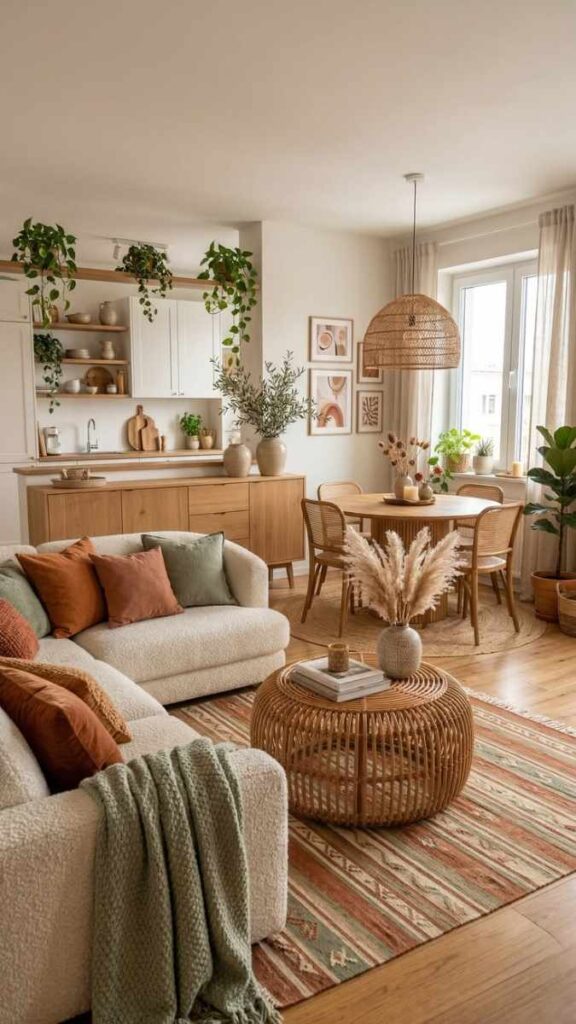
A macramé pendant shade built from cotton rope and a simple wire ring creates a diffused, dappled light effect that no store-bought shade fully replicates. The knot density determines how much light passes through tighter patterns that produce a more focused glow, looser patterns cast more shadow across surrounding walls
This works best as a bedside pendant or as a secondary accent in a living room. In 2026, handmade textile lighting continues to be a strong direction in interior spaces, partly because it adds warmth that no glass or metal shade achieves in the same way.
Lighted Floating Shelves Using LED Channels
Aluminum LED channel strips recessed into the underside of floating shelves give a cleaner finish than rope light or strip lights applied directly to the surface. The aluminum diffuser spreads the light evenly, eliminating hot spots, and the matte finish reads as built-in rather than DIY.
The channel sits flush against the shelf bottom and the LED strip slides inside no visible hardware. For shelves in a living room or dining area, this creates the kind of lighting effect that most people associate with custom millwork, at a fraction of the cost.
Repurposed Colander as a Ceiling Pendant Shade
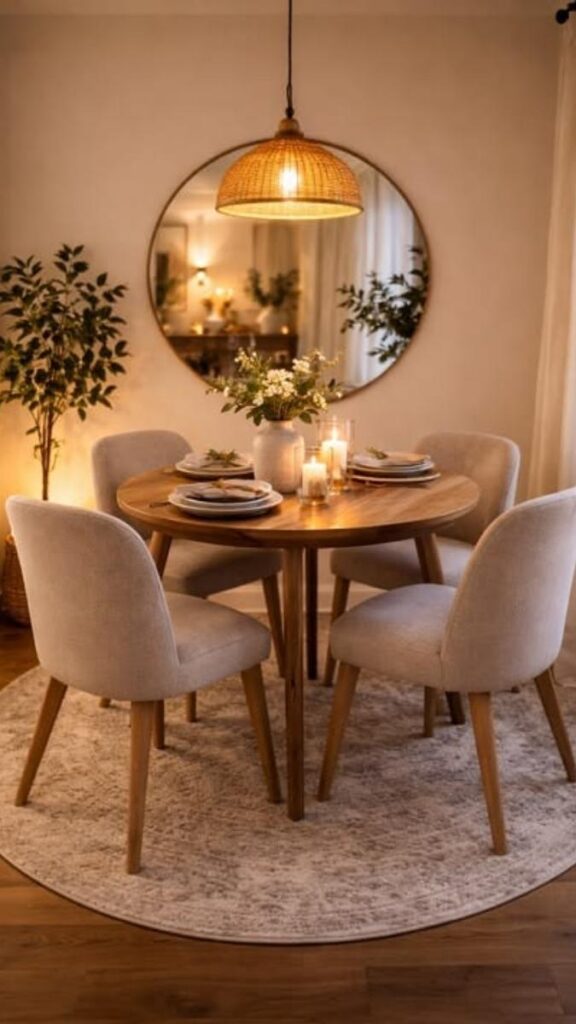
A stainless steel colander with evenly spaced holes converted into a pendant shade creates one of the more visually interesting effects on this list. When the bulb is on, each hole projects a small circle of light onto the ceiling, creating a constellation-like pattern in the room above the fixture.
It’s a functional light source and a light installation at once. Wire it with a pendant kit and mount it over a kitchen island or dining table. The colander’s size determines how light spreads larger colanders diffuse light across a wider ceiling area.
Picture Light Above a Gallery Wall
A plug-in brass or matte black picture light mounted above a gallery wall does something subtle but effective: it draws the eye toward the wall as a curated feature rather than just a collection of frames. The directional light creates shadows along the frame edges, which adds dimensional depth to what is otherwise a flat surface.
Plug-in versions require no wiring and use a cord that runs down behind the wall or through a discreet cord cover. This is especially useful in living rooms where the gallery wall is meant to be the focal point, but ambient room lighting flattens it out.
DIY Sconce Using a Vintage Tin Can and a Wall Socket
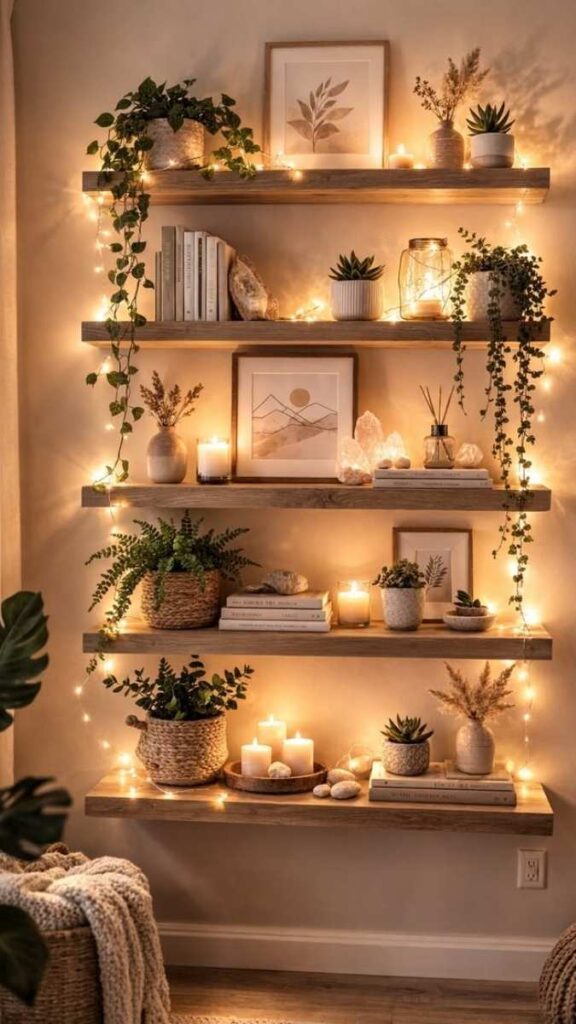
Spray-painted tin cans (large tomato or coffee cans) drilled with ventilation holes and wired with a standard sconce kit become wall-mounted accent lights with an industrial edge. Mounted in pairs in a hallway or flanking a mirror,
They create directional warmth without the cost of actual sconce fixtures. The holes in the can project small dots of light on the surrounding wall, similar to the colander effect. Matte black spray paint reads as the most finished; it’s closer to how commercial fixtures are coated. This is a genuinely useful solution for hallways that need lighting but have no existing wall fixture boxes.
Tension Rod Curtain Light Panel for Window Walls
Weaving a strand of warm fairy lights through sheer curtain panels hung from a tension rod creates a soft, diffused light source that also provides daytime privacy without blocking natural light. At night, the illuminated curtains glow evenly from behind, making the window wall itself a light source. This works in bedrooms, living rooms
, or studio apartments where a soft boundary between spaces is useful. No drilling required the tension rod fits between walls or inside a window frame. The effect shifts significantly between day and night, which most people find pleasantly surprising.
Under Bed LED Strip for a Floating Bed Effect
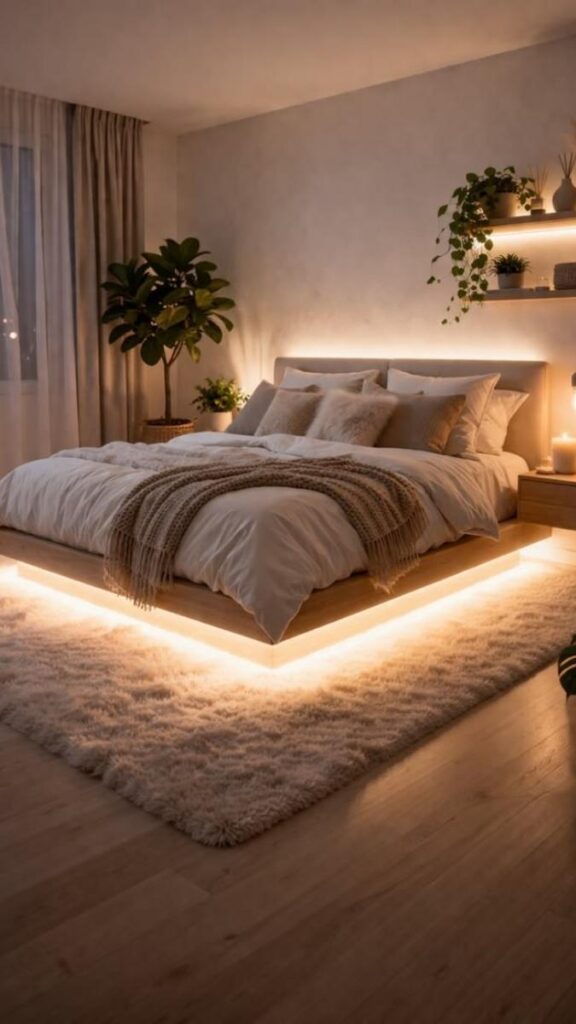
An LED strip mounted to the inner edge of a platform bed frame, pointing downward, creates the visual impression that the bed is floating above the floor. The light doesn’t project far just enough to illuminate a 6–8 inch zone around the base but it creates a visual boundary that makes the bed look like a deliberate design object rather than furniture sitting on a floor.
Warm amber is more effective than cool white here; it reads as intentional mood lighting rather than task lighting. This setup also functions as a practical night light for navigating the bedroom in the dark without turning on overhead lights.
DIY Drum Shade from a Lampshade Frame and Fabric
Building a drum shade from a lampshade wire frame (available at craft stores) and a yard of fabric is one of the more satisfying DIY lighting projects because the result is exactly what you’d pay $60–100 for in a home goods store. The fabric choice controls everything, linen diffuses light warmly, heavier fabrics create more contrast, patterned fabrics project the design faintly onto surrounding walls.
Hot glue or fabric adhesive holds the material to the frame rings. Honestly, the main advantage isn’t cost; it’s that you can choose exactly the diameter, height, and material that your specific lamp base and room proportion need.
Canopy Bed with String Lights for an Enclosed Bedroom Feel
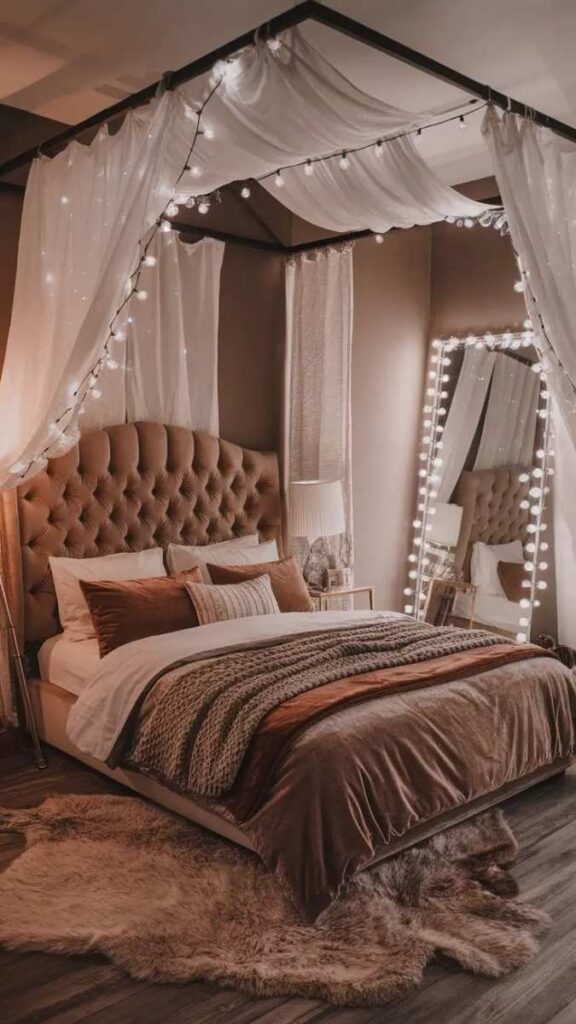
A simple canopy frame either a purchased four-poster frame or a DIY version using ceiling hooks and curtain rods with warm string lights woven through the overhead drape creates an enclosed, low-lit sleeping environment that genuinely helps with sleep transition.
The lights stay on as a soft ambient source while reading and can be switched off without moving from the bed. In a bedroom that lacks architectural interest, this setup adds a structural element that makes the bed feel like a designated retreat rather than just a piece of furniture in a room.
Read More About: 84+ DIY Room Decor Ideas for Teens That Actually Look Good and Work in Real Spaces
Staircase Step Lighting Using Adhesive LED Tape
Adhesive LED tape applied to the underside of each stair tread pointing downward toward the step below creates both a safety feature and an architectural lighting effect that looks far more complex than it is. The light illuminates each step individually without needing to brighten the entire staircase.
Motion-activated controllers make this genuinely practical for nighttime use. In a home with an open or floating staircase design, this effect is particularly striking because the steps appear to hover in the air. For enclosed staircases, it still reads as a deliberate upgrade.
Pendant Light from a Geometric Wire Frame
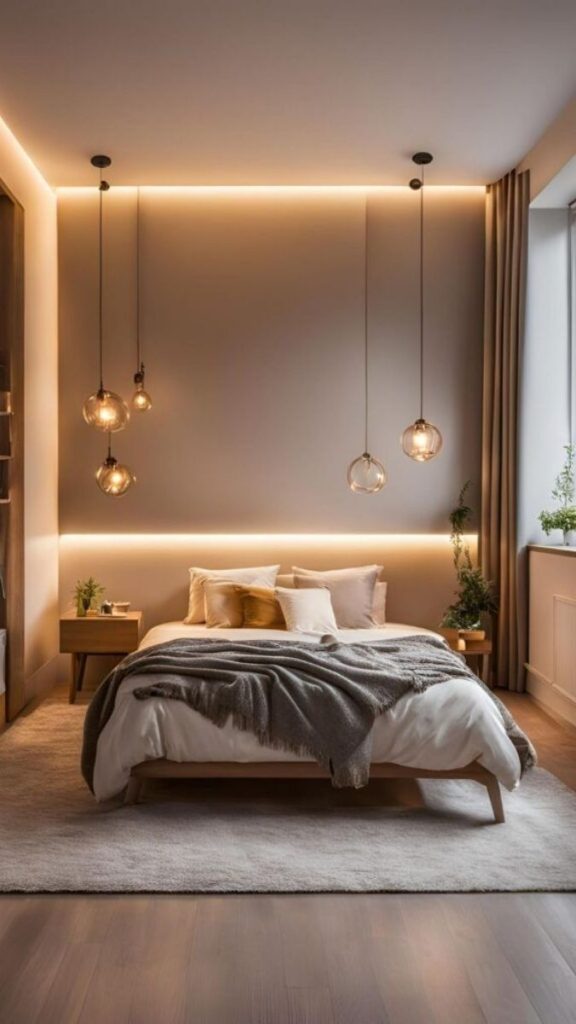
A geometric wire frame (pentagon, hexagon, or diamond) suspended from a pendant cord kit creates a modern industrial fixture that suits kitchens, dining rooms, or home offices. The frame itself contributes no diffusion; the Edison bulb is fully exposed so the quality of the bulb matters.
A warm, low-lumen filament bulb at 40W equivalent gives the right amount of light without being overwhelming as a single source. This setup works best in smaller rooms or over a specific surface (island, desk, table) where you want directional light rather than ambient spread.
Dimmable Plug-In Wall Sconces as Bedside Lighting
Plug-in wall sconces with a built-in dimmer switch flanking the headboard give the bedroom the layered lighting that most people only achieve by buying multiple separate lamps. The cord runs down the wall to the outlet and can be concealed with a flat adhesive cord cover painted to match the wall.
Dimming capability is essential here full brightness from a sconce at eye level while lying down is uncomfortable. This is one of the most practical bedroom upgrades available without hardwiring, and it frees up the space that a lamp base and cord would otherwise consume.
Repurposed Wine Bottle Table Lamp
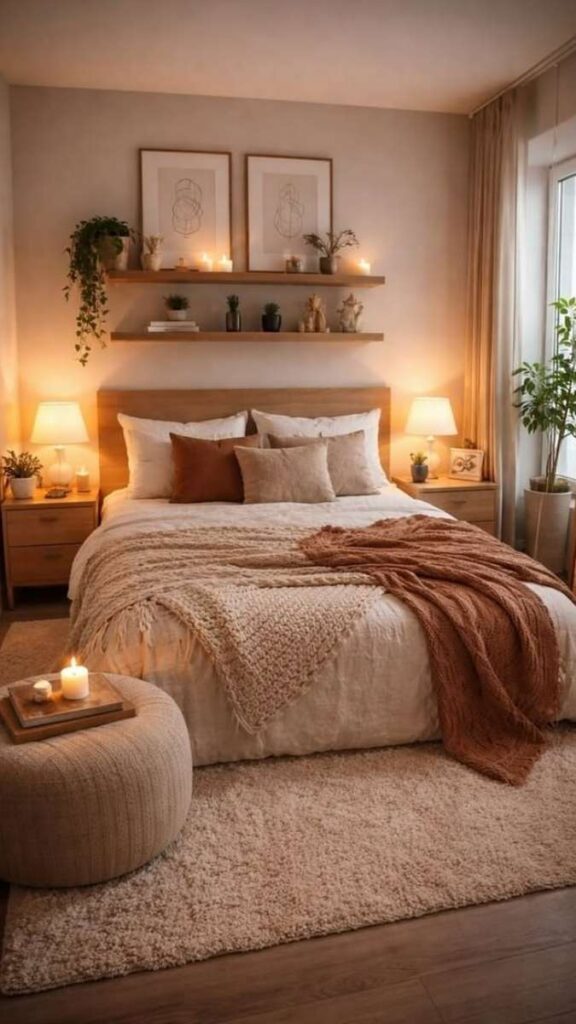
A wine bottle drilled with a bottle lamp kit and fitted with a small drum shade becomes a table lamp with more visual character than most things available at mid-range retailers. Dark glass bottles (olive oil bottles work particularly well) diffuse the bulb glow slightly, giving the base a translucent warmth.
Clear bottles project more light outward. The shade proportion matters if a shade too wide or too tall looks unbalanced. As a general rule, the shade diameter should roughly match the bottle height. This works as a bedside lamp, a dining room accent, or a bar cart detail.
DIY Pendant from a Concrete Planter Mold
Casting a pendant shade from concrete using a balloon mold or a plastic bowl produces one of the most material-forward DIY fixtures possible. The concrete is heavy, so the mounting needs to be solid (a ceiling hook rated for at least 10 lbs), but the resulting shade has a weight and texture that no plastic or metal equivalent replicates.
The gray matte surface absorbs and radiates light differently depending on the finish. Smooth molds give a cleaner look, rough molds create more variation in the surface. This is particularly effective in kitchens or loft spaces where raw materials are already part of the aesthetic.
Layered Table Lamp Trio on a Console Table
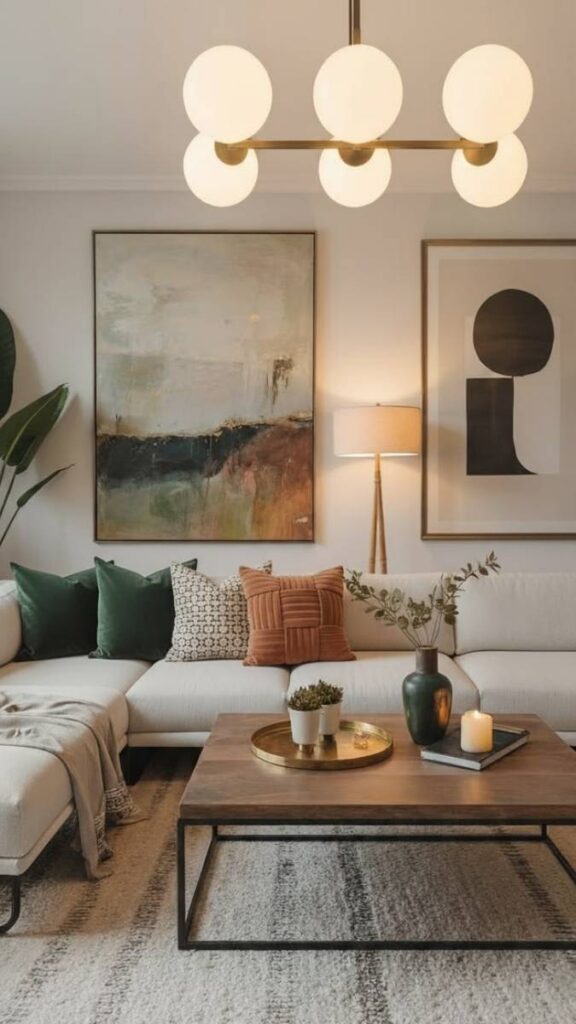
Three small table lamps on a console table placed at two ends and one center create a distributed warm light effect across the surface that no single floor lamp can replicate from a distance. The staggered heights (achieved with small risers or books under one or two bases) add visual interest without competing with the decor between them.
This approach works especially well in entryways or living rooms where the console table is visible from multiple angles. I’ve noticed this style tends to make narrow rooms feel wider because the light draws the eye horizontally across the full width of the surface rather than up toward the ceiling.
What Actually Makes DIY Home Lighting Ideas Work
The difference between a DIY lighting setup that looks intentional and one that looks improvised usually comes down to three things: color temperature consistency, fixture height, and light layering.
Color temperature consistency
Means choosing bulbs in the same Kelvin range across all light sources in a room. Mixing 2700K warm bulbs with 4000K cool white creates a visually disjointed space. Warm white (2700K–3000K) in living rooms and bedrooms; neutral to cool white (3500K–4000K) in kitchens and workspaces.
Fixture height
Determines whether a light reads as task-oriented or ambient. Pendants hung too high don’t draw the eye; pendants hung too low create glare at eye level when seated. The standard rule for dining pendants is 28–36 inches above the table surface. For ceiling-mounted fixtures in living rooms, 7 feet from the floor is the minimum clearance.
Light layering
Is what separates a well-lit room from a functional one. Ambient (general), accent (directional), and task (work-specific) lighting serve different purposes. A room lit only by overhead ambient light is flat. A room with all three layers even if each layer is low-cost reads as designed.
DIY Lighting Ideas by Space and Purpose
| Idea | Best Room | Space Type | Problem Solve | Difficulty |
| Rope light shelf underlighting | Living room, office | Small to medium | Flat shelving, poor accent lighting | Easy |
| Clip-on bedside reading lights | Bedroom | Small, no nightstands | Space constraint, independent lighting | Easy |
| Bias lighting behind TV | Living room | Any size | Eye strain, flat wall | Easy |
| LED strip under bed | Bedroom | Platform bed setups | Navigation, visual interest | Easy |
| Paper lantern pendant | Any room | Rental, high ceiling | Bare bulb, harsh overhead light | Easy |
| DIY drum shade | Bedroom, living room | Any | Wrong shade size, cost | Moderate |
| Copper pipe floor lamp | Reading corner | Medium to large | Lack of accent fixture | Moderate |
| Concrete pendant shade | Kitchen, loft | Industrial aesthetic | Generic fixtures | Advanced |
| Pegboard + LED strip | Home office | Compact workspace | Task lighting, storage | Moderate |
| Macramé pendant | Bedroom, boho space | Any | Sterile lighting, lack of texture | Moderate |
How to Layer Lighting in a Room Without Adding More Fixtures
The most common mistake people make with DIY home lighting is treating it as a fixture problem when it’s actually a placement and layering problem. Adding more fixtures doesn’t automatically make a room feel better in fact, it often creates more visual clutter without improving the light quality.
Start with your darkest corner.
Every room has one. A plug-in floor lamp or a shelf with LED underlighting placed in that corner creates immediate improvement to the overall balance of the room. Corners absorb light rather than reflecting it, so putting a source there distributes light more evenly than centering a new fixture.
Replace one harsh overhead light with two softer sources
If your living room relies on a central overhead fixture, the fix isn’t a better overhead fixture, it’s adding two lower lamps (floor or table) and dimming or eliminating the overhead. The result is a room that feels warmer in the evening without losing usable light during the day.
Use height variation deliberately
Light from three different heights: a floor lamp, a table lamp, and an under-shelf strip creates depth that no number of ceiling fixtures can produce. The shadows created at different angles make a room feel more three-dimensional.
Consider the wall, not just the floor and ceiling.
Most DIY lighting setups focus on horizontal surfaces. Wall sconces, picture lights, and vertically run LED strips on either side of a large piece of furniture give rooms visual height and keep the light distribution from feeling ground-level heavy.
FAQ’s
What is the easiest DIY home lighting idea for renters?
Plug-in wall sconces and battery-operated LED strips are the most renter-friendly options because they require no drilling into electrical boxes and leave no permanent marks. Cord covers adhesive to walls can hide wiring neatly and are removable without damage. Paper lantern pendant shades that slip over existing bare bulbs are another zero-modification fix.
How do I choose the right bulb color temperature for a cozy room?
For a warm, cozy feel, use bulbs rated at 2700K to 3000K. Anything above 3500K reads as cool or clinical, which works well in kitchens and workspaces but undercuts warmth in living rooms and bedrooms. Keep all bulbs in the same Kelvin range within a room to avoid a visually disjointed effect.
Can LED strip lights be used as the primary light source in a room?
Strip lights work well as accent or secondary lighting but rarely provide enough lumens for a primary light source unless multiple runs are used on a bright setting. A single LED strip under a shelf will illuminate that surface area but won’t replace a lamp or ceiling fixture for general room lighting. Use them to supplement, not replace.
Is bias lighting behind a TV actually useful, or just aesthetic?
Both. Bias lighting reduces the contrast ratio between a bright screen and a completely dark wall, which measurably reduces eye strain during long viewing sessions. The aesthetic benefit of a soft backlit glow around the screen is real, but the ergonomic benefit is the reason cinematographers and video editors have used it professionally for decades.
What’s the best DIY pendant light for a dining room table
For a dining room, the mason jar pendant cluster, woven basket pendant, or geometric wire frame pendant all work well depending on aesthetic. The key variable is lumen output; dining tables need enough light to see food clearly. Use a bulb rated at 400–800 lumens per pendant, and hang pendants 28–36 inches above the table surface for the right balance of illumination and visual comfort.
How can I make a small room feel brighter without adding a ceiling fixture?
Use light-colored lampshades (white or cream), position floor or table lamps in darker corners rather than near existing light sources, use mirrors to reflect existing light across the room, and choose bulbs at the higher end of the warm white Kelvin range (closer to 3000K). Under-shelf lighting also adds perceived brightness because it illuminates surfaces that overhead light rarely reaches.
Are DIY lamp kits safe for everyday use?
Yes, provided you use kits rated for the bulb wattage you’re running and ensure all connections are secure. Most residential DIY pendant and table lamp kits are UL-listed and designed for standard use. The most common safety issue is using a bulb wattage that exceeds the fixture rating always match the bulb to the kit’s maximum wattage specification, and opt for LED bulbs, which run significantly cooler than incandescent
Conclusion
Good lighting isn’t about having the right fixtures, it’s about understanding how light behaves in your specific space and placing sources where they create balance rather than just brightness. Most of the ideas above require no electrician, no hardwiring, and no significant budget. What they do require is thinking about light as a layer of design rather than an afterthought.
Start with one or two setups that address an existing frustration: a dark corner, a flat wall, a bedroom that feels clinical rather than calm. Adjust placement, try different bulb temperatures, and see how the room changes before adding anything else. The key is finding what works for your space, your layout, and the time of day you spend most of your time in it. Small adjustments in lighting go further than most people expect.