83+ Kitchen Counter Organization Ideas That Actually Make Cooking Easier
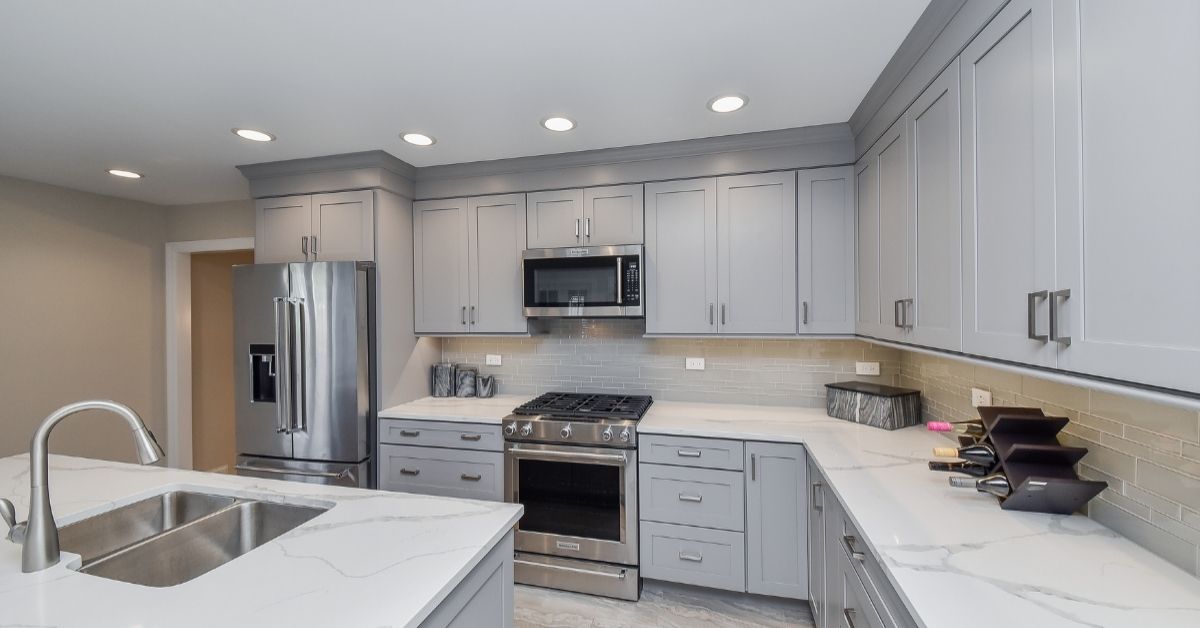
If your kitchen counters collect more clutter than they clear, you’re not alone. Most kitchens have the same problem: limited surface space that somehow becomes a landing zone for everything mail,Kitchen Counter Organization Ideas appliances, snacks, random cords. The result is a kitchen that feels busier and smaller than it actually is, and cooking in it starts to feel like a chore before you’ve even turned on the stove.
The good news is that counter organization isn’t about buying a matching set of containers and calling it done. It’s about understanding what actually belongs on your counters, what doesn’t, and how to arrange what stays so it supports the way you actually cook. Even a few intentional changes can shift how functional and how calm your kitchen feels on a daily basis.
If you’re working with a small kitchen, a rental, or just a layout that never quite clicked, these ideas are built around real constraints. No gut renovation required.
Use a Tiered Spice Rack Right Next to the Stove
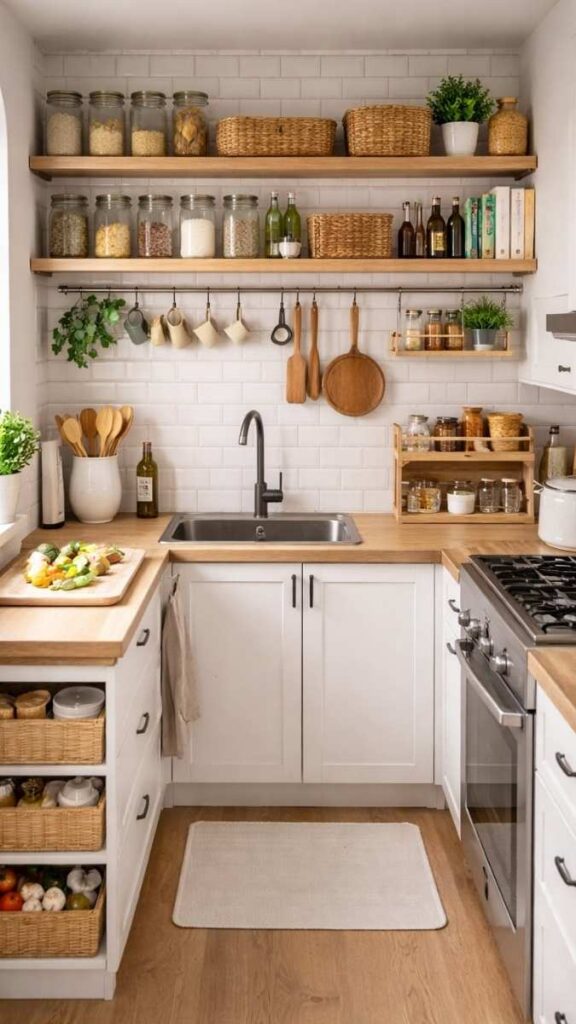
Spices scattered across three different cabinets and two drawers is one of the most common kitchen inefficiencies and it slows down cooking more than people realize. A tiered spice rack positioned within arm’s reach of your cooktop keeps everything visible and accessible without requiring you to dig through a cabinet mid-recipe.
The tiered format means labels face outward on every row, so you’re grabbing the right jar on the first try. This works especially well in galley kitchens or narrow counters where vertical use of space matters. It eliminates the habit of leaving half-used spice jars floating around the counter after cooking.
Add an Over-the-Sink Shelf for Dish Soap and Small Items
The area directly above the sink is almost always wasted space. A simple over-the-sink shelf either tension-mounted or suction-based moves dish soap, sponges, and hand lotion off the counter surface without touching the wall.
This is particularly useful in rentals where you can’t install anything permanent. The counter on either side of the sink stays clear for actual prep work, and the sink area looks considerably less crowded. Stainless or matte black finishes tend to hold up well near water and blend easily with most kitchen hardware.
Keep a Wooden Cutting Board Upright in a Slot Organizer
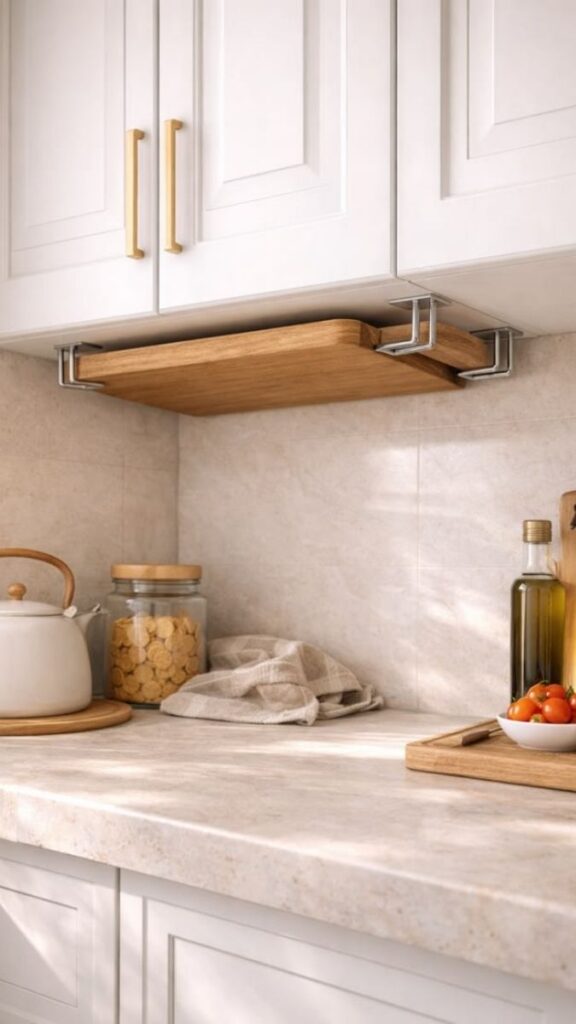
Flat cutting boards stacked horizontally eat counter space and get buried under other things. Standing them vertically in a slot-style organizer, the kind designed for baking sheets or cutting boards, takes up a fraction of the footprint and makes them genuinely easy to grab
A large board and a smaller one cover most cooking tasks without needing a third. In my experience, this works best positioned near the prep zone rather than near the stove, since that’s where boards actually get used. It also keeps the counter surface fully usable underneath and beside it.
Group Your Coffee Setup on a Small Tray
A tray creates visual containment without requiring any installation. Group your coffee maker, a small canister of pods or beans, and your go-to mugs together on a tray, and that cluster becomes a defined zone instead of random sprawl.
The tray also protects your countertop from drips and makes wiping down the area significantly easier. You can lift the whole thing. Round trays in wood or stone work well in most kitchen styles. This approach is especially practical in smaller kitchens where every inch of counter is shared between multiple functions.
Install a Magnetic Knife Strip on the Backsplash Wall
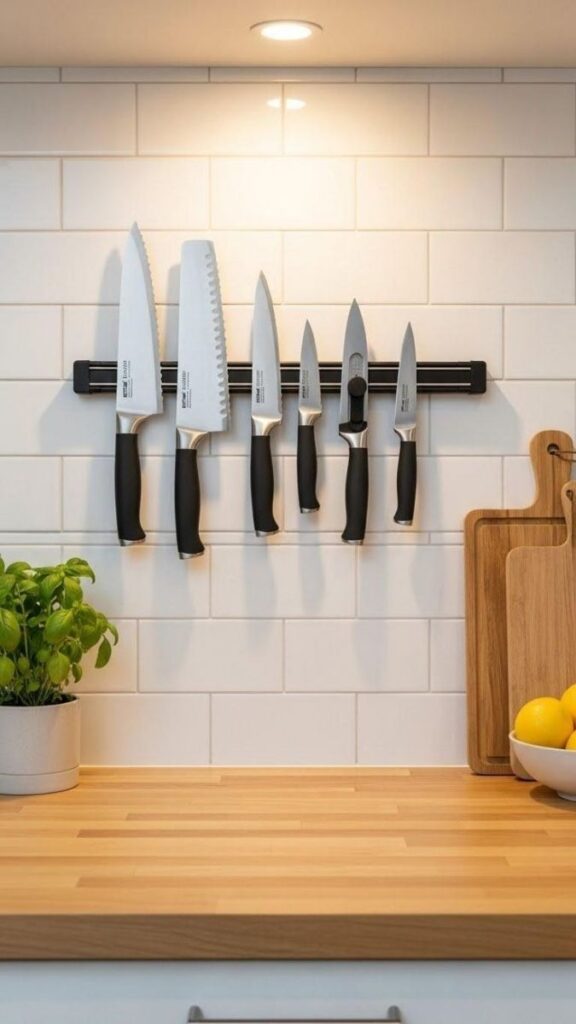
A knife block takes up more counter space than most people realize, typically a full square foot. Mounting a magnetic strip directly on the backsplash tile moves your knives to the wall entirely and actually makes them easier to access, since there’s no block to pull from.
The strip works best positioned slightly above eye level when you’re standing at the counter so you can see the blades clearly. This setup is common in professional kitchens for good reason: it’s faster, safer in terms of blade contact, and frees the full counter below for prep. Renters can use adhesive-backed versions with limited wall damage.
Read More About: 82+ Japandi Bathroom Design Ideas That Make Small Spaces Feel Calm and Intentional
Use a Pull-Out Cabinet Insert for Appliances You Use Daily
Not every appliance needs to live on the counter permanently. A pull-out shelf inside a lower cabinet either installed as part of the cabinet or added as an aftermarket insert lets you keep frequently used appliances like toasters and small blenders accessible without giving them permanent counter real estate.
You pull it out when you need it, push it back when you don’t. The counter stays clear the rest of the time. This works especially well for appliances used daily but not all-day long. It’s one of the more functional changes you can make without renovating anything.
Set Up a Dedicated Fruit Bowl Zone with Vertical Height
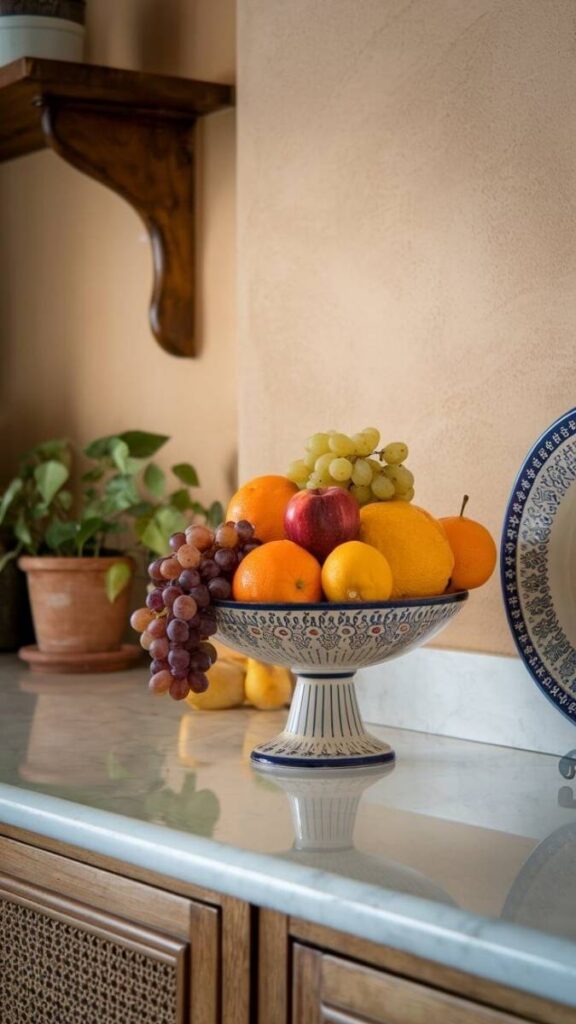
A flat fruit bowl spreads across the counter. A pedestal or footed bowl draws the eye upward, takes up less surface area, and makes the counter feel less crowded by adding vertical interest.
Fruit that needs to ripen at room temperature bananas, avocados, tomatoes should stay out anyway, so giving it a defined spot prevents it from drifting across the counter randomly. Place it near the edge of the counter away from the cooktop to keep it out of the cooking zone. A wooden or ceramic pedestal bowl tends to read as intentional rather than utilitarian.
Store Cooking Utensils in a Crock Near the Stove, Not in a Drawer
Utensil drawers sound organized in theory, but in practice they mean opening, digging, closing every time you cook. A wide-mouth crock or utensil holder placed beside the stove keeps your most-used tools upright and immediately reachable.
The key is limiting what goes in it spatulas, tongs, wooden spoons, maybe a ladle not every utensil you own. Overcrowding the crock defeats the purpose. A tall ceramic or stoneware crock holds up visually and practically in most kitchen styles, from farmhouse to contemporary.
Add a Small Shelf Above the Counter for Decorative + Functional Storage
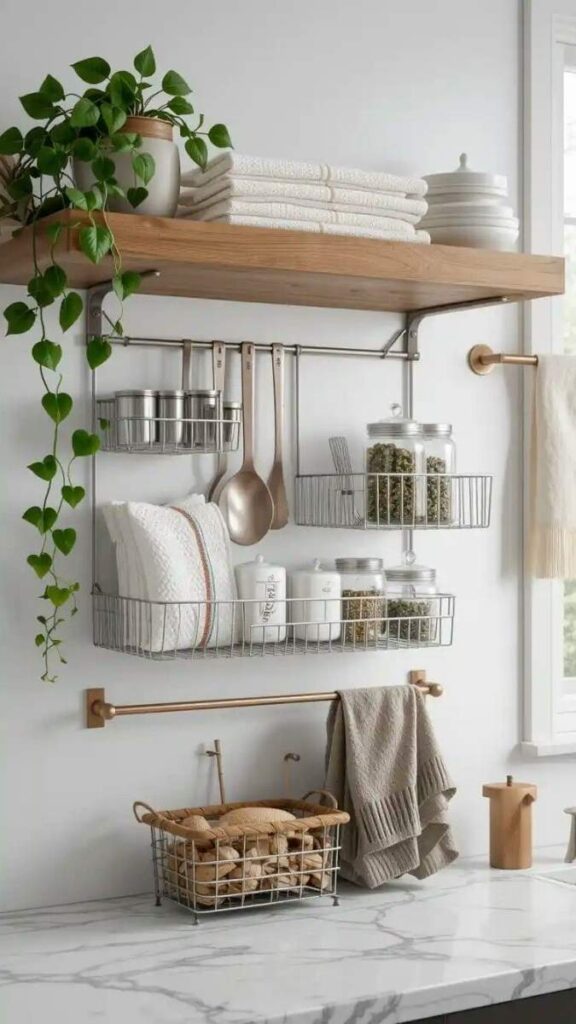
A single floating shelf above the counter, not a full shelving wall, just one creates a second tier of storage without taking up any counter surface. Use it for items that are used occasionally but not daily: a canister of flour, a small cookbook, a trailing plant.
The visual effect is a layered counter zone that looks intentional rather than cluttered. Shelf depth matters here 8 to 10 inches is enough for most kitchen items without making the counter below feel low or boxed in. This works especially well above a coffee station or prep area.
Use a Lazy Susan in the Corner Cabinet (and One on the Counter
Corner counters are awkward; they’re deep, hard to reach into, and often become a pile zone. A countertop lazy Susan in the corner keeps oils, vinegars, and condiments organized and fully accessible with a single spin.
No digging, no knocking things over. The rotating format means everything is visible even in a tight corner, and the circular footprint fits naturally into a corner space that’s otherwise hard to use efficiently. Two-tier versions double the storage without expanding the footprint. Honestly, this is one of the first things I’d try in any kitchen that has a corner counter problem.
Use Drawer Organizers for the Counter Junk Drawer Overflow
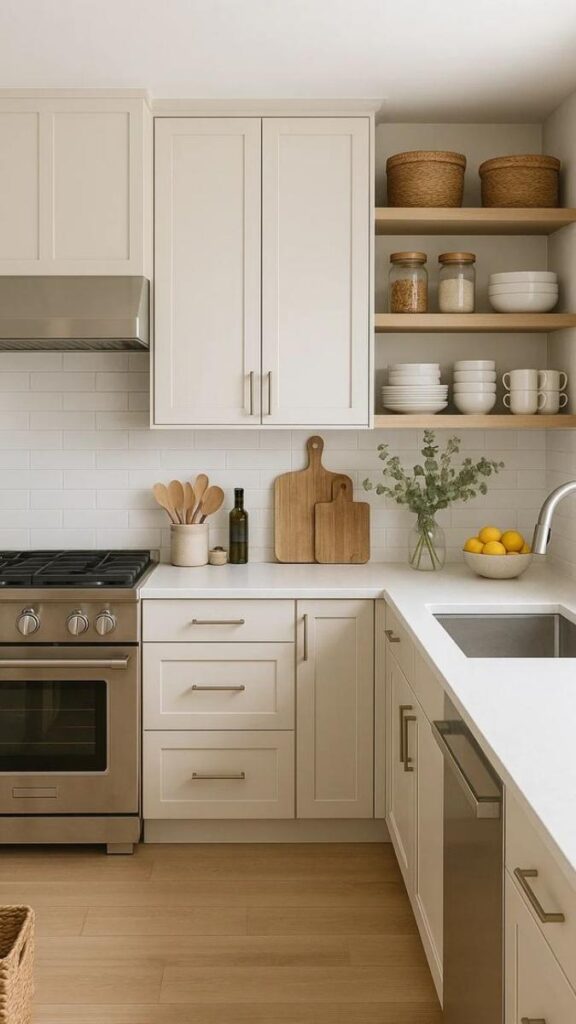
Every kitchen has a junk drawer. The issue is when that junk migrates to the counter pens, rubber bands, twist ties, random chargers. A set of modular drawer organizers assigned specifically to that overflow creates a defined home for miscellaneous items, which stops them from landing on the surface.
Label the sections if needed. The counter directly above that drawer stays clear because you know everything has a place to pull away. This works for renters and homeowners equally since it requires zero installation.
Read More About: 81+ Japandi Color Palette Ideas That Make Any Room Feel Calm, Collected
Create a Baking Station with Everything in One Zone
If you bake even occasionally, having your tools spread across multiple cabinets means every session starts with an assembly project. Grouping your most-used baking items, a flour canister, a few measuring cups, and a mixing bowl into one defined counter zone significantly reduces setup time and keeps the rest of the counter available for meal prep.
A small silicone mat or marble pastry board marks the baking zone visually without requiring any permanent division. This setup works best on a section of counter near an outlet if you use a stand mixer.
Hang a Small Pegboard on an Open Wall Near the Counter
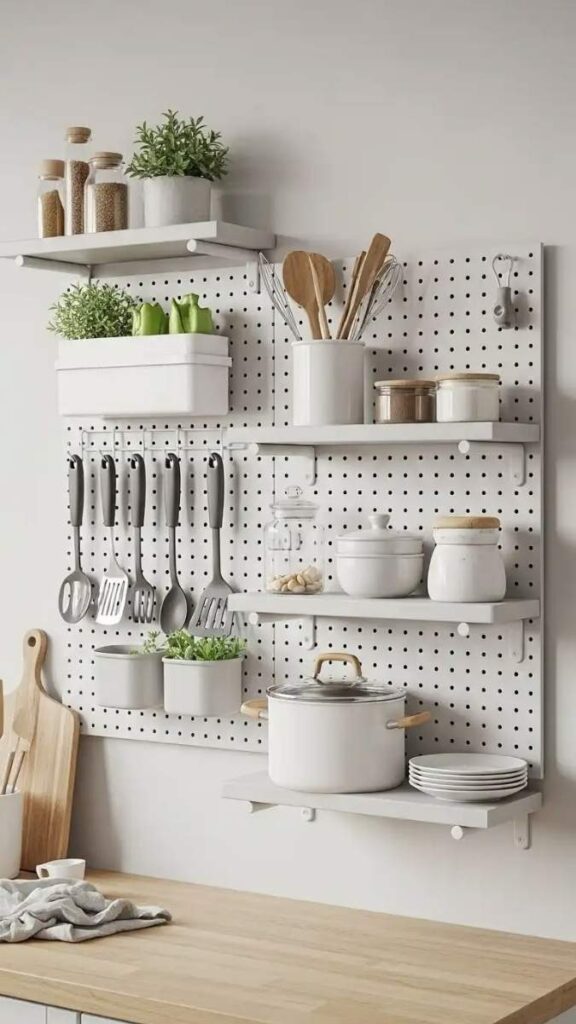
A pegboard doesn’t need to take up an entire wall to be useful. Even a 24×24-inch panel mounted beside or above a short section of counter gives you customizable wall storage for utensils, small pots, or even a hanging herb pot.
The hooks and shelves rearrange as your needs change, which makes it one of the more flexible storage options available. This is especially practical in kitchens where cabinet space is limited. The visual effect is an organized, slightly industrial look that reads as intentional rather than cluttered as long as you’re not overloading it.
Keep a Paper Towel Holder That Mounts Under a Cabinet
A freestanding paper towel holder takes up floor space on the counter. An under-cabinet mounted version screwed in or adhesive, depending on the surface, moves it off the counter entirely and keeps it accessible at the same time.
The roll sits at a natural height just below the cabinet, so you’re not reaching up or down. This is a small change with a noticeable payoff in terms of usable counter space, especially near the sink where surface area tends to be most limited.
Use Clear Canisters for Dry Goods Instead of Their Original Packaging
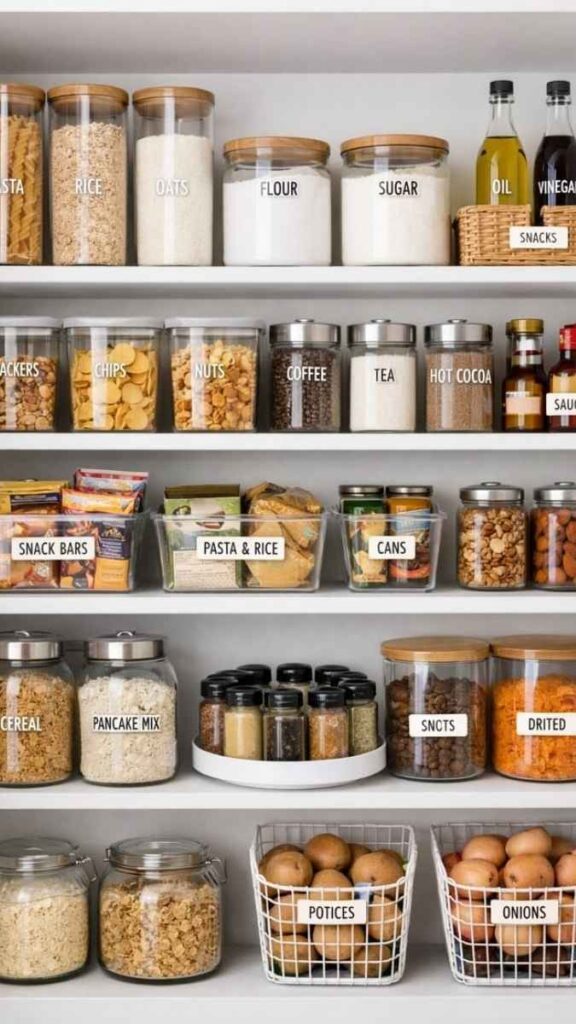
Bags and boxes of dry goods have irregular sizes, can’t stack, and fall over. Moving pasta, rice, oats, and lentils into clear canisters does two things: it standardizes the container size so they line up neatly, and it lets you see exactly how much you have without opening anything.
Round or square canisters in the same material glass or matte plastic line up along the back of the counter and don’t visually break up the space the way mixed packaging does. In smaller kitchens, keeping only 3-4 canisters for daily staples avoids the counter becoming a pantry.
Add a Slim Rolling Cart for Extra Counter Surface
In kitchens where counter space is genuinely limited, a slim rolling cart adds a second work surface without taking up permanent floor space. Park it beside the counter while cooking, roll it away when not in use.
Butcher block tops give you an extra prep surface; wire or wood shelves underneath hold appliances, produce, or cleaning supplies. The rolling format makes this genuinely flexible, not just a fixed island alternative. This is one I’d actually recommend trying first for anyone dealing with a seriously under-countered kitchen.
Store Plastic Wrap and Foil in a Wall Mounted Organizer
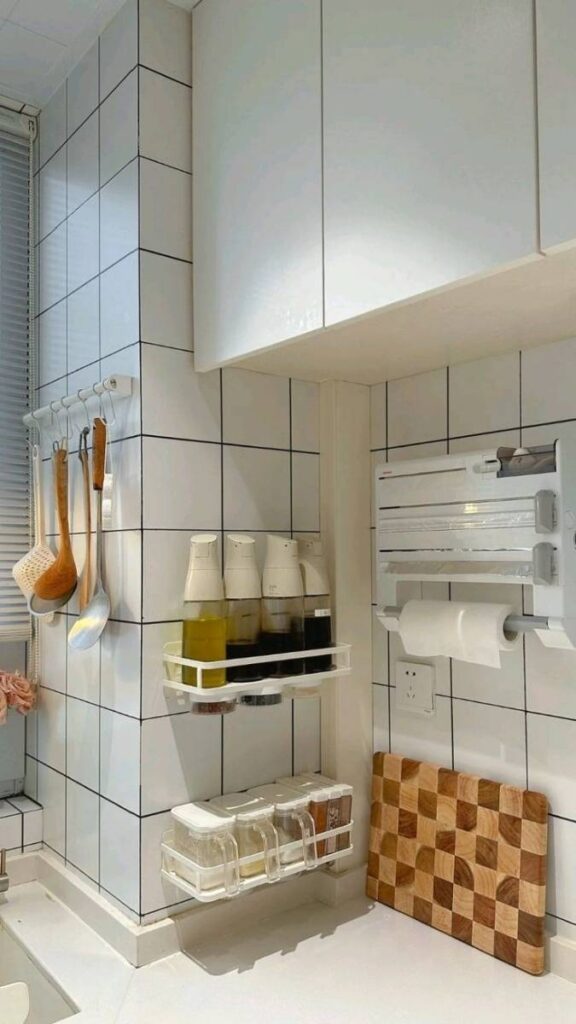
Plastic wrap, foil, and parchment paper boxes are oddly large for what they are and awkward to stack. Mounting a wall-based roll organizer inside a cabinet door or on the wall beside the counter takes all three off the counter and keeps them accessible with a single pull.
Many of these organizers include a cutting blade built in, which also removes the need to wrestle with the flimsy box-edge cutter. This is a minor change that solves a surprisingly persistent counter clutter problem.
Read More About: 80+ Bedroom Lighting Ideas That Actually Change How Your Room
Designate One Section of Counter as a “Clear Zone” at All Times
This is less about a product and more about a system designating at least 18 inches of counter space as a permanent no-clutter zone. No appliances, no mail, no bags. Just a clear surface, always.
It functions as your prep space when you need it and as a visual breathing room the rest of the time. The simple discipline of keeping one section always clear changes how the whole kitchen feels less like a storage surface, more like a workspace. Pair it with a rule that nothing gets set down in that zone unless it’s actively being used.
Use a Wall Mounted Cookbook Stand to Free Up Counter Real Estate
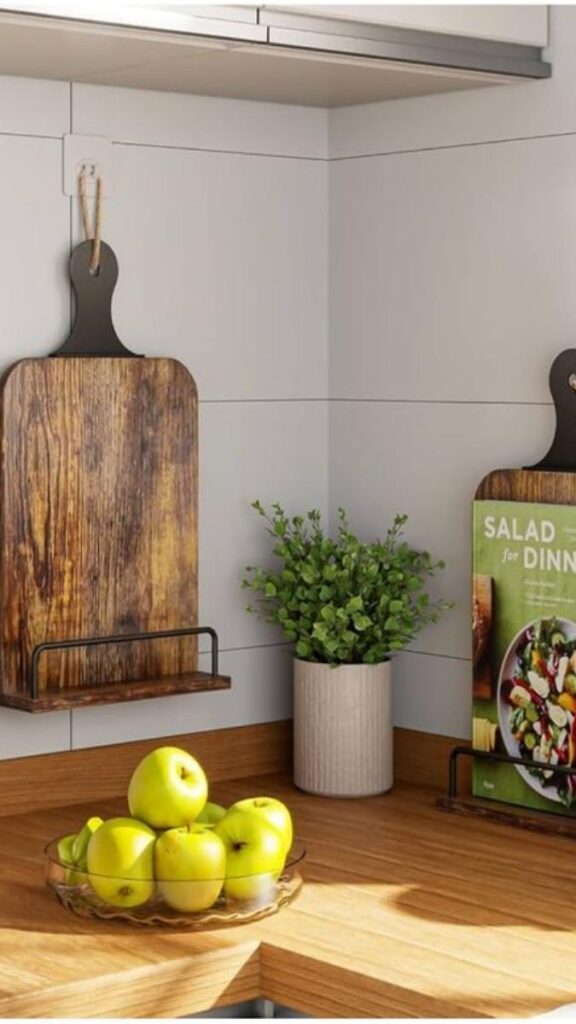
A cookbook propped on the counter while cooking occupies prime prep space and usually slides around. A wall-mounted book stand or tablet holder mounted at eye level near the stove keeps your recipe accessible without taking up any counter surface.
This is especially useful if you tend to cook from physical books or a tablet. You can read it clearly, scroll with a clean hand, and keep the counter below free. Adjustable clip-style holders work for books and tablets equally and require minimal installation.
Place a Herb Garden in a Vertical Window Planter
Fresh herbs on the counter sound nice but quickly become a sprawl of mismatched pots that crowd a windowsill. A vertical window planter one that stacks or hangs multiple small pots in a single footprint consolidates the herbs into a cleaner, tighter setup.
It also keeps them in the best light directly at the window rather than set back on the counter. Basil, mint, and rosemary are the most functional trio for everyday cooking. The visual effect is a kitchen that feels lived-in and intentional without looking cluttered.
Use a Drawer Below the Counter for Knife Storage Instead of a Block
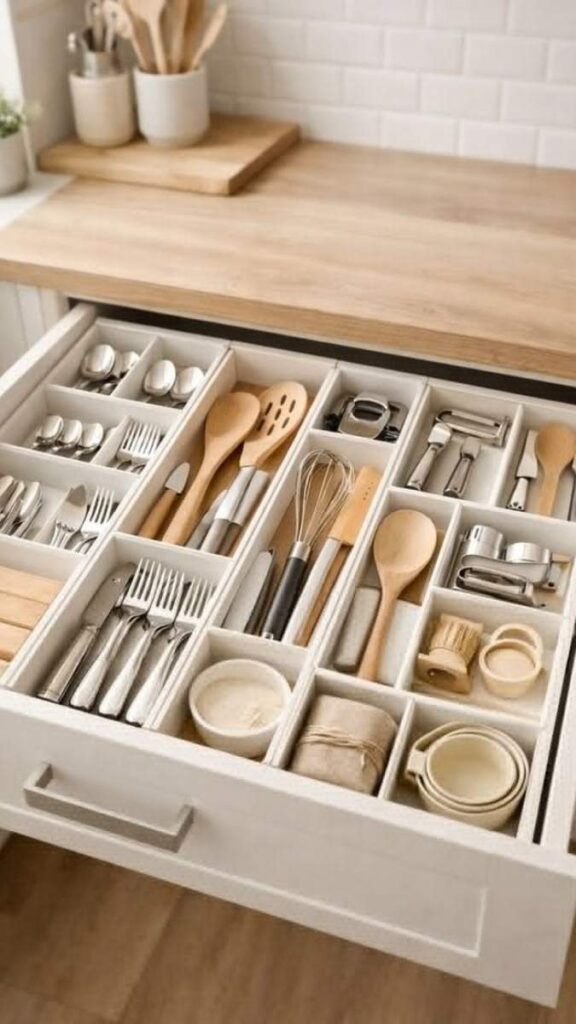
In-drawer knife organizers are a legitimate alternative to both knife blocks and magnetic strips. A fitted wooden insert holds knives horizontally in slotted grooves, protects the blades, and completely removes the knife storage from the counter surface.
The drawer stays organized because each knife has a specific slot, and the counter above it stays fully clear. This works particularly well in kitchens with a designated prep area and a drawer positioned near it. It’s also safer in households with children since knives are fully enclosed when not in use.
Hang a Rail System with Hooks Along the Backsplash
A rail system, one long horizontal bar mounted to the backsplash with interchangeable hooks and clips converts unused wall space into flexible, visible storage. You can hang utensils, a small pot, spice clips, even a paper towel holder off the same system.
Unlike pegboards, rails have a more finished look and work well in modern or contemporary kitchens. Position it between the counter surface and the upper cabinet, where wall space is often unused. The modular nature means you can adjust the setup as your cooking habits evolve.
Store Vitamins and Supplements in a Cabinet, Not on the Counter
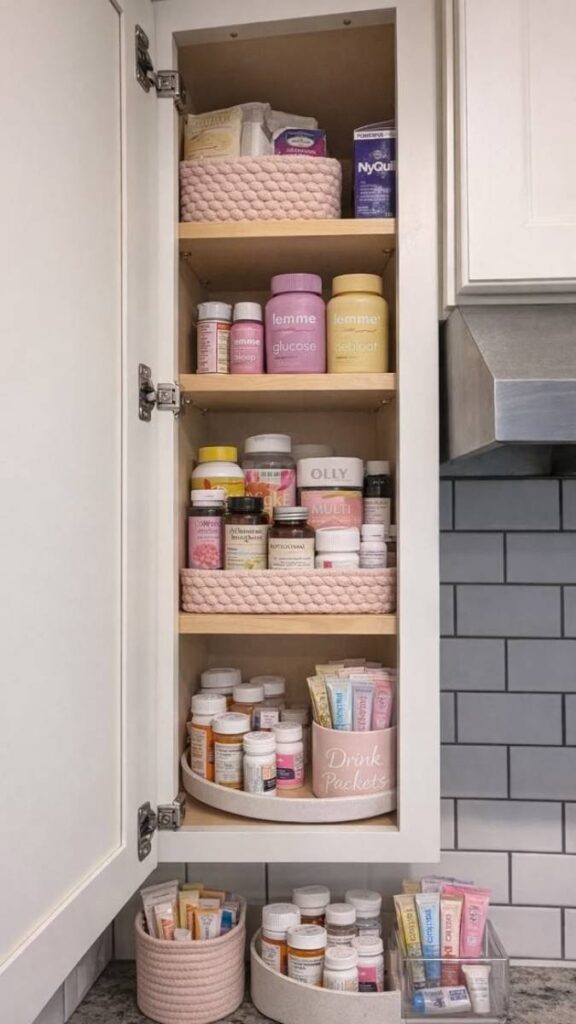
This one is about subtraction rather than addition. Vitamin bottles and supplement jars are among the most common counter clutters in kitchens they’re grabbed daily, so they never get put away.
Assigning them a dedicated shelf inside a cabinet near the breakfast area and building the habit of returning them keeps the counter cleaner without requiring any new storage product. A small tray inside the cabinet corrals them and makes them easy to find. The counter’s visual weight drops noticeably when daily-use items like these are consistently returned to their place.
Use a Narrow Shelf Cart Between the Fridge and Wall
The gap between the refrigerator and the adjacent wall or cabinet is often two to four inches wide enough to fit a slim pull-out pantry cart. These narrow carts, available in widths from two to six inches, slide in and out on wheels and hold an impressive amount of canned goods, spice jars, oil bottles, snack bags.
Using this dead space for storage reduces the burden on countertops considerably, since items that would otherwise sit on the counter now have a vertical home nearby. It’s one of the smarter small-kitchen upgrades available without any installation.
Corral Charging Cables in a Drawer with a Charging Station Insert
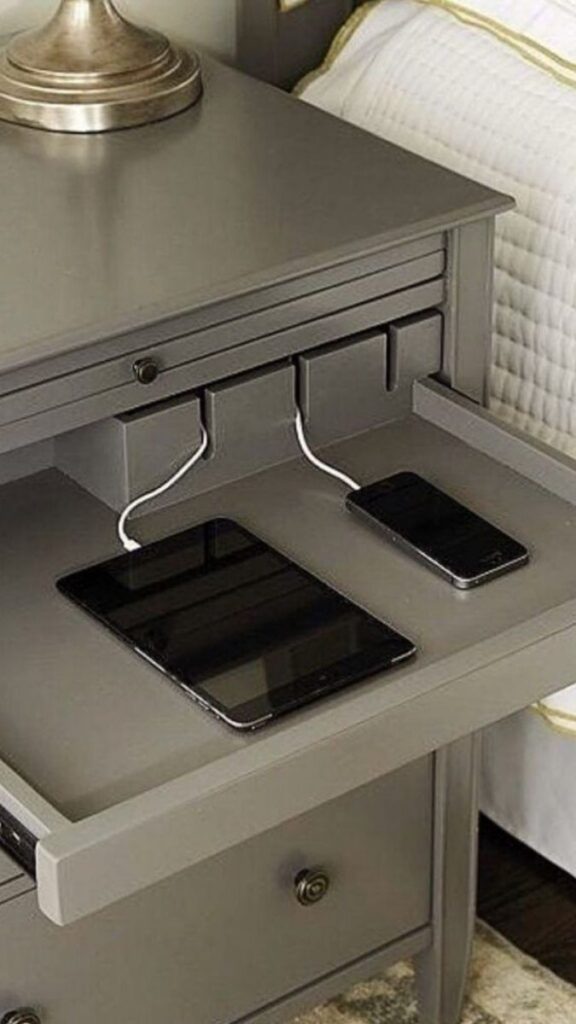
Phone chargers and random cables on the kitchen counter are the enemy of a clean surface. A drawer-based charging station, a simple insert with cable pass-throughs and device slots moves the charging process completely out of sight.
You thread the cable through, close the drawer, and the counter stays clear. Phones charge inside the drawer. This is particularly useful in open-plan kitchens where the counter is visible from the living area, because visible cables make even a tidy kitchen feel messy.
Use a Countertop Compost Bin with a Tight Lid
A compost bin without a lid becomes a visual and sensory problem quickly. A small countertop bin with a carbon filter lid roughly one liter handles daily food scraps without the odor issue and keeps the counter from accumulating vegetable peelings during cooking. Position it directly beside the prep area so scraps go in immediately rather than piling at the edge of the board. Stainless steel or matte ceramic bins in neutral tones blend into the kitchen without drawing attention. The presence of a defined scraps container also streamlines cleanup at the end of cooking.
Apply the “One In, One Out” Rule to Counter Appliances
No organization system survives appliance creep. The slow accumulation of a second toaster, an air fryer, a new blender, and a juicer will fill any counter regardless of how well it was organized before.
A one-in, one-out rule where a new appliance only enters the counter if an existing one is removed or stored elsewhere keeps the counter from gradually reclaiming clutter. Honestly, most kitchens function well with two or three appliances on the counter maximum. Anything used less than three times a week belongs in a cabinet. This is a system, not a product, and it’s what makes every other idea on this list actually stick.
What Actually Makes These Kitchen Counter Organization Ideas Work
Most counter organization fails not because of the wrong products but because of unclear zones. The counter ends up as a catch-all because nothing on it has a defined role.
The underlying principle behind every effective counter setup is zone logic: the counter near the stove handles cooking tools; the section near the sink handles cleaning and prep; the section near the entry or breakfast bar handles daily grab-and-go items. When each zone has a function, items naturally return to the right place rather than drifting wherever there’s space.
Lighting also plays a role that often goes unnoticed. Counters under upper cabinets with poor lighting tend to accumulate clutter because the space feels dark and underused. Adding under-cabinet LED strips, even plug-in puck lights, makes those surfaces feel like an active workspace, which changes how you treat them.
Finally, the ratio of surface-to-storage matters. If cabinet and drawer storage is genuinely insufficient for your kitchen’s contents, the counter will always absorb the overflow. Before investing in counter organizers, it’s worth evaluating whether the real issue is that cabinets need better internal organization first.
Kitchen Counter Organization Quick Setup Guide
| Idea | Space Type | Main Benefit | Difficulty | Budget Range |
| Tiered spice rack | Small–medium kitchens | Speeds up cooking | Easy | Low |
| Magnetic knife strip | Any kitchen | Frees counter space | Easy | Low–mid |
| Rolling slim cart | Small or galley kitchens | Adds prep surface | Easy | Mid |
| Under-cabinet paper towel mount | Any kitchen | Removes clutter near sink | Easy | Low |
| Rail system on backsplash | Modern kitchens | Flexible wall storage | Moderate | Mid |
| Pull-out pantry cart | Kitchens with side gaps | Uses dead space | Easy | Mid |
| In-drawer knife organizer | Any kitchen with prep drawer | Clears counter entirely | Easy | Low–mid |
| Floating shelf above counter | Small kitchens | Second storage tier | Moderate | Low–mid |
| Countertop compost bin | Any kitchen | Streamlines prep cleanup | Easy | Low |
| Clear canister set | Any kitchen | Standardizes dry good storage | Easy | Low–mid |
Common Kitchen Counter Mistakes That Make Your Space Feel Smaller
Keeping appliances you use rarely on the counter.
An air fryer used twice a month doesn’t earn permanent counter space. The test is simple if you haven’t reached for it in a week, it belongs in a cabinet. Appliances are the single biggest contributor to counter overcrowding.
No defined zones.
When the counter has no logic spices next to a phone charger next to a fruit bowl every item feels out of place, and the surface reads as chaotic even when it’s not technically dirty. Defining three or four zones (cooking, prep, coffee, daily-use) and keeping items within their zone makes the counter feel organized even on a busy day.
Underusing vertical space.
Most counters have 18 inches between the surface and the bottom of the upper cabinet. That space can hold a tiered rack, a small floating shelf, a rail system, or mounted storage. Keeping everything flat on the surface when vertical options exist is an efficiency miss.
Matching aesthetics over function.
A beautiful marble canister set that’s difficult to open, fills quickly, and doesn’t actually fit your dry goods quantity isn’t helping the counter, it’s just decorating it. I’ve noticed this tendency particularly with gift-style kitchen sets; they look cohesive in photos, but they don’t solve the actual storage problem.
Ignoring the back of the counter.
The inches between the backsplash and where items tend to sit are frequently wasted. A rail system, a standing spice rack, or a narrow tiered shelf pushed to the back uses that space without reducing the usable front counter area.
FAQ’s
What should always be on kitchen counters?
The short answer only what you use daily. Coffee maker, toaster (if used every morning), a knife block or crock of daily-use utensils, and one prep surface kept clear. Anything used less than daily is a candidate for cabinet storage.
How do I organize a small kitchen counter with limited space?
Focus on vertical solutions first a tiered spice rack, a rail system on the backsplash, or a small floating shelf above the counter. Then identify which appliances can move to a cabinet and only keep daily-use items on the surface. A rolling slim cart can also add prep space without permanently reducing floor area.
Is it better to keep appliances on the counter or in cabinets?
It depends on frequency of use. Daily-use appliances like a coffee maker belong on the counter because the friction of getting them out would reduce how reliably they’re used. Weekly-use appliances, blenders, toasters used a few times a week can go either way. Anything less frequent belongs stored away. The goal is that the counter only holds what earns its space.
What’s the best way to organize counter space in a rental kitchen?
Prioritize non-permanent solutions over-the-sink shelves, lazy Susans, countertop trays, adhesive-backed hooks, and freestanding organizers. Tension rods inside cabinets and under-cabinet adhesive strip lighting also add function without touching walls permanently.
How do I stop my kitchen counter from getting cluttered again?
The “one clear zone” rule helps most designate at least 18 inches of counter as a permanent no-clutter surface and treat it as a rule, not a goal. Pair it with the one-in, one-out principle for appliances and a weekly reset habit; even five minutes of returning items to their correct place prevents the slow creep of clutter.
What’s the difference between counter organization and pantry organization?
Counter organization focuses on items in active, daily use things you reach for while cooking or in the morning routine. Pantry organization handles stock and less-frequent items. The clearest sign that counter organization isn’t working is when pantry items (extra canned goods, backup bags of pasta) start living on the counter, which means the pantry system needs attention first.
How many appliances should be on a kitchen counter?
Most kitchen design guidelines suggest two to three maximum for a standard-sized counter. In smaller kitchens, one or two. The practical test is whether every appliance on the counter can be used without moving another one. If you’re constantly shuffling appliances to access others, there are too many out.
Conclusion
Kitchen counter organization isn’t a one-time project, it’s an ongoing system, and the most effective versions of it are the ones that fit how you actually cook, not how an idealized kitchen would function. Small adjustments in zones, vertical use, and a clear rule about what earns counter space add up to a kitchen that feels noticeably more workable.
Start with one or two ideas that address your specific frustration whether that’s appliance overflow, utensil clutter, or too little prep space. Get those working before adding more. The goal isn’t a perfect counter by the end of day; it’s a counter that’s easier to use tomorrow than it was yesterday.