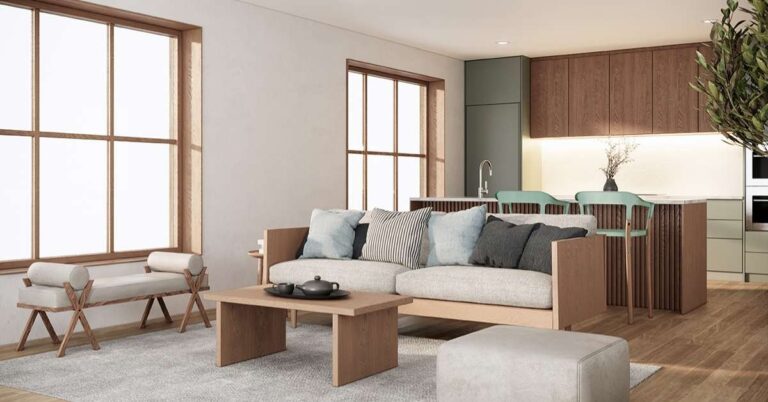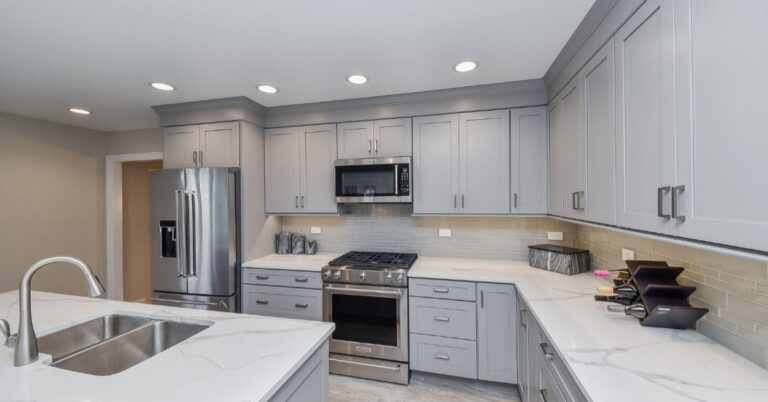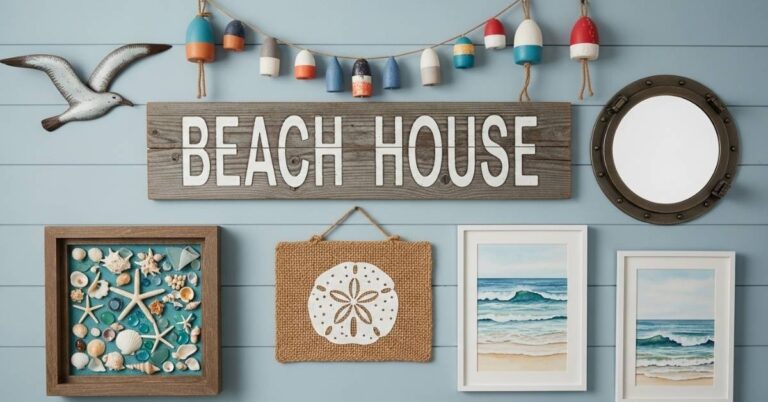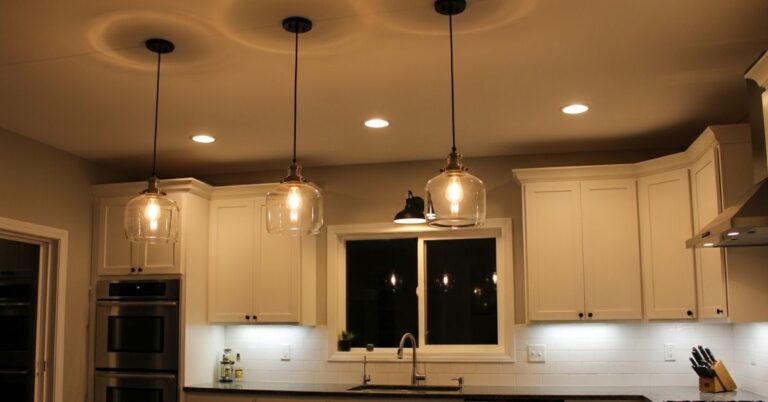
25+ Apartment Living Room Ideas to Make Any Small Space Feel Bigger
Small apartments have a way of feeling even smaller the moment you move your furniture in. You’ve got a couch, a coffee table, maybe a bookshelf and suddenly the room feels like a maze. Apartment Living Room Ideas Sound familiar? Here’s the truth: the size of your living room matters far less than how you use it.
Across the US, millions of renters are turning cramped, awkward small apartment living rooms into spaces that feel open, stylish, and genuinely livable. This guide gives you 25 real, actionable apartment decorating ideas pulled straight from the world of professional apartment interior design: no contractor required, no massive budget needed.
Whether you’re working with a 200-square-foot studio or a slightly more generous one-bedroom layout, these ideas will change the way you see your space. From multifunctional furniture to layered lighting, smart apartment color schemes to renter-friendly decor tricks, every idea here is designed to make your living room feel bigger, brighter, and more like you.
Small Apartment Living Room Ideas That Maximize Every Inch
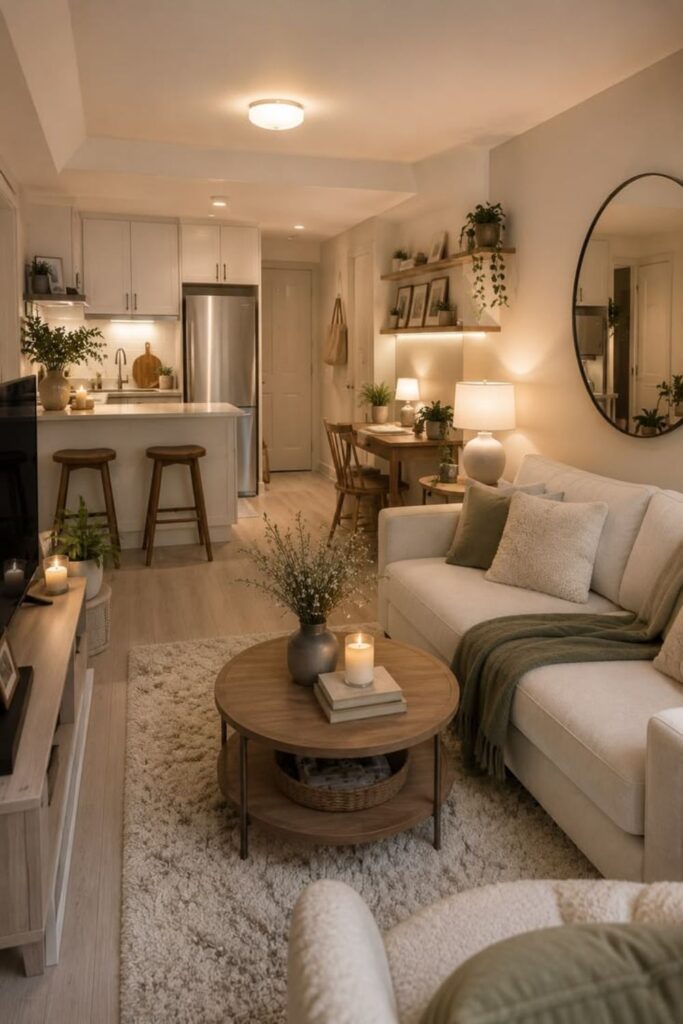
Every inch of a small apartment living room is valuable real estate. The biggest mistake most people make is treating their living room like a showroom placing a sofa against one wall, a TV on the opposite wall, and calling it done. That approach wastes the room’s real potential. Great compact living room design starts with intention.
You decide what the room needs to do, not just what it needs to look like. Think about room zoning, traffic flow, and how each area connects to the next. When you plan with purpose, even the tightest floor plan opens up in ways that genuinely surprise you.
The secret weapon of every well-designed small living room is vertical storage. Most renters think horizontally they spread furniture across the floor and wonder why the room feels crowded.
But walls go up, and that upward space is almost always underused. Tall bookshelves, floating shelves near the ceiling, wall-mounted art, and wall sconces instead of floor lamps all free up precious floor area. The more floor you expose, the bigger the room looks. It’s not magic, it’s visual psychology, and it works every time.
Break the Room Into Functional Zones
Room zoning is one of the most powerful tools in apartment interior design. It’s the practice of dividing a single open room into distinct areas each with its own purpose without building a single wall. In a cozy apartment living room, you might have a watching zone anchored by the sofa and TV, a reading nook tucked into a corner, and a small work area near the window.
Each zone feels separate even though the room is one open space. The trick is using furniture, rugs, and lighting to signal where one zone ends and another begins.
An area rug is your best friend here. Place one under the sofa and coffee table to define the main conversation area, and suddenly the living zone has clear boundaries. A floor lamp positioned beside a reading chair anchors that corner as a distinct spot. You don’t need room dividers or walls to make this work.
Visual balance does the heavy lifting. When each zone has its own anchor piece, a rug, a light source, a key furniture item the whole room feels organized and intentional rather than cluttered and confused.
Make Room for a Home Office Without Losing Living Space
Working from home is the new normal for millions of Americans, and carving out a workspace inside a small apartment living room is one of the trickiest design challenges around.
The good news is that space-saving furniture has come a long way. A slim console table placed behind the sofa works beautifully as a standing desk during the day and disappears into the room’s aesthetic at night. Fold-down wall desks are another genius solution: they fold flat against the wall when you’re off the clock, giving you back your living room instantly.
Functional design is all about pieces that earn their place. A narrow storage ottoman near your workspace can hold office supplies, charging cables, and notebooks and doubles as extra seating when you have guests.
Floating shelves above the desk area keep your work materials organized without eating into floor space. The goal is a workspace that slots into the living room seamlessly, so your home office doesn’t make your living room feel smaller or more chaotic during your downtime.
Read More About: Farmhouse Living Room Ideas: 27 Cozy, Modern & Rustic Designs for Every Home
Convert Unused Corners Into Practical Living Areas
Corners are the most overlooked spots in any apartment layout ideas conversation. They tend to become dead zones empty, awkward, and collecting dust. But a corner, treated right, becomes one of the most charming parts of a cozy apartment living room.
A tall corner bookshelf uses vertical storage brilliantly, drawing the eye upward while keeping books, plants, and decor organized. A floor-to-ceiling corner unit makes the ceiling height feel grander and the room feel more substantial.
Another underrated corner move is the window seat. If your apartment has a corner window, a simple bench with storage underneath transforms it into a reading nook, extra seating, and a storage solution all in one.
Add a throw pillow or two and a small table lamp, and that corner becomes the coziest spot in the apartment. Even a tall, sculptural plant placed in a corner adds life and dimension without crowding the floor plan. Never let a corner go to waste it’s free real estate you’re already paying for.
Apartment Living Room Layout Ideas for Better Flow

Living room layout shapes how a space feels more than almost any other design decision. A poorly arranged room makes you feel like you’re navigating an obstacle course every time you walk through. Good apartment layout ideas prioritize traffic flow the natural paths people walk through the room. As a general rule, keep at least 30 to 36 inches of clear walkway between furniture pieces.
This keeps movement comfortable and the room feeling open rather than cramped. Pulling furniture slightly away from the walls (even just a few inches) also creates a more relaxed, curated feel that professional designers use constantly.
The focal point of your living room should be the first thing you decide on. In most open concept apartment layouts, the focal point is either the TV, a fireplace, or a large window. Every other piece of furniture should orient toward it.
This creates a natural sense of order and gives the room a clear visual anchor. When a room lacks a focal point, the eye doesn’t know where to land and the space feels unsettled. Pick your focal point first, then build your layout around it.
Use Furniture to Define Separate Areas
In an open floor plan apartment, furniture does the job that walls would otherwise do. A sectional sofa placed in the center of a room rather than against the wall creates an immediate sense of separation between the living area and the rest of the space.
The back of the sofa acts as a soft boundary, one side is for lounging, the other side flows into the dining area or entryway. This approach works especially well in studio apartment living Install Subtle Room Dividers for Open-Concept Apartments
Not every open concept apartment dweller wants a completely open look. Sometimes you want a bit of visual privacy between spaces especially if your living room flows directly into a bedroom in a studio layout. The good news is that renter-friendly decor has solved this beautifully.
Curtain panels hung from ceiling-mounted tension rods create an elegant, soft division between spaces. They’re removable in minutes and leave zero damage behind. Sheer panels keep the space feeling light while still creating a sense of separation.
Open-backed bookshelves are another brilliant divider option. They let light pass through while still creating a visual boundary. Slatted wood panels, folding screens, and macramé room dividers are all stylish, renter-friendly decor choices that add texture and personality while carving up the open floor plan.
The key is choosing dividers that feel intentional rather than makeshift. When your room divider doubles as a decor piece, a beautiful bookshelf, a sculptural screen it adds style points to the room rather than subtracting them.
Create a Conversation-Friendly Seating Arrangement
A great conversation area is the heart of any living room. Yet in small apartment living rooms, most people default to lining furniture up against walls which actually makes the room feel less welcoming and more institutional.
Interior designers consistently recommend pulling seating inward and facing chairs and sofas toward each other. This creates warmth and intimacy even in small spaces. The sweet spot for sofa-to-coffee-table distance is about 18 inches close enough to reach your drink comfortably, far enough to walk past without bumping your shins.
The U-shape and L-shape seating configurations work especially well for apartment seating ideas in compact spaces. A sectional sofa or a sofa paired with two armchairs creates a natural U-shape that invites conversation and makes the room feel like a destination rather than just a passageway.
Keep the traffic flow clear by making sure there’s always an obvious path from the entrance to the other areas of the apartment. When people can move through a room easily, the space feels generous even when it isn’t.
Read More About: Best Awkward Living Room Layout Ideas: 25 Smart Ways to Fix Challenging
Apartment Living Room Furniture Ideas for Small Spaces
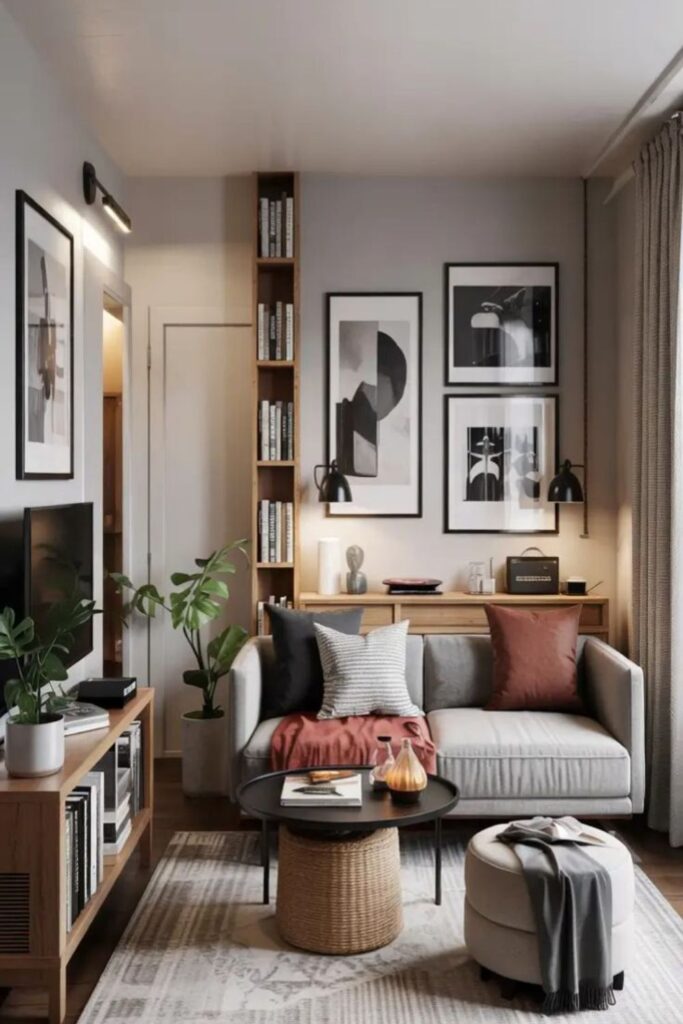
Apartment furniture ideas live and die by one principle: scale. Furniture that’s too big for the room makes the space feel like it’s being swallowed whole. Furniture that’s too small makes the room feel underfurnished and awkward. Getting the scale right is the single most important step in any compact living room design project.
Before you buy anything, measure your room and tape out the furniture footprint on the floor. It sounds tedious but it saves you from the devastating mistake of buying a beautiful sofa that physically doesn’t fit.
Space-saving furniture is the backbone of a well-designed small living room. The US furniture market has exploded with clever options in recent years: pieces that fold, expand, stack, or serve multiple functions at once.
A dining table that folds against the wall, a coffee table with lift-top storage, a sofa that converts to a guest bed aren’t compromises. They’re smart design choices that make your apartment work harder for you without making it look like a college dorm room.
Choose Apartment-Size Sofas and Loveseats
“Apartment-size” is an actual furniture industry term, and it matters enormously in small space decorating. An apartment-size sofa typically measures under 84 inches wide. That might not sound like a huge difference from a standard sofa but in a small living room, those extra inches mean the difference between a room that flows and one that feels blocked.
Look for sofas with tight backs (rather than loose cushion backs), track arms (rather than rolled arms), and legs that lift the piece off the floor. Visible floor beneath the sofa makes the room feel more open because your eye can travel under the furniture.
The loveseat is another underrated hero of apartment furniture ideas. Two-seater loveseats offer the same comfort as a full sofa in roughly 30% less space. Pair one with a pair of accent chairs rather than a second sofa, and you’ve created a conversation area that feels curated and intentional.
Brands like Article, West Elm, and IKEA all offer excellent apartment-scale options that don’t sacrifice comfort for size. Always check the sofa’s depth to a shallower seat depth (around 34 to 36 inches) keeps the piece from dominating the room visually.
Use Slim Coffee Tables and Multi-Functional Pieces
The coffee table is the workhorse of the living room but in a small apartment living room, the wrong one eats up precious floor space without giving much back. Glass-top coffee tables are a perennial favorite in compact living room design for good reason: they’re visually lightweight.
The eye passes right through them, making the floor appear larger than it actually is. Acrylic and lucite options offer the same effect at a lower price point. If glass isn’t your style, look for tables with slim profiles, hairpin legs, or open lower shelves instead of solid bases.
Nesting tables are another brilliant solution for apartment furniture ideas in tight spaces. They tuck together when you need the floor clear and spread out when you have guests.
A storage ottoman used as a coffee table is perhaps the smartest dual-purpose piece of all; it provides a surface for drinks and remotes, opens up for blanket and game storage, and offers extra seating when people come over. In small space decorating, every piece needs to earn its square footage by doing more than one job.
Add Poufs and Ottomans for Flexible Seating
Apartment seating ideas don’t always require full-size chairs. Poufs are one of the most flexible seating options available; they’re lightweight, movable, and double as footrests when you’re relaxing solo.
A pair of well-chosen poufs tucked under a console table or beside the sofa adds seating capacity without permanently claiming floor space. When guests arrive, pull them out. When they leave, tuck them back. That kind of flexibility is genuinely valuable in an apartment where every square foot matters.
A storage ottoman takes this idea even further. Round, rectangular, tufted, or streamlined storage ottomans come in every style imaginable and offer hidden interior space that’s perfect for throw blankets, board games, remote controls, and anything else that tends to create visual clutter in a living room.
Draping a folded throw blanket over the top of an ottoman adds organic textures and warmth to the room while keeping the piece looking styled rather than purely utilitarian. It’s one of the easiest apartment accessories upgrades you can make.
Modern Apartment Living Room Ideas Inspired by Interior Design Trends
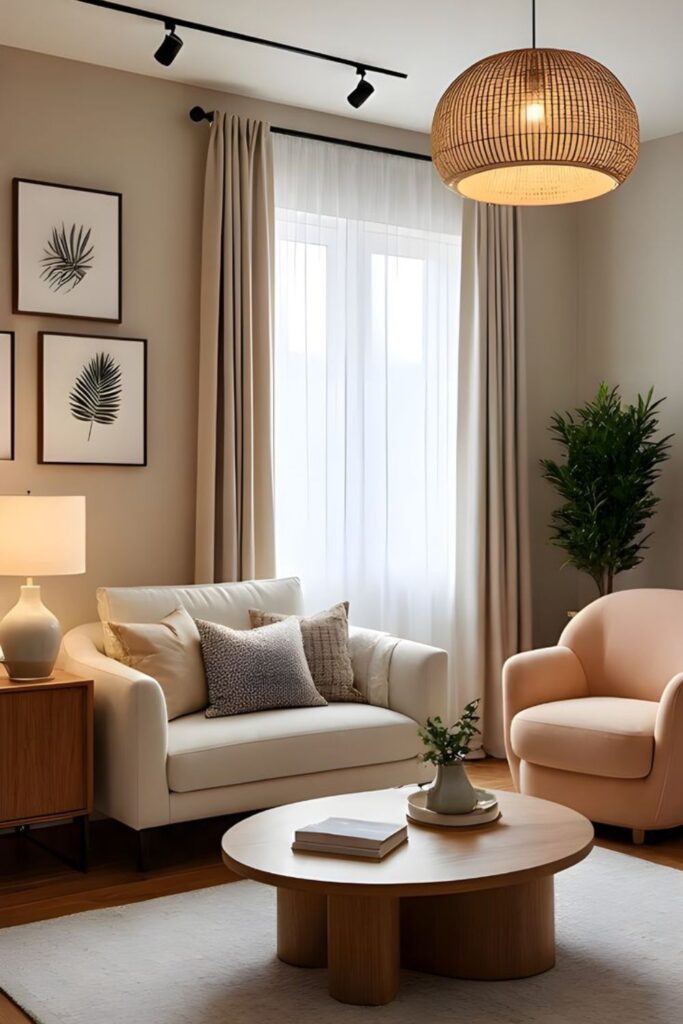
Home decor trends move fast but the best modern apartment decor ideas have staying power because they’re built on good design principles rather than fleeting fads. The three approaches covered here have been shaping US apartment interior design conversations for the past couple of years and show no sign of slowing down.
They work particularly well in small spaces because they prioritize intention over accumulation, quality over quantity, and purpose over clutter. Whether you’re starting fresh or refreshing an existing room, these directions give you a strong, stylish framework to build from.
Interior styling at its best doesn’t feel like it’s trying too hard. The most admired personalized living spaces in the US design world right now are ones that feel collected and evolved rather than purchased all at once from a single catalog.
Mixing pieces with different histories, textures, and scales creates a room with depth and character. That’s what separates a truly beautiful modern apartment decor setup from one that just looks like a floor display.
Embrace Minimalist Modern Styling
Minimalist decor gets misunderstood constantly. People hear “minimalist” and picture cold, empty white rooms with nowhere comfortable to sit. Real minimalist decor is warmer and more intentional than that. It’s about choosing fewer things but making each thing count.
In a modern aesthetic living room, that means a sofa you genuinely love, a coffee table that serves a real function, and decor items that you actually care about rather than things you bought just to fill space. Every item in the room should have either a practical purpose or a personal meaning. Preferably both.
The neutral color palette is the foundation of most minimalist small living rooms. Whites, creams, warm grays, and soft beiges create a calm backdrop that makes the room feel larger and more serene.
Add one bold accent color through a single throw pillow grouping, a piece of statement artwork, or a plant pot to keep the room from feeling flat. The modern aesthetic works especially well in apartments with good natural light sunlight bouncing off pale walls and organic textures makes the room glow, and that warmth is what makes minimalism feel inviting rather than sterile.
Mix Old and New Decor for a Curated Look
The design world has a phrase for this approach: “collected over time.” The most interesting apartment design inspiration accounts on social media aren’t showcasing rooms full of brand-new furniture.
They’re showing spaces where a vintage rattan chair sits next to a sleek modern sofa, where a grandmother’s oil painting hangs above a contemporary floating shelf, where a thrifted side table hosts a brand-new table lamp. That contrast between old and new creates visual balance and makes a room feel like it has a genuine story rather than a price tag.
For US renters, this approach is both stylistically rewarding and budget-smart. Facebook Marketplace, thrift stores, Etsy, and local estate sales are full of beautiful vintage pieces at a fraction of retail cost.
The classic interior design “rule” is one antique or vintage piece per room; it anchors the space in something real and personal. Pair it with cleaner, more contemporary design pieces and you’ve created a personalized living space that looks intentional and unique. That’s what great apartment styling tips are all about.
Incorporate Bold Shapes and Statement Pieces
One of the most exciting home decor trends shaping apartment interior design right now is the embrace of bold, sculptural forms. Arched floor lamps, kidney-shaped coffee tables, egg chairs, fluted side tables, and curved mirrors are everywhere in US design circles and for good reason.
A single statement artwork or statement furniture piece gives the eye something to land on and makes the whole room feel more designed. It signals to anyone who walks in that this space was put together with intention.
Contemporary design in small spaces benefits enormously from one standout piece. The trick is restraint: one statement is powerful, three statements become noise. Choose your most dramatic piece first, then build the rest of the room around it quietly.
If you go with an arched floor lamp, keep the sofa simple. If your statement artwork is bold and graphic, let the surrounding decor breathe. The visual balance between the dramatic and the understated is what makes a room feel cohesive rather than chaotic.
Read More About: Living Room Accent Wall Ideas: 35 Stylish Designs for Every Home
Apartment Decor Ideas That Add Personality
Apartment wall decor is where a rental finally starts to feel like a home. Bare walls are the telltale sign of a space that hasn’t been fully settled into yet. Filling them thoughtfully with art, texture, color, and personal meaning transforms a generic box into a personalized living space.
The approaches below don’t require a huge budget or major commitment. They work within renter restrictions and deliver visual impact that punches well above their cost.
Small space decorating is often more about layering than it is about buying more stuff. A wall that combines framed art, a textured hanging, and a small wall sconce feels rich and intentional. A wall with just a single poster in a cheap frame feels unfinished.
The difference isn’t money it’s layering. Build your apartment wall decor in layers, starting with the largest piece and adding smaller elements around it until the composition feels balanced and complete.
Create a Gallery Wall That Reflects Your Style
A gallery wall is one of the most effective apartment wall decor strategies available to renters. Done well, it fills a large wall with personality, draws the eye upward to make ceiling height feel greater, and turns your personal taste into the room’s focal point.
The key to a gallery wall that looks intentional rather than chaotic is planning it on paper (or on the floor) before you put a single nail in the wall. Lay out your frames on the floor, arrange them until the composition feels balanced, then transfer the layout to the wall.
Mix frame sizes deliberately large, medium, and small rather than using uniform frames throughout. This variation creates visual balance and keeps the eye moving across the arrangement.
Include a mix of art types too: a photographic print, an abstract painting, a typographic piece, and maybe a small mirror or two. For renter-friendly decor, 3M Command Strips handle most lightweight frames beautifully and come off cleanly without damaging walls. Always check the weight limit on the package and use the appropriate number of strips per frame.
Add Textured Wall Art for Depth and Interest
Two-dimensional art is wonderful but textured fabrics and three-dimensional wall pieces add something flat art simply can’t: physical depth. Woven wall hangings, macramé panels, ceramic wall tiles, and fabric tapestries create shadow and dimension on the wall that changes subtly throughout the day as the light shifts.
In a small apartment living room where floor space is at a premium, moving decor interest onto the walls is one of the cleverest apartment decorating ideas you can employ.
Warm neutrals dominate the best-selling textured wall art in US home decor stores right now cream, sand, terracotta, and warm gray weavings complement virtually any apartment color scheme and add organic textures without competing with other decor elements.
Position a large woven piece above the sofa as a soft alternative to framed artwork, or cluster several smaller textile pieces together for a bohemian-inspired gallery wall effect. The tactile quality of these pieces makes a room feel more sensory and layered which, paradoxically, makes it feel more spacious.
Use Wallpaper as Artwork
Peel-and-stick wallpaper has genuinely revolutionized renter-friendly decor. A decade ago, renters were stuck with whatever wall color came with the apartment. Now, you can apply a stunning botanical print, a dramatic geometric pattern, or a moody dark texture to an accent wall and peel it off cleanly when you move out.
Used on a single accent wall behind the sofa or TV, peel-and-stick wallpaper creates a focal point that looks completely custom and intentional from the moment guests walk in.
The apartment wall decor possibilities with removable wallpaper extend beyond full walls too. Frame a section of wallpaper inside an oversized picture frame for a graphic, large-scale art piece that costs almost nothing.
Paper the back of a bookshelf to add color and depth to an otherwise plain storage unit. Use a bold pattern on the inside of a closet door visible from the living room for a fun surprise element. Brands like Spoonflower, Tempaper, and Chasing Paper have excellent US-based options in hundreds of patterns and colorways.
Color and Pattern Ideas for Apartment Living Rooms
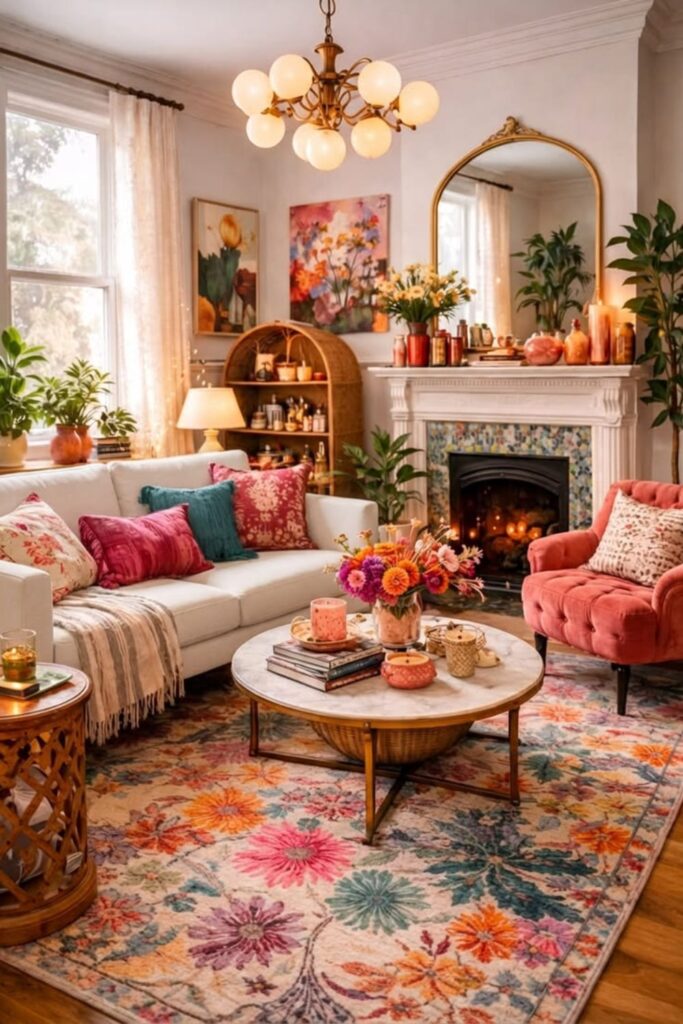
Apartment color schemes are one of the most powerful and most affordable levers in any apartment makeover. Color affects how large a room feels, how much natural light appears to fill the space, and how emotionally comfortable the room feels to be in. Pale, cool colors tend to recede visually making walls feel farther away and the room feel bigger.
Warm, dark colors advance visually making walls feel closer and the room feel more intimate. Neither approach is wrong: it depends entirely on the effect you want to create in your personalized living space.
Pattern adds energy and personality to apartment color schemes, but it needs to be handled with care in small rooms. Too many competing patterns create visual clutter that makes a compact room feel even tighter.
The secret is choosing patterns that share a common color family and varying them by scale: one large pattern, one medium, one small so they complement each other rather than fight. Think of it like a chord in music: three notes that harmonize sound rich, three notes that clash just sound loud.
Pick an Accent Color for Cohesion
The 60-30-10 color rule is one of the most useful frameworks in all of apartment interior design. Sixty percent of the room should be your dominant color (usually a neutral color palette white walls, a beige sofa, a light wood floor). Thirty percent should be a secondary color that adds some weight and contrast (a charcoal rug, dark wood furniture, deep navy curtains).
Ten percent should be your bold accent color, the pop that ties everything together and gives the room its personality. Terracotta, sage green, mustard yellow, and cobalt blue are particularly popular bold accent colors in US apartment color schemes right now.
The magic of the accent color approach is that it creates cohesion without making the room feel monotonous. When your accent color appears in the throw pillows, a piece of statement artwork, a plant pot, and a book stack on the coffee table, the room feels deliberately curated.
Your eye picks up the repeated color and reads the room as a considered, unified design. This sense of cohesion is what separates a thoughtfully designed cozy apartment living room from one that just looks like a collection of random things.
Mix Patterns Without Overwhelming the Room
Pattern mixing is an art form and it’s one that intimidates a lot of renters. The fear is real: mix the wrong patterns and the room looks chaotic. But the solution is simpler than most people think. Stick to patterns that share at least one common color, and vary their scale deliberately.
A large-scale botanical print on a throw pillow pairs beautifully with a medium-scale stripe on another pillow and a small-scale geometric on a third. The shared color creates harmony; the varied scale creates interest.
In compact living room design, a good general rule is three patterns maximum throughout the room. More than that starts to feel busy in a small space. Let your area rug carry the largest pattern, your throw pillows the medium pattern, and your curtains or a single decorative accessory the smallest.
Keep everything else in solid colors that pull from the pattern’s palette. This way, the room feels layered and rich without tipping into overwhelming, which is the sweet spot for apartment color schemes in small living rooms.
Match the Sofa to the Walls for a Spacious Feel
This is one of those apartment styling tips that sounds counterintuitive until you see it in action. When your sofa is a similar tone to your walls, both cream, or both warm gray, or both soft taupe, the visual break between the two disappears. The eye doesn’t register the sofa as a separate, heavy object interrupting the wall. Instead, the two elements blend together, and the room appears larger and more cohesive.
This “tonal dressing” technique is used by professional interior styling experts constantly, particularly in small spaces.
The approach works best with warm neutrals, creamy whites, warm beiges, and light greiges rather than stark cool whites or stark bright whites. A warm-toned room simply feels more welcoming and livable than a cool-toned one, which can feel clinical in small doses.
Once you’ve established your tonal base, introduce contrast through darker textured fabrics, organic textures, and your bold accent color in smaller doses. The contrast reads as intentional and curated rather than visually fragmented.
Storage Ideas for Apartment Living Rooms
Apartment storage solutions are a necessity, not a luxury especially in US apartments where closet space is notoriously limited. The living room tends to absorb overflow from every other room: books, remotes, chargers, blankets, board games, and a dozen other items that don’t have a dedicated home. Without deliberate apartment organization ideas, this overflow becomes visual clutter, and visual clutter makes small rooms feel even more compressed. The goal is to give everything a place and to make that place look good.
Apartment organization ideas that actually work in small living rooms combine concealed storage (so clutter disappears) with displayed storage (so the room still has personality and warmth). Closed cabinets, storage ottomans, and baskets hide the mess. Open floating shelves and curated bookcases display the things worth showing. The balance between hidden and visible storage is what keeps a small living room feeling both organized and alive.
Use Enclosed Storage to Reduce Visual Clutter
Built-in storage is the gold standard of apartment storage solutions but it’s rarely available to renters. The next best thing is furniture that mimics the look and function of built-ins: media consoles with closed-door compartments, sideboards with drawers and cabinet sections, and entertainment units with a mix of open and closed storage. These pieces contain clutter efficiently and keep the room’s visual surface calm and clean.
Every item that disappears behind a closed door is one less thing competing for the eye’s attention.
Wicker and rattan baskets placed inside open shelving units offer a hybrid approach that’s particularly popular in current home decor trends. The baskets contain the mess while adding organic textures and warmth to the room. Label them if you need to (a small chalkboard tag works beautifully), and you’ve created a storage system that’s both functional and attractive.
This approach aligns perfectly with the warm neutrals and natural materials trend dominating US apartment interior design right now.
Add Open Shelving Without Making the Room Feel Crowded
Floating shelves are one of the most versatile tools in the apartment storage solutions toolkit. They provide display and storage space without any floor footprint, which makes them ideal for compact living room design. The styling challenge is keeping them from looking cluttered which is why the “rule of thirds” approach is so useful.
On any given shelf, aim for roughly one-third books or functional items, one-third decorative objects, and one-third empty space. That empty space is not wasted space, it’s breathing room, and it’s what keeps the shelf from feeling overwhelming.
Color-coordinating your books (arranging them by spine color rather than by title or author) is a simple trick that makes open shelving look dramatically more polished and intentional. It reduces the visual noise of dozens of different book spines competing for attention and turns the bookshelf into a quiet, cohesive display.
Add a small plant, a candle, and one or two small decorative objects to each shelf section for warmth and texture. The result is apartment wall decor that’s also genuinely functional which is exactly the spirit of smart apartment organization ideas.
Take Shelving All the Way to the Ceiling
Floor-to-ceiling shelving is one of the most impactful design moves available in any small apartment living room. When shelving runs all the way from the floor to the ceiling, it does something remarkable to the room: it makes the ceiling feel higher. The eye follows the vertical line of the shelving upward and registers the full height of the room rather than stopping partway up the wall.
This optical effect is one of the most powerful tools in small space decorating, and it works in virtually every apartment regardless of actual ceiling height.
The IKEA BILLY bookcase hack adding crown molding to the top of standard BILLY units to make them look built-in has become one of the most popular apartment makeover projects in the US for exactly this reason. The result looks completely custom and costs a fraction of genuine built-in shelving.
Use the upper shelves (above eye level) for display and decorative items, and the lower shelves for genuinely functional storage. This keeps the most visually active part of the shelving at eye level where you’ll appreciate it most, while maintaining the dramatic floor-to-ceiling visual impact.
Apartment Living Room Lighting Ideas for a Brighter Space
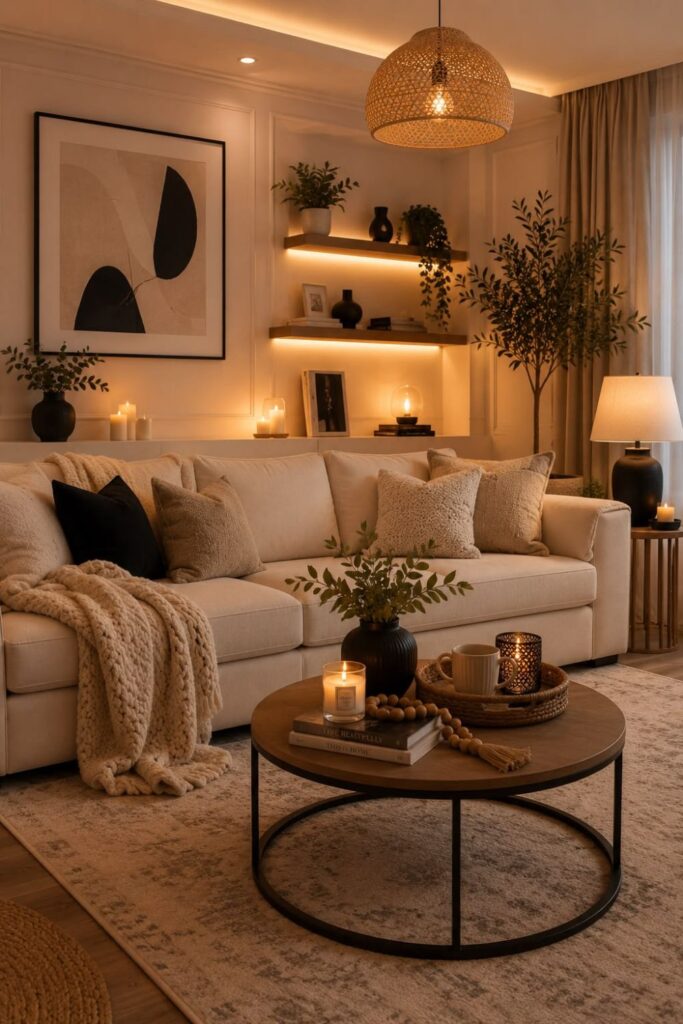
Apartment lighting ideas are one of the most transformative and most underutilized tools in small space decorating. Light shapes how large a room feels, how warm it feels, and how alive it feels at different times of day.
A living room with a single overhead bulb casting flat, cool light feels small and institutional no matter how well it’s furnished. Layered lighting combining ambient, task, and accent sources creates depth, warmth, and the sense of a room that’s been thoughtfully designed from the ground up.
Natural light is always the starting point. Whatever natural light your apartment gets, maximize it. Keep window treatments light and sheer rather than heavy and dark. Don’t block windows with tall furniture.
Consider the window’s position when arranging your layout orient seating toward windows rather than away from them. In apartments with limited natural light, supplement strategically with warm-toned bulbs (2700K to 3000K color temperature) that mimic the warmth of sunlight rather than the cold blue of office fluorescents.
Add Wall Sconces to Free Up Floor Space
Wall sconces are a revelation in apartment lighting ideas for small living rooms. A floor lamp takes up roughly four to six square inches of floor real estate, small, but meaningful in a tight space. Replace one floor lamp with a pair of wall sconces on either side of the sofa or fireplace, and you reclaim that floor area while adding a lighting source that feels more architectural and intentional. Battery-operated, plug-in wall sconces are available in dozens of styles and require zero hardwiring making them a perfect renter-friendly decor solution.
Position wall sconces at roughly eye level when seated (around 60 inches from the floor) for the most flattering and functional light. They work beautifully flanking a gallery wall, on either side of a mirror, or as bedside-style lighting in a studio apartment where the living room and sleeping areas share the same space.
The warm, directional light they cast adds layered lighting depth that a single overhead fixture simply cannot achieve and that depth is what makes a room feel designed rather than just lit.
Use Mirrors to Amplify Natural Light
Decorative mirrors are the oldest trick in the small-space design book and they remain one of the most effective. A large mirror placed on the wall opposite a window reflects natural light back into the room, effectively doubling the apparent brightness of the space. In apartments with limited window exposure, this effect can be genuinely dramatic. A floor-to-ceiling leaning mirror or an oversized wall-mounted mirror can make even a dark, north-facing living room feel significantly brighter and more open.
Beyond the light-reflecting function, decorative mirrors add visual depth that extends the perceived space of the room. The reflection creates the impression of a room beyond the wall a visual trick that’s been used in restaurant and retail design for decades for the same reason it works in apartments.
Mirrored cabinet doors, mirrored trays on the coffee table, and small mirror clusters as part of a gallery wall all contribute to this light-amplifying effect without requiring a single large mirror. Even small mirrored accents cumulatively increase a room’s sense of brightness and spaciousness.
Layer Lighting for a Designer Look
Layered lighting is the single biggest difference between an apartment living room that looks professionally designed and one that looks like a rental. The three layers are ambient (general overhead light), task (focused light for specific activities like reading or working), and accent (decorative light that highlights objects or architectural features).
Most apartments come with only ambient lighting the overhead fixtures. Adding task and accent layers is what creates the warmth, depth, and dimensionality that make a room feel truly designed.
A practical layered lighting setup for a small apartment living room might include: one overhead fixture on a dimmer switch for ambient light, a floor lamp beside the reading chair for task light, a table lamp on the console table for warm ambient fill, and LED strip lights behind the TV or along a bookshelf for subtle accent lighting.
Smart bulbs like Philips Hue allow you to adjust color temperature and brightness from your phone, shifting from bright, cool light for daytime productivity to warm, dim light for evening relaxation. This flexibility is one of the most worthwhile apartment lighting ideas investments you can make.
Renter-Friendly Apartment Living Room Ideas That Won’t Risk Your Deposit
Security deposits in US cities are significant. In many markets, that deposit represents two or three months’ rent money you very much want back. The good news is that renter-friendly decor has advanced enormously in the last decade.
Products specifically designed for renters now make it possible to add color, texture, pattern, and personality to an apartment without leaving a single mark behind. You don’t have to live with bare white walls and generic flooring just because you’re renting. You just have to be strategic about how you customize.
The best renter-friendly decor ideas do double duty: they look great and they come off cleanly. Peel-and-stick wallpaper removes without residue. Command Strips hold frames without damaging paint. Tension rod curtain systems require no drilling.
Free-standing furniture acts as room dividers without touching the walls. Every one of these solutions lets you build a beautiful personalized living space that leaves no evidence it ever existed when it’s time to move out.
Temporary Wall Treatments That Look Custom
Peel-and-stick wallpaper has become the reigning champion of renter-friendly decor wall treatments. The quality has improved dramatically today’s options are thicker, more realistic-looking, and far easier to apply than early versions.
Applied to a single accent wall behind the sofa, a botanical or geometric print creates a custom-looking focal point that completely transforms the room. Brands like Tempaper and Chasing Paper offer sophisticated, design-forward patterns specifically developed for renters who want a high-end look without permanent commitment.
Beyond wallpaper, fabric wall hangings mounted on tension curtain rods make another excellent renter-friendly decor wall treatment. A large piece of fabric pinned to the wall with removable adhesive strips adds color and textured fabrics without a single nail hole.
Large canvas prints leaned against the wall rather than hung are also increasingly popular in US apartment interior design; they look artfully casual and require zero wall contact. The apartment wall decor opportunities for renters today are genuinely impressive, and none of them put your deposit at risk.
Damage-Free Ways to Display Artwork
3M Command Strips are the renter’s best friend but they come with weight limits that are easy to exceed if you’re not careful. Always check the package for the maximum weight rating and err on the side of using more strips rather than fewer. For heavier artwork, picture ledges are a far safer option: they require just two small screws, can hold multiple frames at once, and allow you to rearrange your display without making new holes every time. A single 48-inch picture ledge can hold five to eight frames in a layered, dynamic arrangement that looks far more interesting than frames hung individually.
Wire gallery systems that hook onto door frames or window casings are another clever solution for displaying statement artwork without wall damage. Propped art frames leaned on mantels, shelves, windowsills, and floating shelves rather than hung is also having a major design moment right now.
This approach looks intentionally casual and curated, is completely damage-free, and makes rearranging your apartment wall decor as easy as picking up a frame and moving it. It’s one of those apartment styling tips that simultaneously solves a practical problem and looks genuinely stylish.
Budget Apartment Living Room Ideas That Look Expensive
Great apartment design inspiration doesn’t require a great budget. Some of the most beautifully designed small apartments in the US were put together on shoestring budgets by people who understood where to spend their money and where to save it.
The secret is distinguishing between investment pieces that justify a higher price because you use them constantly and they anchor the room and accessories, where affordable choices look just as good as expensive ones if chosen carefully.
Small space decorating on a budget is also a creativity exercise. Constraints force resourcefulness, and resourcefulness often leads to more interesting, more personal results than unlimited spending.
The most characterful apartment design inspiration accounts on US social media platforms are built around thrifted finds, DIY projects, and clever repurposing, not catalog shopping. A spray-painted thrift store side table, a custom-framed art print, a plant propagated from a cutting: these small, intentional choices build a personalized living space that no amount of catalog furniture can replicate.
Affordable Decor Upgrades With High Visual Impact
The fastest and most affordable way to refresh a cozy apartment living room is a new set of throw pillows and a quality area rug. These two items do more for a room’s look and feel than almost any other single change, and neither requires a major investment.
A set of three coordinated throw pillows of varying sizes, complementary colors and textured fabrics can completely transform the feel of a sofa that’s been in the room for years.
An area rug grounds the seating arrangement, adds color and pattern, and makes the room feel warmer and more complete.
Plants are another high-impact, low-cost upgrade that deserves far more credit than it gets in apartment decorating ideas conversations. A large pothos, a snake plant, a rubber tree, or a fiddle-leaf fig adds color, life, organic textures, and a sense of scale to a room that no manufactured decor item can fully replicate. Position a tall plant in a corner that would otherwise go unused and watch the room immediately feel more lived-in and welcoming.
Spray-painting old hardware, picture frames, and even lamps in matte black or brushed gold is another virtually free upgrade that modernizes a space instantly.
Where to Splurge and Where to Save
The smartest apartment furniture ideas budget strategy is identifying your true investment pieces items you use every single day and that anchor the room’s entire design and putting your money there while saving everywhere else.
The sofa is almost always the right place to spend more. You sit on it every day; it defines the entire living room’s character; and a cheap, poorly made sofa looks cheap, feels cheap, and falls apart within a couple of years.
| Worth the Splurge | Easy to Save On |
| Quality sofa (used daily, defines the room) | Throw pillows (rotate seasonally from Target) |
| A great area rug (anchors the whole space) | Side tables (IKEA, thrift stores, Facebook Marketplace) |
| Statement lighting fixture (sets the mood) | Decorative accessories (thrift and style) |
| One quality statement artwork piece | Smaller prints and photos (Etsy digital downloads) |
| Storage ottoman (multi-functional investment) | Throws and blankets (TJ Maxx, HomeGoods) |
The best places to find affordable apartment accessories in the US include IKEA, Target’s threshold line, Wayfair sale sections, TJ Maxx, HomeGoods, and Facebook Marketplace for secondhand finds. With the splurge-and-save approach, your living room can look like it cost three times what it actually did and that’s the whole point.
Apartment Living Room Ideas by Interior Design Style
Apartment design inspiration is deeply personal; your living room should reflect who you are, not just what’s trending on Pinterest this season. The four interior design styles below represent the most popular directions in US apartment interior design right now, each with its own philosophy, palette, and approach to compact living room design.
Understanding which style resonates most with you gives you a coherent framework for making decisions so you stop second-guessing every purchase and start building a room that genuinely feels like home.
Each of these styles approaches small space decorating differently. Minimalism strips things back to essentials. Mid-century modern furniture uses form and warmth. Industrial design embraces raw, unfinished elements.
Maximalism celebrates abundance. None of them is inherently better than the others, the best style is the one that makes you feel most at home when you walk through the door.
Modern Apartment Living Rooms
The modern aesthetic in a small apartment living room is defined by clean lines, a restrained neutral color palette, and furniture with low profiles and simple silhouettes. Nothing competes for attention; every piece earns its place. Minimalist decor is the natural companion to the modern style, both prioritising quality over quantity and negative space as a design element in its own right.
In a modern apartment living room, the sofa is typically a low-arm, tight-back design in a neutral fabric. The coffee table is glass, metal, or light wood. The walls are kept mostly clear except for one or two pieces of statement artwork.
Contemporary design updates this baseline with current trends, curved forms, textural contrast, and warm materials replacing the cooler, more austere modern interiors of earlier decades. Today’s modern apartment living rooms in the US tend to incorporate warm neutrals alongside the cleaner lines, making the space feel sophisticated but not cold.
LED wall sconces, architectural floor lamps, and integrated layered lighting are essential in a modern living room; they provide functional light while doubling as sculptural decor elements.
Mid-Century Modern Apartment Living Rooms
Mid-century modern furniture is one of the most enduringly popular styles in US apartment interior design and it works beautifully in small spaces. The style is characterized by tapered wooden legs (which lift furniture off the floor and keep rooms feeling open), organic silhouettes, warm wood tones, and a color palette that mixes warm neutrals with mustard yellow, olive green, burnt orange, and teal.
A classic mid-century modern furniture living room setup might include a low-slung teak sofa, an Eames-inspired lounge chair, a tulip-style side table, and a sunburst mirror above the focal point wall.
The beauty of mid-century modern furniture for small apartments is its inherent sense of proportion. Mid-century pieces tend to be appropriately scaled for apartment living, not oversized or overstuffed. They also age beautifully: well-made mid-century pieces look better with time and wear, developing a patina that adds character.
Finding genuine vintage mid-century pieces at thrift stores, estate sales, and Facebook Marketplace is both possible and rewarding and mixing vintage originals with modern reproductions is exactly the kind of old-meets-new approach that makes a personalized living space feel truly curated.
Industrial Apartment Living Rooms
Industrial apartment interior design takes its cues from converted warehouse and loft spaces exposed brick, raw metal, reclaimed wood, and Edison bulb lighting. In a standard apartment that lacks architectural warehouse elements, the style is achieved through material choices and apartment accessories that reference that industrial aesthetic.
Concrete-look accent walls (achieved with paint or removable wallpaper), black metal shelving units, leather sofas, and vintage-style Edison bulb floor lamps all contribute to the look without requiring actual exposed ductwork or brick.
The industrial palette is darker and moodier than many other apartment styles, think charcoal, navy, brown leather, warm brass, and deep wood tones. This darker approach can feel risky in a small apartment, but the key is layered lighting.
Industrial living rooms rely heavily on table lamps, floor lamps, and warm Edison bulbs to counteract the visual weight of dark materials with pools of warm, glowing light. The contrast between the raw, dark materials and the warm light sources creates a living room that feels dramatic, cozy, and genuinely characterful.
Maximalist Apartment Living Rooms
Maximalism is the joyful rejection of the “less is more” philosophy and in a small apartment living room, it takes real skill to execute well. The maximalist approach celebrates pattern, color, texture, and personal collections.
Gallery walls cover every available surface. Bold accent colors appear throughout the room in layers. Bookshelves are full. Plants are everywhere. Objects of personal meaning, travel souvenirs, inherited pieces, collections of pottery or vintage cameras share space with art and textiles. The room feels abundant, expressive, and completely alive.
The critical rule for maximalist compact living room design is editing. Maximalism isn’t about keeping everything, it’s about curating abundance with intention. Every object in a maximalist room should be something you genuinely love. Things you merely tolerate get edited out ruthlessly.
The result is a room that looks full but not cluttered, layered but not chaotic. Keep larger furniture pieces in more neutral tones so they don’t compete with the decorative abundance happening around them. This gives the eye a resting place amid all the richness and that balance is what separates successful maximalism from a room that simply overwhelms.
Interior Design Trends Shaping Apartment Living Rooms This Year
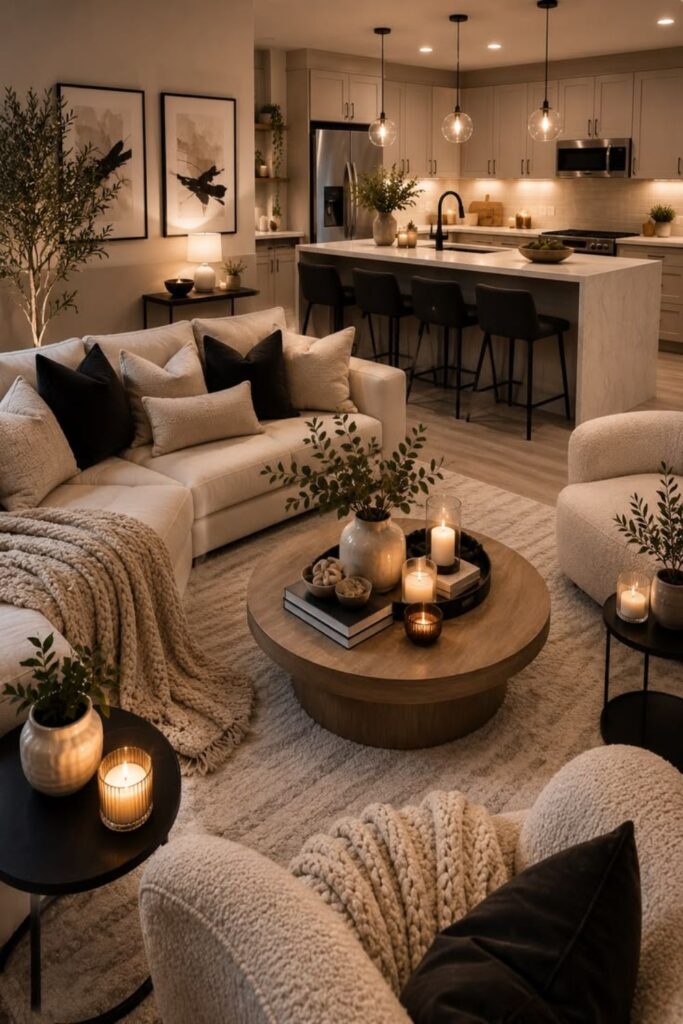
Home decor trends in the US are moving in a consistently warm, natural, and human direction. After years of cool-toned minimalism dominating apartment interior design conversations, the pendulum has swung toward warmth, warm materials, warm colors, warm textures, and an increased emphasis on sustainability and authenticity.
The three trends below are particularly relevant for small apartment living rooms because they all prioritize comfort, intentionality, and the idea that a home should feel genuinely lived-in rather than styled for an Instagram photo.
What’s especially encouraging about these home decor trends is that they’re accessible regardless of budget. Warm neutrals cost no more than cool grays. Secondhand sustainable finds often cost less than new.
Curved furniture and organic shapes are available at every price point from IKEA to high-end design studios. These are trends built around feeling and philosophy rather than expensive purchases which makes them ideal for US renters working with real-world budgets.
Warm Neutrals and Natural Materials
The shift from cool gray to warm beige, cream, camel, and terracotta has been one of the most pronounced home decor trends of recent years. Cool gray dominated US apartment color schemes for most of the previous decade now it feels dated in a way that warm neutrals simply don’t. Warm neutrals are more flattering under artificial light, more forgiving with different wood tones, and more welcoming to a broader range of bold accent colors. They also pair beautifully with natural materials like linen, jute, rattan, cotton, wool, and solid wood that are simultaneously on-trend and timeless.
Natural materials introduce organic textures into a living room in a way that manufactured materials simply can’t replicate. A jute area rug has a texture and natural variation that a synthetic rug lacks. A rattan side table has warmth and character that a plastic laminate table will never have. These materials age gracefully, which matters particularly for renters who move their belongings from apartment to apartment and need pieces that look good across different spaces and contexts. Investing in natural materials is both aesthetically rewarding and genuinely sustainable over time.
Curved Furniture and Organic Shapes
Curved furniture has moved from niche design statement to mainstream staple in US apartment interior design and the timing makes sense. After years of sharp-edged, rectilinear furniture dominating the market, there’s a collective hunger for softer, more human-feeling forms.
Organic shapes in furniture, rounded sofa arms, curved coffee table edges, arched mirror frames, oval dining tables soften the hard geometry of a boxy apartment and create a more relaxed, welcoming atmosphere. They also, interestingly, improve traffic flow in small spaces because rounded furniture edges don’t create the same sharp corners that rectilinear pieces do.
The bouclé curved sofa is the defining furniture piece of this trend and it has earned its ubiquity. The combination of organic shapes and textured fabrics (bouclé is a looped, textured fabric with a tactile richness that photographs beautifully and feels even better in person) creates a sofa that is simultaneously a statement artwork and a genuinely comfortable place to spend time.
Pair a curved sofa with a round coffee table and an arched floor lamp and you’ve created a seating arrangement that feels distinctly current, warm, and thoughtfully designed.
Sustainable Decor Choices for Apartments
Sustainable decor is no longer a niche interest; it’s entering the mainstream of US apartment interior design conversations, driven by a growing awareness of both environmental impact and the practical benefits of buying well rather than buying often. For renters, sustainable decor choices are particularly practical: secondhand and vintage pieces are portable, durable, and often more interesting than new mass-produced alternatives.
They also tend to hold their value better; a quality vintage piece bought at a thrift store for $40 can be resold for the same price or more when it’s time to move.
Non-toxic paints, FSC-certified wood furniture, natural materials like wool and cotton rather than synthetic alternatives, and energy-efficient smart bulbs for layered lighting are all straightforward sustainable decor choices that benefit both the environment and the quality of your living space.
Buying fewer, better things the philosophy that underpins sustainable decor also happens to align perfectly with the needs of compact living room design. A small apartment doesn’t have room for excess anyway. Sustainable decor and small-space living are, in many ways, natural partners.
FAQ’s
How do you make a small apartment living room look bigger?
Make a small apartment living room look bigger by using light wall colors, mirrors, and plenty of natural light to create an open feel. Choose multi-functional furniture with slim profiles and keep the layout uncluttered. Adding vertical storage and a few large décor pieces instead of many small ones can also make the space feel more spacious.
What furniture works best in an apartment living room?
The best furniture for an apartment living room is space-saving and multifunctional. Choose a compact sofa, nesting tables, storage ottomans, and wall-mounted shelves to maximize space. Furniture with clean lines and lighter colors helps the room feel larger and more open.
How can I decorate my apartment living room on a budget?
Decorating an apartment living room on a budget is all about making smart, affordable updates. Use thrifted furniture, DIY décor, and inexpensive throw pillows or rugs to add personality without overspending.
Add mirrors to make the space feel larger, and use peel-and-stick wallpaper or removable art for a stylish upgrade. Layer lighting with floor lamps and table lamps to create a warm, inviting atmosphere.
Conclusion
Making a small apartment living room feel bigger isn’t about having more square footage. It’s about using what you already have more intelligently, more intentionally, and more creatively. The 25 apartment living room ideas covered in this guide give you a complete toolkit: from room zoning and living room layout strategies to multifunctional furniture, layered lighting, smart apartment storage solutions, and renter-friendly decor that protects your deposit while transforming your space.
Start with one change. Move your furniture away from the walls. Hang a mirror opposite your window. Add a floor lamp to a dark corner. Replace three random throw pillows with three coordinated ones in your chosen accent color. Small, intentional changes compound quickly and before long, the apartment living room you’ve been tolerating becomes the cozy apartment living room you actually love coming home to. Your space is smaller than you’d like. But it’s also yours and with the right apartment design inspiration, that’s more than enough to work with.