81+ Japandi Color Palette Ideas That Make Any Room Feel Calm, Collected
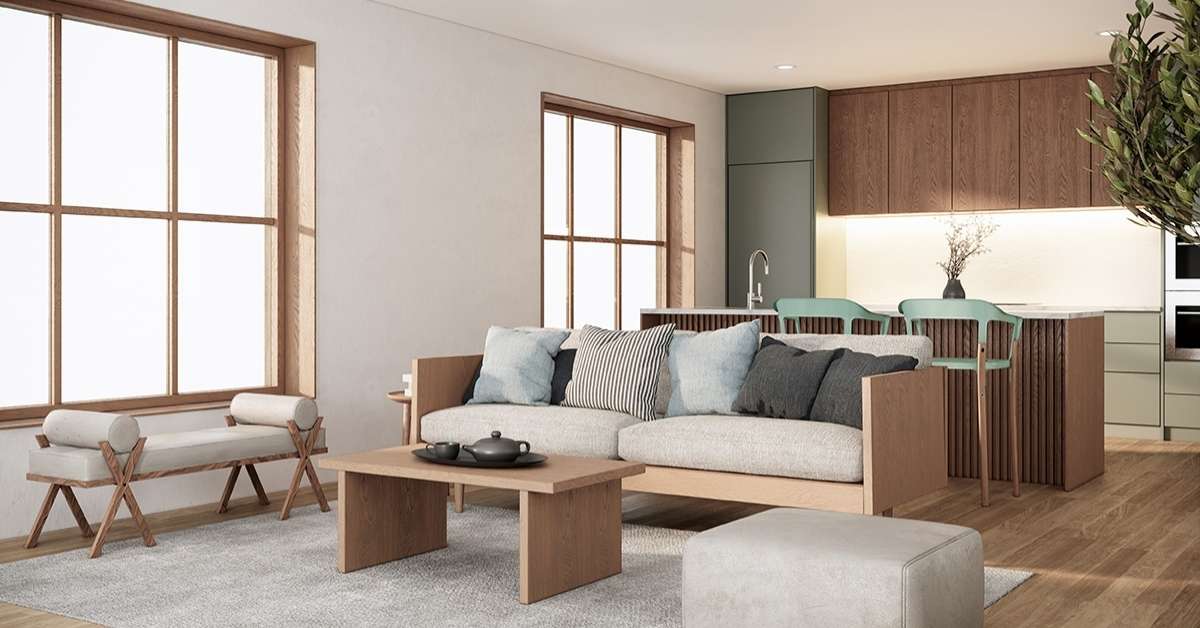
If your space feels visually noisy, too many competing tones, finishes that clash, or a general sense that nothing quite settles the problem is often color before it’s anything else. Japandi’s color approach fixes this quietly. It’s not about going all-white or stripping everything back to bare wood. It’s about building a palette that holds together across different lighting conditions, materials, and furniture scales.
Japandi color palettes pull from two distinct design traditions: Japanese wabi-sabi and Scandinavian hygge and the overlap is where the real magic lives: warm neutrals, muted earthen tones, soft organic greens, and the occasional grounded dark accent. The result is a room that feels complete without feeling decorated.
If your style leans minimal, cozy, or naturally toned or you’re working with a smaller space that needs visual cohesion without feeling closed in, this is worth reading through fully. These aren’t just color swatches. Each idea here is a full palette direction with real spatial logic behind it.
Warm White Walls With Ash Wood and Stone Gray Accents
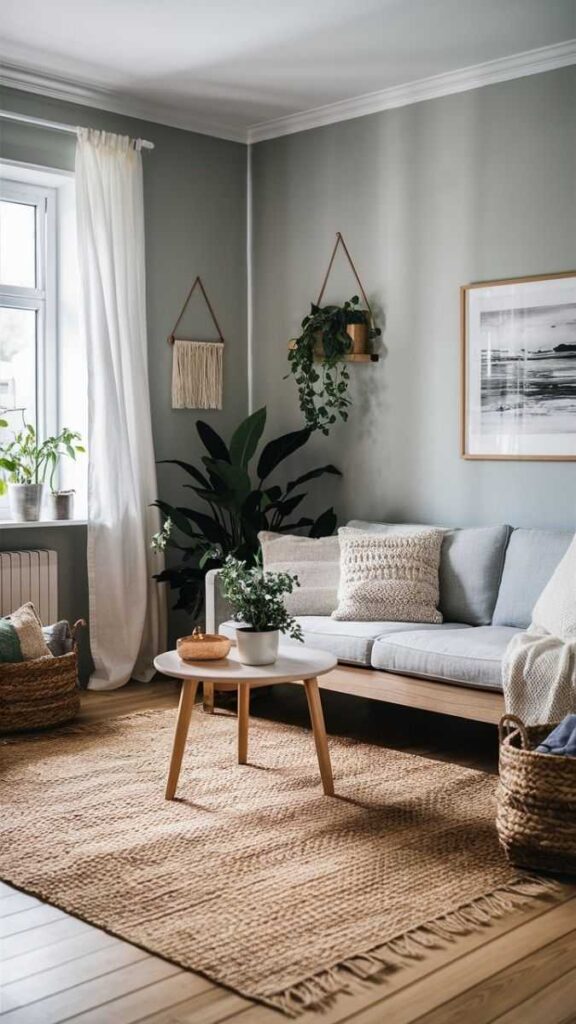
Most white walls read cold under anything but direct sunlight. The fix is choosing a white with a faint yellow or pink undertone think rice paper or unbleached linen rather than crisp gallery white. Pair this with ash wood furniture in its natural, unsealed tone and introduce stone gray through textiles: a linen sofa, a woven throw, a ceramic lamp base.
The three-tone combination of warm white, pale ash, and cool gray creates visual balance because each element occupies a different temperature on the spectrum. This setup works especially well in north-facing rooms where light tends to flatten cooler palettes. It solves the common problem of a space that looks clean but feels sterile.
Greige Walls Anchored by Dark Walnut Furniture
Greige, the blend of gray and beige, is one of the most versatile base tones in Japandi design because it reads differently depending on what surrounds it. Against dark walnut furniture, it softens. Against linen or cream, it warms up. The key is keeping the walnut pieces low-profile: a platform bed, a long console, a low coffee table. This keeps the visual weight grounded without the room feeling heavy.
Add a cream or oat boucle rug to bridge the contrast between the dark wood and pale walls. In my experience, this combination works especially well in open-plan spaces where you need one consistent palette to carry across zones without repetition. It solves the problem of rooms that feel unanchored too light everywhere with nothing to hold the eye.
Soft Sage Green With Natural Linen and Pale Birch
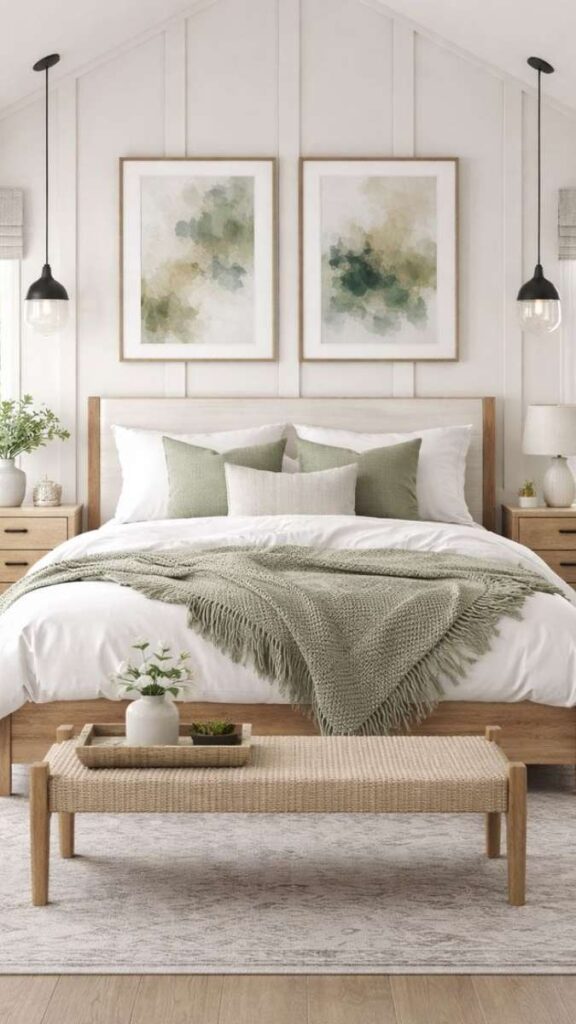
Sage green sits in a unique position in the Japandi palette; it reads as both a neutral and a color depending on what surrounds it. Against pale birch wood and undyed linen, it becomes almost earthy rather than decorative. The result is a room that feels like it grew from the materials rather than being designed around them. This works best in bedrooms or reading nooks where the goal is quiet calm rather than energy.
Place the pale birch furniture near natural light sources; the wood picks up the green undertones from the walls and ties the whole palette together without any additional layering. This is one I’d actually recommend trying first if you’re new to Japandi color. It’s forgiving and hard to get wrong.
Charcoal Accent Wall Behind a Low Timber Bed Frame
A single charcoal wall is not black, not dark gray, but specifically a warm-toned charcoal does something interesting in a Japandi bedroom. It doesn’t darken the room so much as it creates depth, making the opposite wall feel farther away. The low timber bed frame becomes the bridge between the dark wall and the lighter room.
Keep bedding simple: white or off-white cotton with no pattern. Add one ceramic lamp on a small side table for directional warmth. This palette direction works well in larger bedrooms that feel too airy or unresolved. The charcoal grounds the space without requiring additional furniture or decor to fill it. It solves the problem of rooms that feel finished but somehow still empty.
Clay and Terracotta Tones With Matte Black Hardware
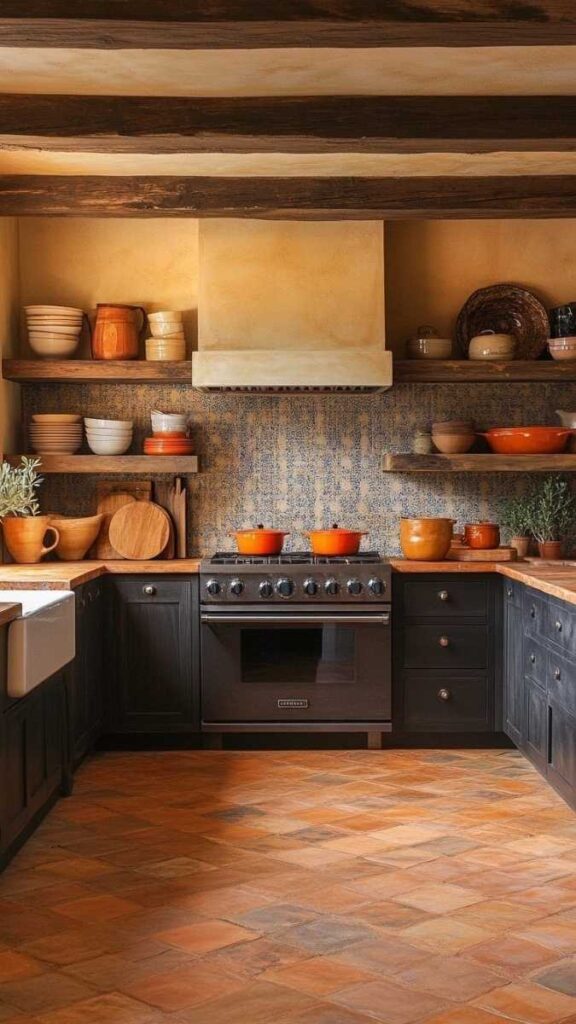
Clay sits at an interesting edge in Japandi palettes; it’s earthy enough to feel natural but warm enough to avoid the coldness that sometimes creeps into minimalist design. In a kitchen, clay cabinetry (either painted or in a natural clay render) with matte black hardware creates contrast that’s sharp without being harsh.
The black acts as a visual anchor, stopping the warmth of the clay from going soft or undefined. Keep countertops in a pale stone or concrete tone to maintain the muted palette. This setup works particularly well in galley kitchens or smaller cooking spaces where you want visual interest without pattern or color competing for attention.
Read More About: 80+ Bedroom Lighting Ideas That Actually Change How Your Room
Off White and Undyed Linen With Wabi-Sabi Ceramic Tones
This is arguably the most traditional Japandi palette and also the most misunderstood. It’s not about going beige. It’s about layering tones that each have a slightly different temperature: off-white walls, undyed linen upholstery, sand-toned ceramics, and pale stone accessories.
The variation keeps the room from feeling flat. What makes it work spatially is that no single element draws more attention than another; the eye moves evenly across the room rather than catching on any one piece. This approach is ideal for renters who can’t paint, since the palette is carried entirely through furniture, textiles, and objects. It also solves the most common Japandi complaint: rooms that look good in photos but feel cold to live in.
Warm Taupe Walls With Olive Green Textiles and Oak Wood
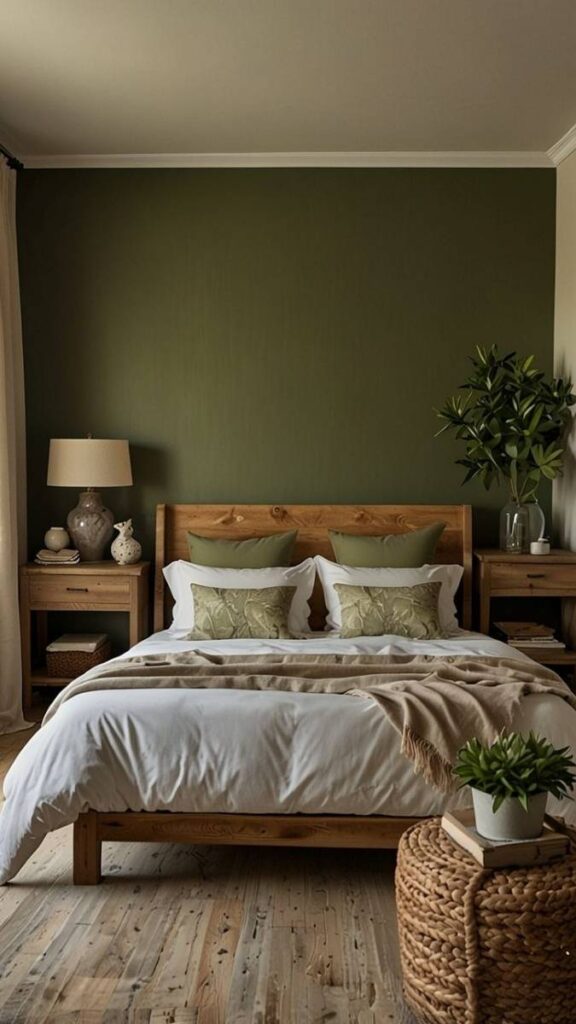
Taupe reads differently depending on its undertone: some lean pink, some lean green, some lean gray. For Japandi, choose a taupe with a green or brown base rather than a red one. When paired with olive green textiles and natural oak, it creates a palette that feels grounded in the natural world without being overtly “nature-themed.”
The olive green works as the connective tissue between the warm wall tone and the cooler wood. Use it in cushions, a throw blanket, or a single upholstered chair rather than as a wall color. In a living room with limited natural light, this combination holds warmth even in the evening under incandescent lighting.
Deep Forest Green Walls With Cream and Warm Timber
Forest green is having a moment in 2026 Japandi interiors specifically because designers are moving away from the all-neutral approach toward more intentional, grounded color. Deep forest green on a single wall or an entire small room creates an enveloping quality that actually makes smaller spaces feel more considered rather than cramped.
The key is pairing it correctly: cream upholstery prevents the green from becoming oppressive, and warm timber shelving adds the natural material contrast that stops it from reading as simply dark. This works best in rooms with purpose: a study, a reading corner, a dining room rather than in transitional spaces like hallways.
Muted Dusty Blue With Sand and Bleached Wood
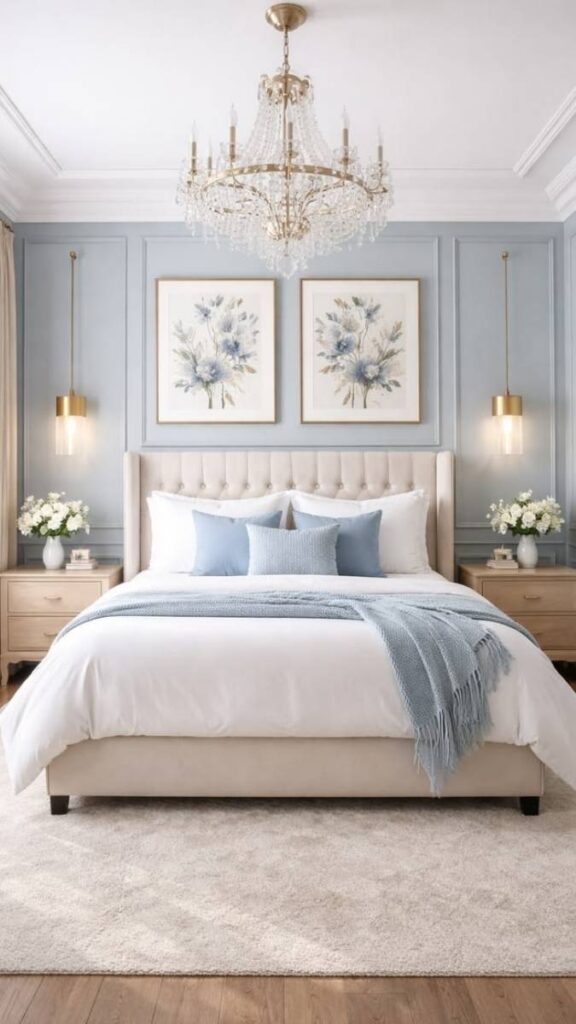
Dusty blue is one of the few cooler tones that fits naturally into a Japandi palette because its muted, grayed quality brings it closer to a neutral than a color. Against bleached wood oak or ash that’s been limed or left to lighten naturally it reads as calm and airy without feeling cold. Sand-toned bedding in linen or cotton provides the warmth needed to balance the blue.
This palette is particularly effective in bedrooms that receive morning light, where the dusty blue shifts toward a soft lavender tone early in the day. It solves the common issue of wanting color without disrupting the quiet visual rhythm that makes Japandi spaces feel restful.
Read More About: 79+ Japandi Kitchen Design Ideas That Make Small Spaces
Mushroom Brown and Pale Stone With Black Iron Details
Mushroom brown, a mid-tone that’s neither gray nor beige but sits firmly between them functions as a quiet anchor in a Japandi palette. Upholstered in a sofa or an armchair, it grounds the room without the visual weight of darker tones. Pale stone accessories (side tables, sculptures, decorative objects) lighten the palette and add material contrast. Bring in black through iron or steel details: a floor lamp, curtain rods, a side table frame. The black reads as a sharp edge against the soft muted tones, adding definition without disrupting the overall calm. This works especially well in living rooms where you need the space to feel usable without being visually busy.
Raw Concrete Tones With Warm Beige and Natural Hemp
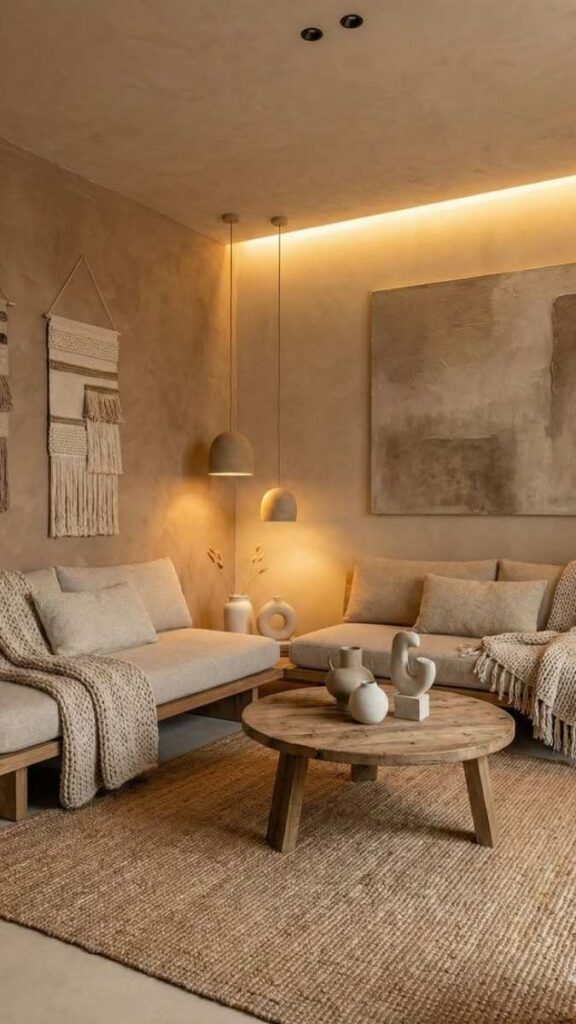
Concrete doesn’t have to mean cold. When the concrete tone leans warm toward sand or pale gray-brown rather than blue-gray it becomes one of the most versatile Japandi base tones available. In apartments or loft spaces where the concrete is structural, this is a significant advantage: work with the existing tone rather than against it.
Add warm beige upholstery and natural hemp or jute textiles to pull the palette toward organic warmth. Solid wood furniture particularly in darker species like walnut or teak completes the contrast between raw industrial and natural material. This palette direction solves the challenge of spaces that feel unfinished or overly industrial without softening them to the point of losing their character.
Ivory and Cream Layering With Rattan and Pale Timber
Layering within a single tone family ivory, cream, off-white, eggshell is a technique that works precisely because the differences are subtle enough to feel intentional rather than accidental. The material contrast does the heavy lifting: linen sofa, rattan occasional chair, pale timber table, sheer cotton curtains.
Each material reflects light differently, which creates visual texture even though the palette is technically monochromatic. This approach works well in smaller spaces where a complex palette would feel cluttered. It also solves a common rental problem when you can’t change walls or floors, controlling color through textiles and furniture alone can still produce a fully cohesive result.
Warm White and Charcoal With Handmade Ceramic Accents
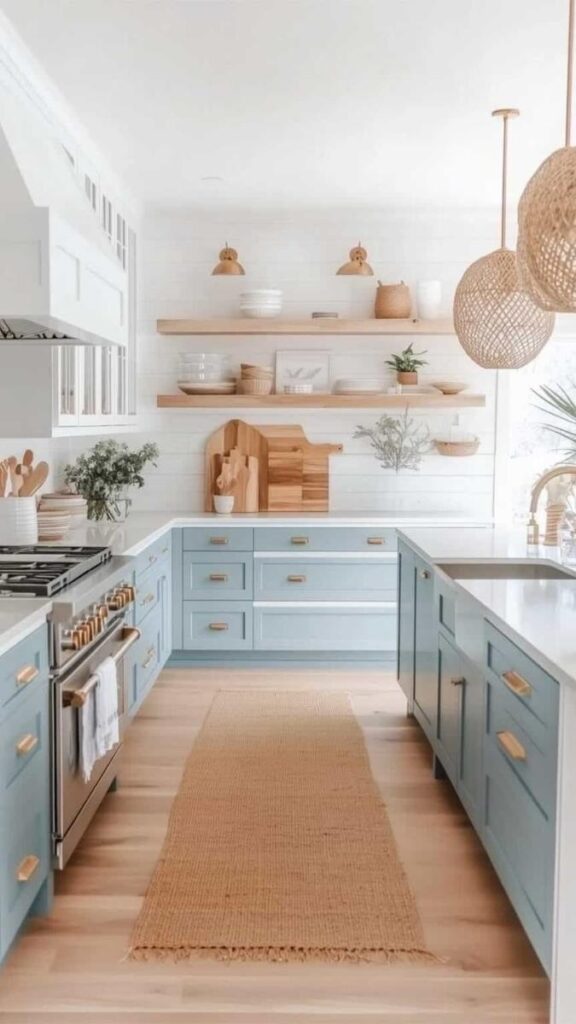
The warmth-charcoal pairing is foundational in Japandi color because it mirrors the natural contrast of light and shadows the core visual principle in Japanese aesthetics. The critical detail is keeping the charcoal genuinely warm-toned rather than blue-based; a blue-gray charcoal will fight the warmth of the white rather than complement it.
Handmade ceramic accents in sand, ash, or unglazed tones add the imperfect texture that stops this palette from looking too controlled. In a dining room, this combination creates a backdrop that makes the table itself and the people around it the focal point rather than the decor.
Pale Lavender-Gray With White Oak and Unglazed Pottery
Lavender-gray sits at the cooler edge of the Japandi palette, but when it’s sufficiently muted and grayed closer to a whisper of purple than an actual lavender it works beautifully as a bedroom wall tone. Against white oak furniture, the cooler wall pushes the wood’s warmth forward, making it feel richer without changing anything material about the finish. Unglazed pottery in earthy tones provides the textural grounding.
This is a palette that performs well in south-facing rooms with strong afternoon light, where the lavender quality of the wall becomes more visible and creates a genuinely calming visual effect. I’ve noticed this palette tends to look best in photographs taken in late afternoon light which also makes it a strong Pinterest performer.
Earthy Ochre Accents Against a Neutral Greige Base
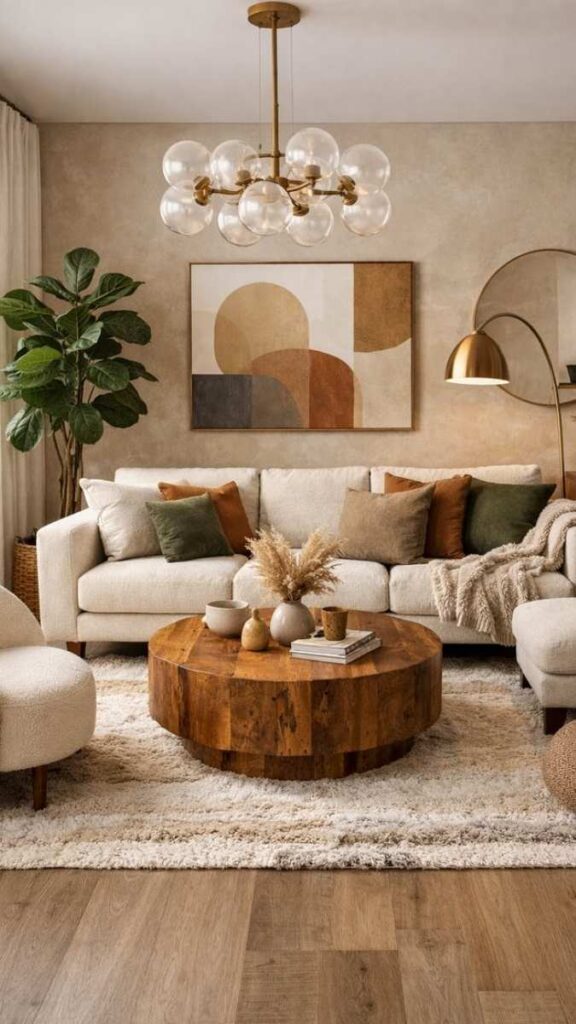
Ochre is one of the few genuinely warm colors that integrates naturally into a Japandi palette without tipping the room into bohemian or Mediterranean territory. The key is using it sparingly and always against a greige or taupe base rather than white against white, ochre reads as bright and decorative; against greige, it reads as earthy and intentional.
Keep it to accent weight: a pair of cushions, a ceramic vase, a single throw. The moment the ochre becomes the dominant tone in a room, it shifts the whole atmosphere. As a supporting note in a neutral palette, it adds depth and warmth without drawing the eye away from the overall composition.
Read More About: 78+ Japandi Bedroom Design Ideas That Actually Work in Real Homes
Matte Black With Warm Natural Timber and Cream Linen
Matte black is more present in Japandi spaces in 2026 than it was three years ago partly because designers are moving away from purely soft palettes and toward setups with more defined contrast. The matte finish is essential: gloss black would feel sharp and modern in a way that conflicts with the organic quality of Japandi design.
Against warm natural timber and cream linen, matte black anchors the room and creates a backdrop that makes every other material read more clearly. This works best as a feature wall behind the bed rather than on all four sides, and it’s particularly effective in rooms with ceiling-height paneling where the texture of the surface adds to the depth.
Neutral Sand With Wabi Sabi Textures and Warm Amber Lighting
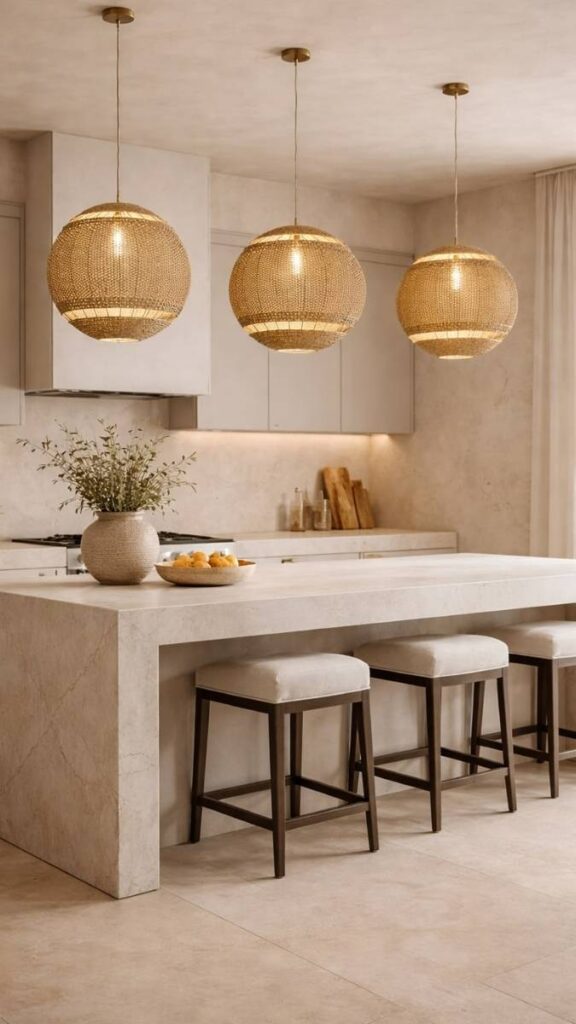
Sand is the most forgiving Japandi base tone because it absorbs both warm and cool light without shifting dramatically. On a wall with a textured plaster finish, sand tone creates shadows and variation across the surface without any additional color the texture does the visual work.
Pair this with warm amber lighting rather than cool white: the amber pulls the sand tone toward honey in the evening, which creates the cozy, atmospheric quality associated with Japandi at its best. This palette addresses the common problem of spaces that look flat in artificial light: the combination of textured surface, warm tone, and amber lighting means the room has dimension regardless of time of day.
Pale Pink-Beige Walls With Nude Tones and Unfinished Wood
Pink-beige sometimes called blush greige or nude is subtler than it sounds. It reads as almost white in bright light and shifts toward a soft warm pink in shadow. In a bedroom context, this creates a naturally flattering, calm atmosphere that doesn’t rely on strong color. Against unfinished or lightly oiled wood furniture, the pale warmth of the walls creates a quietly organic backdrop.
Keep textiles in nude, ivory, or oat tones rather than introducing contrast. This palette works especially well in rooms with limited natural light because the pink undertone adds warmth that cooler whites and grays can’t provide.
Soft Terracotta With Muted Olive and Raw Linen
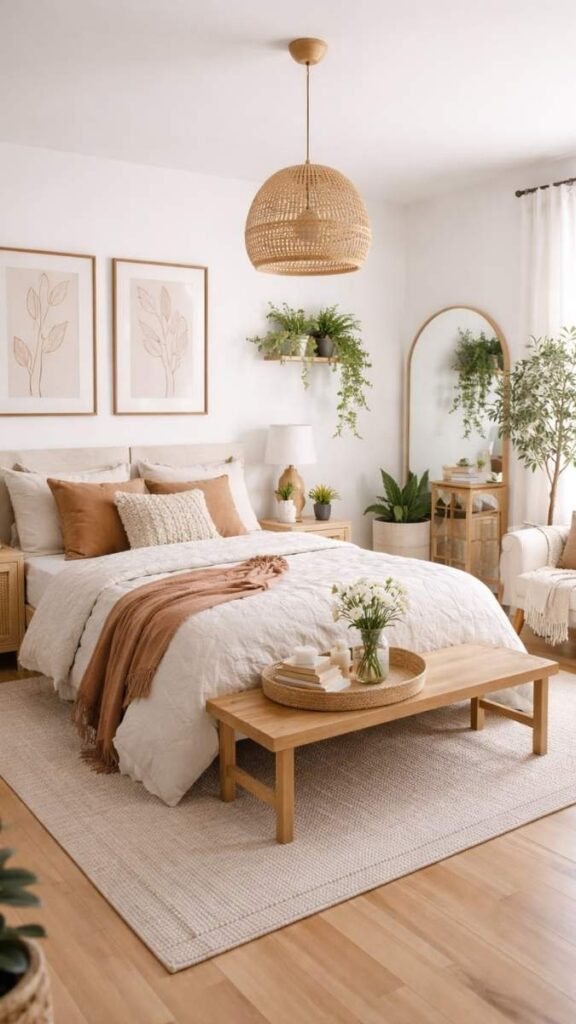
Terracotta and olive is a combination that appears frequently in Japandi spaces when the design is pulling more heavily from the Japanese wabi-sabi tradition. Both tones are earthy, imperfect, and warm; they reference materials found in nature rather than in color charts.
The key to making this palette feel Japandi rather than Mediterranean or bohemian is restraint in application and keeping the tones muted. Soft terracotta on one wall, olive only in textiles, raw linen on upholstery. The natural materials do the rest. This works best in dining rooms and social spaces where warmth and texture create an inviting atmosphere for gathering.
Deep Indigo Accents With Warm Neutrals and Pale Wood
Indigo appears in traditional Japanese textiles particularly in natural dye traditions which gives it a cultural relevance in Japandi design that’s worth knowing. Used sparingly, deep indigo in a warm neutral room creates a note of quiet drama without overwhelming the palette.
One indigo throw, two cushions, perhaps a single ceramic piece with a blue-black glaze. The contrast between the indigo and the warm wood tones is striking in a way that feels intentional rather than accidental. This palette is useful for spaces that are correctly Japandi in structure but feel too quiet; indigo brings depth without brightness.
Warm Gray and White With Layered Linen Textures
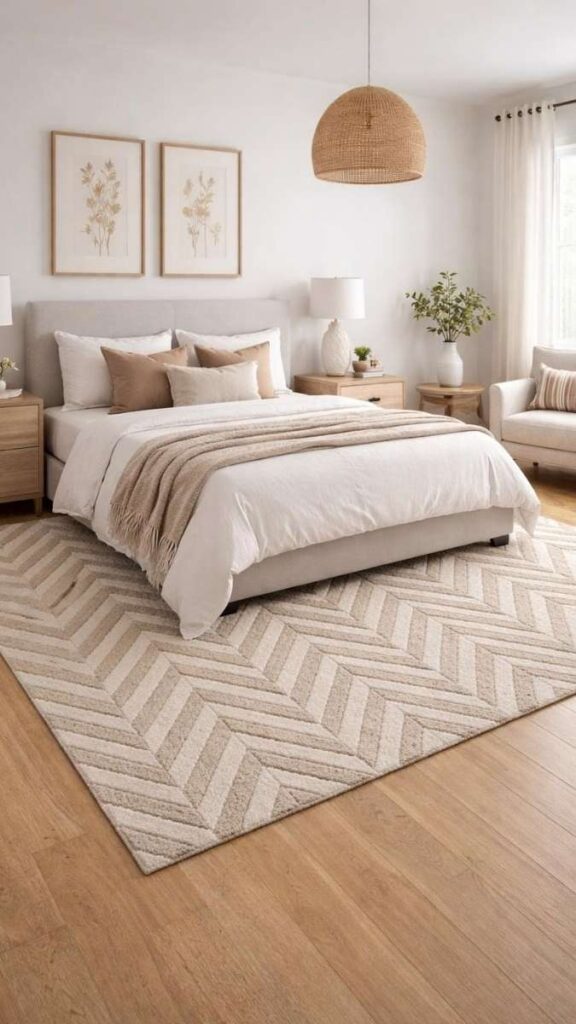
Warm gray is one of those tones that demands the right context to work; it needs layering through textiles to avoid reading as flat or industrial. In a Japandi living room, this means a white linen sofa layered with throws and cushions in varying shades of gray, oat, and cream. The variation within a tight tonal range creates depth.
Add solid timber furniture in a medium tone between ash and walnut to warm the palette from the bottom up. This combination performs well in rooms that need to function for both daytime use and evening relaxation, as it reads differently in natural versus artificial light.
Organic White With Exposed Natural Fiber and Raw Stone
Organic white not bright, not warm, but specifically the tone of unbleached cotton or rice paper works as a complete palette in its own right when the material context is rich enough. Exposed natural fiber (a woven rug, a rattan pendant, a hemp storage basket) and raw stone (a travertine tray, a slate coaster set, a raw stone sculpture) create the visual texture that stops the room from feeling blank.
This approach is ideal for entryways, hallways, or transition spaces where you want a quiet visual moment between rooms. It solves the issue of these spaces feeling like an afterthought by making the material quality not the color the design statement.
Pale Eucalyptus Green With Limewashed White Walls
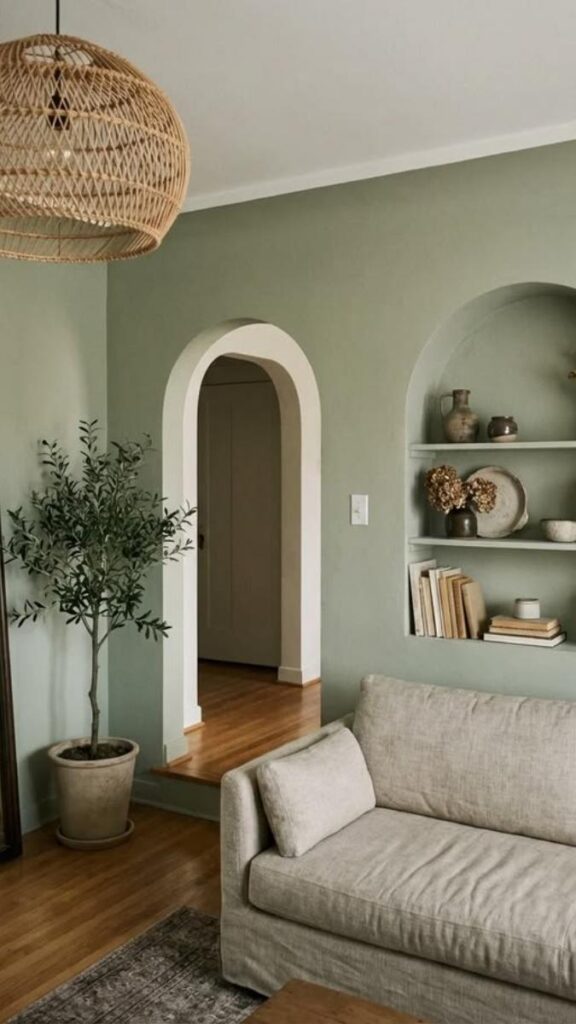
Limewash is one of the strongest surface trends in Japandi interiors heading into the latter half of the decade. The textured, slightly uneven finish references traditional Japanese plastered walls and creates depth without requiring pattern or additional decor.
Against pale eucalyptus green a soft, gray-green similar to sage but cooler the limewash reads as organic and layered. This combination works particularly well in bedrooms where the texture of the wall creates a backdrop that shifts subtly as light moves through the day. The pale green grounding keeps the whole palette from becoming too stark.
Smoke and Slate With Pale Timber and White Cotton
Smoke a blue-gray with low saturation functions differently from standard gray because of its slight chromatic quality. It registers visually without calling attention to itself, which makes it ideal for spaces that need to feel calm and focused rather than stimulating.
In a home office or study, smoke walls with pale timber furniture create a composed backdrop. White cotton curtains diffuse whatever light enters, and matte black desk accessories add the slight definition needed to prevent the palette from feeling inert. This is a palette that improves productivity precisely because it removes visual noise.
Ivory, Warm Walnut, and Black in a Three Tone Japandi Palette
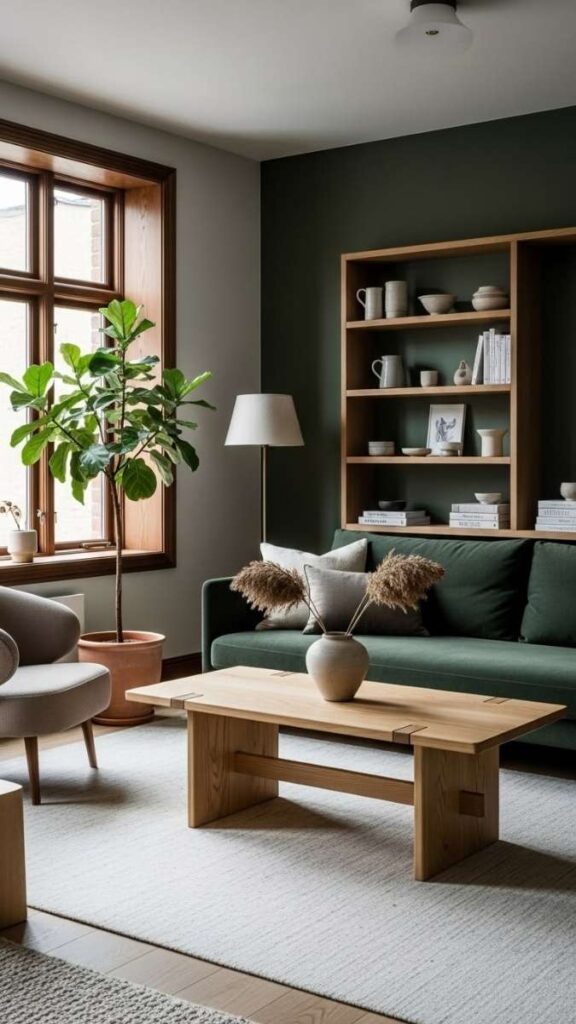
The three-tone palette one light, one warm mid, one dark is the clearest structural expression of Japandi color logic. Ivory gives the room its base and light. Warm walnut furniture provides the organic material weight. Black in hardware and lighting details gives the eye a resting point and prevents the palette from reading as too soft.
The distribution matters: the ivory should be dominant (walls, large textiles), walnut secondary (main furniture pieces), and black used with restraint (lighting, frame details, hardware). This structure creates a room that feels complete without needing additional color or accessory layers.
Bleached Driftwood Tones With Pale Sage and White
Driftwood tones pale, sun-faded, slightly silvery wood are where coastal sensibility and Japandi aesthetics overlap naturally. When the floor or main furniture piece carries this bleached quality, pair it with pale sage soft furnishings and white walls to maintain the airy, light-washed atmosphere.
Natural fiber rugs and sheer curtains reinforce the connection to natural, unprocessed materials. This palette works especially well in rooms that receive strong lateral light from windows on one wall as the bleached tones pick up and distribute that light across the space. It solves the problem of rooms that feel bright but not warm.
Dark Mocha Brown With Warm Off White and Aged Brass Touches
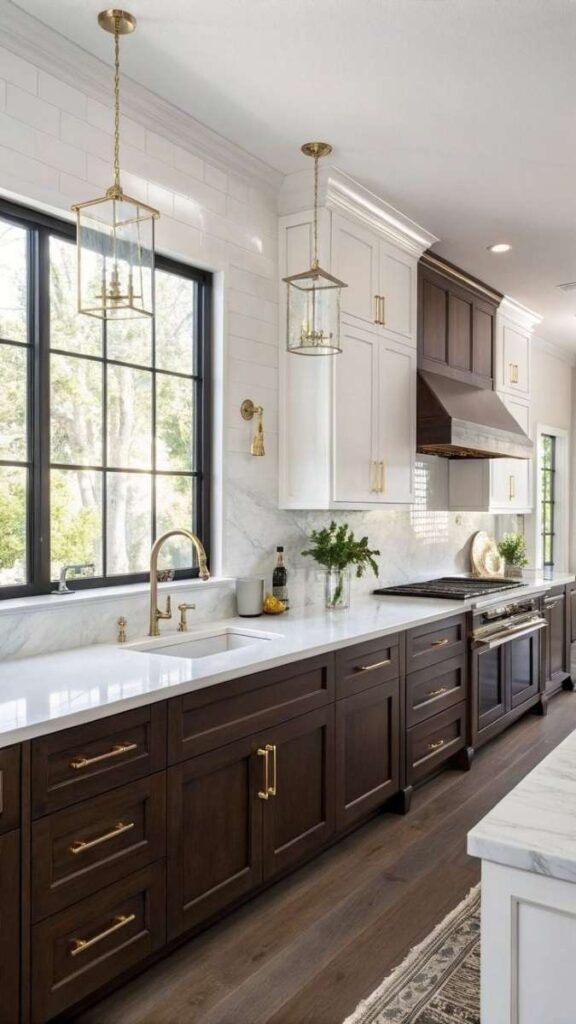
Mocha brown is emerging as one of the defining Japandi tones for late 2025 into 2026 rich enough to create depth, warm enough to avoid severity. As a wall tone behind a linen sofa or bed, it creates an enveloping backdrop that makes the lighter elements in the room feel more deliberate.
Aged brass is not polished gold, but the warm, slightly dulled tone of brass that’s been handled adds a material note that reads as refined without being precious. Off-white linen textiles complete the picture by keeping the contrast soft. This palette direction is ideal for those who want something more expressive than a purely neutral Japandi setup without moving away from the core sensibility.
What Actually Makes These Japandi Color Palettes Work
Understanding why these palettes hold together is as useful as knowing which ones to choose. Japandi color logic isn’t about selecting a set of pretty swatches, it’s about controlling how tone, material, and light interact in a real room.
Temperature balance is the core principle.
Every effective Japandi palette manages the tension between warm and cool tones deliberately. A room that’s entirely warm reads as heavy. Entirely cool reads as cold. The palettes that work best sit between those extremes: a warm base with a cool accent, or a cool structural tone softened by warm textiles and wood.
Material contrast replaces color contrast.
In conventional design, contrast comes from color complementary or contrasting hues. In Japandi, contrast comes from material: the difference between a matte plaster wall and a polished ceramic, a raw linen textile and a smooth timber surface. This is why Japandi rooms can feel visually rich with very little color variation.
Lighting changes everything.
A palette that reads beautifully in afternoon light will behave differently at night under warm incandescent sources. Japandi palettes generally work across both conditions because they avoid extreme saturations; the muted, earthy tones shift subtly rather than dramatically. Choosing lighting that adds warmth (2700K–3000K) rather than neutralizing it (4000K+) is what maintains the palette’s intention after dark.
Scale and distribution matter as much as color selection.
The same three tones can produce entirely different results depending on how they’re distributed across walls, furniture, and textiles. The general Japandi distribution favors a dominant light tone (60-70% of the room), a secondary natural material tone (20-30%), and a dark accent used minimally (10% or less).
Japandi Color Palette Setup Comparison Guide
| Palette Direction | Best For | Space Type | Mood Created | Difficulty |
| Warm white + ash + stone gray | North-facing rooms with cool light | Any size | Clean, airy, calm | Easy |
| Greige + dark walnut | Open-plan spaces | Medium to large | Grounded, warm, resolved | Easy |
| Sage green + linen + birch | Beginners, bedrooms | Small to medium | Organic, restful | Very easy |
| Charcoal accent + cream | Rooms that feel too airy | Medium to large | Dramatic, anchored | Moderate |
| Mocha brown + off-white + aged brass | Expressive Japandi look | Any size | Rich, warm, refined | Moderate |
| Concrete base + warm beige | Loft or industrial spaces | Large or open plan | Raw, textured, grounded | Moderate |
| Three-tone ivory + walnut + black | Any room needing visual structure | Any size | Structured, complete | Easy |
Common Japandi Color Mistakes That Make Your Space Feel Off
Getting the palette right on paper doesn’t always translate to the room. These are the most frequent points where Japandi color setups fall apart in practice.
Using true white instead of organic white.
Bright, blue-based white the kind you find in most standard interior paint, fights against warm wood tones and natural textiles. It makes them look yellowed rather than warm. Japandi rooms consistently use whites with warm undertones: off-white, ivory, rice paper, eggshell. The difference is subtle in the can and significant on the wall.
Treating all wood as interchangeable.
The wood tone in your room functions as a color. A room with warm walnut furniture requires a different palette balance than one with bleached ash. If you’ve chosen your textiles and wall color without accounting for the specific undertone of your wood furniture, the palette will feel slightly wrong even if each individual element looks fine in isolation.
Adding too many accent colors.
The most common Japandi color mistake is treating the neutral base as a canvas for multiple accent colors: a green plant, a terracotta vase, a blue cushion, a yellow throw. Each individual piece is fine; together they create visual noise that undermines the whole approach. Pick one accent direction (earthy warmth, muted cool, or deep grounding tone) and stay within it.
Ignoring the ceiling.
Most Japandi rooms benefit from a ceiling that’s slightly lighter than the walls rather than stark white. When the ceiling is painted bright white against a warm-toned wall, the contrast pulls the eye upward and breaks the enclosed, cohesive quality that makes these palettes work.
Choosing colors from swatches alone.
Paint swatches don’t show you how a color behaves at scale or under your specific lighting conditions. Before committing to a wall color, test it as a large painted sample (at least 30x30cm) on the actual wall and observe it across different times of day.
FAQ’s
What are the main colors in a Japandi palette?
Japandi palettes are built around warm neutrals (off-white, cream, greige, taupe), natural material tones (ash wood, walnut, stone), and muted earthy accents (sage green, dusty blue, terracotta, ochre). Dark tones like charcoal or mocha brown appear as grounding accents rather than dominant colors. The defining quality is that every tone is muted and low-saturation, nothing competes for attention.
How is Japandi color different from Scandinavian or Japanese design alone?
Scandinavian design tends toward cooler, lighter neutrals and sometimes incorporates bright functional color. Japanese design favors deeper, more austere tones and embraces asymmetry and incompleteness (wabi-sabi). Japandi sits between them warmer than pure Scandi, softer and more minimal than pure Japanese, with an emphasis on natural materials across both.
Can Japandi color work in a small apartment?
Yes and it’s often more effective in smaller spaces than complex palettes. The limited tonal range reduces visual clutter, and the consistent use of warm neutrals makes walls and floors read as part of the same cohesive surface rather than separate competing elements. Stick to a two or three-tone base, keep textiles within the same tonal family, and use one wood tone throughout.
Is it worth painting walls for a Japandi palette if I’m renting?
Not necessarily. The Japandi palette can be carried almost entirely through furniture, textiles, and objects. An off-white linen sofa, walnut or ash furniture, natural fiber rugs, and muted ceramic accessories will produce most of the palette’s effect regardless of wall color. If your walls are a neutral tone already, the result will be close to the full effect without any painting.
How do I add color to a Japandi room without breaking the palette?
Choose one accent direction rather than several. The safest Japandi accent colors are muted and earthy: sage green, dusty blue, soft terracotta, warm ochre, deep indigo. Apply them in textiles (cushions, throws) rather than on walls, and limit them to one tone per room. The moment you introduce a second accent color, the palette starts to feel less cohesive.
What lighting works best with Japandi color palettes?
Warm incandescent-equivalent lighting at 2700K–3000K maintains the warmth of Japandi palettes after dark. Cooler light (4000K and above) shifts warm neutrals toward gray and makes organic materials like linen and raw wood look flat. Layer your lighting ambient overhead, directional task, and warm accent from table lamps rather than relying on a single ceiling source.
What’s the easiest Japandi palette to start with?
Warm white walls, a single ash or pale oak furniture piece, natural linen textiles in oat or ivory, and stone gray as a secondary tone through ceramics or upholstery. This combination is the most forgiving to work with, performs well in both natural and artificial light, and gives you a clear foundation to build from.
Conclusion
Getting Japandi color right comes down to understanding how tone, material, and light work together rather than selecting a specific set of colors. The palette isn’t a trend formula, it’s a structural approach to color that creates rooms that feel calm, cohesive, and naturally finished. Small adjustments in base tone, wood choice, or textile layering can shift the entire atmosphere of a space without requiring a full redesign.
Start with one or two ideas that fit your existing space whether that’s testing an organic white on a wall, introducing a sage green textile, or grounding a pale room with a darker accent piece. The key is finding what works within your specific constraints: your light, your layout, your existing furniture. Japandi palettes reward incremental decisions more than dramatic overhauls.