18+Kitchen Lighting Ideas That Make Every Inch of Your Space Work Harder
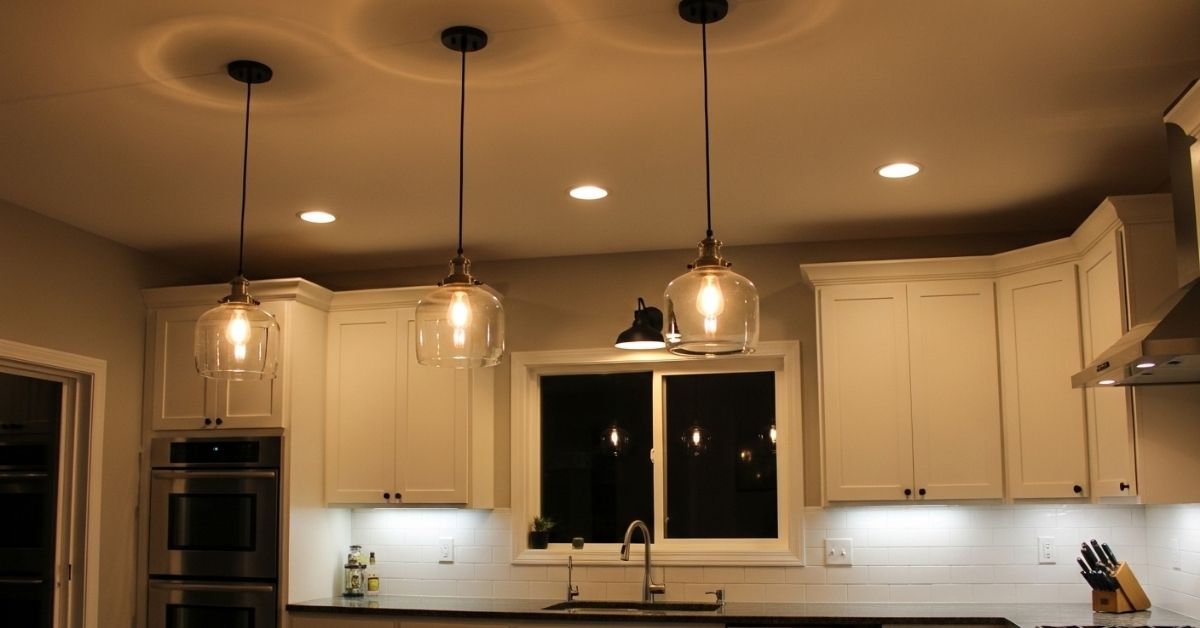
There’s a specific frustration that comes with a kitchen that’s always just a little too dim or weirdly bright in some spots and shadowy in others. You add a nice backsplash, Kitchen Lighting Ideas upgrade the hardware, maybe even repaint and the space still doesn’t feel right. Nine times out of ten, lighting is what’s quietly undermining everything else.
Good kitchen lighting isn’t about chandeliers or expensive fixtures. It’s about layering light sources so the room functions clearly and still has some warmth after 6pm. If you’re working with a galley layout, an awkward peninsula, or rented space where rewiring isn’t an option, these ideas are built for real constraints not ideal conditions.
Layer Ambient, Task, and Accent Light in One Kitchen
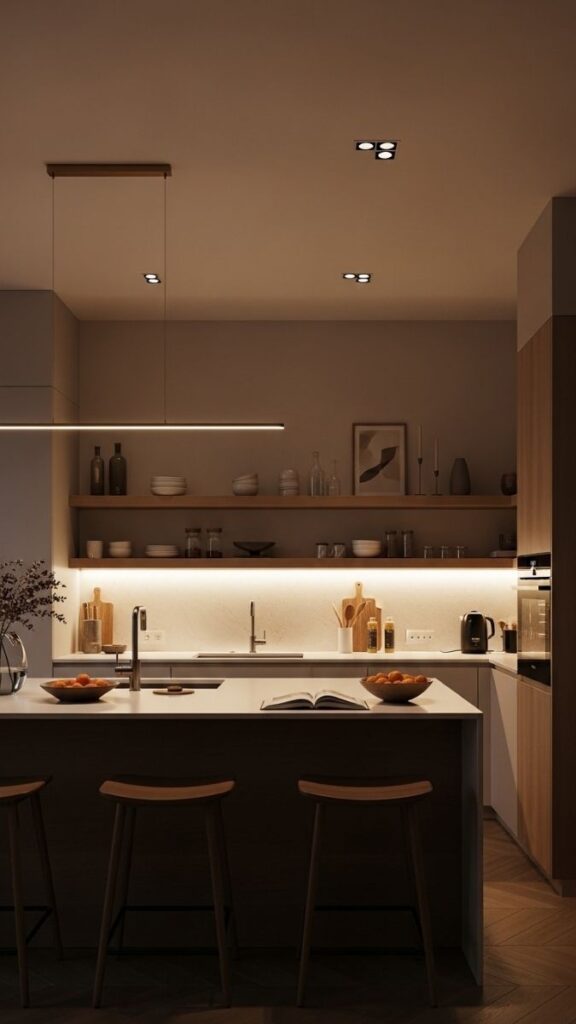
Most kitchens have one ceiling fixture and call it done which means the whole room dims the moment you turn on a range hood. The fix is layering: ambient (overhead), task (direct work surface lighting), and accent (underneath cabinets or inside glass doors). Each layer is controlled separately so you can shift the mood from “prepping dinner” to “unwinding with a glass of wine” without ever touching a dimmer. In my experience, this is the setup I’d recommend trying first because it changes how the kitchen feels across different times of day, not just how well-lit it is.
Under-Cabinet Strip Lighting for Countertop Clarity
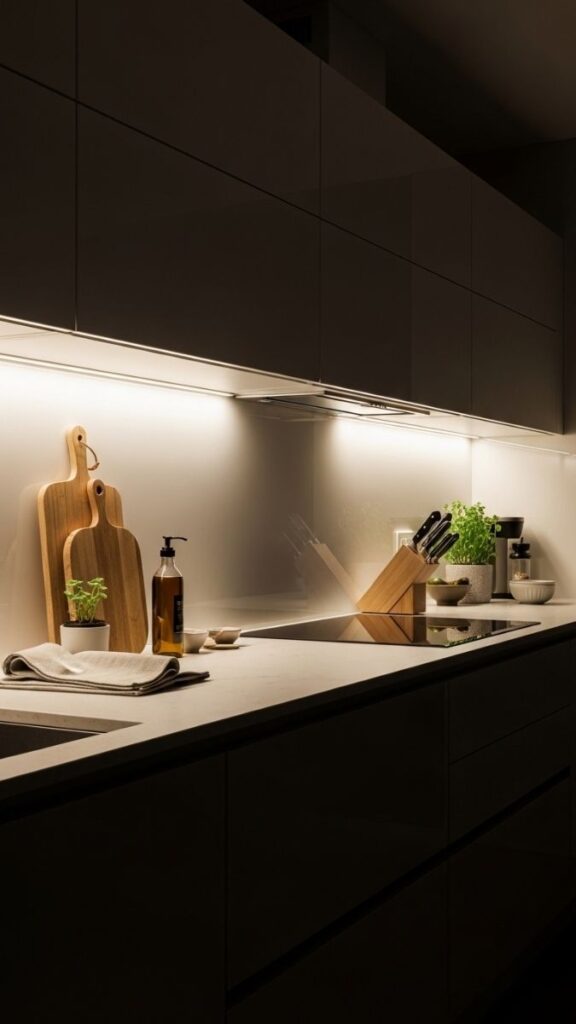
Upper cabinets shadow your counters constantly, especially on either side of a window. Plug-in LED strip lights mounted under cabinet edges eliminate that shadow with zero rewiring. The key detail: mount the strip toward the front edge of the cabinet base, not the back wall. Mounting it too far back creates a glow that reflects off the backsplash instead of hitting the work surface. This setup works especially well in rentals and kitchens where counter space doubles as a home office or homework zone.
Pendant Lights Over a Kitchen Island
A single pendant over an island is decorative. Two or three pendants, spaced evenly and hung at the right height, are functional. The rule of thumb: 30–36 inches between the countertop and the bottom of the fixture. Lower than that and you’re blocking sightlines across the kitchen; higher and the light scatters too broadly to be useful. Pendants with metal shades focus light downward more efficiently than open globe styles, which makes them the better choice when actual task lighting is the goal rather than just atmosphere.
Recessed Lighting Grid That Covers the Full Work Zone
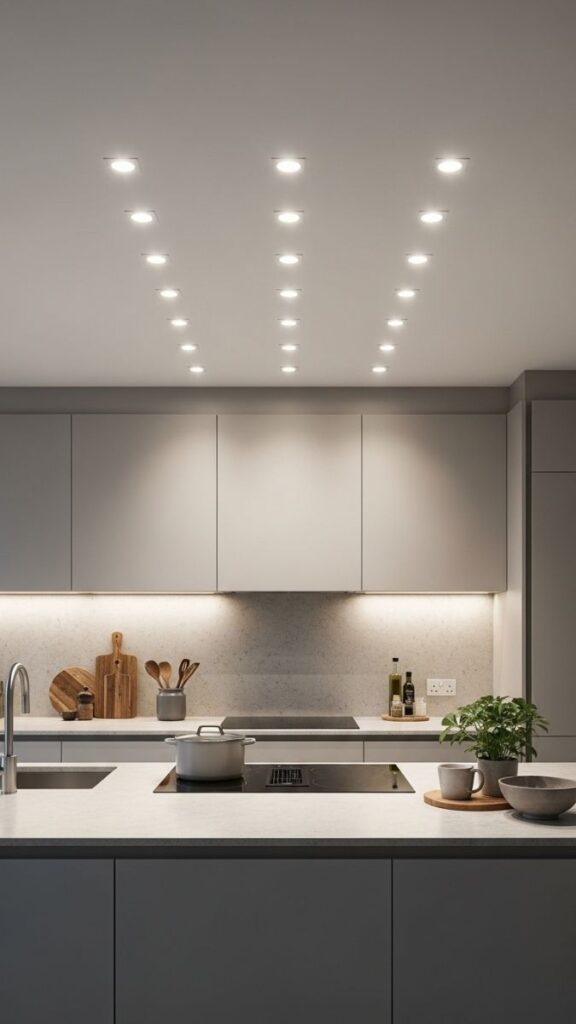
Recessed lighting works best when it’s planned as a grid rather than placed randomly. A common mistake is centering fixtures in the room rather than above the key work zones sink, stove, prep area. When fixtures are only overhead, they cast your own shadow onto the surface you’re working on. Offset recessed lights 18–24 inches from the edge of your upper cabinets and they’ll light the counter from the front instead of hitting the top of your head. This layout is particularly effective in galley kitchens where natural light doesn’t reach the full length of the space.
Read More About: 16+Apartment Bathroom Decor Ideas That Make Small Spaces Feel Intentional
A Statement Fixture Over a Small Kitchen Table
In eat-in kitchens, the dining area often gets ignored in the lighting plan. A single pendant hung 28–34 inches above the tabletop creates a visual anchor for the nook and separates it from the rest of the kitchen without any room dividers. Woven rattan or fabric shades diffuse the bulb so you’re not staring into a bare light at dinner. For renters, swag-style pendants with a cord cover are a clean workaround that requires only a ceiling hook.
Warm Toned Bulbs to Balance Cool Appliances
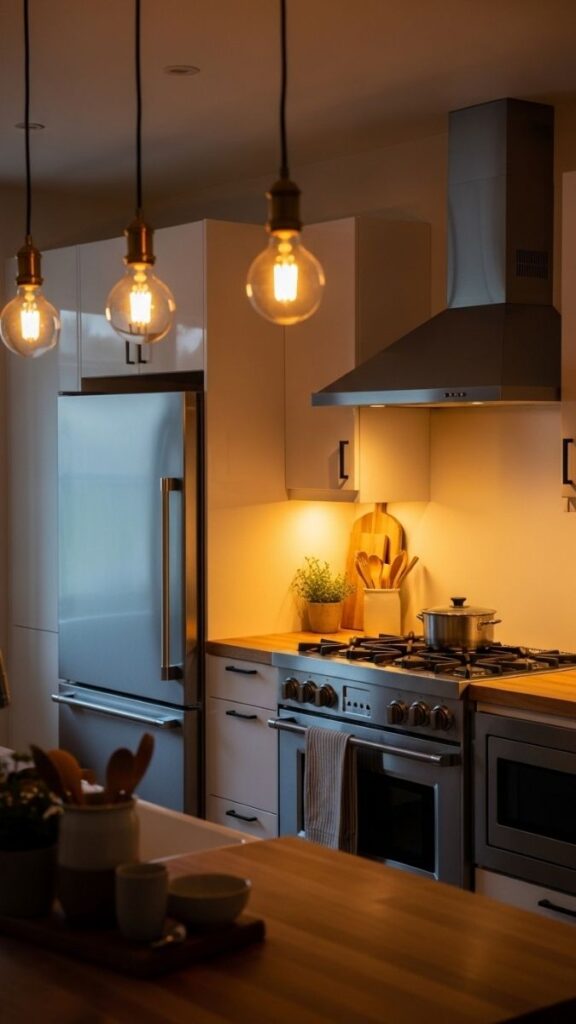
Stainless steel, chrome fixtures, and bright white cabinets all push a kitchen toward a cold, clinical feel especially in kitchens with north-facing windows. Swapping to 2700K–3000K bulbs across all fixtures softens the room considerably without any structural changes. This is purely a bulb choice, not a fixture replacement, and honestly one of the most underrated adjustments in kitchen design. The difference between a 4000K and a 2700K kitchen at night is stark: one feels like a hospital break room, one feels like somewhere you’d want to cook.
Puck Lights Inside Glass Front Cabinet Interiors
Glass-front cabinets look flat and forgotten without interior lighting. Battery-powered puck lights installed at the top of each cabinet interior require no wiring and add just enough warm glow to make open shelving look intentional rather than accidental. This works best with a curated selection of dishware exposed storage with mixed-height items that creates interesting depth when backlit. For everyday kitchens, limit this to one or two display cabinets rather than the whole run.
Toe Kick Lighting for Low Level Ambient Glow
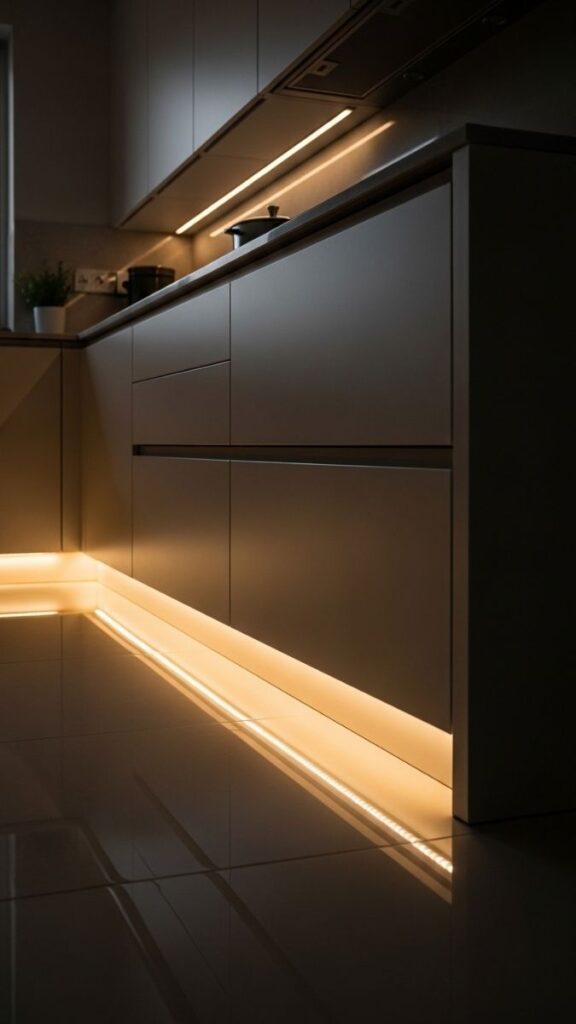
Toe kick lighting LED strips installed along the base of lower cabinetry is one of those details that reads as unexpected in most home kitchens because it shows up mostly in restaurant design. The effect is a continuous low-level ambient glow that makes the cabinets look like they’re floating and provides just enough light to navigate the kitchen at 2am without turning on the overheads. This is a straight plugin-or-hardwire strip light job, and the cost is minimal compared to the visual impact.
Dimmer Switches Across Every Lighting Zone
Dimmer switches are the single most functional upgrade you can pair with any kitchen lighting setup. They extend the use of your overhead fixtures well beyond cooking a kitchen at 30% brightness at 8pm reads entirely differently than the same kitchen at full blast during prep. The limitation: not all LED bulbs are dimmable, and not all dimmers are compatible with LEDs. Check both the bulb and switch packaging before buying. Retrofitting existing fixtures with compatible dimmers is a straightforward DIY job in most cases.
Linear Pendant Over a Long Kitchen Counter or Peninsula
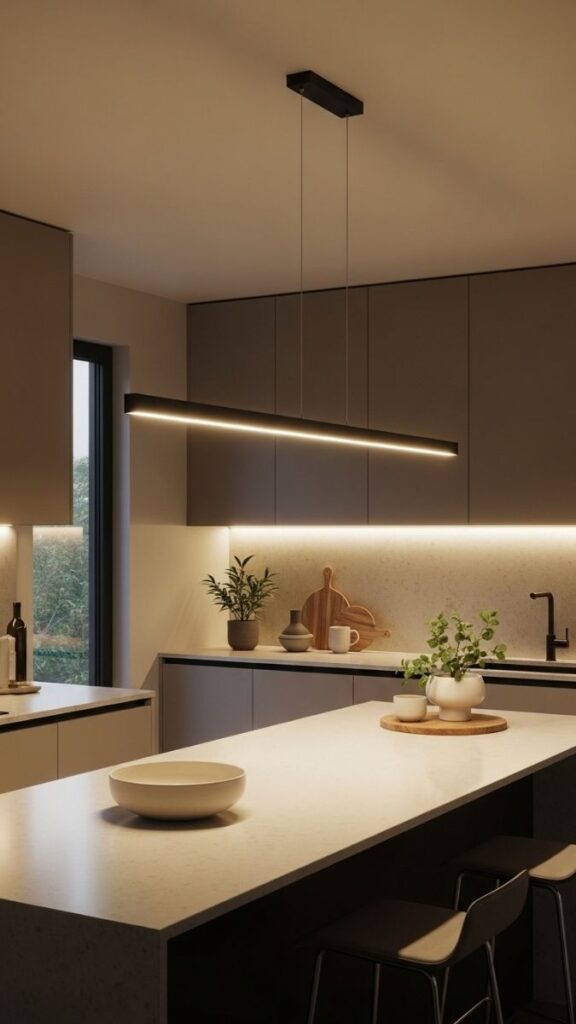
When a kitchen has a peninsula or an extended counter that functions as a bar seating area, a single linear pendant does more visual work than multiple round ones. It traces the length of the surface, reinforces the horizontal line of the space, and keeps the overhead zone clean. In kitchens with lower ceilings (under 9 feet), a flat linear fixture flush or semi-flush achieves the same directional emphasis without eating into headroom.
Read More About: 15+Boho Home Decor Ideas for Your Bathroom That Actually Work in Real Spaces
Sconce Style Wall Lights in a Kitchen With No Island
In galley kitchens or small layouts without an island, wall sconces flanking the window or mounted between cabinets add a layer of warm light without competing with overhead fixtures. They also visually elongate the wall they’re mounted on, useful in kitchens where the walls are all you’ve got. Plug-in sconces with fabric shades work for renters; hardwired versions with dimmers are worth the effort in kitchens you own.
Natural Light Sheer Curtains as a Daytime Lighting Strategy
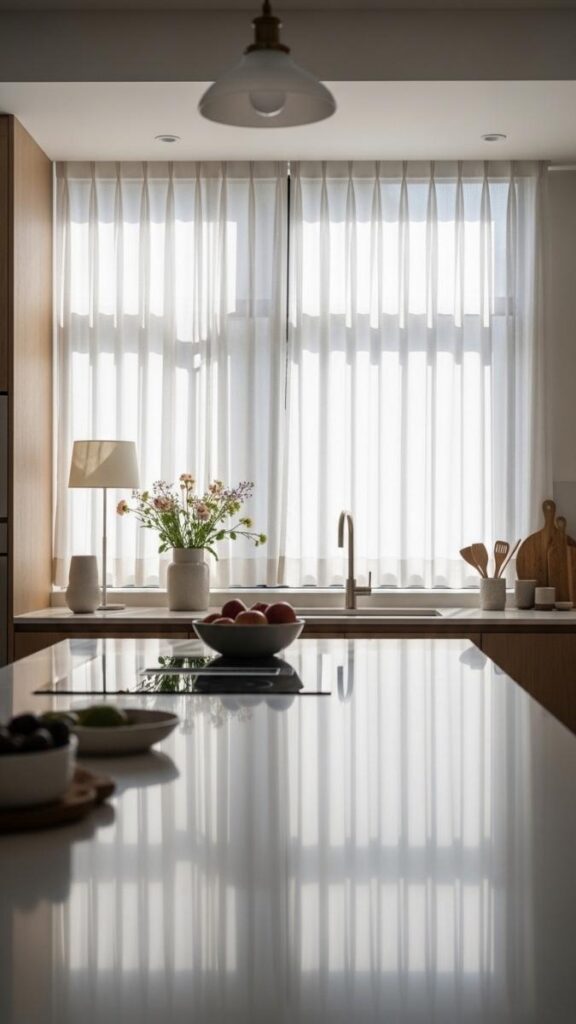
Artificial lighting gets all the attention, but the way you manage natural light shapes the kitchen’s entire daytime feel. Bare windows create harsh glare on counters and screens. Sheer linen or cotton curtains filter direct sun into diffused ambient light without blocking the view or reducing brightness significantly. This is especially relevant in east-facing kitchens that get intense morning sun. Pair with lighter countertop materials and you create a naturally lit workspace that doesn’t require switching on anything before noon.
Color Temperature Consistency Across All Fixtures
Mixed color temperatures are one of the most common lighting problems in kitchens that have been updated over time: a warm pendant here, cool recessed lights there, neutral under-cabinet strips somewhere else. The visual result is a space that looks patchy and unresolved. Settling on a single temperature (2700K for warmth, 3000K for a cleaner neutral) across every fixture in the room creates cohesion even when the fixture styles don’t match. I’ve noticed this issue more in kitchens that were renovated in stages, where each round of updates brought in whatever was on sale at the time.
Battery Powered Cabinet Lighting for Renters
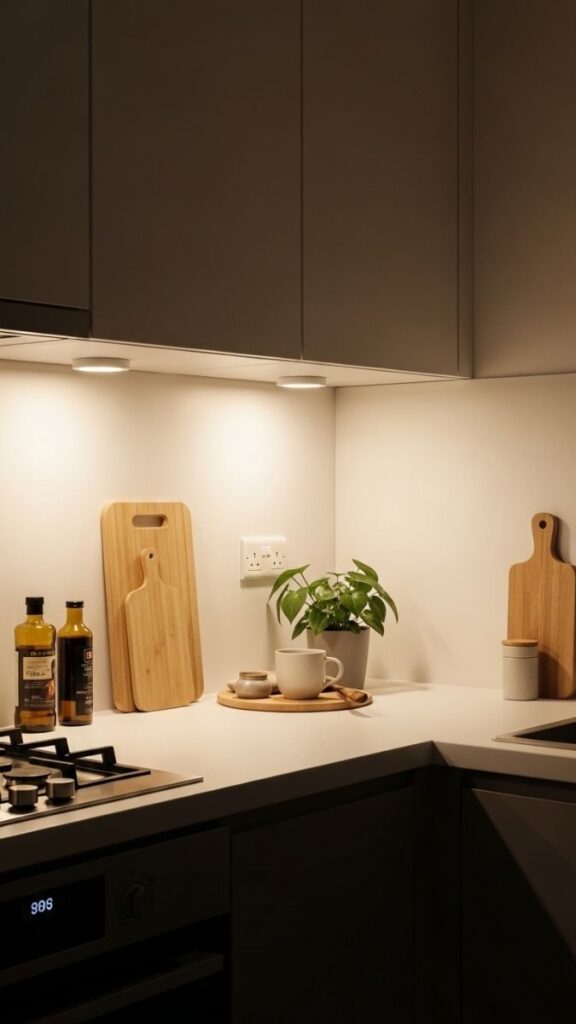
If you’re renting and can’t do any electrical work, battery-powered or USB-rechargeable LED bars under cabinets are the most practical upgrade you can make. Modern versions have adhesive mounts that don’t damage surfaces, are dimmable via remote, and run long enough between charges that recharging becomes a monthly task rather than a daily one. The trade-off is that battery packs are visible if you look, so placement matters mounting toward the back of the cabinet base keeps hardware out of sightlines.
Skylight or Solar Tube Addition for Dark Kitchens
Interior kitchens without exterior windows are genuinely difficult to light. No combination of artificial fixtures fully replicates the way natural light fills a room. A solar tube (also called a sun tunnel) is a less invasive alternative to a full skylight that routes daylight through a reflective tube from the roof to the ceiling. For kitchens in the middle of a floor plan, it’s often the only way to introduce natural light without structural changes to exterior walls. The installation requires a roofing contractor, but it’s significantly cheaper than a standard skylight.
Plug In Pendant Light With a Cord Canopy Kit
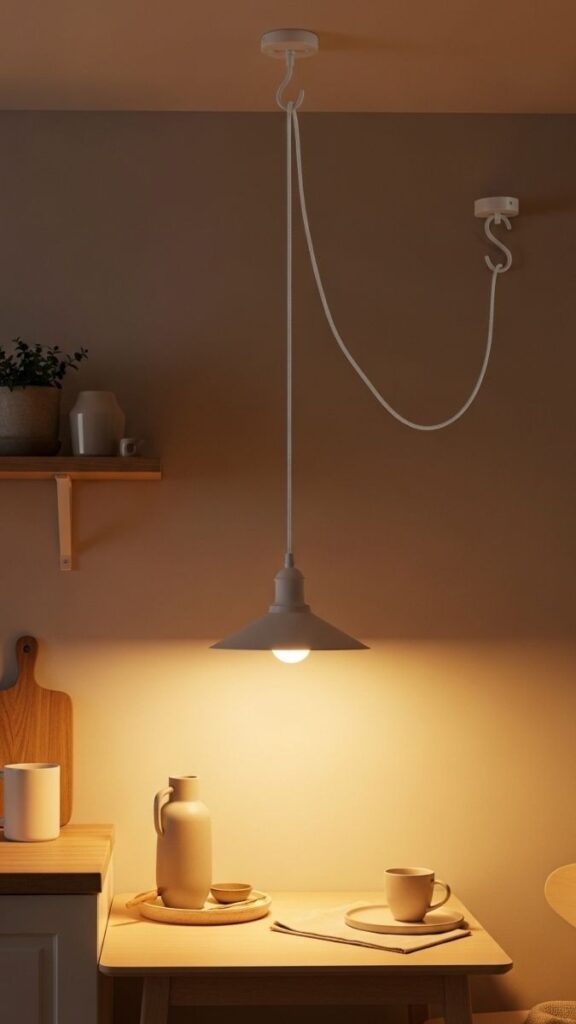
Standard pendant lights assume hardwiring, but cord canopy kits let you hang a pendant from any ceiling hook and route the cord along the wall to a standard outlet. The cord can be pinned flat against the wall with cable clips for a cleaner finish. This is specifically useful in kitchens where the existing ceiling box isn’t in the right position or doesn’t exist at all. It’s not invisible, but with the right cord color it’s far less noticeable than people expect.
Focused Lighting Above the Stove and Sink
The two most critical light zones in any kitchen are the sink and the stove, one for food prep and cleanup, one for cooking safety. These spots get the most use and are also the most likely to be undermined by general overhead lighting that doesn’t reach them directly. Adding a recessed or track-mounted fixture directly above each, separate from the main ceiling grid, means you’re not reliant on the range hood light (which is usually harsh and positioned too close to be useful) or a single ceiling fixture to cover everything
Read More About: 40+Home Decor Ideas for Your Living Room That Actually Work in Real Homes
Track Lighting as a Flexible Overhead System
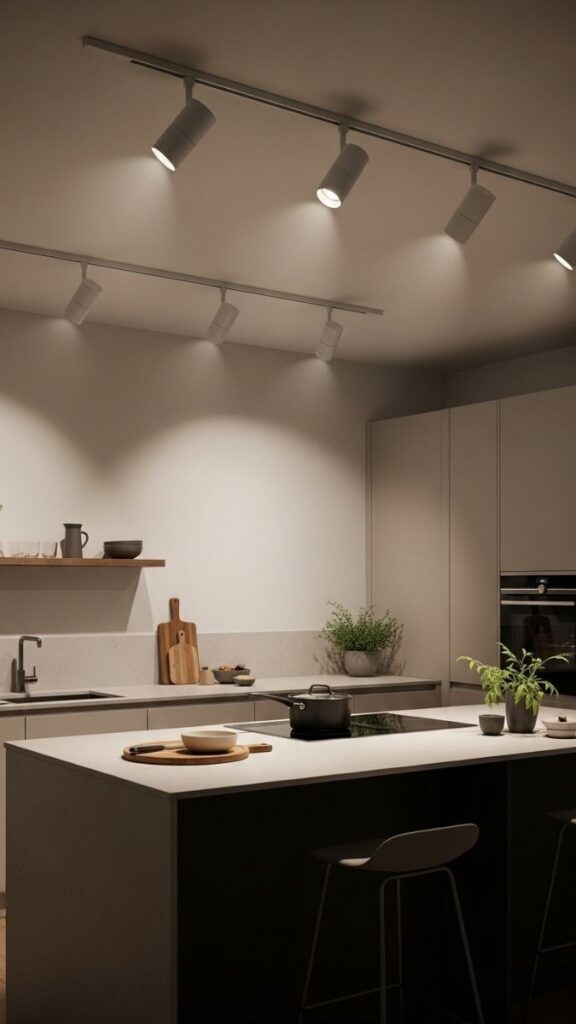
Track lighting tends to get dismissed as outdated, but modern versions particularly slim black or brushed-metal tracks with adjustable heads are one of the most practical overhead solutions for kitchens without a defined island layout. The heads pivot individually, which means one track can cover the counter, the sink, and a dining table without requiring separate fixtures or extra electrical work. This setup works especially well in open-plan kitchens where the lighting needs to flex between cooking and socializing modes.
Warm Edison Bulbs in Industrial-Style Fixtures
Edison-style bulbs in cage or bare-socket fixtures work when the rest of the kitchen’s design can carry the warm-amber tint exposed brick, wood shelving, dark metal hardware. The trade-off is that they’re not efficient light sources for actual cooking; the amber glow is atmospheric but low in lumen output. This style works best as one layer in a multi-source setup of ambient lighting handled by separate overhead fixtures, Edison pendants as the accent layer that sets the tone for the space.
Semi Flush Fixture for Low Ceiling Kitchens
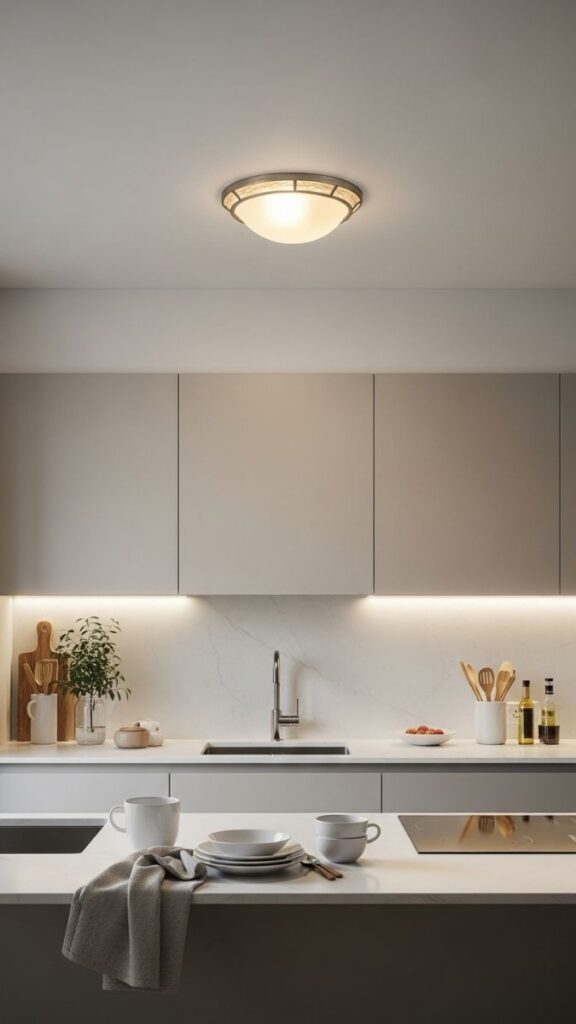
Eight-foot ceilings leave almost no room for pendants without creating a headspace problem, especially if you’re tall. A wide-diameter semi-flush fixture (18–24 inches) diffuses light more evenly than a recessed grid and gives the ceiling a visual anchor which helps in kitchens where the overhead zone feels blank or unfinished. Look for fixtures with a frosted or opal shade: they scatter light more evenly than clear glass and eliminate the hot-spot glare that makes kitchens feel interrogation-room-bright.
LED Strip Lights Behind Open Shelving
Open shelving without lighting reads as flat during the day and disappears at night. A warm LED strip mounted along the back wall behind the shelf creates depth and separation between the shelf and the wall making the shelving unit look designed rather than just functional.
This is particularly effective with wood shelves against a light-colored wall: the strip backlights the shelf edge and creates just enough contrast to make the whole wall feel intentional. Use the lowest brightness setting that’s still visible; the goal is depth, not brightness.
Articulating Arm Lamps for Targeted Task Lighting
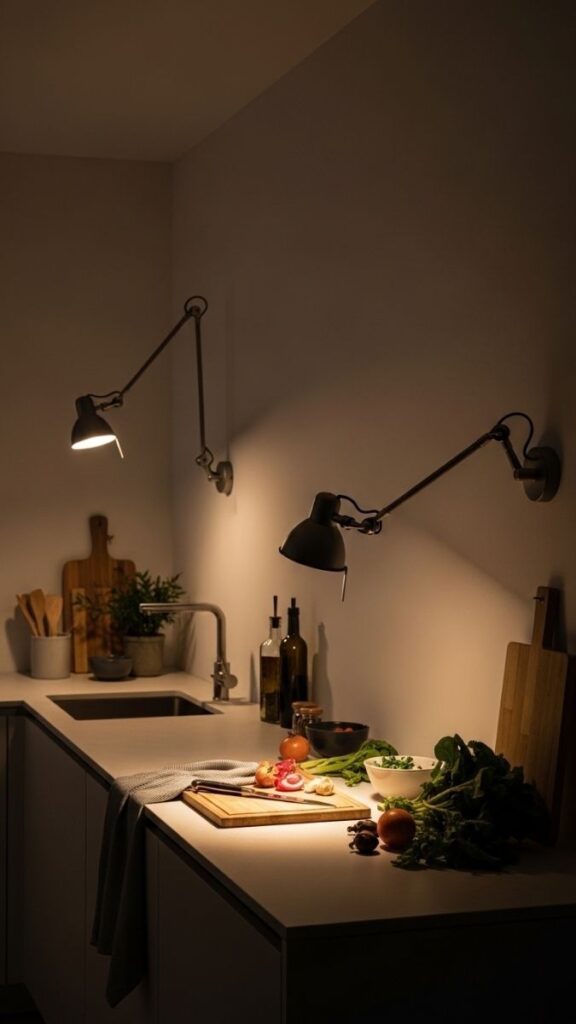
In kitchens with one or two specific countertop zones that don’t get adequate light from overhead fixtures a coffee station, a baking counter, a bar cart area a single wall-mounted articulating lamp is more precise and adjustable than any overhead solution. These are standard in design studios and offices for exactly this reason: the light goes exactly where you point it and doesn’t affect the rest of the room. Look for ones with an integrated on/off switch on the arm, not just a cord switch it makes one-handed use while cooking practical.
Dark Painted Ceiling With Recessed Lights
A dark-painted ceiling might seem counterintuitive in a lighting conversation, but it works specifically because of how it interacts with recessed lighting. When the ceiling is dark and recessed lights are on, the contrast between the lit counter surfaces and the dark overhead reads as intentional and dramatic rather than dim. The eye focuses on the work surfaces rather than the ceiling, which can actually make the functional zones feel brighter even at the same lumen output. This setup works best in kitchens with tall ceilings (9 feet+) and white or light countertops.
Integrated Lighting in Range Hood Design
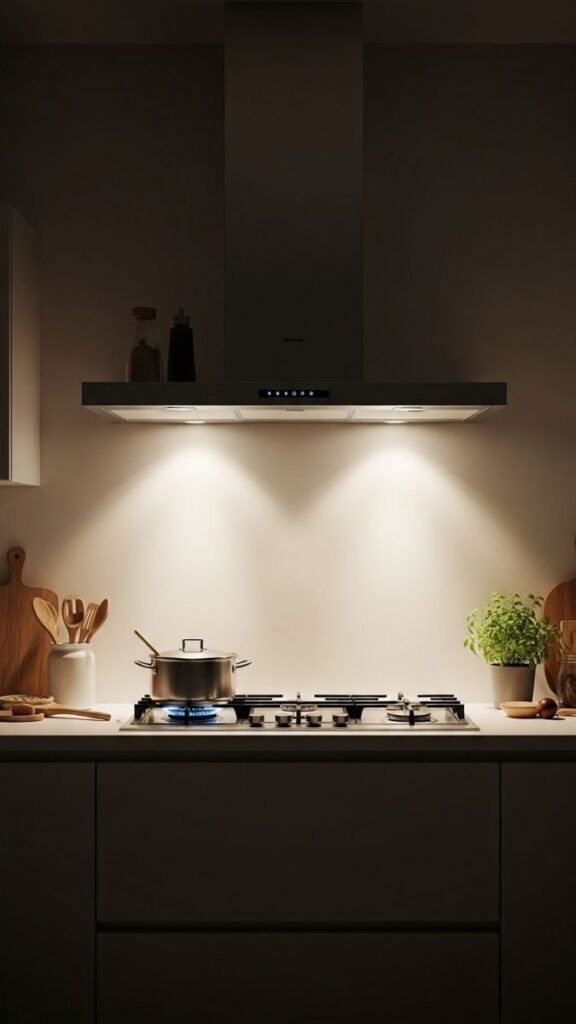
Most range hoods come with a built-in light, but it’s usually a single low-wattage incandescent positioned to illuminate the back burners more than the front. If you’re replacing a range hood, prioritizing one with multiple LED light positions or a model that lets you angle or adjust the lighting is worth the added cost. This is particularly relevant for anyone doing serious cooking, where seeing the entire cooktop surface clearly is a safety issue as much as a convenience one.
Mirrored or High-Gloss Backsplash to Amplify Light
Reflective backsplash materials high-gloss subway tile, mirrored glass tile, polished stainless steel panels effectively double the impact of existing lighting by bouncing light back into the room. In kitchens where adding more fixtures isn’t an option, switching to a high-gloss backsplash material achieves a noticeable brightness increase without touching the electrical plan. This is especially effective in kitchens with under-cabinet strips already installed, where the backsplash becomes a reflective surface that amplifies the strip light output.
Lighting That Follows the Kitchen’s Work Triangle
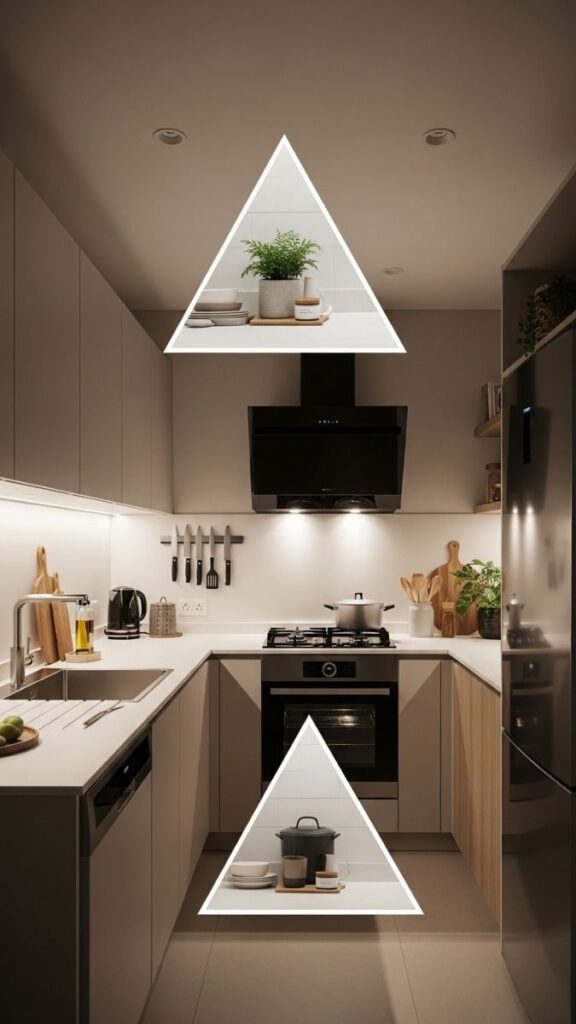
The kitchen work triangle (sink, stove, refrigerator) defines movement flow through the space, and lighting should mirror it. Each point of the triangle benefits from its own dedicated fixture, not necessarily a separate circuit, but a deliberate placement decision so that no single work zone is relying on overflow light from another. This becomes especially clear when you’re cooking and need clear light at the stove while someone else is loading the dishwasher: two separate zones lit independently don’t interfere with each other.
Lighting Transition Between Kitchen and Open-Plan Living Area
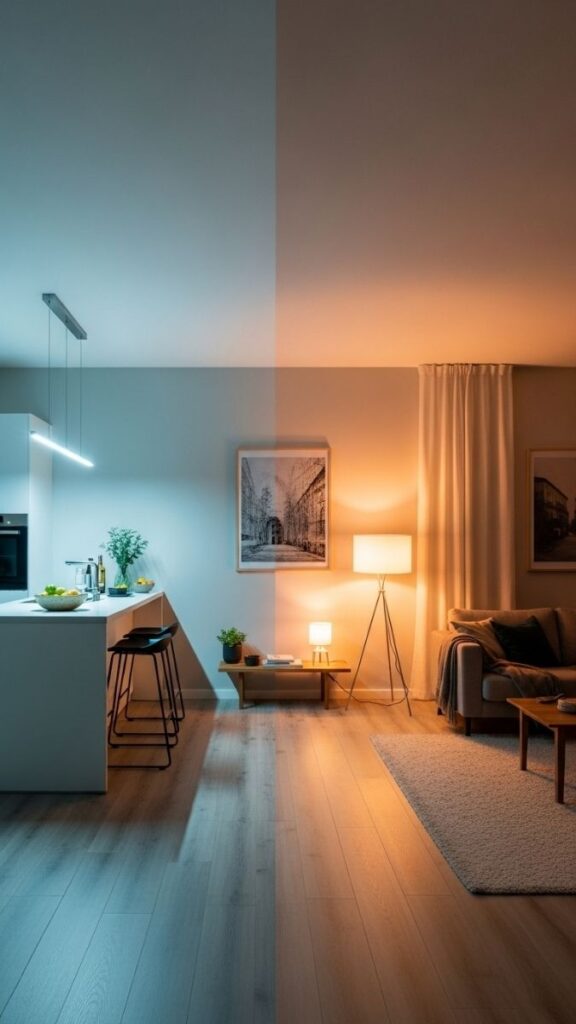
In open-plan layouts, the kitchen lighting and living room lighting often exist in completely different registers, harsh bright overheads in the kitchen, warm lamps in the living space creating a jarring visual break when you’re moving between them. Using the same bulb temperature in both zones and dimming the kitchen lighting in the evenings to match the living room level makes the transition seamless. Pendant lights over an island or peninsula are the natural bridge point: they sit between both zones and can be adjusted to function as ambient light for the living area when cooking is done.
What Actually Makes These Kitchen Lighting Ideas Work
Lighting works when it serves the room’s actual patterns of use, not when it’s impressive in isolation. A few things that consistently separate functional kitchen lighting from just having lights:
Multiple control points matter.
A kitchen where every light runs off one switch can’t adapt to different moments in the day. Even if you’re not doing a full renovation, adding a second dimmer or splitting existing fixtures onto separate switches dramatically extends how useful the space feels.
Light placement over light quantity.
More lumens don’t fix shadow problems better placement does. A kitchen that’s correctly lit at every work zone needs fewer total fixtures than one that’s overcompensating with high-lumen overhead lighting pointed at the ceiling.
Warm vs. cool temperature is a design decision.
In 2026, the default kitchen light is trending warmer away from the blue-white LEDs that dominated the previous decade and toward 2700K-3000K. This isn’t just aesthetic: warmer light is easier on the eyes during long cooking sessions and more cohesive with natural evening light.
Scale matters.
A small kitchen with large pendants looks staged. A large kitchen with a single flush-mount fixture looks incomplete. Match fixture scale to room scale and ceiling height before worrying about style.
Kitchen Lighting Ideas Setup Guide by Space Type
| Setup | Best For | Space Type | Problem It Solves | Difficulty |
| Under-cabinet LED strips | Daily cooks, renters | Any size | Counter shadows | Easy |
| Recessed grid | New builds, full renos | Medium–large | Uneven general light | Moderate |
| Pendants over island | Islands, peninsulas | Open-plan | Poor task + ambiance | Easy–Moderate |
| Track lighting | Flexible layouts | Any size | Multiple zones, one fixture | Easy |
| Layered (ambient + task + accent) | Long-term setup | Any size | Single-source flatness | Moderate |
| Toe kick lighting | Night use, open-plan | Any | Dark floor-level navigation | Easy |
| Solar tube | Interior kitchens | All, no exterior windows | No natural light | High |
| Plug-in pendant + canopy kit | Renters | Small–medium | No ceiling box | Easy |
Common Kitchen Lighting Mistakes That Make Your Space Feel Smaller or Dimmer
Centering fixtures in the room instead of above the work zones.
A centered ceiling light in a kitchen hits the middle of the room which is usually a walking space, not where you’re working. Move fixtures 18–24 inches toward the counter edge and the room immediately feels more functional.
Relying on the range hood light alone.
It’s designed for the cooktop, not the kitchen. Using it as your primary light source creates a hot spot at the stove and leaves the rest of the room underlit.
Using the same brightness setting all day.
Full kitchen lighting at 8pm is genuinely uncomfortable; it’s optimized for prep and cleanup, not for sitting down after dinner. Dimmers on at least two zones give you flexibility.
Choosing fixtures before checking ceiling height.
A pendant that works beautifully in a 10-foot ceiling creates a clearance problem in a standard 8-foot one. Height first, then style.
Ignoring color temperature consistency.
Mixing 2700K pendants with 4000K recessed lights creates an unresolved visual tension that no amount of styling will fix. Pick one temperature and commit.
FAQ’s
What’s the best lighting setup for a small kitchen?
For small kitchens, the most effective combination is under-cabinet LED strips for task lighting plus a semi-flush overhead fixture for general ambient light. These two layers cover your work surfaces clearly without requiring ceiling height you don’t have. Add dimmer control if possible.
How many pendants should I hang over a kitchen island?
The standard is one pendant per 2 feet of island length, with 24–30 inches of spacing between them. A 4-foot island works with 2 pendants; a 6-foot island can take 2–3. More important than the count is the hang height 30–36 inches above the countertop surface is the usable range.
What color temperature is best for kitchen lighting?
For most kitchens, 2700K–3000K strikes the right balance between warmth and functional clarity. 4000K is often recommended for kitchens but reads noticeably blue-white at night. Go 3000K if you’re unsure it’s neutral enough for tasks and warm enough for evenings.
Can I add pendant lights in a rental kitchen?
Yes, plug-in pendants with a cord canopy kit require only a ceiling hook (not a hardwired box) and route the cord to a standard outlet. Combined with cable clips pinned along the ceiling line, the result is much cleaner than it sounds and leaves no permanent marks.
Do I need both under-cabinet lights and recessed lights?
Ideally, yes. Recessed lights cover the general room; under-cabinet lights hit the specific work surface directly beneath the upper cabinets where overhead light doesn’t reach. Together they eliminate the countertop shadow problem that recessed-only setups create.
Is track lighting still a good choice in 2026?
Modern slim-profile track systems with adjustable LED heads are genuinely practical and far removed from the heavy, dated versions of a decade ago. For kitchens with irregular layouts or multiple zones to cover, they’re one of the more efficient single-install solutions available.
How do I make a dark kitchen feel brighter without rewiring?
Focus on three things: add plug-in under-cabinet strips, replace bulbs with a higher lumen count at the same warm color temperature, and switch to a high-gloss or light-reflective backsplash material. Together, these changes can noticeably brighten a space without any electrical work.
Conclusion
A kitchen that’s well-lit at every level overhead for the room, task lighting for the counter, accent lighting for the details functions better and feels noticeably more resolved than one relying on a single ceiling fixture. The adjustments don’t need to happen all at once. Even one targeted change, like adding under-cabinet strips or switching bulbs to a consistent warm temperature, makes a tangible difference in how the space reads.
Start with wherever the biggest pain point is: if your counters are always shadowed, begin with under-cabinet lighting. If the whole room feels cold and institutional, start with bulb temperature. Work through the list at a pace that fits your budget and whether you own or rent. The key is choosing based on how your kitchen actually works, not just how a finished kitchen photo looks.