25+ Bathroom Decor Ideas That Actually Make Small Spaces
Most bathrooms get decorated last if at all. You pick a shower curtain, toss in a candle, and call it done. But a bathroom that feels put-together isn’t about spending more; it’s about making deliberate choices with the space you already have. Whether you’re renting, working with a windowless box, Bathroom Decor Ideas or just tired of a room that feels like a leftover, these ideas are genuinely usable, not just pinnable.
If your bathroom feels functional but soulless, these setups solve that without a renovation.
Floating Shelves Above the Toilet to Reclaim Dead Wall Space
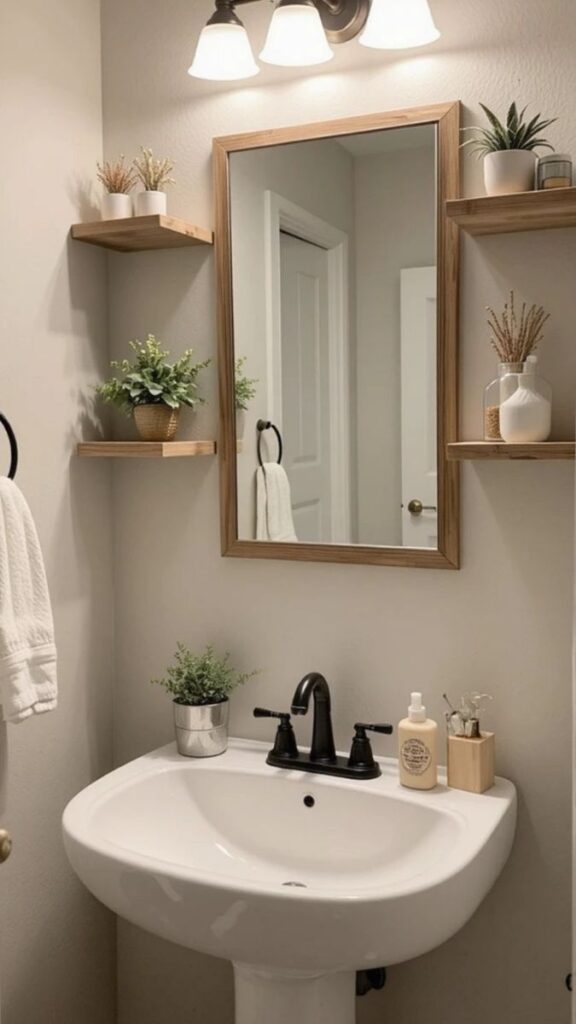
The wall directly above the toilet is almost always wasted in small bathrooms. Two staggered floating shelves, one around 60 inches from the floor, another 12 to 18 inches above it, turns that dead zone into the room’s most functional storage surface.
Use the lower shelf for everyday items like hand lotion, a small diffuser, or a folded washcloth. Reserve the upper shelf for purely visual objects: a small trailing plant, a single ceramic piece, a stack of folded washcloths in a consistent color. The asymmetry keeps it from looking like a medicine cabinet. This works especially well in bathrooms under 50 square feet where every inch of floor space is occupied.
A Single Oversized Mirror to Fix a Cramped Bathroom Layout
Mirror size is the most underused tool in bathroom design. Most people default to a builder-grade rectangle that matches the vanity width but going larger (a round mirror 28 to 32 inches in diameter, or a vertical rectangular mirror that extends well above the faucet line) changes how light moves through the space entirely.
The reflection picks up light from opposite walls and creates a visual depth that makes the room feel less boxed-in. This is especially effective opposite a window, where the mirror essentially doubles the natural light. Renters can hang large mirrors without permanent damage using heavy-duty removable strips rated for 30+ pounds.
A Linen or Bamboo Hamper That Doubles as a Side Surface
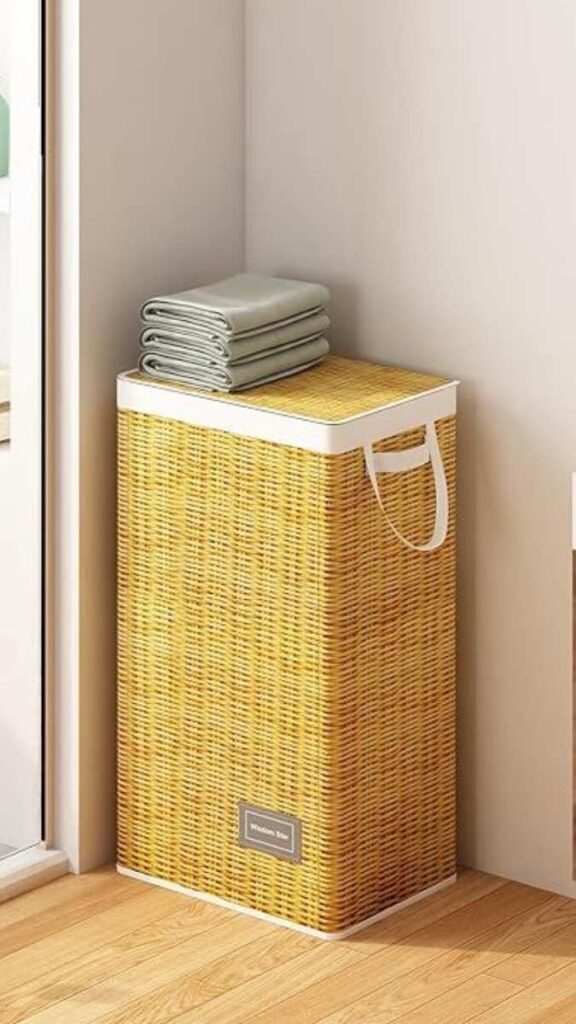
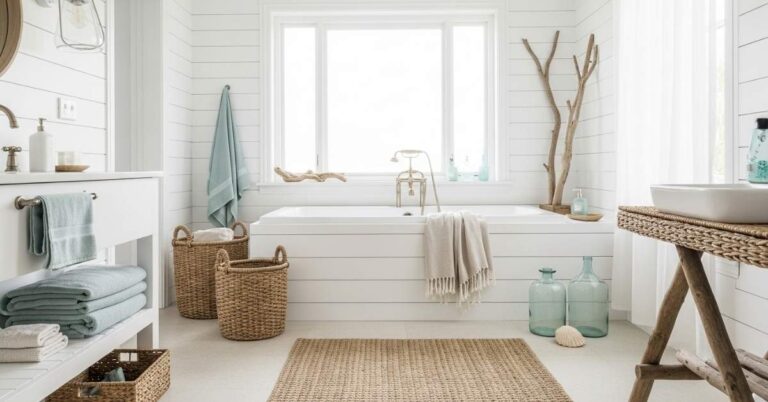
In bathrooms without built-in storage, laundry hampers are usually an eyesore sitting in the corner. A lidded hamper in woven seagrass, rattan, or bamboo changes that dynamic completely; the lid functions as a small shelf for a tray, a candle, or a plant, and the texture adds warmth that hard bathroom surfaces usually lack.
The visual weight of a natural fiber hamper grounds the room without adding bulk. This setup works best in bathrooms where the floor plan allows the hamper to sit in a corner or beside a vanity, keeping the walking path clear.
Layered Lighting With a Warm Bulb Swap
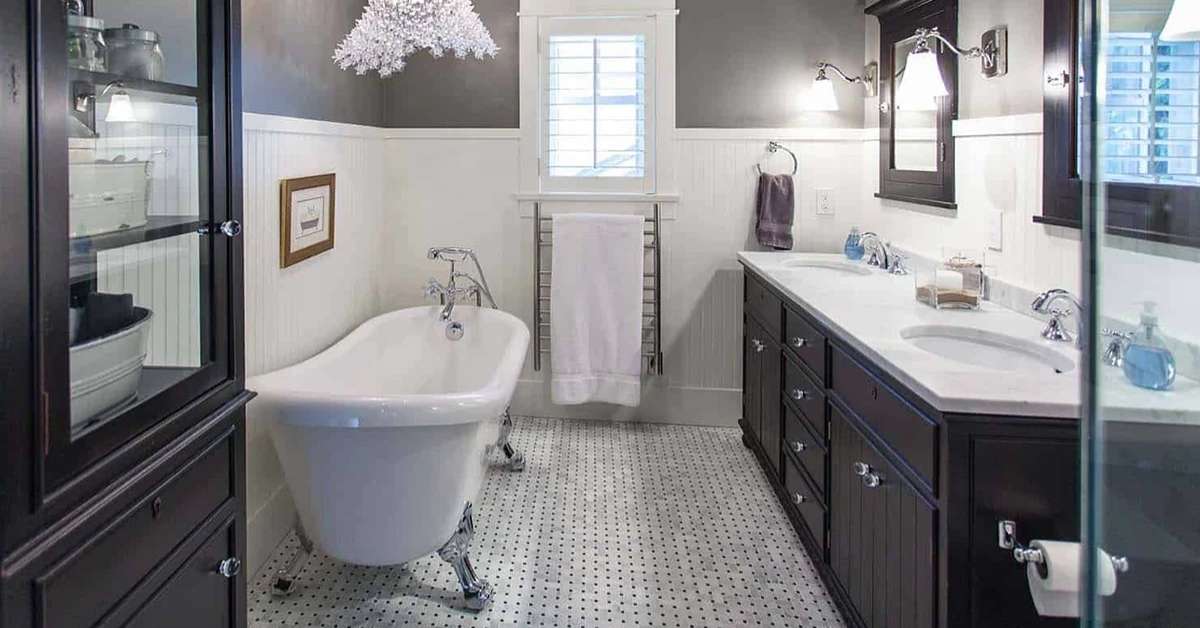
Most bathrooms run on a single overhead light and that single fixture is almost always positioned to cast unflattering shadows downward. Adding a second source at eye level (a plug-in sconce beside the mirror, or a small cordless rechargeable wall light) distributes the light more evenly and dramatically changes the mood of the room.
Pair this with a warm-white bulb swap (2700K instead of the standard 4000K or daylight that comes pre-installed) and the bathroom shifts from clinical to calm. The warm tone makes white tile and grout read as cream rather than stark, which softens the whole room without changing a single tile.
A Matching Apothecary Set to Declutter the Vanity Counter
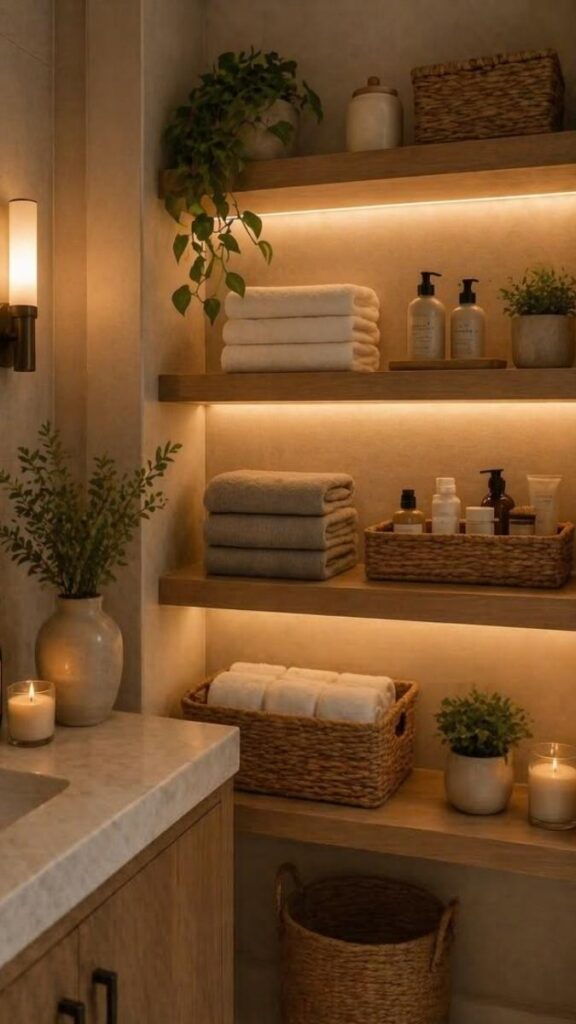
Vanity counters accumulate mismatched packaging fast, a drugstore shampoo bottle next to a prescription cream next to a half-empty face wash. Replacing the most visible items with a matching apothecary or refillable set (amber glass, matte ceramic, or frosted white) eliminates the visual noise.
The consistency of material and height makes the counter feel curated instead of cluttered. Group everything on a small tray, even a basic marble or acrylic one so the items read as a deliberate collection rather than random objects. This is one I’d recommend trying first before buying anything else, because it changes the bathroom’s entire register without touching the walls or fixtures.
Read More About: Kitchen Makeover Ideas That Actually Change How the Space
A Shower Curtain That Functions as the Room’s Statement Piece
In a bathroom without much architectural character, the shower curtain is often the only large surface that can carry a design decision. A curtain in a solid earthy tone terracotta, sage, slate, warm oat does more for the room’s atmosphere than any amount of small accessories. Linen curtains in particular (or linen-look polyester) have a weight and texture that reads differently than standard fabric; they hang with a gentle drape that feels more deliberate. Pair with matte black or brushed brass rings for contrast. The key is treating the curtain as you’d treat a wall color, not an afterthought.
A Wooden Bath Tray Across the Tub for Function Bathroom Decor Ideas
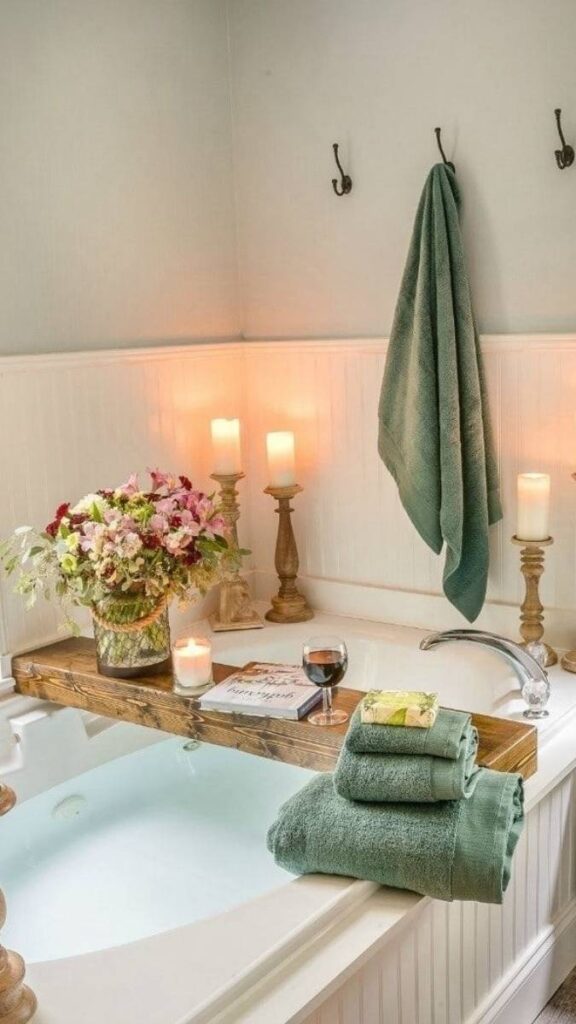
A bath tray is one of those objects that’s both functional and immediately visual. A teak or bamboo tray resting across the tub gives you a surface for a book, a candle, or a glass but it also adds a horizontal line of warm natural material that breaks up the hard edges of porcelain and tile.
The contrast between the organic grain of wood and the smooth white of the tub is a material pairing that works in almost any style, minimal, warm-modern, or spa-influenced. For bathrooms without a freestanding tub, a smaller version (a bar-length tray) can sit across a standard alcove tub just as well.
Gallery Wall Framing Above the Toilet for a Personality Anchor
People rarely think of bathroom walls as viable gallery space, but the wall above the toilet is genuinely one of the few vertical surfaces in the room with enough clearance for art. Three small frames (4×6 or 5×7) in matching black, white, or natural wood hung in a tight cluster not spread out create a collected feel rather than a corporate waiting room.
The content doesn’t need to be literal bathroom art. Botanical prints, abstract shapes, simple typography, or even framed fabric swatches work well. The key is the grouping: frames spread too far apart lose the anchoring effect.
A Pedestal Sink Skirt to Add Storage Without Renovation
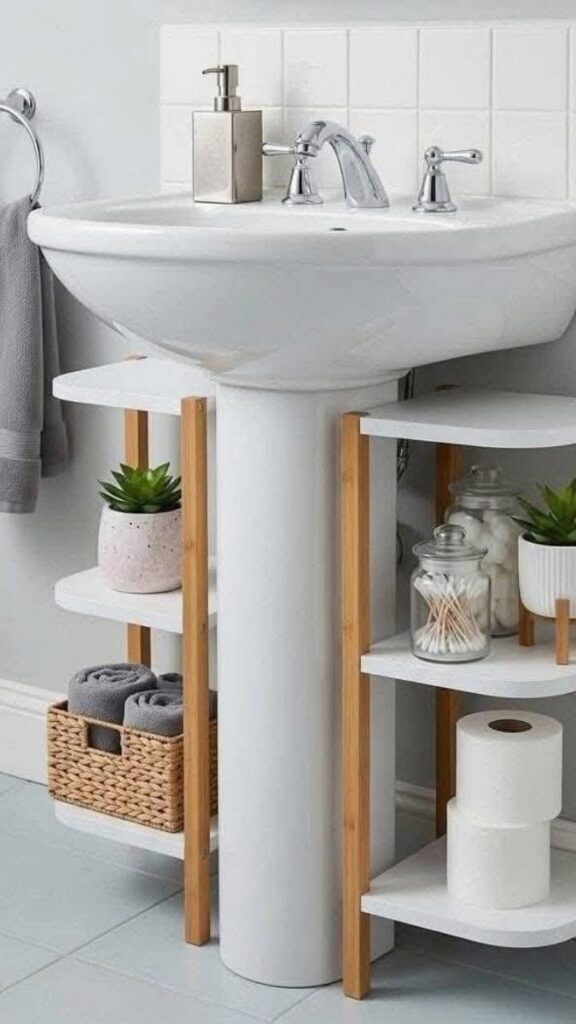
Pedestal sinks are a fixture in older apartments and rental units and they look clean but offer zero storage. A fitted fabric skirt (available in linen, cotton, and performance fabric) attaches with Velcro and instantly conceals the plumbing while creating hidden storage underneath for a small basket, a second set of towels, or cleaning supplies.
The visual effect is softer and more intentional than an exposed pipe situation and it’s entirely removable for renters. In narrow bathrooms, this approach keeps the floor plan open while adding concealed capacity.
Textured Towels in a Consistent Palette to Replace Accessory Clutter
Towels are one of the most visible objects in a bathroom, and they’re almost never treated as a design decision. Swapping mismatched towels for a set in one or two tones sand, ivory, sage, dusty blue immediately brings cohesion to the room.
Waffle-weave or Turkish cotton textures look more editorial than standard terry cloth and dry faster, which is a practical bonus. The rule is simple: treat towels as you would soft furnishings. Color consistency matters more than brand. Hang them folded in thirds rather than halves for a cleaner horizontal line.
A Trailing Plant on a High Shelf to Soften Hard Surfaces
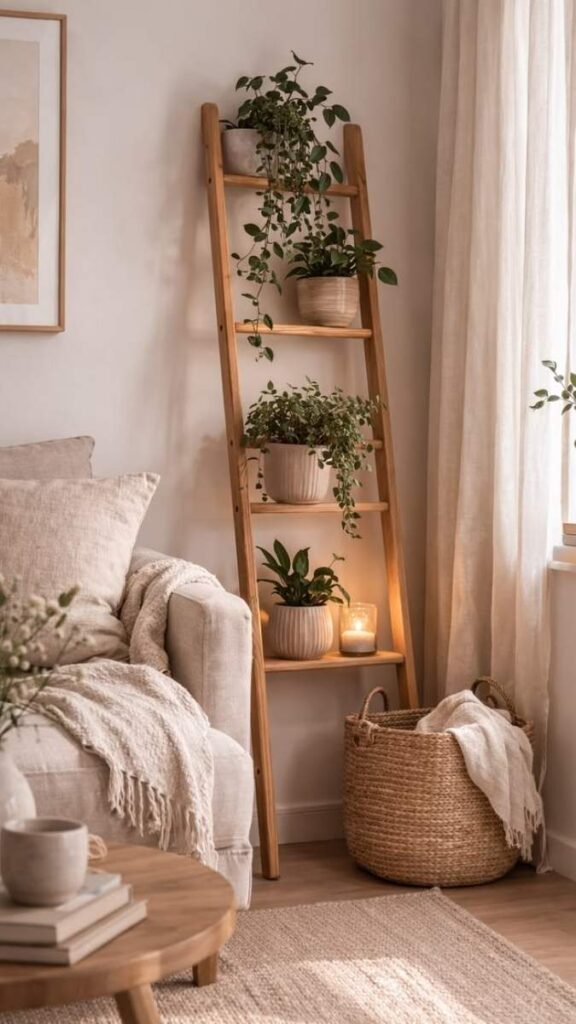
Most bathrooms are entirely hard surfaces: tile, glass, chrome, porcelain. Adding one plant shifts the visual texture of the room toward something organic. A trailing plant (pothos, string of pearls, or heartleaf philodendron) placed on a high shelf lets the vines fall naturally, which adds movement and scale without taking up counter space.
High shelves also work in low-light bathrooms; pothos in particular tolerates near-zero natural light and thrives in humidity. In my experience, this works best when the shelf is positioned at eye level or just above, so the trailing effect is visible from the doorway.
Read More About: Peel and Stick Wall Decor Ideas That Actually Look Good
A Minimalist Shower Caddy in Matte Black or Brushed Gold
A shower caddy sounds like a basic utility item, but the finish and form matter more than most people expect. A corner tension caddy or wall-mounted caddy in matte black or brushed gold reads as a fixture it looks like it belongs rather than an afterthought clip-on.
Keeping the bottles inside the caddy consistent in height (or decanting into matching bottles) removes the visual chaos that most showers default to. This is especially useful in walk-in showers where the caddy is visible from the rest of the bathroom and functions as part of the room’s aesthetic rather than hidden behind a curtain.
A Bamboo or Teak Footstool for Spa Feel Elevation
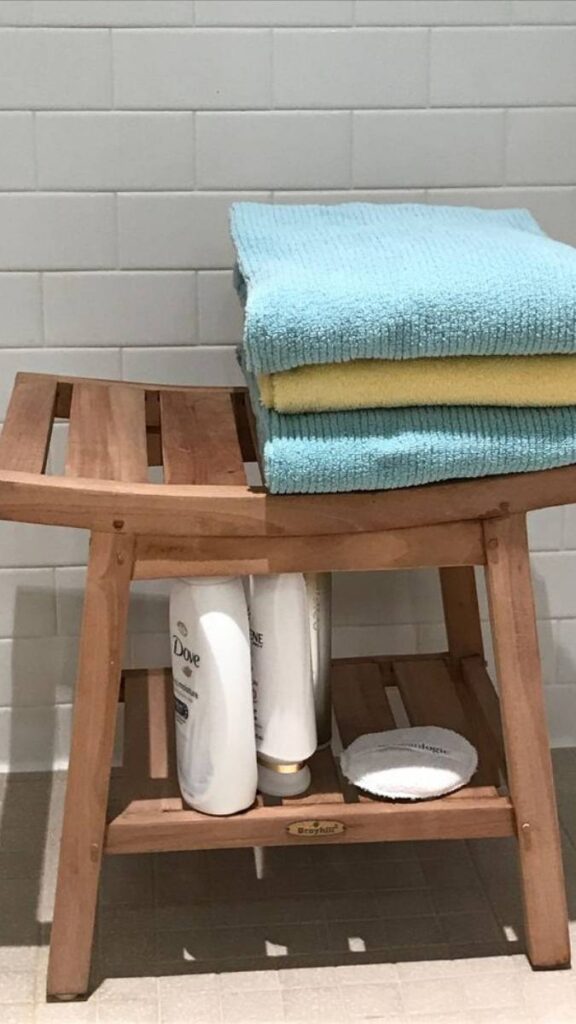
A small stool beside the tub or vanity is a surprisingly high-return piece. It functions as a surface for towels, a plant, or a tray, but it also adds height variation to what is usually a very flat, horizontal room. Teak and bamboo stools in particular have enough natural warmth to shift the room’s feel toward a slow-morning spa atmosphere without any effort.
They also work in narrow spaces where a full side table would block movement; a 12×12 inch stool takes almost no floor footprint. I’ve noticed this style tends to look most at home in neutral, minimal bathrooms where it can sit quietly without competing with pattern or color.
An Open Linen Tower for Vertical Storage in Narrow Bathrooms
In bathrooms where width is limited, vertical storage is the most practical solution. A linen tower, a freestanding unit about 14 inches wide and 60-70 inches tall fits in the gap between the toilet and vanity, or in the dead corner beside the door.
Towers with open shelving (no doors) work best in small bathrooms where the visual weight of cabinetry can make the space feel even more compressed. Folded towels in a consistent color, small lidded baskets for odds and ends, and a plant on top keep the tower from looking like a utility closet.
A Wallpapered Accent Ceiling for Unexpected Visual Depth
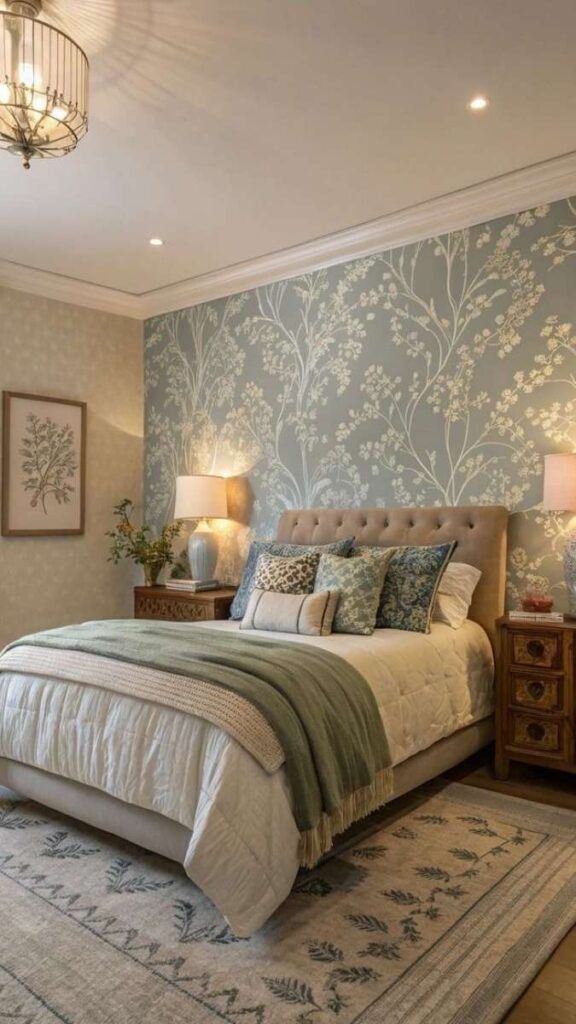
Ceilings in bathrooms are almost universally ignored which is exactly why a wallpapered ceiling works so well as a design move. A peel-and-stick botanical or geometric pattern on the ceiling adds depth and personality without touching the walls, which matters in small spaces where patterned walls can feel claustrophobic.
Because the ceiling is out of your primary sightline when standing, it creates a discovery effect when you notice it gradually rather than all at once. This approach is renter-friendly and reversible, and tends to make the room feel both more intimate and more considered.
A Monochrome Color Story in Warm Neutrals
Monochrome doesn’t mean boring, it means choosing one tonal family and letting it run through every surface and accessory. A warm neutral approach (ivory walls, sand towels, oat-colored mat, natural wood accessories) makes even the smallest bathroom feel calm and considered.
The trick is staying within the same warmth register mixing warm and cool neutrals (beige towels against a gray-blue rug, for example) creates an unresolved visual tension that reads as unintentional. Keeping the temperature consistent across surfaces makes the room feel designed rather than assembled.
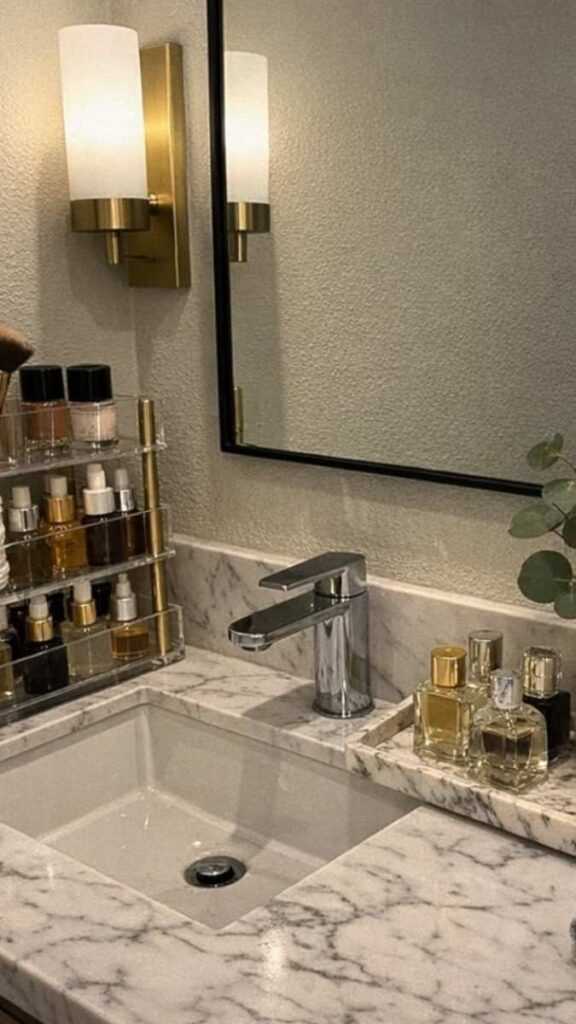
A Vanity Tray as a Micro Organization System
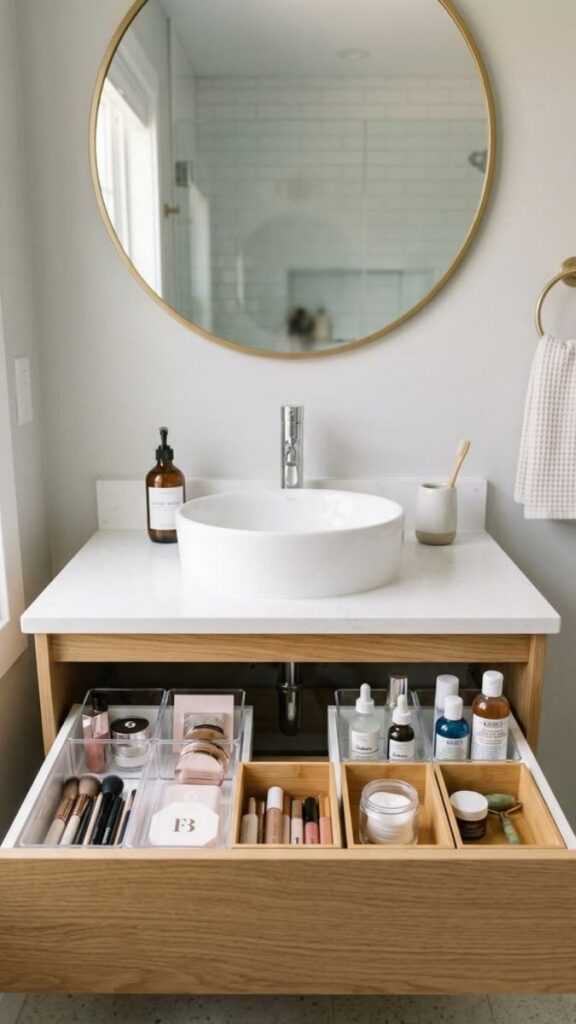
A tray is one of the highest-leverage objects in bathroom organization. It creates a defined zone on an otherwise undefined counter, which automatically signals “this is intentional.” The rule for vanity trays: keep three items maximum inside the tray.
One functional (soap dispenser), one organic (a small plant or stone), one ambient (a small candle or diffuser). More than three start to look crowded. The tray material marble, slate, wooden, or acrylic matters less than the containment principle. Even a basic IKEA tray changes the register of a cluttered counter when used with discipline.
Matte Black Hardware Swap on a Budget
Switching fixture hardware faucet handles, cabinet pulls, towel bar, toilet paper holder to a consistent matte black finish is one of the highest-impact, lowest-effort changes possible in a bathroom. The consistency of the finish is what creates the effect; mismatched metals (chrome towel bar, brass faucet, silver toilet flush) create a fragmented look even in otherwise well-decorated rooms.
Matte black is currently the most versatile finish because it reads as both modern and warm, and it doesn’t show water spots the way polished chrome does. Most hardware can be replaced without a plumber.
Rolled Towels in a Deep Basket Instead of a Traditional Rack
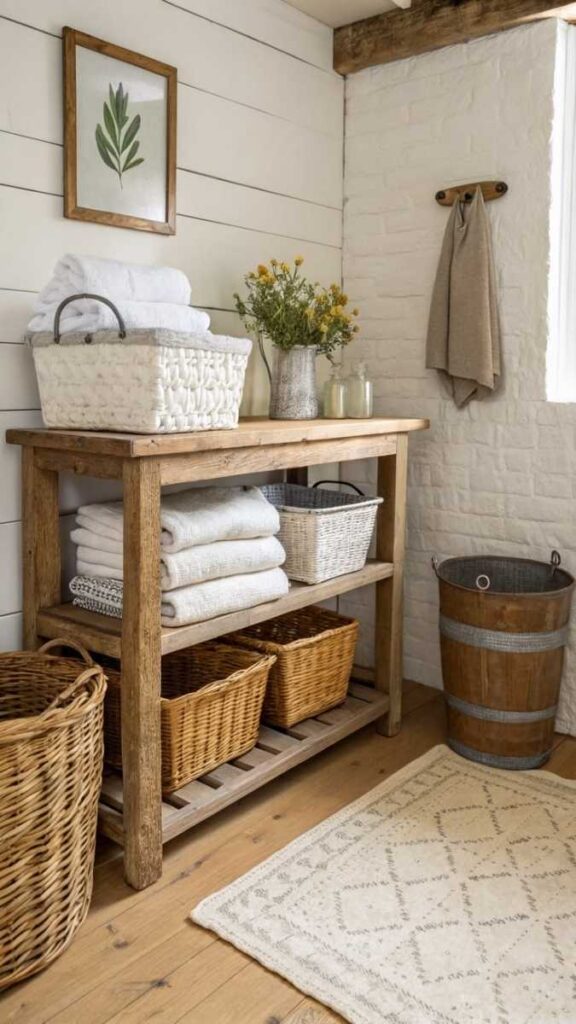
Towel racks work, but they present towels as a flat, utilitarian object. Storing rolled towels in a deep wicker or wire basket positioned on the floor or on a low shelf changes the texture and warmth of the room immediately.
Rolled towels take up more visual space than folded ones (which is an advantage in a room that can feel bare) and the basket adds a material layer that most all-tile, all-hard-surface bathrooms are missing. This setup is also practically useful: a basket on the floor near the shower means towels are within reach without crossing the room.
A Printed Cotton Bath Mat to Ground the Color Story
Bath mats are usually treated as safety objects, non-slip, quick-dry, functional. But the mat is also the largest piece of textile on the bathroom floor, and a printed or tonal one can anchor the room’s entire color story in one piece.
A block-print cotton mat in terracotta and cream, or a striped mat in sage and ivory, functions the way an area rug does in a living room: it grounds the space and tells you what the room’s palette is. Avoid mats with heavy rubber backing in pattern-heavy options; they tend to curl at the corners. Flat weave cotton mats with a block pattern tend to stay flat and wash well.
A Built-In Niche or Faux Niche for Shower Organization
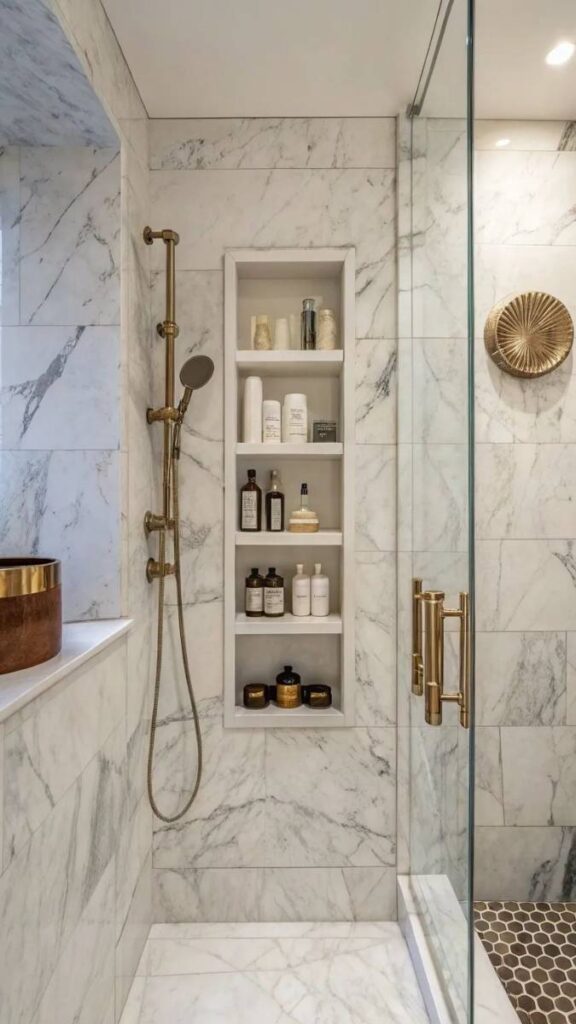
A recessed niche in the shower wall is the cleanest possible storage solution: no caddy, no hardware, no hanging system. In a renovation context it requires cutting into the wall between studs. But for renters or anyone who can’t renovate, a surface-mounted niche (adhered directly to the shower wall with heavy-duty waterproof tape) gives almost the same effect.
The key measurement: niche height should sit at mid-chest level accessible without reaching overhead, visible without looking down. A tile-lined niche (matching or contrasting the shower surround) reads as architectural rather than afterthought.
A Fog-Free Mirror for the Shower Zone
This is a purely functional addition with a surprisingly strong aesthetic payoff. A fog-free mirror (either a self-heating model or one treated with an anti-fog film) mounted at face height inside or directly beside the shower creates a practical grooming zone, but it also adds a reflective surface that makes the shower area feel larger and more finished.
The mirror’s frame round, oval, or frameless becomes a small design detail in a zone that’s usually just tile and fixtures. Chrome or matte black frame options are both readily available.
A Concrete or Resin Soap Dish as a Counter Anchor
Soap dishes are one of those accessories that do almost no visual work in most bathrooms: a plastic tray or chrome rack that blends into the background. A concrete, resin, or ceramic soap dish with some mass and texture does the opposite: it anchors the counter and reads as a deliberate object.
Concrete soap dishes in particular have a matte, neutral quality that works in both minimal and warm-organic aesthetics. The practical note: ensure it has adequate drainage, either through grooves or a porous surface, so the soap doesn’t sit in standing water.
Read More About: 27+ Affordable Pool Furniture Ideas That Actually Look Good
Botanical Prints as a Low Cost Wall Solution
Vintage botanical prints, the kind sold by the sheet at art supply stores or printed from public domain archives online ave a quality that’s genuinely difficult to date. They look appropriate in almost any bathroom style, from farmhouse to contemporary to eclectic.
Two or three prints in matching simple frames (black, white, or natural wood) hung above a towel rack or beside the mirror give the room a studied, collected feel. The botanical subject matter reads naturally in a room that’s connected to water and hygiene, which makes it feel less like a decoration choice and more like a coherent decision.
A Matte White or Cream Paint Refresh to Reset the Room
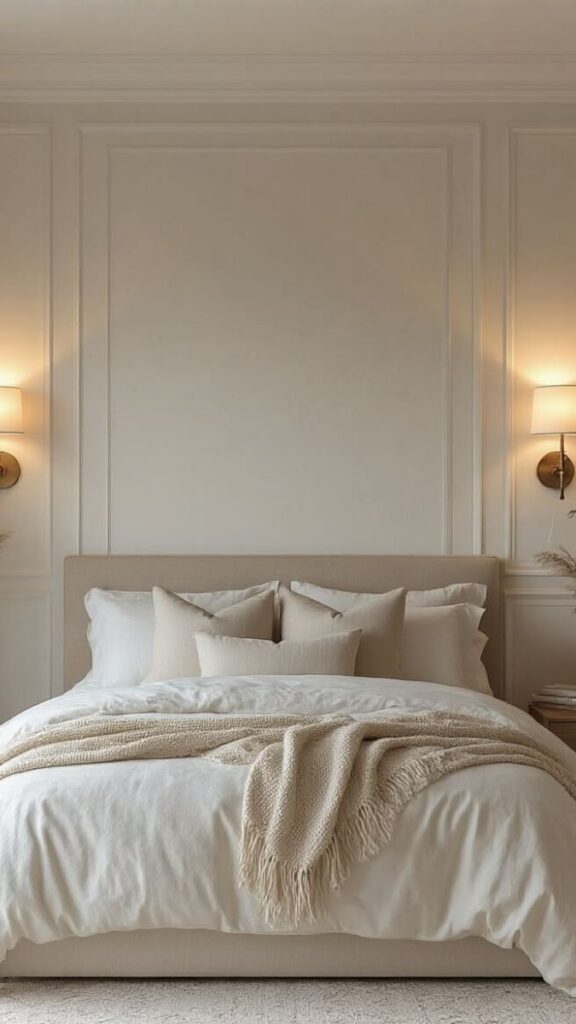
Paint is the single most impactful and least expensive change available in a bathroom. Most builder-grade bathrooms come in a cool-toned eggshell white that interacts badly with fluorescent overhead lighting. Repainting in a warm matte white or a soft cream Benjamin Moore’s White Dove, Sherwin-Williams’ Alabaster, or similar changes how all the other surfaces in the room read.
The matte finish in particular reflects less of the overhead light harshness and absorbs more of the warm light from lamps or sconces. Use a bathroom-specific paint formulated for humidity resistance; standard matte finish will degrade quickly in steam environments.
A Curtain Panel to Separate a Toilet Zone in an Open Bathroom
In open-plan bathrooms or larger layouts where the toilet sits in full view of the bathing area, a ceiling-mounted curtain track with a single linen or cotton panel adds a layer of privacy and architectural definition.
The panel doesn’t need to be heavy or opaque; a lightweight linen in a neutral tone creates visual separation without making the space feel divided. This is especially useful in vacation rentals or shared living situations, and it’s a detail that reads as a design choice rather than a practical workaround.
A Cohesive Scent Layer to Finish the Room’s Atmosphere
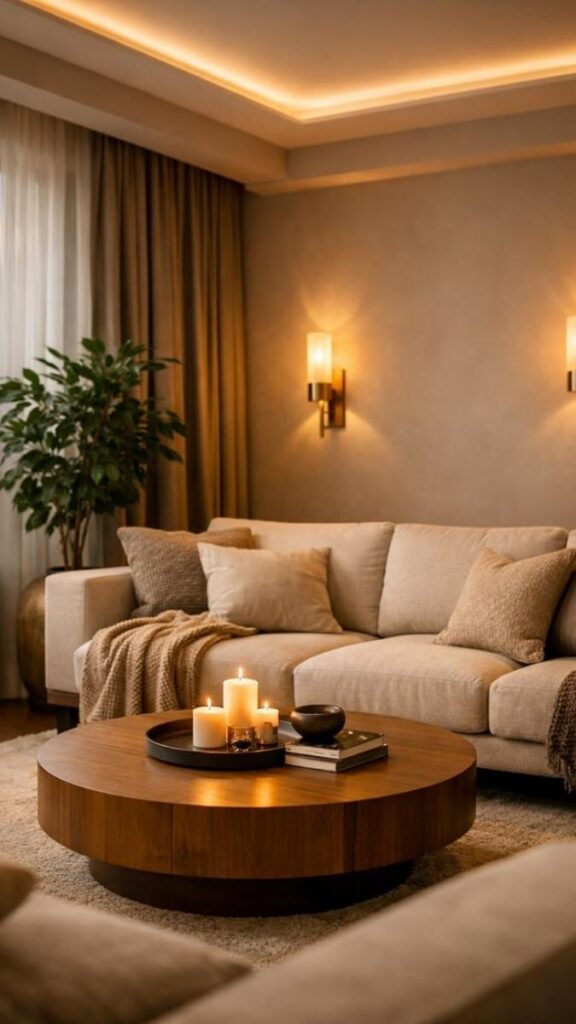
Scent is the final layer of a bathroom that’s genuinely finished. It’s not visible, but it’s the first thing you notice when you walk in. A reed diffuser (longer-lasting and lower maintenance than a candle for daily use) in a clean, simple scent eucalyptus, cedar, unscented linen placed on the counter or a small shelf completes the room in a way that no accessory can.
The visual object (the diffuser vessel and reed stems) also functions as an accessory on the counter. Avoid overpowering or heavily synthetic scents in enclosed bathroom spaces; the goal is ambient freshness, not fragrance overwhelm.
What Actually Makes These Bathroom Decor Ideas Work
Most bathroom decor fails not because of bad taste but because of scale mismatch. A candle that works beautifully on a large bathroom vanity becomes a visual afterthought on a narrow pedestal sink shelf. The rule that applies across every idea above: size everything relative to the surface it sits on, not relative to how it looks on Instagram.
The second most common issue is material consistency. A room with chrome fixtures, matte black accessories, brushed brass hardware, and stainless steel hooks reads as visually chaotic no matter how individually nice each piece is. Narrowing your finish choices to two metals maximum or committing to one resolves most of that tension without replacing a single fixture.
Lighting tends to be the last thing people address and the first thing that would change their experience. A warm bulb swap costs under $10, takes five minutes, and fundamentally changes how every other surface in the room reads. If you do nothing else from this list, start there.
Bathroom Decor Setup Comparison
| Setup | Best For | Space Type | Problem Solved | Difficulty |
| Floating shelves above toilet | Storage without clutter | Small/narrow bathrooms | No storage, dead wall space | Low |
| Oversized mirror | Visual expansion | Any, especially cramped | Room feels boxed-in | Low–Medium |
| Layered lighting | Mood and flatness | All bathrooms | Harsh overhead light | Low |
| Apothecary set + tray | Counter clarity | Any counter size | Packaging clutter | Low |
| Linen shower curtain | Color anchor | Bathrooms lacking character | Plain or stark aesthetic | Low |
| Linen tower | Vertical storage | Narrow bathrooms | No linen storage | Low |
| Gallery wall above toilet | Personality | Medium–small bathrooms | Blank walls | Low–Medium |
| Wallpaper ceiling | Depth and interest | Small, windowless | Flat or boring overhead | Medium |
| Monochrome palette | Cohesion | Any size | Visually fragmented room | Low |
Common Bathroom Decor Mistakes That Make Your Space Feel Smaller or More Cluttered
Hanging towel bars too low.
A standard towel bar at 48 inches from the floor is fine functionally, but positioning it at 54 to 60 inches draws the eye upward, which visually extends the wall height. In small bathrooms especially, where ceiling height is the room’s only vertical advantage, this matters.
Over-accessorizing the counter.
Every object on a counter competes for attention. In a bathroom, the goal is the opposite of a living room restraint reads as luxury. A counter with a soap dispenser, one plant, and one ambient object (candle or diffuser) is the maximum before it starts reading as cluttered. When in doubt, remove one thing.
Using cool-toned white in a warm-toned room.
Bright cool white paint against warm wood accessories and warm-toned towels creates an undertone conflict that’s hard to articulate but easy to feel the room never quite looks resolved. Warm whites (with yellow or pink undertones) or off-whites (cream, linen) resolve this immediately.
Mixing too many metals.
Chrome, brass, matte black, and nickel in the same bathroom is a common default because fixtures are replaced at different times. But the visual noise is cumulative. If replacing all hardware isn’t feasible, pick the dominant finish and swap the lowest-cost items (towel rings, toilet paper holder, cabinet pulls) to match first.
Under-lighting the mirror zone.
Overhead lighting positioned behind you (or directly above) casts shadows downward across your face the opposite of useful for grooming or applying makeup. A light source at eye level, on either side of the mirror, is functionally and aesthetically better. This is achievable without hardwiring via plug-in sconces.
FAQ’s
What is the easiest way to make a small bathroom look more expensive?
Consistency of finish is the fastest route matching all hardware to one metal tone (matte black or brushed brass) and replacing mismatched items immediately changes how designed the room feels. Pair this with a warm bulb swap and matching towels in one tonal family.
How do I decorate a bathroom without making it feel cluttered?
Use a tray as the organizing principle on any counter surface; only what fits in the tray stays on the counter. Group wall items (frames, shelves) tightly rather than spreading them out, and limit each surface to three objects maximum.
What kind of plants work in a bathroom with no natural light?
Pothos, ZZ plants, and cast iron plants are the most tolerant of low-light, high-humidity environments. Pothos in particular grows aggressively in a bathroom and trails well from a high shelf, making it the highest-reward option for a windowless space.
Is it better to have open or closed bathroom storage?
Closed storage (cabinets, lidded baskets) is better when the contents are visually mixed toiletries, cleaning supplies, medications. Open storage works when what’s stored is itself decorative rolled towels, plants, matching bottles. The decision is about what you’re storing, not aesthetic preference.
How do I make a bathroom feel warmer without changing the tile?
Three changes cover most of the work: swap to a warm-white bulb (2700K), add at least one natural material (wood tray, rattan basket, cotton mat), and use towels in a warm neutral (sand, ivory, sage) rather than bright white. None of these touch the tile.
What’s the difference between a spa bathroom and just a nice bathroom?
A spa bathroom prioritizes sensory reduction, fewer objects, softer lighting, one or two materials repeated consistently, and an ambient scent layer. The functional items are hidden or concealed. A “nice” bathroom can still have visible utility; a spa-feel bathroom is specifically edited to minimize it.
Can renters do most of these bathroom decor ideas?
Yes the majority are fully reversible. Peel-and-stick wallpaper, removable hooks and strips, plug-in sconces, free-standing storage, fabric skirts, and accessory swaps require no permanent modification. The only ideas that involve any commitment are paint (which most rentals allow with permission) and hardware swaps (which can be reinstalled at move-out).
Conclusion
A bathroom doesn’t need to be large or expensive to feel right, it needs to be considered. The difference between a bathroom that feels finished and one that feels incomplete is rarely about fixtures or tile; it’s almost always about small decisions made consistently. Light temperature, material finish, counter discipline, and vertical storage solve most bathroom problems without touching the structure of the room.
Start with two or three ideas that match your current constraints budget, space type, or renter status and add from there. Swap the bulb, pick up a tray, roll the towels. Small changes made with intention compound quickly in a room this size.