Best Living Room Layout Ideas: 25 Smart Ways to Arrange Your Space
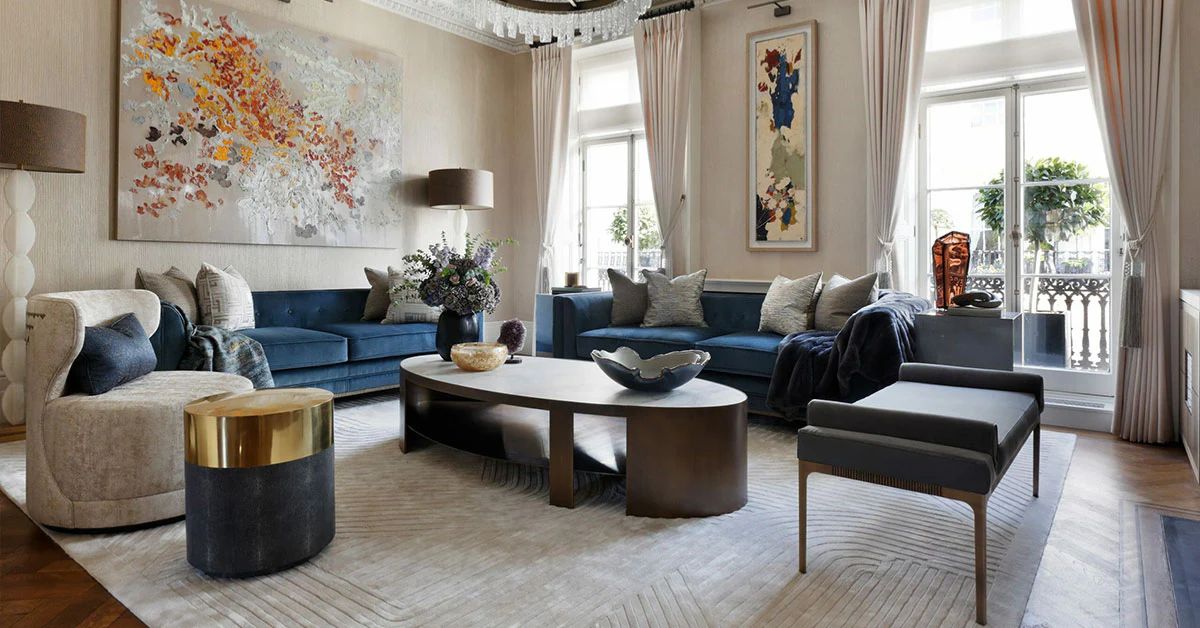
There’s a moment most homeowners know well. You walk into your living room, stare at the furniture, and feel like something is just off. Maybe the sofa feels too close to the wall. Maybe the TV is at a strange angle.
Maybe the whole room just doesn’t flow. The good news? You don’t need a gut renovation to fix it. Smart living room layout ideas can completely transform a space and most of the time, Living Room Layout Ideas it costs nothing but a free afternoon and a willingness to rearrange.
This guide covers 25 smart ways to arrange your space, whether you’re working with a tiny city apartment, a large suburban great room, a long narrow hallway-style living room, or an awkward open-plan setup. From sofa placement and traffic flow to layered lighting and feng shui, every section gives you practical, actionable advice you can use today. Let’s get into it.
How to Choose the Best Living Room Layout
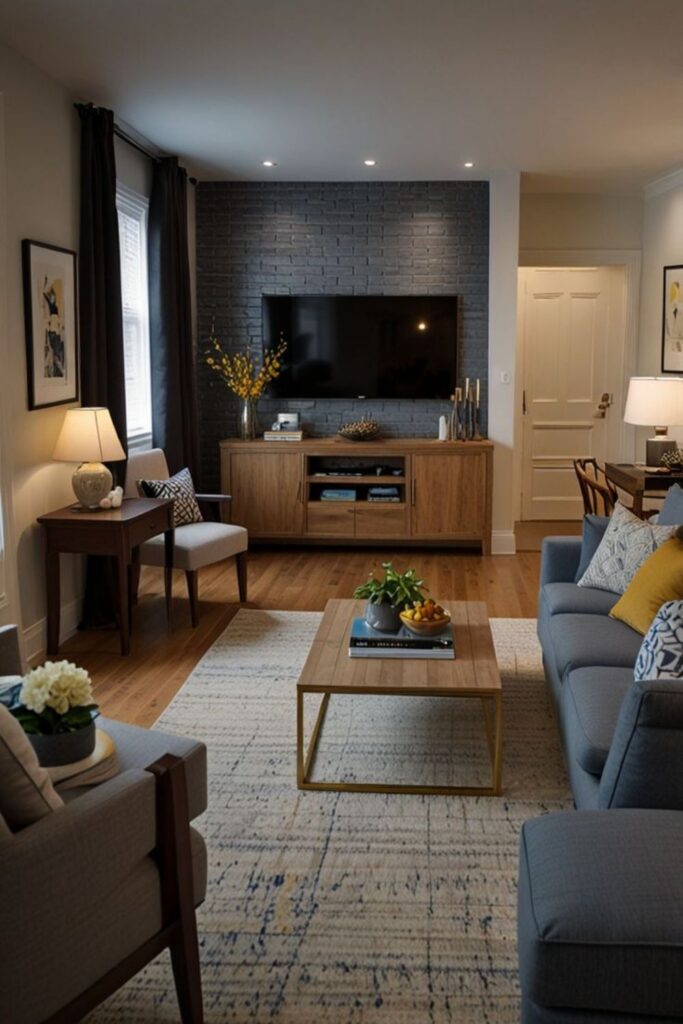
Choosing the right living room layout starts with understanding how you actually use the room. Do you host big family gatherings? Watch a lot of TV? Work from home in the corner? Your lifestyle drives everything: the furniture you choose, how you group it, and where you place it.
Interior designer tips always start here: define the room’s purpose before you move a single piece of furniture.A good living room design balances three things: function, flow, and visual appeal. Function means the room works for daily life.
Flow means people can move through it without bumping into things. Visual appeal means it looks intentional and welcoming, not like furniture was dropped wherever it fit. When all three align, you’ve got a layout that genuinely works.
Measure Your Space Before Arranging Furniture
Before anything else, grab a tape measure. Room dimensions matter more than almost anything else in space planning. Knowing your exact floor area tells you which furniture will actually fit, which pieces are too large, and where the natural pathways run.
Sketch a simple floor plan on graph paper, or use a free digital tool like Roomstyler or IKEA’s Room Planner to visualize the layout before you start lifting anything.
Note every architectural feature doorways, windows, outlets, heating vents, and any chimney breast or built-in shelving. These are non-negotiables that your layout must work around, not against. Here are standard furniture dimensions most American living rooms work with:
| Furniture Piece | Standard Size (USA) |
| Standard Sofa | 84″–96″ wide |
| Loveseat | 52″–66″ wide |
| Sectional Sofa | 110″–140″ across |
| Coffee Table | 48″–54″ long |
| Area Rug (Living Room) | 8’x10′ or 9’x12′ |
| TV Stand / Media Cabinet | 60″–70″ wide |
| Side Table | 24″–28″ tall |
| Floor Lamp | 58″–64″ tall |
These numbers aren’t rules, they’re starting points. But they’ll save you from hauling a sofa upstairs only to discover it doesn’t fit through the door.
Identify the Room’s Focal Point
Every well-designed living room has a focal point, one dominant element that draws the eye when you walk in.
It’s the anchor around which everything else arranges itself. In American homes, the fireplace focal point is a classic choice. So is a large-screen TV mounted on a media cabinet, a dramatic window with a garden view, or even a bold piece of wall art.
Here’s the key principle: arrange your furniture toward the focal point, not away from it. When sofas and chairs face the focal point, the room instantly feels intentional and pulled together. When they face random directions, the space feels disjointed.
If you’re not sure what your focal point is, look at the largest wall or the most prominent architectural feature. That’s usually your answer.
Small Living Room Layout Ideas
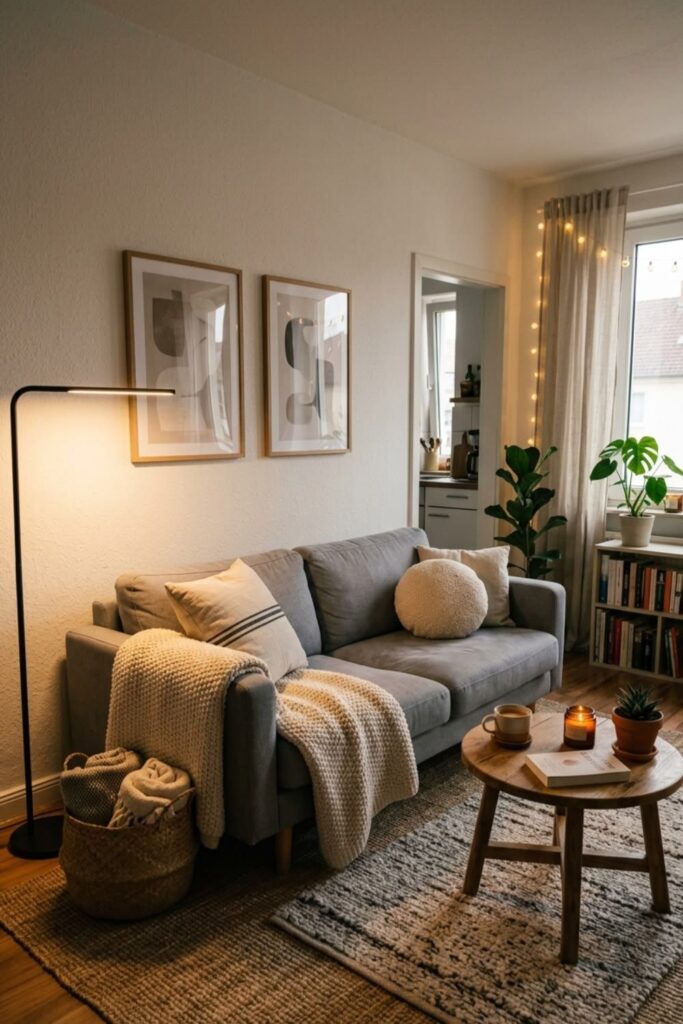
Small living room layouts demand creativity. Every inch counts, so the decisions you make about furniture size, placement, rug choice carry more weight than they would in a larger space.
The biggest mistake people make in compact rooms is pushing all the furniture against the walls. It feels logical, but it actually makes the room feel smaller and more hollow, not bigger.
Interior styling for small spaces is about creating the illusion of space while maximizing actual usability.
A loveseat instead of a full sofa, a round coffee table instead of a rectangular one, and a well-chosen area rug that’s sized correctly can make a small room feel surprisingly generous. Think of it this way: small rooms need more thoughtful decisions, not fewer.
Layout Ideas for Tiny Living Rooms
Tiny living room furniture needs to be edited ruthlessly. Pull the sofa away from the wall by at least three to six inches floating furniture, even slightly, creates depth and makes the room feel more designed.
Choose pieces with exposed legs rather than pieces that sit flush to the floor; visible floor space reads as open space. A loveseat paired with one or two armchairs often works better than a full-size sofa in a tight room.
Use a round coffee table to ease traffic flow with no sharp corners to navigate around. Layer a properly sized area rug under the seating group to anchor the conversation zone and define the space visually.
Mirrors opposite windows double the natural light and visually push the walls outward. Keep decorative accents minimal: one or two meaningful pieces beat a crowded collection every time in a small room.
Space-Saving Furniture Arrangements
Multifunctional furniture is a small room’s best friend. An ottoman with hidden storage solutions inside serves as a coffee table, extra seating, and a place to stash blankets three jobs in one piece.
Nesting tables replace a traditional side table and tuck away when not needed. A console table behind the sofa doubles as a desk or display surface without eating floor space.
Compact furniture with slim profiles keeps the room from feeling overwhelmed. A wall shelving unit mounted above eye level draws the eye upward and adds storage without consuming floor area.
A bookcase in a corner can anchor a reading corner while adding pers.
Read More About: 43+ Wall Decor Ideas That Actually Make Your Space Feel More
Large Living Room Layout Ideas
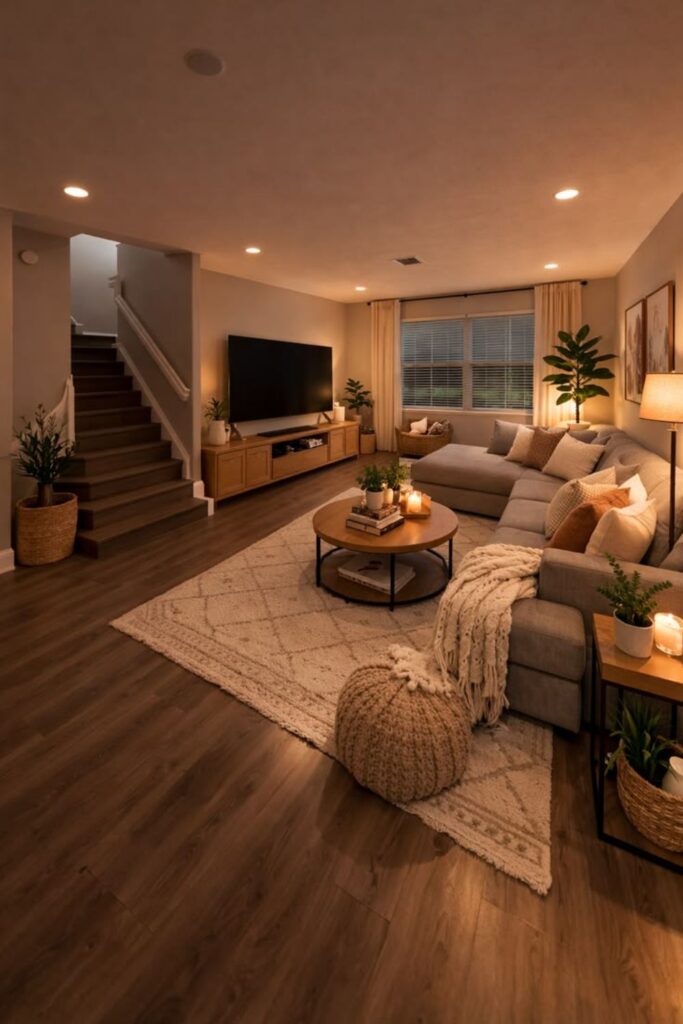
Large living rooms present the opposite problem from small ones. Too much empty space looks just as uncomfortable as a cramped room. The instinct to push all the furniture against the perimeter walls leaving a vast empty center is exactly what makes big rooms feel cold and uninviting.
Interior designer tips for large spaces almost always involve floating the furniture toward the middle of the room and creating distinct zones.
Think of a large open-plan living room as several smaller rooms living inside one big one. A seating zone for TV watching, a conversation zone for guests, a reading corner for quiet time each zone has its own furniture grouping, its own area rug, and its own layered lighting. This approach makes a large room feel warm, purposeful, and alive.
Creating Multiple Conversation Zones
Conversation areas work best when seating is grouped within eight to ten feet of each other. Beyond that distance, you’re not having a conversation you’re shouting across a room.
In a large living room, create two or three distinct seating zones, each anchored by its own area rug and centered around a coffee table or side table.
Use the backs of sofas as natural dividers between zones. A sofa facing the TV creates the entertainment zone; turning another sofa perpendicular and adding two armchairs creates a separate conversation zone beside it.
Room dividers, bookcase units, and even tall plants can subtly separate zones without closing off the space. Each zone should feel complete on its own while reading as part of a cohesive whole.
Balancing Scale and Proportion
Furniture scale is critical in large rooms. A tiny two-seater sofa floating in the middle of a twenty-foot room looks lost and sad. Choose generously sized pieces: a substantial sectional sofa, an oversized coffee table, large-format wall art, and a rug that’s big enough to anchor the whole seating group.
The standard guideline is that your area rug should extend at least eighteen inches beyond each side of the sofa.
Visual balance in large rooms also comes from room symmetry matching lamps flanking a sofa, a pair of armchairs mirroring each other, or twin floor lamps creating equal visual weight on both sides of the room.
Balanced room proportions don’t mean everything has to be perfectly symmetrical, but the eye needs something stable to rest on. A large room with one giant sofa and nothing else looks like a furniture warehouse, not a home.
Long Narrow Living Room Layout Ideas
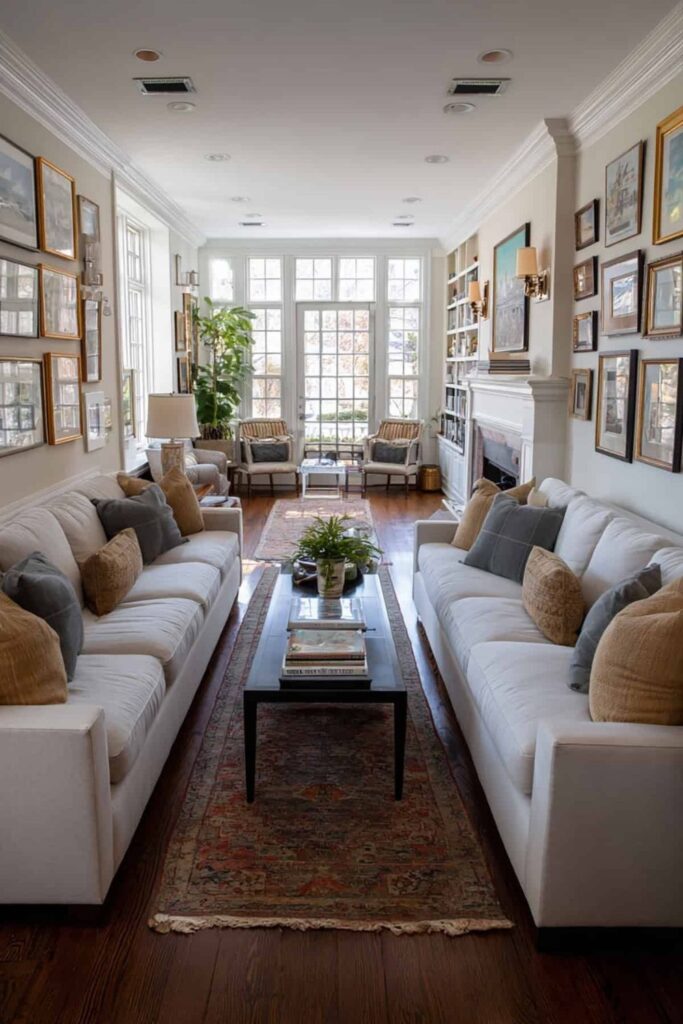
Long, narrow rooms are one of the most common layout challenges in American homes, especially in older row houses and urban apartments.
The natural temptation is to line furniture along both long walls creating what designers call the “bowling alley” effect. You end up with a tunnel of furniture that feels awkward to use and uncomfortable to sit in.
The fix is surprisingly simple. Break the tunnel by placing furniture arrangement across the narrow room, not along it.
A sofa perpendicular to the long walls, with armchairs facing it, creates a conversation zone that feels like its own room within the room. This interrupts the tunnel visually and makes the space feel wider and more purposeful.
Best Furniture Placement for Narrow Rooms
In a narrow living room, the sofa is your most powerful tool. Place it against one of the short walls, facing down the length of the room, with a coffee table in front and armchairs on either side.
This creates a contained conversation area that feels cozy rather than cramped. Alternatively, place the sofa perpendicular to the long wall to visually divide the room into zones.
A horizontal area rug one that’s wider than it is long tricks the eye into perceiving more width. Likewise, horizontal stripes in the rug pattern or horizontal wall art above the sofa reinforce that sense of width.
Keep storage furniture low-profile and choose pieces with legs to show more floor, which also reads as more space. Avoid oversized furniture with bulky arms or deep seats; they eat precious inches in a narrow room.
Read More About: 35+ Best Living Room Paint Ideas to Transform Your Space in 2026
How to Improve Traffic Flow
Traffic flow is the unsung hero of great living room layout ideas. The general rule is this: main pathways through the room need at least 36 inches of clearance. Secondary pathways between the coffee table and sofa, for example, need at least 18 to 24 inches.
When traffic patterns are blocked by furniture, the room feels claustrophobic even if it’s technically spacious.
In a narrow room, traffic flow is even more critical. Identify the natural routes people take through the space from the front door to the kitchen, from the hallway to the back of the house and make sure no furniture blocks those paths.
A simple trick: walk the routes yourself before settling on a layout. If you find yourself turning sideways or squeezing past the sofa, something needs to move.
Awkward Living Room Layout Ideas
Awkward rooms are actually a secret opportunity. An unusual shape forces you to think creatively, and the result is often a layout that’s far more interesting than a standard rectangular room would produce. Working with an awkward-shaped room means accepting the quirks instead of fighting them.
That strange corner becomes a reading nook. That odd alcove becomes a home office nook. That angled wall becomes an art gallery.
The first step with any awkward room is to identify what’s fixed and what’s flexible. Architectural features like chimneys, support columns, and load-bearing walls are fixed. Everything else, furniture, rugs, and lighting is flexible.
Once you know what you’re working around, the layout puzzle becomes much easier to solve.
Working Around Windows and Fireplaces
Windows are a gift in any room. They bring natural lighting, ventilation, and a connection to the outside world. Never block a window with tall furniture. Instead, float low-profile furniture beneath windows to keep the light flowing into the room.
If your sofa needs to go in front of a window, keep the back of the sofa no higher than the windowsill.
The chimney breast and fireplace focal point deserve special attention. A fireplace is almost always the most architecturally significant element in a room. Use it as your anchor.
Arrange seating to face the fireplace, with the sofa and armchairs angled slightly inward to create a warm, intimate conversation zone around the hearth. Keep furniture at least 36 inches from the firebox opening for safety. Then address the TV separately; we’ll cover the fireplace and TV combination layouts later.
Solutions for Unusual Room Shapes
L-shaped rooms, rooms with bay windows, rooms with odd angles or support columns these challenge even experienced designers. But each unusual feature can be turned into an asset. A bay window becomes a reading corner with a bench seat or a pair of armchairs positioned to capture the light and the view.
A support column becomes a visual divider between a seating zone and a home office nook.
For rooms with angled or non-parallel walls, try angling the furniture itself to echo the room’s geometry. A sofa placed at a slight angle from the wall often works better than fighting to make it sit perfectly parallel to a wall that isn’t quite straight.
Room zoning with area rugs works exceptionally well in irregular spaces; a rug defines a zone clearly regardless of what shape the room is.
Open Plan Living Room Layout Ideas
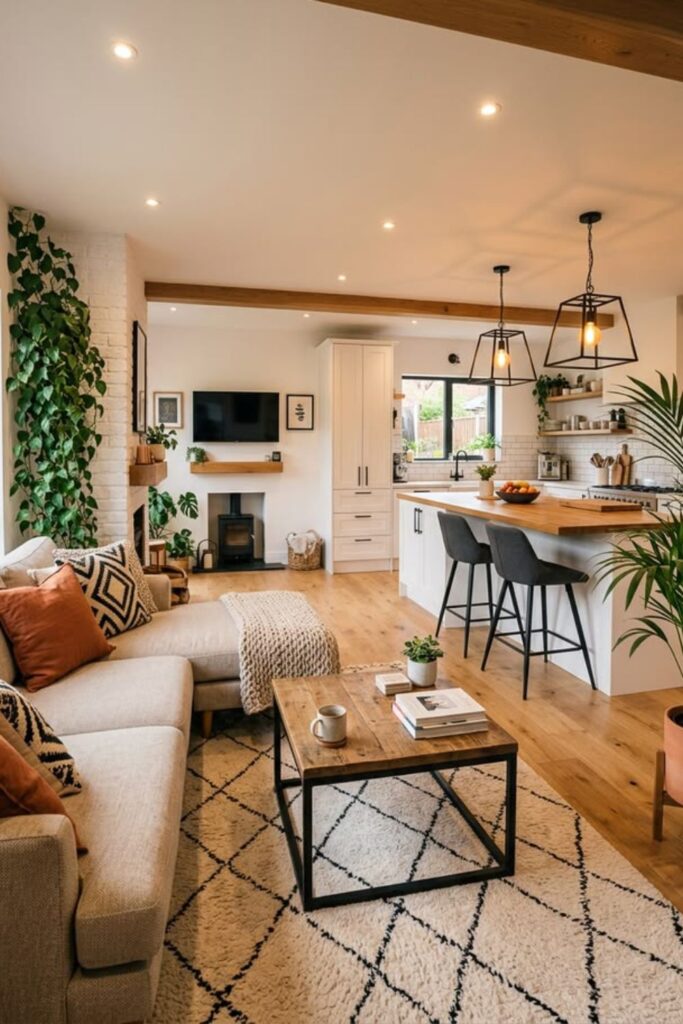
Open-plan living is the dominant style in modern American home design. Kitchens, dining rooms, and living rooms flow together in one continuous space. It’s beautiful and sociable but it presents a real design challenge.
Without walls to define where one room ends and another begins, spaces can feel undefined, chaotic, and impossible to furnish well.
The secret to great open-plan living room design is creating implied boundaries rather than physical ones.
Area rugs, furniture groupings, lighting changes, and even ceiling treatments can define zones powerfully without a single wall. Think of it as room zoning through suggestion rather than construction.
Defining Zones Without Walls
The most effective zone-defining tool in an open-plan living room is the area rug. Place a large rug under the living room seating group big enough that all four legs of every piece sit on it and instantly the living area becomes its own defined space. A different rug under the dining table creates an equally clear dining zone.
Two rugs, two zones, no walls needed.
The back of a sofa is another powerful zone definer. A sofa placed with its back facing the kitchen or dining area creates a visual wall that says clearly: living room on this side, kitchen on that side. Add a console table running along the back of the sofa for even more definition and extra surface space.
Room dividers like open bookcase units, hanging pendant lights, and changes in layered lighting all reinforce zone boundaries without closing off the beautiful open feel.
Furniture Placement in Open Spaces
In a large open-plan living room, floating the furniture in the center of the living zone is almost always the right move.
It feels counterintuitive most of us are conditioned to push furniture against walls but floating creates a defined, inviting room within the larger open space. The furniture itself becomes the architecture.
Furniture scale matters enormously here. A sectional sofa or a large L-shaped sofa anchors the living zone with authority. Pair it with a substantial coffee table, generous armchairs, and a large area rug.
Floor lamps placed at the edges of the seating group provide layered lighting that reinforces the zone boundaries after dark. Keep pathways of at least 36 inches clear between the living zone and the kitchen and dining areas to maintain good traffic flow throughout the open plan.
Living Room Layout Ideas With a TV
Television placement is one of the most debated topics in living room design. In most American homes, the TV is the dominant feature, the thing everyone looks at most of the time.
That means getting the placement right matters enormously for comfort, eye strain, and how the room feels overall.
The general principle is simple: the TV should be at eye level when you’re seated. That’s roughly 42 to 48 inches from the floor to the center of the screen. When the TV is too high, you crane your neck upward for extended viewing, which causes real discomfort.
When it’s too low, reflections from windows and natural light can create glare. Eye level is the sweet spot.
TV Above the Fireplace Layouts
Mounting the TV above the fireplace focal point is enormously popular in American living rooms and it’s worth being honest about the tradeoffs.
It looks sleek and saves wall space. But in most rooms, it places the TV significantly higher than ideal viewing height, which means neck strain during long viewing sessions.
If you love the look and want to make it work, a tilting wall mount lets you angle the screen downward toward the seating.
A recessed niche above the fireplace keeps the TV at a lower height. A pull-down motorized mount is the premium solution; it drops the screen to eye level when you’re watching, and retracts above the mantel when you’re not. These solutions add cost but genuinely solve the ergonomic problem.
Best Viewing Distances and Angles
The formula for ideal television placement distance is straightforward: screen size multiplied by 1.5 to 2.5 gives you the ideal range in feet.
So a 65-inch TV works best when seating is between 8 and 13.5 feet away. Here’s a quick reference:
| TV Screen Size | Ideal Viewing Distance |
| 43″ | 5.5 – 9 feet |
| 55″ | 7 – 11.5 feet |
| 65″ | 8 – 13.5 feet |
| 75″ | 9.5 – 15.5 feet |
| 85″ | 10.5 – 17.5 feet |
The maximum comfortable viewing angle off center is about 40 degrees. Anyone sitting at a sharper angle than that will find the picture quality and viewing experience degraded. Position your seating zone so that the outermost seats are within that 40-degree range.
And always position the TV away from windows or strong light sources behind it. Natural light directly behind the screen creates distracting glare that no brightness setting fully overcomes.
Living Room Layout Ideas With a Fireplace
A fireplace changes everything about a living room layout. It gives you a clear, powerful focal point that does half the design work for you. The warmth, the visual drama, the architectural presence of a fireplace is a gift to any room.
The challenge is building a layout around it that feels balanced and functional without making the TV an afterthought.
The seating arrangement around a fireplace focal point should feel intimate and welcoming. Think of it as gathering around a campfire.
Seating arranged in an arc or horseshoe shape, facing the hearth, creates that instinctive sense of warmth and community that makes living room decor feel truly inviting rather than just aesthetically polished.
Arranging Seating Around a Fireplace
Keep upholstered furniture at least 36 inches from the firebox opening. That’s both a safety requirement and a comfort one, since sitting too close to a working fireplace is genuinely hot. Beyond that minimum, the ideal seating distance from a fireplace is three to four feet for chairs and four to five feet for the main sofa.
Armchair arrangement flanking the fireplace is a classic look for good reason. Two armchairs on either side of the hearth, with a sofa opposite, creates a balanced and inviting conversation zone that naturally draws people toward the fire.
Room symmetry here feels appropriate and elegant matching chairs, matching side tables, matching table lamps or floor lamps on either side. It’s one of those layouts where symmetry genuinely works better than creative asymmetry.
Fireplace and TV Combination Layouts
When both a fireplace and a TV share the same room, you have three main options. First: side-by-side placement, with the TV mounted on a media cabinet or wall panel next to the fireplace.
This is the most ergonomically sound option because both elements are at similar heights and in the same general direction from the seating. Second: TV above the fireplace (see caveats above). Third: TV and fireplace on separate walls, with swivel chairs or moveable seating that can pivot between both.
The side-by-side option, especially when flanked by built-in cabinetry, looks incredibly polished and solves the layout challenge cleanly.
The built-ins can house the media cabinet, storage furniture, and display space for decorative accents while tying the fireplace and TV together into one cohesive feature wall. It’s the solution most interior designer tips favor for homes that need both elements to coexist.
Best Furniture Arrangement Examples
Sometimes the clearest way to understand living room layout ideas is to see specific furniture arrangement configurations laid out plainly. These four classic arrangements cover the vast majority of living room situations in American homes.Each has strengths, limitations, and a type of room where it works best.
These aren’t rigid templates, think of them as starting points. A good seating plan adapts to your room’s specific dimensions, architectural features, and the way your household actually lives. Use these as launching pads, then adjust based on what your space demands.
Sofa With Two Chairs Across From It
This is the most versatile living room furniture arrangement in existence. A sofa on one side, two armchairs across from it, a coffee table in between it works in rectangular rooms, it encourages conversation, and it creates a clear visual structure that feels immediately right. Angle the chairs slightly inward toward each other to create a more intimate, welcoming feel rather than a perfectly parallel lineup.
The coffee table in this configuration should be about two-thirds the length of the sofa and positioned twelve to eighteen inches from the sofa’s edge close enough to reach comfortably, far enough to walk past without bumping your shins. Add a side table beside each armchair so every seat has a surface for drinks and books. This is a layout that works in almost any rectangular room and suits both everyday living and entertaining.
Read More About: Best Living Room Color Ideas: 25 Designer Approved Paint Colors & Combinations
Two Sofas Facing Each Other
Two sofas facing each other creates a bold, symmetrical seating arrangement that’s particularly good for larger rooms and households that entertain regularly.
The two-sofa configuration has an inherent generosity: it seats more people, it reads as intentional and designed, and it gives the room strong room symmetry that’s visually satisfying.
Keep the gap between the facing sofas eight to ten feet maximum. Beyond that, conversation becomes uncomfortable. A large, substantial coffee table or a pair of smaller coffee tables side by side sits between them to anchor the arrangement and provide shared surface space.
An area rug large enough to sit under all the legs of both sofas ties the whole configuration together. Add floor lamps at the outer ends of each sofa to create layered lighting that makes the whole arrangement glow in the evening.
U-Shaped Seating Arrangement
The U-shaped arrangement is ideal for large living rooms and families who spend a lot of time together watching TV or talking.
A sofa and two additional sofas or large armchairs form three sides of a square or rectangle, with the open end facing the focal point whether that’s the TV, the fireplace, or a media cabinet.
A sectional sofa or L-shaped sofa can form most of the U on its own, which simplifies the arrangement considerably. Complete the U with a matching loveseat or a pair of armchairs opposite the open end. The coffee table sits at the center of the U, accessible from all sides. This arrangement is wonderfully inclusive: everyone faces the center and everyone has a good sightline to the focal point. It’s the arrangement that families with kids tend to love most.
Chairs Flanking a Sofa
Two armchairs flanking a sofa is a layout rooted in room symmetry and it works beautifully in both formal and casual rooms.
The sofa serves as the visual anchor; the chairs bracket it on either side like bookends. Each chair gets its own side table and floor lamp or table lamp to create a complete, functional vignette.
This arrangement shines in rooms with a fireplace focal point; the flanking chairs echo the symmetry of the mantelpiece and make the whole arrangement feel architecturally considered.
It also works well in square rooms where a central sofa alone might feel lost. The key is choosing armchairs that are in proportion with the sofa, not so small they look like afterthoughts, not so large they overwhelm the central piece.
Living Room Layout Mistakes to Avoid
Even beautiful furniture can look terrible in a poorly planned layout. The most common living room layout mistakes aren’t about taste, they’re about geometry, proportion, and traffic flow. Understanding what goes wrong is just as useful as knowing what goes right.
Home styling mistakes tend to compound each other. One undersized area rug leads to furniture that looks unanchored. Unanchored furniture gets pushed against walls. Furniture against walls creates an empty center that feels cold. Then the TV ends up in an odd position to fill the void.
One bad decision cascades into a whole room that doesn’t feel right. Fixing the root cause usually the rug or the focal point orientation often resolves several issues at once.
Blocking Natural Walkways
Blocking traffic patterns is the single most common layout mistake designers encounter. A sofa placed across a doorway, a coffee table too close to the sofa, an armchair that forces people to squeeze past the TV.
These small blockages make a room frustrating to use even when it looks perfectly fine in a photo.
The solution is to physically walk the paths before you commit to a layout. Walk from the front door to the kitchen. Walk from the hallway to the dining area. Walk around the sofa.
If you find yourself turning sideways, squeezing through gaps, or bumping into furniture, you’ve found the problem. Clear 36 inches for main pathways and 18 to 24 inches for secondary ones. Good room flow should feel effortless.
Choosing Oversized Furniture
Oversized furniture in a room that can’t accommodate it creates an instantly overwhelming, claustrophobic feeling. That massive sectional sofa that looked perfect in the showroom can eat an entire living room when it arrives home.
The proportions that work in a large showroom space simply don’t translate to a standard-sized living room.
Before you buy, tape out the furniture’s footprint on your floor using painter’s tape. Live with those tape outlines for a day or two. Walk around them, sit in the approximate positions, and see how they affect traffic flow.
This simple exercise has saved countless people from expensive furniture mistakes. A general guideline: all furniture combined should occupy no more than two-thirds of the room’s total floor area, leaving one-third as open space for traffic patterns and visual breathing room.
Feng Shui Living Room Layout Tips
Feng shui is an ancient Chinese system of spatial arrangement built on the idea that the physical environment directly affects energy, wellbeing, and harmony.
Whether you’re a true believer or just feng-shui-curious, many of its principles align remarkably well with what Western interior designer tips recommend independently. Good traffic flow, strategic sofa placement, and a clear focal point feng shui agrees with all of it.
The central concept in feng shui for living room design is the flow of positive energy through a space. Furniture that blocks chi flow, rooms that feel cluttered, sharp corners pointing toward seating all these disrupt the energy of the space.
Creating openness, choosing rounded edges where possible, and keeping pathways clear all support positive chi flow, and they also just make rooms feel better to be in.
Best Sofa Position According to Feng Shui
In feng shui, the ideal sofa placement follows the “command position” principle. This means placing the sofa against a solid wall, with a clear view of the main entrance to the room.
The rationale is deeply instinctive: sitting with your back to a solid wall and your eyes on the door creates a subconscious sense of security and control. You can see who’s coming. You’re not vulnerable from behind.
Placing the sofa directly in line with the entrance doorway is discouraged if feng shui chi rushes straight through the room without circulating.
Instead, position the sofa slightly to the side of that direct line, allowing energy to move through the space more gently. Natural light is highly valued in feng shui living room design position seating to take advantage of light from windows while avoiding harsh direct glare.
Furniture Placement for Positive Energy
Furniture with rounded edges is preferred in feng shui because sharp corners create what practitioners call “poison arrows” concentrated flows of negative energy directed at the people sitting nearby.
This isn’t just mysticism: sharp corners at shin height are genuinely uncomfortable and even physically dangerous. A round coffee table is both feng-shui-approved and practically safer for households with children.
Keep traffic patterns and pathways completely clear for chi to circulate freely. Storage furniture that contains clutter is actively encouraged. Hidden chaos is better than visible chaos. Natural light, living plants, and natural materials (wood, linen, cotton, stone) all support positive energy in space.
Mirrors can be used to reflect natural light and visually expand the room, but avoid placing them directly facing the sofa in feng shui, this is said to push energy back at the occupants rather than circulating it through the room.
Living Room Layout Ideas by Room Shape
Room dimensions and shape are the foundational constraints that every living room layout must work within.
American living rooms come in four basic shapes: square, rectangular, L-shaped, and irregular and each shape has a distinct set of challenges and opportunities. Understanding your room’s geometry is the first step toward a layout that actually works.
Space planning by shape means recognizing which arrangements suit the proportions naturally and which fight against them. A layout that’s perfect for a square room will look wrong in a long rectangular one.
A configuration that thrives in an L-shaped room won’t translate to a square. Shape first, furniture second, that’s the order.
Square Living Room Layouts
Square rooms have four equal walls, which sounds simple but creates a subtle challenge: the temptation to over-symmetrize everything, resulting in a room that feels like a furniture catalogue rather than a home.
Equal walls don’t require perfectly equal furniture placement. In fact, a little asymmetry in a square room creates visual interest and energy.
A U-shaped seating arrangement works beautifully in a square room, as does a circular grouping of armchairs and a loveseat around a central round coffee table.
An area rug placed at a slight diagonal from the walls is a bold move that instantly differentiates the room and breaks the rigid geometry. Keep the focal point on the wall opposite the main entry so it draws you naturally into the space when you walk in.
Rectangular Living Room Layouts
Rectangular rooms are the most common configuration in American homes. Most living room layout ideas are designed with rectangular rooms in mind, which means you have the most layout options and the most references to draw from.
The main challenge is avoiding the “bowling alley” effect in long rectangular rooms and the “empty box” feeling in wider rectangular rooms.
For long rectangles, divide the room into two functional zones: a TV and seating zone at one end, a reading or conversation zone at the other using area rugs to anchor each zone separately.
For wider rectangles, a large sectional sofa or L-shaped sofa placed perpendicular to the long wall creates an immediate sense of structure. Always anchor the main seating group with an area rug large enough that all front legs of every piece sit on it.
L-Shaped Living Room Layouts
An L-shaped room is actually one of the most layout-friendly configurations once you understand how to use it. The two distinct arms of the L naturally suggest two separate zones and that’s exactly how you should treat them.
Use the longer arm for the main living room furniture grouping sofa, coffee table, TV. Use the shorter arm for a reading corner, a home office nook, or a drinks cabinet.
An L-shaped sofa or sectional sofa that follows the room’s natural bend is a sleek, space-efficient choice that defines the living zone without over-furnishing. Place the TV in the corner where the two arms meet, so it’s visible from both sections of the L.
A single large area rug that runs through the bend of the L can tie both zones together into one cohesive living room design rather than two disconnected spaces.
Living Room Layout Ideas on a Budget
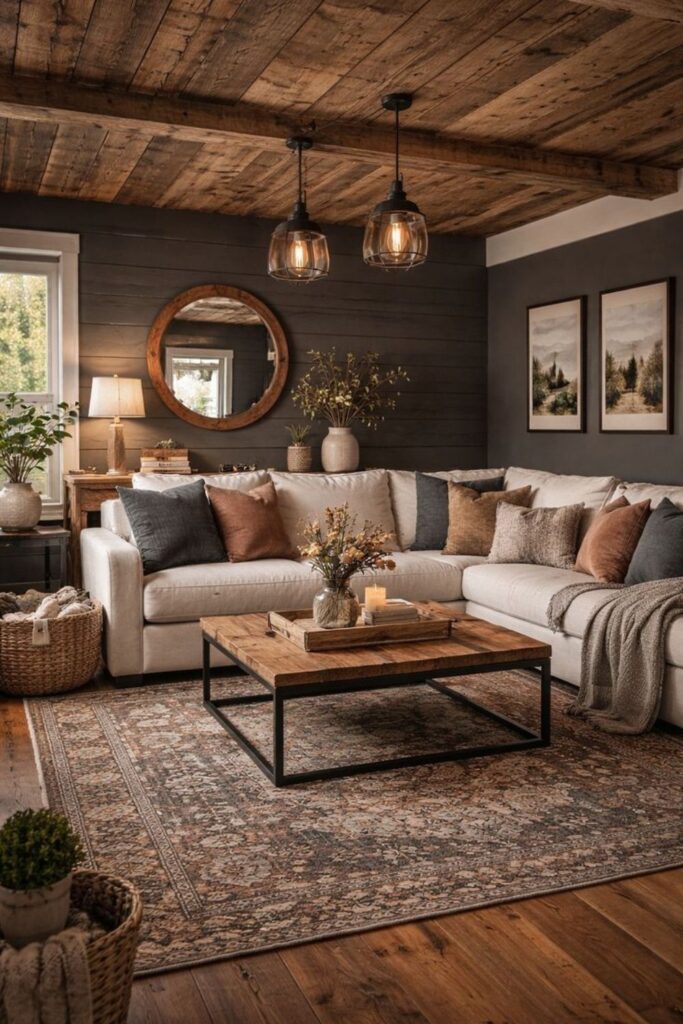
You don’t need a designer’s budget to get a designer’s result. The most transformative living room layout changes cost nothing at all; they just require a willingness to move things around and see what happens. Rearranging what you already own is always the first step before spending any money.
Budget decorating is largely about prioritizing the changes that create the most visual and functional impact per dollar spent. An area rug in the right size and position transforms a room more than almost any other single purchase.
A fresh coat of paint on one accent wall costs thirty dollars and changes the room’s entire character. Home styling doesn’t require unlimited funds, it requires clear thinking about what the room needs most.
Rearranging Existing Furniture
Start by clearing the room completely if you can even move everything to one side. This gives you a blank canvas to work with and helps you see the space fresh. Identify the focal point. Pull the largest piece of furniture almost always the sofa toward that focal point. Build outward from there, adding armchairs, coffee tables, and side tables one piece at a time.
Use free online tools like Roomstyler or Planner 5D to test configurations virtually before you strain your back moving things physically. The “48-hour rule” is worth knowing: live with any new arrangement for two full days before deciding if it works. First impressions aren’t always accurate. A layout that feels strange on the first evening sometimes feels completely natural by the second day.
Affordable Layout Improvements
After rearranging, the highest-impact affordable upgrades are an area rug in the correct size, a new floor lamp or pair of table lamps to add layered lighting, and rearranged wall art to shift visual weight. Thrift stores and Facebook Marketplace regularly yield excellent side tables, armchairs, and storage furniture at a fraction of retail prices especially if you’re willing to sand and repaint.
Layering two smaller area rugs one placed partially overlapping the other, creates a designer-style “stacked rug” look at a lower price point than one large rug. Long curtains hung close to the ceiling and extending past the window frame on both sides make windows look larger and ceilings feel higher. These are $50–$100 changes that deliver a $500 visual impact every single time.
Living Room Lighting Layout Tips
Layered lighting is what separates a flat, harsh-feeling room from one that feels warm, dimensional, and beautiful at any hour of the day. Most living rooms rely too heavily on a single overhead ceiling fixture and that single source of light, cast from above, creates unflattering shadows, flattens the room visually, and makes it uncomfortable to relax in.
Living room decor benefits enormously from lighting variety. The three layers ambient (overall illumination), task (focused light for reading or working), and accent (decorative highlights) work together to create a room that feels alive and intentional. Each layer serves a different purpose, and each contributes to the overall room flow and mood.
Layered Lighting for Better Flow
Ambient lighting sets the overall brightness level of the room. This is usually the ceiling fixture or recessed cans. Task lighting serves specific activities: a floor lamp behind a reading chair, a table lamp on a desk. Accent lighting highlights specific features: wall art, a bookcase, the architectural detail of a chimney breast or vaulted ceiling.
Every seating zone in the room should have its own light source nearby. If someone sitting in a chair has to squint or strain to read because the nearest light is across the room, the lighting layout has failed. A floor lamp beside each armchair and a table lamp on each side table at the sofa’s ends creates a warm, balanced pool of light throughout the conversation zone.
Where to Place Floor and Table Lamps
Floor lamps work best flanking the sofa at each end, or positioned behind and slightly to the side of a reading armchair. Placing a floor lamp in a corner with no nearby seating wastes the light and creates an awkward bright spot in the room’s periphery. The light should serve the people in the room, not illuminate the wall.
Table lamps should be roughly eye level when you’re seated about 58 to 64 inches from the floor to the top of the shade. Matching table lamps on either side of the sofa (on matching side tables or end tables) create room symmetry and visual balance. The single best upgrade for any living room decor is adding dimmer switches to every light source. The ability to adjust the light level transforms the room’s atmosphere from stark to serene in seconds and costs less than fifty dollars per switch.
FAQ’s
What Is the Best Layout for a Small Living Room?
The best living room layout for a small room floats the furniture away from the walls slightly, uses a loveseat instead of a full sofa, and anchors the seating zone with a correctly sized area rug.
Choose a round coffee table to ease traffic flow, add a mirror opposite the main windows to maximize natural light, and keep decorative accents edited and intentional. The goal is to create a defined, functional conversation zone within the small space rather than scattering furniture randomly around the perimeter.
How Far Should a Sofa Be From a TV?
The formula is: screen size (in inches) multiplied by 1.5 to 2.5 equals ideal distance in feet. A 55-inch TV works best with seating seven to eleven and a half feet away.
A 65-inch TV ideally has seating eight to thirteen and a half feet back. The center of the screen should be at eye level when seated roughly 42 to 48 inches from the floor. Sitting too close causes eye strain; sitting too far away loses picture detail and immersion.
Should Furniture Be Against the Wall?
Not necessarily and often no. Pushing all furniture against the walls leaves a hollow, empty center that makes rooms feel cold and awkward. Floating furniture toward the middle of the room, even by just a few inches, creates a more defined conversation zone and makes the room feel more intentional.
The exception is genuinely small rooms where furniture placement against walls is the only way to preserve enough clear floor space for comfortable traffic flow.
How Do You Arrange Furniture in an Awkward Living Room?
Start by identifying the focal point and the room’s unmovable architectural features: windows, chimney breast, doorways, columns. Work with these features rather than against them. Turn an odd corner into a reading nook. Use angled furniture arrangement to soften walls that aren’t quite parallel.
Choose compact furniture with slim profiles to navigate tight spots. Use area rugs to define zones clearly regardless of the irregular room shape. And remember: the most interesting living room layout ideas often come from the most unusual rooms.
Conclusion
Every living room tells a story about how the people who live in it actually spend their time. A great living room layout isn’t about following rules for their own sake, it’s about creating a space that genuinely supports your life.
Whether you’re after a calm reading corner, a sociable conversation zone for entertaining, a cozy hearth arrangement around a fireplace focal point, or a sleek modern living space centered on a large-screen TV, the principles in this guide will help you get there.
Start with one idea. Maybe it’s floating the sofa away from the wall. Maybe it’s adding a floor lamp beside the reading chair. Maybe it’s swapping the coffee table for a round one to improve traffic flow. Small changes compound quickly in living room design.
One good move often makes the next one obvious. You don’t have to transform the whole room at once. Start with what bothers you most, fix that one thing well, and let the rest follow naturally.