49+ Boho Minimalist Wall Decor Ideas That Make Any Room Feel
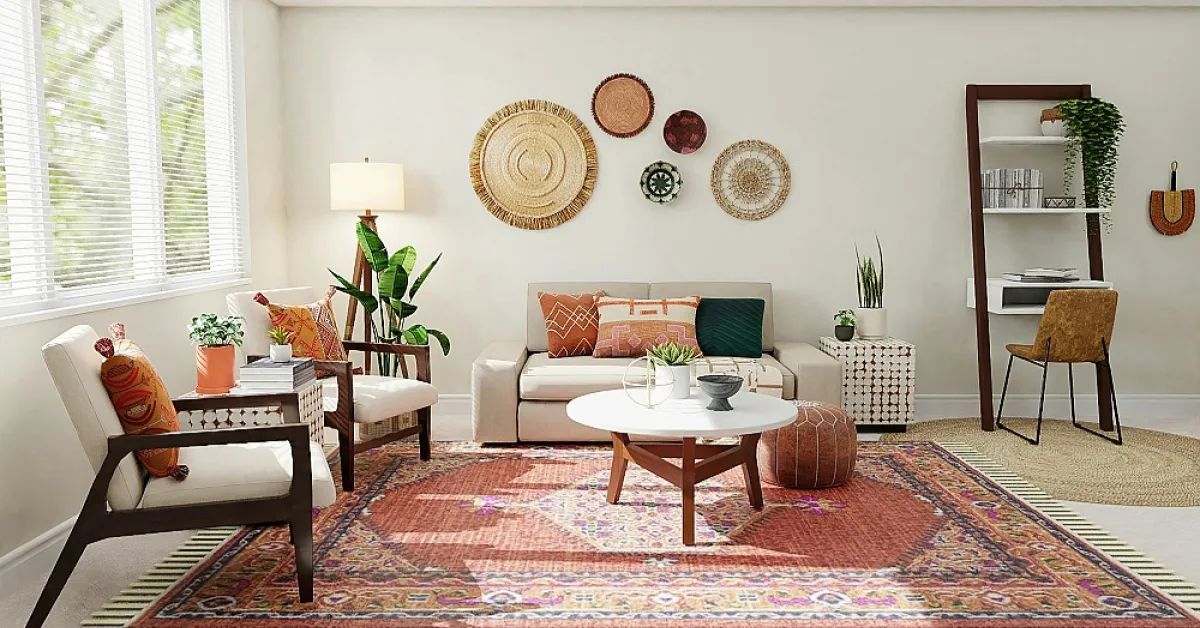
There’s a particular kind of wall that stops you when you walk into a room not because it’s covered in things, but because everything on it feels intentional. Boho minimalist wall decor sits in that precise sweet spot: Boho Minimalist Wall Decor Ideas it has texture, warmth, and personality without the visual noise that makes a space feel chaotic or overdone.
If you’ve ever loved the layered, organic look of bohemian style but found yourself overwhelmed by too many prints, too many colors, too many frames this aesthetic is the answer. It strips boho down to its most essential elements: natural materials, handmade texture, soft neutrals, and breathing room. What’s left is something that actually feels calming to live with.
For anyone working with a small apartment, a rented wall, or a space that needs to function across multiple moods, this combination is especially practical. You get visual interest without sacrificing the clean openness that makes a room feel bigger than it is.
Single Large Macramé Panel on an Otherwise Bare Wall
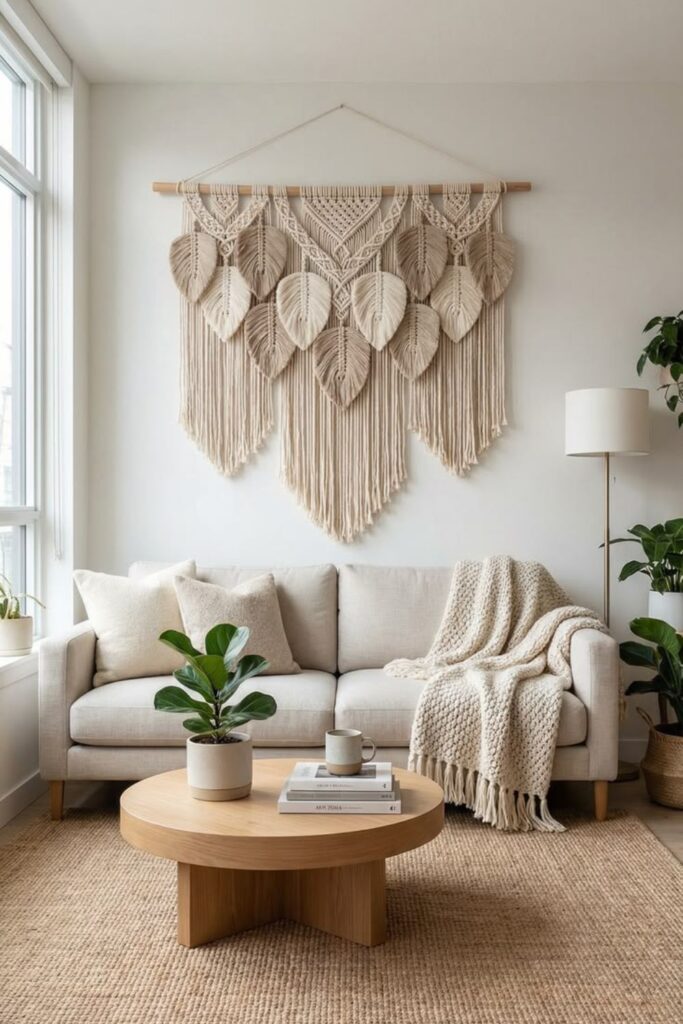
One large macramé piece does more visual work than a gallery wall of five smaller items and it does it with less effort. Choose a panel that spans roughly one-third to one-half of the wall’s width, in undyed cotton or hemp with loose, open knotwork. Hang it centered above a low console or bench, with nothing else on that wall.
The textural complexity of the knotting gives the eye something to rest on without crowding the space. This works best in living rooms and bedrooms where one focal wall can anchor the whole room’s layout. It solves the “my walls feel empty but I don’t want clutter” problem without requiring a single nail gallery arrangement.
Woven Wall Hanging Cluster in Three Graduated Sizes
Instead of one large piece, three woven hangings arranged in descending size, largest at center-left, smallest at lower right, creates movement without symmetry. Keep the palette tight: undyed cream, warm sand, or a single muted terracotta. The variation in scale gives the arrangement depth, while the unified color family keeps it from reading as cluttered.
Odd groupings in decor almost always feel more natural than even ones, and this trio format is one I’d actually recommend trying first because it’s forgiving you can adjust spacing easily without leaving multiple holes in your wall. Works particularly well in bedrooms where the wall beside or above the bed needs softness rather than structure.
Minimalist Line Art Print in a Raw Wood Frame
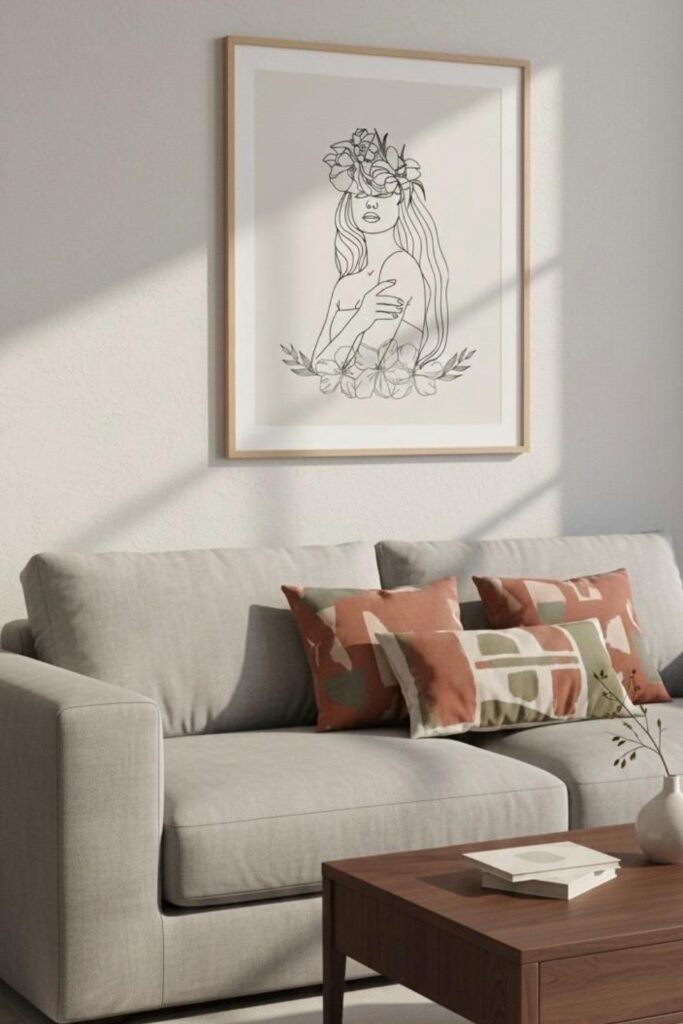
The combination of single-line illustration, one continuous stroke forming a botanical or abstract shape with a wide white mat and an unfinished wood frame is quietly perfect. The frame adds organic warmth, the mat creates breathing room, and the line art itself is simple enough not to compete with other elements in the room.
Go for prints with a lot of white space. The negative space is part of the design. This is one of the more renter-friendly ideas here since a single well-chosen print on a neutral wall requires only one hook. Best suited to small spaces that can’t absorb a lot of visual information, or to spaces where the rest of the room already has texture through textiles and plants.
Dried Pampas Grass in a Tall Ceramic Vase Against the Wall
This isn’t technically on the wall, but it works as wall decor because the feathery height of pampas grass naturally draws the eye upward and fills vertical space the same way a piece of art would. A tall matte ceramic vase in cream, sage, or terracotta placed directly against the wall in a corner creates a soft, organic installation that changes subtly with air movement.
No frame, no hardware, no permanent commitment to a specific placement. The shadow the arrangement casts on the wall in natural light becomes part of the overall effect. Best in spaces with high ceilings or in corners where you need visual height. It solves the “empty corner” problem without adding furniture.
Floating Shelf with a Single Framed Print and One Object
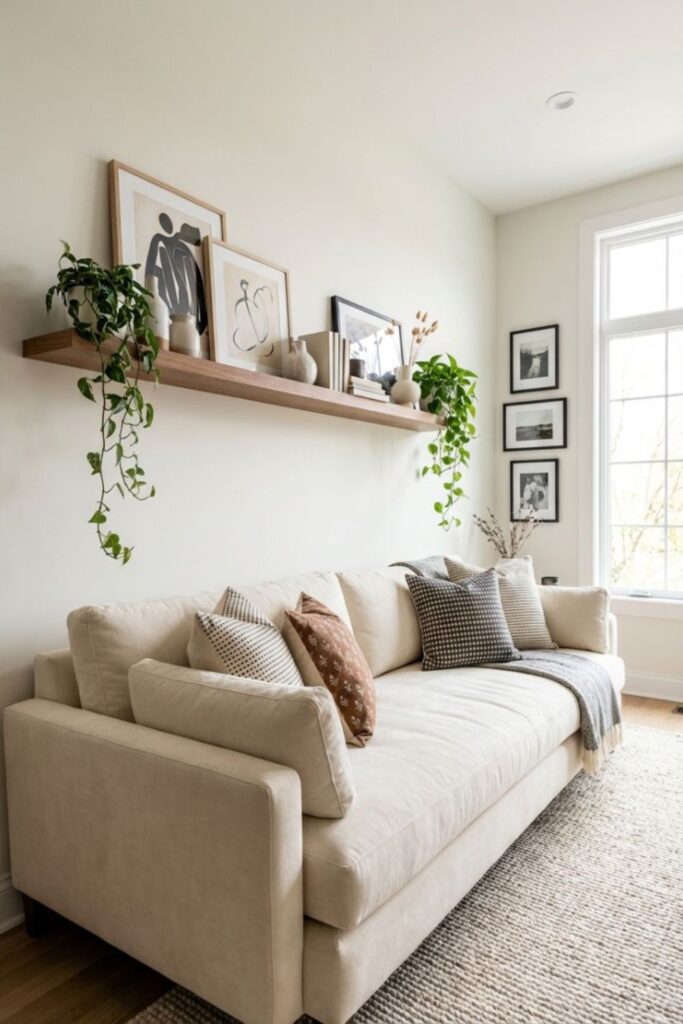
A floating shelf styled with only two or three items, a small framed print leaning rather than hung, a single handmade ceramic, and nothing else looks deliberately curated in a way that a full shelf rarely does. The key is restraint: resist the urge to add more. The leaned print creates a casual, lived-in quality that feels boho without being busy, while the shelf itself provides architectural structure.
This layout works especially well in entryways or narrow hallways where wall space is limited and floor space is at a premium. It solves the challenge of making a transitional space feel styled without blocking movement through the room.
Read More About: Small Living Room Ideas With TV: 25 Smart Layout & Decor Solutions
Circular Rattan Mirror as a Standalone Decor Piece
A large round rattan mirror does three things at once: it reflects light to make the space feel larger, the circular shape softens a room full of rectangular furniture, and the natural fiber frame adds the organic texture that defines the boho minimalist look. Hang it at eye level and center it on the wall without pairing it with anything else on the same wall surface.
The mirror earns its place functionally; it’s not just decorative, which is exactly the kind of dual-purpose thinking that makes small spaces work. This is a particularly strong choice for living rooms and dining areas where a piece of art would feel flat but a mirror opens the space.
Terracotta or Rust Textile Panel Hung on Dowel Rod
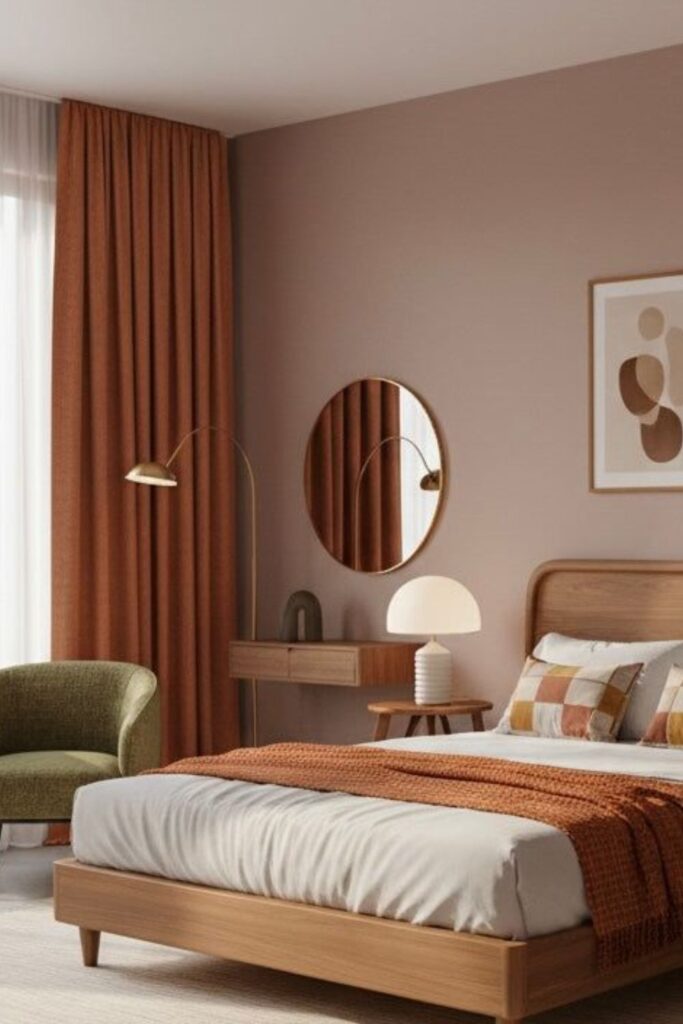
A handwoven or block-printed textile panel hung from a wooden dowel rod is one of the most authentically boho approaches to wall decor and one of the most adaptable. Choose a textile in earthy rust, ochre, or muted brick tones to immediately ground the room’s palette. The dowel method allows the textile to hang flat or with a natural wave, and the whole thing can be relocated without tools.
The visual warmth of warm-toned textiles is especially useful in north-facing rooms or spaces that receive limited natural light; they compensate for cool light with color temperature. Renters should note: two small adhesive hooks are all you need.
Gallery Wall with Only Two Frames, Generous Spacing
The instinct with gallery walls is to fill the space. Boho minimalist reverses that: two frames, wide spacing, and nothing else on the wall. Choose prints that share a palette, think faded botanical, abstract earth tones, or black line art in matching frames of the same size and material. Set them 12–18 inches apart rather than the standard 3–5 inches.
That generous gap between them is what makes the arrangement look intentional rather than incomplete. In my experience, this works best when the frames are large (16×20 or bigger) . Small frames with wide spacing tend to look like they were separated by accident rather than design.
Wabi Sabi Inspired Ceramic Wall Plates in Odd Grouping
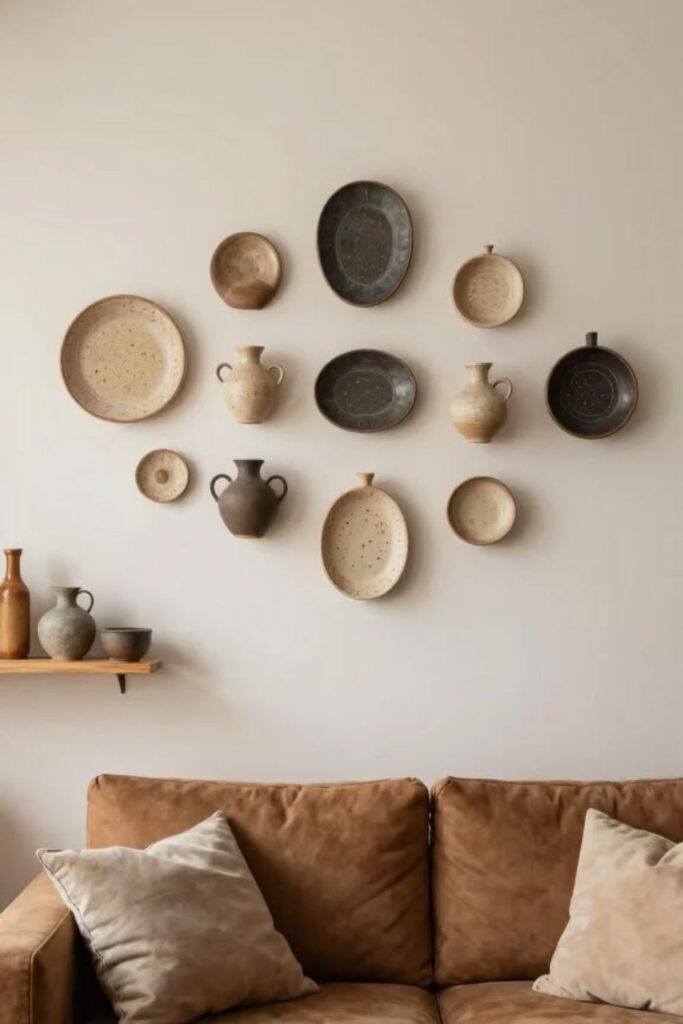
Handmade ceramic plates with irregular glaze in warm whites, sand, sage, or rust arranged in an asymmetric cluster on a textured or painted wall brings in the handcrafted quality that defines boho while keeping the color palette restrained enough for a minimalist space.
Five plates in an irregular, non-symmetrical grouping reads more like art than a traditional plate wall. The shallow depth means they don’t project far from the wall, keeping the visual weight light. This works in dining rooms, kitchens, and living rooms. The imperfect glaze on handmade ceramics captures light differently throughout the day, which gives the arrangement a quiet, changing quality.
Oversized Black and White Botanical Print, No Frame
Leaning a large unframed canvas or mounted print directly against the wall rather than hanging it is one of the easiest ways to get that relaxed, impermanent boho aesthetic. Choose an oversized botanical illustration in monochrome: a single leaf, grass stems, or a botanical diagram.
Place it above a low sideboard or console with one or two objects in front of it. No hanging hardware, no measuring, no commitment. The scale of an oversized piece does more visual work than several smaller hung pieces, and the leaned position gives it an organic quality that hung art sometimes lacks. Works beautifully in living rooms and bedrooms with low, horizontal furniture lines.
Read More About: 23+ Living Room Ideas That Actually Make Small Spaces Feel Bigger
Arched Mirror or Arch Shaped Framed Art
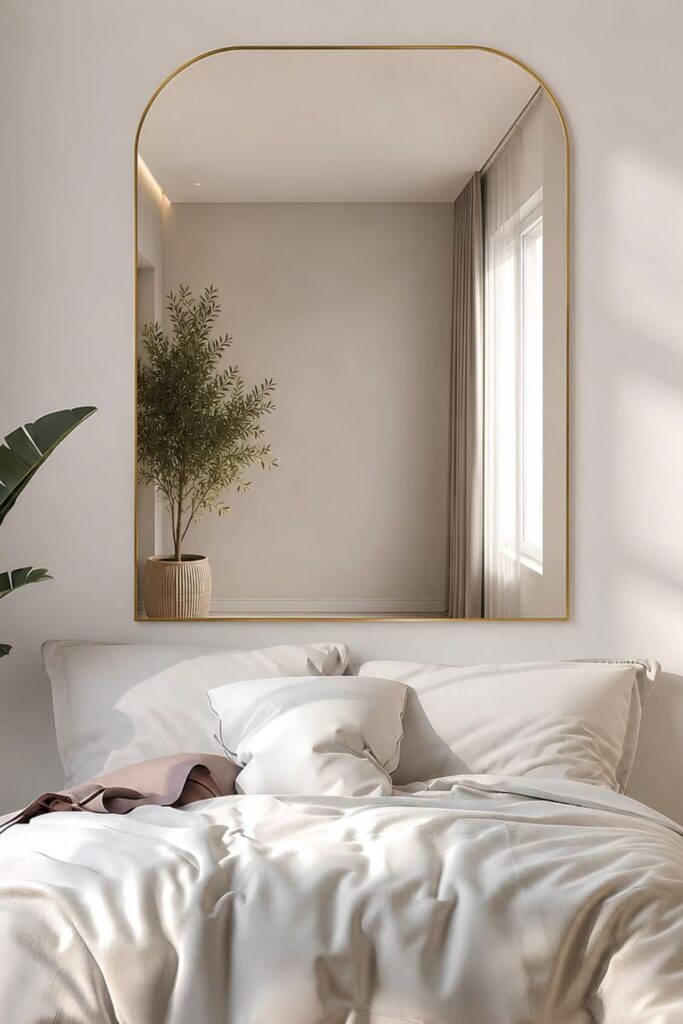
The arch shape, whether in a mirror or a framed print, is one of the more enduring trends of 2026 interior design, and it earns its place in the boho minimalist context because it adds architectural interest without requiring actual architectural features.
A single arched mirror in a cane or thin brass frame placed against a plain wall immediately elevates the room’s geometry. The arch form creates a vertical focal point that makes ceilings feel higher, and the organic curve contrasts nicely with the straight lines of modern furniture. Best used in rooms where you want to create a sense of height, narrow hallways, entryways, and small living rooms especially.
Driftwood or Branch Wall Installation
A DIY installation using natural driftwood or smooth branches mounted directly onto the wall using simple hooks or wire brings in raw organic texture that no printed or manufactured decor can replicate. The irregular shape of natural wood makes each installation completely unique. Keep the pieces unfinished: no paint, no varnish.
Let the natural grain and tone speak for itself against a white or plaster wall. Three pieces of varying length arranged horizontally at slightly different heights creates a calm, horizontal composition. Best suited to bedrooms and living rooms. This type of wall treatment has a grounding quality that works particularly well in spaces that feel overly modern or cold.
Framed Pressed Botanical or Dried Flower Art
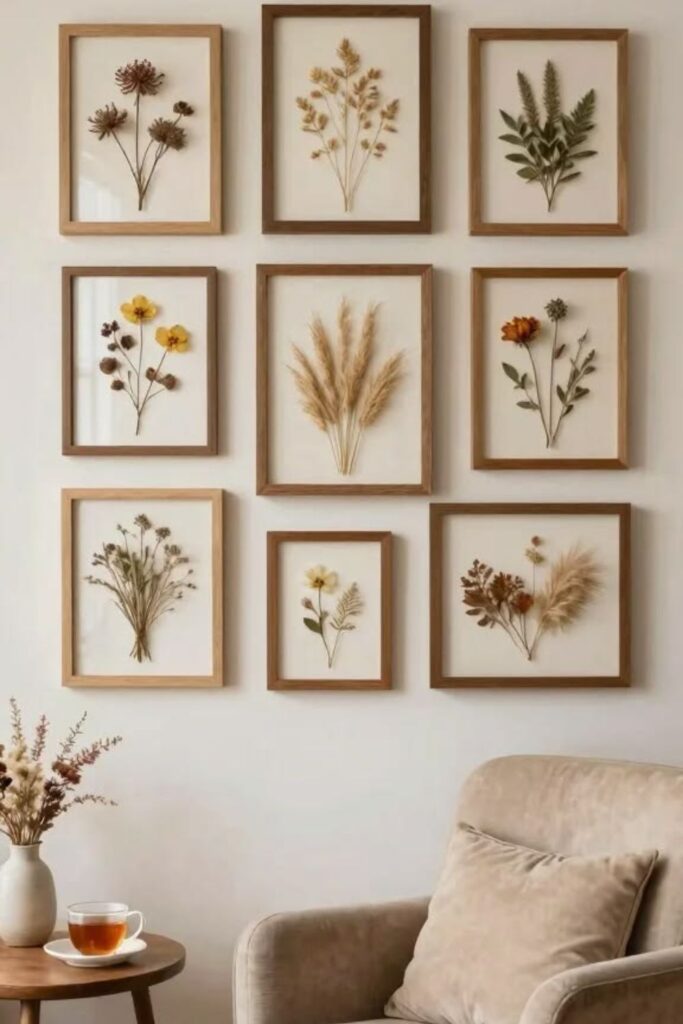
Pressed botanical flowers, leaves, fern fronds framed individually in small square or rectangular frames and arranged in a vertical column create a quiet, nature-forward wall display. The vertical arrangement suits narrow walls or the space beside a window without competing with natural light. Each frame is a simple object: white matte, thin wood or black frame, one pressed element centered with space around it.
The effect is like a naturalist’s collection, which has an intellectual warmth that pairs well with the organic materials common in boho spaces. Keep frames identical in size and frame material to prevent the arrangement from looking random.
Sunset-Toned Abstract Canvas in Warm Earthy Palette
A large abstract canvas in earthy, sunset-adjacent tones, deep sienna, amber, dusty mauve, and warm ochre pulls together a boho palette without literal motifs like palm leaves or mandalas. Abstract art in this color family is versatile: it works with neutral sofas, rattan furniture, and natural fiber rugs without clashing.
The key is choosing a canvas that has visible texture, visible brush marks, palette knife work, or layered washes because that surface quality adds the tactile dimension that distinguishes boho minimalist from generic contemporary. Hang it centered on the main wall of a living room or bedroom and let it be the sole piece on that surface.
Thin Floating Ledge with Leaning Prints, Plants, and Objects
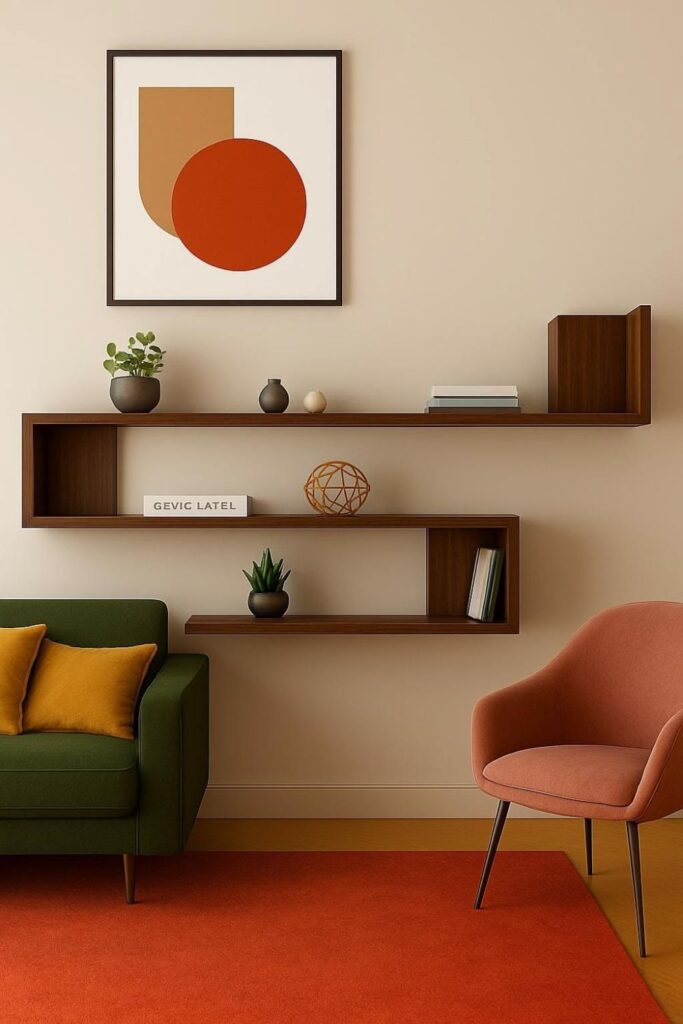
A picture ledge (a long, thin shelf designed specifically for leaning frames) allows you to arrange and rearrange prints without committing a single nail per frame. Three or four prints of varying heights, some framed, some mounted leaned at a slight angle, with a small trailing plant and one ceramic object between them, looks considered without requiring exact placement.
The ability to swap prints seasonally or when you find something new gives this format real long-term value. Honestly, this is one of the most practical setups in the entire list: low cost, zero commitment, and completely changeable.
Handmade Paper or Fiber Wall Sculpture
Handmade paper or felted fiber wall sculptures, abstract, organic forms in monochromatic neutral tones occupy the space between art and textile. They’re three-dimensional enough to cast subtle shadows as light moves across them, which gives the wall a quiet animation throughout the day. Because they are read as sculptural, a single piece is enough, no grouping needed.
Look for forms that are loosely oval or irregular rather than geometric. The handmade quality is visible in person in a way that print art isn’t, which gives the piece genuine presence in the room. Best suited to the wall behind a sofa or above a bed, where it becomes the room’s artistic focal point.
Read More About: Living Room Wall Decor Ideas: 35 Stylish Ways to Transform Your Space
Pegboard Painted Linen White with Natural Baskets and Hooks
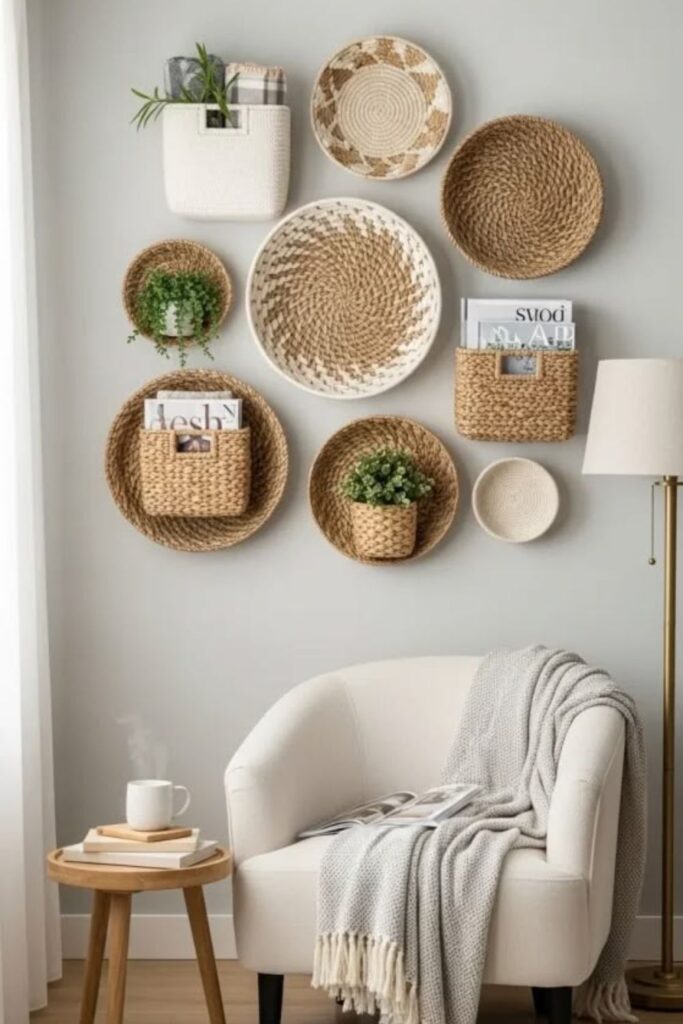
This idea is more functional than purely decorative, but in a boho minimalist space, functional objects are allowed to be beautiful. A standard pegboard painted in linen white or warm off-white, mounted on the wall with a few handwoven baskets, wooden hooks, and one small framed print, creates a practical storage wall that also reads as a considered display.
The irregular weave of small baskets adds texture, while the intentional spacing between objects keeps it from looking utilitarian. Best in kitchens, home offices, and studio apartments where storage and style need to coexist on the same wall.
Minimalist Sun Mirror or Starburst in Matte Gold or Brass
A sun or starburst mirror in matte or antique brass sits at the intersection of boho and minimalist; it has the decorative quality of bohemian style but the simple, singular composition of a minimalist approach. Choose a medium size (22–28 inches) so it reads as art rather than a functional mirror.
Hang it centered on a solid-colored wall sage green, dusty olive, or warm terracotta work particularly well as background colors to bring out the warm metal tone. The rays create a circular pattern that’s visually interesting from a distance without requiring anything else around it. This is one of the stronger options for people who want impact from a single piece.
Vertical Row of Three Small Square Frames
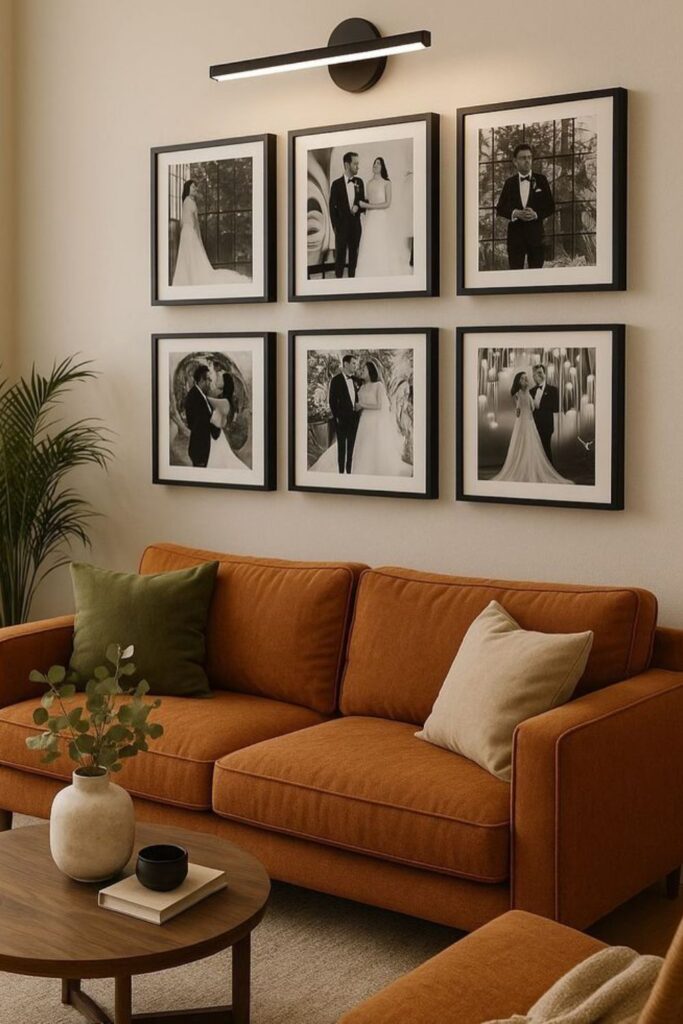
Three small identical frames hung in a tight vertical column spaced just 3–4 inches apart creates a tall, narrow composition that works beautifully on the wall beside a window, at the end of a hallway, or in the narrow space between a door and a corner. The vertical orientation draws the eye upward, making ceilings feel higher.
Keep all three prints within one visual theme: three black and white photographs, three botanical illustrations, or three abstract forms in the same palette. The uniform frame size and spacing gives the arrangement a structured simplicity that leans more minimalist, while the print content can carry the boho warmth.
Limewash or Textured Paint as the “Decor” Itself
Not every boho minimalist wall needs something hung on it. A limewash finish, a traditional paint technique that creates a softly variegated, matte texture, turns the wall itself into a visual feature. The surface picks up light differently throughout the day, creating a living quality without a single object required.
This is particularly effective on the main wall behind a sofa or bed. A single trailing plant hung from the ceiling in front of it is the only addition needed. I’ve noticed this style tends to work best in rooms with warm natural light. The limewash finish amplifies warm tones beautifully, while in darker rooms it can read flat.
Cane Webbing Panel in Simple Wood Frame as Wall Art
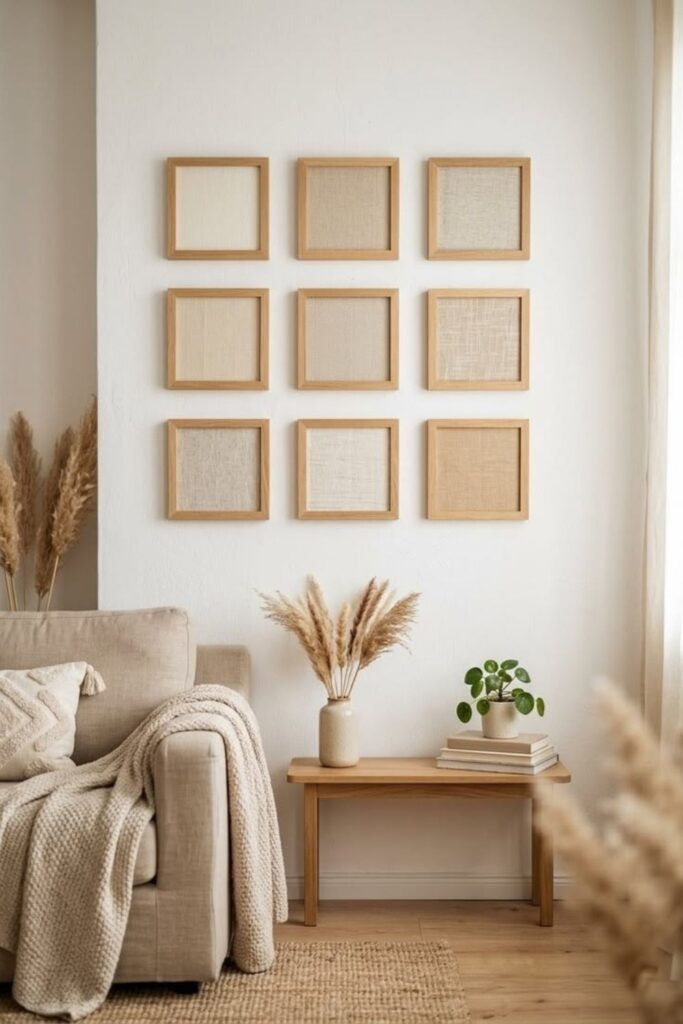
Cane webbing, the material typically used in furniture stretched within a simple square or rectangular wood frame, makes for an unexpectedly beautiful piece of wall art. The repetitive geometric pattern of the cane is visually calm, the natural material adds organic texture, and the overall piece has a handcrafted quality that stores can’t replicate easily.
It’s genuinely a DIY project most people can complete in an afternoon. The result looks more intentional and cohesive in a boho minimalist space than almost anything you can buy off-the-shelf, because it echoes the rattan and cane furniture that’s common in this aesthetic.
What Actually Makes Boho Minimalist Wall Decor Work
The phrase gets used loosely, but there are a few practical principles that determine whether a wall actually reads as boho minimalist or just underdone.
Material choice matters more than quantity.
A single piece of woven fiber or a handmade ceramic does more for the aesthetic than four mass-produced prints. The reason boho style feels warm is its reliance on natural, imperfect, handmade materials. When you minimize to only a few pieces, each one has to carry more weight so it needs to be genuinely interesting up close.
Negative space is doing active work.
In conventional decorating, empty wall space is a problem to solve. In boho minimalist, it’s a design choice. The empty area around a single macramé piece or an arched mirror makes that object feel more important and intentional, not lonely. Resist the instinct to fill gaps.
Color restraint across the whole wall.
Boho has a rich color history, jewel tones, layered patterns, complex rugs but the minimalist half of this aesthetic asks for a tighter palette on the walls specifically. Work within a range of three to four tones: warm white, natural fiber colors, one earthy accent. The texture carries the character; the color keeps it calm.
Scale is regularly underestimated.
Most people buy wall art that’s too small for the space it occupies. A single piece hung at eye level on a large wall can disappear entirely. In a boho minimalist context where you’re not filling the wall with multiple pieces, getting the scale right is critical go bigger than you think you need to
Boho Minimalist Wall Decor Idea Comparison at a Glance
| Idea | Space Type | Main Benefit | Problem It Solves | Renter-Friendly |
| Single macramé panel | Any room | Strong texture focal point | Empty wall without clutter | Yes |
| Rattan mirror | Small/medium room | Light + visual depth | Dark or cramped feeling | Yes |
| Leaned oversized print | Living room, bedroom | No hardware needed | Commitment-free styling | Yes |
| Ceramic plate cluster | Dining, living | Handmade warmth | Flat, impersonal walls | Mostly |
| Driftwood installation | Living room, bedroom | Unique organic texture | Overly modern feeling | Yes (hooks) |
| Limewash accent wall | Main feature wall | Built-in texture | Bare, flat wall | No (painting required) |
| Cane panel DIY | Any room | Cohesive to furniture | Difficulty finding unique art | Yes |
| Floating ledge with prints | Any room | Fully changeable display | Wanting flexibility | Yes |
| Sun/starburst mirror | Living room | High-impact single piece | Need focal point without art | Yes |
| Textile on dowel rod | Bedroom, living room | Warm color and pattern | Cool light, north-facing rooms | Yes (2 hooks) |
How to Design a Boho Minimalist Feature Wall Without Overcrowding It
A common issue with this aesthetic is the in-between phase: the wall has two or three pieces, but they’re not quite working together yet, so the temptation is to add more. Usually, the problem isn’t about quantity, it’s about placement and proportion.
Start with one anchor piece.
Before adding anything else, choose the single piece that will define the wall’s center of gravity whether that’s a large mirror, a macramé panel, or an oversized canvas. Hang it, live with it for a few days, and then assess what (if anything) the wall actually needs.
Work with the furniture line.
Whatever is against the wall a sofa, a console, a bed creates a horizontal baseline. Your wall decor should sit in relationship to that line, not float disconnected from it. A piece hung too high looks stranded; centered roughly 6–8 inches above the furniture’s highest point usually anchors it properly.
Group only when pieces share a material or palette.
If you’re placing multiple pieces on the same wall, they need a visual connection. Matching frames, consistent color, or similar material (all woven, all ceramic, all paper) prevents the wall from looking like a random collection. The connection doesn’t need to be obvious but it needs to exist.
Keep floor space clear near the wall.
In small rooms especially, the floor area directly in front of a feature wall should be unobstructed. Visual complexity on the wall combined with furniture crowded up against it makes the room feel compressed. Aim for at least 18–24 inches of clear floor between the wall and the nearest movable piece.
FAQ’s
What is boho minimalist wall decor?
Boho minimalist wall decor combines natural, handmade materials (like macramé, rattan, and woven textiles) with a restrained approach: fewer pieces, more breathing room, and a tightly edited neutral palette. It keeps the organic warmth of bohemian style while removing the visual clutter.
How many pieces should go on a boho minimalist wall?
In most rooms, one to three pieces is the right range. A single large, high-quality piece, a macramé panel, an oversized print, or a round rattan mirror is often more effective than a group of smaller items. The less you use, the more carefully chosen each piece needs to be.
What’s the best wall color for boho minimalist decor?
Warm white, plaster white, soft greige, or a muted earthy tone like clay or dusty sage all work well. The wall color should recede enough to let the texture of the wall decor speak for itself; very bright or saturated walls compete rather than complement.
Can renters create a boho minimalist feature wall?
Yes most of the ideas here require only one or two adhesive hooks or small nails. Leaned art, dowel-hung textiles, floating ledges, and plant arrangements near the wall are all completely renter-friendly. The rattan mirror and a single macramé piece are also low-commitment since they need only one hook each.
Boho minimalist vs. maximalist boho: which works in a small space?
Boho minimalism is significantly more effective in small spaces. Maximalist boho relies on layering and abundance which can feel stimulating and rich in a large room but overwhelming in a small apartment. Boho minimalist gives you the warmth and texture without the visual density that shrinks a room.
How do I make a boho wall look intentional rather than incomplete?
Scale and placement matter most. One well-sized piece centered on a wall looks deliberate; one small piece floating randomly looks forgotten. When using fewer pieces, go bigger than you think you need to, hang at the right height relative to the furniture below, and resist adding more just to fill space.
What natural materials work best for boho minimalist wall decor?
Undyed cotton and hemp for macramé, rattan and cane for frames and mirrors, raw or lightly finished wood for frames and dowels, and natural clay or earthenware for ceramic wall pieces. Linen-backed textiles also work well. The common thread is that all these materials have visible grain, weave, or texture they read as handmade at a distance.
Conclusion
Boho minimalist wall decor works because it resolves a tension most people feel with their walls: wanting them to feel personal and warm, but not wanting to live with visual noise. The ideas here don’t require a lot of pieces, they require the right pieces, placed with intention.
Start with one or two that fit your current space and lifestyle: a single woven hanging if your room needs texture, a large leaned print if you want flexibility, or a rattan mirror if you need the wall to work harder in a small room. Small, considered changes in how a wall is styled have a real effect on how the overall space feels not as decoration for its own sake, but because the walls set the visual tone for everything else in the room.