45+ Vintage Baby Nursery Ideas That Feel Warm, Nostalgic, and Completely Livable
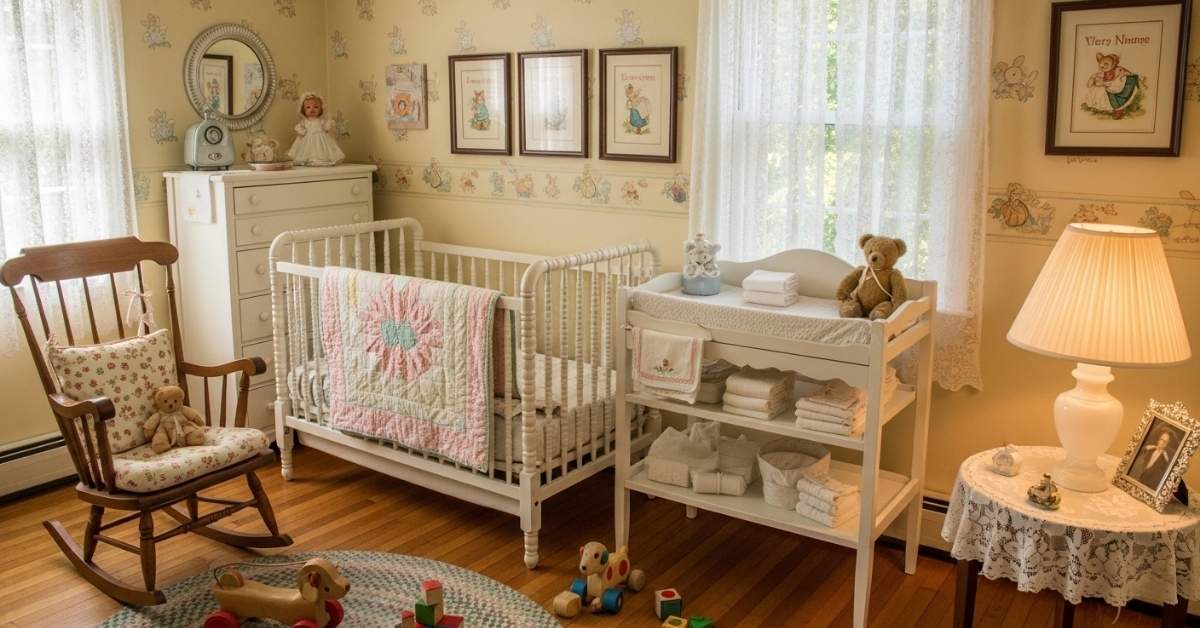
There’s something about a vintage nursery that feels different from every other baby room trend. Not just visually but in how it actually feels to sit in one. The warm wood tones, the soft muted colors, Vintage Baby Nursery the layered textures that look like they’ve been collected over years. In a design moment when every other nursery looks like a pastel tech showroom, the vintage approach offers something genuinely different: rooms that feel calm, personal, and real.
If you’re working with a space that needs more character and warmth than a fresh coat of beige can provide, this is the direction worth exploring. These ideas work across a range of budgets, apartment layouts, and style comfort levels, from soft shabby chic to structured antique-modern hybrids trending in 2026.
A Distressed White Crib Against a Muted Sage Wall
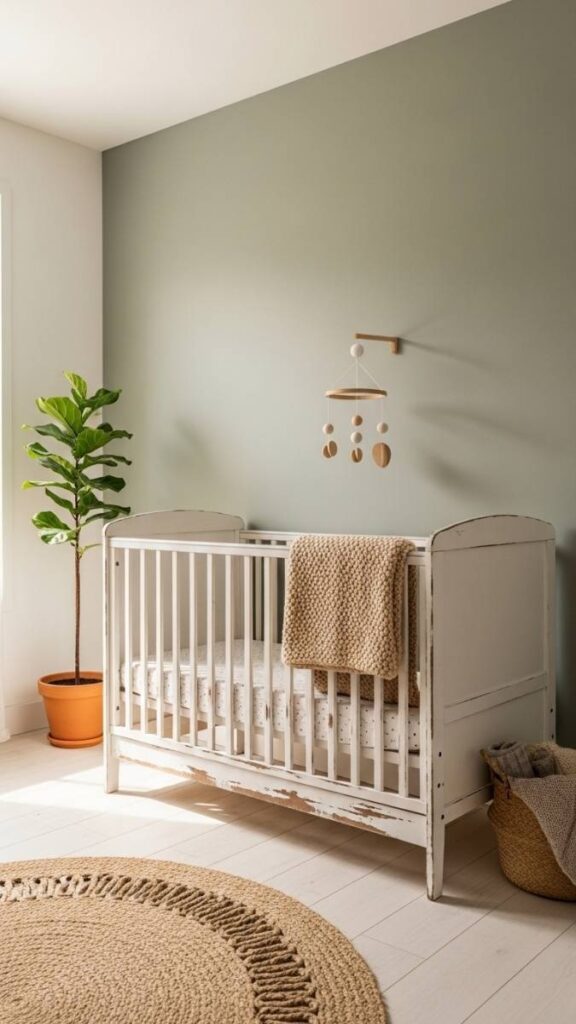
The foundation of most vintage nurseries starts here. A cream or distressed-white crib ideally one with simple spindles or a slightly arched headboard shape placed flush against a muted sage or dusty green wall creates immediate visual depth without demanding much from the rest of the room.
The whitewashed wood picks up light well even in north-facing rooms, while the sage keeps the space from tipping into clinical brightness. Pair the crib with a natural jute rug underneath and a vintage-style mobile overhead (dried flowers in muted tones work especially well here) and the setup feels complete with minimal effort.
This is one I’d actually recommend trying first because the base palette sets the tone for everything else you layer in. Works beautifully in smaller nurseries where you can’t rely on furniture variety to carry the design.
A Rattan Glider in the Corner With a Vintage Floor Lamp
Functional seating in a nursery often looks like an afterthought. A natural rattan glider either natural or lightly whitewashed changes that completely. Positioned in a corner, ideally near a window, it reads as a deliberate design choice rather than furniture forced into an empty space.
Add a vintage-style arc floor lamp with a white linen shade directly beside it and the corner transforms into a proper feeding nook. The warm light from a low-wattage bulb keeps nighttime feeds calmer than overhead lighting ever could, and the rattan texture introduces organic warmth the way painted furniture can’t. Works in any size room because it occupies a corner efficiently without pushing into the open floor area.
Vintage Inspired Wallpaper on One Accent Wall
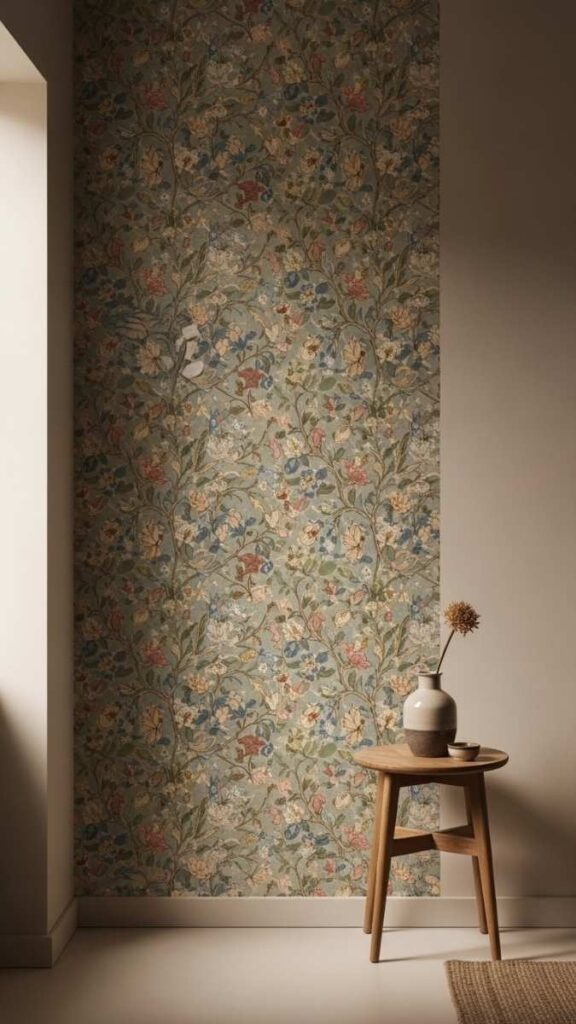
You don’t need to wallpaper the entire room to make vintage wallpaper feel intentional. A single accent wall most commonly the wall behind the crib with a botanical print, delicate floral, or small repeating pattern in dusty tones can anchor the whole space.
The patterns that translate best for vintage nurseries in 2026 tend to avoid the oversaturated vintage clichés (no overly bright Toile or busy damask) in favor of subtler botanical prints in sage, terracotta, or dusty blush.
The contrast with painted walls on three sides makes the wallpapered wall feel like a frame without overwhelming a small room. Especially useful in rental spaces because peel-and-stick versions are now genuinely convincing.
A Wooden Gallery Wall With Vintage Frames
Gallery walls in nurseries often look too curated or too chaotic. The vintage version threads the needle by using mismatched wooden frames think light oak, honey-toned pine, and a few painted frames in cream or soft olive all grouped in an organic arrangement rather than a precise grid.
Content doesn’t need to be antique prints; simple watercolor botanicals, vintage-style alphabet art, or even meaningful family photos in sepia tones all work within the frame mix. Keep frames in varying sizes (the largest no bigger than 10×12 inches for a nursery wall) and arrange them low enough that they sit within the sightline of someone seated in the glider. This solves the problem of blank walls without resorting to decals or trendy typography prints that date quickly.
Read More About: 44+ Cozy Vintage Apartment Ideas That Make Small Spaces Feel Warm, Layered, and Lived In
An Antique Dresser as the Changing Table
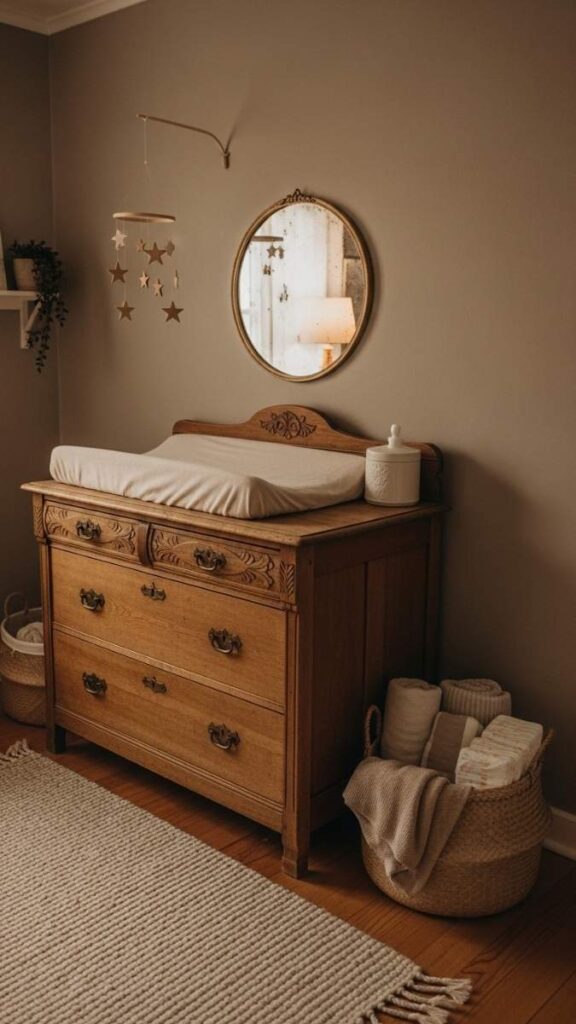
Repurposing an antique dresser as a changing table is one of those ideas that sounds obvious once you see it, but looks genuinely better than most purpose-built changers. A solid wood dresser ideally with original hardware like brass or aged iron pulls topped with a simple changing pad and a small basket for supplies is both more functional and more beautiful than a standard changer.
The drawer storage it adds is significant in smaller nurseries. Most purpose-built changers have shallow shelves; a proper dresser gives you real drawer depth for all the folded items that otherwise pile up. In my experience, this works best when the dresser sits at a comfortable height (approximately 32–34 inches) to avoid back strain. Sand and reseal older pieces before use and always anchor to the wall.
Soft Linen Curtains in Dusty Blush or Cream
Window treatment in a nursery affects both the mood and the practicality of the space more than most people expect. Linen curtains in dusty blush, aged cream, or soft terracotta hang differently from polyester; they drape with weight and pool slightly at the floor, which reads immediately as considered rather than functional.
For actual light control (which you do need in a nursery), pair the linen panels with a simple white roller blind on the window itself. The curtains provide the visual warmth; the blind does the actual blackout work.
This layered approach lets you keep the linen fabric even in a room with eastern exposure, without waking the baby at 5am. Works in any room size and is rental-friendly since it requires only basic curtain rod installation.
Wicker Storage Baskets in a Stacked Open Shelf Unit
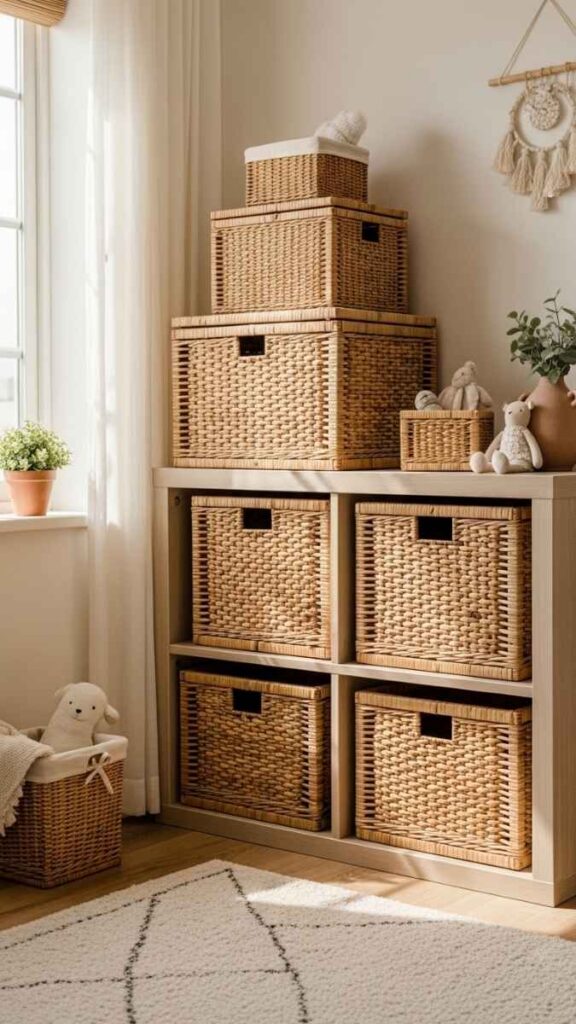
Open shelving in a nursery demands intentional storage solutions because everything is visible. Wicker baskets round, rectangular, and lidded in varying sizes solve this while contributing to the vintage texture palette simultaneously.
A simple pine or oak wall shelf with three to four tiers works best for this layout. Stagger the basket sizes across shelves: a large lidded wicker bin on the bottom tier for bulky items, medium baskets on middle shelves for diapers and wipes, small open wicker bowls on the top shelf for decorative items that also get used (cotton balls, baby powder).
Honestly, this system works better than a dedicated diaper caddy because everything has a fixed location and the shelf doubles as display space. Suitable for any size nursery.
Read More About: 43+ Vintage Lake House Decor Ideas That Make Every Room Feel Warm, Collected, and Lived In
A Vintage Style Mobile With Dried Florals and Neutral Wood
Standard crib mobiles tend toward primary colors or cartoon characters both of which fight a vintage aesthetic. A DIY or handmade-style mobile using dried botanicals (lavender, pampas, small dried roses, eucalyptus) suspended from a natural wood ring makes a genuinely striking alternative.
The movement of dried flowers catches ambient light in a different way than fabric or plastic toys, creating gentle shadow patterns that are interesting to look at without being over-stimulating.
Because the colors are entirely muted dusty purple, creamy white, faded green they work with almost any wall color in the vintage palette. This mobile type is especially useful in rooms where you’re trying to add an element that doubles as art and functionality, rather than choosing between the two.
A Muted Color Palette Built on Terracotta, Sage, and Cream

Color selection is where most vintage nurseries either work or fall apart. The combinations that photograph best and actually feel good to live in tend to use three or fewer tones: one warm (terracotta, dusty rose, warm ochre), one cool-neutral (sage, soft olive, dusty blue), and one base (cream, off-white, warm linen).
Terracotta paired with cream is having a significant moment in 2026 nursery design showing up on walls, in textiles, and in ceramic accessories largely because it reads as warm and nurturing without tipping into aggressively gendered pink or blue.
Apply the warmest tone in small doses: one terracotta pillow on the glider, a terracotta plant pot, or a single wall in a warm clay paint rather than all four. The restraint is what makes the palette feel vintage rather than southwestern.
Vintage Style Knit Blankets and Heirloom Textile Layers
Textiles carry more of the vintage feeling than any furniture piece does, and they’re also the easiest element to change. A knit blanket in a cream or dusty blush draped over the crib rail, a small linen quilt in a faded patchwork pattern folded at the foot of a rocking chair, and a cotton muslin swaddle in a subtle vintage print layered on a shelf together read as genuinely collected rather than decorated.
The key is material variety over color matching: different knit weights, a woven texture, and a soft cotton all together create the visual complexity that vintage style depends on.
These items are safe for display (not for infant sleep) and most can be sourced inexpensively from vintage markets, charity shops, or family hand-me-downs. For renters and those on a limited budget, textiles are where the real vintage transformation happens for the lowest cost-per-visual-impact.
Read More About: 11+Apartment Living Room Aesthetic Ideas That Actually Work in Real Spaces
A Worn Leather Pouf as a Footrest Near the Glider
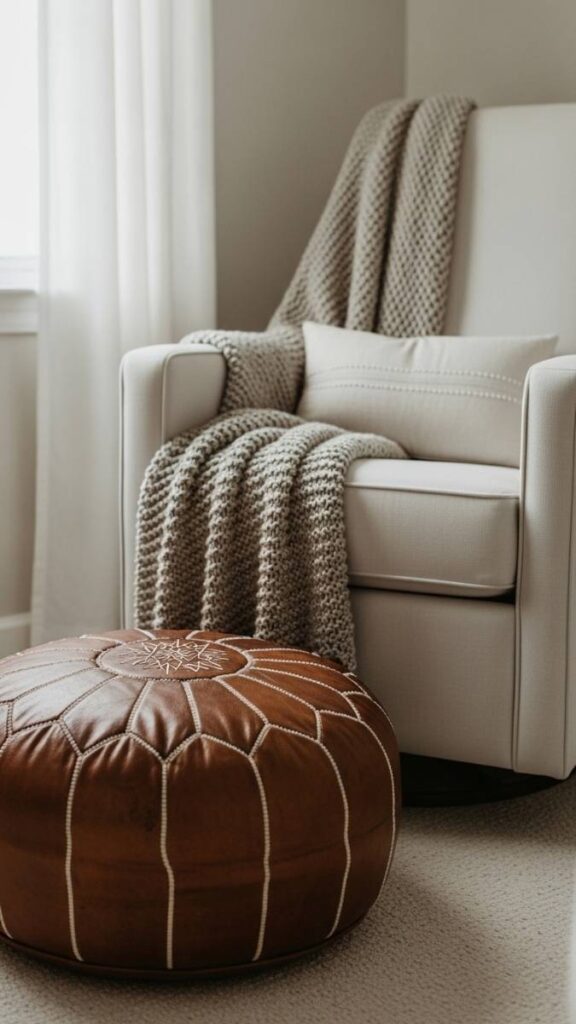
A small caramel or cognac leather pouf next to the glider serves two practical purposes at once: it’s a footrest during feeding sessions and extra floor seating when another adult is in the room. The worn texture of aged leather fits naturally into a vintage palette without requiring any styling.
Most leather poufs are lightweight enough to move easily, which matters in a small nursery where floor space changes function throughout the day. If genuine leather isn’t in the budget, high-quality faux leather in a caramel tone reads nearly identically in this context. This works especially well in nurseries that will also function as occasional reading or lounging spaces for parents.
Mounted Vintage Style Sconce Lighting on Either Side of the Crib
Overhead lighting in a nursery is almost always too bright and too flat. Wall-mounted sconces on either side of the crib solve the problem of ambient lighting while also contributing to the vintage aesthetic if chosen well. Look for sconces with an aged brass or antique bronze finish, a simple arm design, and a small fabric shade the kind that diffuses light into a warm glow rather than directing it.
This setup allows you to keep the room softly lit for late-night checks without turning on a ceiling light that fully wakes both baby and parent.
Placement roughly 60 inches from the floor and 18–24 inches from the crib sides keeps the light balanced. A hardwired version looks cleaner, but plug-in sconces with a fabric-wrapped cord also work and are easier for renters.
A Large Vintage Style Area Rug in a Washed Pattern
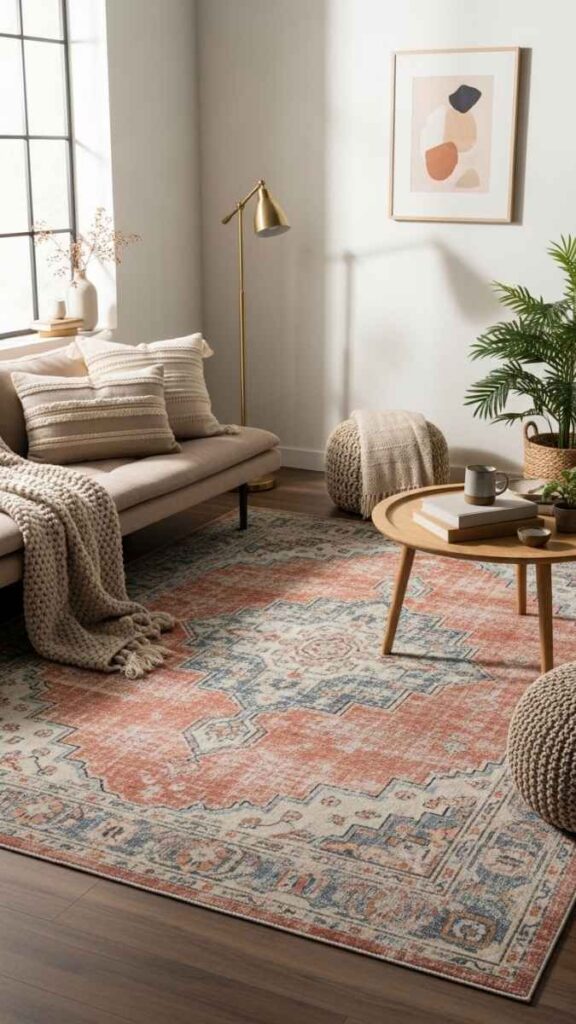
Rugs define the nursery floor space more than any other single element. A large vintage-style rug, the kind with a faded Persian or medallion pattern in dusty tones, grounds the room and ties furniture placement together in a way that plain neutral rugs often can’t.
The “washed” version of these rugs (machine-made pieces that mimic aged patina) is more practical than genuine antiques in a nursery because they’re typically washable or at least more resilient to the cleaning demands of baby spaces.
Size matters here: the rug should extend at least two feet beyond the crib on either side and partially under the glider legs. Too small and it looks decorative rather than architectural. This idea is especially effective in hardwood-floor rooms where the rug also provides a warmer surface for floor play as the baby develops.
Floating Wooden Shelves With Ceramic and Wicker Display
A trio of simple floating oak or pine shelves staggered asymmetrically rather than in a perfect column create display space that looks styled without effort when loaded with the right mix of objects. For a vintage nursery, that means: a small potted plant in a terracotta or cream ceramic pot, one or two small wicker or woven vessels, a framed print, and a single meaningful object like a vintage baby bootie or antique book.
Avoid overcrowding. Three to five objects per shelf, with breathing room between each, looks curated. More than that tips into clutter.
The staggered shelf placement (one shelf at eye level, one slightly lower and to the right, one higher and to the left) creates the kind of visual rhythm that symmetric grid arrangements can’t replicate. Works on any neutral wall in any size room.
A Canopy Over the Crib Using Sheer Linen
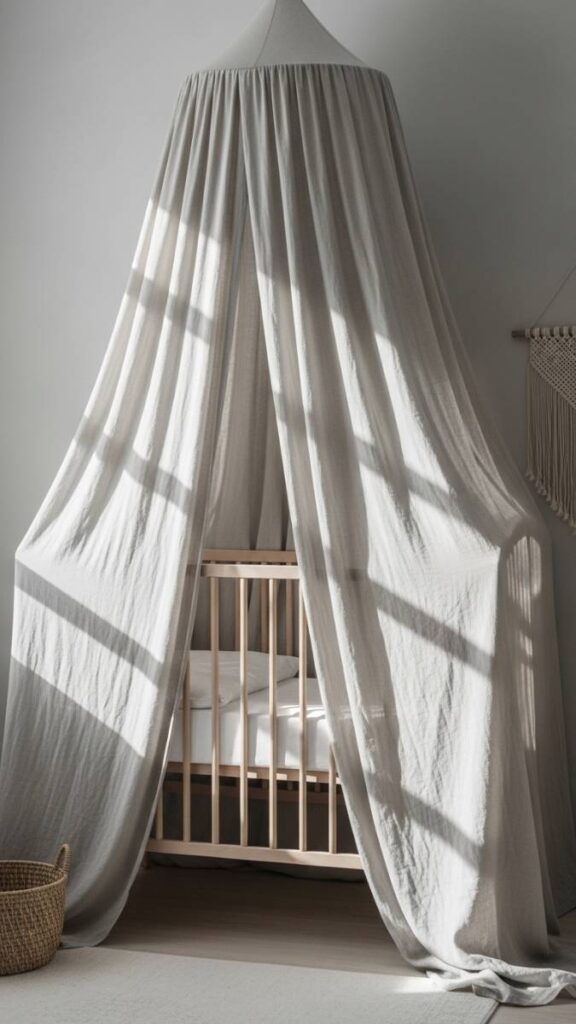
A linen canopy over the crib transforms the sleeping area into a defined architectural zone within the nursery, particularly useful in large rooms where the crib can feel isolated without surrounding furniture. Mount a simple wooden ring (approximately 16 inches in diameter) to the ceiling directly above the crib center and drape unbleached linen or sheer muslin through it.
The fabric should pool softly rather than being pulled taut; you want a gathered, romantic effect rather than a structured tent shape. Keep the fabric cream, white, or very pale blush; anything darker changes the light quality inside the canopy significantly.
This idea is decorative and safe when mounted securely and positioned above rather than inside the crib. Works especially well in rooms with higher ceilings (9 feet or above) where a flat ceiling would otherwise feel disconnected from the furniture scale below.
A Peg Rail Along One Wall for Hanging Storage
Shaker-style peg rails, a horizontal wooden strip with evenly spaced wooden pegs, have been having a sustained revival in home design because they genuinely solve a storage problem without adding visual bulk. In a nursery, a peg rail mounted at adult chest height along one wall works for hanging small fabric bags, cotton swaddle bundles, a spare robe, or decorative baskets.
The vintage-style version uses natural wood (unfinished pine, light oak, or a simple white-painted option) rather than painted MDF.
Keep what’s hung on it organized: don’t mix utility items (diapers in a bag) with purely decorative elements (dried flower bunches) on the same section of rail. Separating them by position on the rail keeps it looking considered. Works in rooms of any size and is particularly practical in nurseries that lack built-in closet space.
A Small Vintage Rocking Horse or Heirloom Toy as a Focal Accent
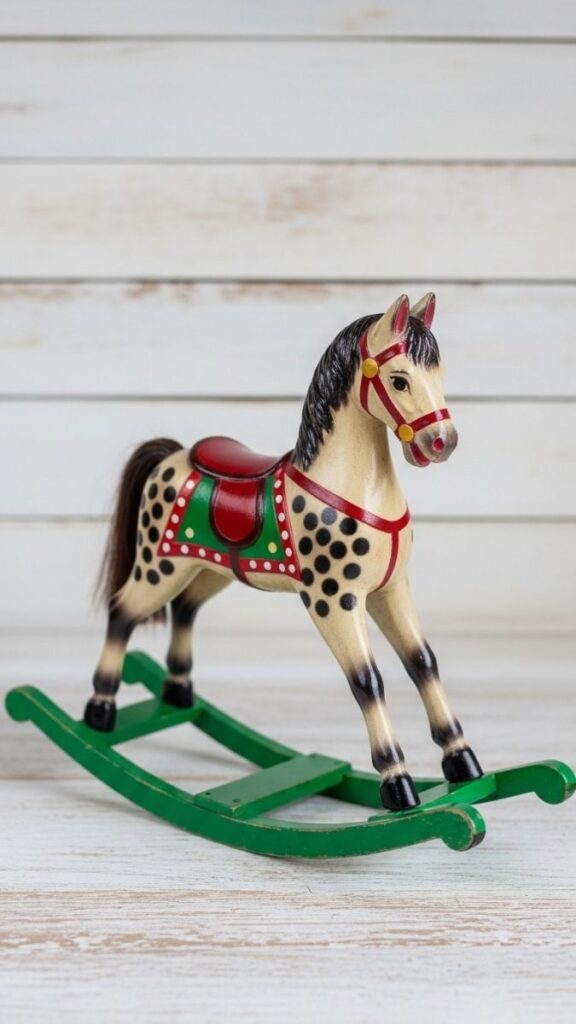
A single statement object a wooden rocking horse, a small carved rabbit on wheels, or an antique-style stacking toy in natural wood placed in an intentional spot in the nursery (beside the glider, in a clear corner, or on a low shelf) does a surprising amount of design work without taking up significant floor space.
It signals the aesthetic immediately and gives the room a sense of narrative that purely functional spaces lack. I’ve noticed this type of anchor piece tends to make the rest of the decor feel more intentional, even when the surrounding elements are simple or budget-friendly.
Source these from thrift stores, estate sales, or antique markets for genuine vintage pieces, or look for handcrafted versions from small makers for new items with an heirloom quality. Works in any style of vintage nursery from traditional to Scandinavian.
What Actually Makes a Vintage Baby Nursery Work
The most common way vintage nurseries fall flat isn’t a wrong color or a poor furniture choice, it’s a mixing of visual weight.
A room can have three genuine antique pieces and still feel inconsistent if the scale of those pieces doesn’t relate to each other or to the room size.
Visual weight in a vintage nursery is about managing density. A large wooden dresser, a rattan glider, and a gallery wall are each medium-to-high weight elements.
Put all three in a small room and it reads heavy and crowded even if every individual piece is beautiful. The rule that works consistently: one high-visual-weight item per wall zone, with lighter or simpler elements completing each zone.
A heavy dresser deserves a clear wall above it and minimal furniture nearby. The glider corner works best with just the lamp beside it, not a side table and a hanging plant and a basket.
Lighting is the other factor that separates a genuinely warm vintage nursery from one that just uses vintage furniture. Warm-toned bulbs (2700K or lower) are non-negotiable.
The wrong color temperature makes natural wood look yellow and turns cream paint greenish. Every lamp or sconce in the room should use the same warm temperature for consistency.
Vintage Baby Nursery Setup Comparison
| Setup | Best For | Space Type | Problem Solved | Effort Level |
| Antique dresser as changer | Storage + style combined | Small to medium | Lacks drawer storage | Low (repurpose existing) |
| Rattan glider + arc lamp corner | Functional feeding nook | Any | Seating feels like afterthought | Low |
| Peg rail storage | No closet space | Small apartments | Surface clutter | Low–Medium |
| Linen canopy over crib | Large, high-ceiling rooms | Spacious nurseries | Crib feels isolated | Medium |
| Wallpaper accent wall | Blank, uninteresting wall | Any (renter-friendly) | Room lacks character | Medium |
| Vintage area rug | Hardwood or cold flooring | Any | Furniture lacks cohesion | Low |
| Sconce lighting on crib wall | Harsh overhead lighting issue | Any | Too-bright nighttime environment | Medium–High |
How to Arrange a Vintage Baby Nursery for Better Flow and Function
Start with the crib placement before anything else. In most rectangular nurseries, the crib works best on the wall opposite the door or on the longest uninterrupted wall not shoved into a corner, which restricts access from both sides. You need approach clearance on at least two sides of the crib for comfortable nighttime access.
Position the dresser-as-changer on the same wall as the crib if the room is wide enough, or on the adjacent wall to keep the changing zone close to the crib. Avoid placing it on the wall directly across from the crib that forces longer trips during night changes when you’re least alert.
The glider should sit so that natural light falls to one side rather than directly behind or in front of you. Light directly behind the feeder means the baby stares at glare; light directly in your face creates the same problem. A corner position near a window, with the window to your side, is almost always the best glider placement in any nursery layout.
Keep the floor between the door, crib, and changing area entirely clear. Rugs are fine; furniture, floor baskets, or poufs placed in that corridor become nighttime hazards when you’re moving on autopilot at 2am. Store floor accessories along the glider zone where you’re seated and stationary, not in the travel path.
Frequently Asked Questions
What makes a nursery look “vintage” without buying antique furniture?
The vintage feel in a nursery comes primarily from color palette, materials, and texture rather than furniture age. Warm wood tones, muted dusty colors, linen and wicker textures, and warm-toned lighting together read as vintage even when all the furniture is new. Focus on those four elements before searching for antique pieces.
Is a vintage nursery safe for a baby?
Yes, with specific precautions. Genuine antique furniture (especially pre-1978 pieces) may have lead paint and should be refinished or avoided for direct contact surfaces like cribs. Always anchor dressers and shelving to the wall, use a safe-sleep-compliant mattress, and keep decorative textiles and display items outside the crib. The vintage aesthetic is entirely safe; the vintage furniture requires individual assessment.
Which vintage nursery color works in a room with poor natural light?
Cream, warm off-white, and pale terracotta reflect more warmth than sage or dusty blue in low-light rooms. Avoid cool grays or muted greens in north-facing rooms; they tend to read flat and slightly cold without daylight to warm them up. Warm-toned bulbs (2700K) compensate significantly.
Rattan glider vs. traditional upholstered rocking chair which works better in a vintage nursery?
Both work, but rattan gliders are more visually lightweight and suit smaller rooms better. Traditional upholstered rockers add warmth through fabric but take up more visual space. Go for rattan if the room is under 120 square feet; upholstered if the room is larger and you want the seating to serve as a visual anchor.
How do I add vintage style to a rented nursery without permanent changes?
Peel-and-stick wallpaper on one accent wall, peg rails mounted with a single screw per peg (easily patched on move-out), freestanding shelving units, and area rugs over existing flooring are all renter-safe. The biggest vintage impact with the least installation commitment comes from textiles, lighting (plug-in sconces with fabric cord), and furniture choices.
What’s the easiest first step to creating a vintage baby nursery?
Start with the rug and the lighting. A large vintage-style rug and warm-toned bulbs in existing fixtures cost relatively little and change the feel of the room more immediately than any furniture switch. Once the floor and the light are right, every other vintage element you add integrates more naturally.
Conclusion
A vintage baby nursery isn’t about filling a room with old things, it’s about creating an atmosphere that feels considered, warm, and layered rather than straight from a box. Even a single room with mostly new furniture can read as genuinely vintage when the color palette is right, the textures are varied, and the lighting is warm. The difference between a nursery that looks designed and one that just looks furnished often comes down to those three elements alone.
Start with one or two of these ideas that fit your actual space constraints and budget the rug, the window treatment, the corner reading nook. Build from there at your own pace. Not every idea has to happen before the baby arrives, and some of the best vintage nurseries are the ones that develop naturally over the first year rather than being completed all at once.