48+ Rustic Bedroom Ideas That Make Any Space Feel Warm, Grounded, and Effortlessly Lived In
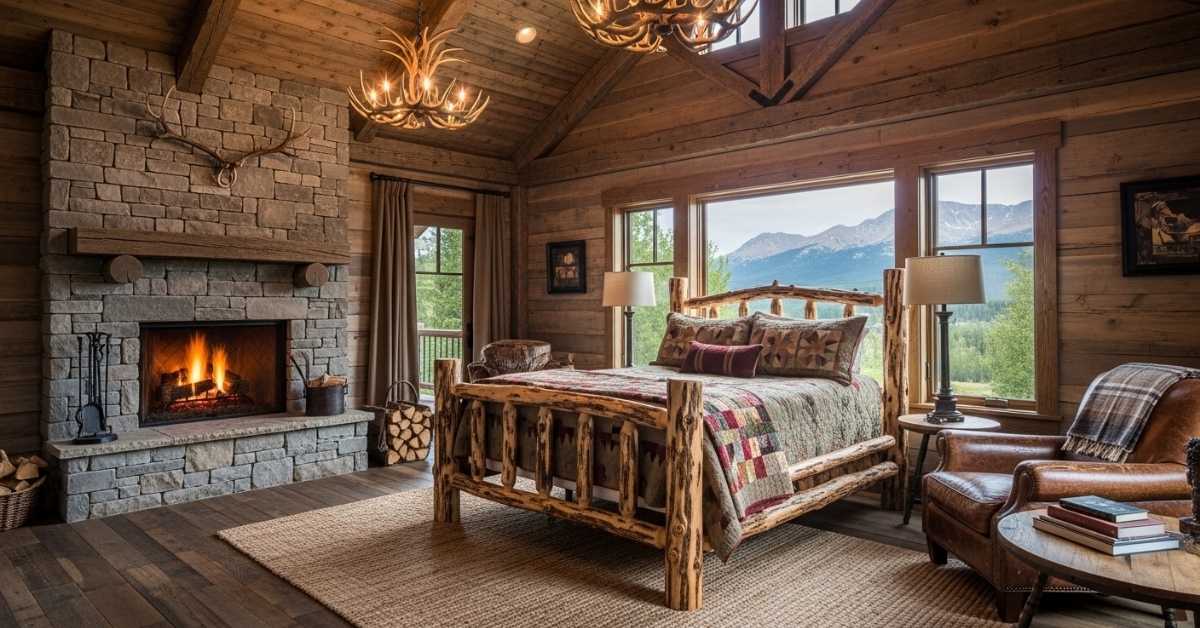
If your bedroom currently feels a little flat or disconnected, this style is worth considering seriously. It works across a wide range of spaces, small apartments, older homes with quirky layouts, Rustic Bedroom Ideas even new builds that need some warmth added back in. The core logic is simple natural materials, texture contrast, and warm light do most of the heavy lifting.
For anyone trying to make their bedroom feel more grounded and less generic, these 27 rustic bedroom ideas cover everything from bed frame choices and wall treatments to lighting setups and storage that actually fits real life.
Reclaimed Wood Bed Frame as the Focal Point
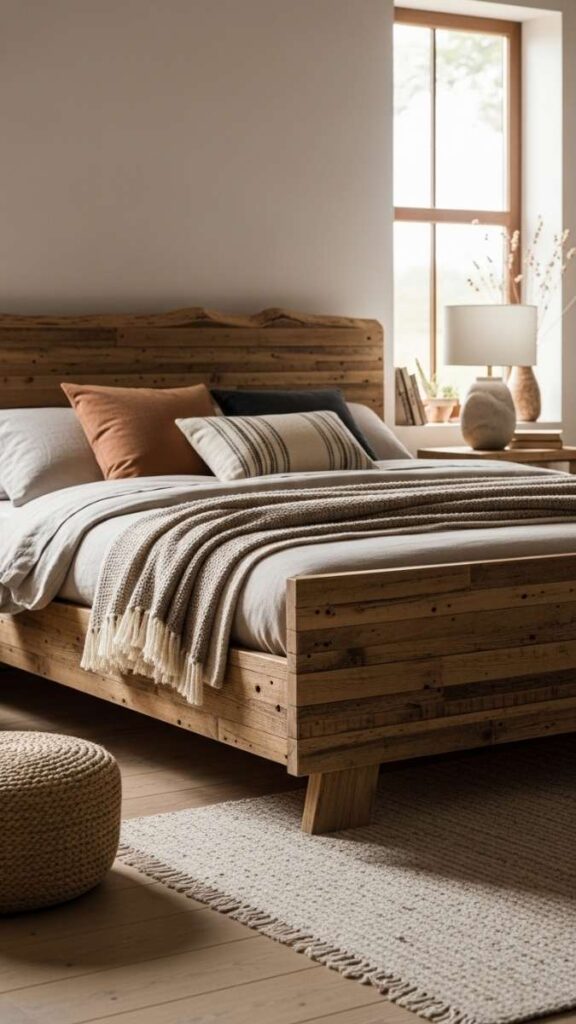
A reclaimed wood bed frame does something a painted or upholstered frame rarely achieves; it anchors the entire room with visible history. The grain variations, knots, and slight color inconsistencies across the wood panels create depth that no two pieces replicate exactly.
Position it centered on the main wall with equal nightstand spacing on both sides to balance the visual weight. This setup works especially well in rooms where the walls are plain or neutral, because the frame becomes the room’s defining feature without competing with anything else. It solves the “bedroom feels like a hotel” problem immediately.
Exposed Wooden Ceiling Beams With Warm Overhead Lighting
Ceiling beams draw the eye upward and make a room feel intentionally designed rather than just furnished. In rooms with standard 8- or 9-foot ceilings, real structural beams aren’t always an option but lightweight faux wood beams mounted flush to the ceiling read almost identically in photos and in person.
Pair them with a warm-toned pendant or a simple Edison bulb fixture hanging between the beams, and the light bounces off the wood in a way that changes the entire atmosphere of the room after dark.
This works especially well in bedrooms that feel too wide or too boxy; the beams give the ceiling a defined structure that brings the room’s proportions into balance.
Shiplap Accent Wall Behind the Bed
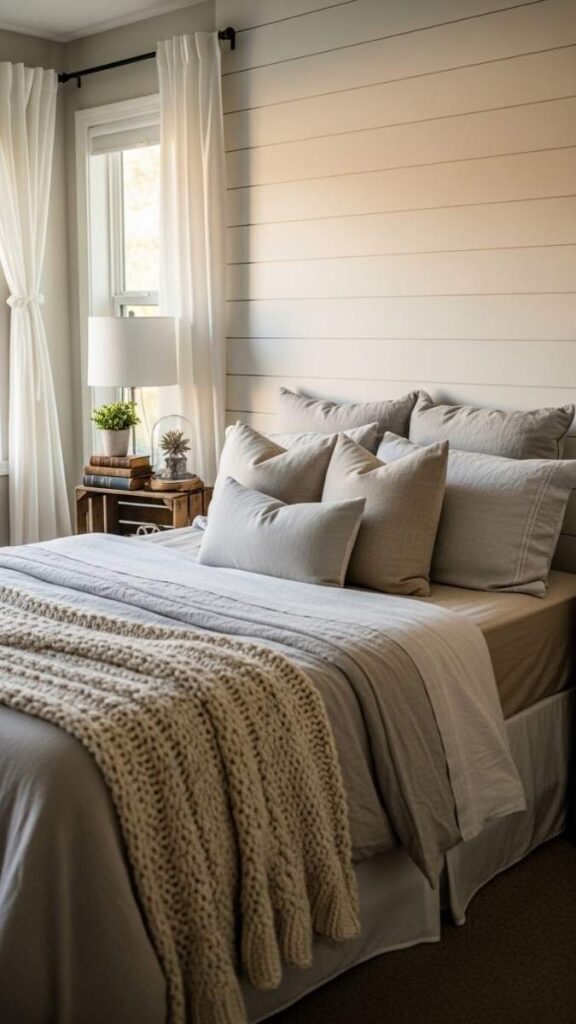
Shiplap is one of those wall treatments that looks far more involved than it actually is to install. A single accent wall behind the headboard in horizontal white or natural-toned shiplap adds architectural detail without needing artwork, wallpaper, or anything mounted on it.
The horizontal lines visually widen narrower rooms, which makes this particularly useful in longer, thinner bedroom layouts. Wall-mounted sconces on either side of the bed rather than table lamps keep the nightstands clear and reinforce the paneled, intentional look.
If you’re renting, there are peel-and-stick shiplap panel options that install without damage and remove cleanly.
Read More About: 47+ Rustic Wedding Decor Ideas That Feel Warm, Intentional, and Totally Pinterest Worthy
Layered Linen and Wool Bedding in Earthy Tones
The bed is the largest surface in the room, so what goes on it matters more than most people realize
. Layering works better than matching a linen duvet in oatmeal or cream, a lightweight cotton blanket in a muted sage or clay, and a chunky wool or knit throw draped across the foot of the bed creates dimension that a single duvet cover never achieves.
The textures reflect light differently and make the whole setup look considered without being precious. This approach also solves a practical problem: you can adjust warmth throughout the night without needing a completely different bedding setup for different seasons.
Stone or Brick Feature Wall for Permanent Texture
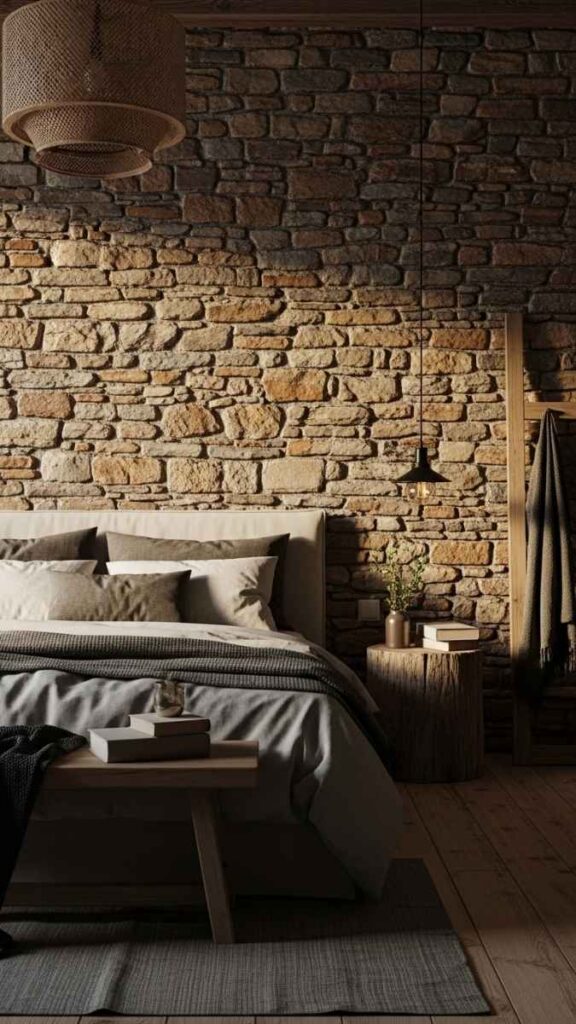
Exposed brick or stone adds raw texture that no paint color can replicate. If the room has an original brick wall, even a partially exposed one, leaving it unsealed and visible gives the space a grounded, slightly industrial-meets-rustic feel that works particularly well with iron or blackened steel bed frames.
In rooms where real brick isn’t available, thin brick veneer panels or stone-look tiles applied to a single wall achieve a very similar effect. The key is keeping everything else in the room relatively quiet, neutral bedding, simple furniture so the wall does the work without the room feeling chaotic.
Wooden Nightstands With Visible Grain or Live Edge
Nightstands are often treated as afterthoughts, but in a rustic bedroom they’re one of the easiest places to add natural material without a major purchase or renovation. A live edge wood nightstand where the natural outer edge of the wood slab is preserved brings organic shape into a space that’s otherwise full of right angles.
Even a basic solid wood nightstand with visible grain in walnut, oak, or pine reads differently than MDF or painted furniture. Keep the surface edited by a lamp, something small, nothing more. The wood itself is the detail.
Vintage or Antique Dresser as a Statement Piece
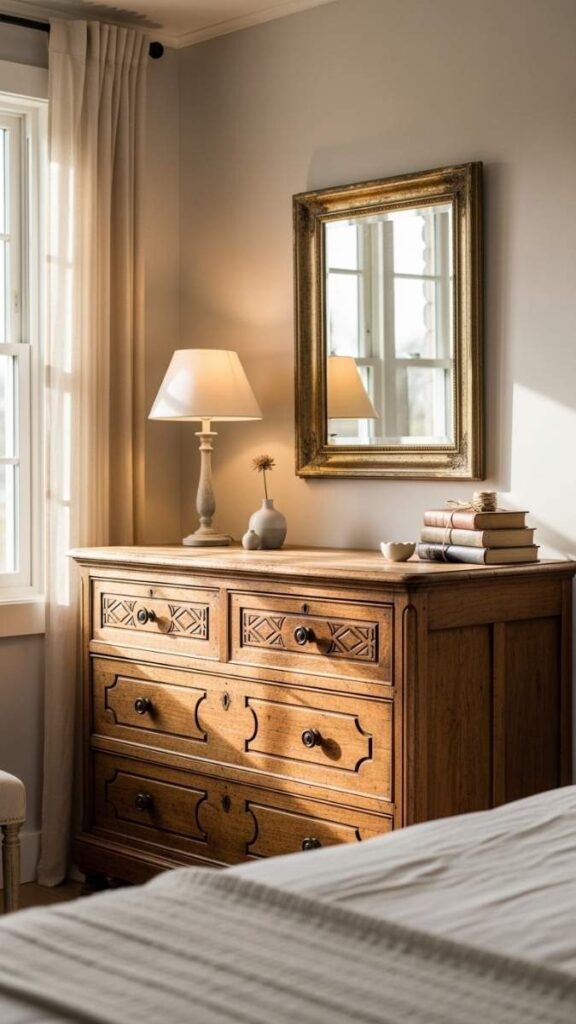
A single antique or vintage dresser can shift the entire register of a bedroom. The aged finish, slightly imperfect drawer fronts, and ornate hardware read as authentically rustic in a way that new furniture, even well-made new furniture rarely achieves.
Thrift stores, estate sales, and online marketplaces reliably carry solid wood pieces from the mid-20th century that just need a light clean or hardware swap. Place it against the wall that gets indirect light, add a simple mirror above it, and the combination of the aged wood and the reflected light becomes a genuine focal point.
This is one I’d actually recommend trying first, especially if you’re working with a limited budget the payoff relative to the cost is hard to beat.
Rope or Macramé Wall Hanging Above the Headboard
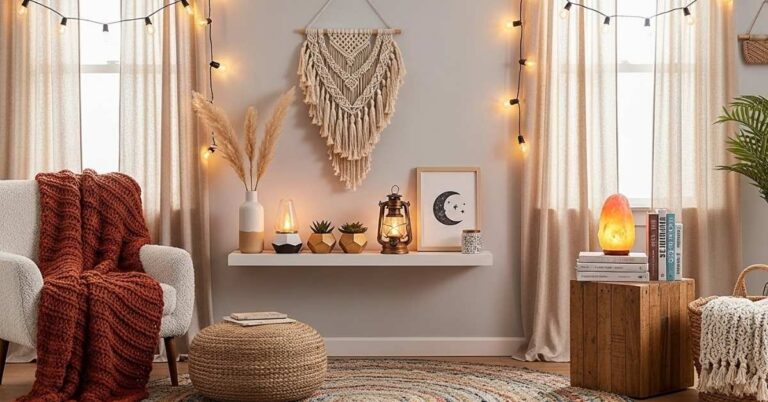
A large macramé or woven wall hanging above the bed fills vertical wall space without the rigidity of framed art. The knotted texture adds visual weight and warmth, and the natural fibers typically cotton or jute fit naturally within the rustic material palette.
This works especially well in rooms without a traditional headboard, where the wall above the bed can feel empty or unresolved. In smaller rooms, a single oversized piece reads cleaner than a gallery wall and takes up far less visual real estate while achieving the same effect of making the wall feel intentional.
Read More About: 46+ Vintage Beach House Decor Ideas That Make Coastal Living Feel Effortlessly Lived In
Barn Door Closet or Room Divider
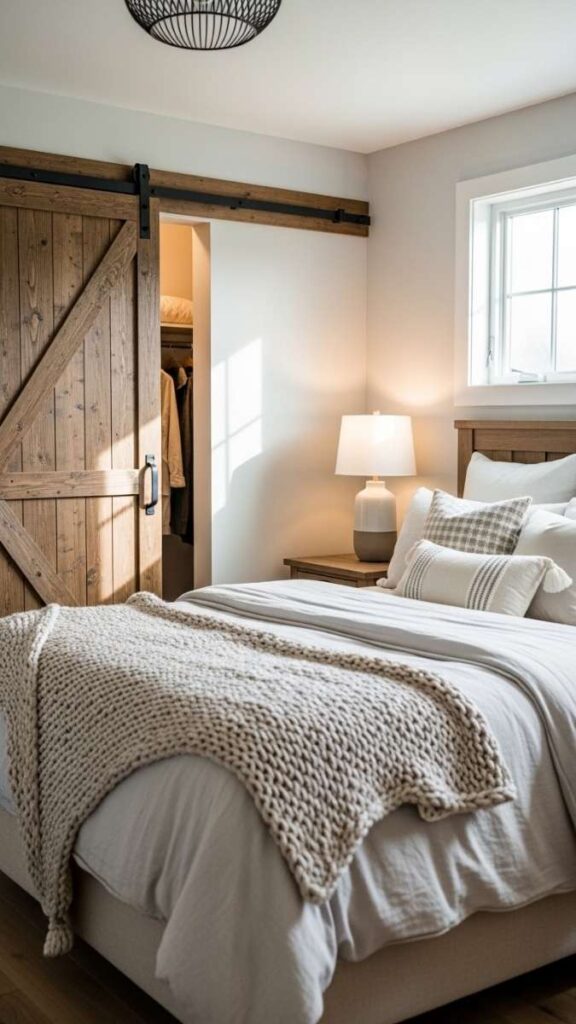
Barn doors solve a real space problem: standard swinging closet doors need clear floor space to open, which in smaller bedrooms often means awkward furniture placement around them.
A sliding barn door on a wall-mounted track eliminates that radius entirely, freeing up floor space and making furniture arrangement significantly easier.
The door itself, typically a planked wood panel with exposed hardware, also adds strong rustic character to an otherwise plain wall. Matte black or wrought iron hardware against a dark-stained wood door is one of the more reliable material combinations in this style.
Wrought Iron or Forged Metal Bed Frame
Iron bed frames carry a specific kind of historical weight they read as rustic without skewing overly country or farmhouse when kept simple. A straightforward panel or spindle design in matte black or aged bronze pairs well with almost any wall color or floor material.
The open structure of the frame also lets more of the room show through it, which matters in smaller bedrooms where a bulkier upholstered frame would dominate the space. Because the frame itself has visual presence, the bedding can stay simple solid linen or cotton in a neutral works better here than anything heavily patterned.
Edison Bulb String Lights Along Ceiling or Beams
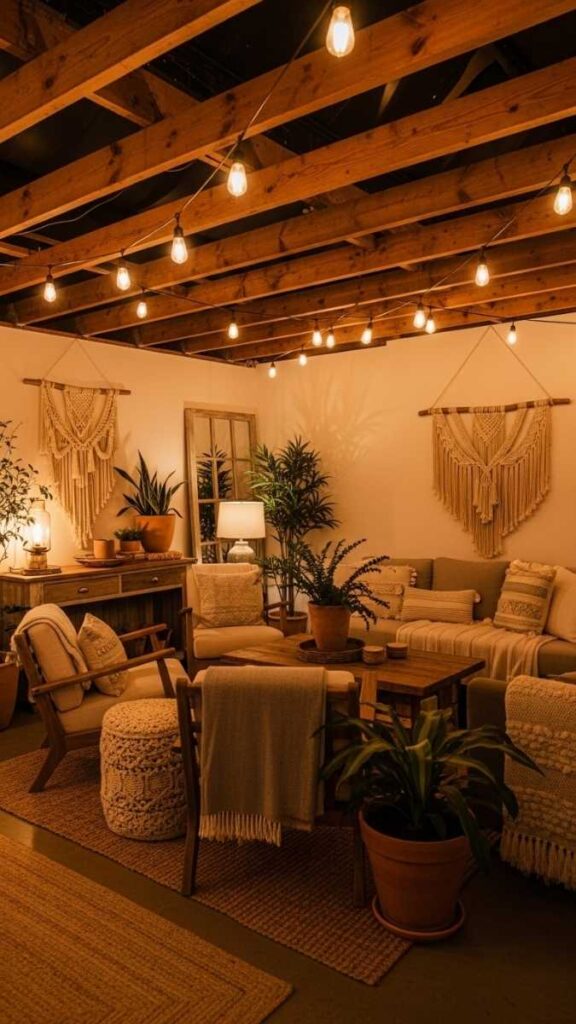
Edison string lights aren’t a new idea, but how they’re used matters. Draped loosely along a ceiling beam or hung in a simple parallel arrangement across the ceiling rather than wrapped around a headboard or draped behind sheer fabric they function more like architectural lighting than decoration.
The warm amber glow they produce is distinctly different from overhead LED lighting, and in a bedroom context, that quality of light is genuinely more relaxing. This works well as supplemental lighting in rooms where the main fixture is too bright or too central for evening use.
Woven Jute or Wool Area Rug Under the Bed
A rug under the bed extending at least 18 inches on either side and at the foot is one of the most effective layout tools in a bedroom, and most rooms skip it entirely or use one that’s too small.
A jute, sisal, or flat-woven wool rug in a natural tone grounds the furniture arrangement and visually ties the bed to the rest of the space. The natural fiber texture also adds another layer to the material palette without introducing pattern or color.
In rooms with wood or tile floors, the rug also solves the practical issue of cold bare floors when stepping out of bed in the morning.
Wooden Floating Shelves for Bedside Storage
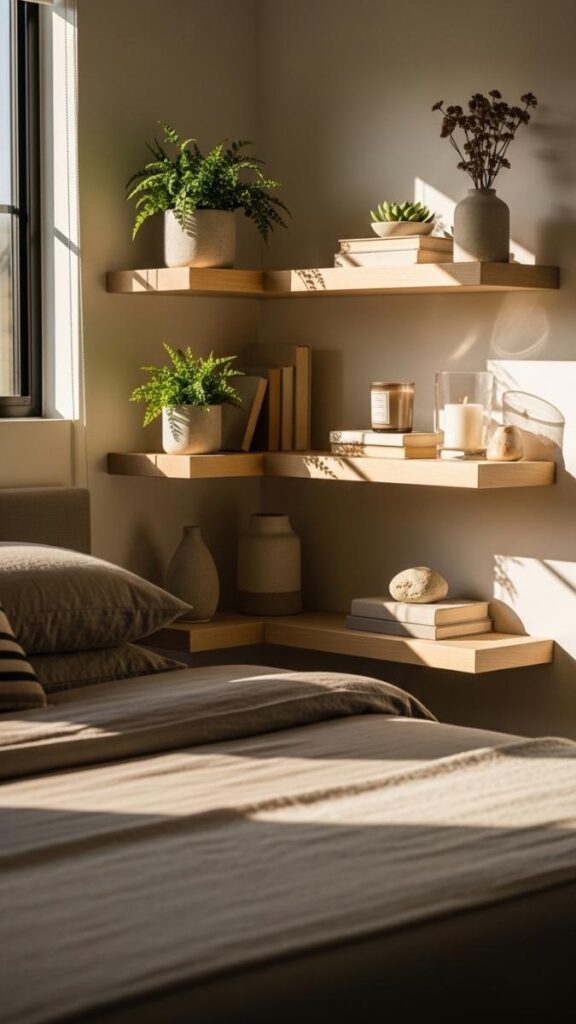
In rooms where floor space is limited, floating wood shelves mounted at nightstand height on either side of the bed eliminate the need for standalone furniture pieces entirely.
A single solid wood shelf oak, pine, or walnut with a small lamp, a book, and nothing else reads clean and functional without sacrificing the warm material tone.
The absence of table legs opens up the floor, which makes a real perceptual difference in narrow rooms. This is a particularly useful solution for anyone dealing with an awkward room width that doesn’t accommodate standard nightstand dimensions.
Neutral Limewash or Roman Clay Walls
Limewash paint creates a matte, slightly cloudy finish with subtle tonal variation across the surface; it doesn’t look flat the way standard wall paint does, and it doesn’t look shiny the way eggshell or satin does.
The texture it creates is visible in raking light and invisible in direct light, which gives walls a quiet depth that changes throughout the day.
In a rustic bedroom, limewash on the main walls works better than wallpaper or a bold paint color because it adds surface interest without introducing pattern or strong hue. Warm whites, pale terracotta, and muted clay tones are the most versatile options.
Log or Branch Curtain Rod
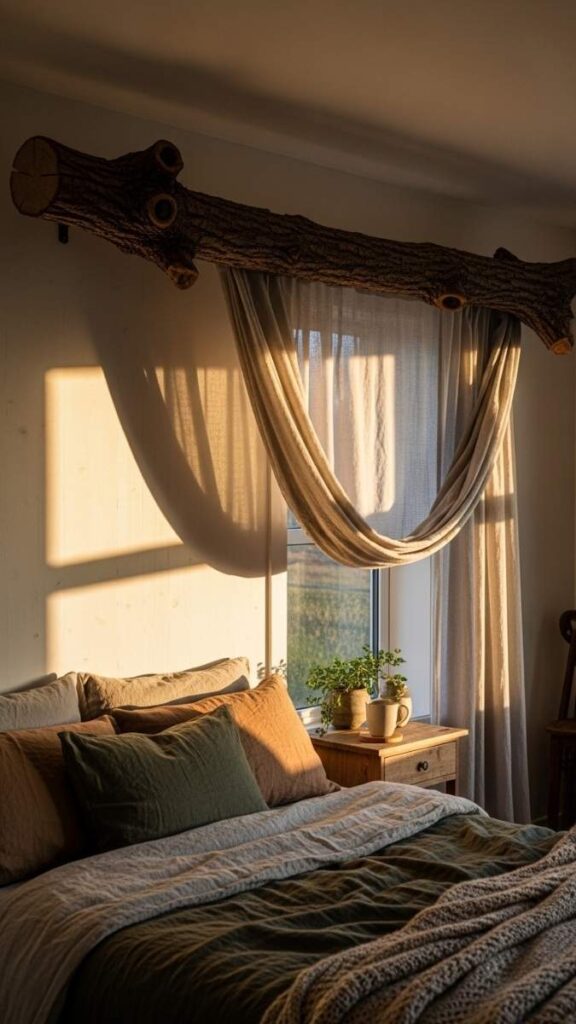
This is a small detail that lands differently than you’d expect. A straight branch or log section sealed or lightly sanded used as a curtain rod introduces a genuinely organic element that no manufactured rod replicates.
Branches with a relatively consistent diameter and a natural fork or end detail look finished without needing any hardware beyond simple hook rings.
This works best in rooms that already have other natural wood elements and where the windows aren’t too wide beyond about 60 inches, the branch may need center support to avoid sagging.
Plaid or Flannel Throw Blankets for Seasonal Texture
A plaid flannel throw is one of those things that works harder than it looks. Folded neatly at the foot of the bed or draped casually over one corner, it introduces pattern and warmth into an otherwise neutral setup without needing anything else on the walls or surfaces.
The key is keeping the colorway muted deep forest greens, burgundy, or navy with cream rather than going for bright primary colors, which push the aesthetic in a different direction.
In my experience, this works best when everything else in the room is staying neutral and you want one layer of visual interest without committing to a full color change.
Read More About: 45+ Vintage Baby Nursery Ideas That Feel Warm, Nostalgic, and Completely Livable
Wooden Window Frame Contrast With Linen Curtains
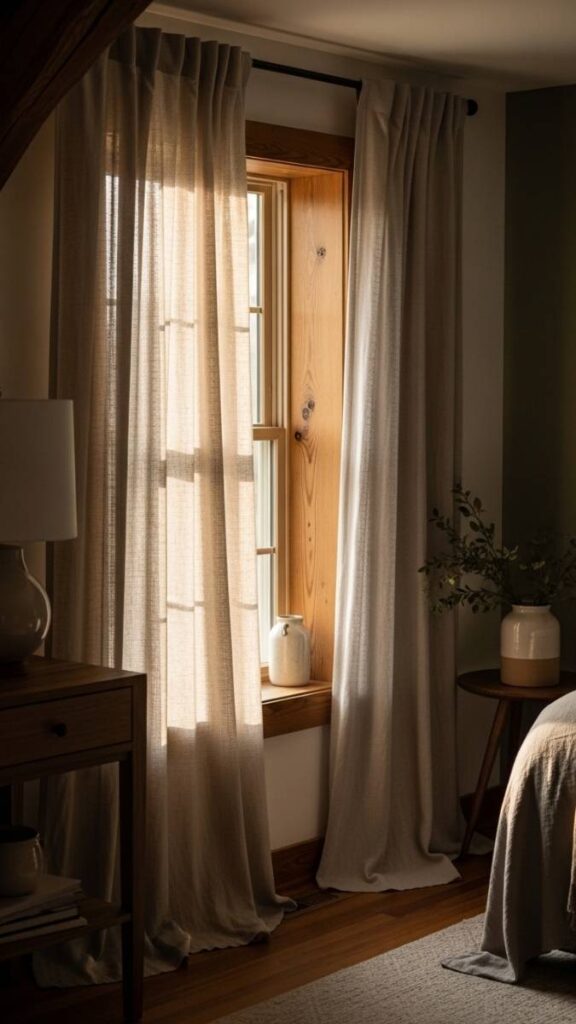
Dark-stained or natural wood window trim against light walls creates a framing effect that draws attention to the window without needing curtains that do any heavy decorative lifting.
Pair the trim with simple linen panels in a natural or off-white tone floor length, slightly wider than the window frame to allow full light when open and the combination reads as quietly refined rather than decorated.
This works especially well in older homes where original wood window trim is already in place and just needs refinishing, or in new builds where adding wood trim is a relatively low-cost upgrade.
Cedar Lined or Wooden Blanket Chest at the Foot of the Bed
A blanket chest solves two problems at once: extra bedding storage and the visual gap at the foot of the bed that can make a room feel unresolved.
A solid wood chest cedar, pine, or oak with minimal hardware sits low enough not to block movement through the room and adds enough mass to balance the visual weight of the headboard.
In smaller rooms, look for options that double as seating a flat lid with enough structural integrity to sit on briefly. The chest doesn’t need to be new; antique and vintage versions found at estate sales often have characters that new versions replicate poorly.
Leather or Linen Upholstered Headboard With Wood Base
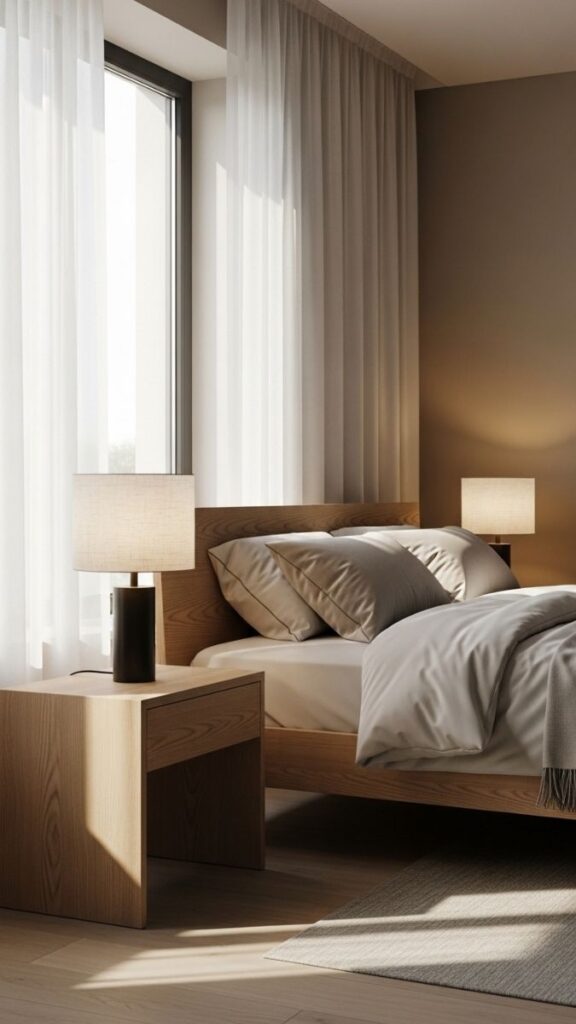
An upholstered headboard with exposed wood legs or a visible wood frame base sits at an interesting intersection of rustic and refined. The upholstery adds softness useful for reading in bed while the wood base keeps it grounded in the natural material palette.
In rooms where an all-wood frame feels too heavy or too dark, this hybrid approach breaks up the material while still maintaining warmth.
Natural linen or aged leather in a muted tone works better than velvet or performance fabric in this context, since both materials age in a way that actually improves over time.
Indoor Plants and Dried Botanicals for Organic Life
Live plants bring genuine organic presence into a room that a painting or print can’t replicate something about the variation in leaf shape and the slight movement in the air reads differently than any static decor. In a bedroom, lower-light options like pothos, snake plants, or ZZ plants make the most practical sense since they don’t require direct sunlight and are forgiving of irregular watering.
Dried botanicals, pampas grass, wheat stems, dried eucalyptus work well in rooms where live plants aren’t feasible, and they hold their shape for months to years with minimal maintenance. A single large dried arrangement in a ceramic or woven vessel has real visual presence without requiring anything else around it.
Vintage Lantern or Candlestick Lighting
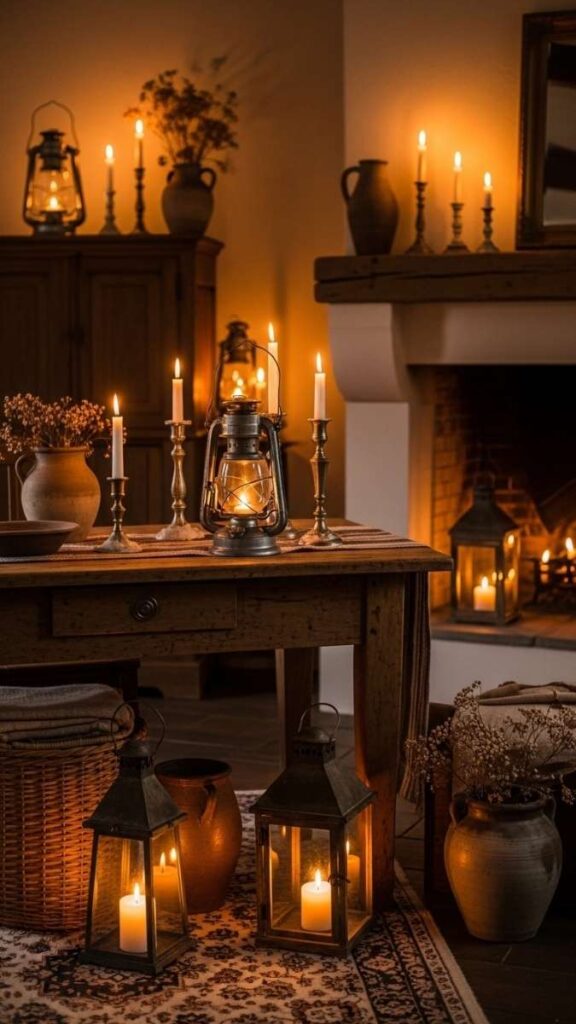
Table lamps in a rustic bedroom work best when they look like they weren’t designed to be table lamps; vintage lanterns, candlestick holders converted to lamps, or ceramic vessels with simple shades all fit this logic.
The key is the shade: a linen or paper shade in a warm white or natural tone will diffuse the light softly, while a solid or dark shade will cast more directional light. In rooms where the overhead lighting is too bright or too cool, a pair of these on the nightstands and nothing else overhead creates a genuinely different and noticeably more relaxing lighting environment.
Whitewashed or Pickled Wood Furniture
Whitewashed or pickled wood furniture occupies a specific space in the rustic palette; it reads lighter and more airy than dark or natural-toned wood, which makes it particularly useful in smaller bedrooms or rooms with limited natural light.
The process of whitewashing allows the wood grain to remain visible through the finish, so you retain the texture and depth of natural wood while lightening the overall tone.
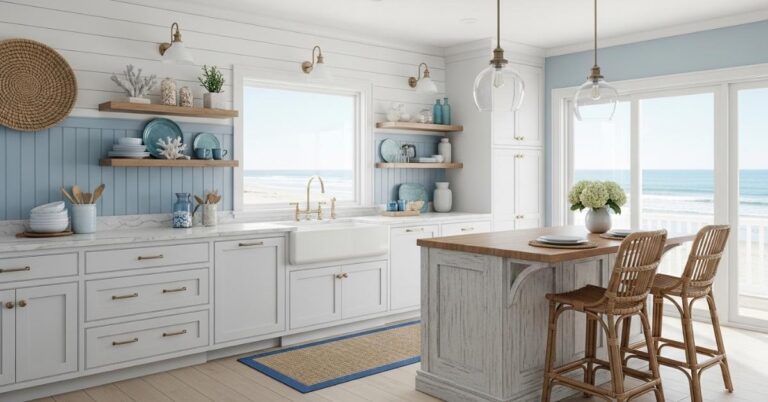
This works well in coastal-adjacent rustic setups or in rooms where you want warmth without the visual heaviness that darker wood can create in tight spaces.
Peg Rail or Wooden Wall Hooks for Functional Decor
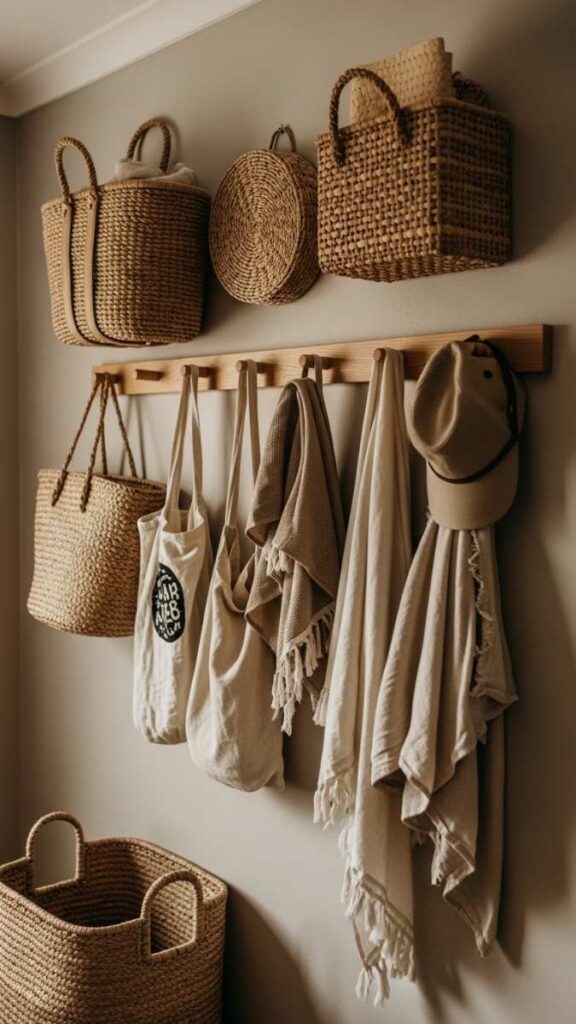
A Shaker-style peg rail mounted along one wall either above the dresser or on an empty stretch of wall near the door adds both storage and visual rhythm. Evenly spaced pegs in natural or painted wood hold robes, bags, hats, or a small hanging basket for phone chargers or accessories. The rail itself, even when empty, reads as an architectural detail rather than just a storage solution.
This is especially practical in rooms without a full walk-in closet, where everyday items tend to end up draped over chairs or door handles. Mounting it at consistent height (about 5 to 5.5 feet) keeps it accessible and visually aligned.
Terracotta or Earth Tone Accent Decor
Terracotta, clay, rust, and warm ochre work within the rustic palette in a way that feels current without being trendy in the pejorative sense; these are colors tied to natural materials rather than to a particular design moment.
A terracotta ceramic lamp base, a set of clay-toned pillows, or even a simple earthenware bowl on the nightstand introduces this hue without overpowering the room.
The color reads warm in any light condition, which makes it more reliable than cooler accent tones that can look washed out in the morning or flat in artificial light at night.
Low Platform Bed With Thick Mattress Profile
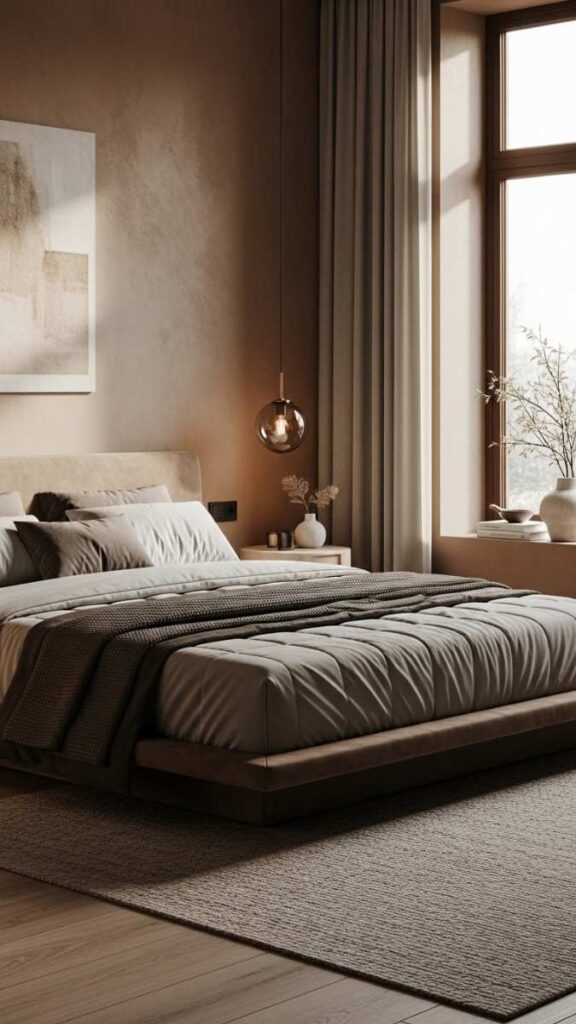
Low platform beds change the proportions of a room in a specific way by bringing the sleeping surface closer to the floor, the ceiling reads higher, and the room feels less top-heavy.
This is especially useful in rooms with lower ceilings or heavy overhead fixtures. A solid wood platform in a clean plank construction pairs well with a thicker mattress profile, since the low base makes a thinner mattress look underdressed.
Honestly the proportion of a generous mattress on a low, solid frame is one of the more effortlessly put-together looks in the rustic bedroom category.
Wool or Sheepskin Accent Rug Near the Bed
A small sheepskin or tightly woven wool rug placed on one or both sides of the bed rather than under it serves a different spatial purpose than a large area rug. It defines the immediate area where you step out of bed each morning and adds a layer of softness that’s both tactile and visual.
In rooms with beautiful wood or tile floors you don’t want to cover, this approach gives you the warmth of a rug without obscuring the flooring. The natural variation in sheepskin texture also adds an organic quality that synthetic versions don’t replicate convincingly.
Reclaimed Wood or Pallet Accent Shelf or Headboard Wall
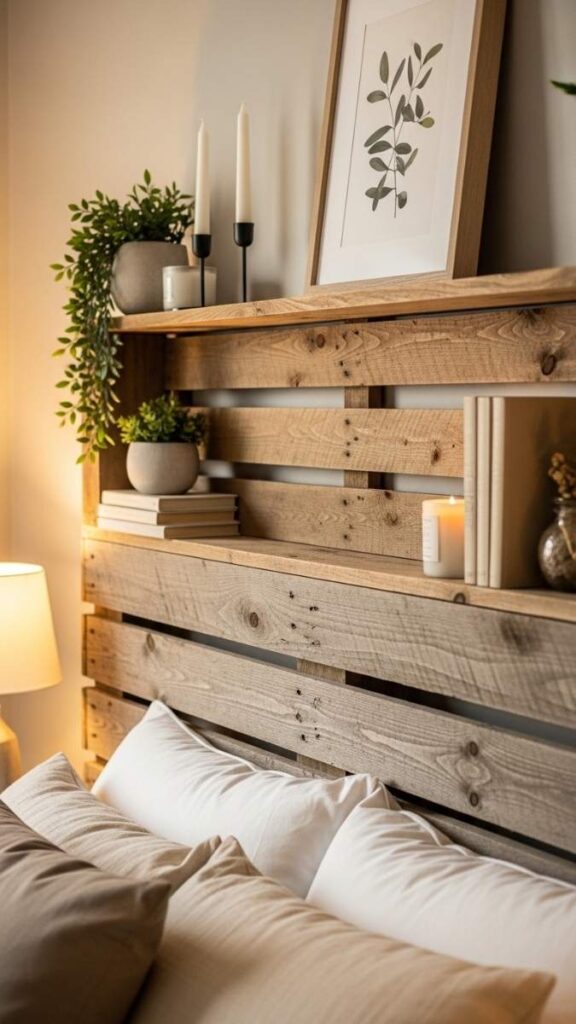
A planked headboard wall built from reclaimed wood panels or repurposed pallet wood is one of the more committed rustic bedroom moves but it’s also one of the most effective.
The weathered, varied tones of reclaimed wood create a feature wall that has genuine depth and history, and because no two pieces of reclaimed wood look the same, the result is always unique.
Installation typically requires mounting a simple frame to the wall and attaching planks horizontally or vertically manageable as a weekend DIY project. This is especially impactful in new construction or recently renovated spaces that have otherwise lost all original architectural character.
What Actually Makes These Rustic Bedroom Ideas Work
Rustic design has a logic to it that’s worth understanding before selecting individual pieces or finishes, because the style can easily slide into something cluttered or contrived without it.
Material layering is the foundation.
The reason rustic bedrooms feel warm isn’t because of any single element it’s because multiple natural materials are present at the same time. Wood, linen, wool, jute, leather, ceramic each one adds a layer of texture, and the combination creates a room that reads as rich without being loud. If a room has only one natural material and everything else is synthetic or painted, the effect falls flat.
Lighting quality matters more than fixture style.
Rustic bedrooms depend on warm light not just warm-toned bulbs, but layered sources. A single overhead fixture, even a beautiful one, doesn’t create the same atmosphere as a combination of bedside lamps, a ceiling fixture on a dimmer, and potentially some supplemental string or candle lighting. The 2026 direction in this style is moving away from one dominant light source toward multiple low-level warm sources that allow the room’s texture to show.
Scale needs attention.
Oversized furniture in a small room, or small-scale pieces in a large one, breaks the spatial logic that makes rustic rooms feel grounded. A reclaimed wood bed frame needs to be proportional to the room a king frame in a 10×12 room will feel overwhelming regardless of how good the frame is. Work with the room’s actual dimensions, not the dimensions you wish it had.
Restraint with accessories.
The instinct in rustic decorating is often to add more baskets, more branches, more vintage objects. In practice, the bedrooms that feel most genuinely rustic are the ones with fewer, more considered pieces. Three well-chosen items on a surface read better than seven.
Setup Comparison Rustic Bedroom Ideas by Space Type
| Idea | Best Space Type | Key Benefit | Main Problem Solved |
| Reclaimed wood bed frame | Any size room | Anchors the design | Generic, impersonal feel |
| Shiplap accent wall | Narrow rooms | Adds width visually | Flat, unfinished walls |
| Floating wood shelves | Small bedrooms | Frees floor space | Cramped nightstand area |
| Barn door | Tight layouts | Eliminates door swing radius | Poor furniture placement |
| Low platform bed | Low-ceiling rooms | Makes ceiling read higher | Top-heavy proportions |
| Limewash walls | Any room | Adds depth without pattern | Flat, lifeless walls |
| Edison string lights | Rooms with beams | Layered warm ambient light | Harsh overhead lighting |
| Blanket chest | Medium–large rooms | Adds storage + visual balance | Unresolved foot-of-bed space |
| Peg rail | Rooms without closets | Functional wall storage | Clutter from lack of storage |
| Layered linen bedding | Any room | Texture + seasonal flexibility | Flat, one-dimensional bed setup |
How to Arrange a Rustic Bedroom for Better Flow and Function
The physical arrangement of a rustic bedroom matters as much as the materials in it. A beautifully sourced reclaimed wood frame placed against the wrong wall, or a rug that’s undersized for the room, can undermine everything else.
Start with the bed placement.
Ideally, the bed sits on the wall opposite or perpendicular to the main window, which allows natural light to enter the room without shining directly onto the sleeping surface in the morning. In rooms with a single window on one wall, positioning the bed on the wall adjacent to the window rather than directly against it keeps the window accessible and the room feeling more open.
Leave real walking space.
The minimum comfortable clearance on each side of the bed is about 24 inches enough to walk through without turning sideways. If the room can only accommodate this on one side, position that clearance on the side you actually use to get in and out, not the decorative side.
Use the foot of the bed intentionally.
This is the area most rooms waste. A blanket chest, a low bench, or even a styled tray on a low stool gives the foot of the bed a visual anchor that balances the headboard end. Without it, beds tend to look like they’re floating in the middle of the room.
Layer lighting from the ground up.
Start with bedside lamps; they’re the most important light source in a bedroom and often the most neglected. Then add a ceiling fixture on a dimmer. If the room has beams or architectural detail, supplemental lighting along those elements comes last. The goal is a room that can be lit at three different intensities depending on what you’re doing in it.
Keep surfaces edited.
In rustic bedrooms specifically, the temptation to display every vintage find or woven basket can lead to a room that feels more like a store than a bedroom. Two or three items per surface, maximum. Let the materials and the furniture do the work.
FAQ’s
What makes a bedroom look rustic without feeling like a log cabin?
The key is material restraint and mixing rustic elements with cleaner lines. Use natural wood and texture, but keep furniture silhouettes simple and avoid novelty items like wagon wheels or excessive themed decor. One or two strong rustic anchors like a reclaimed wood headboard or limewash walls with neutral everything else achieves the look without the theme-park effect.
What colors work best in a rustic bedroom?
Warm neutrals are the most reliable base oatmeal, cream, warm white, greige, or pale terracotta. Deeper accents in forest green, rust, burgundy, or navy work well for throws and pillows. The goal is a palette that reads like natural materials, earth tones, organic hues rather than saturated or cool-toned colors, which tend to push the space in a different direction.
How do I make a small bedroom feel rustic without it feeling cramped?
Focus on wall treatments and lighting rather than additional furniture. A shiplap wall, limewash paint, or a single large woven wall hanging adds rustic character without occupying floor space. Keep furniture minimal and appropriately scaled, a low platform bed and floating nightstand shelves open up the floor significantly compared to a taller frame with bulky side tables.
Is rustic bedroom decor expensive to achieve?
It doesn’t have to be. Rustic style specifically lends itself to secondhand finds vintage dressers, antique frames, and thrifted ceramics are often the best version of these elements and cost a fraction of new equivalents. The materials associated with the style (linen, jute, pine) also tend to be less expensive than luxury alternatives like velvet or marble.
Rustic vs. farmhouse bedroom: what’s the difference?
Farmhouse style leans toward shiplap, white paint, and a cleaner, more polished finish, think Shaker cabinets and matching sets. Rustic style is rougher around the edges, more visible grain, more varied tones, less matching, more organic texture. Farmhouse reads are curated; rustic reads accumulated over time. Both use natural materials, but rustic allows for more imperfection and variety.
What type of lighting works best in a rustic bedroom?
Warm white bulbs (2700K–3000K color temperature) in layered sources bedside lamps, a dimmable ceiling fixture, and optional supplemental string or candle lighting create the most authentic rustic atmosphere. Avoid cool-toned or bright white LEDs, which flatten the texture of natural wood and linen and work against the warmth the style depends on.
Do rustic bedrooms work in modern or newly built homes?
Yes, and honestly this is where the style has the most impact. New construction tends to be architecturally neutral with smooth walls, standard trim, plain finishes so introducing reclaimed wood, raw texture, and warm lighting has an outsized effect compared to doing the same in an older home that already has character. The contrast between modern construction and rustic materials can actually feel more intentional than rustic decor in a historically rustic space.
Conclusion
A rustic bedroom doesn’t require a full renovation or a significant budget; it requires a thoughtful approach to materials, light, and proportion. Natural wood, layered textiles, and warm lighting do more for a room’s atmosphere than any amount of decorative accessories, and the best version of this style is usually the one that feels considered rather than collected.
Start with one or two ideas that fit your actual room, your dimensions, your existing furniture, your light conditions. A reclaimed wood frame or a shiplap wall if you’re ready for a larger commitment; layered linen bedding, a wooden nightstand, or a jute rug if you want to test the direction first.