36+Studio Apartment Layout Ideas That Make Small Spaces Feel Bigger and More Livable
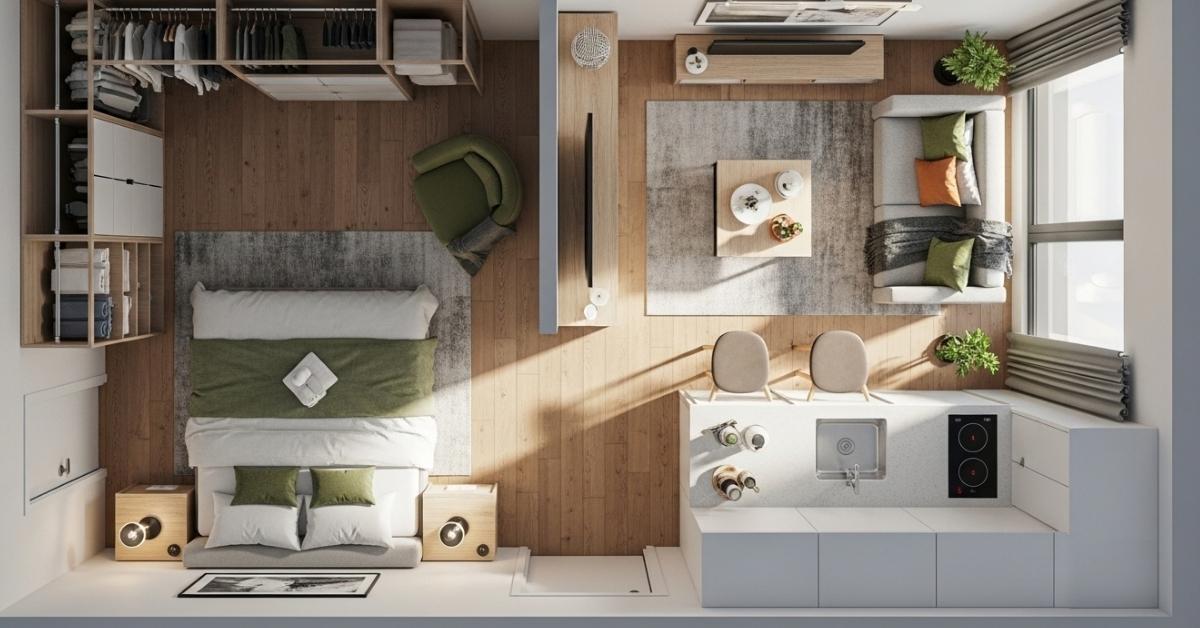
Studio apartments have a reputation for feeling cramped but that’s usually a layout problem, not a size problem. When a single room has to handle sleeping, living,Studio Apartment Layout Ideas working, and sometimes dining, the way you arrange everything matters more than square footage. A poorly placed bed or an oversized sofa can make even a decent-sized studio feel suffocating. Get the layout right, though, and the same space starts to feel intentional, calm, and surprisingly functional.
If you’re working with a studio apartment, whether it’s 300 square feet or 600these ideas are built around real constraints: limited floor space, no separate rooms, and the need to make one area flow into the next without visual chaos. Most of these setups work without major renovations, and several are renter-friendly by design.
The shift happening in 2026 is interesting. Studio dwellers are moving away from trying to hide the fact that they live in one room, and toward layouts that embrace its defined zones, smarter storage, and furniture that does more than one job. That’s the direction this list goes.
Use Your Bed as a Room Divider, Not Just Furniture
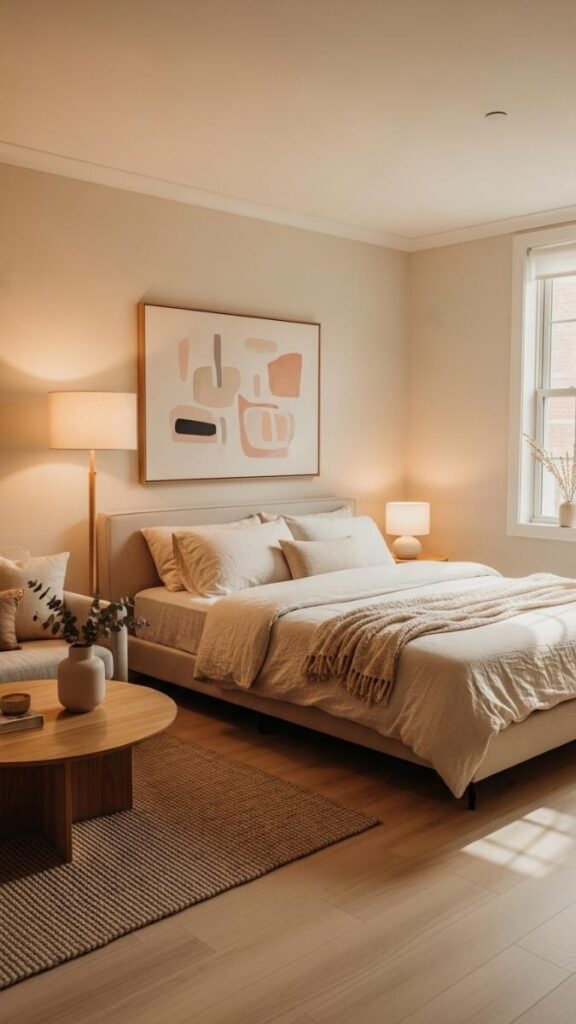
Most studios default to pushing the bed against the wall which technically saves floor space but creates one long, shapeless room with no visual logic. Try pulling the bed away from the wall and orienting it perpendicular to the longest wall instead. This creates a natural divider between the sleeping area and the living zone without needing a physical partition. A low-profile platform bed works especially well here because it doesn’t block sightlines across the room. The living side of the bed becomes the “front” of the apartment; the sleeping side becomes a quieter, more private corner even though it’s technically the same room.
Put the Sofa Where the Room Breathes
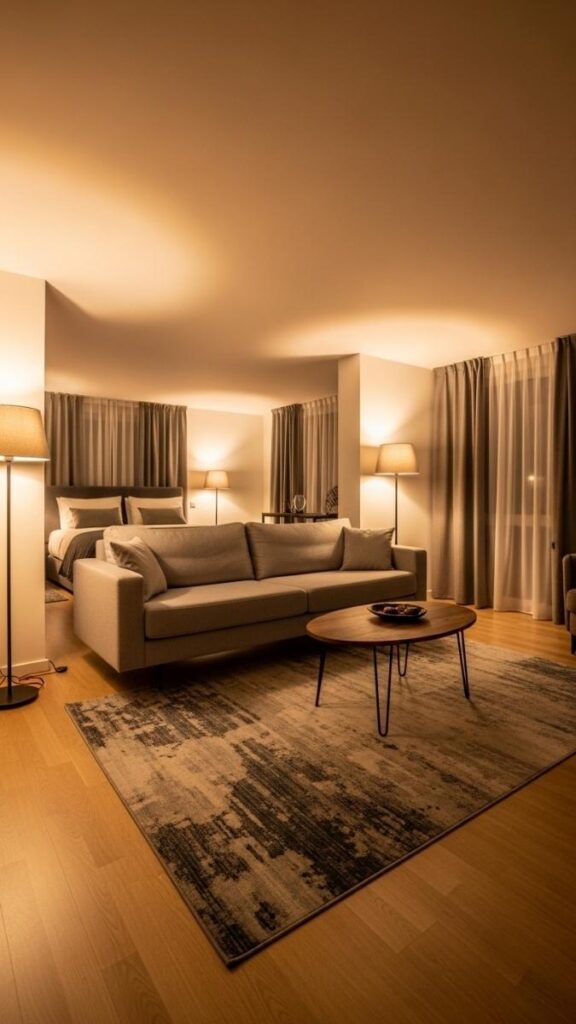
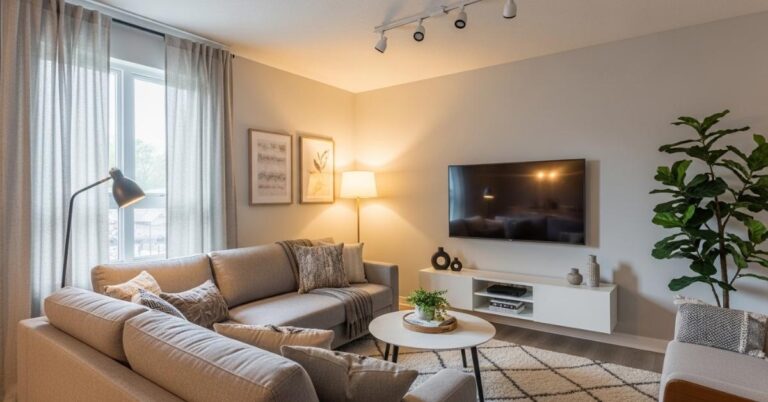
In small spaces, people tend to push every piece of furniture against a wall thinking it frees up floor space. In reality, it often makes the room feel more like a waiting room. Floating the sofa even 12–18 inches off the wall creates a sense of depth and makes the layout feel more deliberate. Pair it with a narrow coffee table (rectangular works better than round here) to keep the walking path open. This setup works best in studios where the main window is on one end positioning the sofa to face it pulls natural light deeper into the room.
Read More About: 35+Small Living Room Layout Ideas That Actually Make Your Space Feel Bigger
Define the “Dining Zone” With a Two-Person Table Against a Wall
A dedicated dining area might feel like a luxury in a studio, but it’s one of the most useful zone-defining decisions you can make. A slim wall-mounted or freestanding table with two chairs tucked against it takes up almost no floor space when not in use and when you’re eating, working, or hosting, it pulls that corner of the room into focus. Add a pendant light directly above it (even a plug-in version) to reinforce the zone visually. Without that overhead light anchor, the “dining area” just blurs into the rest of the room.
Use a Bookshelf as a Room Partition
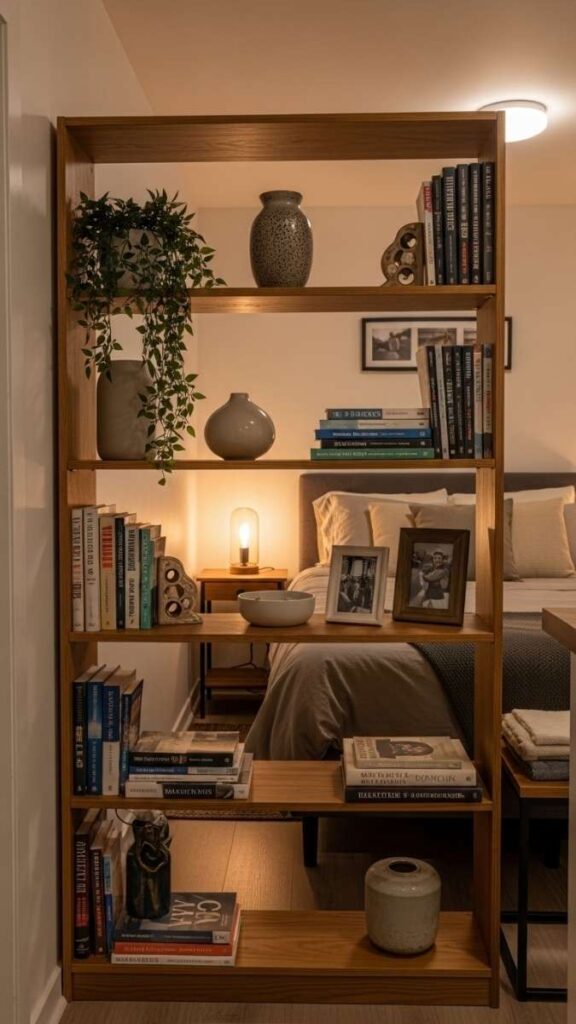
Open-back shelving units, the kind you’d normally put against a wallwork surprisingly well as partial room dividers when placed perpendicular to a wall. They separate the sleeping area from the living area while keeping the space visually open (no solid walls cutting off light). A unit around 60–65 inches tall is the sweet spot high enough to create a psychological boundary, low enough to keep the ceiling feeling tall. Style the shelves facing the living area with books and objects; the back side toward the bed can stay more functional extra blankets, bedside reading, whatever.
Layer Lighting Zones Instead of Relying on One Overhead Light
Single overhead lighting is one of the fastest ways to make a studio feel flat and institutional. In my experience, this is one of the first things worth fixing not because of aesthetics, but because of how it affects the room’s spatial logic. When you have one light source, every corner of the apartment reads as the same zone. Add a floor lamp near the sofa, a pendant or plug-in above the dining table, and a warm lamp on the bedside table and suddenly each area has its own identity without any furniture rearrangement. This is especially useful in studios where zoning through furniture placement isn’t fully possible.
Raise the Bed on a Loft Frame to Free Up the Floor Completely
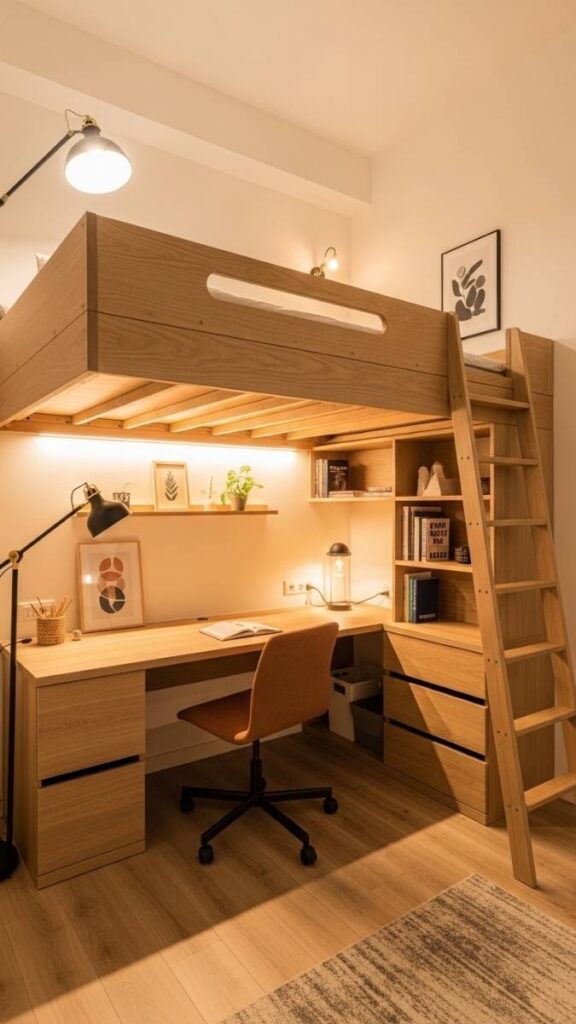
If your ceiling height allows it (roughly 9 feet or more is ideal), a loft bed is arguably the most dramatic space-multiplier available in a studio. The area underneath, typically 5 to 6 feet of vertical clearance becomes a full functional zone: a dedicated desk, a compact wardrobe, even a small sofa. This is especially useful in studios where floor space is genuinely tight and there’s no good way to zone the room horizontally. The trade-off is that getting in and out of bed requires a ladder, which some people find disruptive. Go for this if you’re working from home and need a physically separate workspace but can’t afford a one-bedroom.
Create a Bedroom Corner With Curtains, Not Walls
A ceiling-mounted curtain track is one of the most renter-friendly ways to give a studio some genuine spatial separation. A floor-to-ceiling linen or cotton curtain drawn across one end of the room creates a closed-off sleeping area that’s visually distinct from the rest of the apartment without any construction. During the day, it pulls fully open and disappears against the wall. The key is mounting the track close to the ceiling (not halfway up the wall) so the curtain drops fully and reads as an architectural element rather than an afterthought. This setup works particularly well in narrow studios where the sleeping end is near a window.
Position the Desk Near Natural Light, Not as an Afterthought
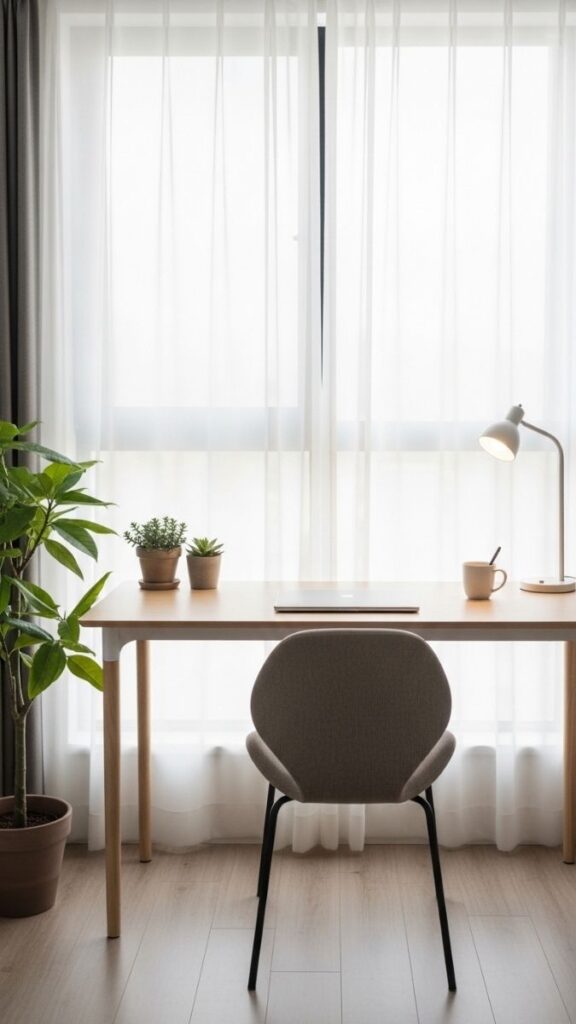
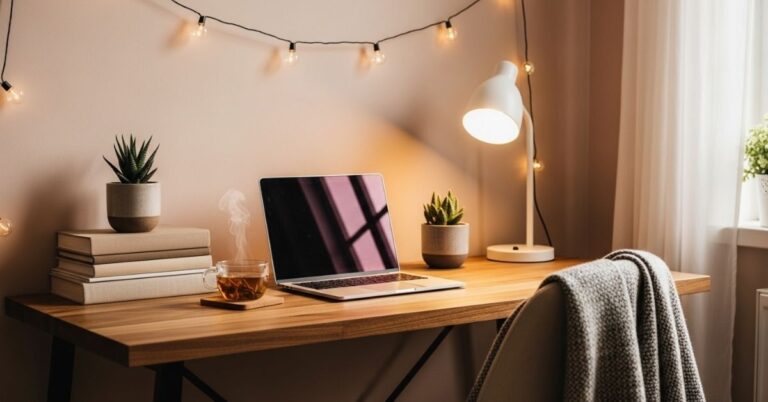
In studios that need to double as a home office, the desk placement usually happens last whatever space is left over. That’s backwards. The desk is one of the most-used surfaces in the apartment; positioning it near the natural light source (ideally a window) reduces eye strain and makes the working hours more manageable. A slim wall-mounted desk or a narrow writing desk keeps the footprint small. Facing the desk perpendicular to the window (rather than directly at or away from it) gives you good ambient light without glare on a screen.
Read More About: 34+Living Room Lighting Ideas That Make Your Space Feel Bigger, Warmer, and More Intentional
Use Vertical Space With Tall, Narrow Storage Instead of Wide and Low
In a studio, floor space is a finite vertical space usually isn’t. Swapping out wide, low furniture for taller, narrower pieces frees up square footage while drawing the eye upward, which makes the ceiling feel higher. A 72-inch tall narrow bookshelf takes up the same floor footprint as a 36-inch wide short one but stores significantly more and adds height to the room visually. This works especially well along the wall behind the sofa or beside the bed, where a taller piece doesn’t interfere with walking paths.
Float a Small Area Rug to Anchor Each Zone
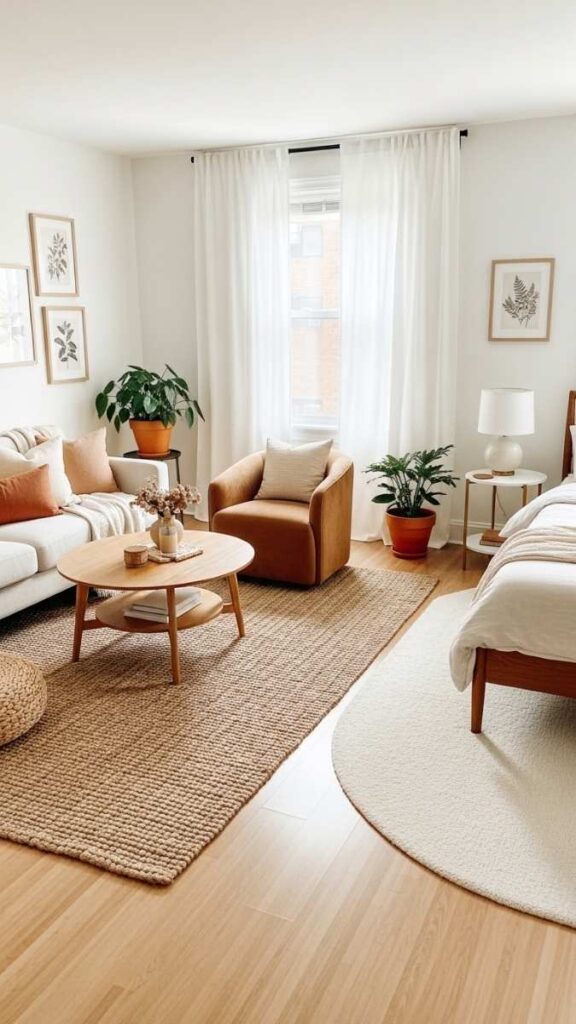
Area rugs are one of the few tools that can zone a studio without using any furniture or partitions. Two rugs, one under the sofa and coffee table, one under or beside the bed visually separate the living and sleeping areas in a way that feels deliberate rather than makeshift. The key is sizing each rug should be large enough that the main furniture sits on it or at least has its front legs on it. A rug that’s too small reads as a decorative item rather than a zoning device. Keeping both rugs in the same color family (different textures are fine) ties the room together without flattening it.
Mount the TV on the Wall to Reclaim Surface Space
A TV stand or entertainment center in a studio eats up floor space and creates a visual anchor point that’s hard to work around when arranging the rest of the room. Wall-mounting the TVideally on the wall directly opposite the sofafrees up the floor entirely. A small floating media shelf below it handles the essentials (streaming device, console) without taking up floor footprint. This setup also makes the wall feel intentional rather than filled, especially if the area around the TV stays relatively clear.
Use a Murphy Bed to Turn Your Bedroom Into a Living Room
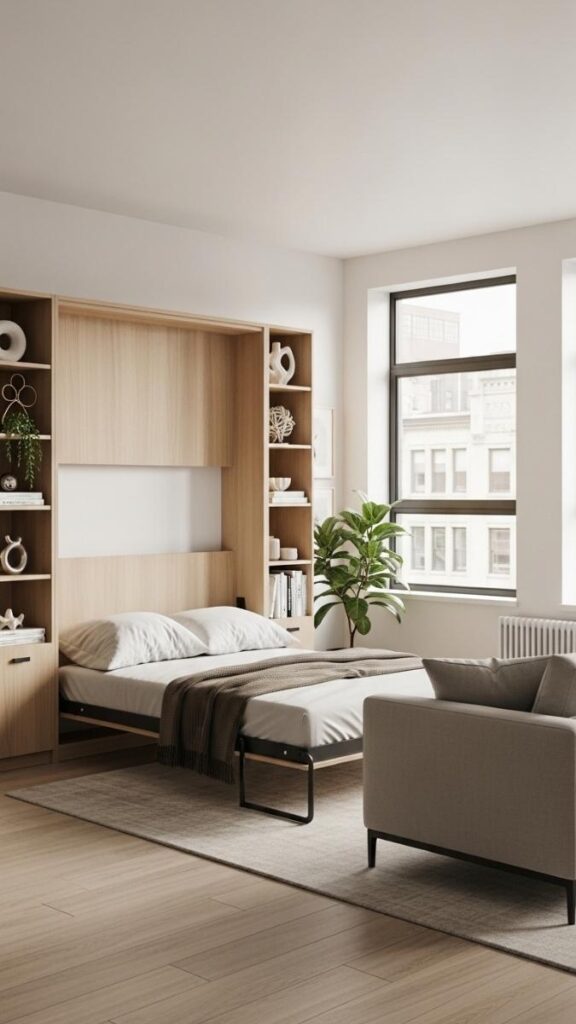
Murphy beds have come a long waymodern versions integrate into wall units that look like shelving or cabinetry when the bed is folded up. In a studio, this effectively doubles the function of the largest zone in the apartment: by day it’s a proper living room; by night it converts to a bedroom. This is especially practical in very small studios (under 400 sq ft) where a permanent bed takes up a disproportionate amount of floor space. The upfront cost is higher than most furniture purchases, but the spatial return is significant.
Keep the Kitchen Visually Separate With an Open Shelf or Bar Cart
In most studios, the kitchen is open to the rest of the room which creates a visual blur between cooking space and living space. A narrow open shelf positioned at the edge of the kitchen area, or a bar cart used as a subtle boundary marker, gives the kitchen its own visual perimeter without closing it off. This works both as a light room divider and as extra kitchen storage. A bar cart in particular is useful for renters because it’s completely portable and can shift based on how the rest of the layout changes.
Choose a Sofa With Storage Underneath or Inside
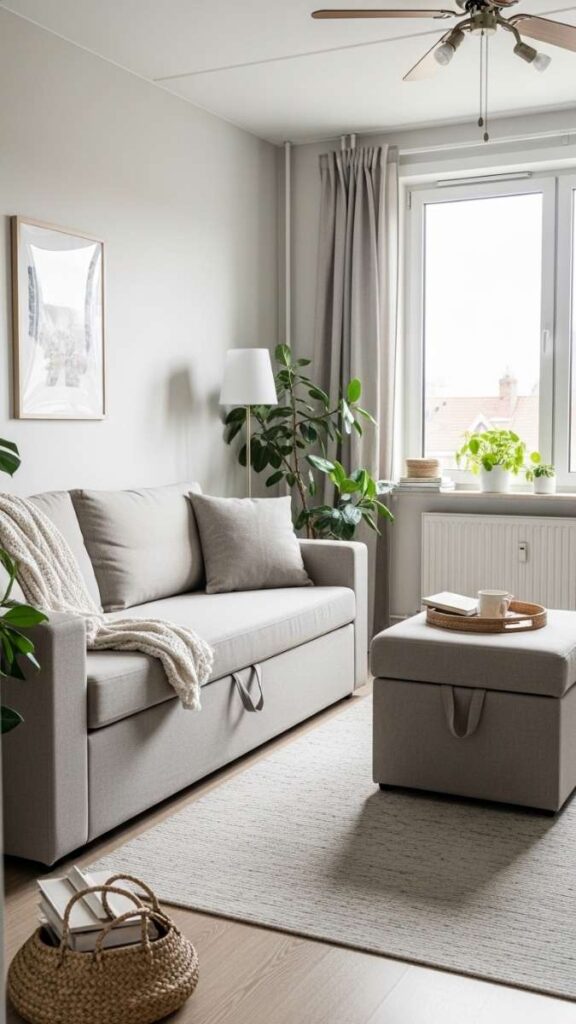
In a studio, every piece of furniture that doesn’t double as storage is a missed opportunity. A sofa with a pull-out drawer base or a storage ottoman that opens up on top effectively adds a hidden closet to the living area without changing the room’s footprint. This is particularly useful for bedding (if the sofa converts to a guest bed), seasonal items, or anything that doesn’t have a natural home in a single-room apartment. The visual result is the same as any other sofa the functional difference is significant.
Read More About: 32+Large Wall Decor Ideas That Make Every Room Feel Intentional and Complete
Use a Daybed to Make the Sleeping Area Guest-Ready
A daybed pushed against the wallstyled with a row of cushions across the back functions as a sofa during the day and a bed at night without the space-consuming mechanics of a sofa bed. This is one of the better solutions for studios where the sleeping area and living area need to overlap significantly. The cushions store easily in a basket or ottoman at night. Daybeds tend to work best in studios with natural light on the side wall, where the daybed can sit below a window and feel intentional rather than shoved in.
Place a Floor Mirror Strategically to Expand the Room Visually
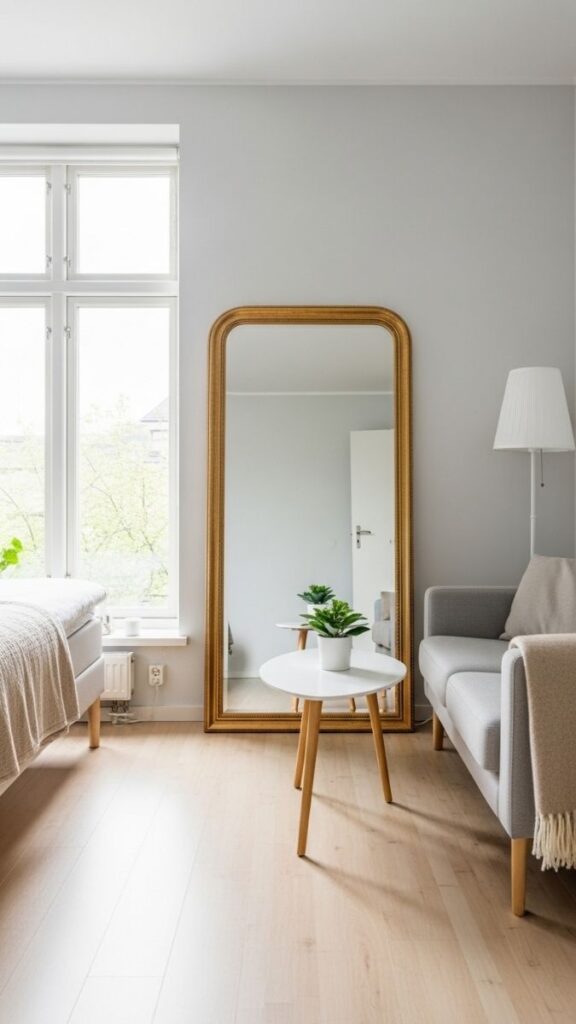
A large mirror placed opposite or adjacent to the main window reflects natural light back into the room and extends the visual depth of the space the room appears to continue beyond the mirror’s surface. This is a well-known technique, but placement matters more than size. A mirror that reflects a cluttered corner doesn’t help. Position it so it reflects the window or the most open part of the room. A leaning floor mirror (around 65 inches tall) is the easiest format for this and requires no wall installation.
Create Depth With a Two-Tone Paint or Accent Wall Behind the Bed
In a studio where every wall is the same color, the room reads as one undifferentiated box. A single accent wallspecifically behind the beddoes two things: it anchors the sleeping area visually and creates the illusion that the bed sits in a separate zone even though it doesn’t. A muted, warm tone (terracotta, sage, warm taupe) works better than a bold color here because it adds depth without overwhelming a small space. This is one of the more permanent changes on this list but also one of the most spatially effective.
Use Pegboards or Wall-Mounted Organizers in the Kitchen or Office Area
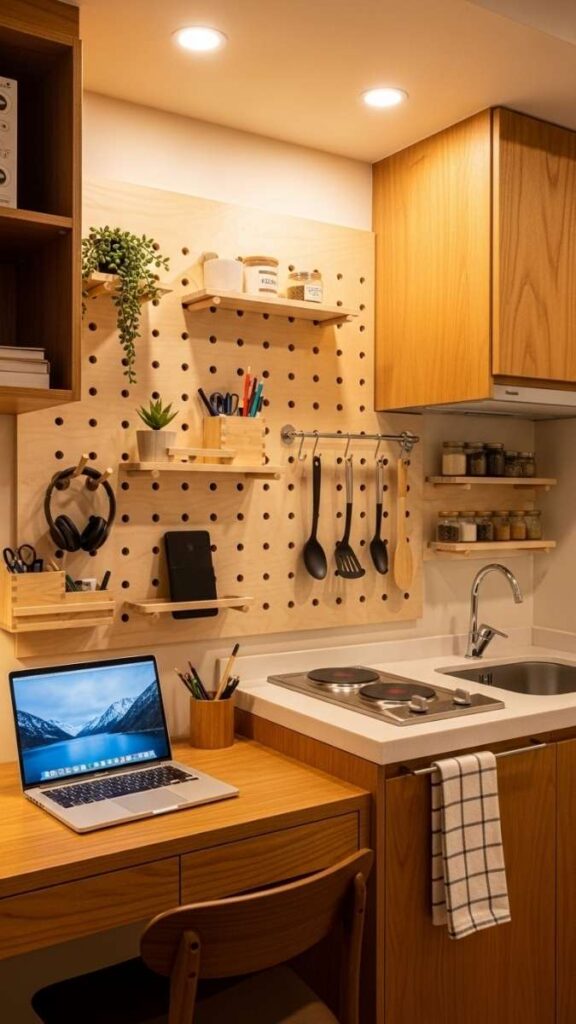
Counter and desk surfaces in a studio get cluttered fast because there’s nowhere else for things to go. A pegboard mounted above the kitchen counter or desk keeps frequently used items visible and accessible without occupying surface space. Hooks for utensils, small shelves for spices or office supplies, and magnetic containers work well within the pegboard system. The visual result is organized without being sterile especially when the board and accessories are kept in a consistent material or color palette.
Opt for Transparent or Light-Framed Furniture to Reduce Visual Weight
Dense, dark furniture in a small room creates visual mass that makes the space feel heavier and more enclosed than it actually is. Swapping one or two pieces for transparent or light-framed alternatives, an acrylic chair, a glass or lucite coffee table, a slim metal-framed shelving unit reduces that visual weight without shrinking the room’s functionality. This works particularly well in studios with limited natural light, where heavy furniture would otherwise absorb what little light there is. I’ve noticed this style tends to work best when the flooring is light-toned as well, which keeps the overall palette cohesive.
Use Ceiling Hooks or Hanging Storage to Free Up Floor Space
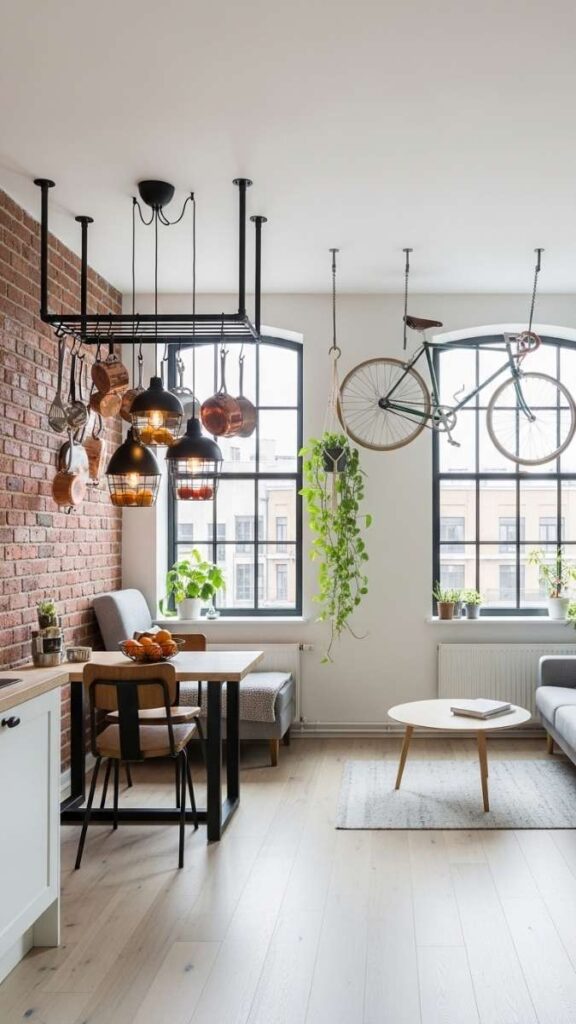
Ceiling space is almost always underused in studio apartments. Hanging hooks for a bike, a pot rack in the kitchen, or even a hanging pendant shelf above the dining table all move storage upward and free up the floor and wall surface below. This is especially useful in very small studios where floor space genuinely can’t accommodate additional furniture. It also adds visual interest at a height most apartment decor ignores making the room feel more layered and intentional.
Define the Entryway With a Narrow Console and Wall Hooks
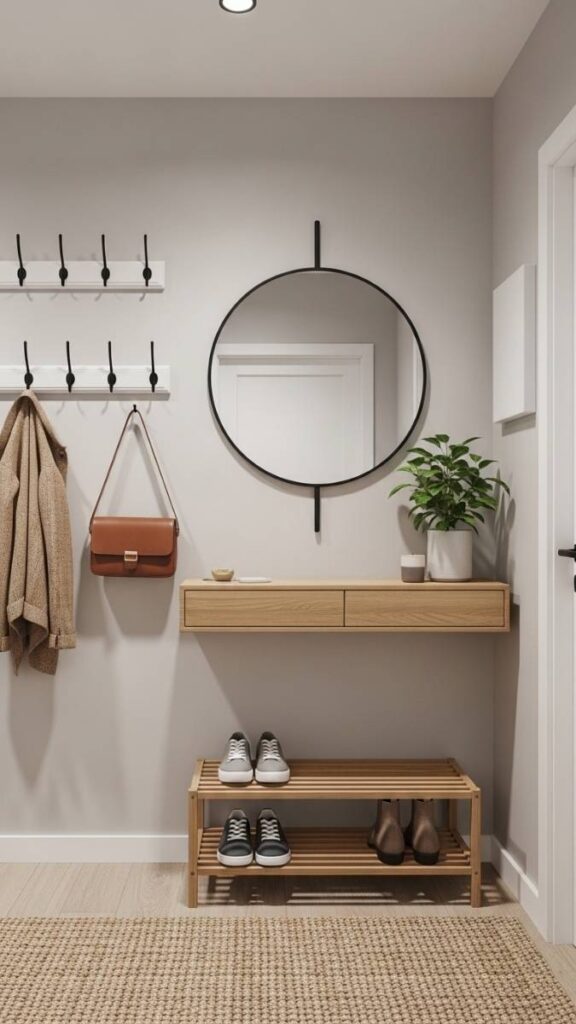
Most studios have no real entryway; the door opens directly into the main room, which means the apartment feels like it starts abruptly with no transition. A slim console table (12–14 inches deep) positioned just inside the door, with a small mirror and a few wall-mounted hooks above it, creates a visual “entrance” that grounds the layout. It also solves a practical problem: a landing spot for keys, bags, and shoes keeps those items from migrating to the sofa or desk. This works even in studios where the door opens into a short hallway.
What Actually Makes These Studio Apartment Layout Ideas Work
The ideas above work individually, but the ones that make the biggest difference share a few underlying principles worth understanding.
Zone definition is everything.
In a studio, the brain needs visual cues to understand that sleeping, working, and relaxing are happening in different spaces even if those spaces are separated by 8 feet. Rugs, lighting, curtains, and furniture orientation all create those cues. Without them, the room feels unresolved regardless of how well-decorated it is.
Scale matters more than style.
Oversized furniture in a small room doesn’t just look off it physically blocks movement and creates dead zones where the layout stops functioning. A sofa that’s 12 inches narrower, a coffee table that’s lower profile, or a bed frame without a bulky footboard can open up meaningful walking space without changing the room’s aesthetic at all.
Storage should be built into the layout, not added to it.
A studio where storage is an afterthought always ends up cluttered because there’s nowhere for things to live naturally. The most functional studio layouts build storage into the furniture choices themselvesbeds with drawers, ottomans with lids, sofas with underseat storage so the room stays organized without requiring constant effort.
Studio Apartment Layout Quick-Reference Guide
| Layout Strategy | Best For | Space Type | Key Problem ItSolves | Difficulty |
| Bed as room divider | Defining sleep vs. living zone | 400–600 sq ft studios | Shapeless, open-plan layout | Easy |
| Floating sofa | Creating depth and zone logic | Studios with center floor space | Flat, wall-hugger layouts | Easy |
| Loft bed with under-desk | Maximizing vertical space | Small studios under 400 sq ft | No room for work area | Medium |
| Murphy bed | Daytime living space recovery | Very small studios | Bed dominating the room | High |
| Ceiling curtain divider | Soft bedroom separation | Narrow or long studios | No visual privacy for sleeping | Easy |
| Area rug zoning | Defining multiple zones | Any studio size | Unclear room structure | Easy |
| Daybed as sofa + bed | Guest-ready sleeping area | Studios with limited space | Sofa AND bed taking up room | Easy |
| Accent wall behind bed | Anchoring sleeping zone visually | Studios with uniform walls | Undifferentiated, boxy feel | Medium |
Common Studio Apartment Layout Mistakes That Make Your Space Feel Smaller
Pushing all furniture against the walls.
This is the most common one, and it’s counterintuitive most people assume that clearing the center of the room creates more space. What actually happens is the room looks like a waiting area. Floating key pieces (especially the sofa) away from the wall creates depth and makes the layout feel residential rather than institutional.
Using one large light source.
Overhead lighting flattens a room. When there’s a single light, every corner of the apartment reads at the same intensity; there’s no hierarchy, no warmth, and no separation between zones. Multiple light sources at different heights (floor lamp, table lamp, pendant) allow the room to breathe and give each zone its own atmosphere.
Choosing furniture that’s too large for the footprint.
A sectional sofa that fits a living room will dominate a studio. The issue isn’t just visual, it’s functional. Oversized furniture blocks natural movement through the room, making daily life feel like an obstacle course. The rule of thumb measures walking paths before buying any large piece. A 30–36 inch clear path around the main furniture is the minimum for comfortable movement.
Skipping the entryway entirely.
When a studio has no defined entrance point, the whole apartment feels like it starts at the door which makes it feel smaller. Even a minimal entry setup (console table, hooks, mirror) gives the room a beginning, which psychologically makes the rest of it feel more organized and spacious by contrast.
Treating storage as optional.
Studios with nowhere to put things will always look cluttered, no matter how nice the furniture is. If storage isn’t built into the layout from the start, items accumulate on surfaces, chairs, and floors which reduces the perceived size of the room significantly.
FAQ’s
What is the best layout for a studio apartment?
The best studio apartment layout separates the space into distinct functional zones, sleeping, living, and working using furniture placement, rugs, and lighting rather than walls. Position the bed to act as a natural divider or use a curtain or bookshelf to create separation. Floating the sofa away from the wall and anchoring each zone with its own rug are two of the most effective starting moves.
How do I make my studio apartment feel bigger without renovating?
Focus on three things: vertical storage (tall, narrow furniture over wide, low pieces), layered lighting (multiple sources instead of one overhead), and transparent or light-framed furniture to reduce visual weight. A large mirror opposite the main window also helps by reflecting light and creating visual depth.
Can a studio apartment have a separate bedroom area?
Yes without construction. A ceiling-mounted curtain track with floor-to-ceiling panels, an open-back bookshelf used as a divider, or even the orientation of the bed itself can create a defined sleeping area that feels distinct from the living zone. The key is creating a visual and psychological boundary, not a physical wall.
What size sofa works best in a studio apartment?
Generally, a sofa between 72 and 84 inches wide is manageable in a studio. Anything larger tends to dominate the floor plan and blocks movement. A sofa without a bulky rolled arm (a track arm or slope arm profile) saves additional visual and physical space. If hosting guests matters, a daybed or a sofa with a pull-out function is worth considering over a standard three-seater.
Is a Murphy bed worth it in a studio apartment?
For studios under 450 square feet, especially if daytime livability matters. A Murphy bed essentially gives the sleeping area a second function during waking hours, which is a meaningful gain in a single-room apartment. The upfront cost (typically $1,500–$4,000 installed) is the main barrier, but the spatial return is difficult to match with any other single furniture decision.
How do I create a home office in a studio apartment?
Position a slim desk near the natural light source ideally perpendicular to a window to minimize screen glare. Keep the desk footprint narrow (under 20 inches deep if possible) and use wall-mounted or pegboard storage above it to keep the surface clear. Physically separating the desk from the sleeping area, even by a rug or furniture orientation, helps with work-life separation in a single-room environment.
What’s the biggest mistake people make in studio apartment layouts?
Pushing all the furniture against the walls. It feels logical but creates a flat, shapeless room with no zone logic. Floating the sofa and using area rugs to define separate areas produces a more functional, visually coherent layout even in genuinely small spaces.
Conclusion
Studio apartment living works well when the layout does the heavy lifting. It doesn’t require expensive furniture or a full redesign often the biggest improvements come from repositioning what you already have, adding a second light source, or introducing a simple zone marker like a rug or curtain. Not every idea on this list will fit every space, but most studios will benefit meaningfully from even two or three of these adjustments.
Start with the changes that solve your biggest frustration first whether that’s a cluttered surface, a bedroom that bleeds into the living room, or a layout that just never feels finished. Pick one or two ideas that match your space and budget, try them, and build from there. Studio apartments reward thoughtful layouts more than any other space type and the difference between a room that feels cramped and one that feels livable is usually a matter of a few intentional decisions.