14+Neutral Color Palette Ideas for Home That Actually Work in Real Life
If your space feels a little unfinished, not bad, just somehow off there’s a good chance the issue isn’t furniture or layout. It’s color. A neutral color palette for home isn’t about choosing beige and calling it done. Neutral Color Palette Ideas for Home Done well, neutrals create the kind of layered, calm environment that feels genuinely put together without demanding constant redecorating. And in 2026, the shift toward warmer, more textured neutrals is making this easier (and more interesting) than ever.
If your style leans minimal, cozy, or somewhere between the two, these ideas are built for you whether you’re working with a small apartment, a rented space you can’t repaint, or a home you’re just trying to make feel more cohesive.
Layered Warm Whites With a Linen Accent Wall
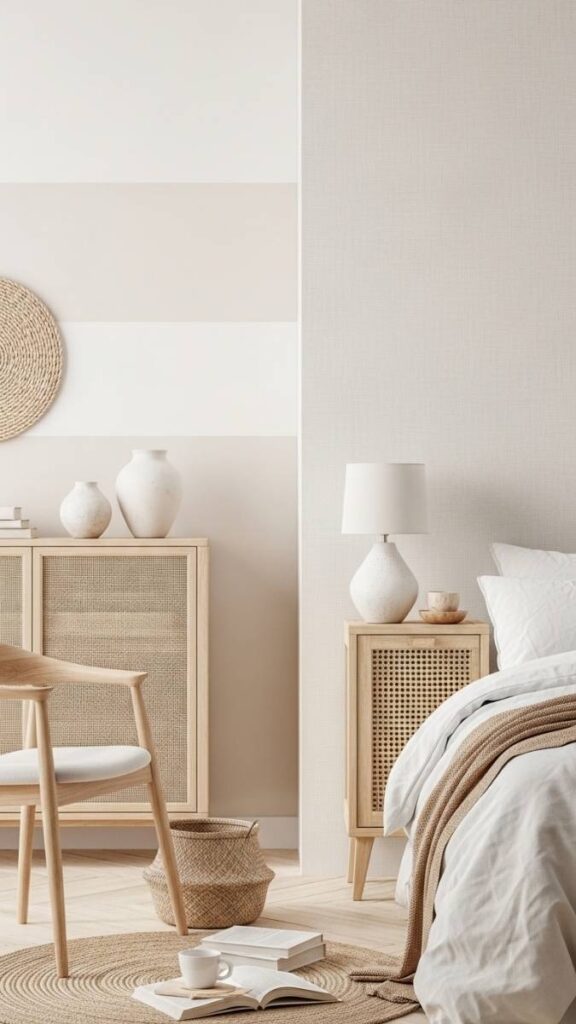
Not all whites are the same, and that’s the whole point. Pair a warm white like off-white or cream on three walls with a linen-toned accent wall either real linen wallpaper or a matte paint in the same warm family. Place a low-profile wooden sofa with white cushions near the textured wall so the contrast is subtle but visible.
The difference in texture between flat white paint and a linen surface creates depth without any bold color. This works especially well in living rooms or bedrooms where overhead lighting is the main source the texture picks up shadows and creates visual interest the flat walls can’t.
Greige Base With Warm Timber Flooring
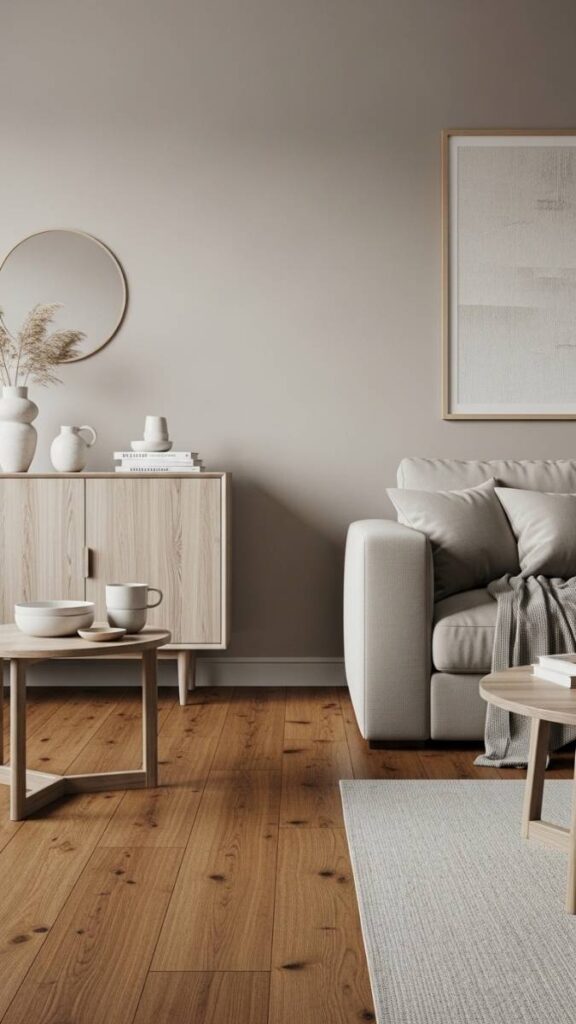
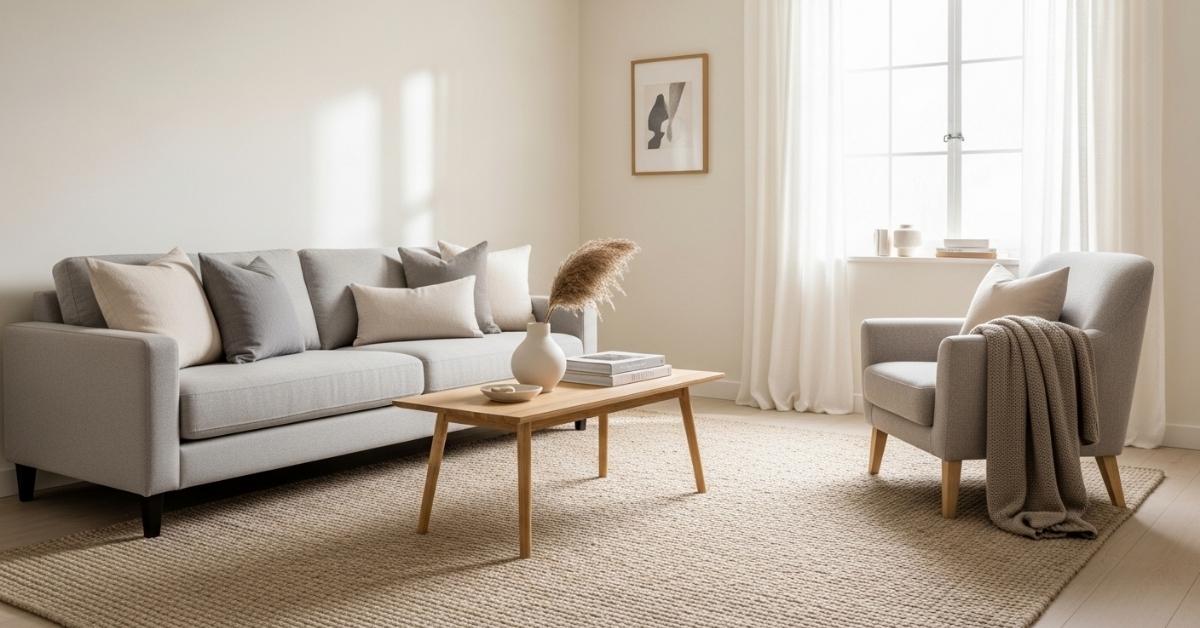
Greige (gray-beige) is one of the most forgiving wall colors you can use. It reads cool in bright morning light and warm in the evening, which means it adapts to your space without requiring you to pick a side. Pair it with warm timber or oak flooring and the room grounds itself. Add cream or oatmeal soft furnishings and the palette stays cohesive without feeling monotone. This is one I’d actually recommend trying first because it works in almost every room size and lighting condition. It also plays well with both modern and more traditional furniture shapes.
Soft Sage Green as a Supporting Neutral
Sage has shifted from accent color to genuine neutral in recent years, and it’s earned the status. At low saturation, sage green reads as a quiet, organic backdrop closer to gray-green than anything leafy or bold. In a bedroom, sage walls paired with white linen and natural wood furniture create a calm that’s hard to achieve with cool grays.
The green undertone brings enough warmth that the room doesn’t feel sterile, but enough restraint that it doesn’t dominate. It works best in rooms with reasonable natural light. In very low-light rooms it can shift dull, so factor in your exposure before committing.
Warm Sand Tones With Matte Black Accents
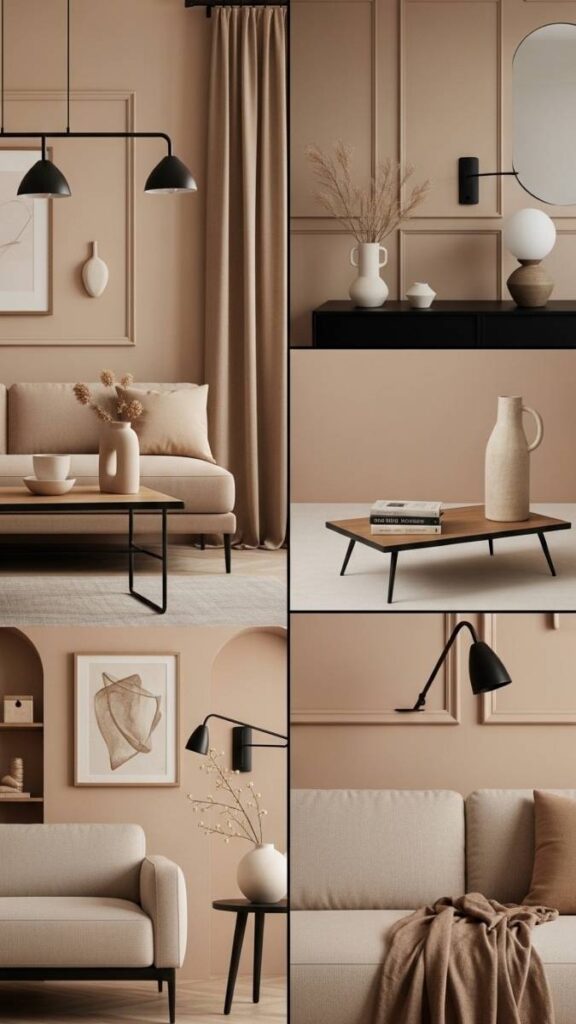
Sand-toned walls sit in the warmest part of the neutral spectrum; they feel almost sun-baked, which gives them a natural weight without being dark. To keep the palette from reading flat, pull in matte black as an accent through hardware, light fixtures, or furniture frames.
A black-framed coffee table or wall sconce against a sandy wall creates visual structure without adding another color. The contrast does the heavy lifting. This setup is particularly effective in rooms with mixed or artificial lighting, where cool grays can look washed out.
Read More About: 12+Vintage Modern Living Room Ideas That Actually Work in Real Homes
Monochromatic Taupe Throughout an Open-Plan Space
When you’re working across an open-plan layout, keeping the color consistent but varying the tone and texture is what creates cohesion. Use taupe across walls, cabinetry, upholstery, and rugs in slightly different shades:
lighter on the walls, deeper in the soft furnishings, and mid-tone on large furniture pieces. The tonal variation keeps the eye moving without the space feeling chaotic. Texture becomes the differentiator here smooth plaster vs. linen cushions vs. a wool rug all read differently even at the same color value.
Stone Gray and Natural Jute for a Textured Neutral Base
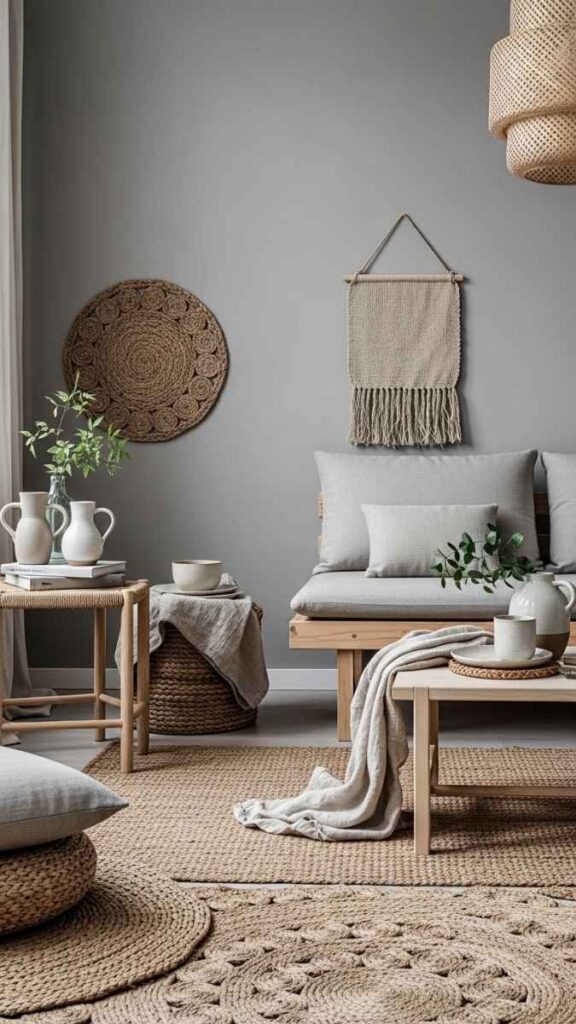
Stone gray sits right in the middle of the neutral spectrum, not as cold as slate, not as warm as greige. Its strength is that it holds its own against natural materials. A jute rug on stone gray reads as intentional and earthy rather than random. Add a cream-toned sofa and wood shelving and the room feels like it has real material depth.
The jute specifically adds a roughness that prevents the palette from feeling too refined or showroom-like. In smaller living rooms, this combination avoids the visual heaviness that darker neutrals can create.
White Walls With Warm Wood Built-Ins
Straight white walls often get a bad reputation for feeling cold or clinical, but the fix is in what you place against them. Built-in shelving in walnut or warm oak against white walls is one of the most effective neutral combinations precisely because the wood does all the warming work. The white reflects light and opens up the room; the wood anchors it. This works especially well in home offices or alcove living rooms where the shelving spans a full wall; the contrast between white plaster and wood grain creates a layered look without any additional color.
Dusty Rose as a Muted Warm Neutral
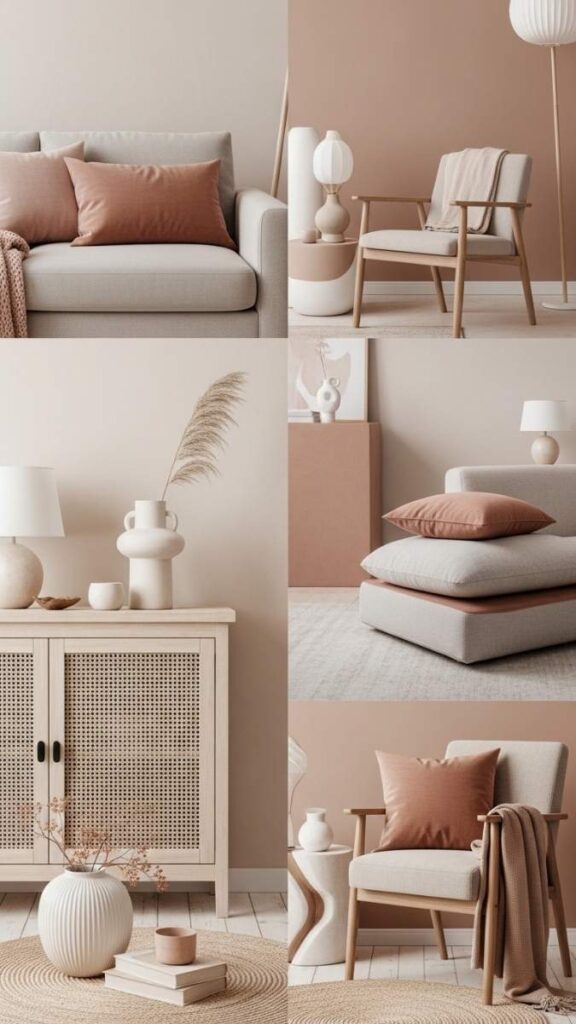
Dusty rose at a low enough saturation functions as a warm neutral, not a pink statement. The key is choosing a version that leans more toward blush-brown than pink-pink think old plaster or faded terracotta rather than pastel.
On a bedroom wall with a white ceiling and natural linen bedding, it reads as a softer, more interesting alternative to beige. It also works in rooms with north or east-facing light where warm walls compensate for cooler natural light. I’ve noticed this shade tends to look its best in artificial light after dark, which makes it a good choice for a room you mainly use in the evenings.
Warm White and Concrete Gray in a Modern Kitchen
This combination solves one of the more common kitchen dilemmas: wanting a light, clean palette without the space feeling sterile. Warm white cabinetry (not pure bright white) paired with a concrete gray island or countertop creates enough contrast to define zones without introducing any additional color. Brushed brass or matte gold hardware ties the warm and cool tones together.
The concrete texture whether real or a surface finish adds an industrial edge that prevents the white from looking too domestic. This is a setup that works well in small kitchens because it keeps the walls and cabinets light while the island carries visual weight.
Layered Creams for a Tonal Bedroom Palette
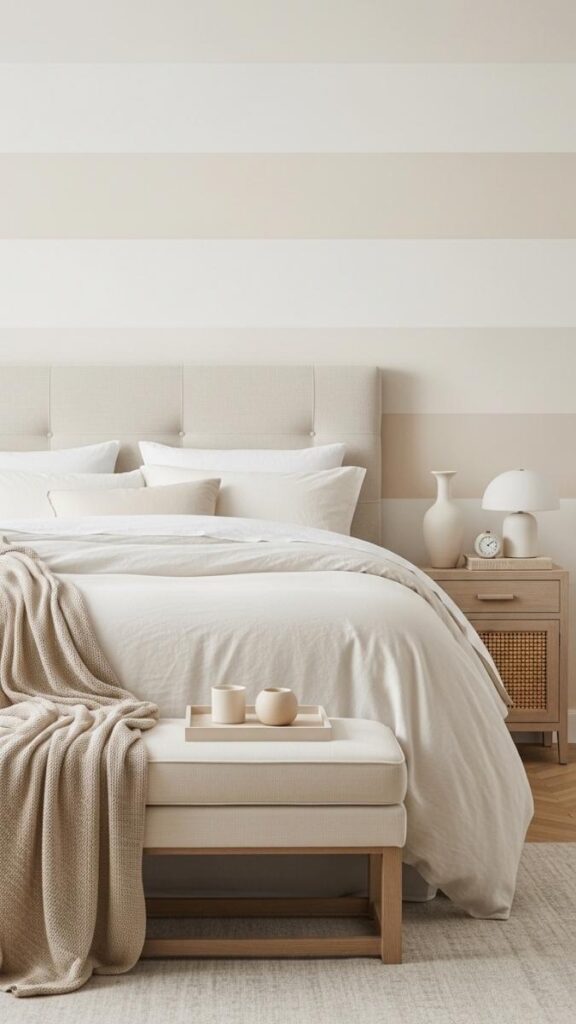
Working entirely within the cream-ivory-ecru spectrum might sound bland, but the layering effect is what makes it work. Each of those tones has a slightly different undertone yellow, pink, or gray and placing them together creates a quiet richness that reads much warmer than a single flat cream ever could.
Use the lightest shade on the walls, a mid-tone in the bedding and curtains, and the deepest cream in a textured throw or rug. The room feels like it was put together thoughtfully rather than defaulted to. Natural light is what makes this palette shine; most east- or south-facing rooms are ideal.
Warm Charcoal as a Dramatic Neutral Base
Charcoal is often treated as a bold choice, but a warm-toned charcoal (one with brown or red undertones rather than blue) functions convincingly as a neutral. The depth it adds to a living room completely changes how the furniture reads creams and oatmeal tones look richer against dark walls, and brass or warm metal accents glow rather than just sit there.
This is one of the better options for a room that gets direct afternoon or evening light, where the dark walls absorb the harshness and create something more atmospheric. Not suited to very small or low-ceilinged spaces, where it’ll feel heavy.
Read More About: 19+Living Room Decor Ideas That Actually Work in Real Homes Not Just on Pinterest
Off White Walls With Terracotta Floor Tiles
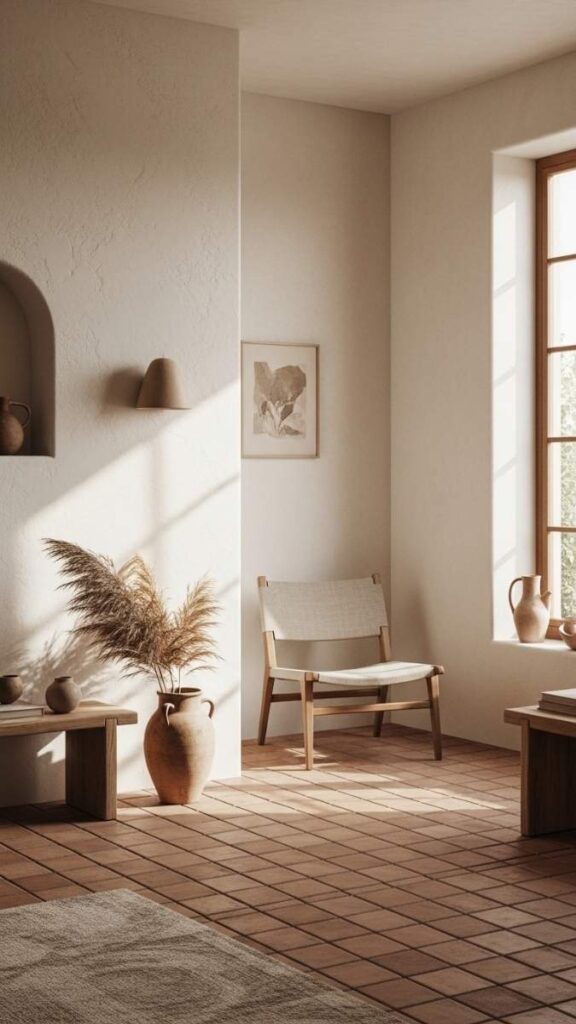
Terracotta tile is one of the few floor choices that genuinely warms a neutral palette from the ground up. Against off-white walls, the orange-red of terracotta reads as earthy rather than bright, especially in matte or unglazed finishes. The combination is particularly effective in kitchens, hallways, and dining rooms where the floor covers a large surface area.
White or off-white furniture and cabinetry keeps the walls light and lets the floor do the work. Avoid pairing with cool-toned grays or blues unless you’re specifically going for contrast; the warmth of terracotta is the point.
Clay and Chalk White in a Living Room
Clay a muted terracotta-beige reads differently depending on your light quality, which is actually part of its appeal. In morning light it’s almost dusty pink; in afternoon warmth it shifts more orange. Pairing it with chalk white trim and ceiling stops it from feeling heavy and defines the architectural structure of the room clearly.
A natural linen sofa and wooden furniture in a mid-brown tone keeps everything within the warm, organic palette. This is a good option for period or older homes where the architecture has detail that benefits from a two-tone paint approach.
Warm Neutral Bedroom With Japandi Influence
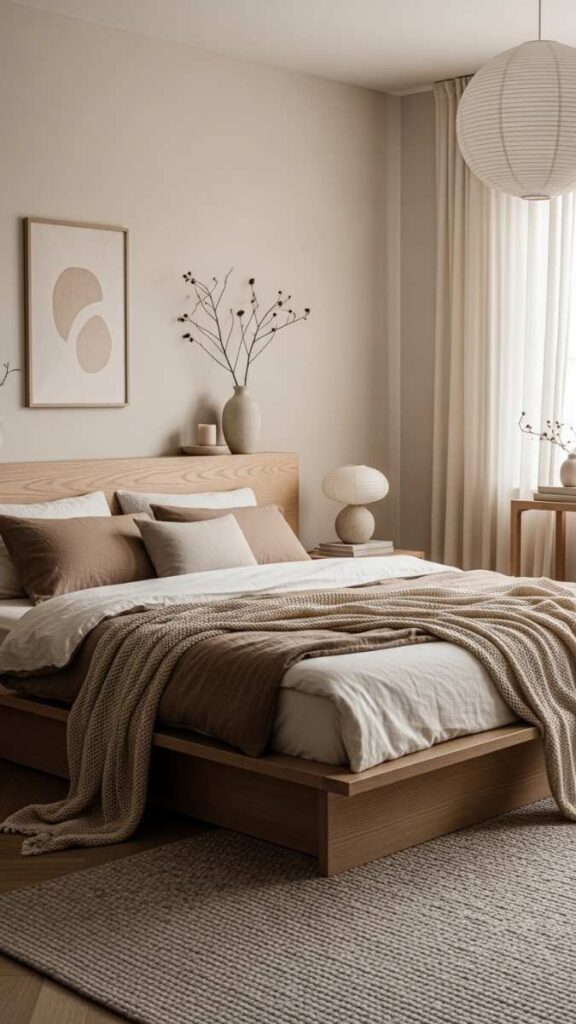
The Japandi style of blending Japanese minimalism with Scandinavian warmth translates naturally into a neutral palette because restraint is built into the aesthetic. A low-profile bed in pale wood against warm white walls, floor-to-ceiling linen curtains, and one or two deliberately chosen objects is the full setup.
The trick is in what you leave out as much as what you include. Avoid symmetrical styling or anything that feels too styled asymmetry and natural imperfection in materials (raw linen, unfinished wood edges) are what make the palette feel intentional rather than sparse.
Neutral Entryway With a Dark Moody Accent
Entryways are the one room where a slightly more dramatic neutral works well partly because the space is small and partly because you spend seconds in it rather than hours. A light greige or off-white on the side walls with a darker neutral (deep taupe, charcoal, or dark olive) on the end wall creates a focused, tunnel-like draw through the space. The pendant or ceiling fixture above illuminates the transition.
A wooden bench or low console anchors the space practically. This is especially effective in narrow hallways where the accent wall is directly opposite the front door you see as you enter, which makes even a small space feel considered.
Warm Neutral Dining Room With Limewash Texture
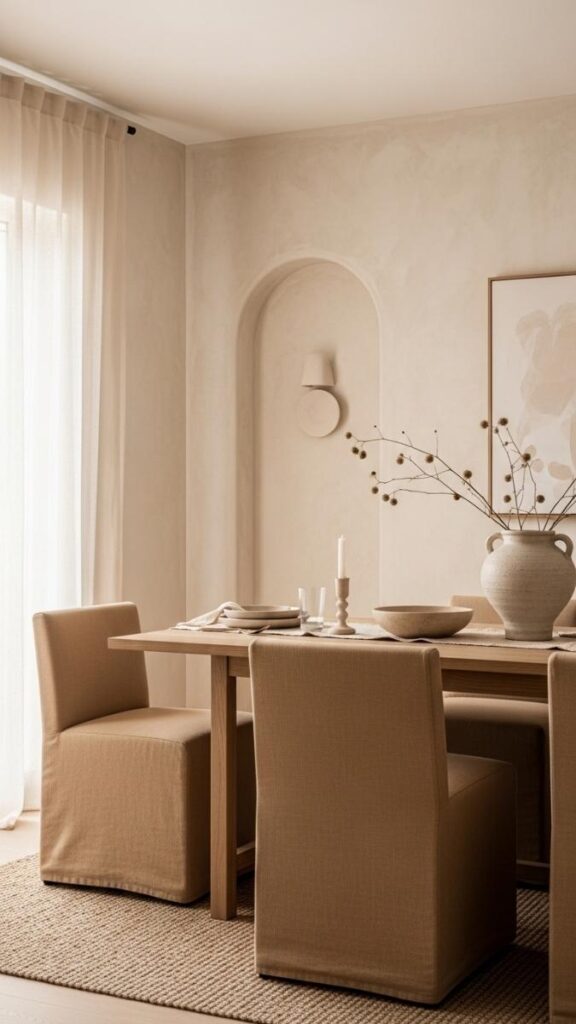
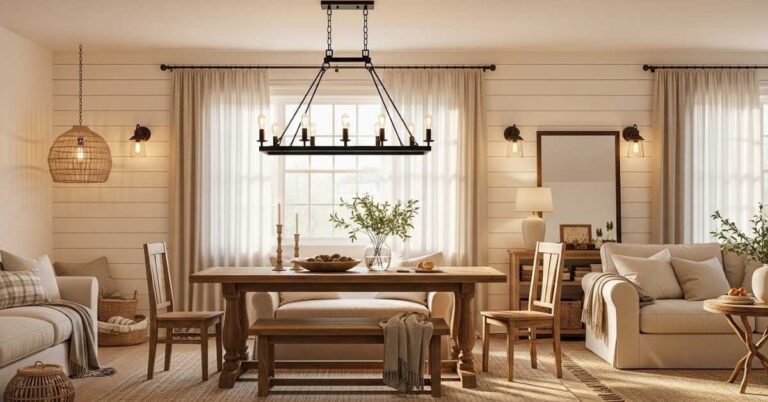
Limewash paint has become one of the more interesting finishes in the neutral toolkit; it creates a mottled, aged texture that flat paint can’t replicate, and it photographs beautifully. In a dining room, a limewash in warm beige or white gives the walls movement without adding any color. A long wooden table, linen-covered chairs, and a pendant light that sits low over the table complete the setting. The texture also means small imperfections in older walls become features rather than problems which are useful in rented spaces or older homes.
Pale Blue-Gray as a Cool Neutral in a Bathroom
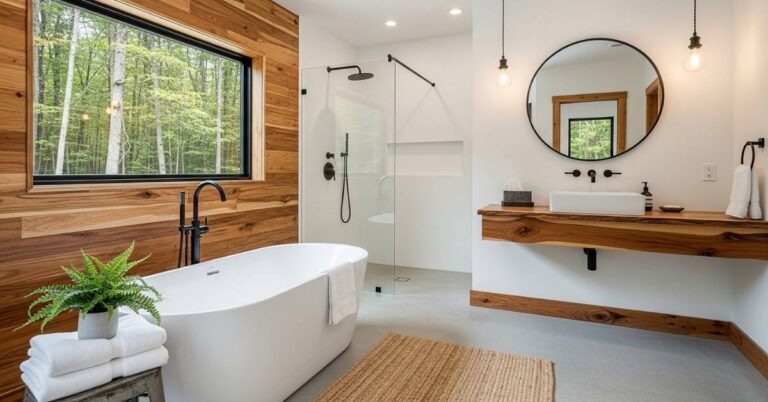
Bathrooms are one of the few rooms where a slightly cool neutral makes sense; the hard surfaces (tile, porcelain) naturally introduce coolness, and a pale blue-gray harmonizes with them rather than fighting. Paired with white fixtures and natural wood details (a wooden shelf, bamboo accessories), the blue-gray reads clean and calm without the clinical edge that pure white can give.
Warm lighting above the mirror shifts the tone slightly, which keeps the room from feeling cold. This is a particularly good option for bathrooms with little or no natural light, where warm walls can actually feel muddier than they appear in a paint sample.
Textured Neutral Living Room With Wabi Sabi Materials
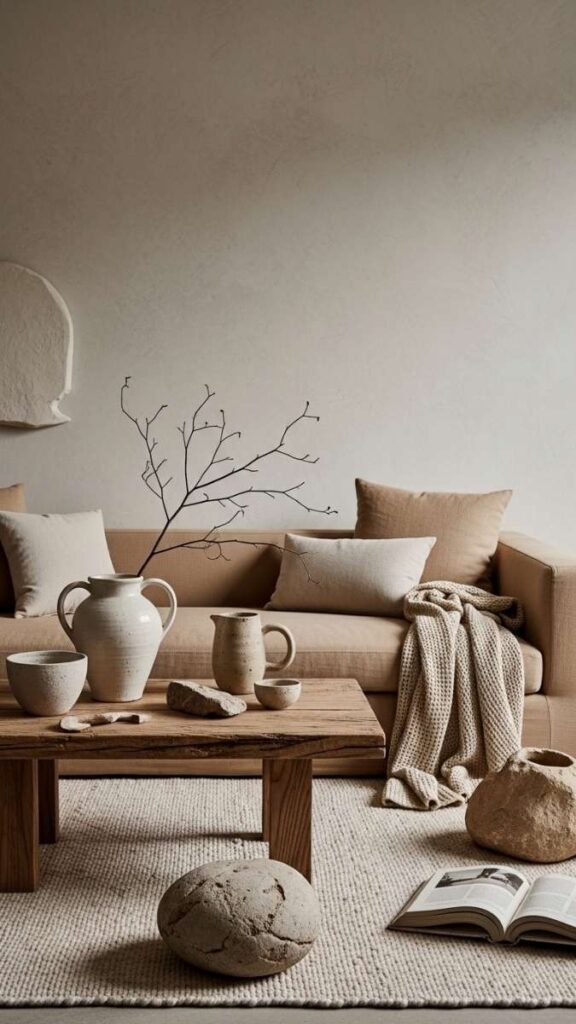
Wabi-sabi as a design principle finding beauty in imperfection and natural aging translates directly into a neutral palette built on texture rather than color. Raw plaster walls, undyed linen, stone surfaces, and aged wood all belong to the same material family even when they’re different colors.
The result is a room that looks deeply considered because everything shares a kind of roughness or imperfection. This approach works well for people who want a neutral base but find flat, polished interiors cold. It also ages well materials like raw plaster and natural linen look better over time, not worse.
Warm Gray and Brass in a Home Office
A home office needs enough calm to allow focus without the sterility of a corporate space. Warm gray on the walls, a gray with a definite brown or yellow undertone provides a quiet, grounded backdrop for a working setup. Brass accents (a desk lamp, cabinet hardware, a small accessory tray) add warmth without requiring any additional colors.
The combination reads more like a study than an office, which makes extended time in the space more comfortable. Natural light works best here: position the desk perpendicular to the window rather than facing it to avoid glare on screens.
Sand Dune Palette in a Coastal Inspired Space
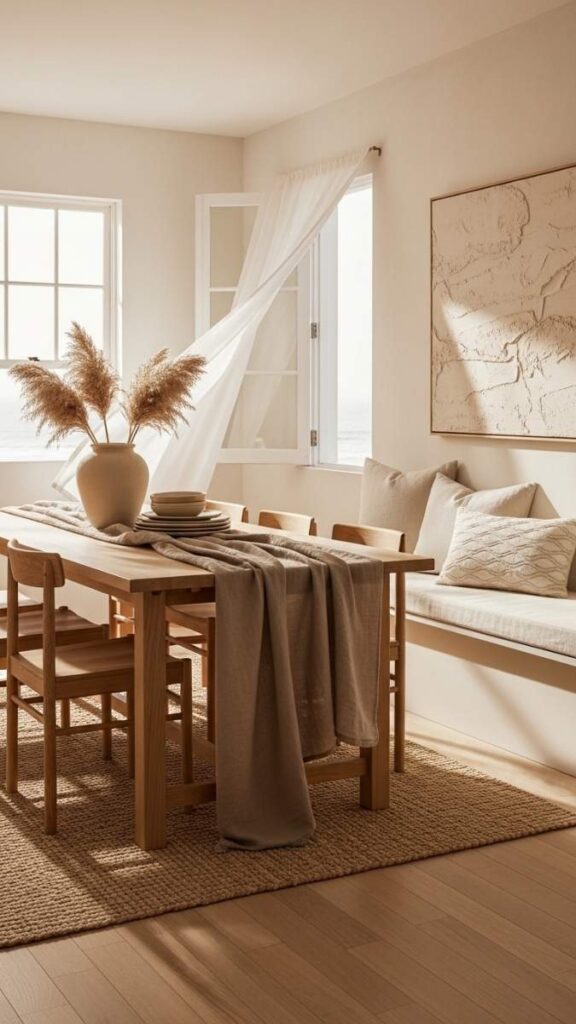
If your space gets strong natural light particularly in warmer climates or south-facing rooms a sand dune palette makes good use of it. Sandy beige walls, bleached or whitewashed wood furniture, and layers of cream, off-white, and ecru textiles create an interior that almost seems to glow in direct sunlight.
The bleached wood is key here; darker woods would ground the palette too heavily. Keep the wall art minimal and light-toned. This setup is good for rooms where you want a spacious, airy feeling without painting walls white the sand tone adds warmth without reducing the sense of openness.
Read More About: 18+Kitchen Lighting Ideas That Make Every Inch of Your Space Work Harder
Neutral Bedroom With a Tonal Green Gray Accent
Green-gray is one of the quietest accent choices in the neutral family; it reads as almost colorless in some light, but adds just enough differentiation to define the headboard wall without creating a statement. This is useful in bedrooms where you want some visual structure without committing to anything dramatic. Linen bedding in a tone close to the wall color keeps the palette consistent; slightly warmer wooden furniture prevents the whole room from drifting too cool. It also works as a paint-only solution for renters who want to differentiate zones within a room using color alone.
Warm Neutral Kitchen With Open Wood Shelving
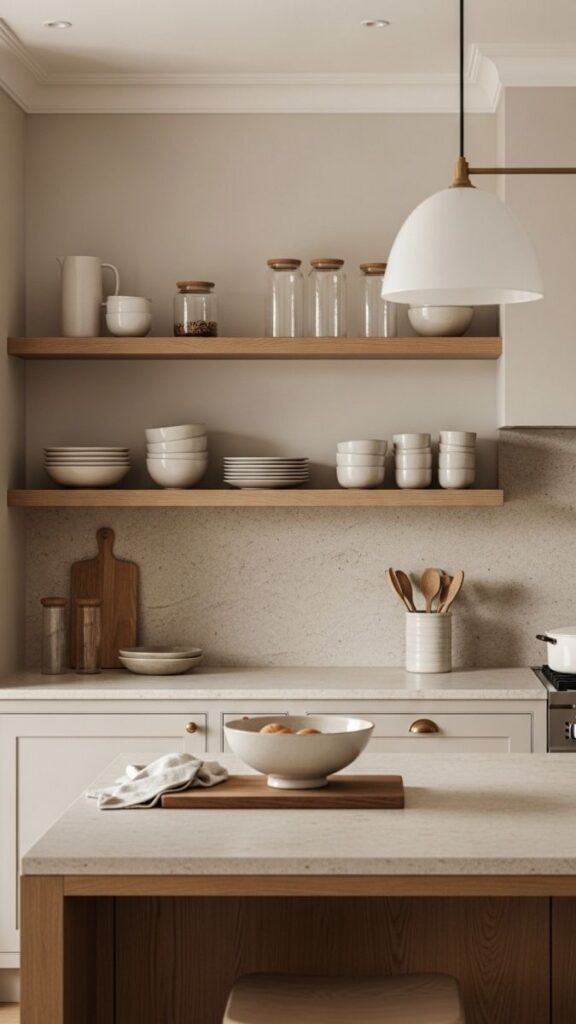
Open shelving in kitchens only works when the objects on the shelves are kept consistent and a neutral palette makes that easier. Off-white walls with warm wood shelving (oak or pine rather than walnut, which can feel heavy) and ceramic dishware in creams and whites creates a kitchen that looks organized even when it isn’t.
The key is consistency in dishware tones mixing bright white with off-white creates a jumbled appearance. A stone or quartz countertop in a warm neutral completes the palette without the need for any bold choices.
Bare Plaster and White in a Modern Minimal Setup
Bare or unpainted plaster walls or plaster-effect paint in the same warm pinkish-gray have moved firmly into the mainstream in 2026, and for good reason. The tone reads as simultaneously warm and neutral, and the slight irregularity of the surface gives a room the kind of depth you’d usually only get from pattern or color.
Against a white ceiling and trim, the plaster wall effect is clean and architectural. This works best in rooms with a fairly minimalist furniture approach if the room has a lot of furniture, the visual texture of plaster competes rather than complements.
Muted Olive and Cream in a Study or Library
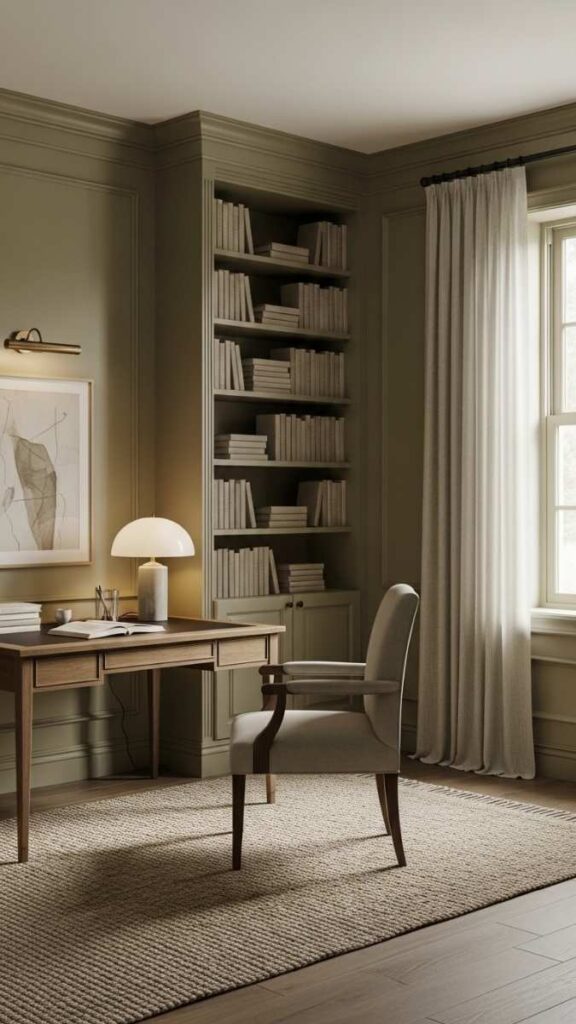
Muted olive, a very desaturated green with yellow and brown undertones, is a neutral that reads as color up close and almost as a warm gray from a distance. In a study or reading room, it creates the kind of seriousness that works with bookshelves and a leather armchair without going dark.
Cream-painted shelving against olive walls creates contrast without loudness. A warm floor lamp in the corner and a tan or cognac leather chair complete the palette within its warm, earthy logic. This is particularly good for north-facing rooms that tend to feel cold; the warm olive compensates.
Off-White With Rattan and Natural Fiber Accents
Rattan and natural fiber furniture works as a neutral; it has a warmth and texture that reads as color without actually introducing one. Against off-white walls, rattan chairs or a pendant shade create visual interest through material contrast alone. The woven texture of a jute rug, the smooth flat white of a wall, and the irregular open weave of rattan create enough visual difference to keep the room interesting.
This combination is especially well-suited to smaller living areas or studios where furniture needs to feel light rather than heavy.
Warm Neutral Bathroom With Zellige Tile in Cream
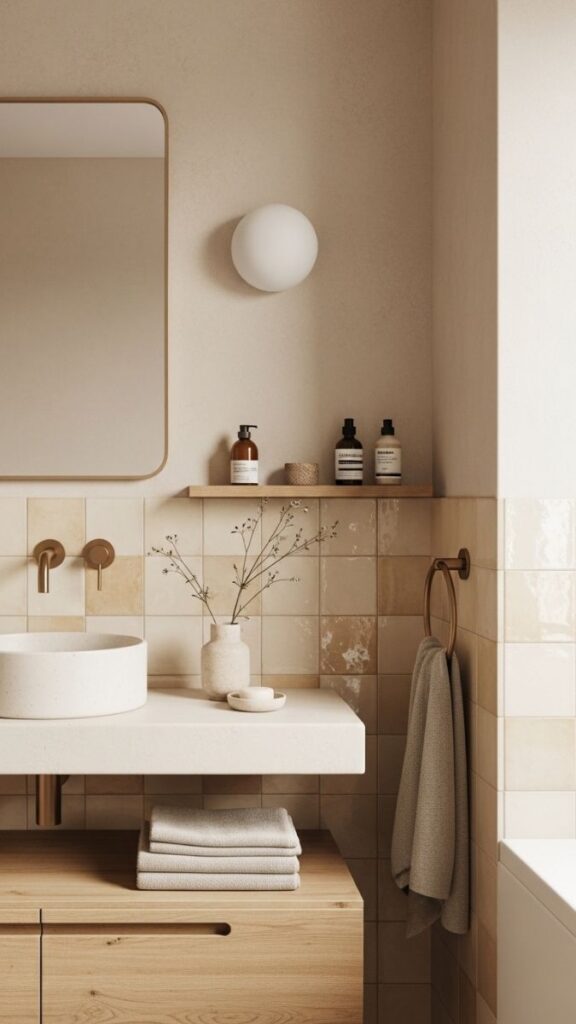
Zellige tiles the handmade Moroccan ceramic tiles with slightly irregular surfaces have a reflective quality that changes how neutral tones look. In cream or off-white, zellige tiles create a wall finish that shifts between warm and cool depending on the light angle. This makes a neutral bathroom feel genuinely interesting rather than just safe.
Brass fixtures read warm against the cream tile, and natural wood accessories (a wooden bath mat, wooden shelf) keep the palette organic. This works in both large and small bathrooms. The scale of the tile is small enough that it works in compact spaces without overwhelming them.
Soft Warm Neutrals With Dark Grout for Definition
One underused technique in neutral spaces is using dark grout against light tiles to create definition and pattern without changing the color palette. Light-toned tiles cream, warm white, soft gray paired with charcoal or dark taupe grout creates a grid pattern that reads as structure rather than decoration. In kitchens and bathrooms, this adds visual interest to tiled surfaces without introducing any bold colors. The palette stays neutral; the grout line does the design work. It also has a practical benefit: dark grout doesn’t stain the way white or cream grout does, which is useful in high-use areas.
What Actually Makes a Neutral Color Palette Work in a Real Home
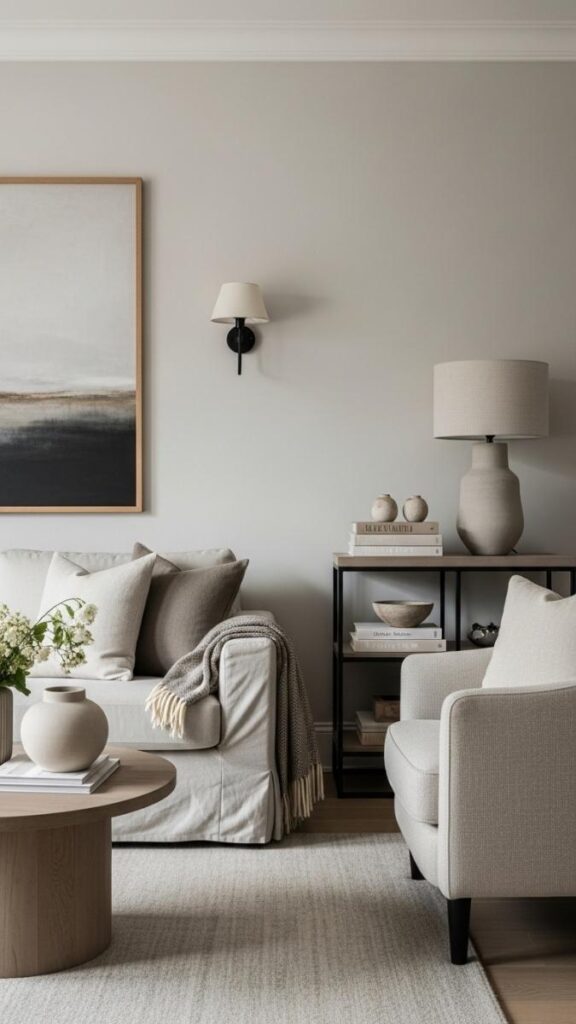
There’s a version of neutral that looks beautiful in magazines and flat in person, and a version that feels genuinely warm and layered in a real room. The difference usually comes down to three things: undertone consistency, material contrast, and light.
Undertone consistency means that all your neutral choices belong to the same temperature family. Warm neutrals have yellow, red, or brown undertones; cool neutrals have blue or green. Mixing a warm beige wall with cool gray furniture and a yellow-toned wood floor creates a palette that looks unresolved as each element is pulling in a slightly different direction. Decide on warm or cool and let that guide everything, including paint, furniture, and floor choice.
Material contrast is how a monochromatic neutral palette avoids looking flat. If everything in your room is the same color but also the same texture, flat, smooth, matte there’s nothing for the eye to land on. Rough linen against smooth plaster, matte paint against gloss ceramic, raw wood against painted surfaces: these contrasts create depth without any additional color. This is the real mechanism behind why high-end neutral interiors look intentional rather than bland.
Neutral Palette Setup Guide
| Palette Type | Best Room | Light Condition | Key Material | Problem It Solves |
| Warm white + linen | Bedroom, living room | Any | Linen, cotton | Flat-feeling walls |
| Greige base | Open-plan spaces | Mixed | Oak wood, wool | Indecisive undertone |
| Warm charcoal | Lounge, dining room | Afternoon/evening light | Brass, cream upholstery | Lack of depth |
| Tonal cream layers | Bedroom | Natural morning light | Linen, ecru | Feels cold or sterile |
| Sage green | Bedroom, study | Bright natural light | Natural wood, white | Coldness, sterility |
| Clay + chalk white | Period homes, dining | Afternoon light | Limewash, timber | Flat, modern-looking walls |
| Cool gray-blue | Bathroom | Artificial warm light | White fixtures, wood | Clinical or cold feel |
Common Neutral Palette Mistakes That Make Your Space Feel Off
Choosing neutral paint without testing for undertone.
This is the most common mistake, and it’s frustrating because it only reveals itself once the room is fully painted. Every neutral has an undertone: warm neutrals shift yellow, pink, or orange in a certain light; cool neutrals go blue or green. Before committing, get a large tester pot and paint a section at least 30cm square in the actual room. View it in morning light, afternoon light, and under your artificial lighting at night. The way it shifts tells you more than any color swatch can.
Treating neutrals as backgrounds rather than foundations.
A neutral palette works when it’s built deliberately, not when it’s what’s left over after you couldn’t decide on a color. This means choosing your neutral with as much attention as you’d give a bold shade factoring in undertones, how it reads against your floors, and what it does to your furniture.
Ignoring material temperature.
A warm sand wall looks wrong next to a cold gray concrete floor and a stark white sofa. Each material has a color temperature, and a neutral palette only reads as cohesive when those temperatures are aligned. Wood has warmth; polished concrete is cool; undyed linen is warm; bleached linen is cooler. Map out your material temperatures before buying anything.
Overdoing texture variation.
The advice to “add texture” can go too far. A room with a jute rug, a bouclé sofa, a rattan pendant, a macramé wall hanging, and raw plaster walls starts to feel chaotic even in neutral colors. Pick two or three texture types and let them repeat; that’s what creates cohesion rather than noise.
FAQ’s
What is a neutral color palette for a home?
A neutral color palette uses colors with low saturation whites, creams, beiges, grays, taupes, and soft greiges as the dominant tones in a space. These colors are called neutral because they don’t compete for attention, making them versatile backgrounds for furniture, art, and materials.
How do I stop a neutral room from looking boring?
Texture and material contrast are the main tools. A room with varied textures, rough linen, smooth plaster, matte paint, natural wood stays visually interesting even without color. Varying tones within the same neutral family (different shades of cream or taupe) also adds depth without introducing a new color.
What’s the difference between warm and cool neutrals?
Warm neutrals have yellow, red, or brown undertones (beige, cream, taupe, greige, sand). Cool neutrals have blue, gray, or green undertones (gray, slate, stone white, blue-gray). The most important thing is consistency mixing warm and cool neutrals in the same room often creates a palette that feels unresolved.
Can a neutral palette work in a dark room?
Yes, but with some adjustments. In north-facing or low-light rooms, warm neutrals, creams, sandy tones, warm off-whites perform better than cool grays, which can appear almost blue in limited natural light. Layered warm lighting (multiple lamp sources rather than a single overhead) also prevents neutrals from looking washed out or cold.
Which neutral paint colors are the most flexible?
Greige (a warm gray-beige), warm off-white, and taupe are typically the most adaptable because they shift with the light rather than reading as definitively one tone. They also complement a wide range of furniture styles, floor types, and material choices without clashing.
Is it necessary to use the same neutral throughout an open-plan space?
Not exactly the same shade, but the same undertone family. In an open-plan space, using neutrals with matching undertones (all warm or all cool) across different zones creates cohesion even if the specific tones vary slightly. Switching undertone families between zones warm in the kitchen, cool in the living area creates a disjointed feeling when seen from across the room.
How do I add personality to a neutral palette?
Through material choice rather than color. Zellige tiles, limewash paint, raw plaster, rattan furniture, linen curtains all carry visual interest without introducing color. Curated objects (ceramics, books, plants) in consistent tones also add character to a neutral space without undermining the palette.
Conclusion
A thoughtful neutral color palette doesn’t simplify your home, it clarifies it. By getting the undertones right, layering in material contrast, and treating light as a genuine design variable, a neutral space can feel more layered and interesting than a room full of competing colors. The key is making deliberate choices rather than defaulting to whatever seems safe.
Start with one room, one wall, or even just a paint tester on the wall you’re unsure about. Pick a palette direction warm or cool and let that guide the rest of your choices. Small, considered adjustments almost always have a more noticeable effect than a full renovation.