63+ Rustic Decor Ideas That Make Any Room Feel Grounded, Warm, and Actually Livable
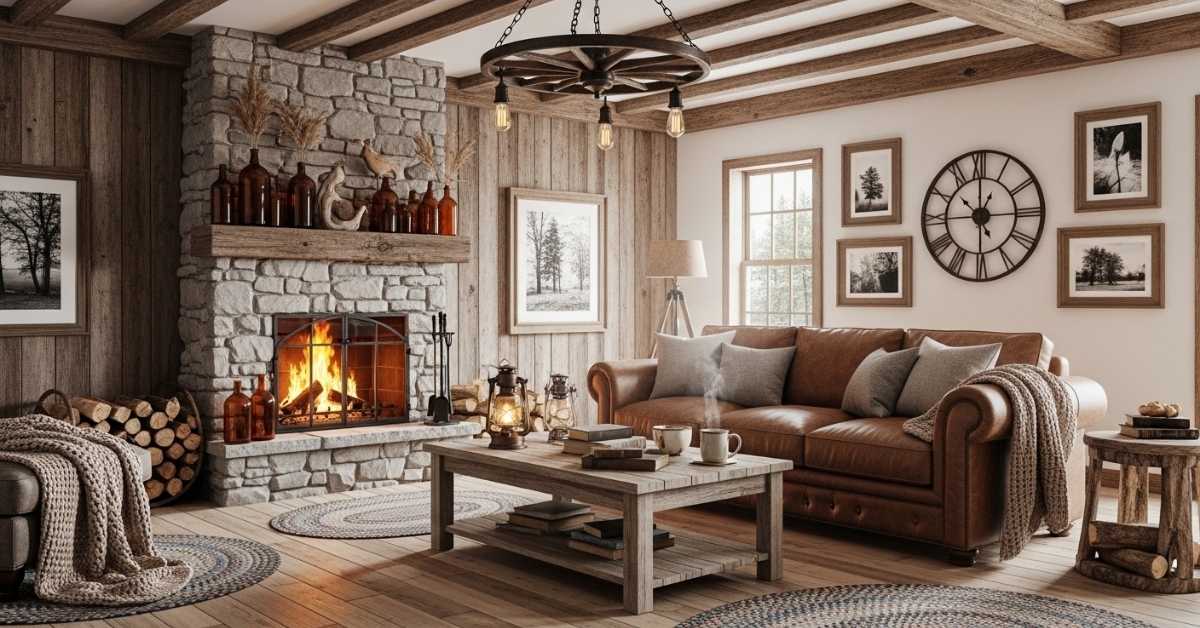
Rustic decor has quietly shifted in 2026. It’s less about shiplap-everything and more about intentional warmth mixing aged wood with soft textiles, keeping palettes earthy but not dark, and layering materials that feel like they’ve always been there. If your space feels sterile, cold, or a little too “showroom perfect,” this style is the most effective fix and most of these ideas work with what you already have.
For anyone working with a small apartment, a rented space, or a room that just feels like it’s missing personality, these setups are grounded in real homes, not staged ones.
Reclaimed Wood Shelf Above a Low Sofa
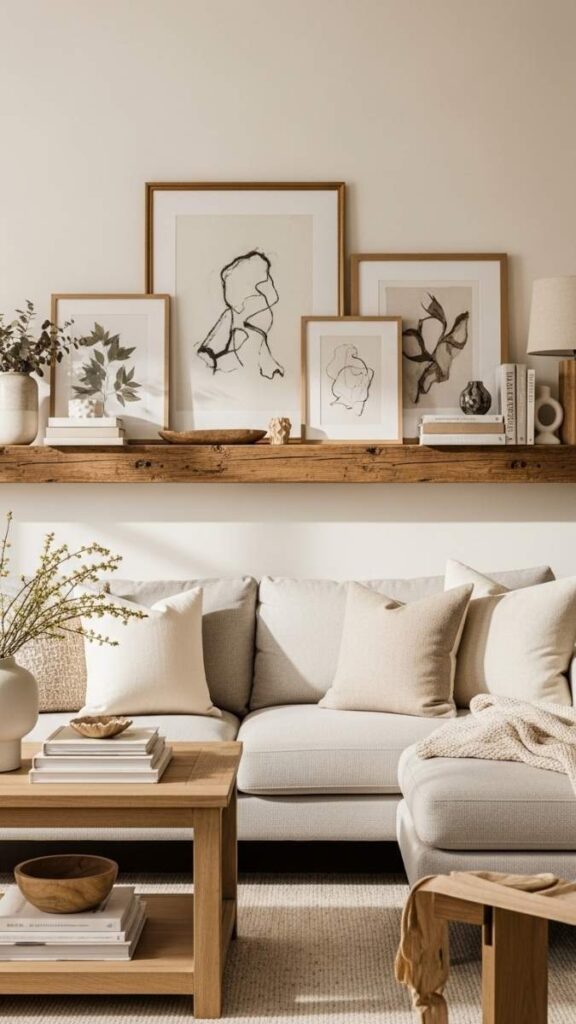
One wide, rough-edged plank above a sofa does more for a room than a gallery wall ever could. Mount it at around 60–65 inches from the floor high enough to clear throw pillows, low enough to feel connected to the seating below.
The unfinished grain reads as texture, which breaks up flat painted walls without adding visual clutter. This setup works especially well in narrow living rooms where a console or bookcase would eat up floor space. It solves the “nothing above the sofa” problem without requiring wall anchors in multiple places.
A Stone or Concrete Look Fireplace Surround With Wood Mantel
Even a non-functional fireplace becomes the room’s anchor when the surround and mantel are done right. Pair rough stone (or a stone-look panel) with a thick, unfinished wood beam as the mantel shelf. The contrast between the cold material of stone and the warmth of wood is exactly what makes this setup feel rustic without feeling heavy.
This works best in larger living rooms or open-plan spaces where you need a visual focal point. For renters, peel-and-stick stone panels have improved significantly; they’re worth trying on a feature wall around an electric fireplace insert.
Linen Curtains Floor to Ceiling in a Bedroom
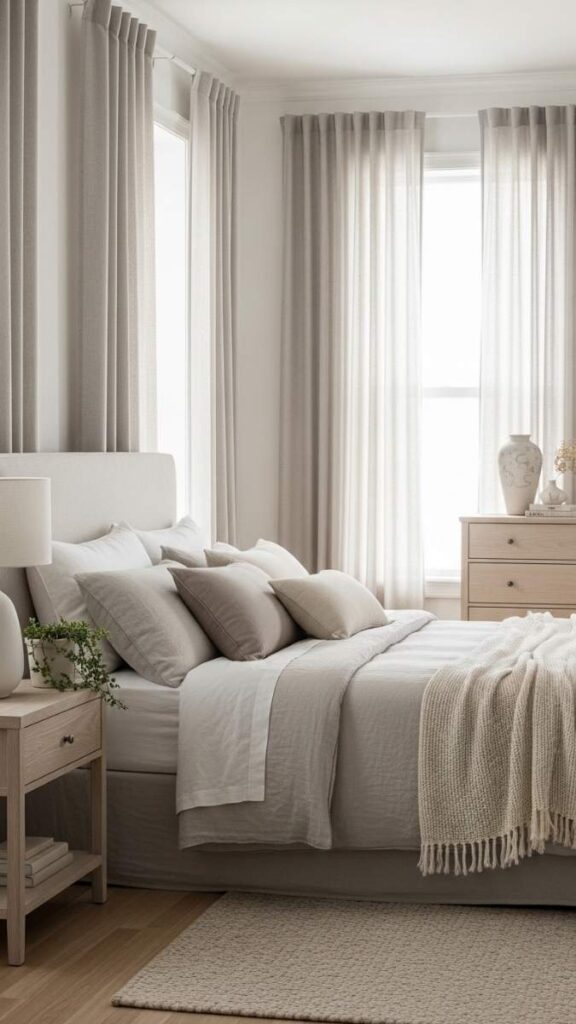
In my experience, this is one I’d actually recommend trying first because the impact is immediate and costs less than most people expect. Hanging curtains at ceiling height even in a room with standard 8-foot ceilings creates vertical space, and linen’s natural slub texture brings the rustic quality without looking farmhouse-themed.
Choose undyed or warm greige linen for the most flexibility. This layout is especially useful in bedrooms with awkward or small windows, because the curtain expands the perceived window size and draws the eye upward.
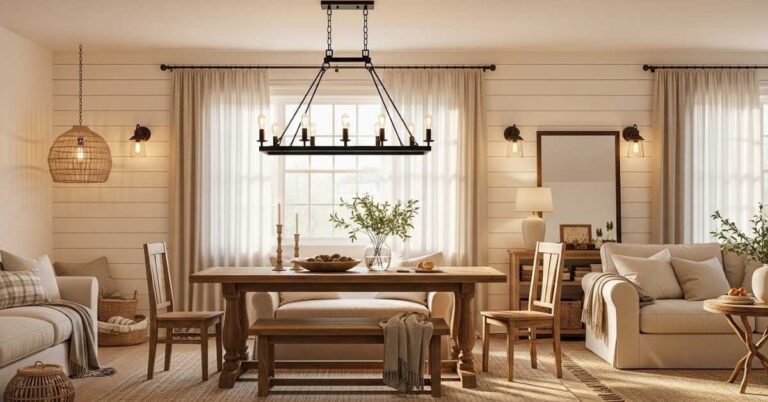
A Distressed Wood Dining Table Centered Under a Woven Rattan Pendant
The combination of a large textured wood table and an organic overhead light creates the kind of layered, grounded dining space that feels like it took years to collect but is actually easy to pull together. The pendant should hang roughly 30–34 inches above the tabletop.
Woven rattan diffuses light in a warm, imperfect pattern across the table surface, which softens the look compared to a clean metal fixture. This setup works in open dining areas or eat-in kitchens and solves the common problem of a dining area that feels disconnected from the rest of the home’s personality.
An Exposed Beam or Faux Beam Across a White Ceiling
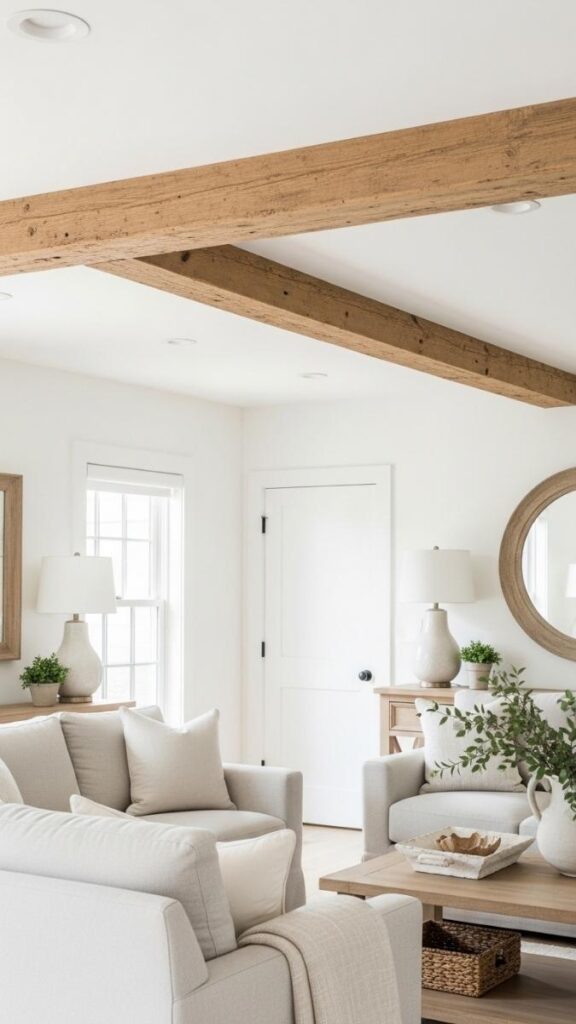
Honestly, one beam changes a room more than most people give it credit for. Faux wood beams have gotten convincing enough that they’re worth the install for renters or owners who can’t alter structural elements. A single beam running the width of the room creates a natural ceiling line that draws the eye across the space which is useful in boxy rooms that feel unresolved. In bedrooms, position it above the headboard wall to frame the bed without overwhelming the space.
Read More About: 62+ Vintage Decor Ideas That Make Any Room Feel Collected, Not Cluttered
Layered Wool and Jute Rugs in a Living Room
Layering rugs is one of those ideas that looks intentional but solves a real practical problem: a single large rug is expensive, while a layered setup lets you combine a functional base (jute handles traffic well) with a smaller, softer textile that adds warmth underfoot where people actually sit.
The jute rug should extend beyond the sofa legs by at least 6 inches on each side; the top rug sits centered under the coffee table. This works in medium to large living rooms and is especially effective in spaces where the flooring is cold-toned (gray wood, tile, concrete).
A Raw Wood Headboard With Linen Bedding
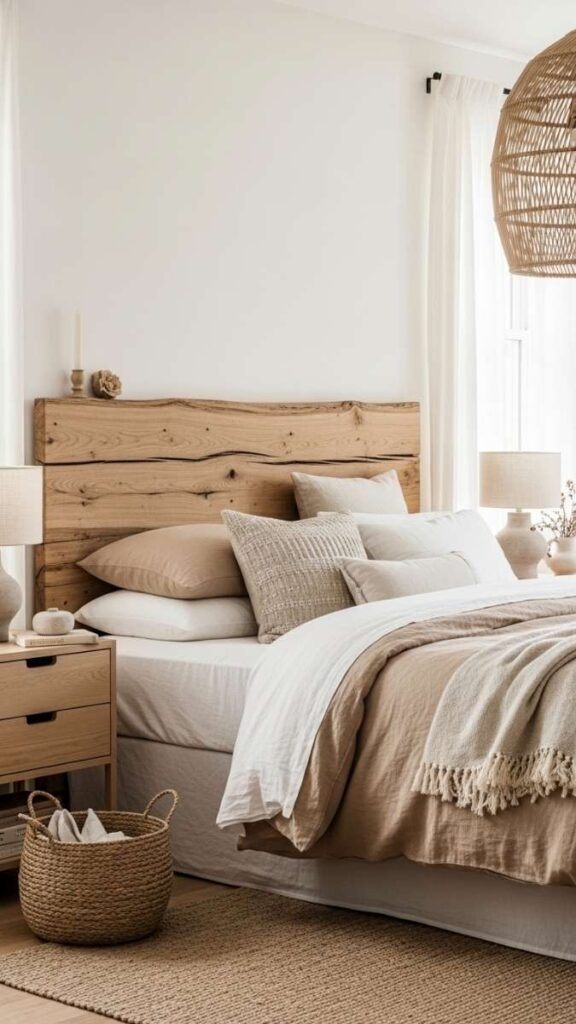
The headboard is the most impactful single piece in a bedroom, and a raw wood version does double duty: it adds the rustic texture and acts as a natural focal point so the rest of the room can stay simple. Pair it with undyed or warm white linen the matte,
The slightly rumpled texture of linen plays off the roughness of the wood in a way that cotton or polyester bedding doesn’t. For smaller bedrooms, a headboard-only approach (no footboard, no platform frame) keeps the floor visible and makes the space feel larger.
Terracotta Pots and Dried Botanicals on Open Kitchen Shelving
Open shelving in a kitchen either looks curated or chaotic terracotta and dried botanicals are the easiest way to land on the curated side. The warm orange-red of terracotta against white or greige walls pulls the color palette toward earthy without adding pattern.
Dried lavender, eucalyptus, or wheat stems add vertical interest without requiring maintenance. This works in small kitchens where the shelves are visible from the main living area and where the decor needs to earn its place functionally (herbs, pots) and visually.
A Leather Armchair Next to a Stacked Log Display
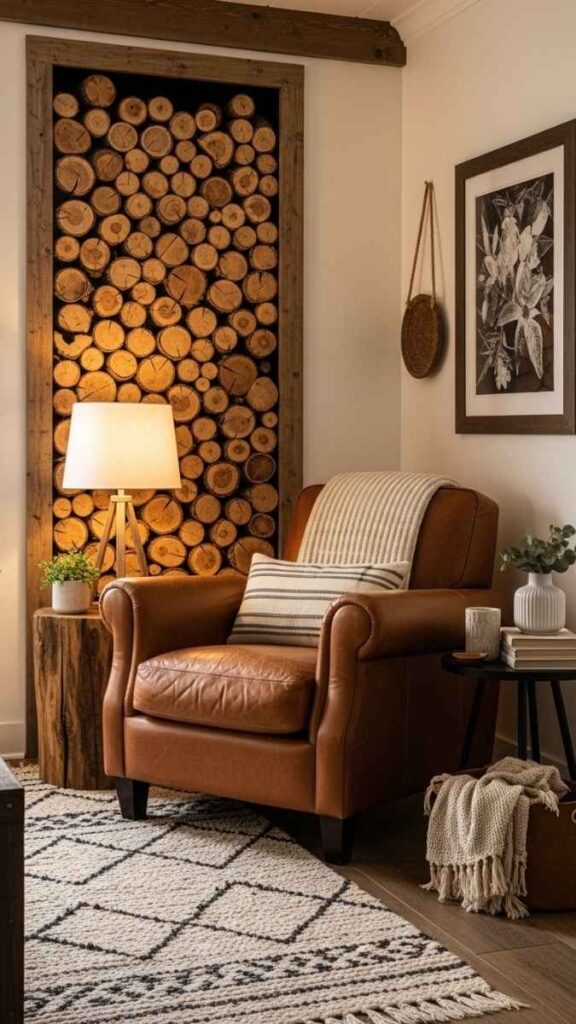
This corner setup works by combining two elements that both signal “used, lived-in, real” aged leather and actual wood. The leather armchair should face inward toward the main seating arrangement, not the wall, with a floor lamp positioned just behind and to the side to create a reading nook effect.
The log stack in a simple iron or raw metal holder fills dead corner space and adds organic texture at a low visual cost. Best in larger rooms where you have a corner that feels unused.
Woven Baskets as Storage in a Living Room or Bedroom
Woven baskets solve a storage problem while adding the kind of textural depth that rustic spaces depend on. Use them to throw blankets, magazines, or extra pillows items that need to be accessible but not visible.
The key is that one large basket has more visual presence than three small ones, and presence is what makes the difference between “organized” and “designed.” In a living room, a tall basket beside the sofa or fireplace reads as a decor object, not just a storage solution.
Read More About: 10+ Luxury Decor Ideas That Make Any Room Feel More Elevated Without the Designer Price Tag
Warm Edison Bulb Lighting in a Bedroom or Dining Room
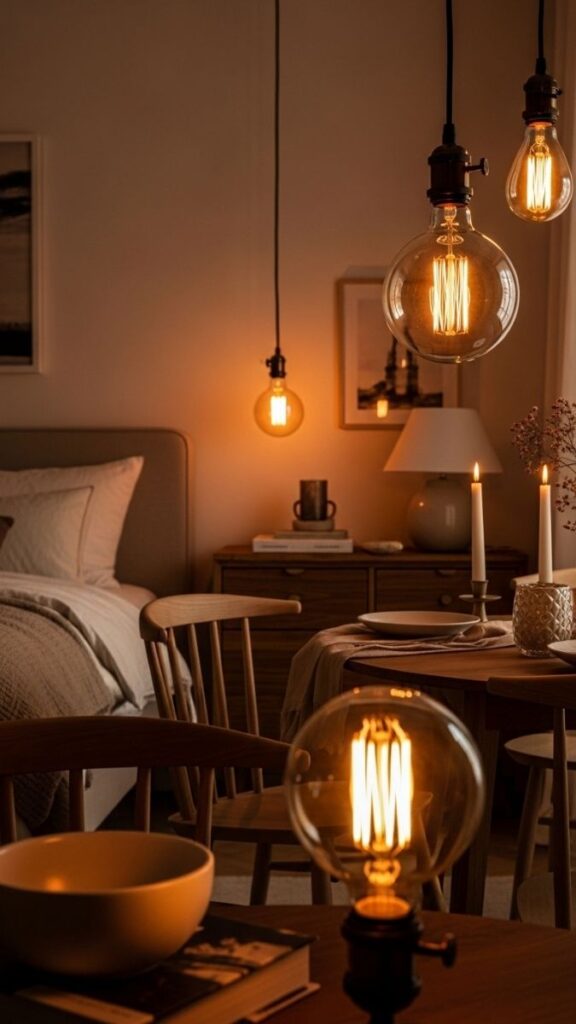
Edison bulbs emit around 2200K warmer than most standard LEDs and that amber quality reads as candlelight to the brain, which is why spaces lit by them feel immediately cozier. In a dining room, use two or three pendants at different heights rather than one centered fixture. In a bedroom, string lights looped around a headboard or across a beam give ambient light without the overhead harshness.
This is one of the lowest-effort, highest-impact changes in rustic decor: a fixture swap takes 20 minutes.
A Vintage or Antique Mirror Over a Console Table
The combination of an antique-style mirror and a rustic wood console is one of the most reliable setups in entryways. The mirror bounces light in a space that’s often dark, while the aged frame adds the patina that makes the whole space feel collected over time.
Position the mirror so its center sits at approximately 57–60 inches from the floor; this aligns with average eye level and keeps it from looking too high or too low. For renters, this requires only two anchor points on the wall.
A Whitewashed or Limewash Accent Wall Behind a Bed
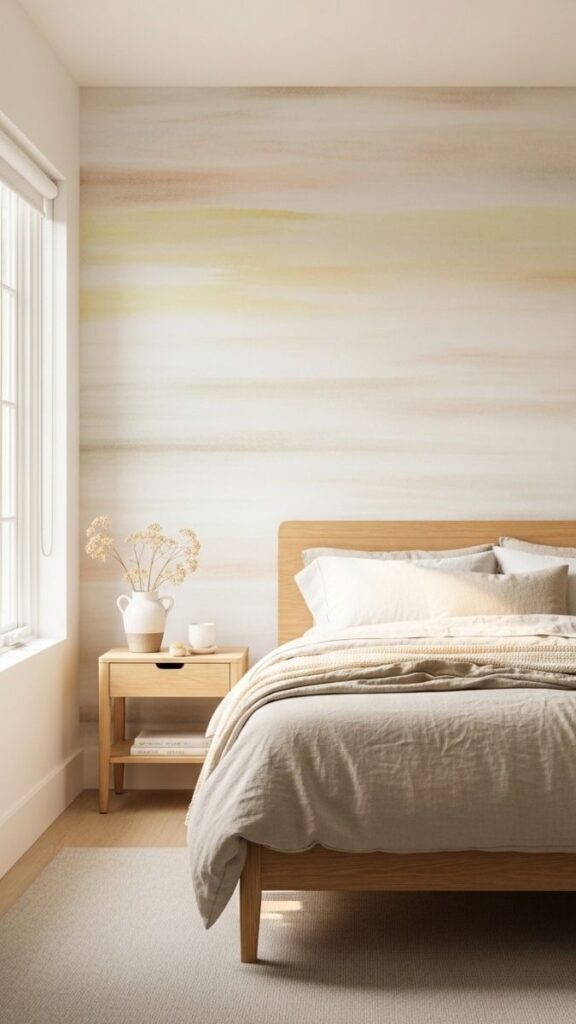
Limewash paint has become one of the defining aesthetics of 2026 home decor and for good reason. The patchy, naturally varied finish mimics old plaster walls without needing actual plaster skills. Applied behind a bed, it creates the impression of an architectural feature where none exists.
It works in both small and large bedrooms, and unlike wallpaper, it doesn’t read as “loud” ; it’s a quiet texture rather than a pattern. Most limewash kits are designed for DIY use and can be applied over existing painted walls.
A Chunky Knit Throw Draped Over a Wood or Rattan Chair
A single chunky knit throw in cream, oat, or warm gray can shift the entire temperature of a room’s feel. Draped over the back of a wood-framed chair or a rattan accent chair, it introduces softness without requiring a full furniture change.
The chunky texture more visible and dimensional than a regular throw reads as intentional from across the room. This is the kind of detail that works in any size space and costs almost nothing to change seasonally.
Floating Wood Shelves in a Bathroom With Woven Accessories
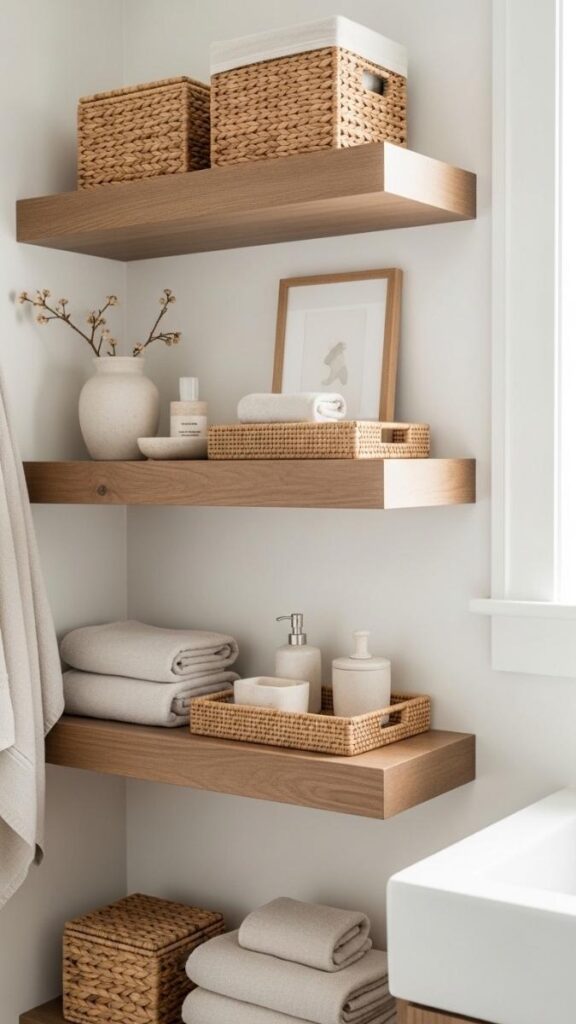
Bathrooms are often left out of the rustic decor conversation, but a wood shelf paired with woven baskets and warm-toned towels makes the space feel intentional rather than utilitarian. Use sealed or treated wood to handle humidity, teak and bamboo are both practical choices.
The floating shelf keeps floor space clear (critical in small bathrooms) while adding the organic material contrast that makes a space feel finished. Two shelves staggered at different heights work better than one wide shelf in narrower bathrooms.
An Arched Doorframe or Arched Mirror in a Living Room
The arch is one of 2026’s most persistent design trends and unlike many trends, it actually adds spatial value. An arched mirror in a living room creates the illusion of a doorway or window where there isn’t one, which opens up the visual weight of a solid wall.
Lean a large arched mirror against the wall rather than hanging it for a casual, European-apartment feel. In smaller rooms, position it opposite a window to double the natural light.
A Wood and Iron Coffee Table on a Jute Rug
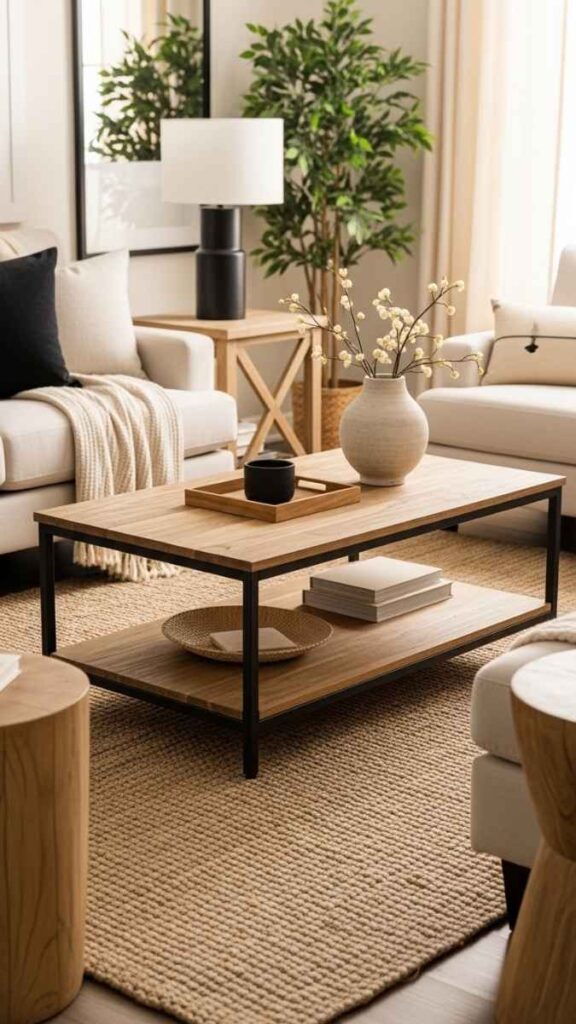
The combination of a wood top and iron or blackened steel base is one of the most practical coffee table choices for rustic spaces. It’s durable, works with a wide range of sofa colors, and the material contrast (organic wood + industrial iron) gives the table enough visual interest to not need anything on it.
Pair it with a jute rug the natural fiber and warm tan tones of jute ground the arrangement without competing with the table. This setup works in open-plan living rooms where the coffee table needs to anchor the seating area clearly.
Read More About: 59+ Coastal Kitchen Ideas That Actually Work in Real Homes Not Just Beach Houses
Vintage Crates or Wooden Boxes as Bookshelf Styling
Vintage crates used as modular shelving units or as bookshelf dividers bring texture and depth that standard shelf styling can’t. Stack two or three vertically in a bookcase alcove to create divided sections for books, plants, and objects.
Individually, they can be used as side tables, plant stands, or bathroom storage. This is one of the easiest ways to add rustic character to a rental space because nothing is permanently attached to the wall.
A Sliding Barn Door in a Bedroom or Hallway
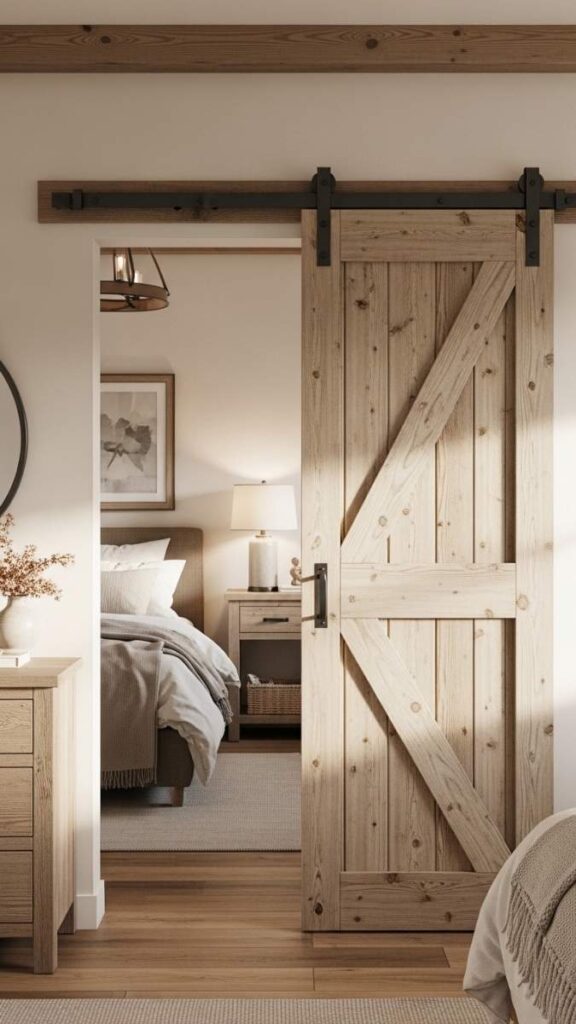
A sliding barn door is a functional solution to a real spatial problem: standard swing doors eat up floor space in bedrooms, small bathrooms, and hallways. The barn door slides parallel to the wall, freeing up the arc that a hinged door would require.
The visual effect is immediate; it adds a strong wood element and black hardware detail that anchors the room. This works best in spaces where the door opening is visible from the main living area, so the aesthetic element is actually seen.
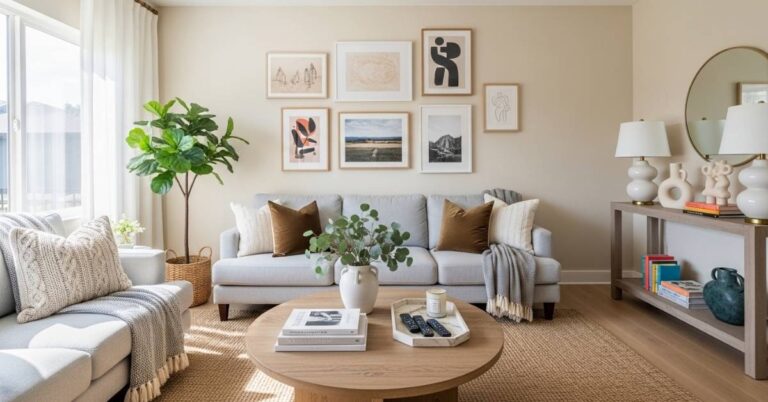
A Neutral Linen Sofa With Throw Pillows in Earthy Tones
I’ve noticed this style tends to work best when the pillows are treated as the color story rather than the sofa. A neutral linen sofa in oat, greige, or warm white becomes the base layer; it’s the canvas. Earthy-toned pillows in terracotta, olive, or muted rust add the color without requiring paint or furniture changes.
Mix textures: one woven pillow, one linen, one with a small pattern. The variety of surfaces reads as layered and collected rather than matching, which is exactly what rustic decor does well.
A Live-Edge or Irregular Wood Dining Bench
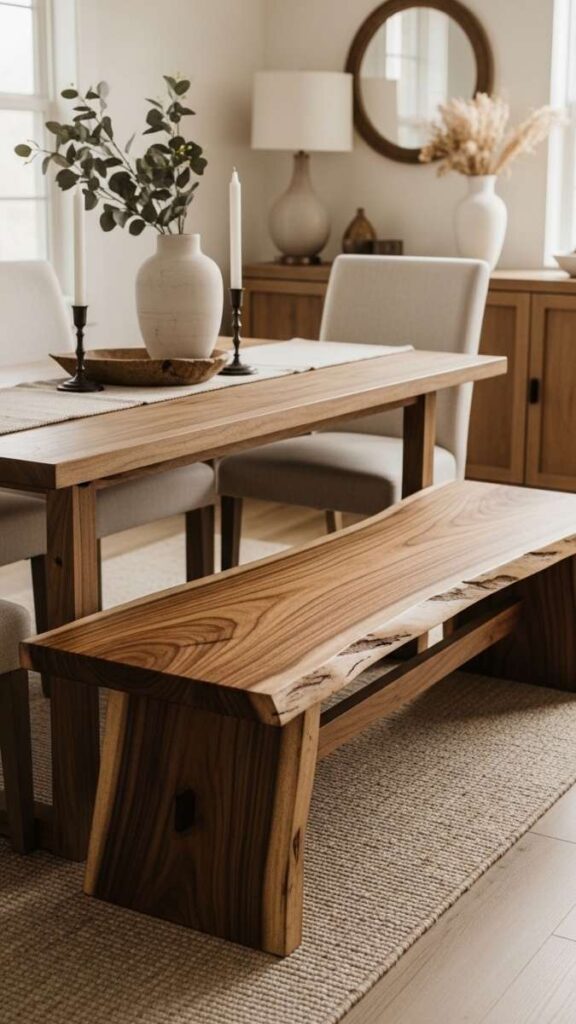
A live-edge bench on one side of a dining table, paired with chairs on the other, is one of the most low-effort ways to break the matching-set monotony that makes dining rooms feel generic. The irregular edge of live-edge wood makes the bench feel like a found object rather than a purchased one.
It also solves a practical problem: benches can seat more people than individual chairs in the same footprint. This works in medium to large dining rooms and is particularly effective when the bench is in a contrasting wood tone to the table.
Dried Pampas Grass or Wheat Stems in a Tall Vase
Tall dried botanicals in a large vase solve the “empty corner” problem without requiring anything living that needs maintenance.
Pampas grass in particular has a texture that reads from across a room the feathery fronds catch light and move slightly in air currents, which adds a quality to a corner that static decor never achieves.
Pair with a ceramic or terracotta vase (not glass glass makes the stems look clinical). Best in corners of living rooms, entryways, or beside a fireplace where height is needed.
A Wood Ladder Used as a Towel Rack or Blanket Display
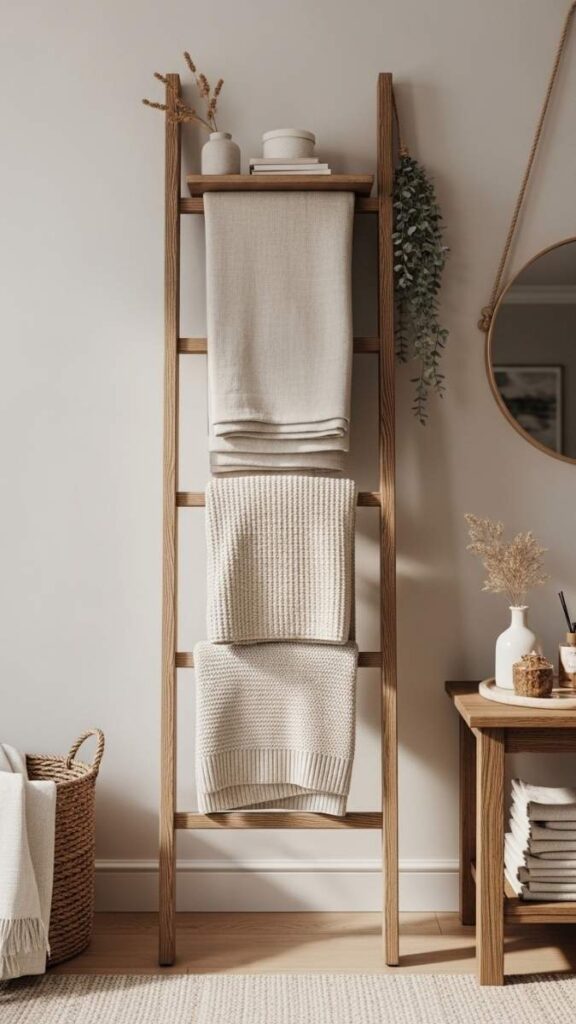
A simple wood ladder leaned against a wall is one of those objects that works in almost every rustic setup it’s functional, takes up no floor space, and the vertical element adds height interest in a room that otherwise reads as horizontal.
In bathrooms, it replaces towel rings and frees up wall space. In bedrooms, it holds spare throws and makes the corner feel dressed. A dark walnut or whitewashed finish covers most style directions.
Exposed Brick Real or Panel as a Feature Wall
Exposed brick does something that paint and wallpaper can’t. It creates genuine depth and a surface that changes with light throughout the day. In north-facing rooms or spaces with limited natural light, brick panels (which install over existing walls without structural changes) add warmth that feels physical, not just visual. Position the furniture to allow the wall to breathe, keep large furniture pieces at least 6 inches away from the brick to let the texture remain visible.
A Freestanding Wooden Wardrobe in a Bedroom
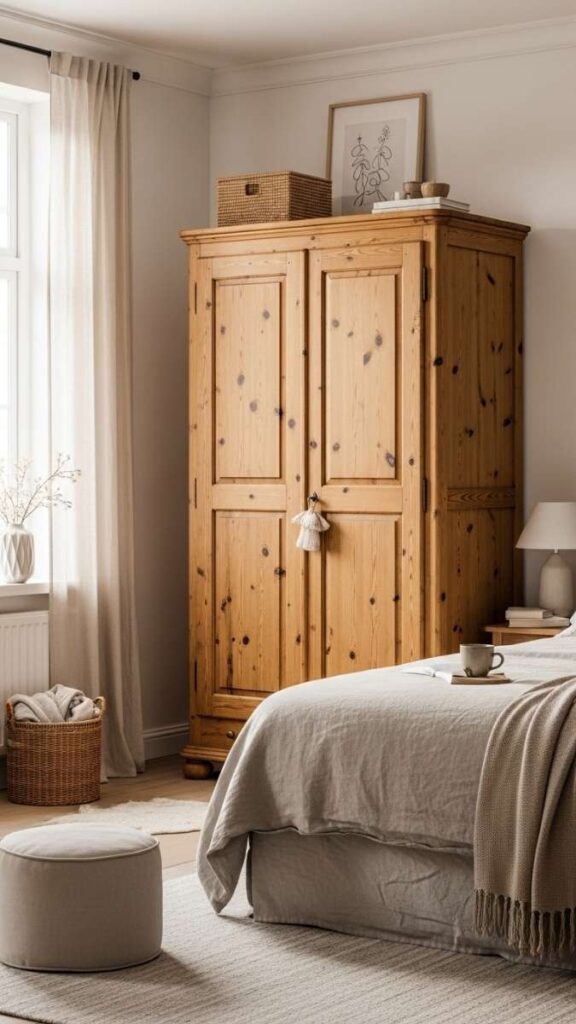
Built-ins communicate sleek and modern; a freestanding wardrobe communicates collected and lived-in, which is exactly the quality rustic decor builds from. A large wood wardrobe also solves the storage problem in older homes or apartments where closet space is limited.
Look for pieces with simple plank construction rather than ornate carvings. The texture of the wood does the aesthetic work. Position it on the wall opposite the bed so it serves as an anchor without blocking natural light.
Small Framed Botanical Prints in a Grid on a Stairwell or Hallway
Stairwells and hallways are the most underused surfaces in a home. A grid of small botanical prints in matching frames is one of the more forgiving gallery wall approaches because everything is the same size and frame, the grid reads as intentional even when the spacing isn’t perfect.
Use prints with warm paper tones (not white backgrounds) for a rustic feel over a clinical one. This works in any hallway width over 24 inches and requires only basic wall hardware.
A Concrete or Stone-Look Kitchen Counter With Wood Cabinet Fronts
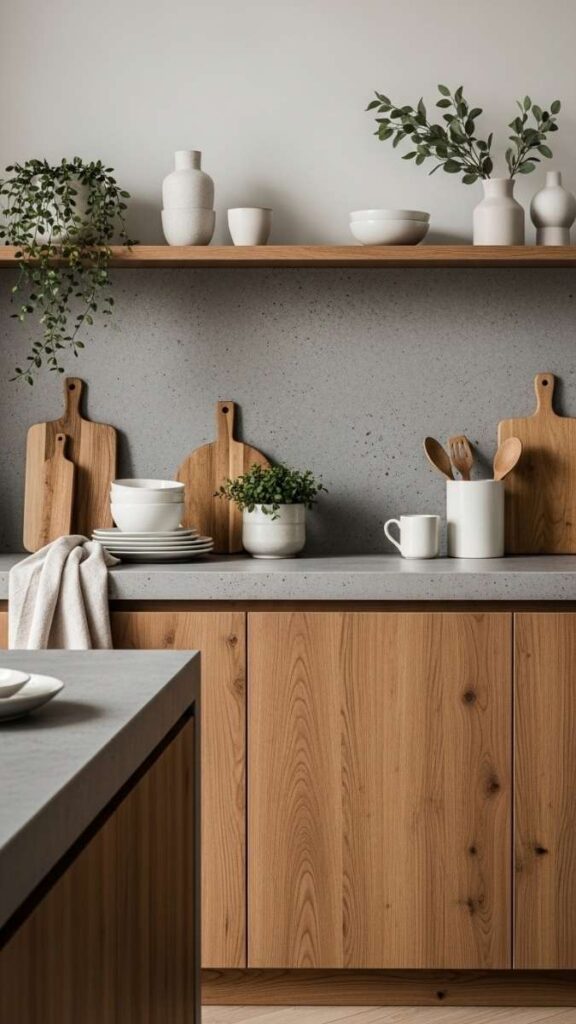
This pairing works because the material contrast covers all three bases of rustic design: cold (stone or concrete), warm (wood), and organic (the natural grain and variation in both). It’s also the most functional version of rustic decor in a kitchen concrete-look surfaces are scratch-resistant and easy to clean, while wood cabinet fronts age naturally rather than chipping or peeling like painted surfaces. For renters, peel-and-stick concrete-look contact paper on countertops has improved dramatically and wood-effect adhesive film on cabinet fronts is now convincing enough at normal viewing distances.
What Actually Makes Rustic Decor Work in Real Homes
The ideas above are each effective on their own, but rustic decor works as a system when it follows a few consistent material rules and fails when it doesn’t.
Material logic matters more than style rules.
Rustic spaces feel grounded when every material can explain why it’s there. Raw wood → nature, longevity, organic warmth. Iron and matte black hardware → hand-forged, old-world craft. Linen and wool → natural fiber, softness, wear. Terracotta and ceramic → earth, kiln, handmade quality. When you mix a rustic wood shelf with high-gloss acrylic accessories, the logic breaks. The materials start arguing with each other, and the space reads as confused instead of collected.
Layering depth, not just objects.
The difference between a rustic space that feels rich and one that feels staged is depth visual layers that exist at different distances from the eye. A shelf that has a large ceramic vessel (far plane), a mid-sized plant (middle), and a small woven coaster (foreground) has three layers of depth. A shelf with five objects all at the same scale has one. This is why rustic decor tends to use tall and short objects together, why rugs are layered, and why pendants are chosen for visual texture rather than clean lines.
Light is the finish.
Warm lighting (2200K–2700K) does more to complete a rustic interior than any single decor piece. Cold LED lighting (4000K+) strips warmth from wood, makes linen look gray, and flattens texture. If you’ve tried rustic ideas that haven’t landed, check the bulbs before changing anything else.
Quick Setup Guide Rustic Decor by Room Type
| Room | Best Rustic Element | Space Type | Problem Solved | Difficulty |
| Living room | Reclaimed wood shelf + layered rugs | Small to large | Empty walls, cold floors | Easy |
| Bedroom | Linen curtains + raw wood headboard | Any size | Feels sterile, lacks warmth | Easy |
| Dining room | Distressed table + rattan pendant | Medium to large | Generic, disconnected from home | Easy |
| Kitchen | Terracotta accessories + open shelving | Small | Lacks personality | Easy |
| Bathroom | Wood floating shelf + woven baskets | Small | Utilitarian, no character | Easy |
| Hallway/entryway | Antique mirror + wood console | Narrow | Dark, unused space | Easy–Medium |
| Any corner | Tall vase with dried botanicals | Any size | Empty, flat, unresolved | Easy |
How to Avoid Common Rustic Decor Mistakes That Make Rooms Feel Heavy or Cluttered
Rustic done wrong looks like a barn. Rustic done right looks like a home that someone has actually lived in for years. The gap between the two usually comes down to a few repeatable mistakes.
Too much dark wood in a small room.
Dark wood furniture, dark stained floors, and dark beams in a small room create a space that reads as a cave rather than a cozy interior. If your room is under 150 square feet, limit dark wood to one or two pieces: the coffee table, the bed frame, or the shelf and balance with light walls and natural linen.
All texture, no negative space.
Every rustic material has texture jute, linen, raw wood, brick, woven baskets. When every surface carries texture simultaneously, the room becomes visually exhausting. Leave some surfaces intentionally bare a clear section of wall, a tabletop with only one or two objects, a floor area without a rug. The quiet spaces make the textured ones readable.
Overdoing the farmhouse details.
Shiplap, barn doors, milk crates, mason jars, galvanized metal individually, each of these works. Together in one room, they become a theme rather than a style. In 2026, the better approach is to use one or two clear rustic anchors (a reclaimed wood shelf, a barn door, a live-edge table) and let the rest of the room be more neutral.
Ignoring scale.
A small jute rug in a large living room floats; it doesn’t anchor the furniture arrangement. A single tiny botanical print on a large wall disappears. Rustic decor depends on objects that are proportional to the space. When scale is off, even the right materials read as decoration rather than design.
FAQ’s
What is rustic decor, and how is it different from farmhouse style?
Rustic decor focuses on natural, raw, aged materials wood, stone, linen, iron with an emphasis on warmth and lived-in character. Farmhouse style is a specific subset of rustic that tends to include more white, more shiplap, and more thematic elements like galvanized metal and apron sinks. Rustic decor is broader and more flexible; it can work in modern, Scandinavian, or even industrial settings.
Can rustic decor work in a small apartment?
Yes in fact, rustic decor often works better in smaller spaces because natural materials add warmth without requiring much visual space. The key is focusing on one or two anchor pieces (a wood shelf, a woven rug, linen curtains) rather than trying to layer every rustic element at once. Keep the palette light and limit dark-toned wood.
What’s the easiest rustic decor change that makes the biggest difference?
Swapping out light bulbs for warm Edison-style LEDs (2200K–2700K) and adding one large-scale natural element a jute rug, a chunky knit throw, or a tall vase with dried botanicals will shift a room’s feel immediately without any permanent changes. These are the first two moves worth making.
Is rustic decor expensive to achieve?
Not necessarily. Most of the high-impact rustic elements, woven baskets, dried botanicals, linen throws, and terracotta pots are relatively affordable. The more expensive anchors (a reclaimed wood dining table, a live-edge headboard) can be sourced secondhand or replicated with more budget-friendly alternatives like faux-wood beams or peel-and-stick limewash paint.
How do I mix rustic decor with a more modern or minimalist style?
Focus on one or two natural materials against a clean, minimal backdrop. A single reclaimed wood shelf on a white wall, or a raw-edge coffee table on a concrete floor, reads as modern-rustic rather than purely traditional rustic. The key is retaining fewer pieces, more space, and a limited color palette in earthy neutrals.
Rustic vs. industrial which works better in a small living room?
Rustic tends to be more forgiving in small spaces because warm materials (wood, linen, ceramic) make rooms feel cozy rather than smaller. Industrial design relies on metal and concrete, which can feel cold or stark in tight spaces unless the lighting is very warm. If you’re working with limited square footage, rustic is the easier starting point.
Can I do rustic decor in a rental without making permanent changes?
Yes. Freestanding furniture, adhesive-backed limewash paint on temporary panels, peel-and-stick stone or wood-effect film, woven baskets, and leaning ladders all add rustic character with zero permanent installation. The style lends itself to collected, freestanding setups rather than built-in ones.
Conclusion
A room doesn’t need to be renovated to feel warm, grounded, and lived-in; it needs the right materials in the right proportions. Most of the ideas in this list work because they follow the same logic natural texture, warm light, and a scale that matches the room rather than fighting it. Even one or two of these setups can shift how a space feels day-to-day.
Start with what’s easiest for your space: swap the lighting, add a jute rug, or hang a reclaimed wood shelf. Build from there. Rustic decor isn’t about perfecting every corner at once, it’s about letting the room develop the kind of character that makes it feel like yours.