74+ Small Coastal Setup Ideas That Make Any Room Feel Like a Beachside Retreat
If your space feels a little too landlocked, too heavy, too dark, or just visually busy, a small coastal setup might be exactly what it needs. This isn’t about seashell collections or novelty anchor prints. Small Coastal Setup The coastal aesthetic that’s actually working in 2026 is quieter natural textures, soft light, open sightlines, and a palette that doesn’t try too hard.
For anyone working with a compact apartment, a beach house rental, or just a room that needs to breathe, this approach solves a real problem. Coastal design done right creates visual openness without requiring a gut renovation. It uses light, material contrast, and strategic furniture placement to make a space feel more expansive than it actually is.
If your style leans toward calm, neutral, and uncluttered, these setups will feel immediately usable.
Whitewashed Wood Shelving Against a Blue Toned Accent Wall
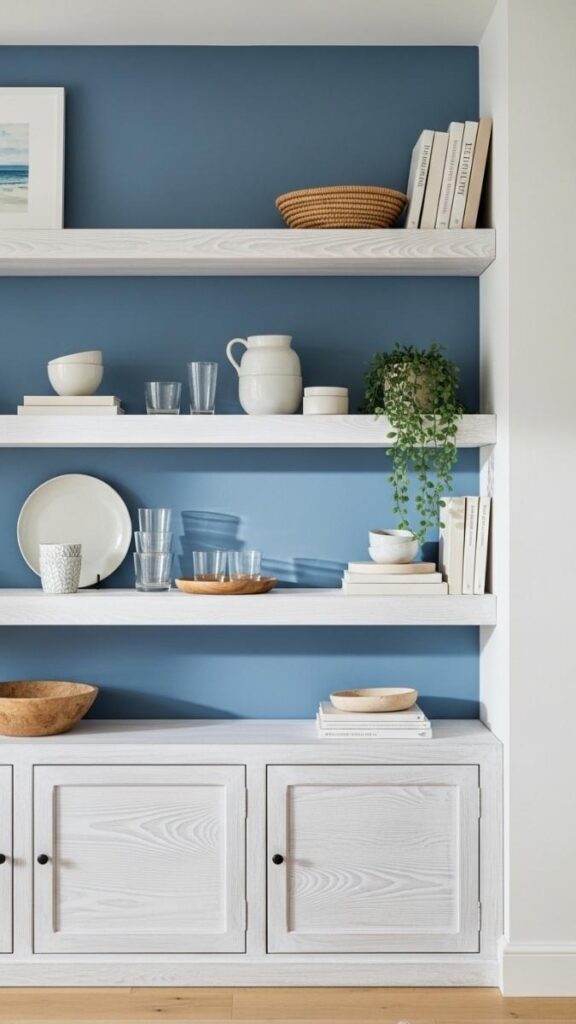
Open shelving with a whitewashed or driftwood finish against a soft blue-grey wall creates immediate depth in a small room. Keep the shelves sparse three to five objects max mixing a trailing plant, a woven basket, and one or two neutral ceramic pieces.
The contrast between the pale wood and the cool wall tone reads as “layered” without adding visual bulk. This works especially well in narrow living rooms where a full bookcase would close in the space. The wall color does the heavy lifting, and the open shelving keeps airflow and sightlines intact.
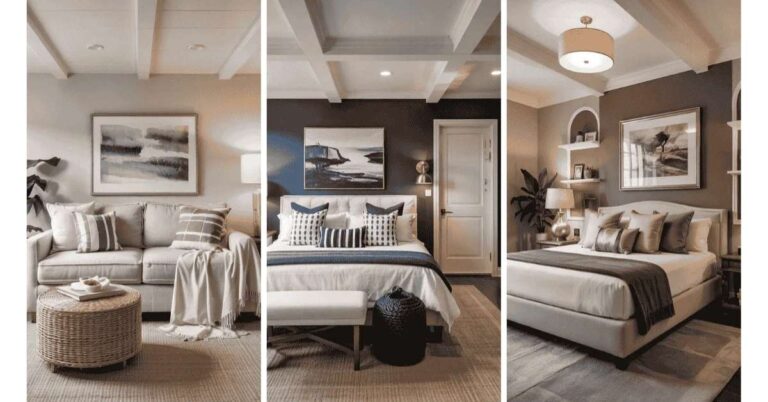
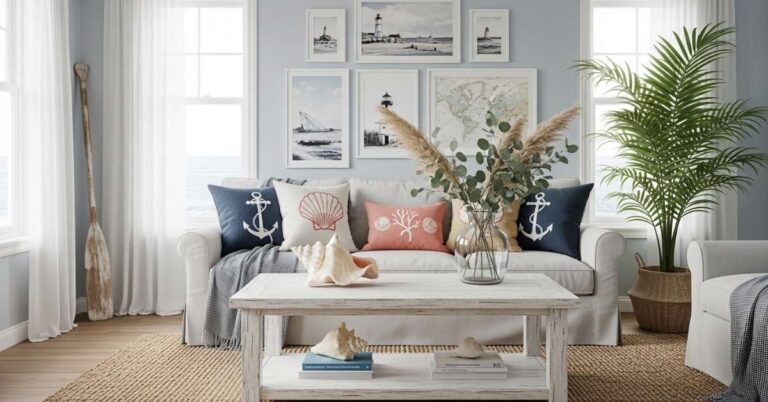
Linen Sofa Facing a Low, Rattan Coffee Table
Low-profile furniture is one of the most underused tools in small-space design. A linen sofa, oatmeal, warm white, or pale sand paired with a rattan or woven coffee table at seat height keeps the eye moving horizontally rather than stopping at visual weight.
The natural materials create texture without pattern, which matters in tight rooms where busy prints tend to shrink the space further.
I’ve noticed this combination works especially well in studio layouts where the living and sleeping zones share the same sightline; the low, open arrangement doesn’t interrupt the flow. Honest, practical, and genuinely easy to source at most price points.
Sheer Curtains Floor to Ceiling to Fake a Bigger Window
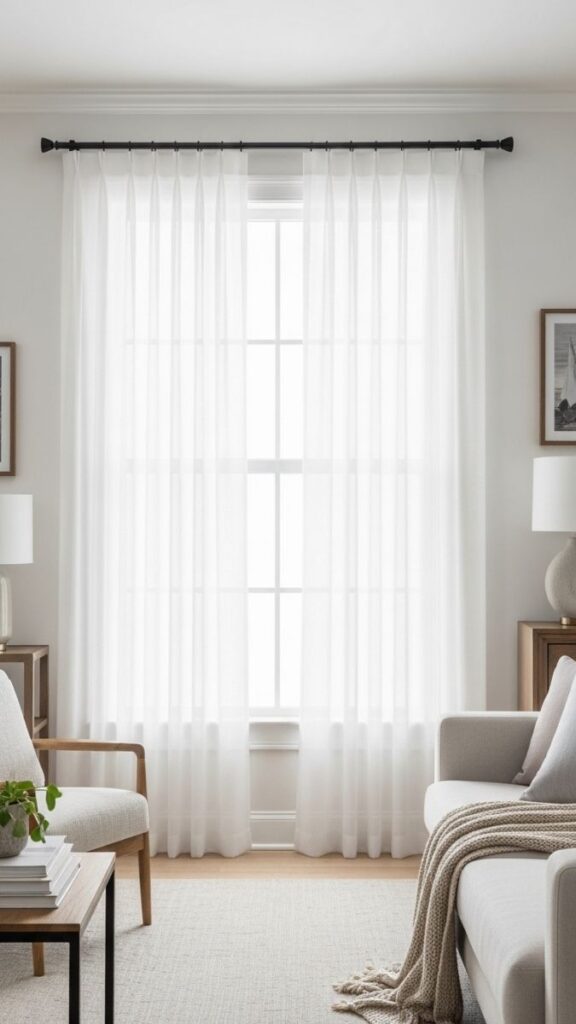
Mounting curtains at ceiling height even over a modest-sized window dramatically changes how light moves through a small room. Sheer linen or cotton voile panels work best here; they soften direct light into a diffused glow rather than blocking it, which is the whole point in a coastal-inspired space.
This setup is especially useful in rentals where structural changes aren’t possible. The extra vertical length draws the eye upward, adding perceived height. Go for an off-white or warm cream rather than bright white it reads warmer and prevents the “hospital curtain” effect.
A Built-In Bench Along One Wall With Storage Underneath
In small coastal spaces, seating that doubles as storage solves two problems at once. A bench built along one wall even a freestanding version with a lift top or drawer keeps the floor plan open while adding function.
Pair it with a narrow dining table and two chairs on the opposite side, and you’ve created a proper dining nook without wasting square footage on a full four-chair setup.
Add a cushion in a simple stripe or solid texture with nothing loud and a pendant light in rattan or rope directly above. This is one I’d recommend trying first if you have an awkward corner near a window that isn’t being used well.
Gallery Wall of Coastal Botanical Prints in Matching Frames
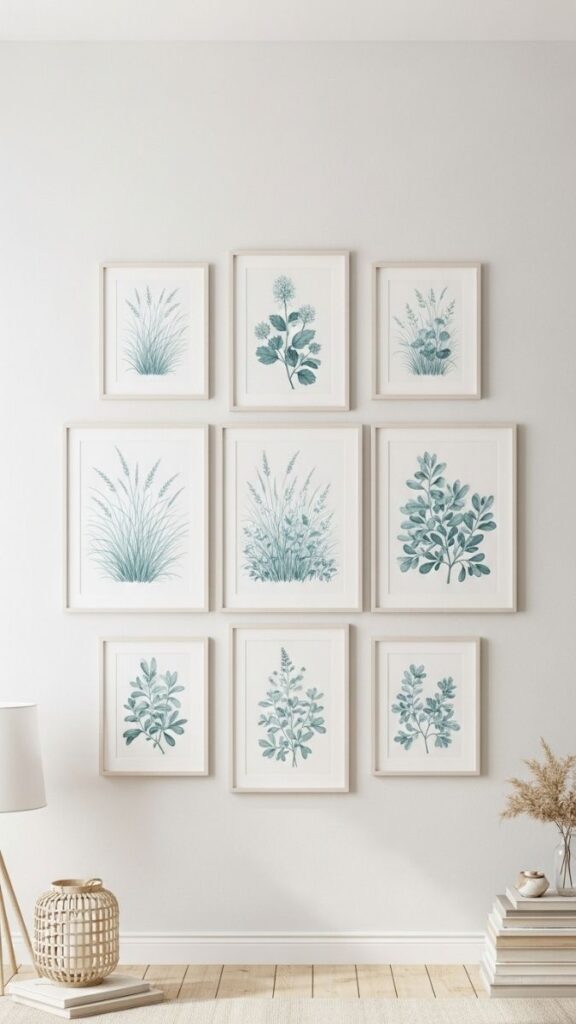
A coherent gallery wall in a small space only works when the frames match. Mixed frames look intentionally eclectic in large rooms in compact setups, they read as cluttered. Stick to one frame finish (white, natural wood, or thin black) and choose prints with a similar palette of soft greens, sandy neutrals, watercolor blues.
Coastal botanical subjects sea grasses, kelp, dune flora add organic detail without introducing pattern overload. Hang the grouping tighter than you think feels right; around 2–3 inches of spacing between frames.
The tight arrangement reads as a single cohesive piece rather than a collection of items competing for attention.
Rope or Jute Pendant Light Over a Dining or Reading Nook
Pendant lighting changes the scale of a small room in a way that floor lamps and overhead fixtures often can’t. Hanging a natural rope or woven jute pendant low over a table dining, side, or reading creates a zone within an open layout. In coastal design, the material matters as much as the form.
Rope and jute pendants add tactile warmth without color, which keeps the palette clean. Hang it lower than feels intuitive around 28–32 inches above the table surface for that intimate, lived-in quality.
This works especially well in studio apartments where you’re trying to carve out distinct areas within one room.
Read More About: 61+ Small Apartment Ideas That Make Every Square Foot Work Harder
Wet Sand Warm White Two Tone Wall Treatment
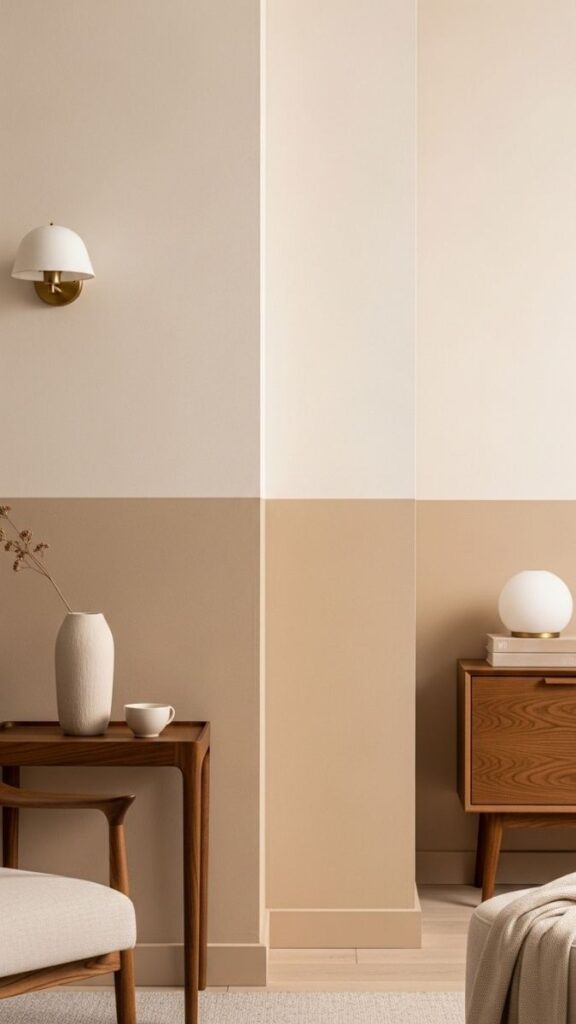
A two-tone wall with warm white on the upper half, a muted sandy or warm greige on the lower is one of the most spatial tricks in small-room design. The lighter top half visually raises the ceiling.
The darker lower tone grounds the room and adds depth without closing it in. For a coastal feel, avoid cool greys; lean into warm, slightly yellow-toned neutrals that reference sand and driftwood.
No chair rail required a clean painted line works fine, and it’s a change any renter can reverse. This setup is particularly effective in bedrooms and living rooms where ceiling height is under 9 feet.
Woven Seagrass Rug to Define a Living Zone
In open-plan small spaces, a rug is doing more than decorative work; it’s defining where one area ends and another begins. A seagrass or sisal rug in a natural tan or warm sand tone anchors the living zone without adding color competition.
These materials also handle high-traffic areas better than most wool or synthetic rugs, which makes them practical for smaller homes where rooms serve multiple purposes. Size up rather than down a rug that sits fully under the front legs of the sofa (or better, all four legs) makes the seating area feel deliberate rather than floating.
The natural texture also adds the coastal reference without requiring any other themed decor.
Driftwood or Bleached Wood Headboard in a Small Coastal Bedroom
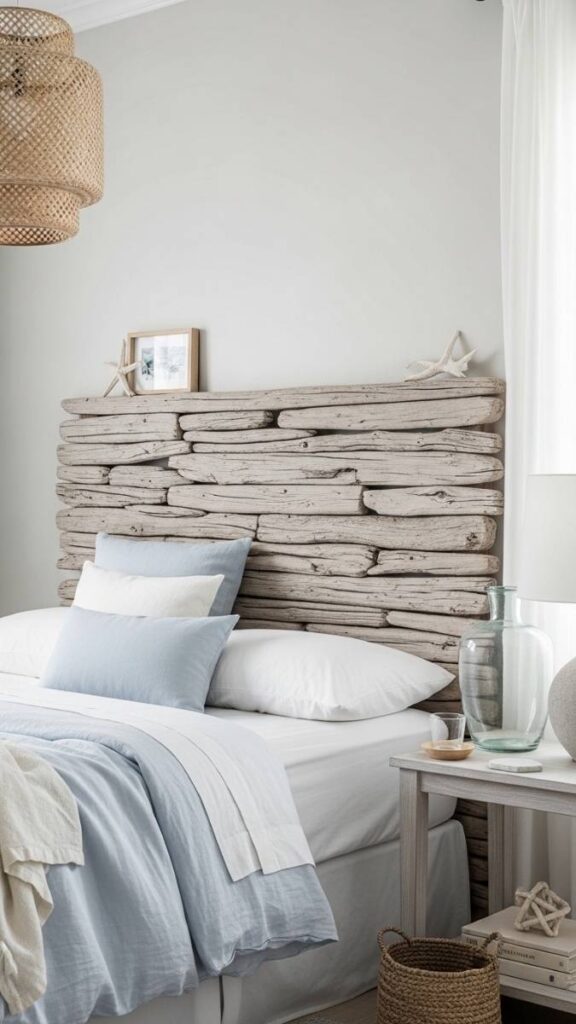
A headboard with a driftwood or bleached panel finish grounds the bedroom without adding visual weight. In small rooms, upholstered headboards with thick padding can crowd the wall behind the bed and push the ceiling line visually lower.
A flat wood panel especially in a lighter, weathered finish keeps the horizontal line clean. Pair it with white or warm linen bedding and very low nightstands. No overhead light directly above the bed; use wall-mounted sconces or small table lamps at a lower height to keep the light warm and directional.
This arrangement works best in rooms where the bed is the main furniture piece and you’re not trying to fit much else.
Read More About: 60+ Light Blue Bathroom Ideas That Make Small Spaces Feel Airy and Intentional
Floating Vanity With a Round Mirror in a Small Coastal Bathroom
A floating vanity does two things in a compact bathroom: it frees up floor space visually (even an inch of visible floor makes a room read larger), and it creates a natural space for small storage underneath.
Pair it with a round mirror in a natural frame bamboo, light wood, or a simple brass ring rather than a rectangular one, which tends to feel more corporate. For lighting, two wall sconces flanking the mirror at eye level give more flattering, even light than a single overhead bar.
This setup solves the harsh lighting and cramped countertop problem common in smaller bathrooms without requiring a full renovation.
Natural Linen Roman Shades Instead of Heavy Drapes
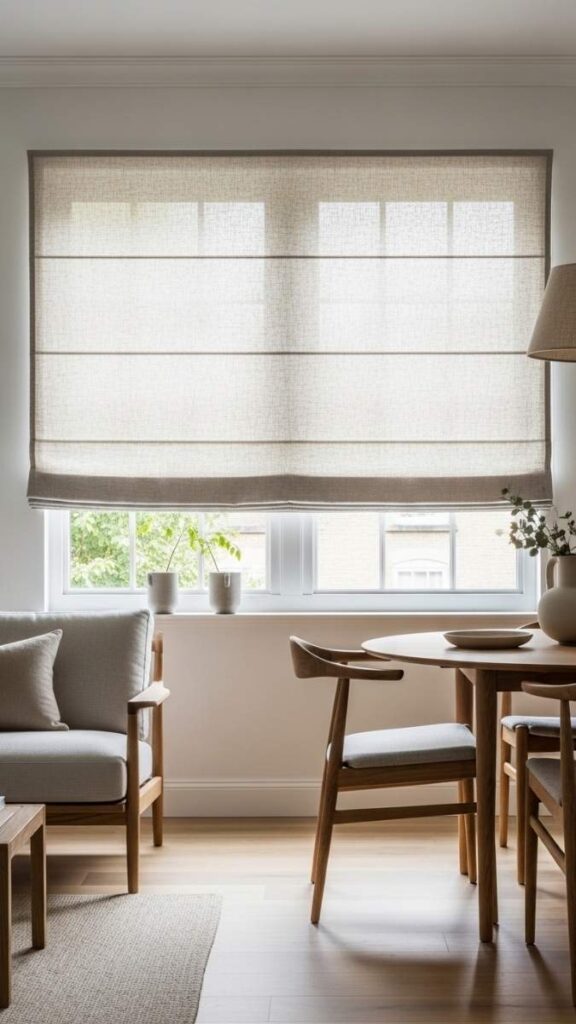
Heavy curtain panels on small windows pull visual focus and often block light you actually need. Roman shades in a natural linen or cotton canvas sit close to the window frame, keeping the surrounding wall clean. When raised, they stack tightly at the top and disappear, leaving the window fully open.
This matters especially in small rooms that rely on whatever natural light they can get. In a coastal setup, the texture of the linen itself does the decorative work; there’s no need for pattern. Go for a relaxed, unstructured fold rather than a stiff, tailored Roman shade. The softer version reads warmer and more in line with the coastal aesthetic.
Cluster of Varying Height Candles on a Tray as a Coffee Table Centerpiece
Styling a coffee table in a small space requires restraint. A single tray containing a curated cluster of three to five candles in varying heights, one small object (a smooth stone, a small ceramic dish), and a sprig of dried sea grass or pampas gives the surface a finished look without consuming the entire table.
The tray matters a weathered wood or dark woven option grounds the arrangement. This setup keeps the surface functional (you can move the tray easily) while giving the room a warm, intentional focal point. IMO, it’s also the easiest swap when a space feels visually unresolved but you don’t want to rearrange furniture.
Shiplap or Vertical Plank Accent Wall in a Small Coastal Bedroom or Living Room
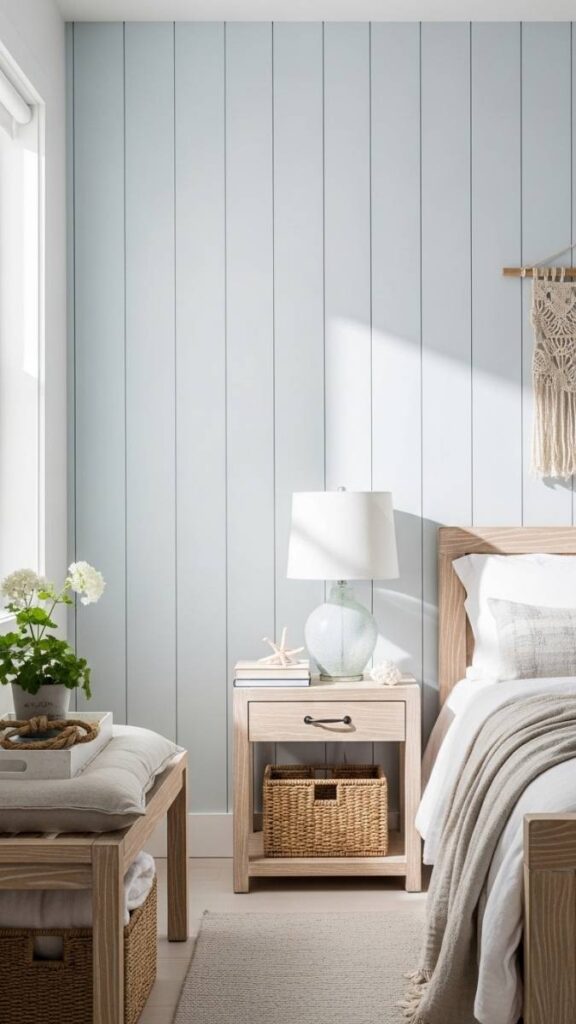
Shiplap doesn’t need to be rustic. In 2026, the shift is toward tighter-grained vertical planks or smooth shiplap in a warm white or light stone finish less cabin, more clean coastal.
A single accent wall in a compact room adds architectural texture without requiring wallpaper or paint murals. It also defines the primary wall, the one behind the bed or behind the sofa which helps organize the room visually.
For renters, peel-and-stick shiplap panels have genuinely improved in quality and are a practical alternative. Keep everything else on that wall minimal; the texture is enough.
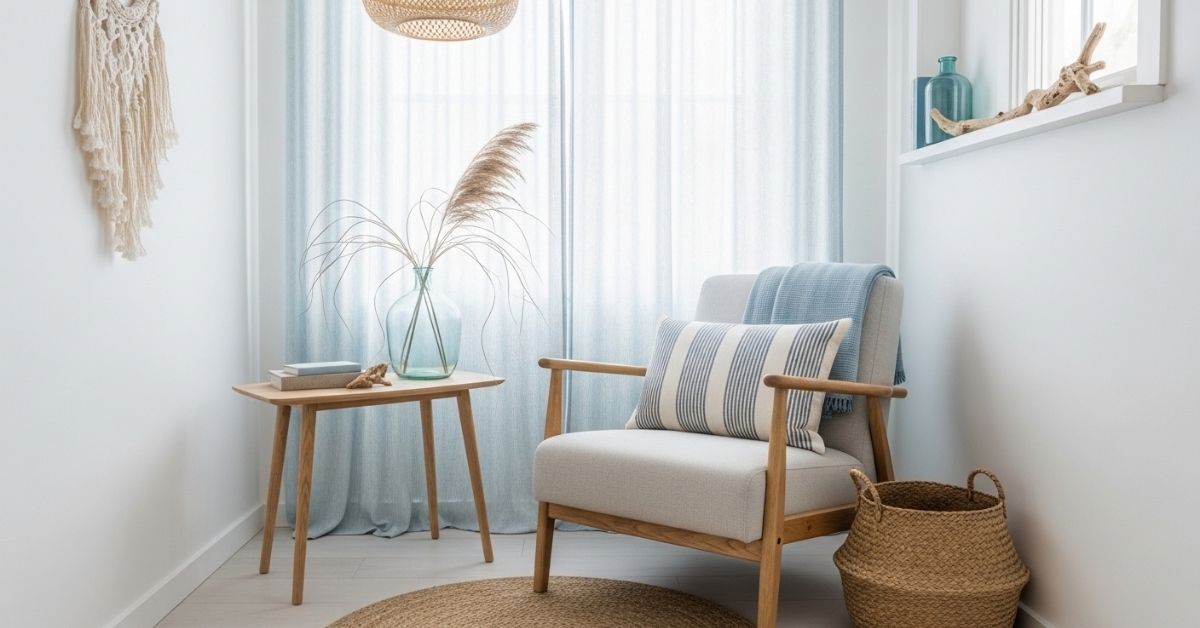
Corner Reading Nook With a Curved Chair and Side Table
A dead corner becomes functional and genuinely inviting with a curved accent chair and a small side table angled toward a window. The curved form softens the 90-degree geometry of the corner, which matters in small rooms where sharp angles can feel rigid. Choose a chair in boucle, linen, or a loose-weave fabric in cream or warm sand.
The side table should be at arm height just tall enough for a glass and a book and in a material that contrasts lightly with the chair a light wood, a rattan, or even a simple stone-topped metal piece. Add a floor lamp behind the chair, angled slightly forward, for reading light that also warms the corner. This transforms wasted square footage into a purposeful zone.
Open Kitchen Shelving With Coastal Toned Ceramics and Glassware
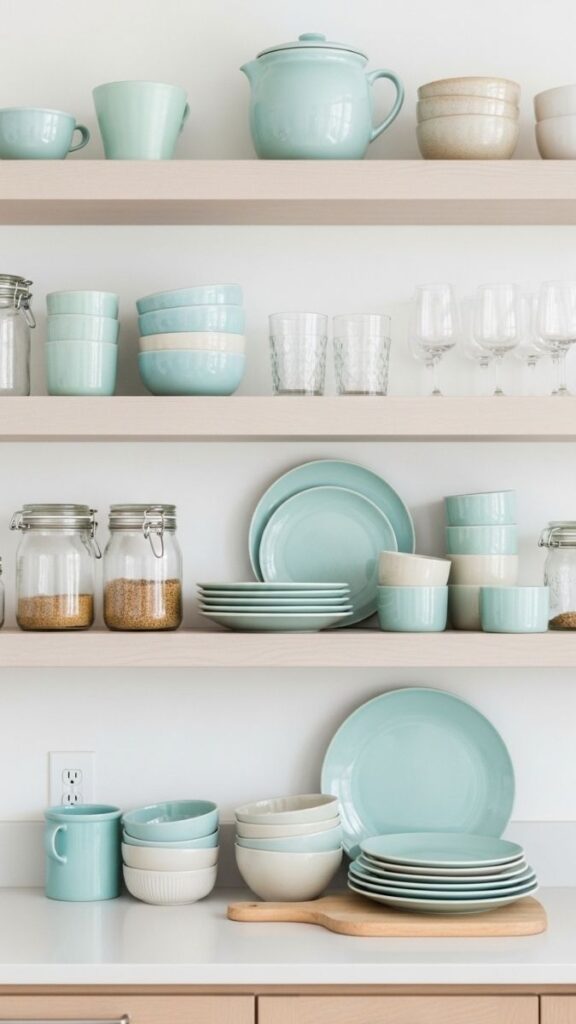
Removing upper cabinet doors or replacing one run of cabinets with open shelving makes a small kitchen feel dramatically more open. The key is editing what goes on those shelves. A coastal kitchen shelf should hold stacked white or sandy-toned ceramics, clear or sea-glass-colored glassware, one small plant, and one woven or ceramic storage jar.
That’s it. The negative space between objects is as important as the objects themselves. In my experience, this works best on the wall closest to the window, where natural light can hit the ceramics and glassware and create that soft, airy effect that photographs well and looks even better in person.
Read More About: 73+ Aesthetic Setups That Make Your Home Feel Intentional Without Starting Over
Layered Lighting With a Floor Lamp, Table Lamp, and Candles
Single overhead lighting flattens a room and eliminates the warmth that makes coastal spaces feel calm. In a small living room, layered lighting means three sources: a floor lamp in one corner (arc or straight, in a natural material), a table lamp on a side table or console at mid-height, and a lower light source candles or a small accent lamp near the floor or coffee table level.
The result is a graduated light effect that makes the room feel larger and more dimensioned at night. Keep all bulbs in the same warm range (2700K is the target). Cool or daylight bulbs will kill the coastal mood regardless of how good the furniture is.
Outdoor Inspired Greenery Coastal Plants in Textured Pots
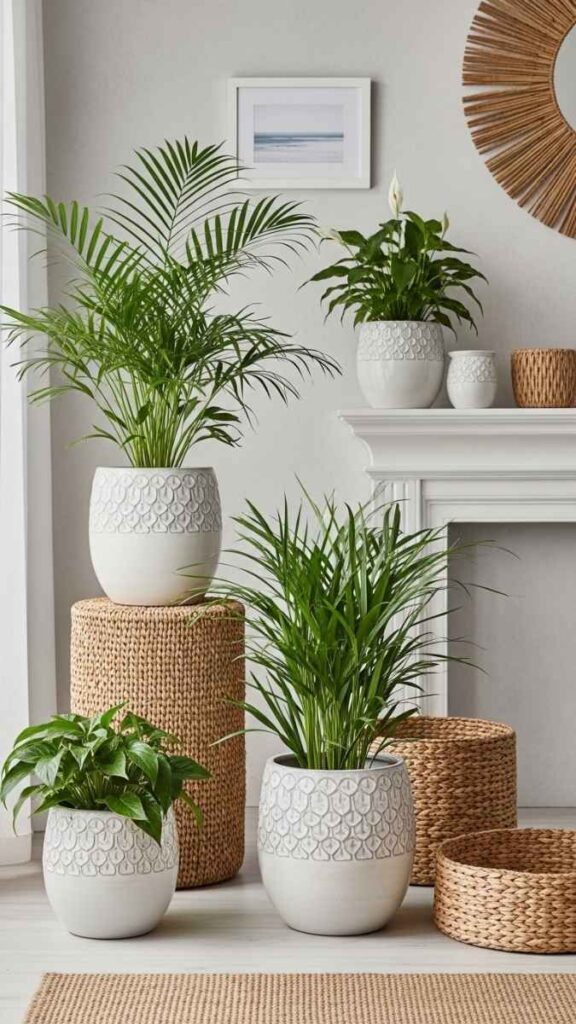
The right plant placement in a small coastal room does more than add color; it adds scale and vertical movement. A tall, single plant in one corner (a fiddle leaf fig, areca palm, or olive tree) draws the eye upward and softens the hard geometry of walls and furniture edges.
The pot material matters: textured terracotta, a woven basket liner, or a sandy ceramic finish keeps the coastal connection without resorting to novelty. To avoid overcrowding with multiple small plants in a tiny space one or two strong vertical plants will always outperform a shelf of small succulents in terms of spatial impact. Keep them near natural light sources, which in a small coastal setup usually means next to the window that’s already your biggest asset
What Actually Makes a Small Coastal Setup Work
The difference between a coastal room that feels considered and one that just looks themed comes down to three things: material consistency, spatial restraint, and light management.
Material consistency means picking a texture family and sticking to it. In coastal design, that’s natural fibers (linen, jute, rattan, seagrass), soft wood finishes (driftwood, bleached oak, whitewashed pine), and ceramics or stone in neutral tones. When you mix too many material types of glass, metal, dark wood, synthetic fabric all in one small room the space reads as busy regardless of the color palette.
Spatial restraint is probably the hardest to execute. Every object in a small coastal room should be earning its place either adding function, defining a zone, or creating a specific visual moment. The moment you start layering objects “because they look nice,” the room starts to feel cluttered and the coastal openness disappears.
Light management is what separates a room that photographs well from one that actually feels good to be in. In small spaces, you’re working with limited natural light and often low ceilings. The goal is to distribute light across multiple sources and heights, keep window treatments light and minimal, and use warm-toned bulbs consistently. The coastal aesthetic is largely a light aesthetic, get that right, and the rest follows.
Small Coastal Setup Space by Space Guide
| Setup Idea | Best Space Type | Key Problem Solved | Difficulty Level |
| Whitewashed shelving + accent wall | Living room, studio | Empty or flat walls | Easy |
| Low linen sofa + rattan table | Living room, studio | Visual heaviness | Easy |
| Ceiling-height sheers | Any room with windows | Small or awkward windows | Easy |
| Built-in bench with storage | Kitchen nook, entryway | Limited seating + storage | Moderate |
| Botanical gallery wall | Hallway, bedroom wall | Blank, undefined walls | Easy |
| Rope/jute pendant | Dining or reading nook | Poor zone definition | Easy |
| Two-tone wall treatment | Bedroom, low-ceiling rooms | Low ceiling or flat walls | Easy |
| Seagrass rug | Open plan, studio | Undefined zones | Easy |
| Driftwood headboard | Small bedroom | Heavy, bulky furniture | Moderate |
| Floating vanity + round mirror | Small bathroom | Cramped counters, bad lighting | Moderate |
| Linen Roman shades | Kitchen, bedroom windows | Heavy drapes blocking light | Easy |
| Candle tray centerpiece | Living room table | Unstyled or cluttered surfaces | Easy |
| Shiplap accent wall | Bedroom, living room | Flat, boring primary wall | Moderate |
| Corner reading nook | Bedroom, living room corner | Wasted corner space | Easy |
| Open kitchen shelving | Small kitchen | Dark, closed-off cabinetry | Moderate |
| Layered lighting | Living room, studio | Flat or harsh overhead light | Easy |
| Coastal plants in textured pots | Any corner near a window | Hard geometry, empty corners | Easy |
Common Small Coastal Setup Mistakes That Make Your Space Feel Cluttered
Using too many nautical accessories.
Anchor prints, seashell collections, and rope accents all at once tip a room from coastal to costume. The contemporary coastal direction is material and light-based, not object-based. One or two natural references are enough; the palette and textures carry the rest.
Choosing the wrong rug size.
A small rug floating in the middle of a room makes the space feel unresolved and actually smaller. In a compact coastal setup, a rug that’s too small reads like an afterthought. Size up and anchor the furniture properly with all legs on, or at least the front legs of the sofa.
Going too cool with the palette.
Coastal doesn’t mean cold. Bright whites and icy blues look sharp in photographs but feel clinical in real living spaces, especially in rooms with limited natural light. The palette should lean warm warm whites, sandy neutrals, muted sage, dusty terracotta. Cool greys belong in a different aesthetic entirely.
Overcrowding open shelves.
Open shelving is only effective when it’s edited. If every inch is filled, it reads as clutter faster than closed cabinetry. Leave deliberate negative space around 30–40% of each shelf and group objects in odd numbers.
Mismatched lighting temperatures.
This is the one that quietly ruins otherwise well-designed rooms. A warm linen sofa and driftwood shelf next to a cool-white bulb overhead creates a visual disconnect that’s hard to name but immediately feels off. Standardize bulb temperature across the entire space at around 2700K.
FAQ’s
What is a small coastal setup in interior design?
A small coastal setup refers to a room arrangement and decor approach that evokes a relaxed, beachside atmosphere using natural textures, light palettes, and open layouts without heavy nautical theming. It prioritizes light management, natural materials like linen and rattan, and spatial restraint to create an airy feel in compact spaces.
How do I make a small room look coastal without it feeling themed?
Focus on materials and light rather than accessories. Natural fiber rugs, linen upholstery, whitewashed or driftwood-finish wood, and warm neutral paint tones create a coastal atmosphere without relying on seashells or anchor prints. The fewer the themed objects, the more sophisticated the result.
What colors work best for a small coastal setup?
Warm whites, sandy beiges, muted sage, soft terracotta, and washed blue-greens are the most effective palette for a small coastal room. Avoid bright or icy white, which reads cold in rooms with limited natural light. The palette should feel like sun-bleached materials, not a paint swatch board.
Coastal vs. Scandinavian minimalism which works better for small spaces?
They solve similar problems differently. Coastal design relies on natural texture and warm neutrals to create openness; Scandinavian minimalism uses negative space and functional furniture. In practice, a blend of both minimal furniture arrangement with coastal materials tends to work best in small apartments and studios.
What furniture works best in a small coastal setup?
Low-profile pieces in natural materials rattan, light wood, linen upholstery keep the room from feeling heavy. Avoid dark finishes and oversized upholstered pieces. Multi-functional furniture (storage benches, floating shelves, nesting side tables) is especially useful in compact coastal rooms.
How do I add coastal style to a rental apartment?
Concentrate on reversible changes linen curtains, a seagrass rug, removable shiplap panels, open shelving over existing counters, and layered lighting through freestanding lamps. The material palette is warm, natural, textured and does most of the work without touching the walls.
Is a coastal setup practical for everyday living, not just aesthetics?
Yes, and honestly it’s one of the stronger arguments for this style. The emphasis on open sightlines, functional furniture, and minimal clutter makes coastal setups genuinely easier to live in, not just look at. Less decor means less to maintain, and the material choices (seagrass, linen, natural wood) tend to age well.
Conclusion
A small coastal setup isn’t about recreating a beach house, it’s about applying the principles that make those spaces feel good, open, light, natural, and uncluttered. In a compact room, those same principles solve real functional problems: visual heaviness, poor light distribution, undefined zones, and surfaces that never quite look finished.
Start with one or two changes that fit your current space and budget. If your room feels dark, address the lighting and window treatments first. If it feels cluttered, edit the surfaces before adding anything new. Small adjustments made intentionally tend to have more impact than a full redecoration and they’re far easier to actually follow through on.