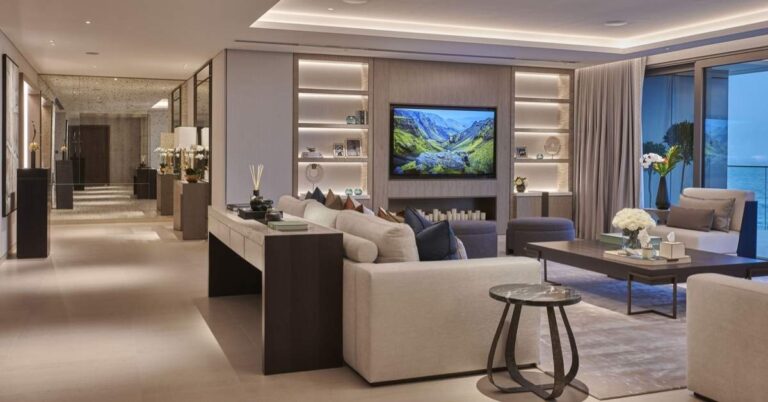
17+ Coastal Color Palette Ideas That Make Any Room Feel Calm, Airy
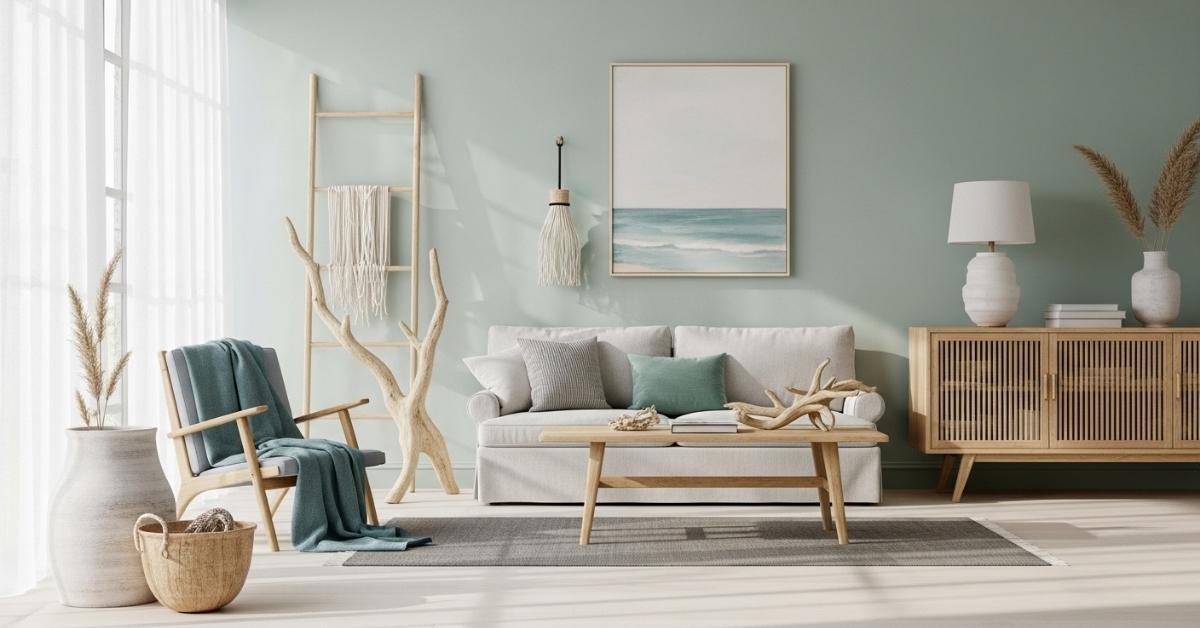
If your space currently feels heavy, busy, or just… unresolved a coastal palette is one of the most forgiving ways to reset it. The tones are naturally harmonious, they reflect light well, Coastal Color Palette and they work across furniture styles from modern to traditional. You’re not locked into a “beach house” look. You’re just working with colors that happen to behave well together.
This is especially useful if you’re working with a smaller space, a room with limited natural light, or an open-plan layout where you need colors that flow room to room without clashing. These 17 ideas cover everything from full room palettes to single-wall accents practical starting points whether you’re painting, decorating, or simply refreshing what you already have.
Soft White Walls with Warm Sand Accents
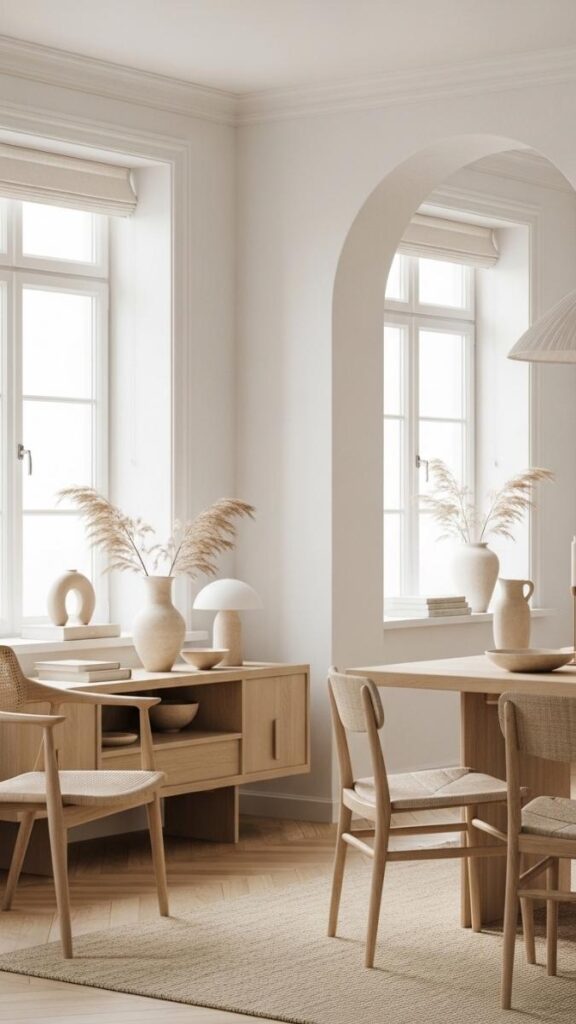
White is the obvious starting point for coastal interiors, but the version that actually works isn’t bright or cool; it’s slightly warm, with undertones that lean cream or greige. Pair it with sand-toned accents: a jute rug, linen throw pillows in warm beige, or a wooden console in a light natural finish.
The combination feels clean without being clinical. What makes this setup particularly effective is the way warm sand tones prevent white walls from reading as stark or empty, especially in rooms without abundant natural light. Works best in living rooms and bedrooms where a calm, settled atmosphere matters most.
Pale Blue and White for an Open, Airy Layout
Pale blue think sky after a cloud passes, not royal blue is probably the most versatile color in any coastal palette. It reads as neutral in low light and luminous in direct sun.
Against white trim, white bedding, or white shiplap, it creates a sense of visual openness that’s hard to replicate with other colors.
The spatial effect is real: pale blue walls genuinely make a room feel larger because the eye reads them as receding rather than closing in. I’ve noticed this works particularly well in bedrooms with east-facing windows, where morning light shifts the blue toward a softer, almost lavender tone that feels naturally calming.
Seafoam Green as an Accent Wall in a Neutral Room
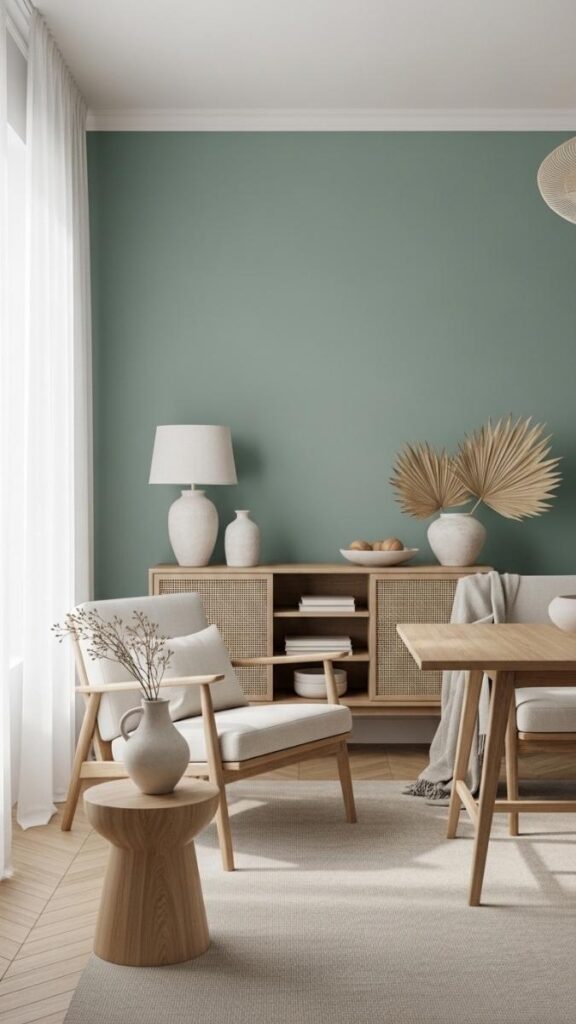
Seafoam is having a moment in 2026 and honestly, it deserves it. It sits right between green and blue, which makes it surprisingly easy to layer with both warm neutrals and cooler tones. Used on a single wall behind a sofa or bed, it adds color without commitment.
The key is keeping the surrounding palette very quiet: white, off-white, warm wood, and maybe a touch of terracotta as a contrast note. Seafoam does the visual work so the rest of the room doesn’t have to.
This is a particularly good option for renters who can paint one wall and still create a strong, cohesive look.
Warm White and Driftwood Grey for a Muted Coastal Feel
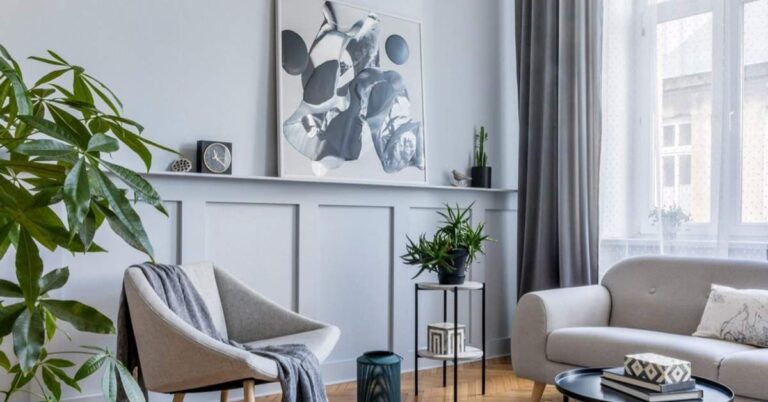
Not every coastal palette needs to read bright or summery. A combination of warm white and driftwood grey creates something quieter, more like a Nordic coastal look than a Florida beach house.
The grey reads as worn, natural, and grounded rather than cold. It works especially well with linen, raw cotton, and unfinished wood textures.
This palette is particularly well-suited to open-plan spaces because it flows easily between zones without requiring you to commit to one dominant tone throughout.
Navy Blue with White and Natural Wood for a Layered Look
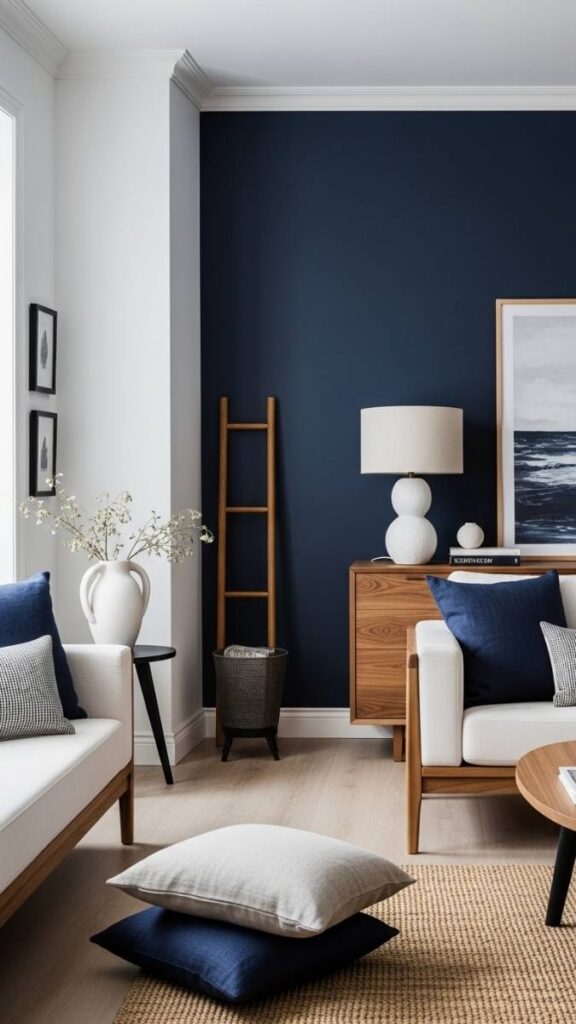
Navy might seem too bold for a coastal palette, but used correctly, it grounds a room beautifully. The trick is treating it as an anchor rather than an all-over color navy lower cabinets in a kitchen, a deep blue sofa in a light-filled living room, or a statement wall behind a bed.
When balanced with white above and natural wood below, the layering creates a sense of depth that feels genuinely sophisticated. This setup works best in rooms with decent ceiling height, where the navy doesn’t compress the space.
Read More About: 74+ Small Coastal Setup Ideas That Make Any Room Feel Like a Beachside Retreat
Sandy Beige and Terracotta for a Warm Coastal Twist
The coastal palette doesn’t always have to lean blue. Sandy beige with terracotta accents pulls in the warmth of sun-baked earth and works particularly well in spaces that get warm afternoon light; it feels rich rather than washed out.
This combination is rising in popularity as people move away from the cooler, greyed-out coastal look toward something with more warmth and texture. Use terracotta in small doses: a ceramic lamp base, a few cushions, a woven basket. It adds dimension without turning the room orange.
Dusty Blue and Linen for a Relaxed, Organic Setup
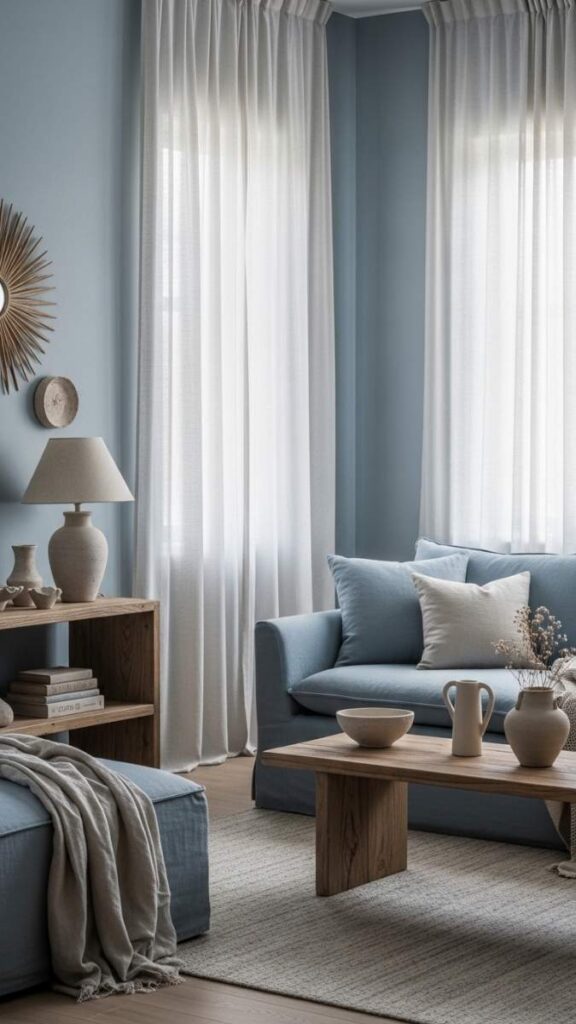
Dusty blue is a softer, more grown-up version of classic sky blue; it has a slight grey or sage undertone that makes it feel less obvious and more layered. Against natural linen (undyed or barely-there beige), it creates a bedroom or sitting room that feels genuinely restful without looking styled.
The organic texture of linen does a lot of the heavy lifting here; it softens the whole palette and keeps it from feeling flat. This is one I’d actually recommend trying first if you’re new to working with color, because the combination is almost impossible to get wrong.
Crisp White with Black Accents and Sea Glass Tones
This is a more modern take on coastal color white and black as the structural tones, with sea glass green or aqua used as the accent color. It works well in kitchens and bathrooms where there’s already a lot of hard surface material.
The black grounds the white and prevents the space from feeling overly soft, while the sea glass accent reads as a nod to coastal without being literal. Hardware is a surprisingly easy entry point here: brushed black handles on white cabinets with a sea glass tile backsplash is enough to shift the whole room’s feel.
Pale Grey-Green Walls for a Subtle Coastal Shift
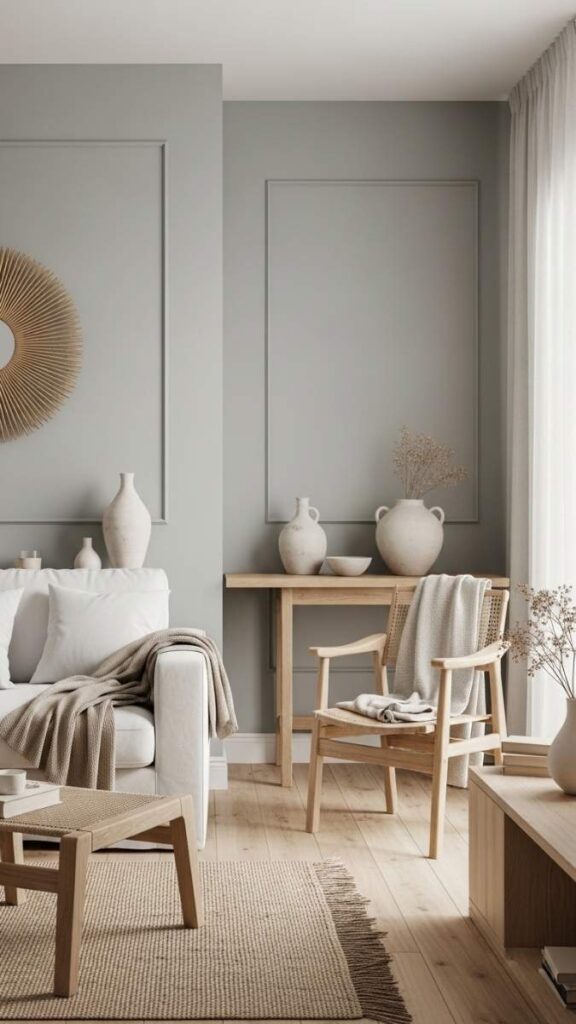
Grey-green sits in a quiet corner of the color wheel that most people don’t think to use but it’s one of the most livable tones in any coastal palette.
It has enough green to feel organic, enough grey to read as neutral, and it doesn’t compete with furniture or art the way stronger colors do. Against white trim and cream upholstery, it creates a room that feels like it belongs somewhere near the water without looking themed.
This palette works in almost any room and pairs well with both warm and cool lighting.
Read More About: 61+ Small Apartment Ideas That Make Every Square Foot Work Harder
Bright White Ceilings with Coastal Blue Lower Walls
The two-tone approach white above, color below is a smart move in rooms where you want color but don’t want the walls to close in. In a bathroom or bedroom, coastal blue on the lower two-thirds of the wall with white above creates a sense of airiness that a full-color wall wouldn’t.
It also draws the eye around the room horizontally, which makes a narrow space feel wider. This is a particularly practical option for smaller rooms where a full color commitment might feel overwhelming.
Warm Coral and White for a Sunlit Coastal Effect
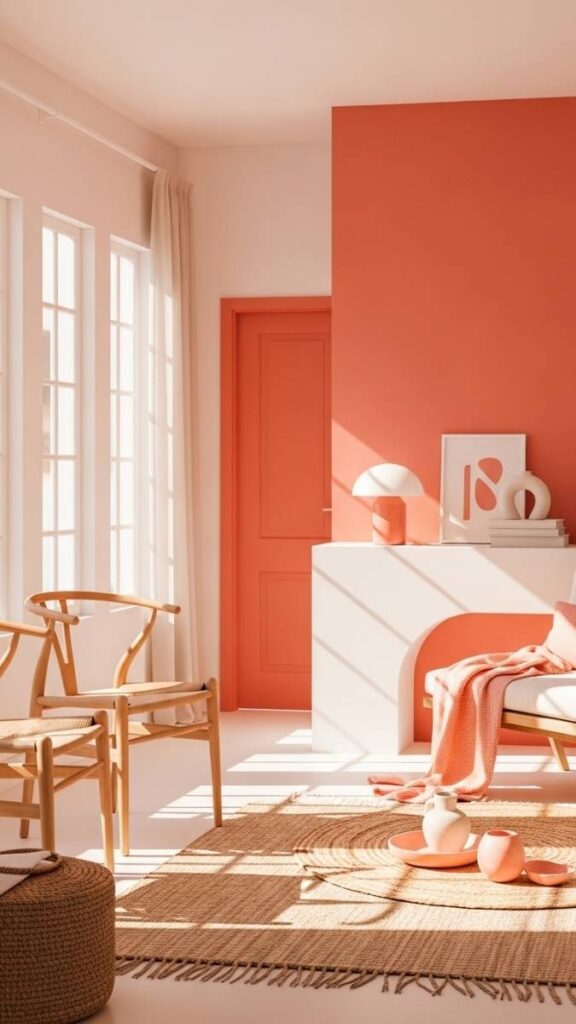
Coral is underused in coastal palettes most people skip straight to blue but it captures the warmth of early morning light on water better than almost any other color.
Used in a sun-facing room or breakfast nook, coral walls create a space that feels genuinely energizing in the morning and warm in the afternoon.
The key is keeping it balanced with a lot of white and natural materials; too much coral tips quickly into overwhelming. This palette works best in smaller, functional rooms rather than main living areas.
Soft Sage and White for an Earthy Coastal Look
Sage green has been trending for a few years now, but it earns its place in coastal palettes specifically because of how well it connects interior spaces to the outdoors.
Paired with white and natural wood, it creates a room that feels grounded, organic, and easy to live in. Unlike the cooler blue-based coastal tones, sage reads warm in lamplight which makes it a strong choice for bedrooms where you want the color to work in both daylight and evening.
Bleached Wood Tones with Ocean Blue for Texture and Depth
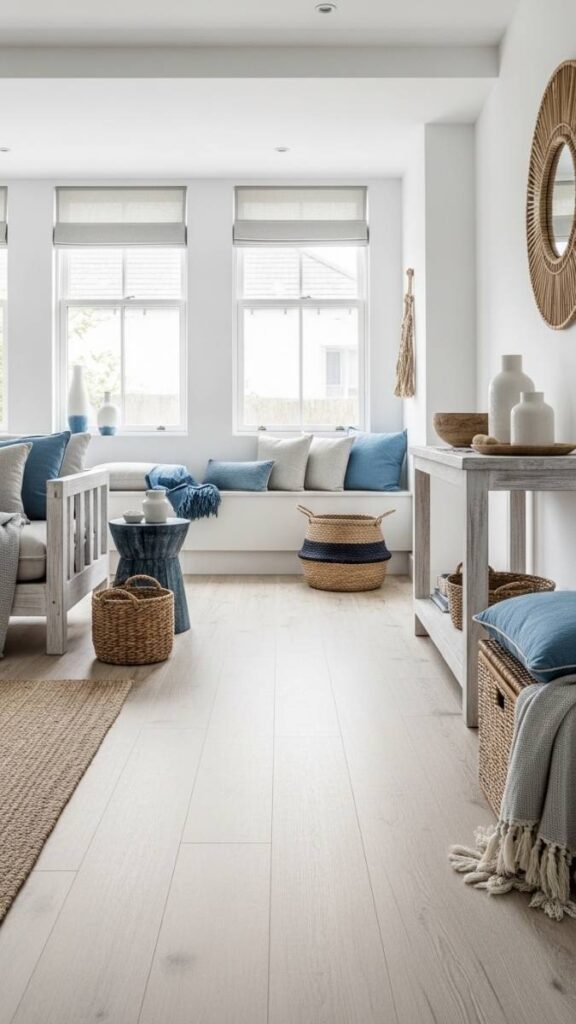
Texture matters as much as color in a coastal palette and bleached or whitewashed wood brings in the natural, worn quality that keeps the palette from feeling too polished.
Against ocean blue accents (a single chair, a throw, a rug border), the result is a room with real visual depth that still reads as light and open.
The bleached wood prevents the blue from dominating and gives the palette a sun-faded, relaxed quality that’s difficult to fake with other materials.
Read More About: 60+ Light Blue Bathroom Ideas That Make Small Spaces Feel Airy and Intentional
All White with Layered Blue Textiles for a Classic Feel
If you want a coastal palette but aren’t ready to commit to a paint color, this is the lowest-friction approach: keep the walls and larger furniture in white, then build the palette entirely through textiles.
Blue cushions, a blue-and-white striped rug, a navy throw layered together, they create a cohesive look that can be easily updated or switched out. In my experience, the key is using at least three different shades of blue rather than repeating the exact same tone, which creates variation and depth without requiring anything structural.
Muted Aqua and Warm Beige for a Balanced Mid-Range Palette
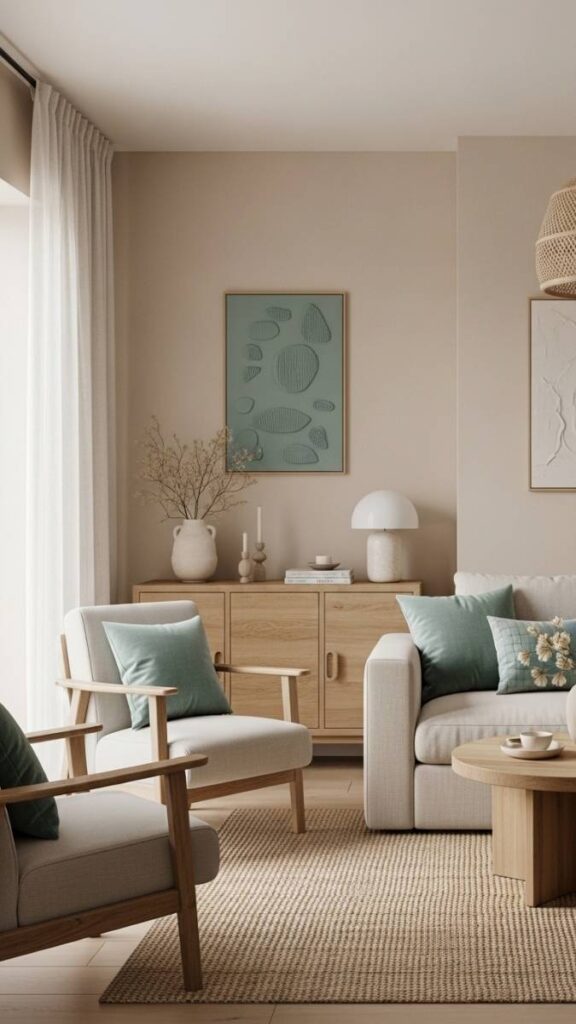
Muted aqua sits right in the middle of the coastal palette, not as soft as sky blue, not as intense as teal. Its warmth comes from the slight yellow undertone, which makes it one of the easier coastal colors to balance with warm furniture and lighting.
Against warm beige chairs and a white table, it creates a dining space that feels collected and intentional rather than themed. This palette is particularly effective under warm pendant lighting, where the aqua shifts toward a more golden, lived-in tone.
Ice Blue and Marble White for a Modern Coastal Aesthetic
Ice blue barely-there blue with almost white undertones paired with marble gives a coastal palette a more elevated, modern quality. It works especially well in bathrooms and kitchens where hard surfaces dominate.
The marble adds movement and pattern without adding color, and the ice blue keeps the space feeling cool and clean. This combination is gaining traction in 2026 as people move away from the warmer, more textured coastal aesthetic toward something cleaner and more restrained.
Charcoal, White, and Coastal Blue for a Moody Coastal Approach
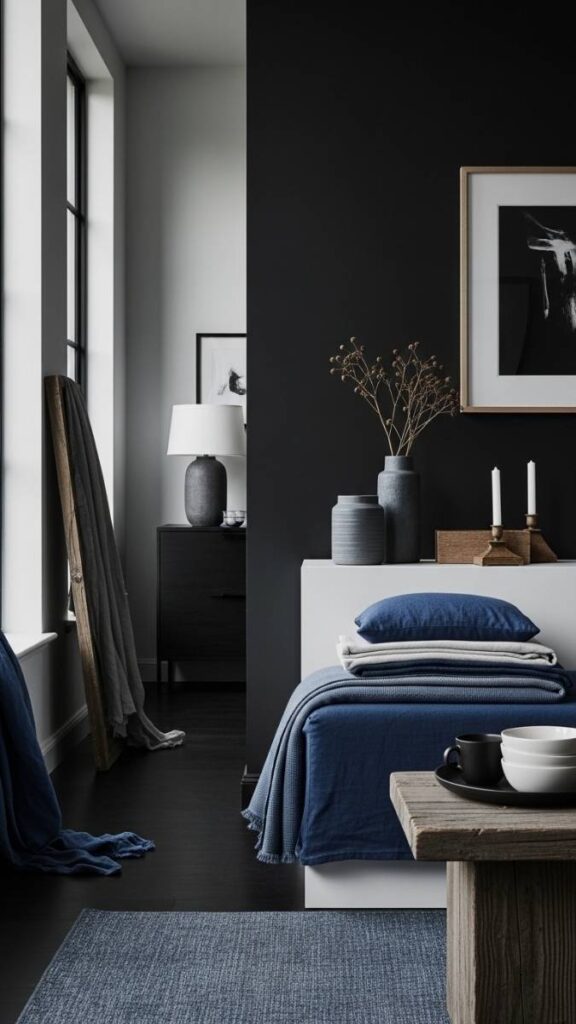
Not every coastal palette has to feel light and breezy. A moody version of charcoal walls, white trim, deep coastal blue furniture creates a room that feels sophisticated, dramatic, and still connected to water-based color references.
This works best in rooms with limited natural light that you want to feel cozy and rich rather than trying to compensate with brightness. The coastal blue sofa against charcoal walls creates a jewel-like quality that works especially well with warm, layered artificial lighting.
What Actually Makes a Coastal Color Palette Work in a Real Home
The colors alone don’t do it the balance between them does. A coastal palette falls apart when one tone dominates or when the material choices work against the color story. Here’s what to get right:
Proportion matters more than color choice.
A room can use the right coastal colors and still feel off if the ratios aren’t working. A general rule: 60% neutral (white, sand, greige), 30% mid-tone coastal color (pale blue, seafoam, sage), and 10% accent (navy, terracotta, coral). This keeps the palette balanced without being monotonous.
Lighting changes everything.
Most coastal colors are highly sensitive to light temperature. A pale blue that reads airy in a north-facing room can feel cold and grey under warm bulbs. Test paint samples in the actual room across different times of day before committing.
Texture carries the palette.
Coastal color palettes work because of how the materials reinforce the mood linen, jute, raw wood, and woven cotton. Swapping those out for synthetic fabrics or high-gloss surfaces changes the feel even if the colors stay identical.
Stick to a maximum of three tones.
The most effective coastal palettes are built on a base, a mid, and an accent. More than three working colors at once tends to create visual noise that works against the calm, settled atmosphere the palette is trying to achieve.
Coastal Color Palette Comparison Guide
| Palette Combination | Best Room | Space Type | Mood | Difficulty |
| Pale blue + white | Bedroom, living room | Any size | Airy, calm | Easy |
| Navy + white + wood | Kitchen, dining | Medium-large | Sophisticated | Moderate |
| Seafoam + warm neutral | Living room, bedroom | Small-medium | Fresh, relaxed | Easy |
| Sandy beige + terracotta | Bedroom, lounge | Any | Warm, earthy | Easy |
| Dusty blue + linen | Bedroom | Small-medium | Organic, restful | Easy |
| Charcoal + coastal blue | Living room | Medium-large | Moody, dramatic | Moderate |
| Ice blue + marble | Bathroom, kitchen | Any | Modern, clean | Moderate |
| Sage + white + wood | Bedroom, study | Any | Grounded, organic | Easy |
Common Coastal Color Palette Mistakes That Make a Room Feel Off
Using too many coastal references at once.
When the walls are blue, the cushions have shells, the rug is striped, and the art has waves, the room stops feeling coastal and starts feeling like a hotel gift shop. A coastal palette works best when it’s subtle enough that someone could walk in and feel calm without immediately thinking “beach house.”
Choosing the wrong white.
Coastal palettes rely on white as a base tone, and the wrong white can disrupt the whole combination. Cool whites (with blue or grey undertones) work with blue-heavy palettes. Warm whites (cream or soft ivory undertones) work better with sandy, terracotta, or sage combinations. Using a stark bright white with warm coastal tones creates a disconnect that’s hard to resolve with accessories.
Ignoring floor tone.
Dark wood floors pull a pale coastal palette down visually, making the room feel heavier than intended. If you can’t change the floors, compensate with a large, light-toned rug and keep the lower portion of the palette slightly warmer to bridge the gap.
Over-accessorizing in the accent color.
If your accent is navy, it should appear in two or three places, not twelve. Overusing the accent color flattens the palette and removes the contrast that makes it interesting in the first place.
Skipping the transition between rooms.
In open-plan layouts, coastal color palettes can feel disjointed if each room gets its own distinct shade without a connecting thread. Pick one tone, usually the neutral base that carries through the whole space, and let the accent colors shift room by room.
FAQ’s
What colors make up a coastal color palette?
The coastal color palette is typically built from soft blues, warm whites, sandy neutrals, seafoam greens, and occasional deeper accents like navy or terracotta. The defining quality is low saturation; the tones are muted and light-reflective rather than bold or vivid, which creates the calm, open atmosphere associated with coastal spaces.
How do I use a coastal palette in a room without making it look like a beach theme?
Focus on the colors and materials rather than literal coastal motifs. Pale blue walls, linen upholstery, and natural wood furniture create a coastal feel without a single shell or anchor in sight. The palette does the work; the decorative references are optional.
What’s the best coastal color for a small room?
Pale blue and warm white are the most effective combination for small rooms because both tones reflect light and create a sense of visual openness. Avoid deep coastal colors like navy as a dominant tone in compact spaces; use them as accents instead.
Can I use a coastal color palette in a room with no natural light?
Yes, but you’ll need to adjust the tone selection. In low-light rooms, lean toward warmer coastal tones: sandy beige, warm white, dusty blue with yellow undertones rather than cool pale blues or grey-based tones, which can feel flat or cold without natural light. Warm artificial lighting helps significantly.
Is a coastal palette the same as a Hamptons-style palette?
They overlap but aren’t identical. A Hamptons palette tends to be slightly more structured crisp white, navy, natural wood, and classic preppy accents. A broader coastal palette is more flexible and can include softer, warmer, or more organic tones like seafoam, sage, and terracotta.
How many colors should a coastal palette include?
Three working tones is the practical limit for most rooms: a neutral base (white, sand, or warm grey), a mid-range coastal color (pale blue, seafoam, sage), and one accent (navy, terracotta, coral). Using more than three active colors tends to create visual noise that works against the calm quality the palette is trying to achieve.
What materials work best with a coastal color palette?
Linen, undyed cotton, jute, rattan, raw or bleached wood, and unglazed ceramics all reinforce a coastal palette because their natural, low-sheen surfaces complement the muted tones. High-gloss or synthetic materials tend to flatten the palette and remove the organic warmth that makes it work.
Conclusion
A coastal color palette is one of the most practical choices in home decor precisely because of its restraint. The tones are designed to work together, reflect light well, and create a background that supports how you actually use a room rather than competing with it. Even small adjustments repainting one wall, swapping out cushions, adding a jute rug can noticeably shift a space toward that calmer, more open quality these palettes are known for.
Start with the combination that fits your existing furniture and light conditions rather than rebuilding the room around a new palette. One or two deliberate color choices, applied consistently, will do more for your space than an overhaul. Try a single pale blue wall, introduce linen in a warm neutral, and see how the room responds before going further.