15+ DIY Aesthetic Decor Ideas That Actually Look Good in Real Homes
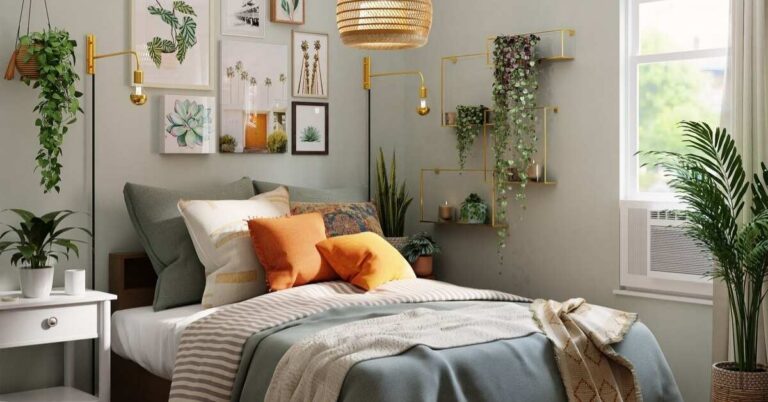
When a room feels generic, it’s rarely about what’s missing, it’s about what hasn’t been made personal yet. DIY aesthetic decor is having a serious moment in 2026, not because it’s trendy, DIY Aesthetic Decor Ideas but because people are finally tired of spaces that look like everyone else’s apartment. The shift is toward handmade, textured, and layered rooms that feel lived-in and considered at the same time.
If you’re working with a tight budget, a rental, or just a space that feels unfinished despite having all the “right” furniture, this list is for you. These ideas don’t require a workshop or a Pinterest-perfect setup to pull off. Most of them work in small apartments, awkward rooms, and spaces where permanent changes aren’t an option.
What makes DIY decor actually work honestly is restraint. One well-executed handmade piece in a room carries more visual weight than five rushed ones. This list focuses on ideas that are specific, buildable, and grounded in how real rooms actually look and function.
Washi Tape Wall Grid for a Minimal Bedroom Gallery
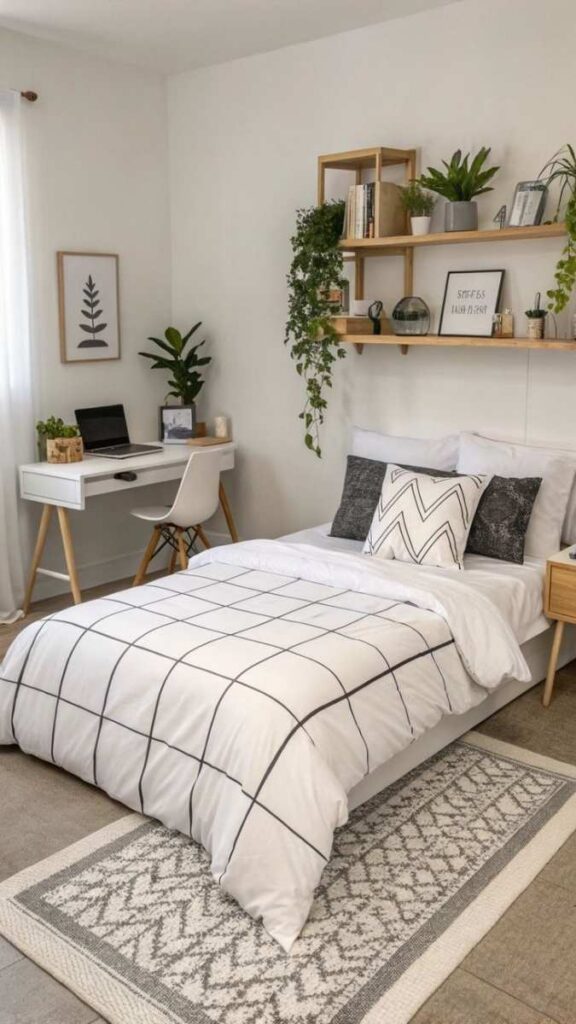
A grid made from black washi tape costs next to nothing and creates a clean, graphic focal point without drilling a single hole. Lay out a 3×3 or 4×4 grid of equal squares directly on the wall, then tuck small prints, polaroids, or postcards inside each cell. The structure does the visual heavy lifting; the items inside don’t need to be perfectly matched to feel cohesive.
This works especially well in rentals or studio bedrooms where the walls are white and the space needs definition without commitment. It solves the “empty wall that’s too small for a proper gallery” problem without requiring frames or hardware.
Painted Terracotta Pots Grouped on a Windowsill
Plain terracotta pots painted in muted tones, dusty rose, sage, warm cream, or slate grouped in odd numbers create a simple still-life effect on any windowsill or shelf. The key is keeping the palette tight two or three colors max, with variation in pot size rather than color.
Use matte paint for a more organic, handmade feel rather than glossy finishes that can look craft-fair rather than considered. In my experience, this works best when the pots are actually different heights; a short cluster of same-size pots loses the visual rhythm. This is one of the easiest setups for anyone who wants greenery without the chaos of mismatched planters.
DIY Linen Wall Hanging with Driftwood Rod
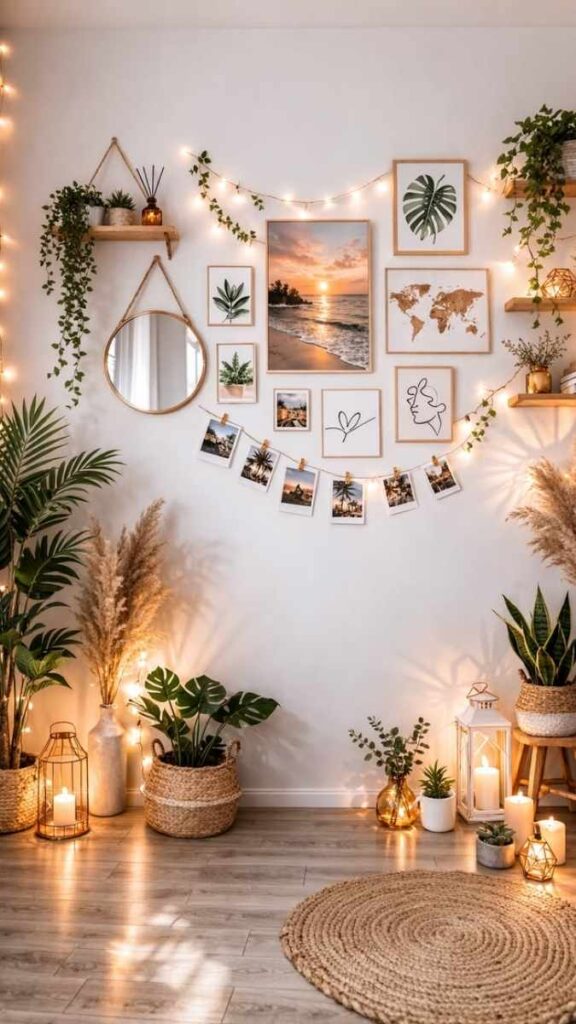
Cut a piece of raw linen or canvas into a simple rectangular panel, fray the bottom edge slightly for texture, and hang it from a piece of driftwood using twine. The result is a large-format wall piece that adds warmth, texture, and height to a room without the cost of framed art. The linen’s natural weave catches light differently throughout the day, which gives the wall more depth than a flat print would.
This setup works particularly well above a sofa or bed where the wall scale demands something substantial but the budget doesn’t allow for oversized framed pieces. It also solves the “blank wall above furniture” problem that makes rooms feel unfinished.
Crate Shelf Stacked as a Bedside Table Alternative
Two wooden crates stacked vertically, one facing forward for open storage, one facing up as a flat surface create a functional, textural nightstand alternative that costs a fraction of the real thing. Sand them lightly and apply a single coat of diluted white paint for a washed effect, or leave them raw for a rougher, more natural feel.
The open-face compartment holds books, a charging cable, or a small candle without everything piling on one surface. This is especially practical in small bedrooms where a traditional nightstand takes up floor space the room doesn’t have. It’s also fully renter-friendly and movable if the layout changes.
DIY Floating Shelf with Pipe Brackets
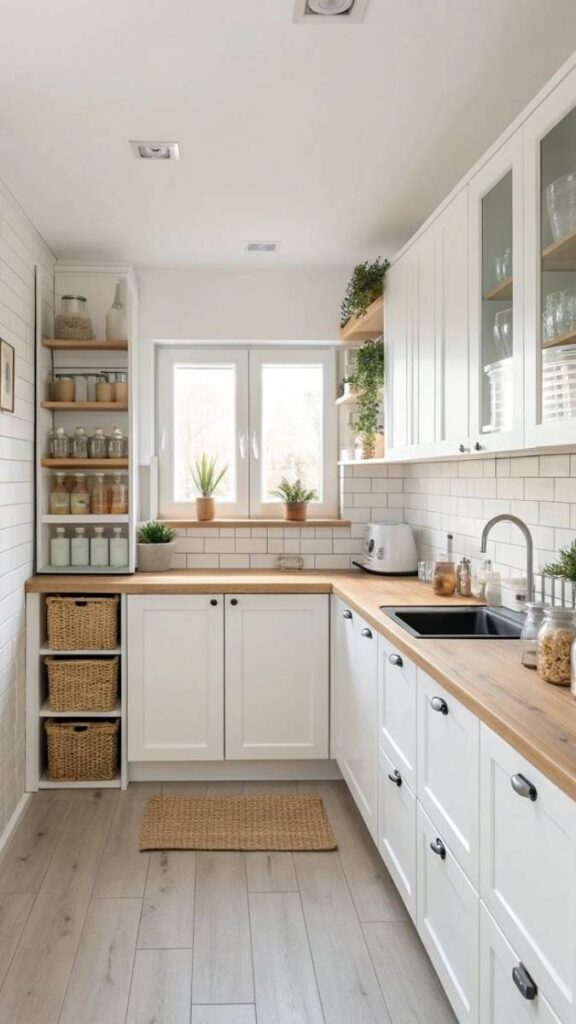
A wooden plank cut to size at any hardware store mounted on pipe-style brackets creates an industrial-modern floating shelf that feels more deliberate than standard box shelves. The contrast between the warm wood grain and the matte black metal is doing most of the aesthetic work here.
Keep the shelf display sparse three to five objects max, with varying heights and at least one organic element (a plant, a stone, a ceramic piece). In a living room, this works best placed at eye level near a sofa or reading chair, where it functions as both storage and a focal point. The bracket style also makes it easy to find the right size for narrow or awkward wall sections.
Read More About: 88+ DIY Home Lighting Ideas That Actually Change How Your Space Feels
Gallery Wall with Mismatched Frames in One Color
The mismatched gallery wall only feels cohesive when the frames share one unifying element and paint is the easiest fix. Collect thrifted frames in various sizes, paint them all the same matte color (black, white, or warm brass), and arrange them asymmetrically across a wall. The visual unity of the color makes the mix of sizes feel intentional rather than random.
This approach works in hallways, above a console table, or along a staircase wall anywhere that needs layered visual interest without dedicated lighting or artwork investment. The problem it solves is the mismatched-frame look that reads as unplanned rather than curated.
Rope Wrapped Vase or Bottle Cluster
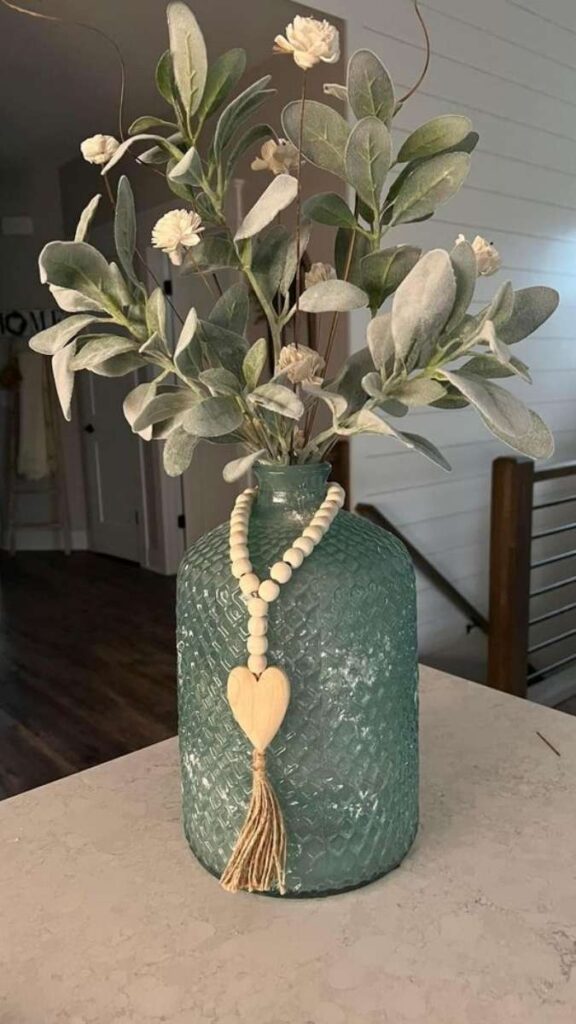
Wrap old wine bottles or basic glass vases in natural rope or jute twine, securing each layer with a small dot of hot glue. Cluster three or five together on a shelf or console, varying the heights by using different bottle sizes. Add dried pampas stems or eucalyptus to one or two and leave the others empty; the variation in texture and height creates a still-life grouping that reads as collected rather than purchased.
This is a practical use for bottles that would otherwise be discarded, and the result holds up well in any neutral or earth-tone room. The rope texture also adds warmth that purely smooth surfaces tend to lack.
DIY Macramé Shelf with Cotton Cord
A simple macramé shelf made with thick cotton cord, a wooden dowel, and a small piece of wood as the shelf base takes about two hours and holds a surprising amount of visual weight on a plain wall. The knotted cord beneath the shelf adds softness and handmade texture that no store-bought bracket replicates.
This works well in bedrooms, nurseries, or small living rooms where wall space is limited and floor space can’t be sacrificed for furniture. Mount it at mid-wall height for a plant or candle display, or higher up for purely decorative objects. The natural cord tones work with almost any neutral palette without competing with other elements.
Concrete-Effect Paint on a Plain Pot or Tray
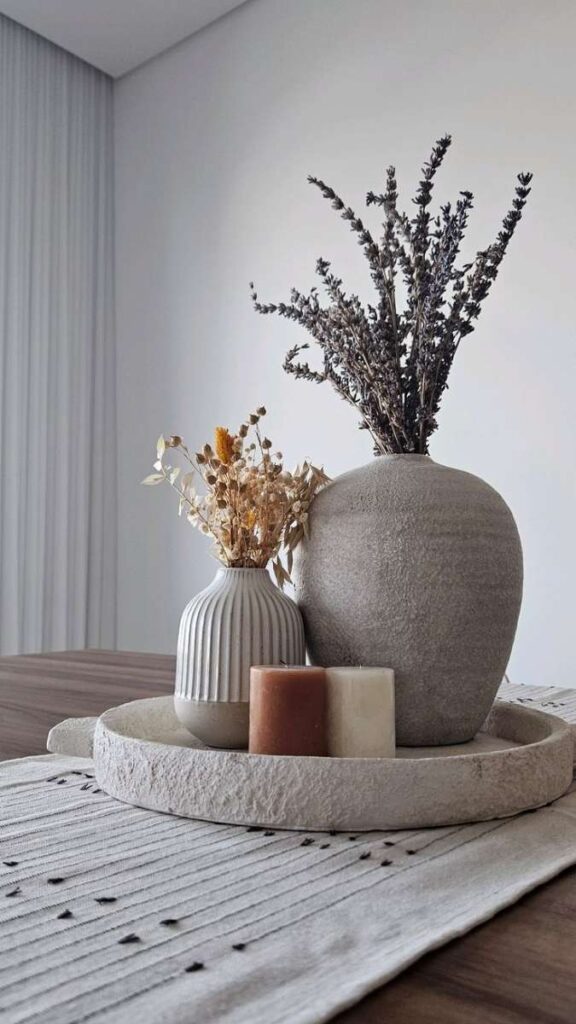
Mixing gray craft paint with a small amount of water and applying it in layered, slightly uneven strokes over a ceramic or plastic pot creates a convincing concrete texture without the weight or cost of actual concrete. A light dry-brush pass with white paint once the base dries adds the variation in tone that makes concrete look realistic rather than flat.
The result works well as a planter, a small tray for an entryway catch-all, or a decorative vessel on a bathroom shelf. This is one I’d recommend trying first if you want to experiment with a more industrial or minimal aesthetic: the materials cost under $5 and the technique is genuinely forgiving of imperfection.
DIY Pegboard Organizer as a Functional Wall Feature
A pegboard panel painted in a muted tone like terracotta, sage, or warm gray mounted on a kitchen wall, home office corner, or craft area becomes both a storage solution and a visual element. The key is treating it like a display rather than just a utility mix in a small plant hanger, a framed print, or a few decorative hooks alongside the functional ones.
The pegboard grid creates an orderly background that makes even a busy collection of objects look organized. This is especially useful in studio apartments or small kitchens where counter space and drawer space run out quickly. The spacing flexibility of peg layouts means the arrangement evolves without having to remount anything.
Dried Botanical Frames Made at Home
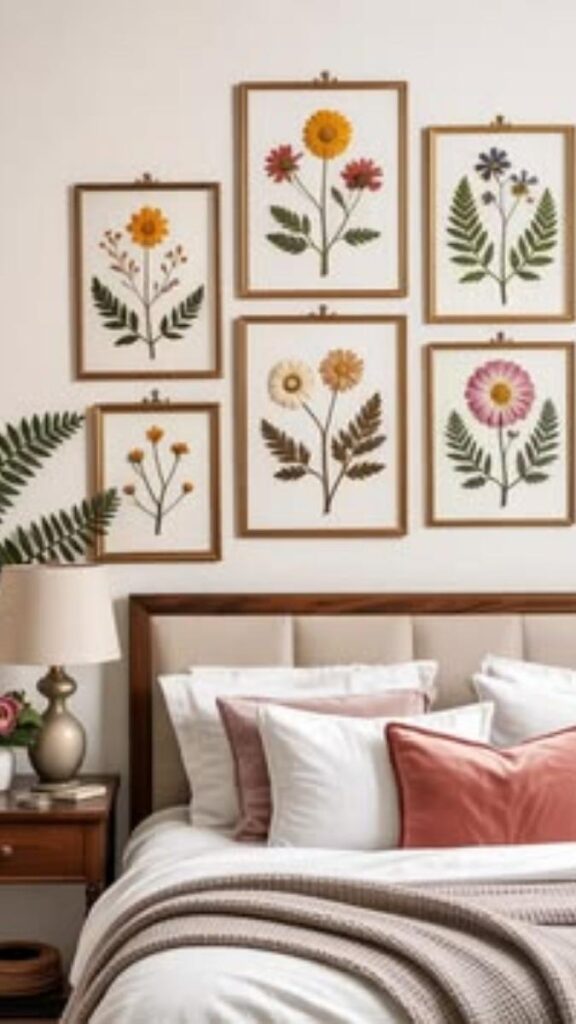
Press flowers, ferns, or eucalyptus branches between heavy books for a week, then arrange them on a sheet of watercolor paper and frame them in simple, inexpensive frames. The result is original wall art that costs almost nothing and carries a quiet, organic quality that mass-produced botanical prints can’t quite replicate mainly because the imperfections are part of the aesthetic.
A pair of these hung side by side with an inch of space between them works better than a single piece; the repetition gives the setup more presence on the wall. This approach works in bedrooms, bathrooms, or reading corners where the mood is calm and the scale is smaller. It also solves the “I need art but can’t justify the cost” problem elegantly.
Stenciled Accent Wall in a Subtle Pattern
A stenciled wall done in a tone-on-tone finish, meaning the pattern is the same color family as the base wall but slightly darker or lighter creates depth and texture without overwhelming a small room. The trick is using a foam roller for even coverage and repositioning the stencil carefully at each pass.
Unlike wallpaper, this is paintable over when you move or redecorate. It works particularly well on the wall behind a bed or sofa, where one defined accent surface grounds the rest of the room’s layout. The pattern adds visual interest that plain paint can’t provide, without committing to bold color.
Read More About: 87+ Apartment Decor Ideas That Make Small Spaces Feel Bigger
DIY Bookshelf Styling with Color Blocked Spines
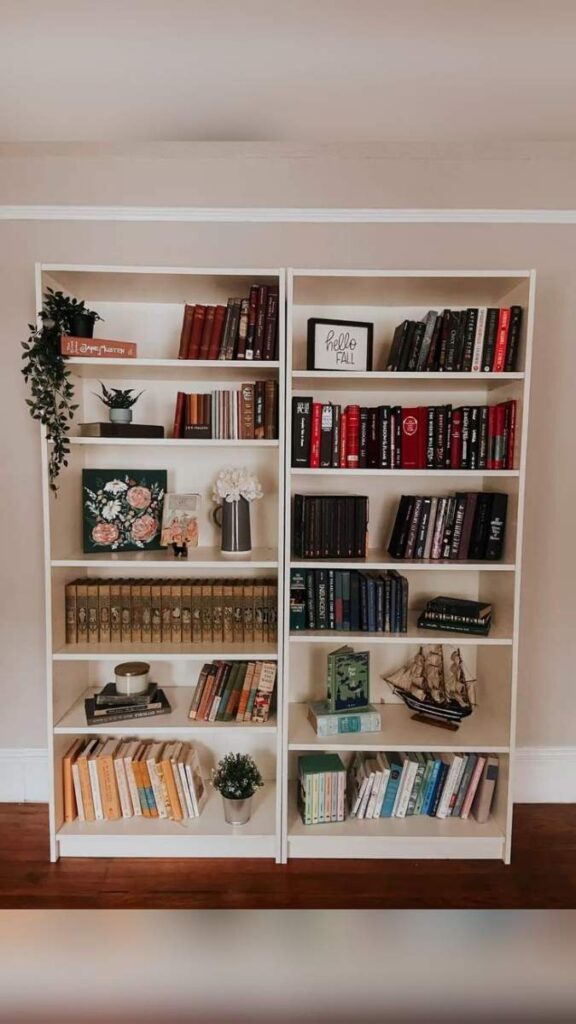
Rearranging existing books by color grouping warm tones, neutrals, and cool tones in blocks across shelves instantly changes how a bookshelf reads in a room. Add one small plant, one small ceramic piece, and leave one section slightly looser than the others to avoid the overly rigid look.
The color-blocking creates a graphic element on the wall without any purchasing required. This approach works in any room with a bookshelf and takes about 20 minutes to execute which makes it one of the highest-impact, zero-cost DIY setups on this list. The practical benefit is that it also forces you to notice which books are actually worth keeping visible versus what’s just taking up space.
Fabric-Covered Pin Board as Bedroom Mood Wall
Cover a corkboard in a piece of linen, canvas, or boucle fabric, pulled taut and stapled to the back. Hang it above a desk or alongside a mirror and use it as a rotating display for photos, small prints, notes, and dried flowers. The fabric surface looks significantly more finished than bare cork and ties the board into the room’s textile palette.
In a bedroom that doubles as a workspace, this solves the visual clutter problem: the board contains the “active” display items so the rest of the room can stay cleaner. It’s also one of the few DIY ideas that genuinely improves with regular updating rather than staying static.
Hanging Planter from Ceiling Hook with Trailing Plant
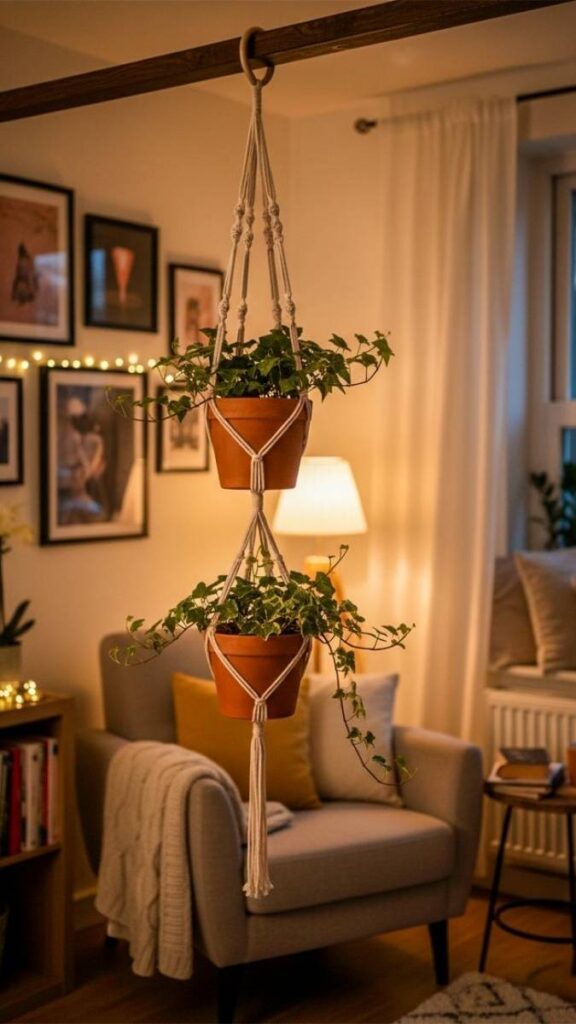
A ceiling-mounted hook with a simple rope or macramé planter holding a trailing plant adds vertical interest to corners that furniture can’t reach. Trailing plants like pothos, string of pearls, or ivy create a downward movement that draws the eye upward and makes ceilings feel taller which matters especially in compact rooms where low furniture can make the space feel compressed.
The installation requires only one ceiling hook and a stud finder, making it one of the more minimal DIY setups in terms of tools. This is especially effective in living rooms or reading corners where the ceiling height is an asset that’s otherwise being ignored.
DIY Tray Styling for a Coffee Table or Ottoman
A wooden or painted tray placed on a coffee table or storage ottoman creates a defined zone within the surface which visually reduces clutter even if the number of objects stays the same. Style it with three items in varying heights: something tall (a candle or slim vase), something flat (a small book or coaster stack), and something organic (a stone, a small succulent, or a dried stem).
The tray itself can be DIYed from a cheap unfinished wood tray painted in a matte tone. In rooms where the coffee table is also used as a footrest or work surface, the tray keeps the decorative grouping intact even when the rest of the table is in use.
Painted Ombre Wall Behind a Bed or Sofa
An ombre wall blending two close tones from top to bottom using a wide brush and a feathering technique at the midpoint creates a gradient backdrop that adds depth without hard color commitment. The effect works best when the two tones are within the same color family (warm white into warm blush, or pale sage into deeper sage), keeping the room’s palette cohesive.
Unlike a two-tone block wall, the gradient reads as softer and more atmospheric, which suits bedrooms particularly well. It solves the “I want color but I’m scared of committing to it” problem by keeping the transition subtle enough to feel intentional without dominating the space.
Read More About: 86+ DIY Hidden Storage Ideas That Keep Your Home Clean, Calm,
Stone or Pebble Tray for Bathroom Counter
Collect flat river stones or purchase a small bag of polished pebbles and arrange them in a shallow dish or tray on a bathroom counter. Nestle a soap dispenser, a small plant, or a single candle into the grouping.
The texture contrast between smooth pebbles and ceramic or glass objects creates a spa-adjacent quality that’s purely optical, no renovations, no new fixtures. This is one of the simplest DIY aesthetic ideas and one of the most underused in bathroom spaces, which tend to be styled with less intention than the rest of the home. It’s also completely removable, making it ideal for shared bathrooms or rentals.
DIY Ladder Shelf from Reclaimed Wood
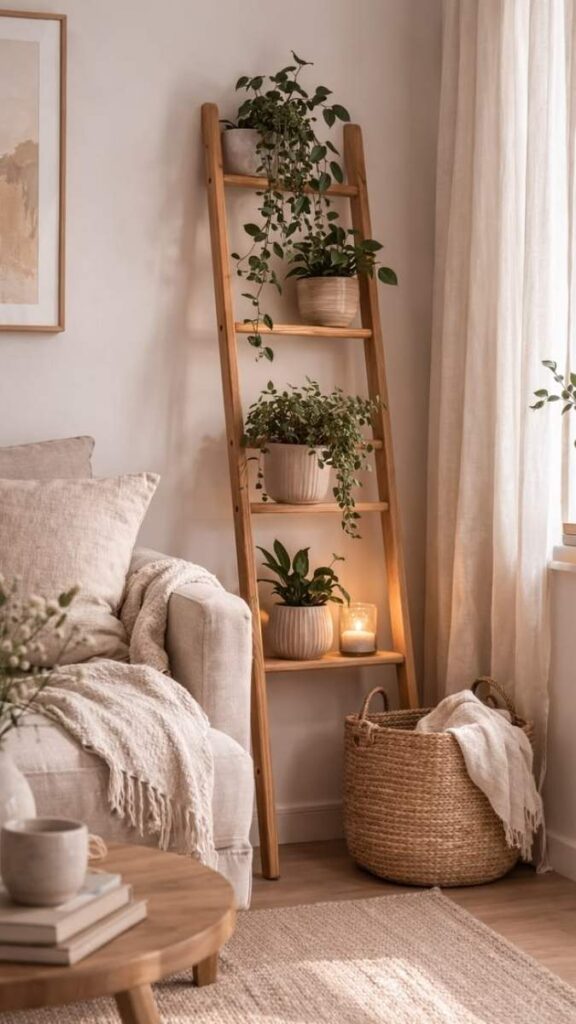
A leaning ladder shelf with two long planks angled together with three or four horizontal rungs requires basic woodworking and no wall mounting, which makes it renter-friendly and movable. The leaning format takes up minimal floor space while offering multiple display levels for books, baskets, trailing plants, and small objects.
In living rooms, it works best in corners where the angled profile doesn’t interrupt foot traffic. In bedrooms, it functions as a wardrobe extension, a place for folded throws, bags, or a plant that a traditional shelf couldn’t accommodate. Use reclaimed wood for a more textured, lived-in quality than new lumber.
Chalk-Painted Cabinet or Dresser Refresh
Chalk paint requires no sanding, no primer, and minimal prep which makes it genuinely one of the most accessible DIY furniture updates available. Apply two coats to a tired dresser or side cabinet, switching out the hardware for simple black bar pulls or ceramic knobs. The matte finish that chalk paint produces is forgiving of brush strokes and actually improves in some cases with light distressing at the edges.
This is especially worth trying on secondhand furniture that has good bones but outdated finishes. The transformation changes how the whole room reads around it. A chalk-painted piece in a neutral or muted earthy tone grounds a room that otherwise feels too light or unanchored.
DIY Sconce Style Candle Holder from Branch
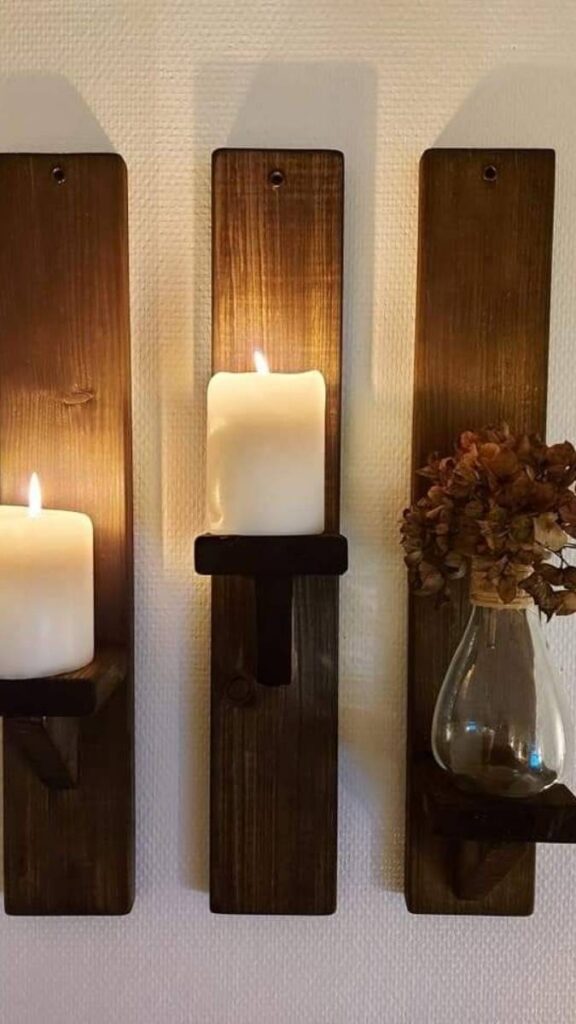
Find a straight branch about 18–24 inches long, let it dry completely, then mount it horizontally on the wall using two small L-brackets painted to match the wall. Add simple clip-on candle holders or small taper cups at either end.
The result is a wall-mounted candle display that has an organic, almost Scandinavian quality raw material, minimal hardware, and warm light. This works especially well in bedrooms or dining areas where ambient lighting is part of the room’s function. The branch element adds the natural texture that many modern interiors lack without introducing anything that needs watering or regular maintenance.
Painted Geometric Pattern on a Plain Floor Rug
A plain jute or canvas rug painted with a geometric pattern, stripes, diamonds, or a simple border using fabric paint and painter’s tape creates a custom piece that would cost three to five times as much if purchased. Tape off the pattern carefully, apply two thin coats of fabric paint, and let it cure fully before use.
The rug becomes the room’s anchor point and does the work that a patterned area rug normally would. This is especially useful in living rooms or bedrooms where the floor is the largest visual surface and a plain rug is making the space feel unfinished. The painted pattern also allows for color-matching to existing decor in a way that off-the-shelf rugs rarely permit.
Dried Pampas Grass in an Oversized Floor Vase
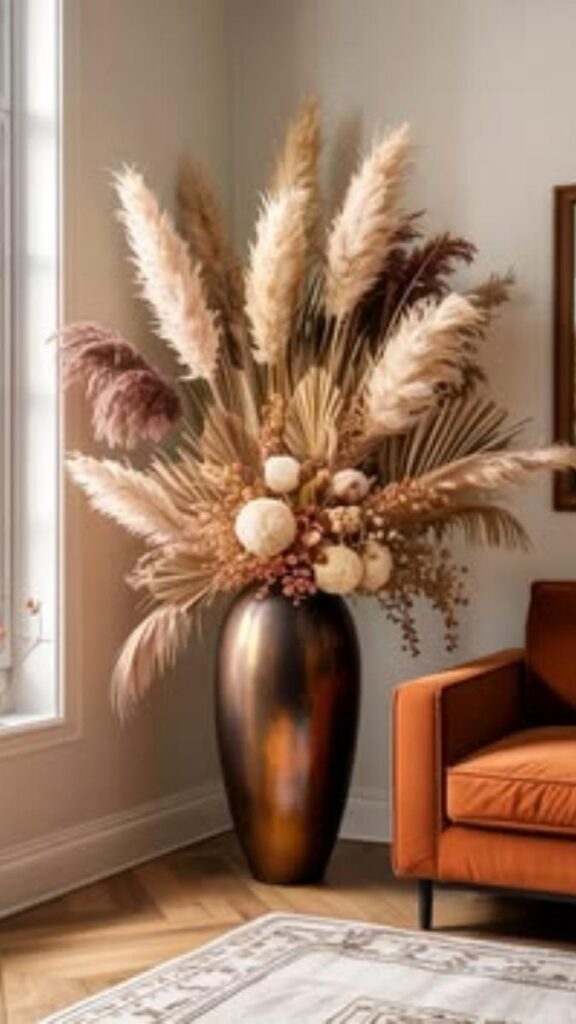
An oversized vase thrifted, painted, or purchased inexpensively filled with dried pampas grass or dried branches creates a floor-level focal point that functions like a plant without requiring maintenance. The height and volume of dried pampas fills vertical space in corners that furniture can’t reach, particularly in living rooms with high ceilings or large blank wall sections.
The feathery texture of pampas softens the hard edges of furniture and architectural lines, which is especially useful in modern or minimal rooms that risk feeling cold. IMO, this is one of those setups that looks effortless but carries a disproportionate amount of visual weight in a room: one piece, one corner, significant shift.
Thrifted Mirror Cluster on an Entryway Wall
Group three thrifted mirrors of different shapes round, arch, and rectangular, for instance on an entryway wall at varying heights, keeping the cluster tight enough that they read as a unit rather than three separate objects. Mirrors in an entryway serve a functional purpose, but the cluster format turns them into a design feature.
The varied shapes prevent the arrangement from looking like a pattern repeat, and the reflected light makes narrow entryways feel significantly wider and brighter. This is one of the most practical DIY aesthetic ideas for dark or narrow entry halls, where the combination of light reflection and visual layering addresses two problems simultaneously.
DIY Linen Curtains Hemmed to Floor Length
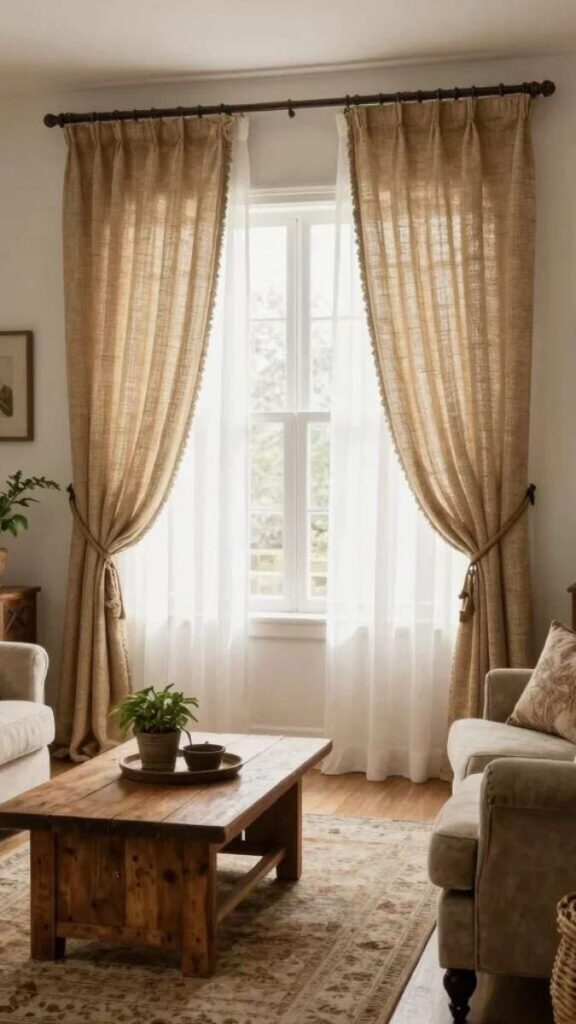
Linen fabric purchased by the yard, cut to length and hemmed with iron-on tape, creates curtains that look significantly more expensive than their actual cost primarily because floor-length curtains with ceiling-height rods make any room feel taller and more finished.
The key measurements mount the rod 4–6 inches from the ceiling, and let the curtains fall within half an inch of the floor. Natural linen has a texture and slight translucency that diffuses light attractively during the day. In rooms with awkward or small windows, this technique visually expands the window’s apparent size and balances the room’s proportions in a way that standard store-bought curtain panels at standard heights rarely achieve.
Painted Arch Shape Directly on the Wall
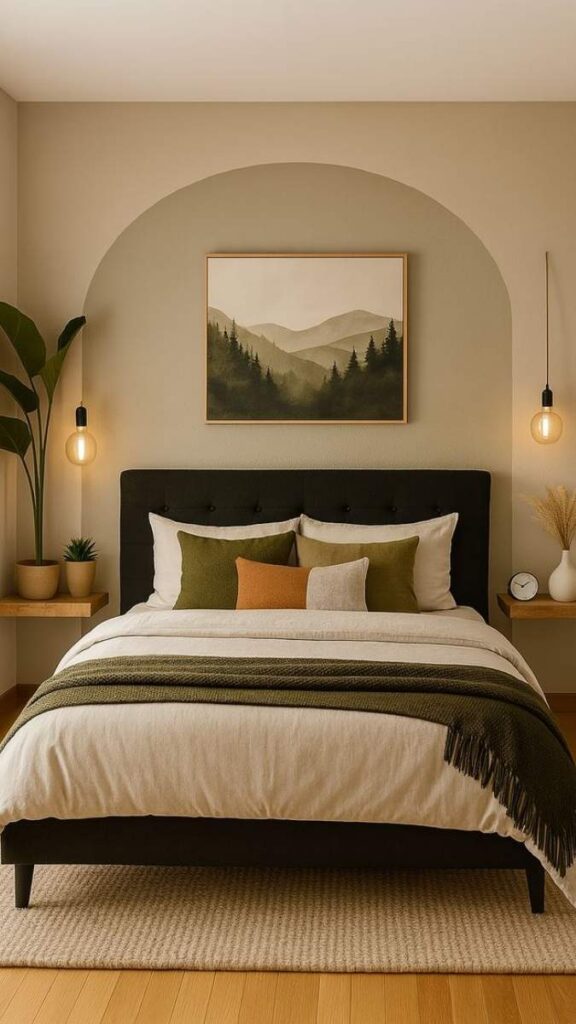
Draw and paint a large arch shape directly on the wall using a pencil, a piece of string as a compass for the curved top, and painter’s tape for the straight sides to create a faux architectural feature.
This technique works particularly well behind a bed as a headboard alternative, behind a console table in an entryway, or as a backdrop to a reading nook. The arch creates a defined zone within a larger wall, giving furniture placed in front of it a sense of belonging to a specific area of the room. In open-plan spaces or large rooms where furniture tends to float, this is one of the most effective layout-anchoring techniques available without any structural work.
Beeswax Candle Dipping for Handmade Taper Candles
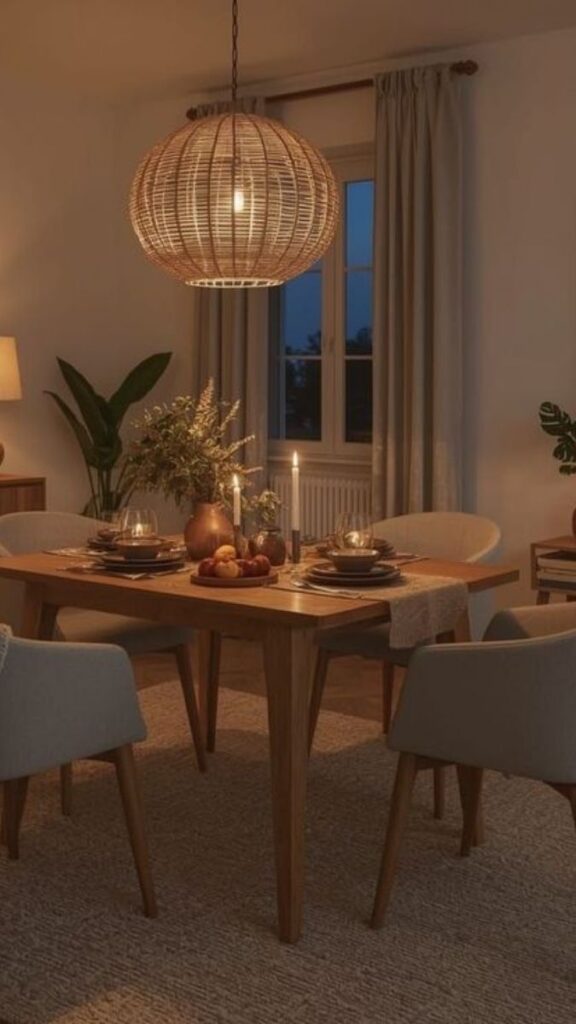
Dipping taper candles in melted beeswax tinted with natural dye or left in its amber tone creates handmade candles with an irregular, organic texture that mass-produced tapers don’t replicate. The process takes about 30 minutes for a set of six and produces candles that look genuinely artisanal on a dining table or shelf.
The warm amber of natural beeswax works with almost any neutral or earth-tone decor palette without clashing. This is particularly worth doing if you style your dining table as part of the room’s overall aesthetic: a set of hand-dipped tapers in simple holders elevates the table setting without requiring new tableware, linens, or any significant investment.
What Actually Makes These DIY Aesthetic Ideas Work
The difference between DIY decor that reads as considered and DIY decor that reads as craft-project-gone-wrong usually comes down to three things: restraint, material quality, and placement.
Restraint means not doing everything at once. One strong DIY piece in a room, a painted arch, a well-styled shelf, and a set of hand-dipped candles carries more weight than five competing ideas. The room needs breathing room around the handmade elements for them to register properly.
Material quality doesn’t mean expensive, it means choosing materials with natural texture over synthetic ones where possible. Linen over polyester. Raw wood over MDF. Cotton cord over plastic rope. Natural materials photograph better, age better, and integrate into more room styles without looking out of place.
Placement is where most DIY setups succeed or fail. A macramé wall hanging at the wrong height, a shelf too cluttered to read clearly, a gallery wall that’s too high on the wall; these are placement problems, not craftsmanship problems. I’ve noticed that the most effective DIY setups tend to follow the same placement logic as professional interior design, anchor to furniture, respect eye level, and leave space between elements for the eye to rest.
DIY Aesthetic Decor Setup Comparison Guide
| Idea | Best Space | Key Problem Solved | Budget Level | Renter-Friendly |
| Washi tape grid | Small bedroom | Blank wall, no drilling | Very low | ✅ Yes |
| Linen wall hanging | Living room / bedroom | Large blank wall | Low | ✅ Yes |
| Painted arch | Any room | Floating furniture, empty wall | Low | ⚠️ Paint required |
| Ladder shelf | Living room corner | Limited storage, floor space | Medium | ✅ Yes |
| DIY linen curtains | Any room | Low ceilings, small windows | Low-medium | ✅ Yes |
| Pegboard organizer | Kitchen / home office | Storage + visual interest | Low-medium | ⚠️ Wall mount needed |
| Mirror cluster | Entryway / narrow hall | Dark or narrow space | Low (thrifted) | ✅ Yes |
| Chalk-painted furniture | Bedroom / living room | Dated or mismatched furniture | Low-medium | ✅ Yes |
| Ombre wall | Bedroom | Flat, bare walls | Low | ⚠️ Paint required |
| Dried botanical frames | Bedroom / reading corner | Need art on a budget | Very low | ✅ Yes |
Common DIY Decor Mistakes That Make a Room Feel Unfinished
Doing too many ideas in one space.
DIY decor works best when it’s selective. A room with a hand-painted arch, a macramé shelf, a gallery wall, and a rope-wrapped vase cluster is a room where no single idea has room to land. Pick one or two ideas per room and execute them well rather than spreading effort thin.
Using the wrong scale.
A small wall hanging on a large wall looks like it got lost. A tiny tray grouping on a large coffee table disappears. Scale mismatch is the most common reason a DIY setup looks undone despite good execution. Before committing, hold up a piece of paper or cardboard at roughly the intended size to test the proportion against the wall or surface.
Skipping the editing step.
Most DIY setups benefit from being installed, lived with for a day, and then edited. Objects that made sense on the floor during arrangement don’t always make sense on the shelf in context. Remove one thing, adjust spacing, and reassess before calling it done.
Choosing trendy materials over durable ones.
Some DIY trends photograph well but deteriorate quickly cheap twine that frays, low-quality chalk paint that chips, paper-based elements that curl. Choose materials with some longevity even within a budget. A well-made DIY piece that holds up for three years is worth significantly more than one that looks dated in three months.
Ignoring lighting.
A beautifully executed DIY gallery wall in a corner with no light source will always feel underwhelming. Natural light direction, the placement of existing lamps, and the potential for a simple clip-on or plug-in light source should be part of the setup planning, not an afterthought.
FAQ’s
What is DIY aesthetic decor?
DIY aesthetic decor refers to handmade or self-assembled home decor that contributes to a room’s intentional visual style, think macramé wall hangings, painted furniture, handmade candles, or custom gallery walls. The goal is a curated, personal look achieved through making rather than purchasing.
How do I make my DIY decor look professional instead of crafty?
The biggest factor is that one or two well-executed pieces in a room look intentional; five competing projects look busy. Also prioritize natural materials (linen, wood, cotton cord) over synthetic ones, and pay attention to scale and placement relative to your furniture.
What are the best DIY decor ideas for renters?
Washi tape wall displays, linen curtains on tension rods, leaning ladder shelves, thrifted mirror clusters, and tray styling are all strong renter-friendly options, none requiring permanent wall changes, and most are fully removable.
Is chalk paint actually worth using for furniture?
Yes, for furniture with good bones but poor finishes, chalk paint is one of the most accessible and forgiving options. It requires no sanding or priming, dries quickly, and produces a matte finish that suits most neutral and earthy decor palettes. Seal with wax or matte varnish for durability.
How many DIY pieces should be in one room?
In my experience, one to two DIY focal points per room is the practical limit before the space starts feeling overly crafted. Let each piece have enough surrounding space on the wall, surface, or floor to register clearly on its own.
What’s the easiest high-impact DIY decor idea to start with?
A tray-styled coffee table grouping or a color-blocked bookshelf rearrangement both require no tools, no purchasing, and no wall involvement, yet both make a noticeable difference in how organized and considered a room feels.
How do I make a DIY room look cohesive?
Stick to a consistent color palette across your handmade pieces, choose materials in the same family (natural, matte, organic textures), and make sure the DIY elements relate visually to the existing furniture rather than competing with it.
Conclusion
DIY aesthetic decor works best when it’s approached as editing rather than adding. The goal isn’t to fill the room with handmade objects, it’s to place a few well-chosen, well-executed pieces where they’ll have the most visual effect. Even one strong idea, done carefully and placed with intention, can shift how an entire room reads.
Start with one idea that fits your actual space, your current budget, and the time you have this week. A styled tray, a painted pot, a rearranged bookshelf these are real starting points, not consolation prizes. Build from there as the room develops, and let each piece earn its place before adding the next.