Kitchen Makeover Ideas That Actually Change How the Space
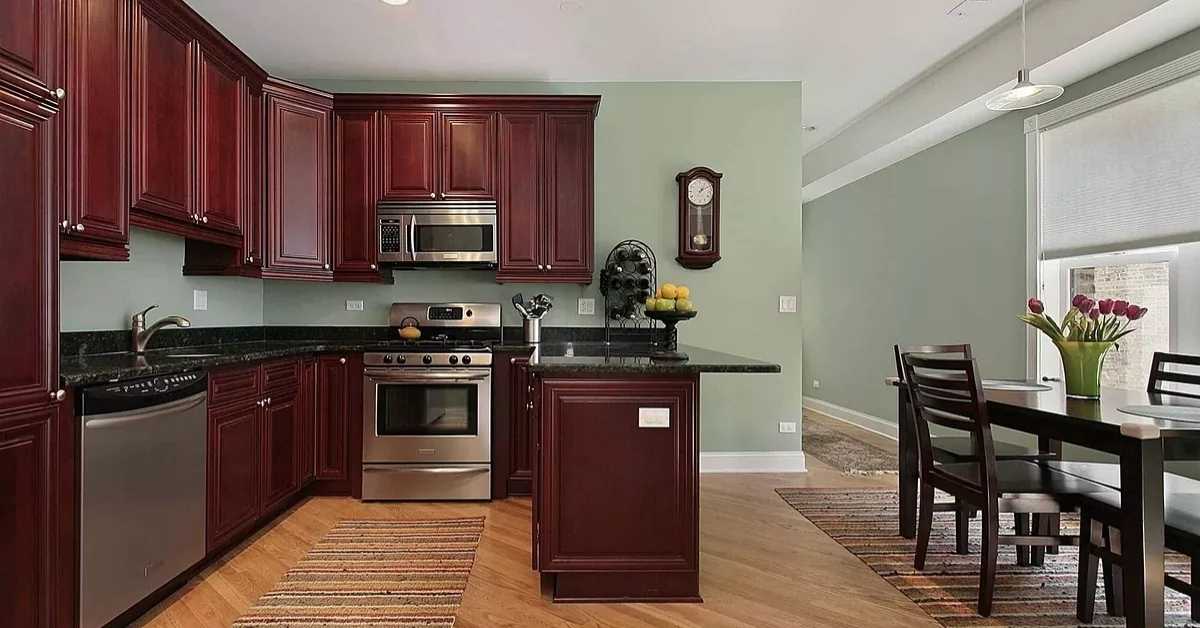
If your kitchen looks dated, crowded, or just doesn’t work the way you need it to, you’re not alone. Most kitchens aren’t bad, they’re just underutilized. A poorly placed shelf, lighting that kills the mood, Kitchen Makeover Ideas or cabinets that ignore vertical space can make even a decent kitchen feel like a chore to be in.
The good news? A real kitchen makeover doesn’t have to mean gutting the whole room. In 2026, the shift is toward targeted, high-impact changes swapping out one fixture, rethinking a wall, or adding a single piece of furniture that fixes three problems at once. This list focuses on ideas that address real kitchen problems: limited storage, awkward layouts, poor lighting, and spaces that feel cramped or disconnected from the rest of the home.
If you’re working with a rental, a small footprint, or a tight budget, most of these ideas are still on the table.
Replace Upper Cabinets with Open Shelving on One Wall
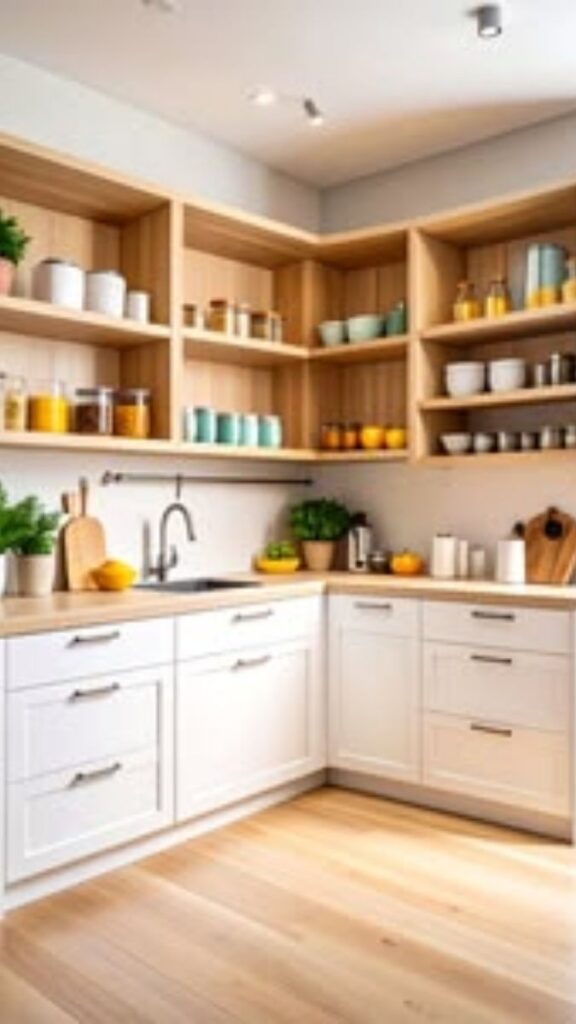
Solid upper cabinets on every wall can make a kitchen feel like a storage unit rather than a room. Pulling them down on a single wall, usually the one opposite the window or above the counter you use most and replacing them with two or three open shelves creates breathing room without sacrificing much storage.
The visual shift is significant: removing a row of cabinet doors opens up sightlines across the room, especially in narrow galley kitchens. Use shelves in natural wood against painted walls, or powder-coated metal brackets for an industrial-minimal look. Keep what’s displayed intentionally a few jars, everyday dishes, and plants. This idea works especially well in kitchens where natural light is limited, since the open wall reflects more of it.
Add Under Cabinet Lighting to Separate the Counter from the Cabinets
Most kitchens rely entirely on overhead lighting, which creates shadows directly on the workspace, the exact place you need to see clearly. Under-cabinet lighting solves this without any rewiring in most cases; plug-in LED strip lights or puck lights work for renters and are available in warm or neutral white to match the kitchen’s atmosphere.
This setup works best when the counter is used actively for prep. Even a strip of warm-toned LEDs makes the counter feel like a distinct, well-considered zone rather than just a surface under a cabinet. In smaller kitchens, layered lighting like this also adds visual depth the wall and backsplash appear to recede slightly, which gives the room a less boxy quality.
Paint the Lower Cabinets a Different Color Than the Uppers
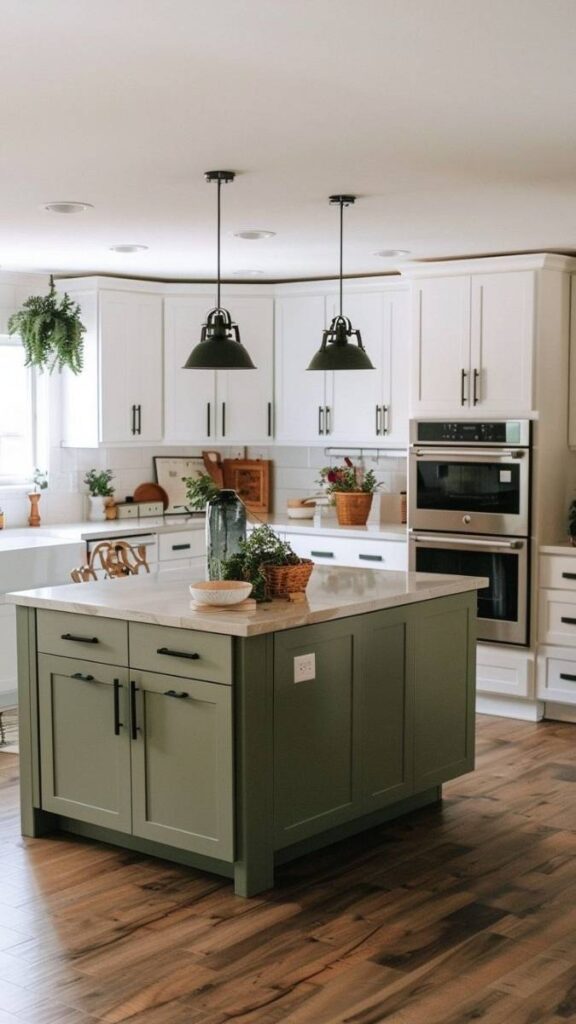
Two-tone cabinetry has been gaining ground since 2024 and continues to feel fresh heading into 2026, partly because it does something structurally useful: grounding the lower half of the kitchen with a deeper color (navy, forest green, warm charcoal) while keeping uppers light reduces the visual weight of the room. The kitchen feels taller because the eye reads the lighter upper cabinets as ceiling-adjacent.
This works best in kitchens with medium to large footprints where the contrast doesn’t feel cramped. For smaller spaces, consider a softer contrast white uppers with sage or warm gray flowers rather than a dramatic split. This is a paint-only change in most cases, making it one of the more achievable kitchen makeover ideas for renters who own their space or are permitted to repaint.
Replace the Faucet and Hardware as a Single Update
Changing a faucet and cabinet pulls together is one of the faster kitchen makeover moves because the two elements read as a set. When a kitchen has chrome pulls and a chrome faucet from 2008, swapping both to brushed brass or matte black updates the whole room’s finish scheme in a way that painting or restyling alone doesn’t.
In my experience, this works best when everything is done at once with a new faucet alongside the same cabinet hardware finish rather than piecemeal. Mixing metals isn’t inherently wrong, but in small kitchens, a unified finish reads as more intentional and polished. Budget-friendly versions of both (around $80–$150 for a mid-range faucet, $2–$5 per pull) are widely available and make a visible difference.
Install a Floating Shelf Above the Stove for Function and Visual Structure
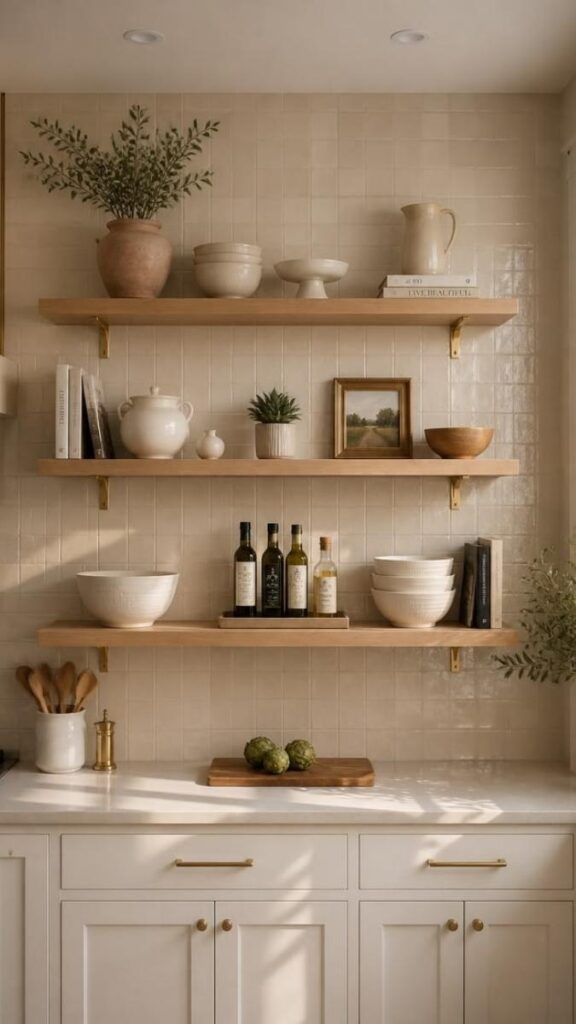
The space above a stove is usually wasted or occupied by a range hood that sits in visual isolation. Adding a single floating shelf between the range hood and the backsplash or if there’s no hood, directly above the stove gives the area purpose. It can hold oil, spices, a small plant, or a tray, and it frames the stove as the kitchen’s focal point rather than an appliance sitting against a blank wall.
Keep the shelf shallow (around 6–8 inches deep) so it doesn’t interfere with cooking clearance, and in the same material as any other wood accents in the room. This setup works especially well in kitchens with high ceilings that make the stove wall feel unfinished. It also solves the very practical issue of reaching for frequently used ingredients across the room mid-cook.
Read More About: Peel and Stick Wall Decor Ideas That Actually Look Good
Use a Kitchen Island Cart Instead of a Fixed Island
Fixed islands are a luxury of square footage. In kitchens under roughly 150 square feet, they block the natural flow between the sink, stove, and refrigerator, the working triangle that makes kitchen tasks efficient. A rolling kitchen cart solves the same problem (more prep surface, storage underneath) without committing to a permanent footprint.
Look for carts with a butcher block or solid wood top, lower shelves or drawers, and locking casters. On weekdays it can live near the counter as an extension of the prep space; when you’re entertaining, roll it to the side or into an adjacent room. This is one of the best kitchen makeover ideas for renters since it requires no installation and moves with you.
Apply Peel and Stick Tile to the Backsplash
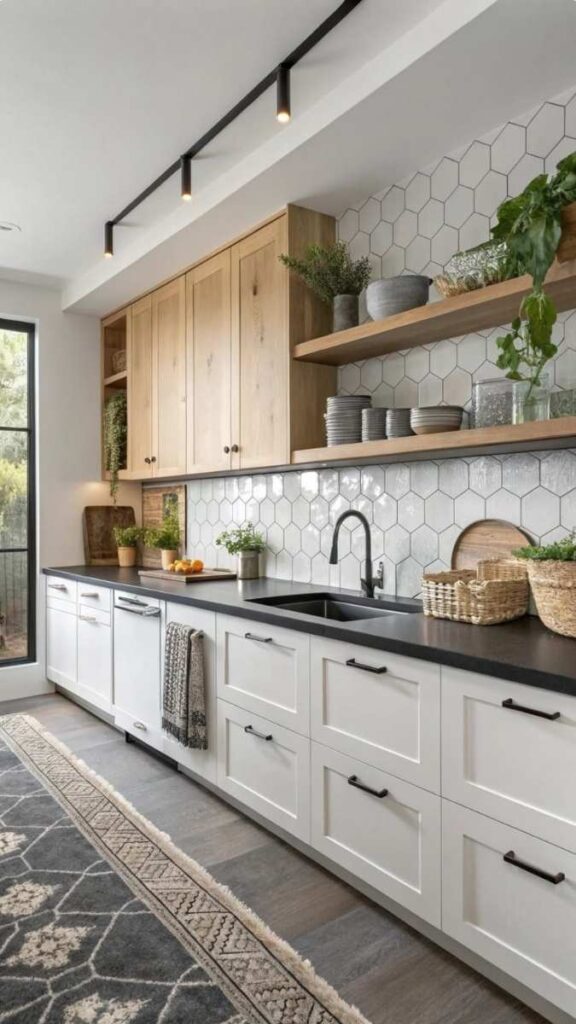
The backsplash is one of the most visible surfaces in a kitchen, and updating it even temporarily reframes the whole room. Peel-and-stick tile has improved significantly in recent years; formats that mimic subway tile, zellige, or terracotta are convincing at mid-range price points and can be removed without damaging walls, which makes this viable for renters.
This setup works best on smooth, primed drywall or existing flat tile. Avoid textured walls, as the adhesive doesn’t bond evenly. The most effective color choices are ones that contrast with the cabinets cream tiles behind dark cabinets, or a soft sage green behind white ones rather than trying to match everything. A new backsplash that reads as deliberate immediately makes counters look more finished.
Swap Overhead Lighting for a Statement Pendant
Most kitchens come with a single flush-mount ceiling light that distributes light evenly but creates no atmosphere. Swapping it for one or two pendants especially over a peninsula or dining area adjacent to the kitchen immediately changes how the space feels in the evening, when kitchens are used most for cooking and entertaining.
Rattan, seeded glass, and matte black cage pendants are all in circulation right now and work across different cabinet styles. Hang them lower than you think feels right (around 30–36 inches above a counter, or 60–70 inches from the floor in a dining area). This brings the light closer to where it’s needed and creates a more intimate, considered feel rather than a floodlit work environment.
Add a Chalkboard or Framed Corkboard Wall Panel Near the Entry
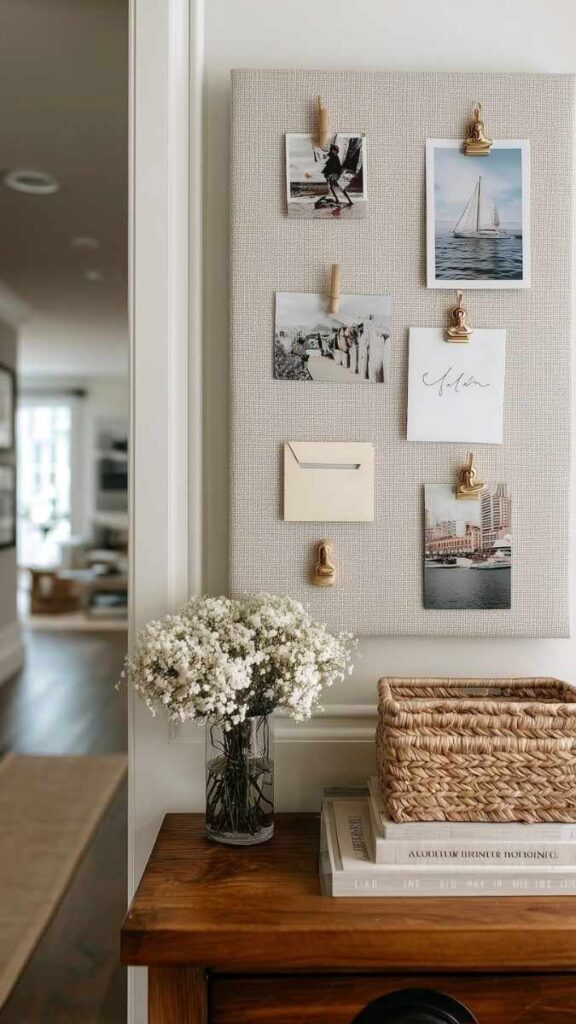
Kitchens that function as a hub grocery lists, school schedules, recipes, takeout menus need a surface for that information without it ending up scattered across the counter. A framed chalkboard panel (or a wall-mounted corkboard with a simple wood frame) mounted near the kitchen entry handles this while looking intentional rather than chaotic.
This is especially useful in households with multiple people moving through the kitchen on different schedules. The key is choosing a frame or surround that ties to the rest of the kitchen’s materials a black metal frame works with industrial or modern kitchens, natural oak with a more Scandinavian or warm-toned setup.
Install Pull Out Drawers Inside Lower Cabinets
Lower cabinets are the most inefficient storage format in a typical kitchen. To access anything near the back, you have to crouch and dig which is why the back halves of most lower cabinets stay underused. Pull-out drawer inserts (available as retrofit kits for most standard cabinet widths) convert this dead space into fully accessible storage with a single pull.
This is a particularly high-value update for base cabinets near the stove or sink, where pots, pans, and cleaning supplies need to be reachable quickly. I’ve noticed this single change tends to reduce counter clutter significantly, simply because things have a more accessible place to go. Most kits require only a screwdriver to install.
Create a Coffee Station in an Underused Corner
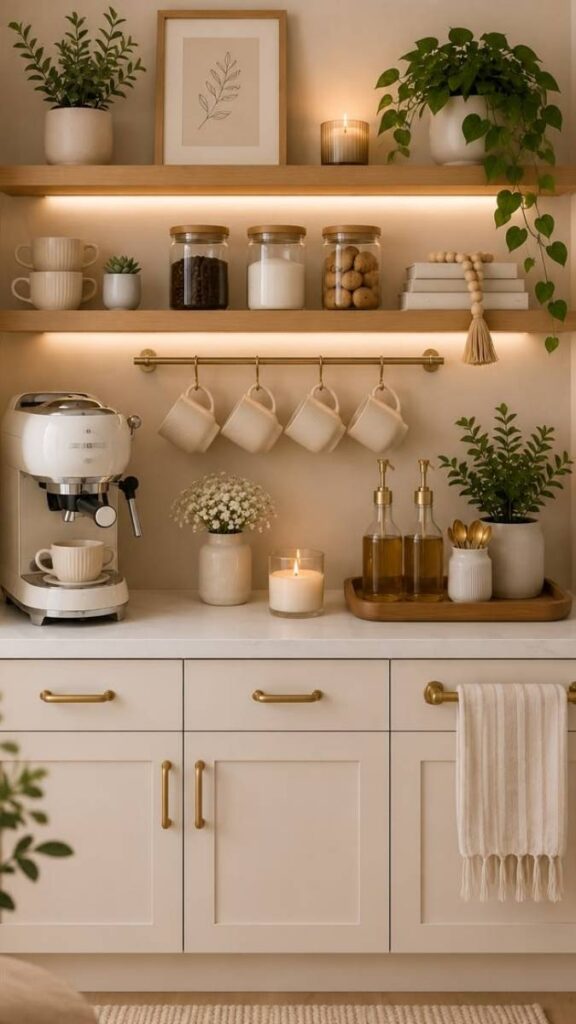
Designating a corner of the counter as a dedicated coffee and tea station does two things: it reduces daily clutter (no moving the machine, finding the mugs, locating the beans) and gives that corner a purposeful, styled look. A small tray, the coffee maker, a jar of beans, and two or three mugs hung from hooks above is all it takes.
This setup works best in kitchens where the main prep area and the coffee-making space currently overlap, creating a cluttered countertop most mornings. By assigning that function to a corner, especially one near an outlet and away from the main prep zone the larger counter stays clearer. A simple wall-mounted mug rack above the station keeps the mugs off the counter and reads as a designed feature rather than overflow.
Read More About: 27+ Affordable Pool Furniture Ideas That Actually Look Good
Repaint the Walls a Warm Neutral Instead of White
Bright white walls in a kitchen sound fresh in theory but often read cold in practice, particularly in north-facing rooms or kitchens with limited natural light. Warm neutrals linen, warm greige, creamy off-white reflect light in a way that feels more inviting, especially in the evening when overhead or pendant lighting becomes the primary source.
The change is most noticeable if the ceiling is also repainted to match or go slightly lighter, as the typical contrast between stark white ceiling and off-white wall can make the room feel segmented. For kitchens with dark or bold cabinetry, a warm neutral wall ties the room together rather than competing with the cabinet color.
Hang Pot Racks to Free Up Cabinet and Drawer Space
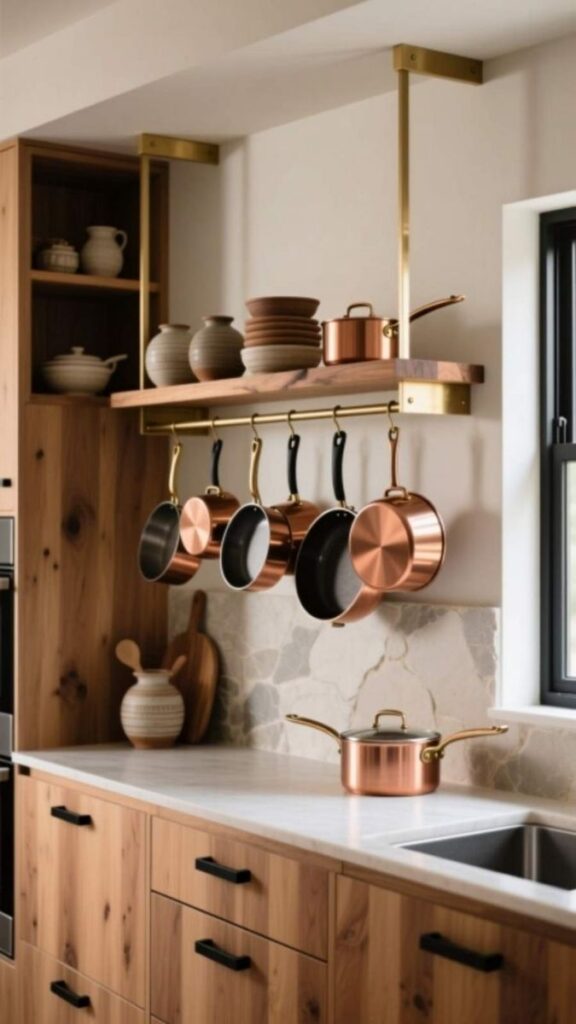
If cabinet space is the primary problem, moving pots and pans to a wall or ceiling rack is one of the most efficient moves available. A wall-mounted pot rack with S-hooks (above the stove or along a long, unused wall) eliminates the need for a full lower cabinet just for cookware and brings the most-used pieces into arm’s reach.
This works best in kitchens with at least 8-foot ceilings or a long stretch of wall without upper cabinets. The visual effect is a working kitchen aesthetic that feels collected rather than cluttered; the pots become a feature of the room rather than hidden storage. Matte black and stainless steel are the most versatile finish options.
Add a Window Valance or Simple Curtain to Soften the Kitchen
Kitchens are typically the least soft room in a home with hard surfaces everywhere, no fabric, no layering. A simple valance or a pair of café curtains on the kitchen window introduces texture and frames the window in a way that makes the wall feel finished rather than functional.
Linen, cotton canvas, and striped ticking fabric all work for kitchen applications since they’re easy to wash. Avoid anything too sheer if the window faces a neighbor or busy street. This is especially useful in kitchens with a window above the sink, where the wall on either side often feels bare. The curtain doesn’t need to fully cover the window even if a top panel softens the look considerably.
Replace Hollow Cabinet Doors with Glass-Front Panels on Upper Cabinets
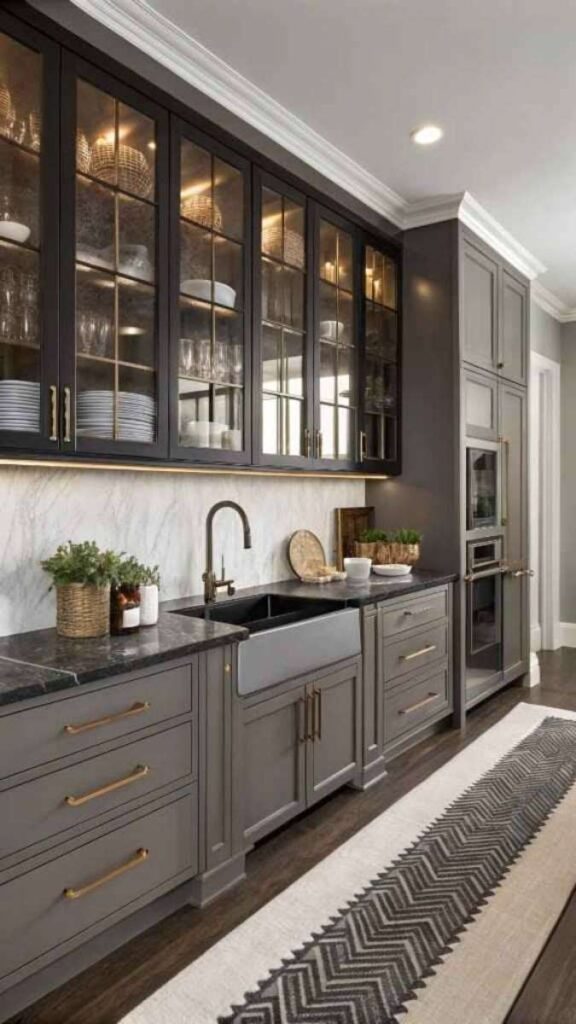
Glass-front cabinet doors on a select few upper cabinets (not all of them) add depth and visual interest to the kitchen in a way that solid doors don’t. The wall stops feeling flat because there’s dimension behind the cabinet face. The interior becomes display space not for everything, but for dishware, glassware, or a few well-chosen objects.
This is a more involved change than most on this list but doesn’t require new cabinets; many standard cabinet doors can have inserts cut out and glass panels set in, either DIY or by a local cabinet shop. Work best when the cabinet interiors are painted (often in a contrasting or complementary tone) so there’s something deliberate to look at through the glass.
Mount a Magnetic Knife Strip to Clear Counter Space
A knife block takes up considerable counter space for what it does. A wall-mounted magnetic strip positioned near the prep area keeps knives accessible without occupying any surface area. It also makes it easier to grab the right knife quickly the blades are visible rather than handle-only.
Stainless steel strips read more industrial; wood-backed strips work with warmer, more natural kitchen styles. Mount it at a comfortable reach height roughly eye level or just below and away from high-traffic walkways. This idea is particularly useful in smaller kitchens where every inch of counter is valuable.
Use Matching Containers for Pantry and Counter Storage
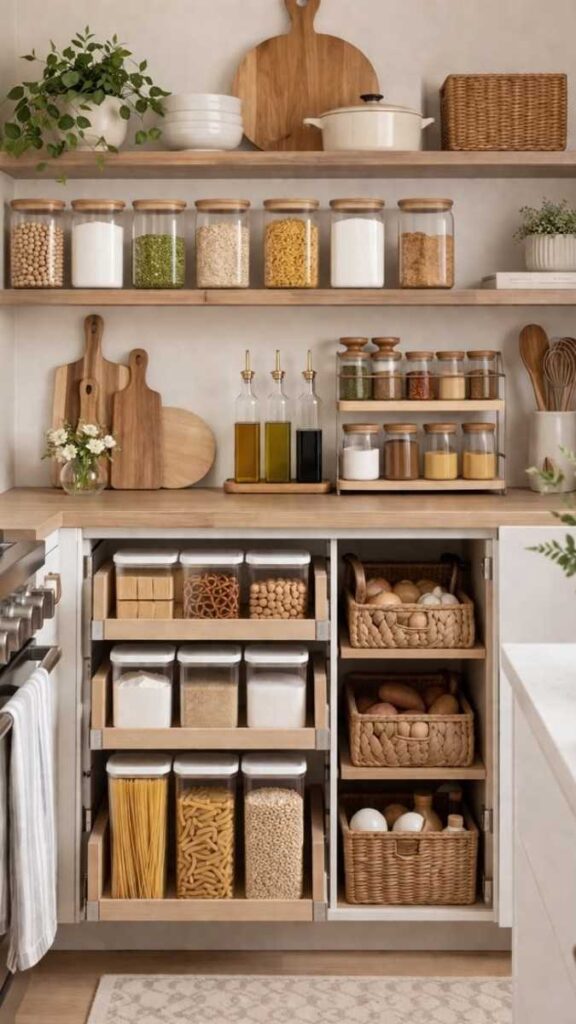
Mismatched containers on the counter and in open shelving create visual noise that makes a kitchen feel more cluttered than it actually is. Switching to a set of matching canisters in glass, ceramic, or matte-finish metal for flour, sugar, coffee, and similar staples makes the counter read as a designed surface rather than a collection of random items.
This is one of the lower-cost kitchen makeover ideas with a high visual return. It works especially well alongside open shelving or in kitchens where the counter is highly visible from another room. Clear glass canisters add a functional beauty (you can see fill levels at a glance); matte ceramic or metal containers work better for a more curated, minimal aesthetic.
Read More About: 35+ Budget Bathroom Makeovers That Look Surprisingly High End
Add a Runner Rug in Front of the Sink or Stove
Hard floors in a kitchen are easier to clean but uncomfortable to stand on for extended periods. A low-pile runner rug placed in front of the sink or stove addresses this practically while also adding color, pattern, or texture to a room that otherwise has very little of it.
Choosing rugs that are machine washable or have an outdoor-indoor construction durability is the priority here. Cotton flatweave and jute runners both work well in kitchen settings and are available in sizes that fit standard 24–30 inch wide appliance runs. In kitchens with neutral or white color schemes, a runner with a subtle pattern or warm color does a lot of visual work for a small footprint item.
Rethink the Space Between the Fridge and the Wall
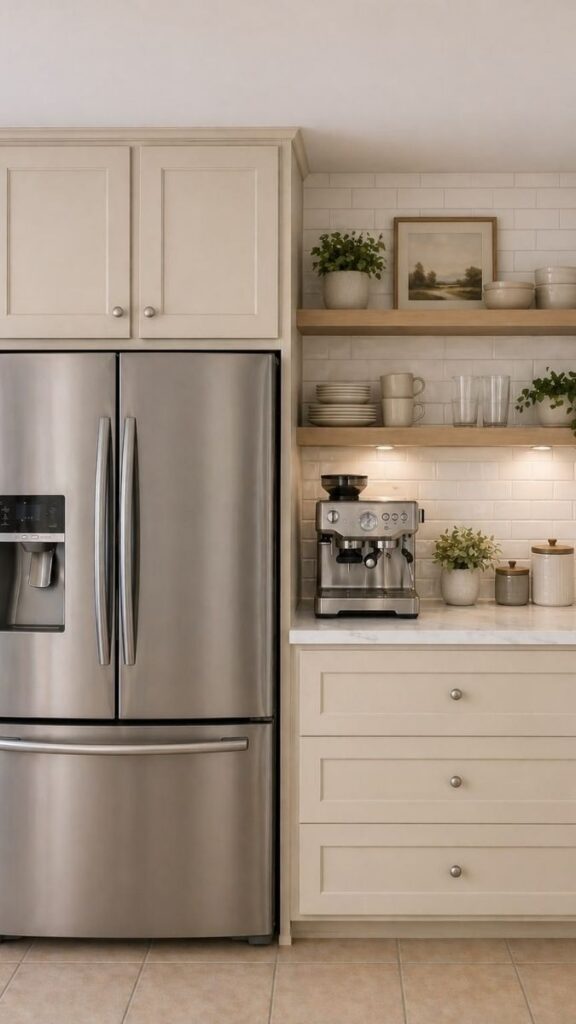
The gap between a refrigerator and an adjacent wall is rarely planned intentionally; it’s usually just whatever was left over. In many kitchens, that gap (even if it’s only 6–12 inches wide) can become a slim pull-out pantry, a narrow shelving unit, or a wall-mounted organizer for flat items like cutting boards, baking sheets, or spice packets.
Slim pull-out organizers designed for exactly this purpose are available in most widths starting at 4 inches. They use every inch of otherwise dead space and reduce clutter in more visible storage areas. This works especially well in smaller kitchens where every bit of storage matters.
Refresh Grout Lines on Tile Backsplash or Floors
Dingy grout is one of those things that makes an entire surface look dirty even after cleaning. Re-grouting or using a grout pen to refresh discolored lines between tiles is a detail-level change that has an outsized effect on how clean and updated the kitchen looks, particularly on white or light-colored tile.
Grout pens (paint-on or marker-style) are the faster option and work well for surface-level discoloration. For more significantly damaged or cracked grout, re-grouting is the more durable fix. Honesty here: this is finicky work, but the before-and-after contrast on a tiled backsplash can be more dramatic than many more expensive updates.
Paint or Wrap the Refrigerator
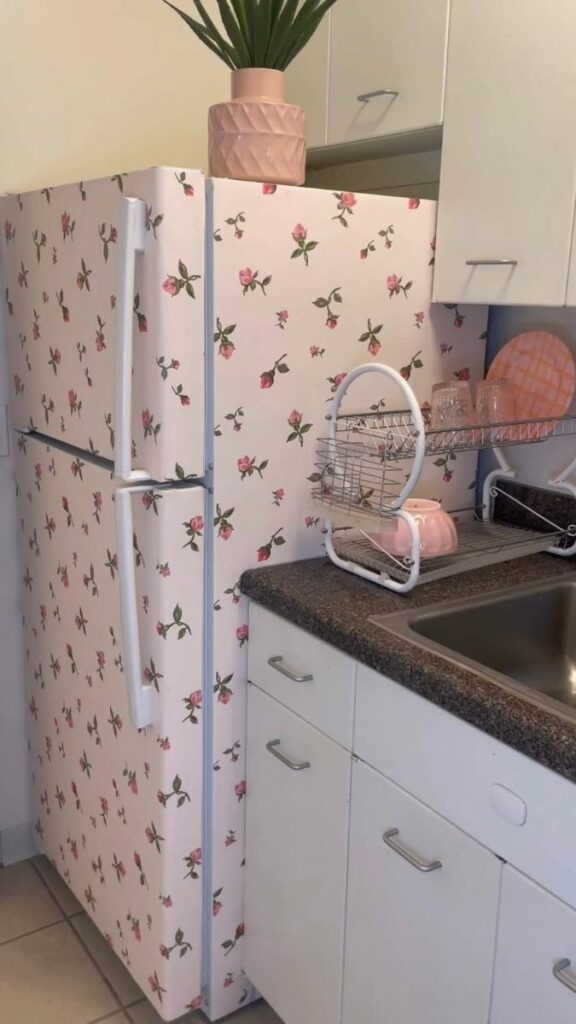
Refrigerators are large and visually dominant but rarely chosen for their appearance. A white fridge in a kitchen with dark cabinetry, or a black fridge in an all-white kitchen, can feel like a mismatch that’s impossible to ignore. Appliance-specific spray paint (formulated to bond with metal and resist heat) or adhesive vinyl wraps designed for appliances let you change the finish to match or complement the rest of the kitchen.
This is a more advanced DIY, but it’s significantly cheaper than replacing the appliance and addresses one of the most visually impactful surfaces in the room. Matte black, stainless-look vinyl, and warm white are the most popular choices, and the wrap format is reversible.
Create Visual Zones with Different Countertop Materials
Not every kitchen needs a single, continuous countertop material. If you’re replacing countertops partially or adding a new element like a kitchen cart or island using a second material creates distinct zones: butcher block for prep, stone for the main run, or laminate paired with a wood section. Different materials signal different functions and break up what can otherwise be a monotonous expanse of one surface.
This works especially well in L-shaped or U-shaped kitchens where the countertop wraps a large area. A butcher block section near the stove and a quartz or stone section near the sink, for example, makes practical sense: wood is better for chopping, stone for heat resistance and wet work.
Add a Simple Chalkboard Paint Panel to the Inside of a Cabinet Door
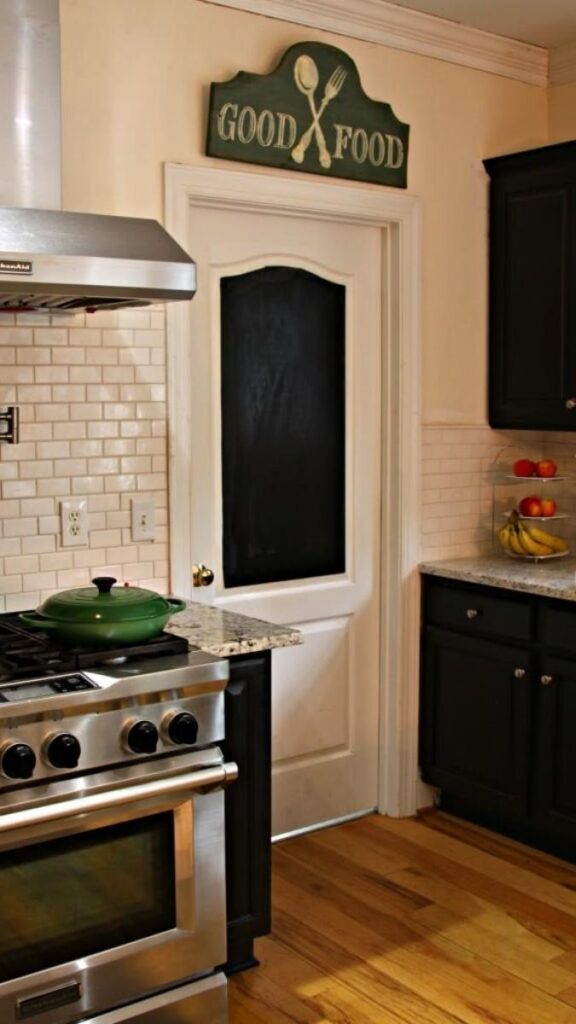
The inside of cabinet doors is almost entirely unused real estate. A coat of chalkboard paint on the interior of a pantry or lower cabinet door creates a surface for notes, grocery lists, recipes, or spice references without taking up any wall space or counter space.
This is a minimal, reversible change chalkboard paint can be repainted over easily. It works best on smooth MDF or wood cabinet doors rather than thermofoil or high-gloss finishes, which don’t bond as well. An especially practical location is the cabinet above or adjacent to the stove, where a quick recipe reference or timer note is most useful.
Replace a Standard Door with a Barn Door Between the Kitchen and Pantry
If your kitchen has a pantry or utility area with a swinging door, that door’s swing radius takes up floor space every time it’s opened. A sliding barn door mounted on a track above the door frame eliminates that swing entirely and frees up 6–12 square feet of usable floor zone when the door is in motion.
Beyond the practical benefit, barn doors in kitchens have a grounded, functional aesthetic that works across styles (painted white for modern kitchens, stained wood for warmer ones). This requires some installation work (drilling into studs for the track) but is feasible as a DIY project for most homeowners.
Style the Top of the Refrigerator as a Mini Shelf
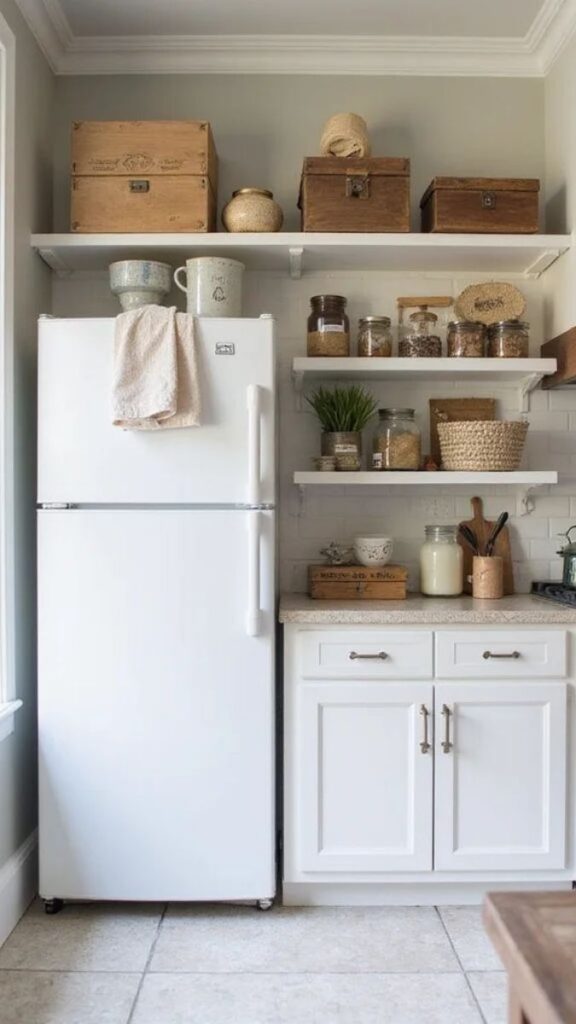
The top of the refrigerator is typically used for overflow storage of random items, rarely accessed appliances, or nothing at all. With a simple approach (a small tray, one or two plants, a cookbook or two) it becomes a purposeful zone that fills the often-awkward visual gap between the fridge and ceiling.
This is especially useful in kitchens where the refrigerator is recessed into a cabinet surround or sits against a visible wall. The key is keeping it simple: one plant and one functional item rather than five of everything. If the gap between the fridge top and the ceiling is very small (under 8 inches), skip the styling and focus elsewhere.
Install a Pegboard Panel in a Utility Zone or Inside a Cabinet
Pegboards have a functional practicality that makes them ideal for kitchens where drawer space is running out. Mounted on a wall in a utility area, or inside a deep pantry door, a pegboard with hooks and small baskets can hold measuring cups, utensils, small bags, and other items that otherwise create drawer chaos.
The standard approach is painting the pegboard to match the wall so it reads as a designed feature rather than a garage tool holder. A few uniform hooks, one or two small wire baskets, and items arranged by frequency of use make the setup genuinely functional. This works best in kitchens with at least one wall section that doesn’t already have cabinetry.
Update the Toe Kicks with Paint or Dark Film
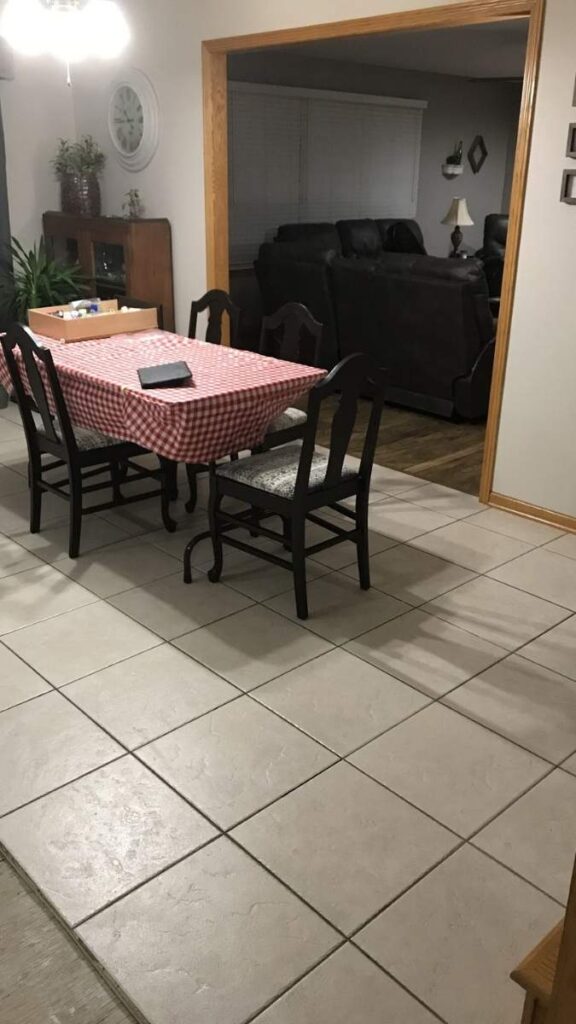
Toe kicks the recessed base panels at the bottom of lower cabinets are almost always overlooked in kitchen renovations. Painting them a dark color (charcoal, black, or a dark version of the lower cabinet color) or applying dark adhesive film creates a visual grounding effect, making the cabinetry appear to float slightly and giving the kitchen a more intentional, finished look.
This is one of the lesser-known kitchen makeover ideas but one of the more refined. In kitchens with light-colored lower cabinets, toe kicks painted in a contrasting dark shade add definition and depth to the base of the cabinets. It’s an inexpensive change, one small can of paint or a single roll of matte black vinyl and rarely requires more than an hour to complete.
What Actually Makes These Kitchen Makeover Ideas Work
The ideas on this list cover a wide range, but they share a few practical principles that determine whether a kitchen makeover actually changes how the space feels versus just adding more things to it.
Layered lighting is more impactful than any single light fixture.
Overhead lighting flattens a room; layered lighting (overhead + under-cabinet + a pendant or two) creates depth and makes the kitchen feel designed. If you’re only doing one thing in this category, add under-cabinet lighting first.
Color anchors the room at the lower half, not the upper.
Kitchens with dark lower cabinets and light uppers feel more grounded and taller than the reverse, because darker tones visually settle at floor level. This is why two-tone cabinetry works; it follows the natural logic of the space.
Storage that requires crouching or digging will be ignored.
Back-of-cabinet storage, lower shelves without pull-outs, and stacked pantry shelves that require moving items to reach others all create workarounds which become countertop clutter. The best kitchen organization is the kind that requires no effort to maintain.
Finish consistency matters more than style consistency.
A kitchen can mix modern and traditional elements without feeling incoherent, as long as the hardware finishes, lighting finishes, and any metal accents are in the same family. Mixing brushed brass with chrome reads as unfinished; mixing brushed brass with a natural wood shelf reads as intentional.
Kitchen Makeover Ideas Setup Comparison Guide
| Idea | Space Type | Primary Benefit | Budget Level | Renter-Friendly |
| Open shelving (replacing upper cabinets) | Small to medium kitchens | Visual space, light | Low–Mid | Depends on lease |
| Under-cabinet lighting | Any size | Workspace clarity, atmosphere | Low | Yes |
| Two-tone cabinet paint | Medium to large kitchens | Visual structure, depth | Low | If permitted |
| Faucet + hardware swap | Any size | Cohesive finish | Low–Mid | Yes |
| Rolling cart/island | Small kitchens | Prep surface, flexibility | Mid | Yes |
| Peel-and-stick backsplash | Any size | Instant visual update | Low | Yes |
| Statement pendant light | Any size with ceiling clearance | Atmosphere, focal point | Mid | Depends on install |
| Pot rack (wall-mounted) | Medium to large kitchens | Storage, accessibility | Low | Yes (with approval) |
| Pull-out cabinet drawers | Any kitchen with lower cabs | Storage efficiency | Mid | Depends on lease |
| Chalkboard paint panel | Any kitchen | Functional organization | Low | Yes |
Common Kitchen Makeover Mistakes That Make the Space Feel Smaller or More Cluttered
Over-accessorizing the counter.
Counter styling is useful to a point: a tray, a plant, a canister or two. Beyond that, each added item reduces the functional surface and contributes to visual noise. The kitchen is a work surface first; if the counter isn’t mostly clear when not in use, something in the storage plan isn’t working.
Using the same cabinet color for the island.
When every surface in a kitchen is the same color, the room reads as one flat plane. Differentiating the island (or the lower cabinets from the uppers) with a second color or material creates hierarchy and makes the room feel more considered.
Choosing lighting that’s too large or too small.
Pendant lights over a peninsula that are sized for a dining room (12–14 inches in diameter) overwhelm the space; fixtures too small (4–6 inches) look like afterthoughts. A good rule: for kitchen pendants over a peninsula, 7–10 inches in diameter works for most setups, and two smaller fixtures tend to look more intentional than one oversized one.
Installing open shelving without editing what’s on it.
Open shelving becomes clutter the moment it holds everything the old cabinet held. The logic changes what’s displayed needs to be curated, not just stored. If you’re not willing to edit the contents regularly, open shelving may work against you.
Ignoring scale at the backsplash.
Large-format tiles (4×8 or larger subway, or big-format stone) in a small kitchen often overwhelm the scale of the room. Smaller tiles (classic 3×6 subway, zellige, mosaic) tend to work across more kitchen sizes without making the walls feel busy.
FAQ’s
What’s the most cost-effective kitchen makeover idea?
Hardware replacement cabinet pulls, knobs, and a new faucet is one of the highest-return, lowest-cost updates available. Combined with a fresh coat of paint on the lower cabinets, it can change the look of an entire kitchen for a few hundred dollars. These are the two changes I’d suggest tackling first if budget is the main constraint.
How do I make a small kitchen feel bigger without major renovations?
Remove what’s on the counter that doesn’t need to be there, add under-cabinet lighting (which draws the eye down and creates depth), and replace solid upper cabinet doors with glass-front panels or open shelving on one wall. These three changes reduce visual compression without altering the layout.
Is open shelving practical for a busy kitchen?
It depends on how frequently you use what’s stored there. Open shelving works best for everyday dishes, a few pantry staples, or items you access multiple times daily. Items used infrequently collect grease and dust faster on open shelves, so mixing open shelving with closed cabinets rather than going fully open tends to work better for most households.
What’s the difference between a kitchen refresh and a full kitchen makeover?
A refresh typically means cosmetic changes: new hardware, paint, lighting, or accessories changes that don’t touch the cabinet structure or layout. A full makeover includes replacing or resurfacing cabinets, changing countertops, or altering the layout. Most ideas on this list fall into the refresh category, which is achievable without a contractor and often without significant disruption to daily life.
Can renters do a kitchen makeover?
Yes, with some restrictions. Peel-and-stick backsplash, removable under-cabinet lighting, rolling cart islands, runner rugs, open storage on freestanding shelving, and hardware swaps (keeping originals to swap back) are all renter-viable. Painting walls, cabinets, or installing permanent fixtures typically requires landlord approval.
How do I choose between painting cabinets and replacing them?
If the cabinet boxes (the structural frames) are solid and the doors are in reasonable condition, painting is almost always the more practical choice. Cabinet replacement adds significant cost and disruption. The cases where replacement makes more sense are when the hinges and door mechanisms are failing, the layout doesn’t work, or the existing cabinets are too shallow to be functional.
What’s the best way to update kitchen lighting without rewiring?
Plug-in pendant lights and under-cabinet strip lights (both available in hardwired and plug-in versions) allow you to add layered lighting without touching existing wiring. Battery-operated or rechargeable LED puck lights are also useful for dark cabinet interiors. These options won’t replace every overhead fixture, but they address the most common kitchen lighting problem: too much flat, overhead-only light without electrician involvement.
Conclusion
Small, targeted changes in a kitchen almost always outperform large, unfocused ones. Addressing one real problem: poor lighting, cluttered counters, wasted cabinet space consistently does more for the room than adding decorative elements without solving anything structural. The ideas here are designed to fix something, not just add to it.
Start with two or three that match your kitchen’s actual friction points whether that’s a counter that’s always cluttered, a space that feels dark, or storage that doesn’t work. Make those changes, live with them for a week or two, and then reassess. A kitchen makeover that happens in stages tends to produce better results than a wholesale overhaul, because you see clearly what’s actually making a difference before adding more.