27+Dark Academia Living Room Ideas That Feel Intellectual, Moody,
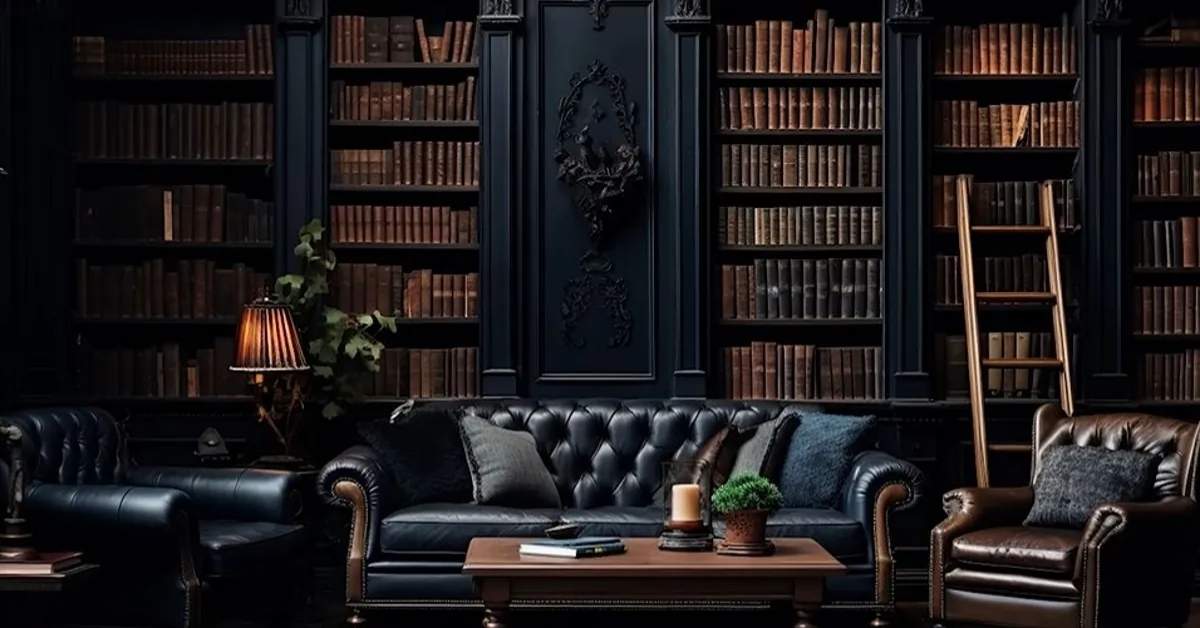
There’s something about a room that feels like it has story shelves heavy with books, warm lamplight pooling on a worn leather chair, wood tones that feel aged rather than staged. Dark Academia Living Room That’s the quiet pull of the dark academia aesthetic, and in 2026, it’s showing up in living rooms in ways that feel far more grounded and livable than the Pinterest fantasy version.
If your space currently feels either too cold and minimal or too chaotic to feel intentional, this aesthetic has a surprisingly practical structure underneath the moodiness. It’s built on layered lighting, rich textures, and furniture with visual weight, not expensive renovations or rare antiques.
This guide is especially useful if you’re working with a small-to-medium living room and want it to feel curated, warm, and distinct without pulling everything apart.
A Deep Toned Sofa as the Visual Anchor
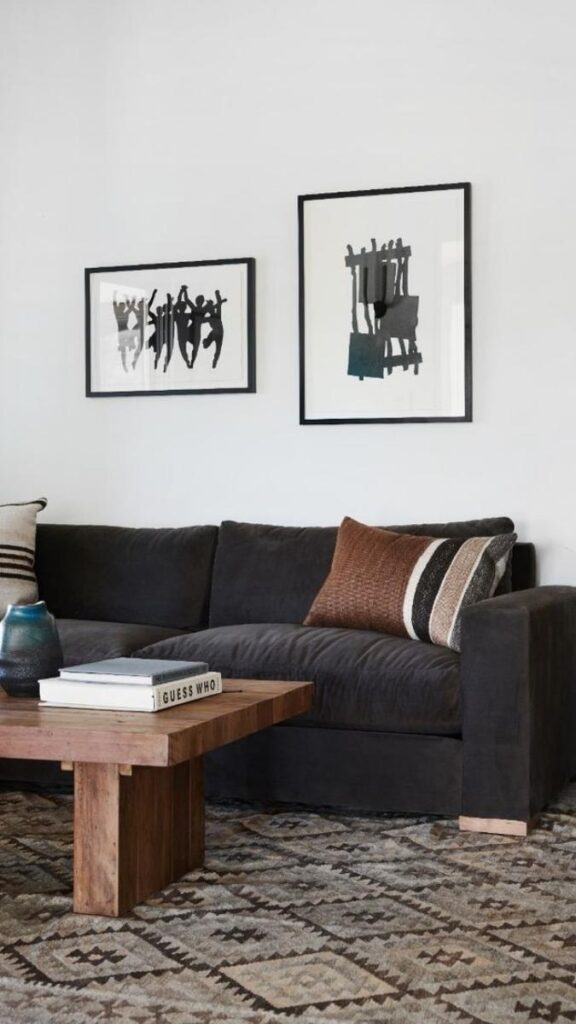
Most living rooms start with a neutral sofa and build from there dark academia flips that. A deep green, burgundy, or inky navy sofa becomes the visual anchor the whole room organizes around. Place it facing the main light source (window or floor lamp) with a worn wooden coffee table in front and a layered rug beneath.
The richness of the upholstery velvet works especially well here absorbs and reflects warm light in a way flat fabrics simply don’t. This setup works best in rooms where you want visual depth without adding more furniture. It solves the “room feels flat” problem immediately by giving the eye somewhere to land.
Floor-to-Ceiling Bookshelves Along One Full Wall
One full wall of shelving ideally dark-stained wood or painted in a deep matte tone does more spatial work than most people expect. It adds vertical height to the room, creates a strong focal point, and absorbs the visual chaos that comes from having books and objects scattered everywhere.
Arrange books by color or spine-out for a more intentional look, then break up the rows with small objects: a marble bust, a brass candleholder, a stack of oversized art books. In my experience, the shelving works best when the objects are clustered in odd-number groupings rather than evenly spaced; it reads as collected, not decorated. This setup is particularly strong in narrow or low-ceiling rooms because it draws the eye upward.
Layered Warm Lighting Instead of a Single Overhead Source
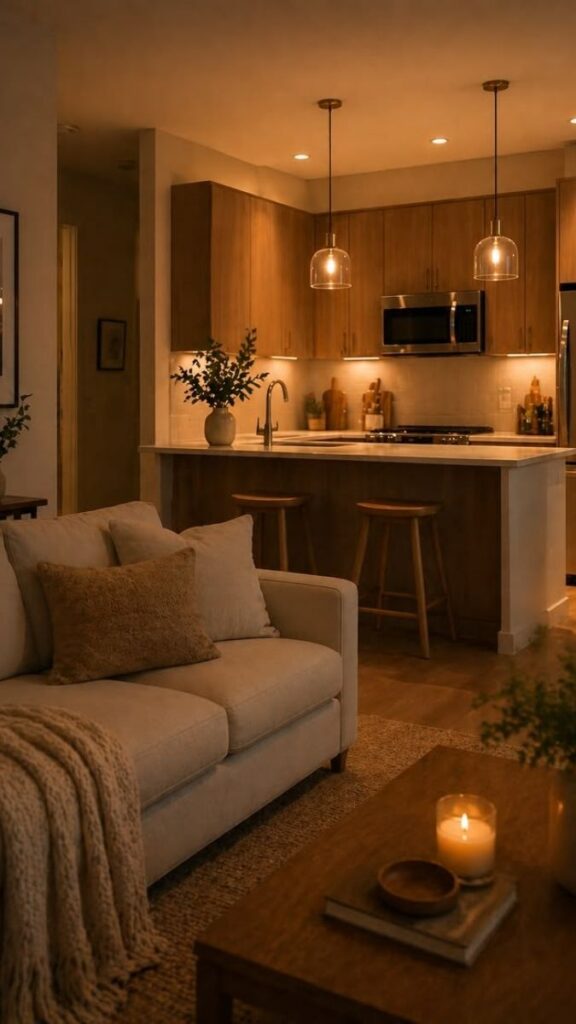
Overhead lighting is the fastest way to flatten a moody room. Dark academia lighting is almost always layered: a floor lamp positioned near the reading chair, a table lamp on a side console, and candles or small accent lights at lower levels. This creates multiple pools of warm light rather than one even washing across the space.
The visual effect is depth: some corners stay slightly dim, which makes the lit areas feel more intentional and intimate. This setup solves the problem of rooms that feel clinical or cold despite having warm decor. It’s also one of the easiest and most budget-conscious changes: you can make three lamps and a set of candles can shift the entire mood of a room.
A Reading Corner Built Around a Single Armchair
This is one I’d actually recommend trying first because it gives the dark academia aesthetic a functional reason to exist in your space, not just a visual one. Position a leather or velvet armchair in a corner, ideally beside or slightly angled toward a bookshelf. Bring in an arching floor lamp so the light falls directly over the shoulder (reading-functional, not just decorative).
Add a footstool and a wool throw and you’ve created a corner that has both purpose and atmosphere. The key is the angle pulling the chair slightly away from the wall and toward the room opens up the corner and prevents it from feeling like an afterthought. Works well in living rooms of almost any size.
A Dark, Patterned Area Rug That Grounds the Seating Zone
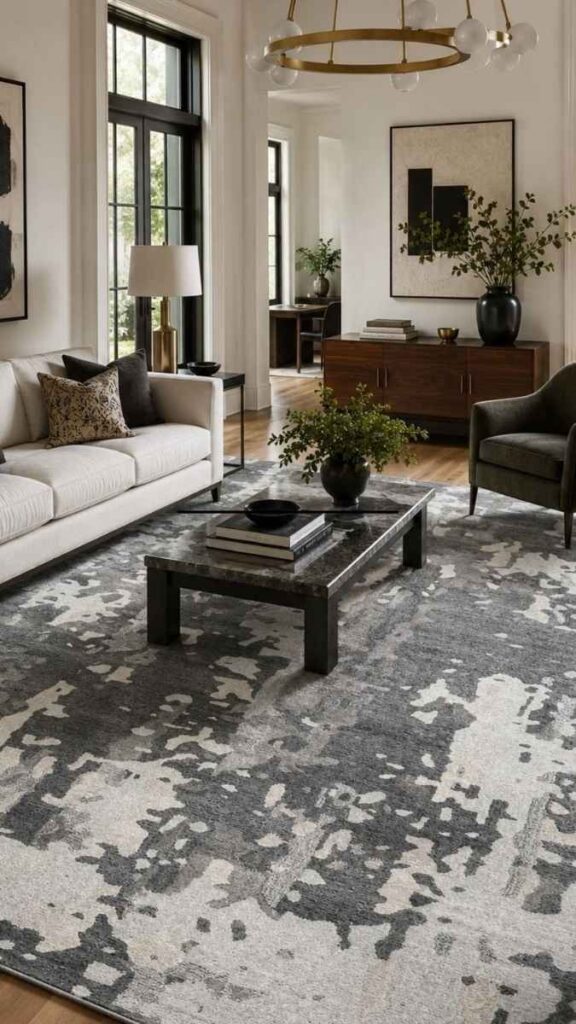
A rug in the dark academia living room isn’t just about comfort it defines where the room begins and ends. A Persian or Oriental-style rug in deep red, burgundy, navy, or forest green tones anchors the seating zone and adds pattern without requiring it anywhere else. Hardwood floors left visible around the edges of the rug reinforce the layered, collected feel.
Size matters here: the rug should be large enough that at least the front legs of all seating pieces sit on it. A rug that’s too small makes the furniture float awkwardly and breaks the spatial logic of the setup. This works in both small and large living rooms; it simply needs to be scaled correctly.
Warm Wood Tones Across Multiple Surfaces
Dark academia doesn’t work in rooms full of white-painted or lacquered furniture; the aesthetic depends on wood grain, warmth, and visible texture. Introduce warm wood tones across multiple pieces: a coffee table, a side table, a bookshelf, even a wood-framed mirror. They don’t need to match exactly, slight variation in tone actually reads as more authentic.
The material contrast between dark wood and soft upholstery (velvet, leather, linen) is what gives the room its visual richness. This setup solves the problem of rooms that look too coordinated in a showroom way. Walnut, mahogany, and dark oak all work; avoid anything that reads as raw or unfinished unless it’s very intentional.
Read More About: 41+Clean Home Aesthetic Ideas That Make Any Space
Gallery Wall of Dark Framed Botanical or Antique Prints
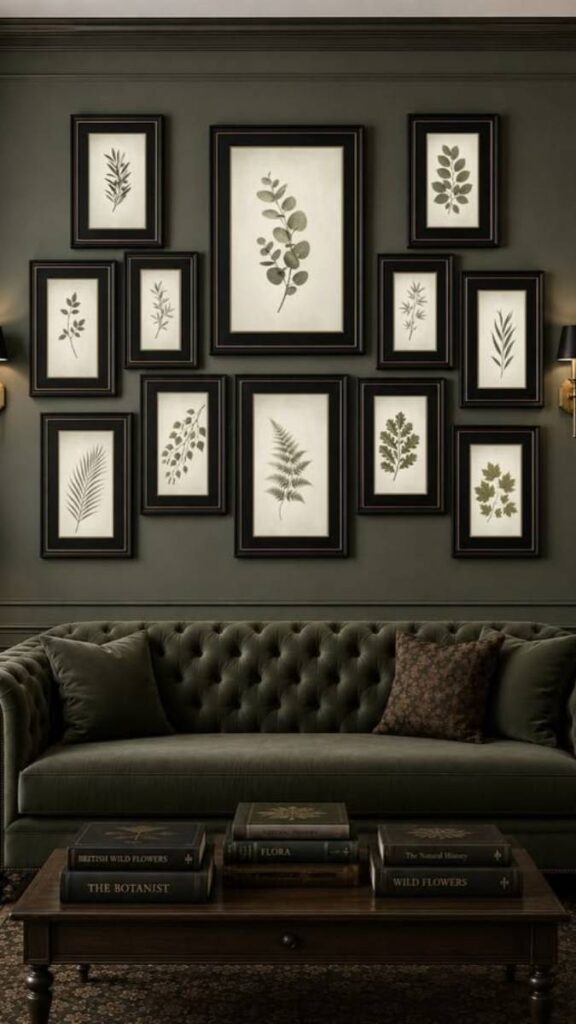
The walls in a dark academia living room shouldn’t be bare but they also shouldn’t be cluttered with random art. A gallery wall built around a single visual theme works well: antique botanical illustrations, old maps, architectural engravings, or classical portraits. Frame everything in the same dark finish (black, dark walnut, or aged brass) so the wall reads as cohesive even if the prints are varied.
Arrange asymmetrically not in a grid to give it that collected-over-time quality. This setup works best on a wall that faces natural light so the prints stay visible without needing extra lighting directed at them.
Deep-Toned Walls in Olive, Charcoal, or Oxblood
Paint is the highest-impact, lowest-demolition change you can make to a dark academia living room. Deep olive, warm charcoal, slate, or oxblood red on the walls immediately shifts the atmosphere of the space even if the furniture hasn’t changed. These tones absorb light rather than reflect it, which is what creates that enclosed, intimate quality.
They also make lighter elements (cream linen, warm wood, aged brass) pop more effectively than they would against a white or gray wall. For renters, a removable wallpaper in a dark damask or botanical pattern achieves a similar effect. This works in rooms with at least one good natural light source otherwise the space can feel heavy rather than moody.
Read More About: 72+ Black and White Bedroom Ideas That Actually Work in Real Homes
A Vintage or Antique Style Coffee Table as the Room’s Centerpiece
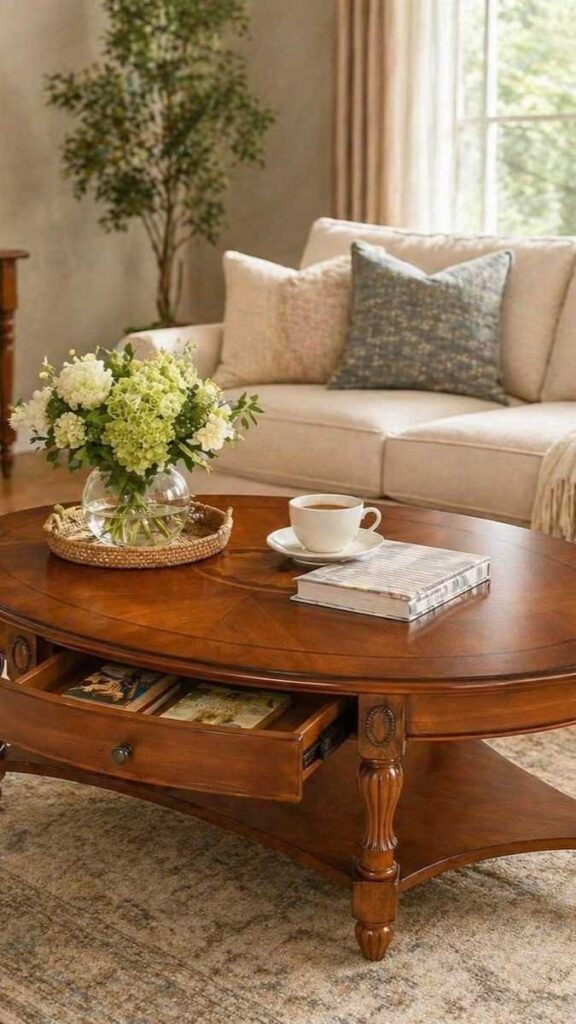
The coffee table in a dark academia setup isn’t just functional, it carries part of the room’s visual identity. Look for a piece with visual weight: carved legs, dark staining, a slightly aged surface, or an unusual shape (oval and round tend to work better than glass rectangles here).
Style it simply a stack of oversized books, a low candle, a small object. The mistake most people make is over-styling the coffee table until it becomes a display, not a functional surface. Keep it intentional but usable. This works especially well in living rooms where the rest of the furniture is fairly simple; the table adds personality without competing with anything else.
A Brass or Antique Metal Floor Lamp as a Statement Piece
Lighting fixtures in this aesthetic do double duty; they provide functional light and act as decorative objects in their own right. A brass arc floor lamp or an antique-style tripod lamp with a fabric shade fits both roles well. Positioning it beside the primary seating and using a warm (2700K) Edison or globe bulb cooler bulbs will fight the warm tone of the whole room.
The brass finish connects to other metal accents (picture frames, hardware, candleholders) and keeps the room from reading as all-dark and heavy. This is one of the most versatile pieces in this aesthetic; it works in small apartments, large living rooms, and everything in between.
Layered Textiles Wool Throws, Velvet Cushions, Linen Drapes
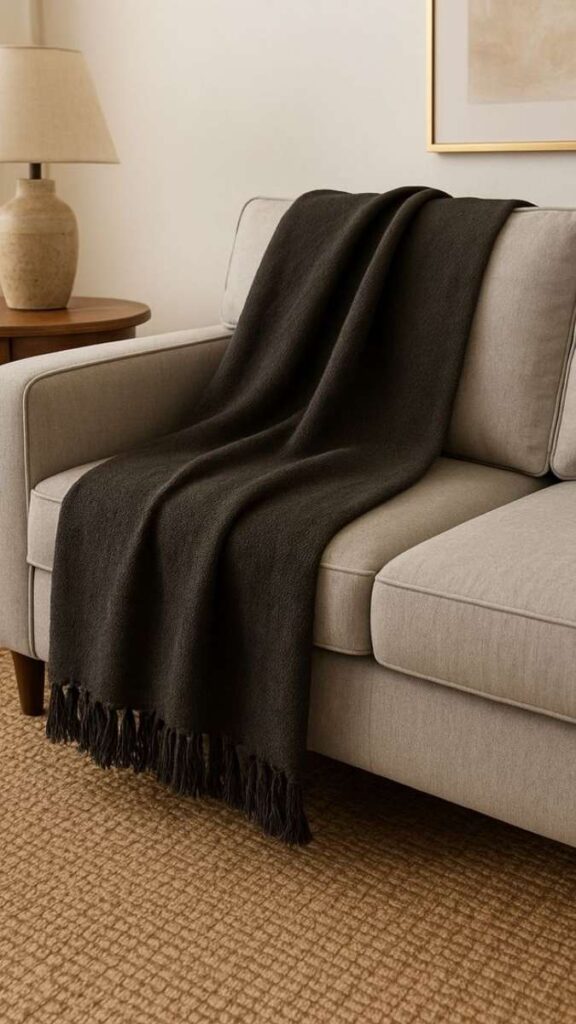
Texture is what separates a dark academia room that works from one that just looks brown and heavy. Layering different fabric types velvet cushions, a wool throw, linen or heavy cotton drapes introduces visual complexity without adding visual clutter. Stick to a tight color palette (deep greens, burgundy, burnt orange, cream, black) and vary the texture rather than the color.
The drapes should be floor-length and hung as high as possible; this adds height to the room and frames the window architecturally rather than just covering it. For smaller spaces, choosing lighter-weight linen in a deep tone keeps the softness without blocking light.
An Antique or Vintage Style Desk in the Living Room
In 2026, the living room is increasingly expected to serve as both a relaxation and a light work space and dark academia handles this transition better than most aesthetics. A vintage-style writing desk (dark wood, straight or slightly tapered legs) positioned against a wall or beside a bookshelf adds function without interrupting the room’s visual flow.
Pair it with a simple desk lamp in brass or aged metal and a low-back chair that doesn’t visually compete with the rest of the furniture. This setup works especially well in studio apartments or single-room living situations where the space needs to function across multiple activities throughout the day.
Read More About: 42+ Cool Living Room Ideas That Actually Work in Real Homes
A Globe or Antique Map as a Decorative Focal Point
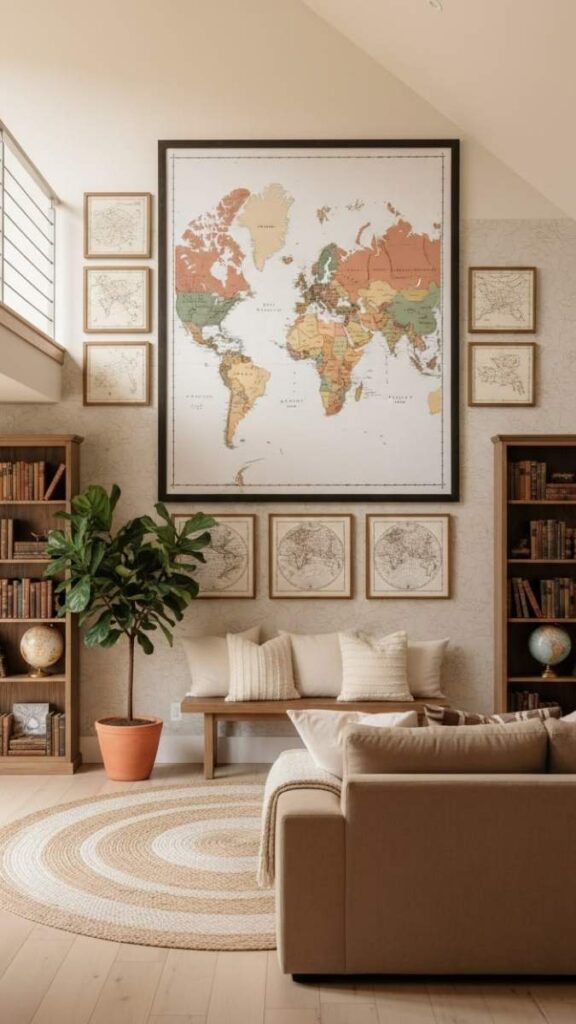
There are certain objects that immediately signal the dark academia aesthetic without requiring any explanation; a vintage globe is one of them. Place it on a console table, a bookshelf, or a side table where it has room to be seen from multiple angles.
The globe works as a sculptural object: it has visual mass, a warm metallic tone (brass works best), and an implied narrative. Pair it with a framed antique map or botanical print on the wall behind it to create a small vignette that anchors that side of the room. This is an easy setup for renters or anyone who doesn’t want to commit to a full aesthetic; it reads as intentional with minimal effort.
Dark Wallpaper in a Botanical or Damask Pattern
An accent wall of dark patterned wallpaper can do more tonal work than almost any other single change in a living room. Botanical prints (jungle leaves, fern fronds, vintage florals), damask patterns, or library-style stripe in a deep base color all fit naturally into this aesthetic.
Install it on the wall behind the primary seating or the bookshelf wall the pattern will read through and around the furniture rather than needing to be seen in full to have an effect. For renters, peel-and-stick wallpaper in these patterns has improved significantly in quality and now holds well on most interior walls. This setup solves the problem of bare walls that feel too plain for the level of detail in the rest of the room.
A Chesterfield Sofa for Architecture and Texture
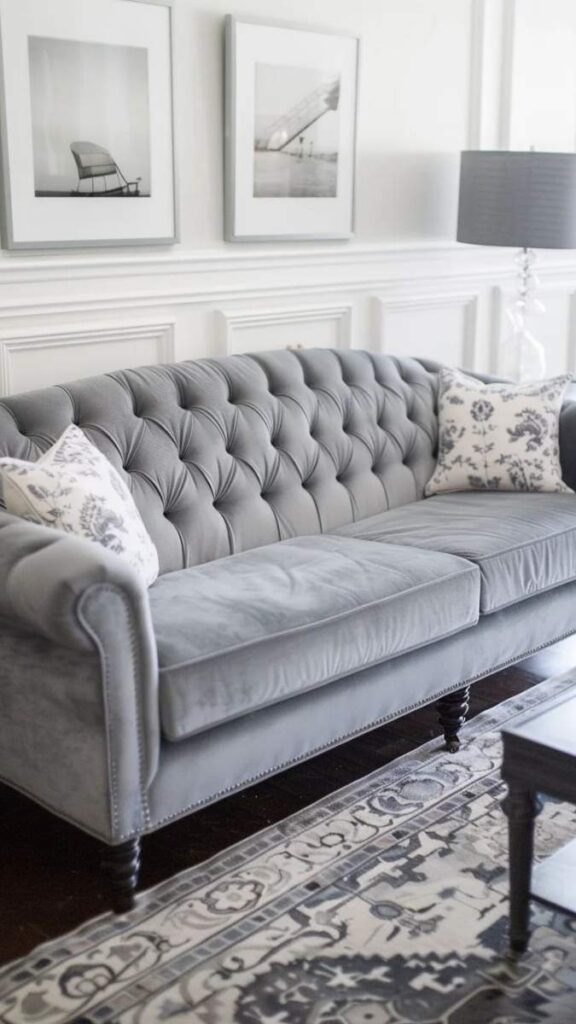
Few pieces of furniture carry as much structural character as a Chesterfield; the tufted back, rolled arms, and deep upholstery make it unmistakably intentional. In a dark academia living room, a Chesterfield in leather (aged brown, black) or velvet (forest green, burgundy) works as both seating and statement.
It’s a heavier piece visually, so it needs space, so don’t push it directly against the wall. Pull it forward and give it breathing room, then let the wall behind it carry the decorative weight (shelving, art, wallpaper). This works best in medium-to-large living rooms; in smaller spaces, a single tufted armchair achieves a similar effect without the footprint.
Framed Vintage Portraits or Classical Art Prints
Classical portraiture, whether original or affordable print reproductions, brings an unmistakable quality to dark academia walls. The subjects don’t need to be famous; what matters is the format: oil-painting style, dark background, formal framing.
Group them in an asymmetric arrangement of two to four frames on one wall, ideally with a small picture light above the largest piece to draw attention to them. This setup solves the “empty wall” problem in a way that feels more deliberately specific than a generic gallery wall. In my experience, mixing portrait prints with botanical or architectural prints reads as more layered and authentic than going all-in on one type.
A Fireplace (Real or Faux) as the Emotional Core of the Room
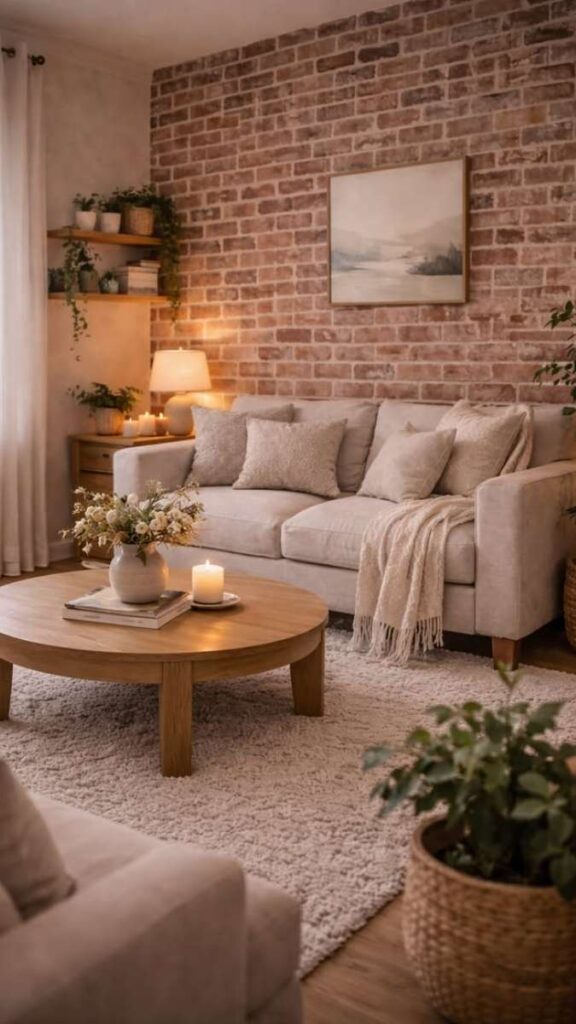
If the living room has a fireplace, it should be the undisputed focal point of the dark academia setup; everything else should orient toward it. Arrange seating in a slight arc facing the hearth rather than pushing furniture against walls. Style the mantel with a mix of objects: a clock, a candle cluster, a piece of art or mirror in a dark frame.
If there’s no actual fireplace, a faux fireplace console (electric insert, dark surround) or even a candle arrangement on a low shelf can create a similar focal logic. The fire real or implied solves the dark academia’s biggest design challenge: making a moody room feel warm rather than cold.
Exposed or Dark-Painted Wood Ceiling Beams
Ceiling beams are an architectural element that dark academia uses in a specific way not as rustic farmhouse detail, but as a layer of structural visual weight overhead. If the room has exposed beams, stain or paint them in a dark tone (walnut, espresso, charcoal) to tie them into the rest of the room’s palette.
If beams don’t exist, faux wood beam panels are surprisingly convincing at ceiling level and installed without major construction. The overhead weight actually helps rooms with high ceilings feel more enclosed and intimate which is exactly what this aesthetic needs. This works best in rooms with at least nine-foot ceilings; below that, even faux beams can feel compressive.
A Deep Toned Accent Table With Curated Objects
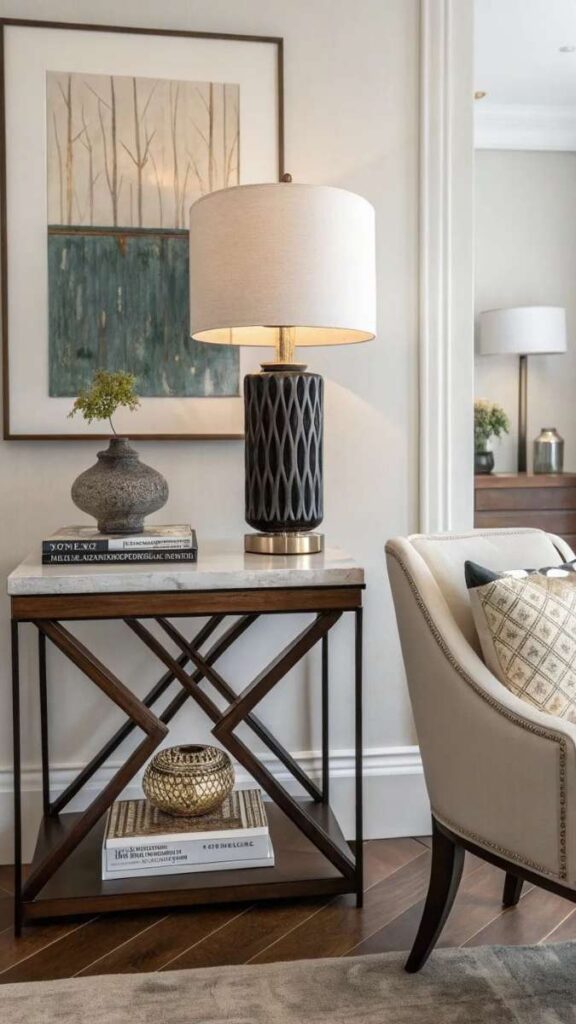
The side table or accent table in a dark academia room is a micro-environment, a small surface where the aesthetic is distilled into a few carefully chosen objects. Stack two or three books (spines visible), add a small sculptural object (brass, bronze, stone), a candle, and one natural element (a dried botanical, a small plant, a feather). The goal is a surface that looks curated without looking arranged.
Avoiding too many objects of the same height varying elevation (books as a base, then an object on top) creates the kind of still-life quality that photographs well and reads as considered rather than cluttered. This works at any scale and is one of the most accessible entry points into the aesthetic.
Dark Green Plants and Dried Botanicals for Organic Contrast
Plants in dark academia living rooms aren’t the bright, tropical statement plants of a maximalist setup; they’re darker, denser, and slightly more architectural. Think fiddle leaf figs, rubber plants, ferns, or snake plants in deep green tones. Place them beside bookshelves or in corners where they add vertical presence without blocking light.
Dried botanicals (pampas grass, dried florals, preserved eucalyptus) add texture on surfaces without requiring maintenance. The contrast of organic material against dark wood and rich fabric is what keeps the room from feeling entirely man-made. This is also a practical consideration: plants genuinely improve air quality in rooms where windows may be limited.
A Deep, Dramatic Mirror in an Ornate Dark Frame
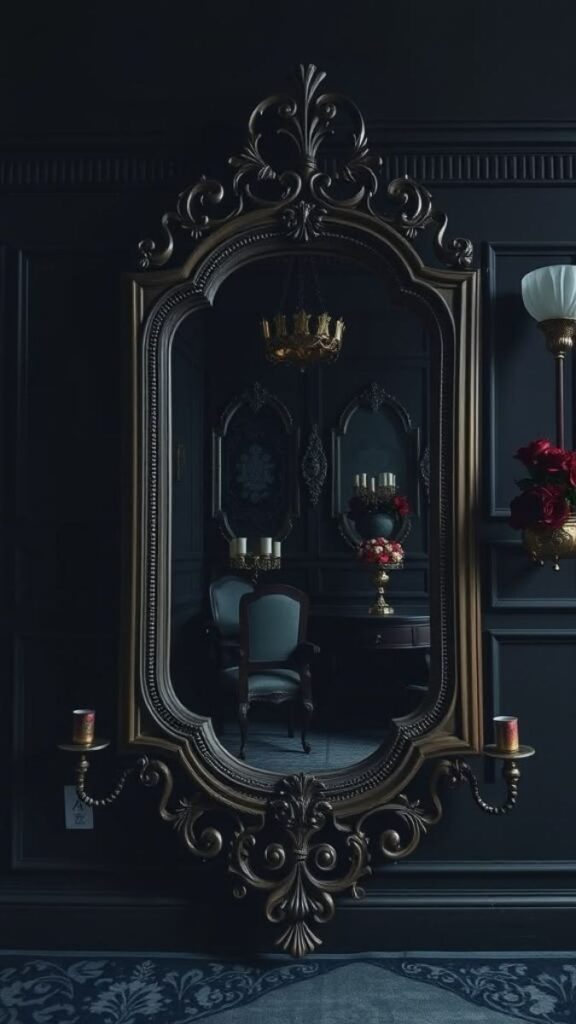
Mirrors in dark academia are less about making a small room feel bigger (though they do that) and more about adding a reflective layer to the warm, layered lighting. An ornate mirror in a dark or aged gilded frame hung on a wall that faces a light source catches and multiplies the glow from lamps and candles. The reflected light adds depth rather than brightness, which is exactly the right quality for this aesthetic.
Lean a large mirror against the wall rather than hanging it for an even more collected feel. This works especially well in living rooms without much natural light. The mirror compensates without making the space feel artificially bright.
A Low, Plinth-Style Console Against an Empty Wall
A console table is one of the most underused pieces in living room design and in dark academia, it’s essential for breaking up long, empty walls. Choose a low-slung console in dark wood or with metal accents, and position it against the wall opposite the main seating. Style it with a mirror or piece of art above, a lamp on one side, and an arrangement of objects below.
The console at standing height (versus a low shelf) creates a visual horizon line that helps divide tall walls and grounds the art displayed above it. This works well in narrow living rooms or hallway-adjacent spaces where adding another seating piece isn’t practical.
A Dark, Sculptural Bookend Collection
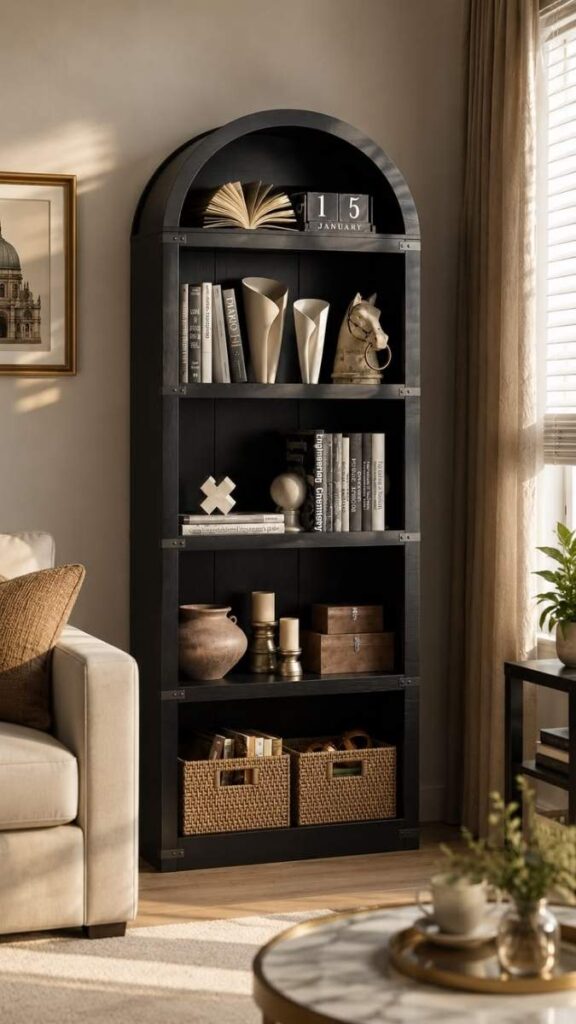
Bookends are easy to overlook but they do important visual work on a dark academia shelf. Heavy bookends in bronze, dark stone, or aged resin shaped like architectural elements, animals, or abstract forms keep books upright while adding object interest. Arrange books in color-grouped clusters with bookends as transitions between sections, rather than filling shelves edge-to-edge.
This creates breathing room and makes the shelf look more composed. It also solves the practical problem of books falling sideways, which creates that disheveled look that reads as cluttered rather than curated. Budget-friendly versions can be found at thrift stores; the patina of a used piece actually reads better than a new one here.
Candlelight as an Intentional Design Layer
Candles in this aesthetic aren’t decorative afterthoughts they’re a lighting layer as deliberate as a lamp. Group pillar candles in different heights on a dark tray on the coffee table, or place taper candles in brass candlesticks along a console or mantel. The quality of candlelight (slightly orange, directional, flickering) is uniquely warm and can’t be replicated exactly by any bulb.
In the evening, switching off the overhead light and using only lamps and candles activates the dark academia atmosphere completely. This is the most accessible entry point in the entire aesthetic; the cost is minimal and the impact on the room’s mood is significant.
A Stacked Book Display That Functions as Décor
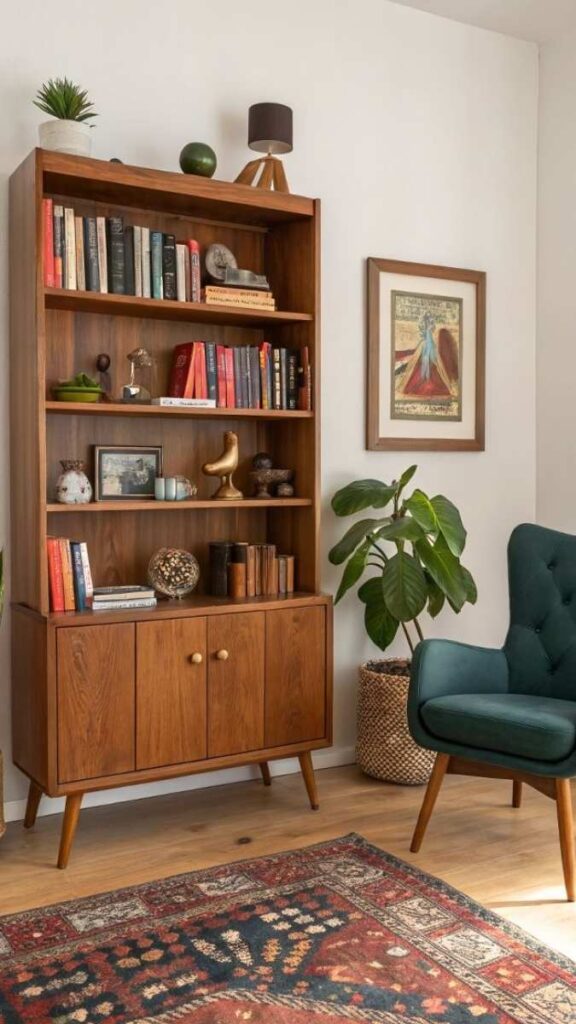
Books as furniture not just shelved, but stacked in visible, functional ways is one of the defining visual languages of dark academia. A stack of four to six hardcovers on the floor beside a reading chair, another on the coffee table, a few propped on a shelf with their covers visible.
This approach requires no shelving investment and immediately signals a lived-in intellectual atmosphere. Honestly, this is where the aesthetic becomes about more than just decoration it implies a way of using the space. Mix sizes and keep spines visible or facing out depending on how much visual order you want. This works at any budget level and in any size room.
Dark Academic Color Palette Executed Through Accessories
Not everyone can paint their walls or commit to a full furniture overhaul and dark academia works even when applied only through accessories. The key colors are: deep green, burgundy, burnt sienna, warm cream, black, and aged brass. Introduce this palette through cushions, throws, rugs, lamps, and small objects keeping the furniture and walls in neutral tones if needed.
The accessories alone can shift the room’s atmosphere significantly if they’re consistent in tone and material quality. This is the most renter-friendly and budget-flexible version of the aesthetic, and it’s genuinely effective when the objects are chosen with some intentionality rather than just swapped in one by one.
A Curated Vintage Bar Cart or Drinks Trolley

A bar cart styled with decanters, vintage glassware, a small candle, and a book or two reads as surprisingly on-aesthetic it’s both functional and visually rich in a way that fits naturally into an intellectually styled space. Choose a cart in brass or dark metal with glass shelves, and place it in a corner or against a non-primary wall.
The reflective quality of glass and metal picks up lamp and candlelight in a way that activates that corner without requiring art or shelving. This works as a standalone vignette in any size room and adds a layer of social function to the living room space that feels entirely appropriate to the dark academia ethos.
What Actually Makes Dark Academia Living Rooms Work
The aesthetic looks complex and it can be but the underlying logic is simple. Dark academia living rooms work because they’re built on contrast: dark backgrounds that make warm tones glow, heavy materials balanced by soft textiles, structured furniture paired with organic objects. When that contrast collapses (everything becomes equally dark, equally matte, equally heavy), the room stops working spatially.
The second structural rule is layering. Every surface, every wall, every corner should have at least two levels of visual information: a base element (furniture, wall color) and a detail layer (objects, textiles, lighting). This is what makes the aesthetic look collected over time rather than purchased in one shopping session.
Finally, lighting is doing more work in this aesthetic than in almost any other. A dark academia room with flat, even overhead lighting looks like a gloomy waiting room. The same room with layered warm light sources lamps, candles, picture lights feels intentional and atmospheric. Prioritize lighting before any other change.
Dark Academia Living Room Setup Quick Reference
| Idea | Space Type | Key Benefit | Problem Solved | Budget Level |
| Deep-toned sofa | All sizes | Strong visual anchor | Flat, characterless room | Mid–High |
| Floor-to-ceiling shelving | Small to medium | Vertical height + storage | Clutter, bare walls | Mid |
| Layered warm lighting | All sizes | Depth and atmosphere | Cold, flat lighting | Low–Mid |
| Reading corner armchair | Small to medium | Function + aesthetic | Unused corners | Mid |
| Persian-style rug | All sizes | Grounds seating zone | Floating furniture | Mid |
| Dark accent wall / wallpaper | All sizes | Instant atmosphere | Blank, flat walls | Low (peel-stick) to Mid |
| Chesterfield sofa | Medium to large | Strong architectural form | Generic furniture | Mid–High |
| Gallery wall prints | All sizes | Fills wall intentionally | Empty wall syndrome | Low |
| Candlelight layer | All sizes | Warm atmosphere | Clinical lighting | Low |
| Vintage bar cart | All sizes | Visual + functional vignette | Empty corners | Mid |
Common Dark Academia Living Room Mistakes That Undercut the Look
Going too dark without enough warm contrast
. Dark walls, dark furniture, and dark rugs with no warm lighting or light-toned textiles result in a room that feels oppressive rather than moody. The aesthetic depends on contrast: warm lamp glow against a dark wall, cream linen against a velvet sofa.
Treating the bookshelf as pure storage.
A shelf crammed from edge to edge with books and random objects loses the curated quality entirely. Even in a real book-filled home, editing the shelves, grouping by color, adding objects, leaving small spaces makes the difference between atmospheric and chaotic.
Choosing the wrong lighting temperature.
Cool-white bulbs (above 3000K) actively fight the dark academia aesthetic. Every bulb in the room should be warm white (2700K or below). This is a small, inexpensive fix that changes the entire atmosphere.
Over-accessorizing to compensate.
Filling every surface with objects because it “feels right for the aesthetic” creates visual noise, not richness. The goal is deliberate density. Every object has a reason to be where it is.
Ignoring furniture scale
Heavy, oversized furniture in a small room closes off the walking space entirely and makes the moodiness feel cramped rather than intimate. Scale furniture to the room first, then add atmospheric elements.
FAQ’s
What is the dark academia aesthetic in a living room?
Dark academia is a decor style built on warm, moody tones, rich textures, and intellectual objects like books, antique maps, and classical art. In a living room, it typically uses deep-colored walls or furniture, layered warm lighting, bookshelves, and natural materials like leather, wood, and velvet to create an atmosphere that feels warm, literary, and intentional.
How do I start a dark academic living room without repainting?
Focus on furniture, rugs, lighting, and accessories. A deep-toned sofa or armchair, a Persian-style rug, warm-bulb floor lamps, and grouped dark-framed art can shift the room’s atmosphere significantly without touching the walls. For renters, peel-and-stick wallpaper on one accent wall is also a low-commitment option.
What colors work best for a dark academic living room?
The core palette includes deep forest green, burgundy, oxblood red, warm charcoal, slate blue, and warm cream or off-white as contrast. Avoid cool-toned grays or stark whites; they work against the warmth the aesthetic depends on. Aged brass, bronze, and dark wood tie the palette together across furniture and accessories.
Is dark academia a good fit for small living rooms?
Yes, with some adjustments. Use vertical space (tall bookshelves, floor-to-ceiling curtains) rather than filling floor space with oversized furniture. Stick to one or two deeper-toned statement pieces and keep the remaining furniture mid-tone. Layered lighting is especially critical in smaller rooms; it creates the illusion of depth that the space can’t get from square footage alone.
Dark academia vs. Gothic decor: what’s the difference?
Gothic decor leans into dramatic, often medieval elements: skulls, black-on-black palettes, heavy drapery. Dark academia is warmer, more intellectual, and more livable: it’s about books, learning, warm lamp glow, and vintage natural objects. Both use dark tones, but the atmosphere of dark academia is cozy and contemplative rather than theatrical.
How do I add dark academia style without it feeling staged or costume-like?
Ground every aesthetic choice in function. Books should be real and readable, not just decorative. The reading chair should be positioned for actual use. Lighting should serve the room before serving the look. When the space is functional first and atmospheric second, it reads as genuine rather than styled.
What lighting setup works best for a dark academic living room?
Layer at least three light sources at different heights: a floor lamp near seating, a table lamp on a console or side table, and candles or smaller accent lights lower down. Use warm white bulbs (2700K) throughout. Avoid relying on overhead lighting as the main source; it removes the contrast and depth that make the aesthetic work.
Conclusion
A dark academia living room isn’t about buying the right objects, it’s about building the right atmosphere through contrast, layering, and intentional use of light and material. Small adjustments to lighting temperature, textile layering, and shelf styling can shift a room’s entire feeling without structural changes. The key is finding the right combination for your actual space, not recreating a version you saw on Pinterest.
Start with one or two changes that fit your current setup: a warm-bulb floor lamp, a stack of books as décor, a deep-toned throw across the sofa. Build from there. The aesthetic rewards gradual, thoughtful layering far more than an all-at-once overhaul.