80+ Bedroom Lighting Ideas That Actually Change How Your Room
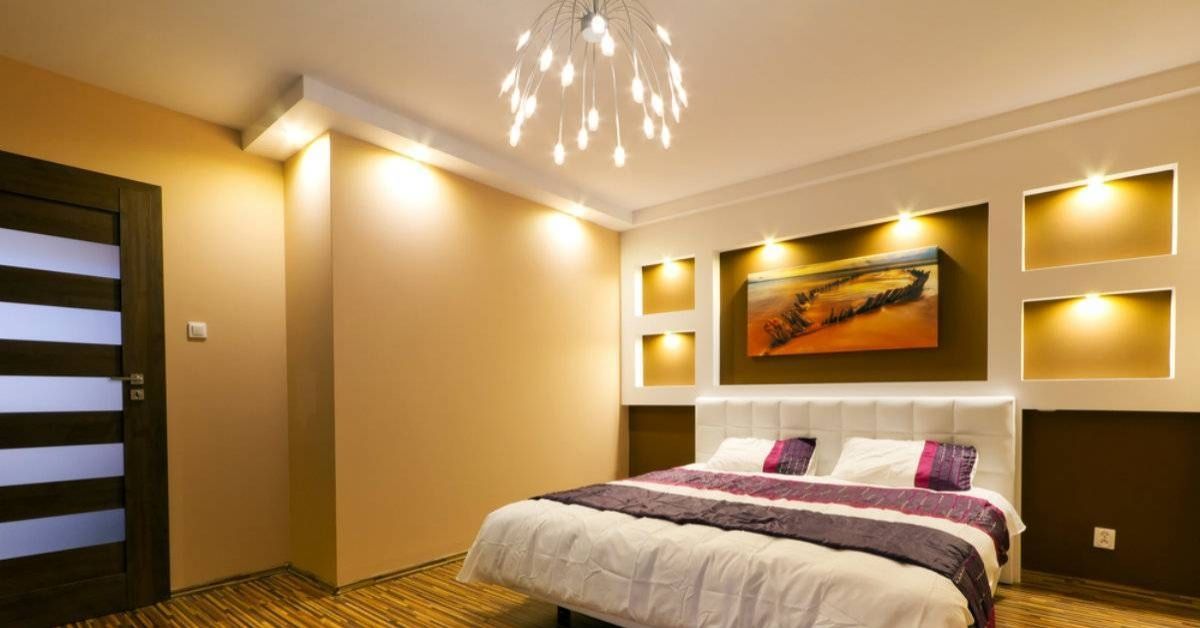
Most bedrooms are lit the way offices are, one overhead fixture doing all the work, and wondering why the room never feels quite right after 6 PM. Bedroom lighting isn’t a single decision; it’s a layered system, Bedroom Lighting Ideas and when it’s done well, it’s one of the most impactful things you can do to shift the atmosphere of a space.
If you’re working with a small apartment bedroom, a builder-basic room that lacks personality, or a layout that feels functional but cold, this is where lighting comes in. It doesn’t require a renovation. In many cases, it doesn’t even require an electrician. But the difference between one overhead light and a thoughtfully layered setup is significant both in how the room looks and how it actually feels to be in it.
These 27 bedroom lighting ideas range from simple plug-in additions to more considered setups, covering everything from tiny studios to larger primary bedrooms.
Swap Your Overhead Light for a Dimmable Pendant
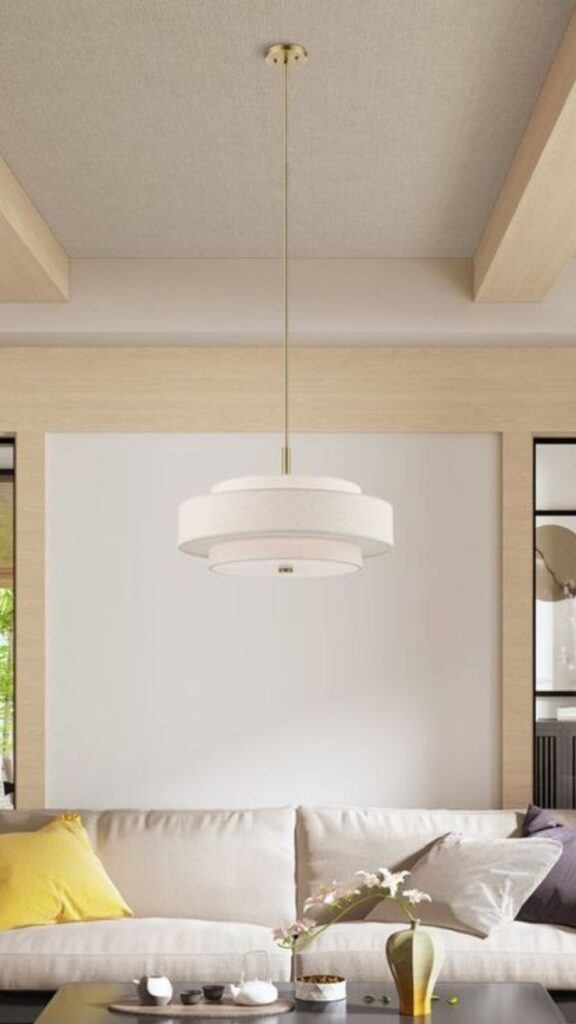
The single overhead fixture in most bedrooms casts flat, downward light that flattens the room and creates zero atmosphere. Replacing it or putting it on a dimmer changes the dynamic entirely. A pendant centered over the bed (hung around 7 feet from the floor) draws the eye upward and creates a focal point where there usually isn’t one.
This works especially well in rooms with higher ceilings, where a low-hanging globe or fabric shade adds visual warmth without closing the space in. If you’re renting and can’t rewire anything, a canopy-style pendant that plugs into an existing socket is a practical workaround.
Add a Wall Sconce on Each Side of the Bed
Bedside sconces solve a specific problem freeing up nightstand space while providing directed, adjustable light for reading. They also add a layer of visual symmetry that makes a bedroom feel more intentional.
Mount them about 28–30 inches above the mattress surface, angled slightly downward. Swing-arm sconces are particularly useful here; they let you direct light exactly where you need it without it spilling across the whole room. For renters, plug-in sconces with fabric-wrapped cords exist in most styles from minimal to warm brass, and they work just as well.
Use a Floor Lamp in the Corner to Break Up Flat Light
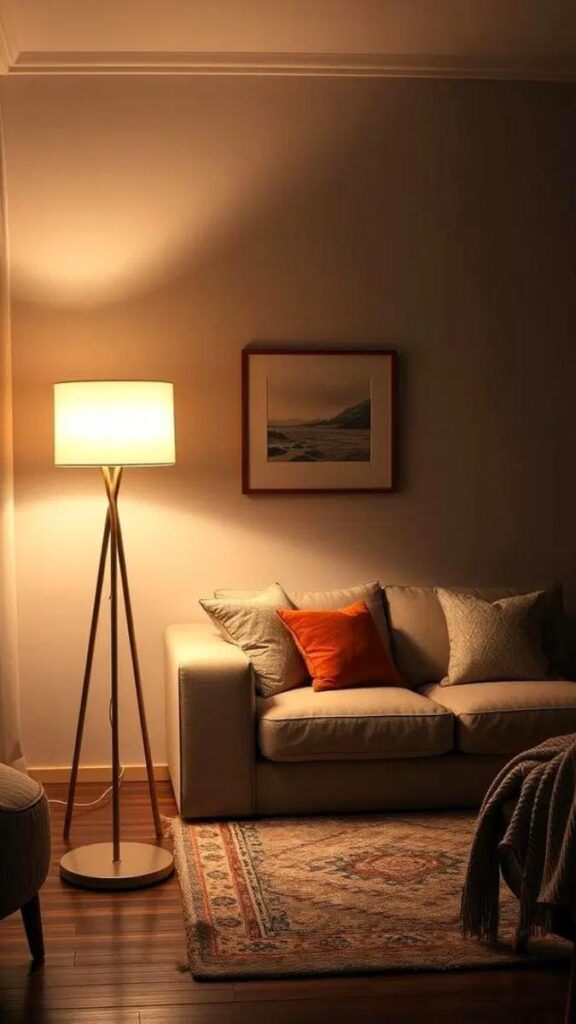
A floor lamp placed in a dim corner does two things: it fills a dead zone in the room’s lighting plan, and it makes the corner itself feel purposeful rather than wasted. An arc lamp that extends toward the center of the room can double as ambient and task lighting, especially if you’ve added a reading chair.
The upward light hits the ceiling and bounces back down softly, a completely different quality of light than a ceiling fixture pointing directly at you. This setup is particularly useful in larger bedrooms where a single pendant or sconce doesn’t reach the full room.
Layer Warm Bulbs at Different Heights
Layering isn’t just about having multiple light sources, it’s about varying their height. Light at ceiling level, eye level, and below eye level creates depth. When all three are using bulbs in the 2700K range (warm white), the room doesn’t look like it has “multiple lights on” it looks warm and cohesive.
This is one of those setups that I’ve noticed makes the biggest difference in photographed bedrooms and in real ones equally. The goal is a room that feels lit from within rather than lit from above.
Install LED Strip Lights Behind the Headboard
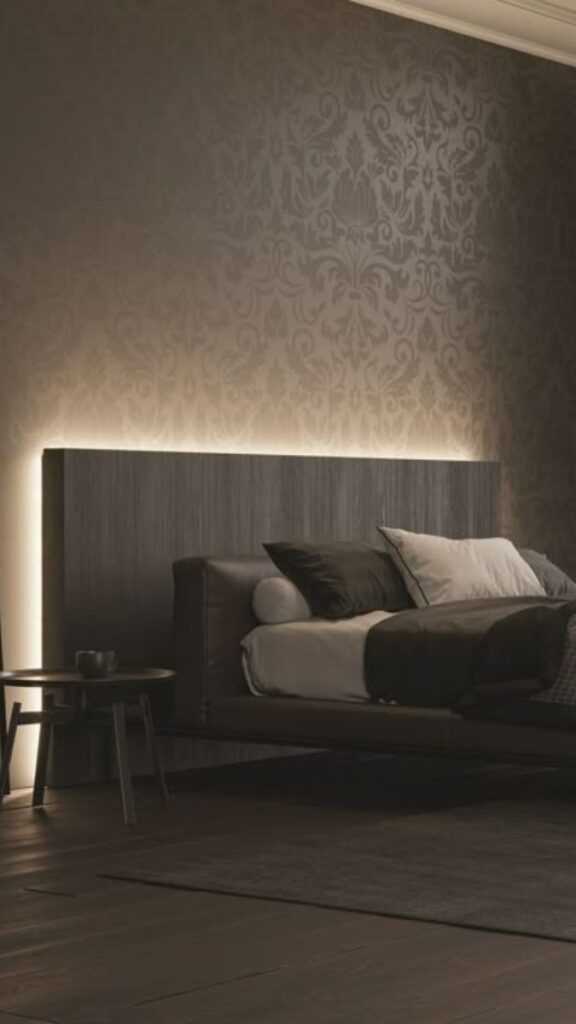
LED strip lighting tucked behind a headboard or mounted to the wall above it creates a floating, backlit effect that works both as ambient light and as a low-key nighttime option. It’s not a reading light, but it’s excellent for winding down.
The light bounces off the wall behind the bed and diffuses softly into the room. Choose warm white (2700K) rather than color-changing strips unless you actively want the flexibility of color modes that tend to look less refined in real life. This is a renter-friendly modification using adhesive mounts and a plug-in power supply.
Read More About: 79+ Japandi Kitchen Design Ideas That Make Small Spaces
Put a Small Table Lamp on a Low Dresser or Shelf
A table lamp at dresser height adds a mid-level light source that softens the transition between floor and ceiling light. It also turns a purely functional piece of furniture into something that contributes to the room’s atmosphere.
The lamp doesn’t need to be large; something with a 10–12 inch shade is enough. Position it toward the room rather than against the wall so the light casts outward. This works particularly well in bedrooms that feel functional but cold, where the lighting is adequate but the warmth isn’t there.
Use a Paper or Fabric Shade Instead of Bare Bulbs
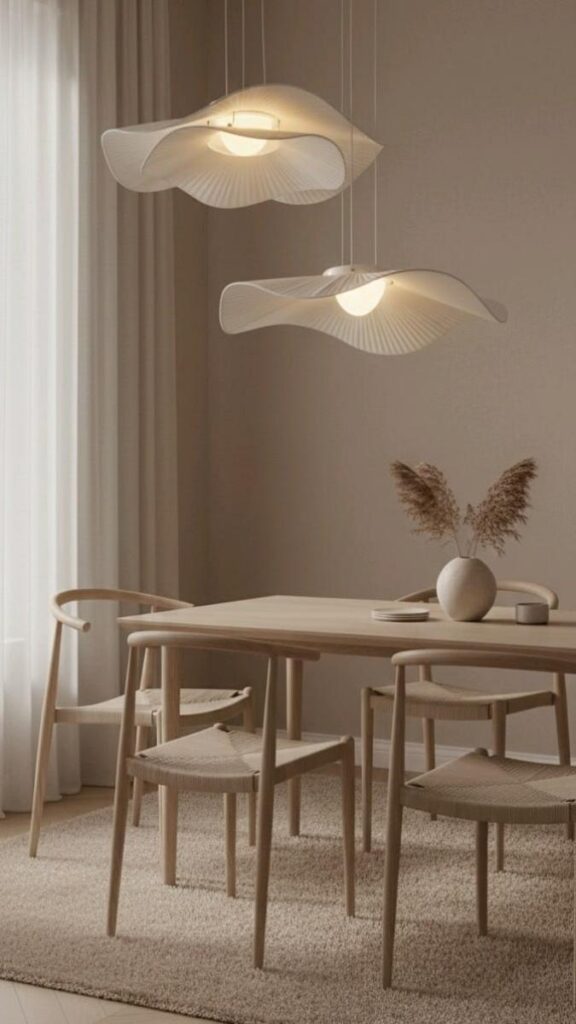
A shade changes the quality of light more than almost anything else. Bare Edison bulbs are trendy but directional they create contrast and glare rather than diffused warmth. A fabric or paper drum shade softens the light in all directions and makes the color temperature feel warmer even when using the same bulb.
In smaller bedrooms, a large shade (16–18 inches) with a warm bulb can replace the need for multiple sources. The key is matching the shade material to the room’s palette linen for neutral or earthy spaces, frosted glass for something cleaner.
Try a Plug-In Pendant Over the Nightstand
If you want the look of a bedside pendant but can’t hardwire anything, plug-in pendants have become a genuinely good option. The cord runs along the wall and plugs into a standard outlet; it’s not hidden,
But with a fabric or braided cord it looks intentional rather than improvised. This setup works especially well in small bedrooms where a table lamp would crowd a narrow nightstand, or in studio layouts where space is tight on both sides of the bed.
Add a Candle Cluster on a Low Surface for Evening Light
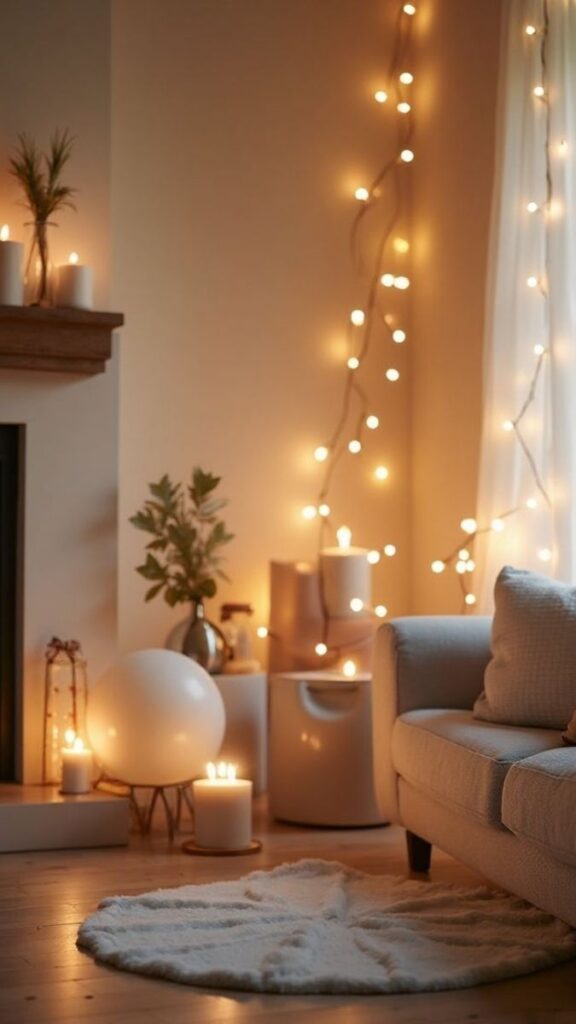
This one is straightforward but often overlooked in rooms that rely entirely on electric light. A cluster of unscented pillar candles (or high-quality LED candles if you prefer) on a tray provides the lowest, warmest light possible ideal for the hour before sleep.
Place them on a low surface, like a bench at the foot of the bed or a wide nightstand, so the light stays below eye level. The visual warmth of candlelight is genuinely difficult to replicate with electric sources at that temperature, and the ritual of lighting them tends to help with the shift from active to rest mode.
Read More About: 78+ Japandi Bedroom Design Ideas That Actually Work in Real Homes
Mount a Picture Light Above Artwork or a Mirror
A picture light isn’t just for galleries. Mounted above a framed print, a mirror, or a small gallery wall, it creates a warm accent layer that draws the eye across the room rather than down toward furniture.
The light is directional and contained; it doesn’t fill the room, but it makes one area feel intentional. This is a particularly useful move in bedrooms that feel a bit bare or where the walls need something without adding more art.
The light is the feature. Brass or matte black fixtures tend to read well in most bedroom palettes.
Use a Himalayan Salt Lamp as a Low Level Warm Accent
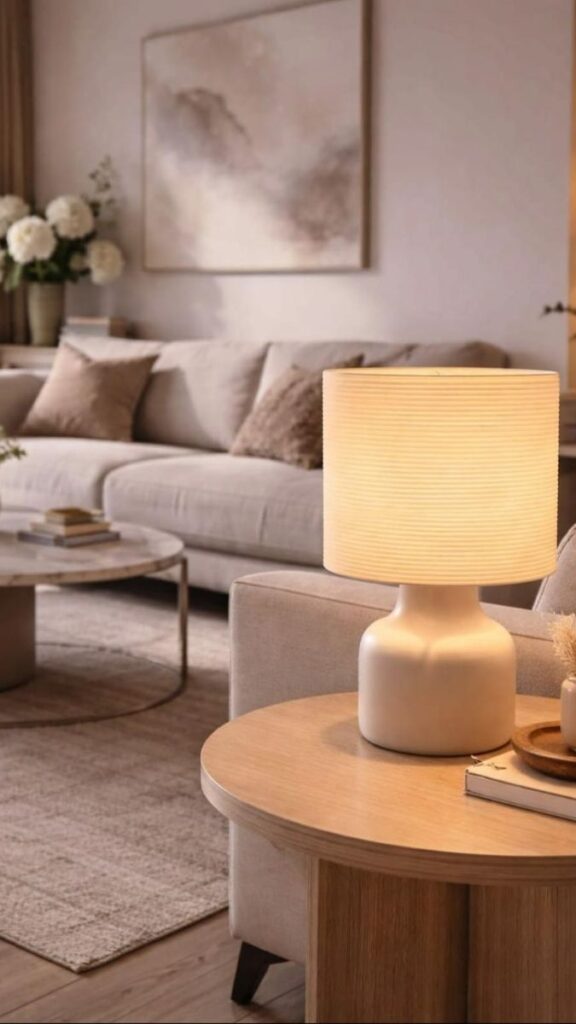
Salt lamps put out almost no usable light, but what they do put out is extremely warm (somewhere around 1900K) and deeply diffused. They work best as a single accent in a corner or on a shelf not as a primary source, but as part of a layered setup where everything else is already handled.
The amber glow is particularly effective in the 30–60 minutes before sleep, when cooler light becomes more of a problem. In my experience, this works best when it’s the only light left on in the room rather than competing with brighter sources.
Replace Recessed Can Lights with Softer Downlights
If your bedroom has recessed can lights, a common builder-grade choice they’re not necessarily a problem, but they need to be on a dimmer and using the right bulb. Recessed lights with warm (2700K), high-CRI (90+) bulbs on a dimmer system behave almost completely differently than the same fixture with a cool, flat bulb at full brightness.
The light becomes softer, the shadows more gradual, and the room shifts from feeling like a utility space to something more livable. If dimmer installation isn’t an option, consider supplementing with lamps to reduce reliance on the overheads.
Use a Clip On Reading Light for a Low Profile Bed
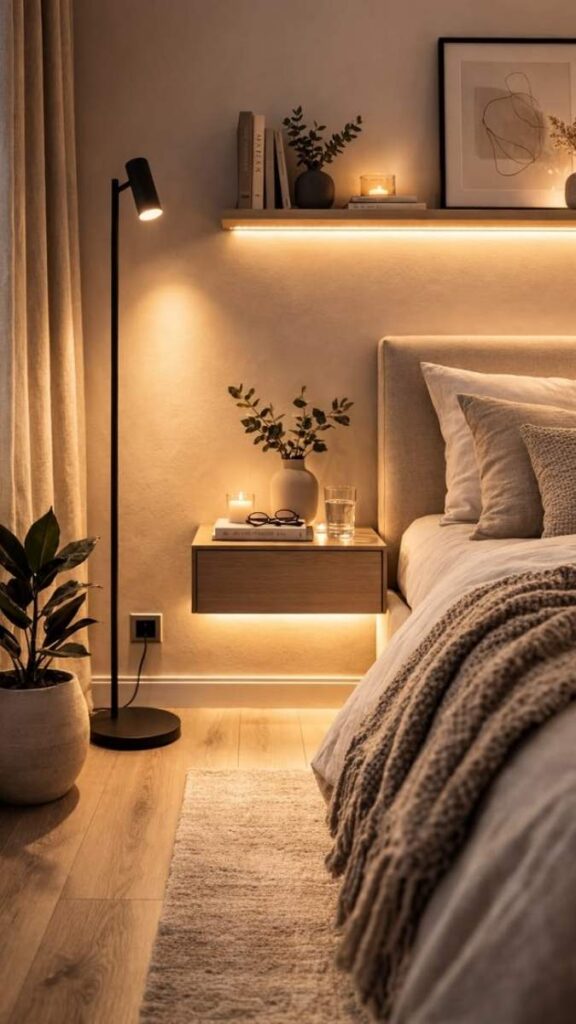
In very minimal or low-profile bedrooms where wall space is limited and nightstands are narrow, a clip-on reading light is a practical solution that doesn’t compromise the room’s aesthetic.
Modern clip lights have moved well past the utilitarian look; many come in brass, matte black, or white with flexible gooseneck arms. They clip to a headboard shelf, a slat, or the frame edge, and provide focused light without taking up surface space. This works particularly well in small bedrooms or shared spaces where one person reads and the other doesn’t.
Add a Lantern-Style Table Lamp for Texture and Warmth
Lantern-style lamps with visible bulbs add texture through the fixture itself, the visible filament, the metalwork, the shadow patterns it casts on the wall. In bedrooms with warm wood tones, raw linen, or rattan elements, this style of lamp reads as part of the material palette rather than a standalone piece.
The open frame means the light disperses in all directions, including upward, which creates a soft ambient effect alongside the visual interest of the lamp itself. Go with an Edison-style bulb at 40W (or equivalent LED) to keep the warmth without overwhelming the space.
Use Uplig hting Behind Tall Furniture
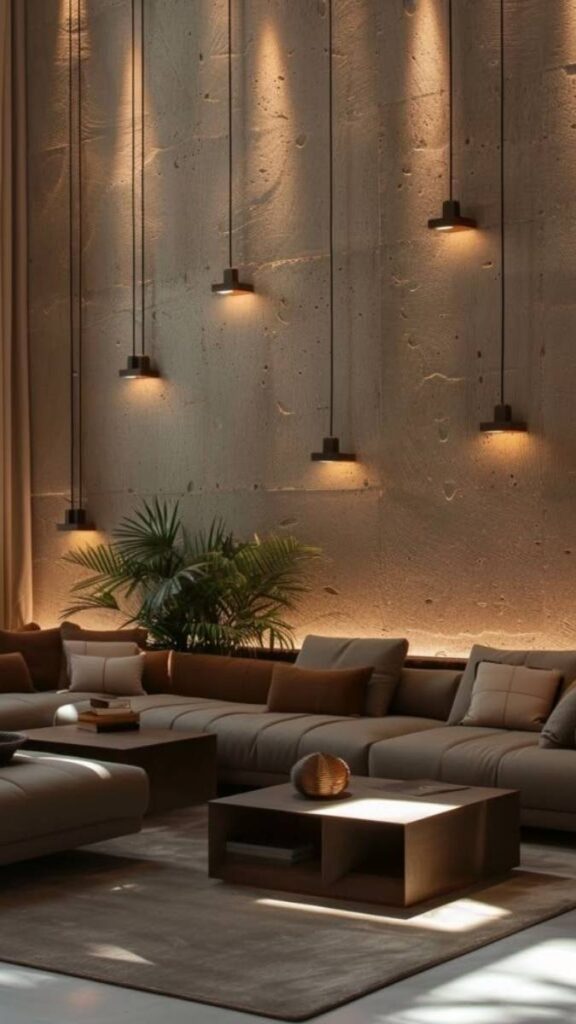
Placing a small uplight either a plug-in LED spotlight or a simple canister fixture behind a tall wardrobe or against the wall behind a plant creates a secondary light source that the eye reads as depth.
The light hits the ceiling above the furniture and creates a gradient from bright to dark that makes walls feel taller and the room feel larger. This is particularly useful in rooms with lower ceilings or where the furniture layout makes the space feel compressed. It’s an inexpensive addition that’s hard to see as a fixture, just a soft glow that you notice without quite knowing why.
Create a Reading Nook with Directed Task Lighting
A reading nook within a bedroom works best when its lighting is separated from the main ambient system. A directed floor lamp or a swing-arm sconce positioned behind and slightly above shoulder height gives enough light for reading without washing out the rest of the room.
This separation of a pool of task light in one area, dimmer ambient light everywhere else makes the bedroom feel like it has distinct zones, which is especially useful in larger rooms that can feel like one undifferentiated space. The nook becomes somewhere you actually want to be, rather than just an extra chair.
Read More About: 77+ Japandi Living Room Design Ideas That Balance Calm, Function
Use Warm Fairy Lights for Low Ambient Light on a Shelf
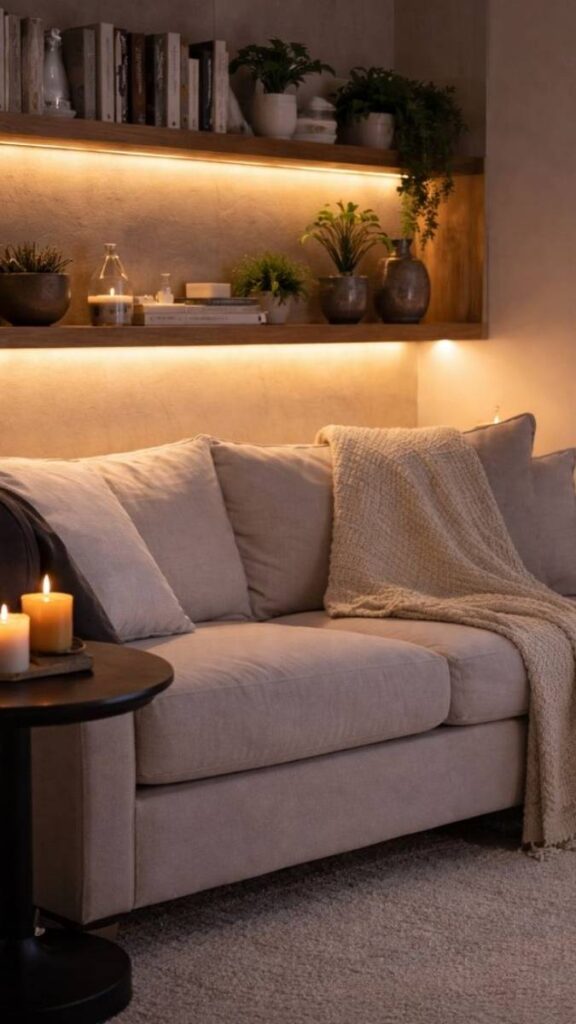
Fairy lights in bedrooms have a reputation for being a student dorm move, but that’s mostly about execution. Loosely draped along a floating shelf above the bed or behind a headboard without being too dense or perfectly arranged they add a soft ambient layer that works well for low light situations.
Choose warm white (2700K or lower) rather than cool white, and go for copper wire rather than green or silver for a cleaner look. The light output is minimal, so they function as atmosphere rather than illumination which, for an hour before sleep, is often exactly what’s needed.
Try a Wabi-Sabi Ceramic Table Lamp for Organic Light
Ceramic lamps with irregular glazes or organic forms are one of the better-looking options in 2026 bedroom styling; they’ve largely replaced the matching set lamp that characterized bedroom design in the previous decade.
The material itself absorbs and reflects light slightly differently than glass or metal, giving the glow a softness that feels handmade rather than manufactured. They pair well with linen shades and work in spaces that lean earthy, minimal, or wabi-sabi.
A single ceramic lamp on one nightstand, with a different (but tonal) lamp on the other, avoids the overly matchy feel while keeping the palette coherent.
Zone Your Bedroom Lighting with Smart Bulbs
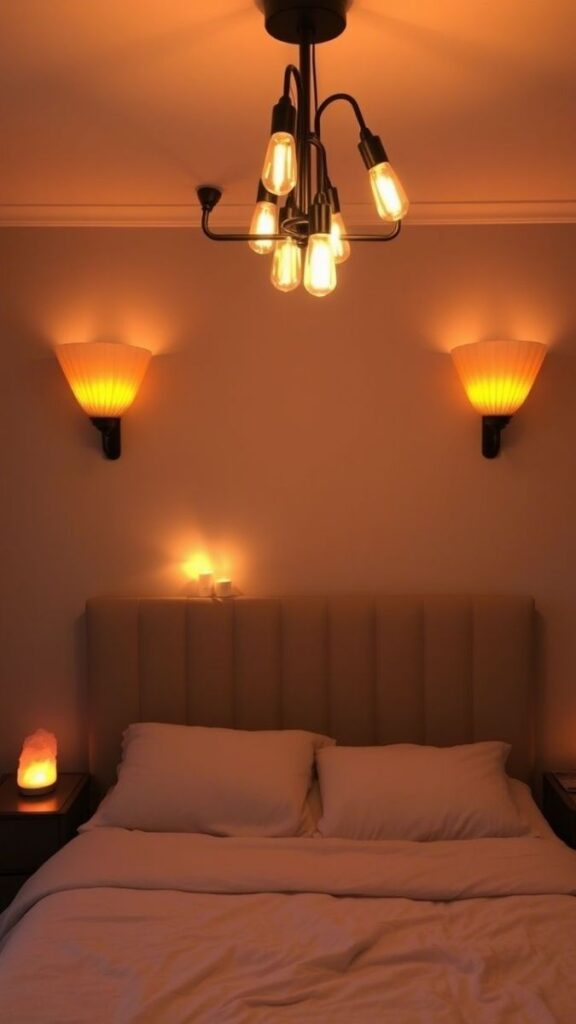
Smart bulbs have become genuinely practical rather than gimmicky, particularly in bedrooms where the need for different light levels at different times is real. A warm, dim scene for evenings, a brighter cooler tone for getting ready in the morning, and a very low amber for late night all set with one tap rather than multiple switches.
The practical value here is in reducing friction if switching to a better light for sleep requires more than one action, most people won’t do it consistently. The bulbs work in any existing fixture and the cost-per-fixture has come down significantly.
Use a Mirror to Reflect and Amplify Lamp Light
A large mirror positioned across from a lamp source or at an angle that catches window light during the day effectively doubles the perceived light in a room without adding a fixture. In small bedrooms, this matters.
A mirror on the wall opposite a pair of bedside lamps reflects their warmth back into the room and makes the space feel considerably brighter and larger without changing the light quality. This is especially useful in north-facing rooms or basement bedrooms where natural light is limited and every bit of amplification counts.
Add a Bedside Tray with a Small Rechargeable Lamp
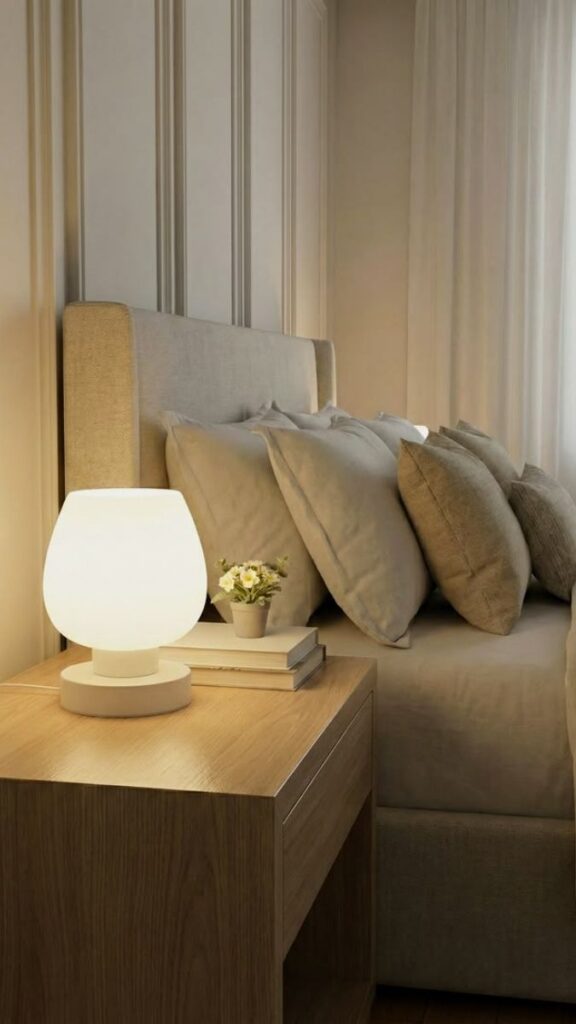
Rechargeable portable lamps have gotten significantly better in quality and design brands like Lexon and GUBI now make options that look intentional on a nightstand rather than improvised.
The advantage is purely practical no cord running to the outlet, which means a cleaner surface and the ability to move the lamp anywhere in the room. In bedrooms with limited outlet placement or in setups where cords run visibly across the floor, this removes the compromise entirely. Charge during the day, use at night most last 8–12 hours on a single charge at low brightness.
Frame the Window with Soft Curtain-Adjacent Lighting
Lighting placed near not in a window frame creates a soft glow that blurs the line between interior and exterior at night and makes windows feel like features rather than dark rectangles.
A simple LED strip along the inside of a window reveal, or warm pendant lights hanging on either side of a larger window, creates this effect without being heavy-handed. During the day the window reads normally; at night the lighting transforms it. This works particularly well in bedrooms with deep window reveals or large windows that frame a view.
Use a Tall Arc Lamp to Create Overhead Light Without Hardwiring
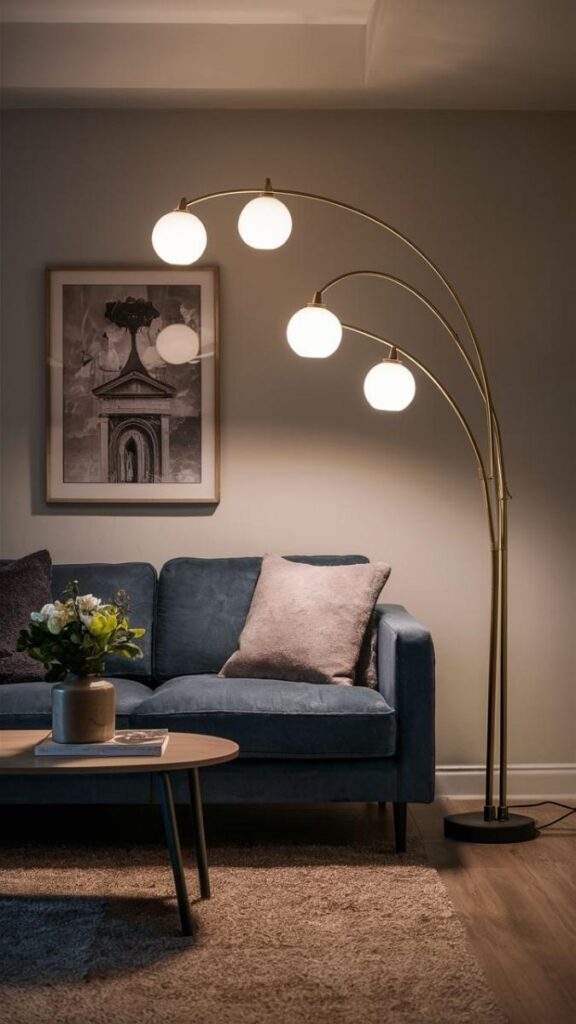
For rooms where the existing overhead fixture is unimpressive and hardwiring isn’t an option, a tall arc lamp positioned near the bed can approximate the effect of a pendant overhead, warm, adjustable.
Choose one with a fabric or paper shade rather than an open reflector bowl, so the light diffuses rather than spots. The lamp base sits on the floor, the arm extends several feet over the bed or seating area, and the shade hangs at roughly pendant height. This is one of the more efficient ways to get overhead-quality light without any installation.
Use a Bedside Lamp with a Touch Dimmer for Late Night Use
Touch-dimmer lamps solve a small but consistent problem reaching for a switch or app when you’re already in bed and nearly asleep. A lamp that dims in three taps bright, medium, very low lets you wind down the light level gradually without getting up or navigating a phone.
At the lowest setting, the warmth should be deep amber rather than pale yellow, which means being deliberate about the bulb choice. The lamp itself can be simple; the functionality is what matters here.
Use Pendant Lights Over a Bedroom Desk Area
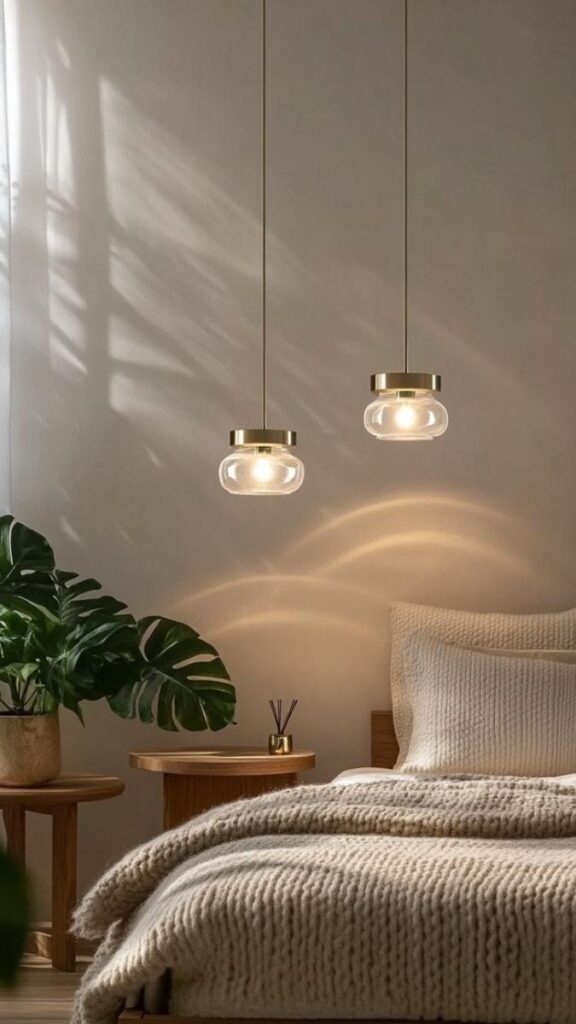
Bedrooms that also serve as workspaces need lighting that can shift between the two functions. A pendant positioned low over the desk (about 18 inches above the work surface) provides focused task light for the day without interfering with the ambient system for the rest of the room.
When work is done, the desk lamp turns off and the room’s ambient lighting takes over and the zones stay separate. This is particularly relevant for studio apartments and smaller setups where the bedroom genuinely has to function as an office some of the time.
Try a Mushroom Lamp for a Sculptural Statement
Mushroom lamps both the classic Murano glass versions and the more accessible interpretations that have come out in the last few years, function as sculptural objects as much as light sources.
Placed on the floor in a corner or on a low console, they put out a soft, diffused glow that barely qualifies as ambient light but adds character to a room that already has a functional lighting setup in place. The shape is distinctive enough to work as a design statement, and the warmth at this scale (usually 10–15 inches) is a comfortable contrast to brighter fixtures elsewhere.
Install a Dimmer Switch as the First Step in Any Lighting Upgrade
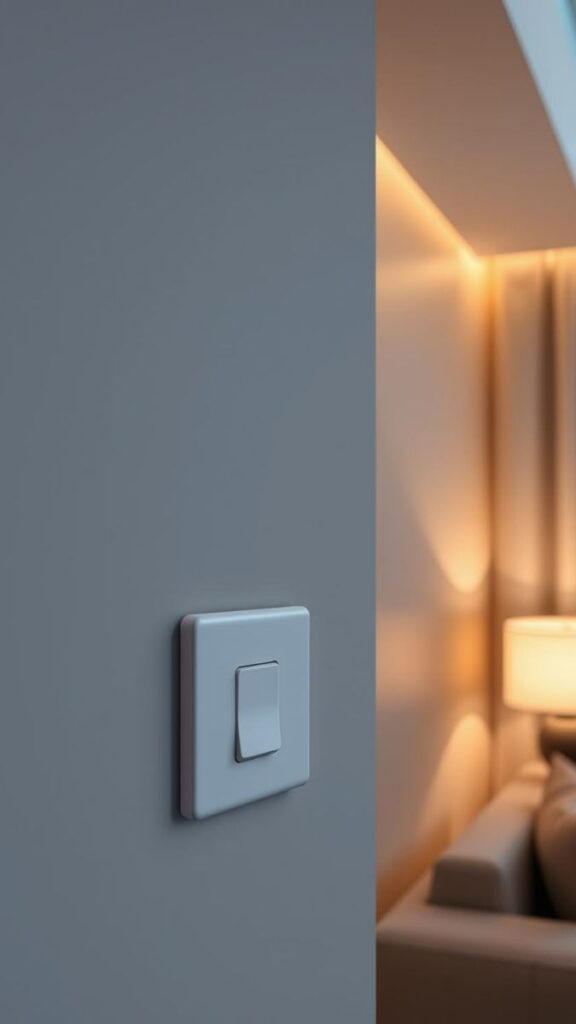
Honestly, if you do one thing on this list, make it this. A dimmer switch costs around $20 and changes what your existing fixtures are capable of. Most bedrooms with overhead lighting are using it at full brightness, the equivalent of working under fluorescent office light.
At 50–60% brightness with a warm bulb, the same overhead fixture becomes functional and livable. At 20%, it’s ambient. The upgrade takes about 15 minutes, works with most fixtures, and changes the usability of the room in a way that new lamps can’t fully replicate on their own.
What Actually Makes Bedroom Lighting Work
There’s a tendency to treat bedroom lighting as a style question: which lamp looks good, what color the shade is. But the more useful lens is function and layering.
The three-layer model
Think of bedroom lighting in three layers: ambient (overall room light), task (reading, getting dressed), and accent (atmosphere, visual interest). A bedroom that only has overhead light has one layer. A bedroom with overhead, sconces, and a floor lamp has all three, and the difference in how it feels is disproportionate to the cost of adding those layers.
Color temperature matters more than brightness.
A 2700K warm white bulb at 800 lumens feels completely different from a 4000K cool white at the same brightness. For bedrooms, stay at or below 2700K for any fixture that’s on in the evening. Higher temperatures (3000K+) are fine for a makeup mirror or morning-specific task light, but shouldn’t dominate the room’s ambient setup.
Dimmer compatibility
Many LED bulbs are dimmer-compatible but still flicker at low levels; this is a bulb-specific problem, not a dimmer problem. Look for bulbs explicitly rated for smooth dimming (often noted on the packaging as “flicker-free” or tested with common dimmer brands). This matters most for the bedside lamps you’ll use at their lowest settings most often.
Ceiling height determines pendant height
In rooms under 8 feet, a pendant hung at the standard height (7 feet from floor) will feel too close. Either skip pendants in very low-ceiling rooms or use a very shallow fixture that doesn’t extend far below the ceiling.
Bedroom Lighting Ideas Quick Reference Guide
| Lighting Type | Best For | Space Type | Problem It Solves | Ease of Setup |
| Dimmable pendant | Primary ambient | Medium–large bedroom | Flat overhead lighting | Moderate (may need electrician) |
| Wall sconces | Reading, nightstand space | Any bedroom | Cluttered nightstands, poor task light | Easy (plug-in option available) |
| Floor lamp | Corner fill, reading | Large or studio bedroom | Dead zones, poor layout lighting | Very easy |
| LED strip (headboard) | Evening ambient | Any bedroom | Harsh overhead at night | Easy (plug-in, adhesive) |
| Smart bulbs | Multi-function spaces | Any bedroom | Manual adjustment friction | Easy |
| Rechargeable lamp | Clean nightstand setup | Small bedroom | Cord clutter, outlet placement | Very easy |
| Arc floor lamp | No-wire overhead effect | Any bedroom | Lacking overhead quality without hardwiring | Easy |
| Touch dimmer lamp | Late night winding down | Any bedroom | Accessibility, gradual dimming | Very easy |
Common Bedroom Lighting Mistakes That Make the Space Feel Off
Using only one light source
Even a great single fixture creates flat light. The room may be bright, but it won’t have depth or warmth which is why it feels uninviting even when technically well-lit.
Placing lamps too high
Table lamps on nightstands above mattress level (common with taller platform beds) put the shade at eye level when you’re in bed, which means glare. Nightstand height should put the lamp shade bottom at roughly shoulder height when sitting up in bed.
Mismatching color temperatures
A warm overhead with a cool-white desk lamp in the same room creates visual dissonance that most people notice without knowing why. Pick a temperature and stick to it across the room 2700K for most bedrooms, 3000K if you want something slightly crisper.
Ignoring the ceiling
Uplighting, bounce light, and pendant choices all interact with the ceiling. A white ceiling amplifies and softens light; a dark or textured ceiling absorbs it. If your room feels dim despite adequate fixtures, the ceiling color may be part of the problem.
Buying lamps based on look alone
A lamp that photographs well but puts out 450 lumens through a thick shade is a decorative object, not a functional light. Check the lumens on the recommended bulb (800–1100 is typically needed for a bedside reading lamp) before committing to a fixture.
FAQ’s
What is the best lighting setup for a bedroom?
The most effective bedroom lighting uses three layers: ambient light (a dimmable overhead or pendant), task light (bedside sconces or lamps for reading), and accent light (a floor lamp, strip lighting, or decorative source for atmosphere). Using all three on dimmers and keeping bulbs at 2700K throughout gives you a setup that works for every time of day and activity.
What color temperature should bedroom lighting be?
For most bedrooms, 2700K warm white is the standard. It’s warm enough to feel comfortable in the evening without being so orange that it affects how colors read in the room. If you have a makeup mirror or need bright morning task lighting, 3000K is acceptable for that specific fixture only.
Do I need an electrician to improve my bedroom lighting?
Not necessarily. Most meaningful bedroom lighting upgrades adding floor lamps, plug-in sconces, LED strips, rechargeable lamps, or smart bulbs require no electrical work. Dimmer switches are a borderline case they’re straightforward to install but do involve working with wiring, so comfort level varies. Hardwiring new ceiling fixtures requires a licensed electrician.
How do I make a small bedroom feel brighter without harsh overhead light?
Use a mirror on the wall opposite your main lamp source to reflect and amplify the light. Add lamps at multiple heights rather than relying on a single overhead. Choose lighter shade materials (linen or frosted glass) that diffuse light in all directions instead of directing it downward. Keeping all bulbs at the same warm color temperature also makes the room feel more cohesive, which the eye reads as brighter.
Is LED lighting good for bedrooms?
Yes, modern LED bulbs in the 2700K range are excellent for bedrooms. Look for high CRI (90+) bulbs, which render colors more accurately and produce a warmer, more natural-looking light. The main thing to check is dimmer compatibility if you’re using them on a dimmer switch.
Bedside sconces vs. table lamps which is better?
Sconces free up nightstand space and look more considered, but they require wall mounting (plug-in options work around this). Table lamps are more flexible and easier to adjust but take up surface area. Go for sconces if you have limited nightstand space or want a cleaner look; go for table lamps if you rent, move often, or prefer flexibility.
How can I make my bedroom feel cozy at night without spending much?
Start with a dimmer switch on your existing overhead light. Add one warm floor lamp in a corner. Use 2700K bulbs throughout. These three changes none of which requires buying new furniture will have more impact on the evening atmosphere than almost any other single modification.
Conclusion
Good bedroom lighting isn’t about having the most fixtures or the most expensive ones, it’s about having the right combination of sources at the right heights, temperatures, and brightness levels for what you actually do in the room. Even two or three thoughtful additions to a basic overhead setup can shift the atmosphere significantly.
Start with one idea that fits your current space and budget a dimmer switch, a floor lamp for a dark corner, or a plug-in sconce on one side of the bed. Adjust from there. The goal is a bedroom that feels comfortable to be in at every hour of the day, not just one that looks good in a photo with all the lights on.