35+ Best Living Room Paint Ideas to Transform Your Space in 2026
There’s something almost magical about a fresh coat of paint. One weekend, a couple of rollers, and suddenly your living room feels like a completely different place. Living Room Paint Ideas Yet most homeowners spend more time picking a Netflix show than choosing their wall color and then wonder why the room never quite feels right.
Here’s the truth: the right paint color doesn’t just decorate a room. It sets the mood, shapes how big the space feels, and ties every piece of furniture together. Whether you’re craving a cozy, moody sanctuary or a bright, airy gathering space, this guide covers 35 living room paint ideas that actually work in 2026.
You’ll find real color recommendations, trusted brand picks from Sherwin-Williams and Dulux, expert tips on finishes and lighting, and practical advice for small spaces, vaulted ceilings, and plant-filled rooms. Let’s get into it.
Best Living Room Paint Ideas for Every Style
Style drives color always. A warm sage green that looks stunning in a Japandi living room can feel completely wrong in a traditional space with mahogany furniture and heavy drapes.
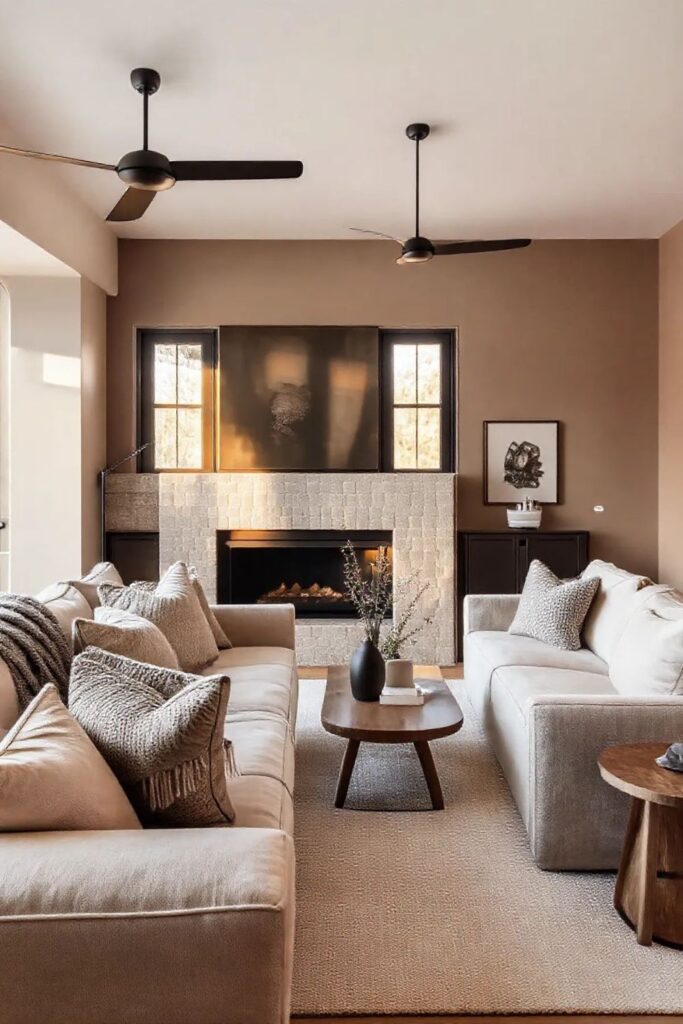
Before you even open a paint chip, you need to know what design language your room speaks. Modern living room paint ideas lean toward clean, cool-toned palettes with strong contrast.
Traditional rooms call for warmth, richness, and depth. Minimalist spaces thrive on restraint, a single, perfectly chosen tone that lets texture do all the talking. Getting this match right is the difference between a room that looks designed and one that just looks painted.
Think of it like dressing for an occasion. You wouldn’t wear a tuxedo to a backyard barbecue and you wouldn’t paint a cozy farmhouse living room with a stark, cool-toned gray.
Once you’ve identified your style, the color selection process becomes so much easier. The following sections break down the best living room paint ideas by style, so you can zero in on what actually fits your home.
Modern Living Room Paint Ideas
Modern living rooms are defined by clean lines, uncluttered spaces, and a palette that feels intentional rather than accidental. Think crisp whites with cool undertones, warm grays that anchor the room without feeling heavy, and deep charcoals that add drama without fuss.
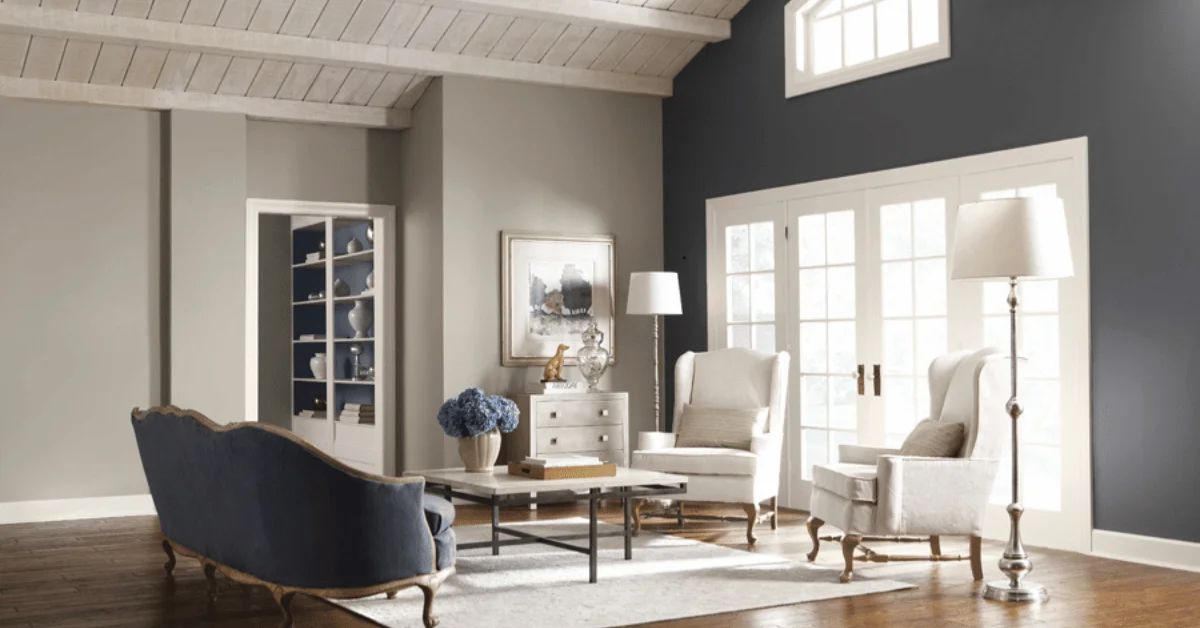
One of the most popular moves in modern living room color schemes right now is the two-tone approach: a charcoal gray accent wall behind the sofa paired with warm white on the remaining three walls. It creates depth and focus without overwhelming the space. Warm greige (that perfect blend of gray and beige) is another strong modern choice, understated, polished, and endlessly versatile. Slate blue adds a calm, sophisticated edge, especially when paired with matte black hardware and concrete-look surfaces.
Here’s a key detail many people overlook: in modern rooms, the paint finish matters as much as the color. Flat or matte finishes dominate modern interiors because they absorb light cleanly and make colors look richer.
A satin finish on a charcoal wall can cheapen the whole effect. When you’re pulling together modern living room paint ideas, always check the finish recommendation alongside the color; it’s half the equation.
Traditional Living Room Paint Ideas
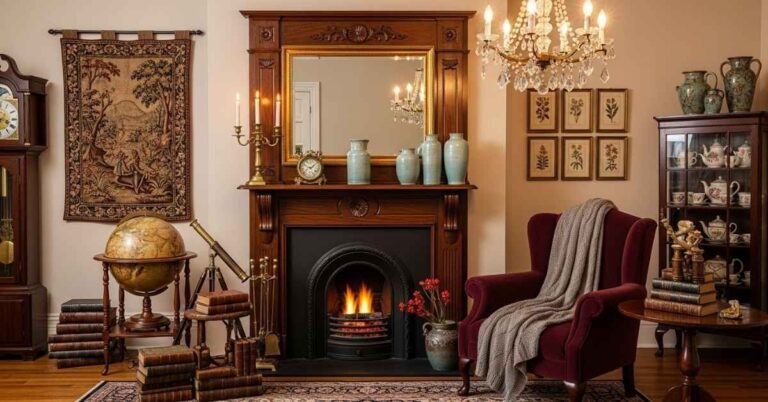
Traditional living rooms are warm, layered, and inviting. They’re built around rich colors, substantial furniture, and a sense of history. Traditional living room paint ideas favor deep navy, hunter green, warm burgundy, and creamy off-whites, the kind of palette that makes a room feel like it has stories to tell.
Deep navy paired with antique white trim is practically a timeless American classic. It’s formal without being cold, rich without being oppressive. Warm terracotta brings that same coziness with an earthy, Mediterranean edge especially stunning against dark wood floors. Forest green walls with gold-framed artwork and warm lighting?
That’s the kind of room people walk into and immediately want to sit down in.
The trick with traditional paint colors is understanding undertones. A cream that pulls too yellow can make a warm-toned room feel dated. A burgundy with too much purple can look garish under incandescent light.
Always test your samples under the lighting conditions of the actual room, natural daylight, evening lamp light, and overhead light before committing. Traditional living room color is all about warmth, but warmth done right.
Read More About: Best Living Room Color Ideas: 25 Designer Approved Paint Colors & Combinations
Minimalist Living Room Color Schemes
Minimalism isn’t about white walls and empty rooms. It’s about restraint, choosing one or two colors and letting them breathe. Minimalist living room color schemes rely heavily on tonal layering: painting the walls, ceiling, trim, and even built-in shelves in the same color family, just in slightly different shades.
This technique, often called color drenching, creates an immersive, cocoon-like atmosphere that feels both calm and sophisticated. An all-white room with warm wood tones and natural linen textures is the most classic version. But soft greige carried from floor to ceiling, or cool gray walls with a single matte black accent piece, work just as well.
What makes minimalist color schemes tricky is that every element shows. There’s no busy pattern or cluttered shelf to distract the eye. So the paint quality has to be excellent, the application flawless, and the shade selection precise.
One degree too warm or too cool, and the whole scheme can feel off. When planning minimalist living room paint ideas, invest in quality paint, take your time with samples, and remember: in a minimalist room, the color is the decor.
Living Room Colour Ideas by Color Family
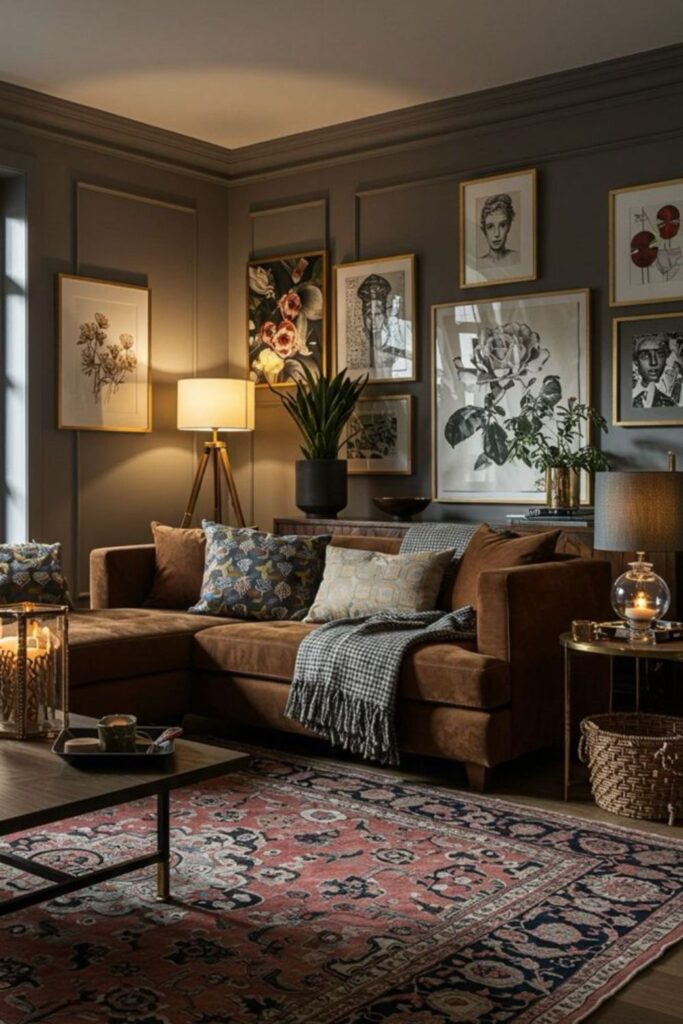
Sometimes you already know what you feel you just need help finding the right shade. Color families are the easiest way to organize your thinking. You might not know exactly which blue you want but you know you want blue. Start there, then narrow down.
The sections below break down every major color family with specific living room colour ideas for each, so you can move from “I like green” to “I want SW Evergreen Fog on my accent wall” in about ten minutes.
Each color family carries its own psychological weight. Blues calm and cool. Greens ground and refresh. Grays anchor and stabilize. Warm tones energize and comfort. Knowing what emotional effect you want from your living room is the fastest shortcut to the right color choice.
Blue Living Room Paint Ideas
Blue is consistently one of America’s favorite interior colors and for good reason. It’s one of the most versatile shades in the spectrum, ranging from barely-there powder blue to dramatically deep navy. Blue living room paint ideas work across virtually every design style: coastal, modern, traditional, even Japandi.
A navy blue accent wall behind a warm linen sofa creates that classic, grounded look that always photographs beautifully. Powder blue walls give an airy, coastal feel light bounces off them easily, making even a mid-sized room feel generous. Slate gray-blue hits a sophisticated middle ground, neither too dramatic nor too safe, and pairs brilliantly with warm wood floors and brass light fixtures.
Denim blue is having a real moment in 2026. It’s relaxed, casual, and warm enough to avoid the coldness that sometimes plagues blue interiors.
Deep cobalt, on the other hand, is a full commitment, bold, dramatic, and stunning against crisp white trim. Whichever shade you choose, pair blue walls with warm textures: wool throws, leather cushions, natural wood furniture. Blue walls with cold, chrome-heavy furniture can feel clinical. Blue walls with warmth feel like home.
Green Living Room Paint Ideas
Green is 2026’s defining interior color. Designers across the country are reaching for sage, olive, hunter, and emerald and the results are consistently stunning. There’s a reason green works so well indoors: it bridges the gap between the natural world and your living space. Green living room paint ideas feel grounding, organic, and effortlessly stylish.
Sage green on all four walls with natural linen furniture and warm wood accents is arguably the defining aesthetic of this moment in American interior design. It’s calm, it’s layered, and it photographs like a dream.
Olive green takes things earthier and pairs it with terracotta accessories and rattan furniture for a look that feels like a Tuscan farmhouse got a Brooklyn makeover. Emerald green as a single accent wall is bold and jewel-toned, especially beautiful when paired with deep walnut furniture and gold hardware.
If you want something lighter and more playful, dusty mint brings a retro, cheerful energy, think 1970s color sensibility with modern restraint. And forest green? That rich, almost-black green that makes a room feel like a cozy private library? It’s everywhere in 2026, and it deserves every bit of its moment.
Gray Living Room Paint Ideas
Gray had a long run as the neutral of choice in American living rooms and while it’s no longer the only option, it’s far from over. The key is choosing the right gray. Cool, blue-toned grays can make a north-facing room feel like a cold storage locker.
Warm grays, the ones that lean slightly toward beige or even purple are an entirely different story. Gray living room paint ideas work best when the undertone is carefully matched to the existing elements in the room.
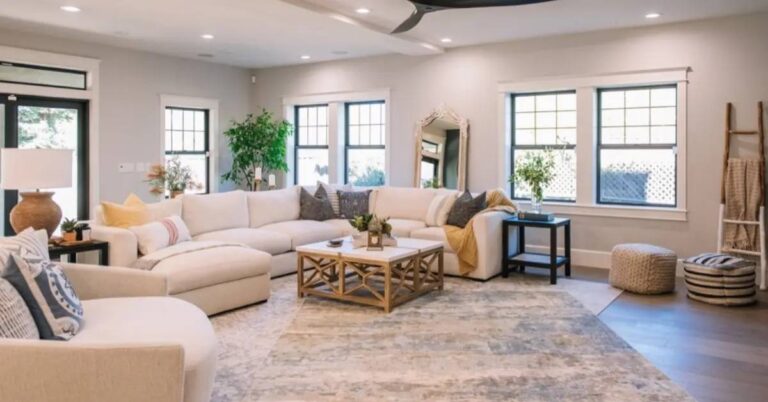
Warm greige (gray + beige) is the safe but genuinely stylish choice versatile enough to work with almost any furniture color and warm enough to feel inviting. Soft dove gray creates an elegant, light-filled room, especially in spaces with large windows.
Charcoal gray on an accent wall delivers real drama paired with lighter walls and warm lighting to keep the room from feeling dark.
Blue-gray hits a relaxed coastal note, while a classic greige-with-white-trim combination remains one of the most timeless looks in American home design.
Pink, Mauve & Lilac Living Rooms
Pink is back and it’s not the candy-coated pink of children’s bedrooms. The pinks making waves in living room colour ideas for 2026 are dusty, muted, and deeply sophisticated.
Dusty rose on a feature wall creates a warm, romantic atmosphere that works beautifully with cream upholstery and aged brass accessories. Mauve takes it a step further; it’s an adult, complex color that reads almost neutral in certain lighting conditions, making it surprisingly versatile for living rooms.
Soft lilac brings a dreamy, ethereal quality that pairs stunningly with white built-ins and natural wood floors.
And blush pink, especially SW’s Rosy Outlook or Benjamin Moore’s Pink Bliss works beautifully as a full-room color when balanced with ivory trim and gold fixtures. These aren’t colors that announce themselves loudly. They settle into a room quietly and make everyone in it feel comfortable. That’s the real power of the blush-to-mauve spectrum.
Warm Orange, Ochre & Yellow Living Rooms
Warm tones are making a strong comeback in 2026, led by the earthy orange and ochre palette that interior designers have been championing for the past couple of years. Warm living room paint colors in this family burnt sienna, terracotta, ochre yellow, soft butter bring energy and comfort in equal measure.
Burnt sienna on all four walls creates a Southwestern, adobe-inspired warmth that’s cozy and distinctive. Ochre yellow as an accent wall behind the sofa adds a pop of color that’s bold but not jarring, especially when the remaining walls stay in a soft cream or warm white.
Terracotta is arguably the decade’s defining earthy tone. It brings Mediterranean warmth and pairs beautifully with sage green plants, natural rattan furniture, and warm-white textiles. Soft butter yellow is the gentlest entry point into this palette, cheerful, sunny, and surprisingly easy to live with.
The secret with warm orange and yellow tones is balance: let the walls do the work, then pull back with neutral furniture and natural textures. The result feels layered and intentional, not like you accidentally painted your living room the color of a pumpkin.
Read More About: 12+ Aesthetic Wall Decor Ideas That Make Any Room Feel Intentionally
Burgundy, Teal & Deep Accent Colors
For homeowners willing to commit to something truly dramatic, bold accent wall colors in the burgundy, teal, and jewel-tone family deliver results that are hard to achieve any other way.
Burgundy wine on a single feature wall creates a moody, luxurious feel like velvet sofas, antique mirrors, and warm candlelight. It’s a commitment, but the payoff is a room that feels genuinely sophisticated.
Teal is an unexpected but stunning accent choice deep enough to feel serious, bright enough to feel alive. Pair a teal accent wall with warm wood furniture and copper accessories for a combination that feels both fresh and timeless.
Deep plum is for the brave; it creates an intimate, almost theatrical atmosphere that makes a living room feel like a destination rather than just a pass-through space.
Dark teal with brass accessories is a pairing that interior designers reach for again and again because it simply works the warm metal against the cool, deep green creates a tension that’s visually irresistible. These aren’t colors for the faint-hearted. But done right, they produce living rooms that are genuinely unforgettable.
Living Room Wall Colour Combination Living Room Paint Ideas
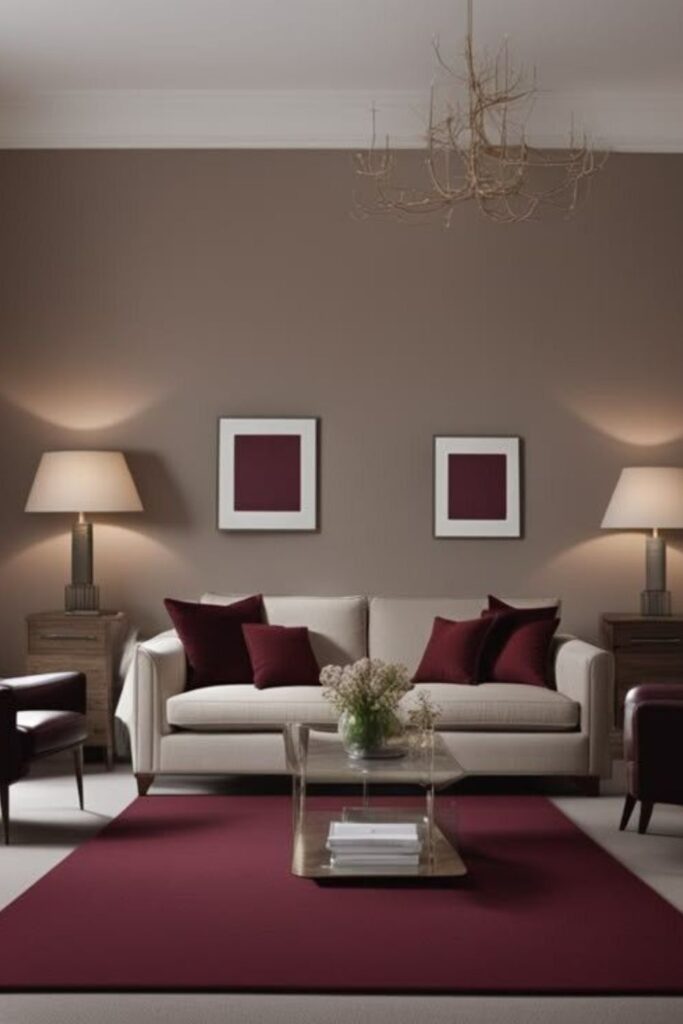
Single-color rooms are great but the real design magic often happens when two colors meet. Living room wall colour combination ideas range from subtle tonal shifts to bold contrasting statements, and getting this right can elevate a room from nice to extraordinary.
The challenge is balance: too much contrast and the room feels chaotic; too little and it just looks like you ran out of paint halfway through.
The 60-30-10 color rule is the most reliable framework here. Sixty percent of the room is in your dominant color (usually the walls), thirty percent in a secondary color (furniture, rugs, curtains), and ten percent in an accent color (cushions, art, accessories).
Apply this ratio and your color combinations will almost always feel balanced and intentional.
Two-Color Living Room Walls
Two-color walls are one of the most underused techniques in home decorating. The most classic approach uses a chair rail, a horizontal molding that divides the wall roughly one-third from the bottom with a darker, richer tone on the lower half and a lighter shade above.
White upper walls with warm greige below creates a clean, architectural look. Deep green wainscoting paired with soft cream walls above feels decidedly British in the best possible way. Navy lower panels with pale blue walls above bring a coastal, layered feel that’s both polished and relaxed.
Horizontal color blocking where you paint a bold stripe of color along the lower portion of the wall without any physical molding is a more contemporary approach that works especially well in modern and minimalist rooms.
It’s also a brilliant trick for low-ceilinged rooms, as it anchors the space visually and makes the ceiling feel higher by contrast. Whichever approach you choose, make sure the division line is crisp and perfectly level a slightly wonky line will undermine the whole effect.
Neutral and Accent Color Pairings
| Neutral Base | Accent Color | Vibe |
| Warm White | Terracotta | Earthy & Cozy |
| Soft Gray | Navy Blue | Classic & Clean |
| Greige | Sage Green | Natural & Calm |
| Off-White | Dusty Rose | Soft & Romantic |
| Cream | Deep Teal | Bold & Luxe |
| Warm Linen | Burnt Sienna | Earthy & Warm |
Building a neutral base and introducing one bold accent is the most foolproof approach to living room colour combination ideas. The neutral does the heavy lifting creating continuity, calm, and a backdrop for everything else.
The accent color is where personality lives. A warm white room with terracotta cushions, an earthy rug, and a terracotta-painted alcove has cohesion and character. The same room with no accent color is just… white. The accent makes the neutral meaningful.
Complementary Color Schemes That Work
Complementary colors sit opposite each other on the color wheel and that opposition creates a visual tension that’s deeply satisfying when handled with restraint. Complementary color schemes for living rooms don’t mean painting opposite walls in opposite colors.
It means using your wall color as the dominant tone and introducing the complementary color through accessories, textiles, and art. Navy blue walls with rust-orange cushions and a terracotta lamp. Sage green walls with deep red textiles and warm wood furniture. Soft lilac walls with mustard yellow accents. In each case, the complementary color appears in small doses enough to create energy, not enough to create chaos.
Best Living Room Wall Paint Colors in 2026
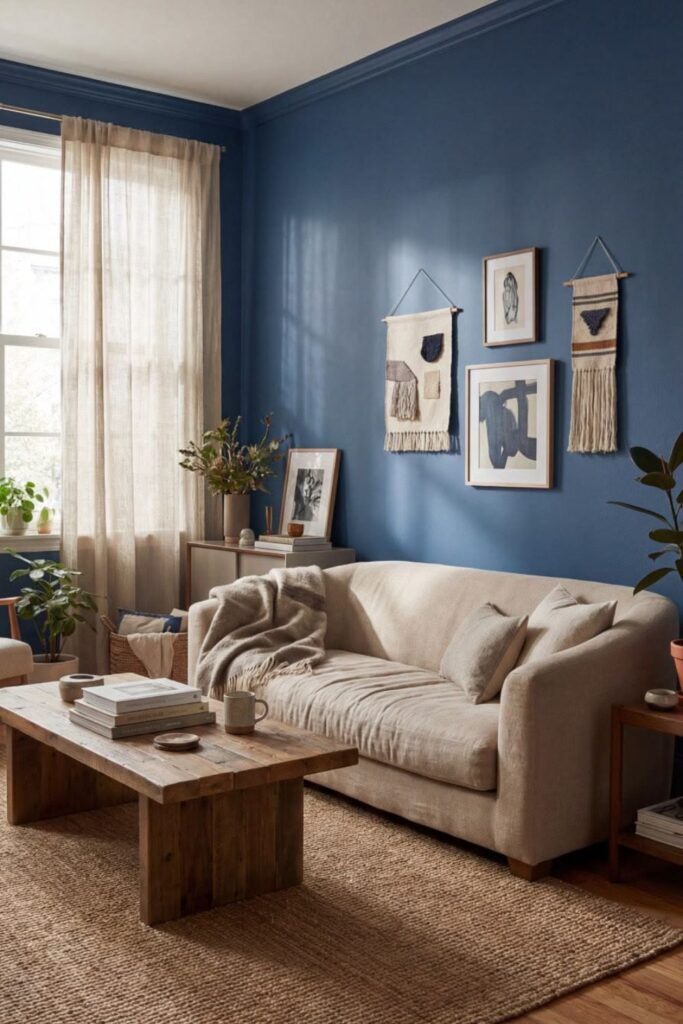
2026 is a reaction year in interior design. After years of cool, clinical grays and stark whites, American homeowners are moving toward warmth, groundedness, and colors that feel connected to the natural world.
The best living room wall paint colors in 2026 share certain qualities: they’re warm rather than cool, earthy rather than artificial, and complex rather than flat. This doesn’t mean every living room needs to be terracotta but it does mean that the cold, blue-toned palette that dominated the 2010s is well and truly over.
Designers are also embracing what they call “considered color” choices made intentionally, with full awareness of how light, texture, and furniture interact with the hue. It’s less about following trends and more about understanding color deeply enough to make a choice that will still feel right in ten years.
Trending Paint Colors Designers Love
The colors interior designers are specifying most frequently in 2026 cluster around a few clear themes: earthy warmth, nature-inspired greens, warm whites, and moody, atmospheric blues.
Warm terracotta continues its run as the decade’s defining earthy tone. Sage and olive greens are appearing in virtually every designer project across the country from coastal cottages in the Carolinas to urban apartments in Chicago.
Warm whites with golden undertones are replacing the stark, blue-toned whites that felt modern in 2015 but look cold today. And moody, atmospheric blues think denim, slate, and deep indigo are being used in living rooms where designers want drama without going full dark.
SW Evergreen Fog, BM Pale Oak, and Farrow & Ball’s Mole’s Breath are appearing constantly on designer mood boards right now not because they’re trendy, but because they’re genuinely excellent colors that work across a wide range of spaces and styles.
Timeless Neutral Paint Shades
Some colors never go out of style and if you’re painting a living room with an eye on resale value or long-term livability, these are the ones to reach for.
Timeless neutral paint shades have a complexity that saves them from feeling bland: they shift in different lighting conditions, they work with a wide range of furniture styles, and they never announce themselves as belonging to a specific era.
Warm greige, soft off-white with golden undertones, pale taupe, and muted sage are the enduring neutrals of American interior design. They’re the colors that make real estate listing photos look their best and make buyers feel instantly at home.
They’re also the colors that let you redecorate around them without repainting which, if you’ve ever repainted a living room, you’ll know is a genuinely significant advantage.
Bold Statement Wall Colors
Not everyone wants a neutral living room and frankly, neutral is overrated for people who actually love color. Bold statement wall colors done right are some of the most impressive interiors you’ll ever see. The key is commitment and balance. If you’re going deep navy, commit to it on all four walls.
If you’re going emerald green, let the furniture be simple and the accessories restrained. The biggest mistake people make with bold colors is hedging one dark accent wall surrounded by cautious beige. Go bold or go neutral; the middle ground rarely looks intentional.
Before committing to any bold color, test it on a large poster board (at least 12×12 inches) and live with it on your wall for 48 hours. Look at it in morning light, afternoon light, and evening lamplight. Colors shift dramatically across the day and across different light sources a color that looks perfect at noon can look completely different at 7pm.
Sherwin-Williams Living Room Paint Colors
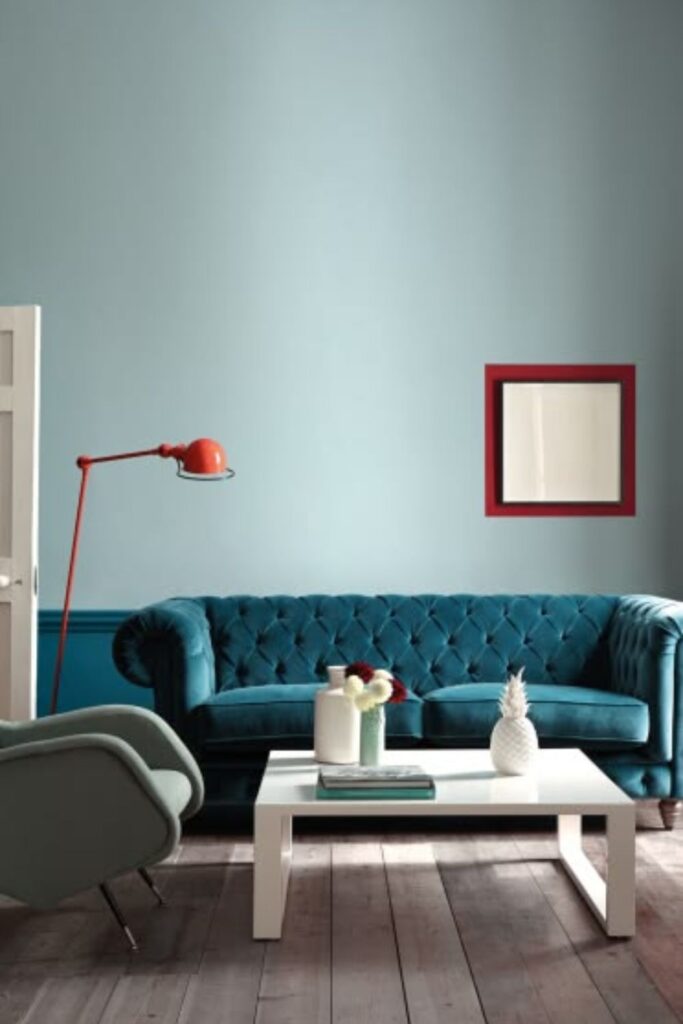
Sherwin-Williams is America’s most trusted and widely used paint brand and for good reason. Their color formulations are consistent, their range is enormous, and their customer service infrastructure (including free color consultations in-store) makes the whole process more accessible.
When it comes to Sherwin-Williams living room paint colors, a few options have achieved near-legendary status among American homeowners and designers alike.
Their ColorSnap tool lets you test colors on virtual room photos before you buy, which is genuinely useful for narrowing down options. And their Chip It browser extension lets you pull paint matches from any image on the web, a brilliant tool for anyone who finds inspiration in design photography.
Read More About: 49+ Boho Minimalist Wall Decor Ideas That Make Any Room Feel
Agreeable Gray for Living Rooms
SW Agreeable Gray (SW 7029) has been America’s best-selling paint color for several years running and it’s not hard to understand why. It’s a warm gray with subtle beige undertones that makes it feel welcoming rather than cold.
Its Light Reflectance Value (LRV) of 60 means it reflects a good amount of light without feeling washed out. In a south-facing living room with warm wood floors, Agreeable Gray looks absolutely stunning, warm, grounded, and quietly sophisticated.
Is it overused? Perhaps. In some neighborhoods, you could knock on three consecutive doors and find Agreeable Gray behind each of them.
But overused doesn’t mean wrong. It became popular because it works consistently, across a remarkable range of spaces and styles.
If you’re painting a living room to sell, Agreeable Gray is still one of the safest, smartest choices you can make. Pair it with bright white trim (SW Alabaster or Pure White), warm wood floors, and navy or sage accents for a result that photographs beautifully and appeals to virtually every buyer.
Alabaster Sherwin Williams Review
SW Alabaster (SW 7008) is the warm white that works everywhere. With an LRV of 82, it reflects plenty of light while its golden undertone prevents it from feeling cold or clinical.
Unlike stark whites that can feel harsh in warm-toned rooms, Alabaster softens naturally; it’s the white that looks like it belongs in the room rather than painted over it.
It’s particularly brilliant in living rooms with cream or beige upholstery, warm wood furniture, and natural fiber rugs, where it ties everything together without competing for attention.
Alabaster also works beautifully as a trim color alongside deeper wall colors paired with SW Naval, Evergreen Fog, or Accessible Beige for a combination that feels both polished and warm. One honest caveat: in north-facing rooms with limited natural light, Alabaster can occasionally pull slightly yellow. Always test it in your specific room before committing.
But in most American living rooms, especially those with southern or western exposure, it’s close to perfect.
Top Sherwin-Williams Paint Colors for Living Rooms
| Paint Name | SW Code | Best For | Undertone | LRV |
| Agreeable Gray | SW 7029 | Any style | Warm beige | 60 |
| Alabaster | SW 7008 | Bright, airy rooms | Warm yellow | 82 |
| Naval | SW 6244 | Bold accent walls | Cool blue | 4 |
| Evergreen Fog | SW 9130 | Nature-inspired rooms | Sage green | 44 |
| Accessible Beige | SW 7036 | Traditional rooms | Warm tan | 58 |
| Intellectual Gray | SW 7045 | Modern spaces | Cool gray | 38 |
| Dusty Miller | SW 9138 | Japandi & minimalist | Soft sage | 52 |
| Antique White | SW 6119 | Farmhouse & traditional | Warm cream | 73 |
Dulux Paint Colours for Living Rooms
Dulux brings a beautifully curated range of colors that reward careful selection. While primarily known in the UK market, Dulux colors are available through select US retailers and are worth seeking out particularly for their nuanced neutrals and nature-inspired greens and blues.
Their Dulux Colour of the Year announcements consistently anticipate the direction of interior design, making them a reliable compass for trend-conscious homeowners.
Dulux’s approach to color development is notably research-led. Their annual color forecasts are built on global lifestyle research, which means their palettes tend to feel emotionally resonant rather than arbitrarily trendy.
If you want colors that feel purposeful and psychologically considered, Dulux is worth exploring.
Best Dulux Neutral Shades
Dulux’s neutral range is particularly strong, complex, warm, and deeply liveable. Polished Pebble is a warm, mid-toned greige that catches light beautifully and pairs with virtually anything.
White Mist is a soft, almost barely-there white with cool undertones that works brilliantly in bright, south-facing rooms. Natural Hessian brings a warm, earthy depth that reads almost like a very light terracotta in warm lighting conditions, beautiful against dark wood furniture and natural fiber textiles.
Almond White is perhaps Dulux’s most versatile neutral: warm enough to feel welcoming, light enough to open up a small space, and neutral enough to coordinate with almost any furniture palette.
For best Dulux neutral shades that work in American living rooms, these four are the ones to start with. They share a quality of warmth and complexity that makes them look genuinely expensive, which is remarkable given that paint is one of the most cost-effective renovation investments you can make.
Best Dulux Blue and Green Paint Colors
Dulux’s blue and green range is where the brand really shines. Sapphire Salute is a deep, saturated blue with just enough warmth to avoid feeling cold, think less chilly cobalt, more rich denim. It’s a statement color that works beautifully on all four walls in a room with warm wood furniture and brass accessories.
Forest Therapy is a mid-toned sage-green with earthy, organic undertones, one of the best biophilic interior design colors on the market right now.
Teal Tension is exactly what the name suggests: a complex, deep teal that creates genuine visual drama without tipping into darkness. And Midnight Dreams is Dulux’s entry into the deep-navy-as-luxury-color category moody, sophisticated, and stunning paired with warm gold accessories.
How to Choose the Right Living Room Paint Color
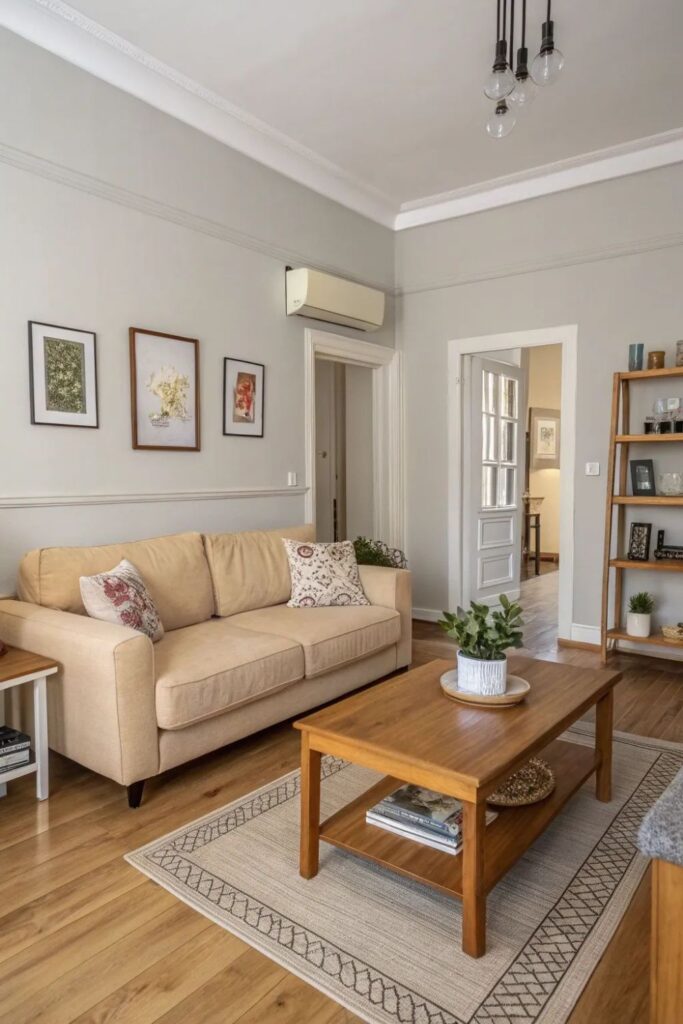
Choosing the right paint color is equal parts science and instinct. The science involves understanding light, LRV values, undertones, and paint finishes. The instinct involves knowing what you want the room to feel like cozy and intimate, open and airy, bold and dramatic, or calm and restful.
The following sections walk you through the practical framework that professional interior designers use when making color decisions simplified into steps any homeowner can follow.
The most common mistake people make is falling in love with a color in the store and painting it straight onto the wall.
Colors look completely different at scale, in different lighting conditions, and surrounded by your actual furniture. Every step in the decision-making process exists to help you avoid that expensive, disappointing surprise.
Consider Natural Light and Room Size
Natural light is the single biggest factor in how a paint color looks on your walls. A north-facing living room receives cooler, more diffuse light throughout the day which means warm paint colors are generally more successful there, because they counterbalance the coolness of the light.
A south-facing room gets warm, direct light for most of the day which means it can handle cooler colors without feeling cold, and warm colors might appear even warmer and more intense than expected.
LRV (Light Reflectance Value) is the number that tells you how much light a color reflects, on a scale from 0 (pure black, reflects nothing) to 100 (pure white, reflects everything). For small or dark living rooms, aim for colors with an LRV above 50.
For rooms where you want coziness and drama, you can go lower. “What looks gorgeous in the store can look completely different on your wall at 7pm” this is the universal truth of paint shopping, and the reason professional designers always test samples at scale before specifying a color.
Match Paint Colors With Furniture
Your paint color doesn’t exist in isolation; it lives with your sofa, your rug, your curtains, your flooring, and every other element in the room. The most common mismatch isn’t between colors, it’s between undertones.
A gray sofa with blue undertones will clash subtly but persistently with a gray wall that has warm, purple undertones. The colors are both “gray” but they’re not the same gray, and the tension between them will quietly bother you every time you walk into the room.
Checklist for Matching Paint to Furniture:
Identify the undertones in your largest furniture pieces (sofa, rug)
Identify the undertone in your flooring
Choose a paint color whose undertone harmonizes not necessarily matches with these elements
Test your paint sample against the actual furniture in the actual room
Evaluate the sample in morning light, afternoon light, and evening lamplight
Live with the sample for at least 48 hours before deciding
Understanding Paint Finishes
The sheen level of your paint affects not just how the color looks but how the surface performs over time. Matte and flat finishes absorb light and make colors look rich and deep but they’re harder to clean and show scuffs more easily.
Eggshell finishes have just a hint of sheen that makes them easy to wipe down while still looking soft and non-reflective. Satin finishes have a gentle glow that reflects light subtly and holds up well to regular cleaning ideal for high-traffic living rooms. Semi-gloss is typically reserved for trim, doors, and architectural details.
| Finish | Sheen Level | Best For | Durability | Washability |
| Flat/Matte | None | Ceilings, feature walls | Low | Poor |
| Eggshell | Very slight | Living rooms, bedrooms | Medium | Good |
| Satin | Soft glow | High-traffic living rooms | High | Very Good |
| Semi-Gloss | Moderate shine | Trim, doors, windows | Very High | Excellent |
For most American living rooms, eggshell or satin is the right call. They clean easily, hold color well, and strike the right visual balance between rich and practical.
Living Room Paint Ideas for Small Spaces
Small living rooms have one job: feel bigger than they are. The right paint color is one of the most powerful tools available for achieving this far more accessible and affordable than knocking down walls or adding windows.
Living room paint ideas for small spaces center on two principles: reflectivity and visual continuity. Light-reflective colors bounce natural and artificial light around the room, making walls feel further apart. Visual continuity painting walls, trim, and ceiling in similar tones removes the hard visual boundaries that make a small space feel boxed in.
The worst thing you can do in a small living room is paint every wall a different color, or choose a very dark shade without any compensating brightness from windows, mirrors, and lighting.
The second worst thing is assuming small rooms can’t handle any color at all. They absolutely can, the key is choosing the right colors, not just the lightest ones.
Colors That Make a Room Feel Larger
Colors that make a room feel larger share certain characteristics: they’re light, they have high LRV values, and they tend toward cool or neutral undertones that don’t advance toward the viewer the way warm, saturated colors do. Soft white with warm undertones (like SW Alabaster) is the classic choice of high reflectivity, no harshness.
Pale blue is a brilliant small-room color because it recedes visually, making walls feel further away. Soft sage green with a high LRV feels open and airy without the coldness of a stark white. Light lavender is underused in this application but incredibly effective it reads almost as a neutral while adding just enough color to feel intentional.
Top 5 Colors for Small Living Rooms:
SW Alabaster Warm white that opens up space without coldness
BM Pale Sky Soft blue-gray with excellent light reflection
SW Sea Salt Pale green-blue that feels open and coastal
Dulux White Mist Cool white with gentle depth
BM White Dove Warm off-white that pairs with virtually anything
Best Light Reflecting Paint Colors
High-LRV paints are the technical solution to dark, small living rooms. The higher the LRV, the more light the color reflects back into the room and the larger and brighter the space feels. Best light reflecting paint colors for living rooms generally sit above LRV 65, though a beautiful, complex color at LRV 55 will always beat a boring bright white at LRV 85.
The goal isn’t maximum reflectivity, it’s maximum light with minimum sacrifice of character.
SW Pure White (LRV 84), BM Chantilly Lace (LRV 92), and Dulux White Mist (LRV 88) are among the highest-performing light-reflective options available. Pair any of these with large mirrors, reflective surfaces, and warm lighting to maximize the brightening effect.
Paint Ideas for Living Rooms With Vaulted Ceilings
Vaulted ceilings are a genuine gift; they create volume, drama, and a sense of architectural distinction that flat-ceilinged rooms simply can’t replicate. But the wrong paint treatment can turn that gift into a liability.
Paint a vaulted ceiling the same stark white as a flat ceiling and it can feel cold and clinical like a hospital waiting room with better furniture. Go too dark on the ceiling without balancing it with the walls and the room can feel like it’s pressing down on you despite all that extra height. Living room paint ideas for vaulted ceilings require a different approach than standard rooms.
The most important principle is this: vaulted ceilings don’t need to be white. In fact, they often look better when they’re not. A ceiling painted in a slightly deeper tone than the walls creates a cozy, enveloping atmosphere the room feels held rather than exposed.
A ceiling painted in the same color as the walls (color drenching) creates a seamless, cocoon-like effect that feels intentional and sophisticated.
Ceiling and Wall Color Pairings
The “paint the ceiling white” rule is a habit, not a law. In rooms with vaulted ceilings, the ceiling is a fifth design surface that deserves as much consideration as the walls. Matching the ceiling color to the walls in a slightly lighter shade creates continuity and softens the transition between vertical and horizontal surfaces.
Contrasting the ceiling in a deeper tone, say, charcoal against light gray walls adds drama and draws the eye upward. A warm wood-toned ceiling against white walls creates a farmhouse-inspired warmth that’s particularly stunning in open-plan living spaces.
Effective Ceiling and Wall Combinations for Vaulted Rooms:
Walls: SW Agreeable Gray / Ceiling: SW Accessible Beige Seamless warm transition
Walls: Soft White / Ceiling: Deep Navy Dramatic contrast with architectural impact
Walls: Sage Green / Ceiling: Same Sage, 50% lighter Tonal, enveloping, nature-inspired
Walls: Warm Greige / Ceiling: Warm White Classic, clean, timeless
Creating Height With Color
Color can create the illusion of height in rooms where the ceiling is standard, and it can emphasize and celebrate height in rooms where the ceiling is already tall. Vertical color techniques painting a stripe of color from floor to ceiling on one wall, or extending a wall color up onto the ceiling plane draw the eye upward and make rooms feel taller.
Color drenching, where every surface including the ceiling shares the same or similar hue, creates an immersive quality that emphasizes the volume of the space rather than its boundaries.
Living Room Paint Ideas With Indoor Plants
Plants and paint are one of interior design’s most powerful combinations. The right wall color makes greenery pop off the surface like a botanical illustration. The wrong wall color makes your carefully tended fiddle leaf fig look like it’s trying to hide. Living room paint ideas with indoor plants center on creating contrast and harmony. The wall color should make the plants look alive and intentional, not lost in the background.
Green walls with green plants can work brilliantly (tonal layering is a real technique) but it requires careful shade selection. Deep forest green walls with bright, vivid green plants creates a lush, tropical effect. Pale sage walls with the same plants can make them disappear. Generally, contrasting background colors make plants stand out more dramatically.
Best Green-Friendly Wall Colors
The colors that make plants look best are those that create visual contrast or complement the warmth of natural greenery. Terracotta is arguably the single best wall color for showing off indoor plants; the warm orange-red of the wall makes the cool, fresh green of leaves look almost luminous. Warm white lets plants read clearly without competing clean, simple, and always effective.
Deep navy creates a dramatic backdrop against which green plants look almost artificially vivid, stunning for statement plants like monstera or bird of paradise. Dusty pink and mauve create a softer contrast with greenery less dramatic but deeply beautiful, especially with trailing plants and botanical-print cushions.
Nature-Inspired Living Room Palettes
Nature-inspired living room palettes go beyond individual colors to create complete, cohesive environments that feel like extensions of the outdoor world. A forest palette might combine deep green walls with warm wood furniture, moss-green textiles, and earthy brown accessories; the whole room reads like a walk in an autumn woodland.
A coastal palette uses pale blue walls, warm sandy neutrals, natural linen textures, and bleached wood to evoke an Atlantic shoreline. A desert palette builds around terracotta, ochre, warm cream, and dusty sage the palette of Utah canyon country brought indoors.
These complete palette approaches are increasingly popular in biophilic interior design, which is the practice of connecting interior spaces to the natural world through color, material, and form. If your living room currently feels disconnected and corporate, a nature-inspired palette is one of the fastest ways to fix it.
Living Room Paint Trends Inspired by Interior Design Styles
Paint color and design style are inseparable. The most beautifully chosen color can look completely wrong if it doesn’t align with the furniture, materials, and overall design language of the room.
Living room paint trends for 2026 are deeply style-specific; the colors that look stunning in a Japandi room would feel completely out of place in a modern farmhouse, and vice versa. Understanding which colors belong in which styles is the shortcut to a room that looks designed rather than assembled.
The three dominant styles in American living room design right now: Japandi, modern farmhouse, and contemporary luxury, each have their own distinct color languages. Knowing which style you’re working in makes color selection dramatically easier.
Japandi Living Room Colors
Japandi, the hybrid of Japanese minimalism and Scandinavian hygge, is one of the most influential design movements in American interiors right now. Its color palette reflects its philosophy: restrained, natural, warm, and deeply intentional.
Japandi living room colors center on warm whites (never stark), warm grays with earthy undertones, muted sage and olive greens, and the occasional deep charcoal or near-black for visual grounding.
The palette avoids both the coldness of pure Scandinavian minimalism and the austerity of traditional Japanese interiors; it sits beautifully in between, creating rooms that feel calm, considered, and genuinely comfortable.
SW Dusty Miller, BM Pale Oak, and Dulux Natural Hessian are all excellent Japandi-aligned choices. Pair any of them with natural wood furniture in warm oak or walnut tones, linen or cotton textiles in cream and oatmeal, and minimal, carefully chosen accessories. The color should feel like it grew organically from the materials around it not imposed from outside.
Modern Farmhouse Paint Colors
Modern farmhouse has been one of America’s defining residential design styles for the past decade and its color palette remains as compelling as ever. Modern farmhouse paint colors cluster around crisp whites, warm off-whites, warm greiges, and soft blacks.
The white-and-shiplap combination that launched a thousand Instagram accounts is still going strong but the whites being used are warmer and more nuanced than the stark whites of early farmhouse design. SW Alabaster, BM White Dove, and Dulux Almond White have replaced the cold Pure Whites that once dominated.
Warm greige on the walls, crisp white on the trim and shiplap, and soft black on window frames and hardware creates the definitive modern farmhouse palette, timeless, photogenic, and genuinely beautiful in person.
Add warm wood tones through furniture and flooring, natural fiber rugs, and iron or matte black accessories to complete the look.
Contemporary Luxury Living Room Colors
Contemporary luxury living rooms are where designers let themselves go deep. Contemporary luxury living room colors are rich, moody, and unapologetically dramatic deep plum, warm black (yes, there is such a thing), rich chocolate brown, and dark, atmospheric greens and blues.
These are colors that require commitment and confidence. They also require excellent lighting both natural and artificial because dark colors in poorly lit rooms just look dark. In well-lit rooms with quality fixtures and reflective accessories, they look extraordinary.
The key move in contemporary luxury interiors is pairing these deep wall colors with warm metal finishes (brushed gold, antique brass, warm copper) and rich, tactile textures (velvet, leather, boucle). The contrast between the deep, absorbing wall color and the warm, reflective metal creates a tension that feels inherently luxurious.
Common Living Room Paint Mistakes to Avoid
Even experienced homeowners make paint mistakes. The good news is that most of them are entirely avoidable once you know what to watch for. Skipping the primer is the most expensive shortcut in painting; it might save you an hour now and cost you two extra coats of paint later.
Not testing samples on the actual wall, in the actual room, is the second most common mistake and the one most likely to result in a complete repaint three months after the first one. Paint chips are useful starting points, not decision tools.
Ignoring undertones is subtler but equally damaging choosing a “gray” without checking whether it pulls warm, cool, or purple can result in a room that looks wrong without the homeowner being able to identify why.
Painting the ceiling the same stark white every single time, regardless of the wall color, is a missed opportunity that flattens the design potential of every room.
Going all-white in a north-facing room is a recipe for coldness; those rooms need warmth, not more white. And rushing the process of judging a paint color before it’s fully dry, or in only one lighting condition leads to decisions that look great at noon and terrible at 7pm. Take your time. The walls will thank you.
FAQ’s
What is the best color to paint a living room?
There’s genuinely no single “best” answer; it depends on your style, the room’s light conditions, your furniture, and the atmosphere you want to create. That said, warm neutrals like greige, soft off-white, and sage green consistently perform well in most American living rooms because they’re versatile, liveable, and broadly appealing. SW Agreeable Gray and Alabaster remain the most consistently successful choices across the widest range of rooms and styles.
Which paint finish is best for living rooms?
Eggshell or satin are the right choice for most living rooms. Both are easy to wipe clean, hold color beautifully, and strike the right balance between rich depth and practical durability. Matte finishes look stunning but show every fingerprint and scuff. Semi-gloss is too shiny for walls save that for trim and doors.
What colors make a living room look bigger?
Light colors with high LRV values, soft whites, pale blues, light grays, and very light sage greens make rooms feel more spacious by reflecting light and creating the visual impression that walls are further apart. The effect is amplified by painting the ceiling in the same or a slightly lighter tone than the walls, which removes the hard visual boundary between wall and ceiling and increases the sense of vertical space.
How many paint colors should I use in a living room?
The 60-30-10 rule is your best guide: one dominant color for 60% of the room (usually the walls), a secondary color for 30% (furniture, rugs, drapes), and an accent color for the remaining 10% (cushions, art, accessories). In practice, this usually means one wall color, one or two furniture tones, and one accent. More than three distinct colors in a single room requires expert coordination to avoid feeling chaotic.
Should living room walls be lighter or darker than furniture?
Generally, lighter walls with darker furniture creates a grounded, stable feel as the walls recede and the furniture anchors the room. Darker walls with lighter furniture creates a more dramatic, jewel-box effect. Both approaches work beautifully when executed with attention to undertone harmony and contrast balance.
Conclusion
Paint is the most cost-effective transformation available to any homeowner. For a few hundred dollars and a weekend of work, you can take a living room from forgettable to genuinely beautiful and everything in this guide is designed to help you do exactly that.
You’ve now got 35 living room paint ideas organized by style, color family, brand, room type, and design aesthetic. You know which Sherwin-Williams and Dulux colors are worth considering. You understand how light affects color, why finishes matter, and how to avoid the mistakes that turn a good painting project into an expensive redo.
Most importantly, you have a framework for making a decision that you’ll actually be happy living with not just something that looks good on a phone screen.
Start with your style. Then pick your color family. Test three samples on the wall. Live with them for 48 hours. Then commit. Which color is calling to you? Save this guide for when you’re finally ready to pick up that paintbrush and go transform your space.