29 Vintage Wall Decor Ideas for Your Living Room That Actually Work in Real Homes
For anyone working with a neutral base, an awkward blank wall, or a space that currently has no clear visual anchor, vintage wall decor offers some of the most flexible and forgiving options in home design. Vintage Wall Decor Ideas for Your Living Room Most of it works across rental restrictions, tight budgets, and mixed furniture styles which is why it keeps showing up as one of the most-saved categories on Pinterest heading into 2026.
The ideas below aren’t about recreating a specific era. They’re about using texture, patina, and thoughtful layering to make your walls feel considered. Start from wherever your room is now.
A Cluster of Mismatched Ornate Frames Empty or Filled
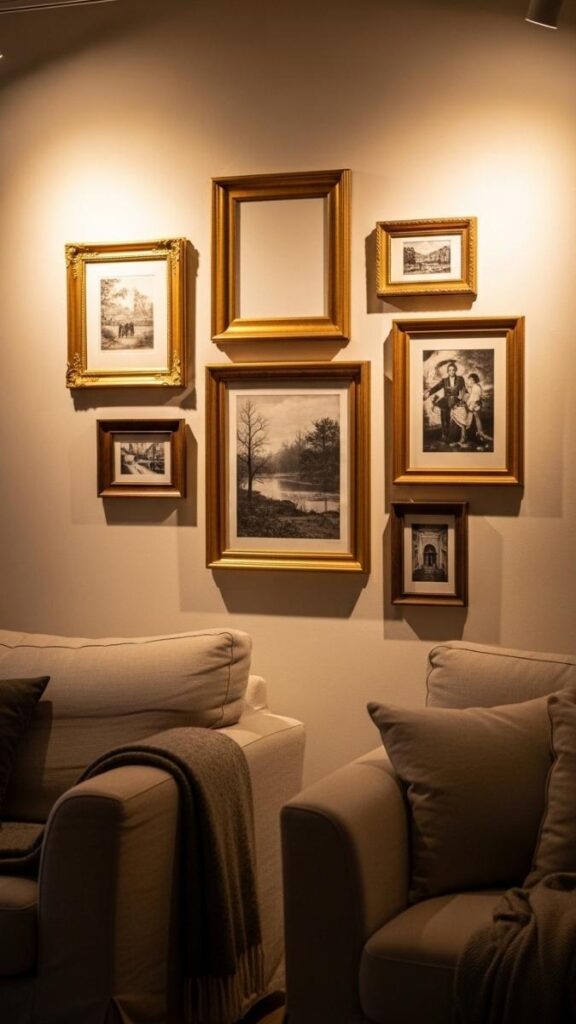
Arranging five to eight frames of different sizes and finishes on one wall does something a single large piece can’t; it creates a visual moment that reads as collected over time, not ordered from one place. Use a mix of gilded, dark walnut, and distressed black frames; the variation is the point. Fill some with sepia botanical prints or black-and-white portraits; leave one or two with matte black backing only.
In my experience, this setup works best when you establish a loose center point first and build outward, keeping the overall grouping within arm’s length of a sofa or console so it doesn’t float disconnected on the wall. It solves one of the most common problems in living rooms: a large empty wall that feels unresolved without feeling overcrowded.
A Single Large Vintage Mirror Above the Sofa
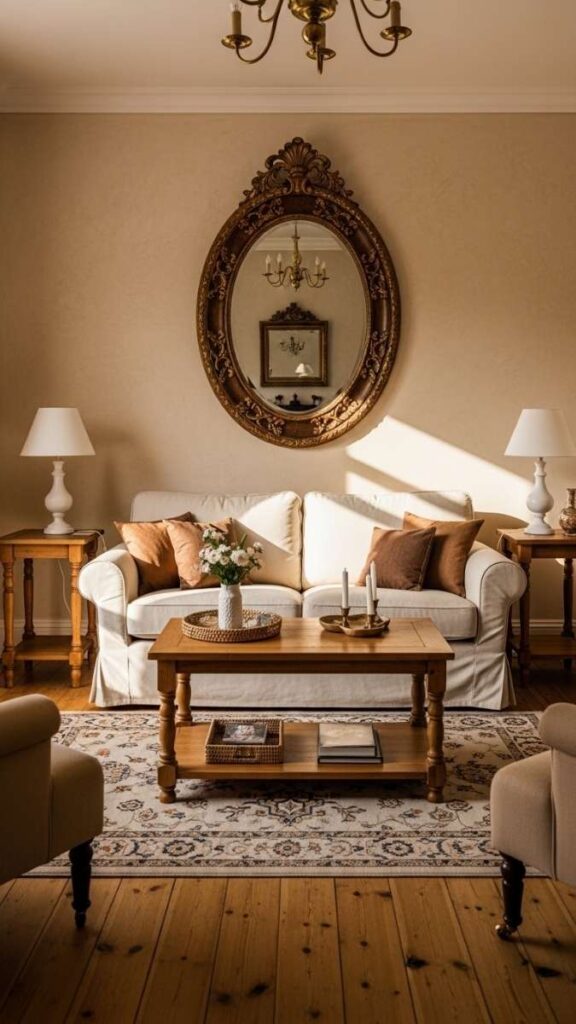
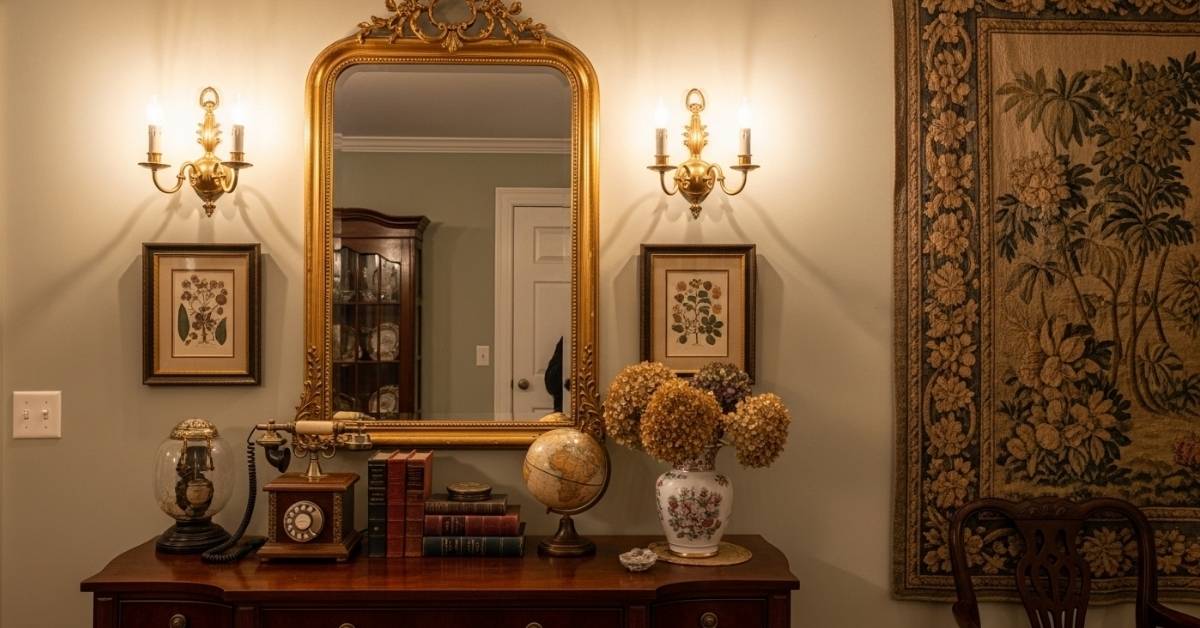
A vintage mirror thinks a heavy oval or arched frame with antique brass or crackled white finish does two jobs at once: it adds decorative weight and bounces light across the room. Position it centered above the sofa with the bottom edge about 6 to 8 inches from the sofa back.
The reflected light visually expands the wall and makes the ceiling feel higher, which is especially useful in compact living rooms or those with only one window. This is one I’d actually recommend trying first because it requires no gallery planning, no art hunting, and it works whether your remaining decor is minimal or layered.
Antique Map Prints in Thin Black Frames
Three matching antique-style map prints, whether topographic, city plans, or old-world cartography hung in a tight horizontal row above a console create a focused, intentional display without the complexity of a full gallery wall. Keep the frames uniform and thin so the prints carry all the visual interest.
The result is quiet but rich maps introduce subtle texture and aged coloring without overwhelming a neutral room. This works well in longer living rooms or narrow walls flanking a fireplace where a vertical arrangement wouldn’t have enough height to work.
Read More About: 20 Vintage Kitchen Decor Ideas That Make Older Homes Feel Intentional and Modern Kitchens Feel Warmer
A Textile Wall Hanging with Earthy Texture
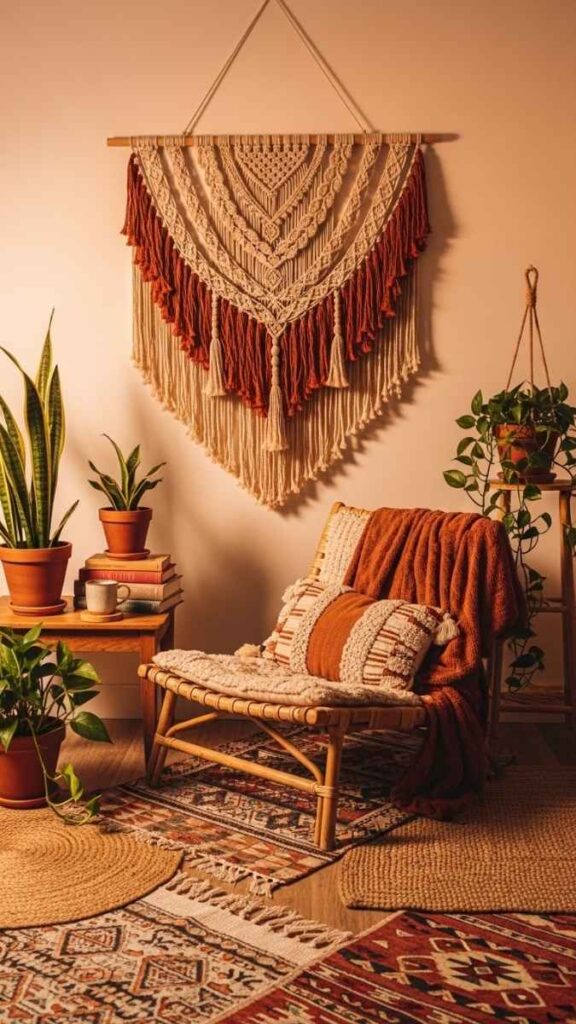
A woven or macramé wall hanging introduces something most vintage wall setups lack depth through material rather than surface. Look for natural fibers in undyed, ochre, or rust tones, and hang it against a plain wall where the texture can read clearly.
Unlike framed art, a textile hanging softens sound and adds warmth to rooms with hard flooring or sparse furniture. This is especially practical for renters. A single large hook handles the install, and it moves with you without leaving damage. The visual effect is organic and layered, which balances rooms that feel too polished or cold.
Architectural Salvage Pieces as Wall Art
Mounting salvaged architectural elements corbels, carved wood panels, iron window grilles, old shutters directly to the wall as sculptural art gives a room immediate historical presence. The key is composition: three corbels evenly spaced along a horizontal line, or a single oversized panel centered as a focal point.
These pieces introduce real materiality, actual weathered wood or cast iron, not a print of one and they’re typically found cheaply at architectural salvage shops or estate sales. In small living rooms, a single large piece works better than several competing items; in larger rooms, a horizontal arrangement above a sideboard or low shelf can anchor a full wall.
A Row of Botanical Prints in Identical Gilt Frames
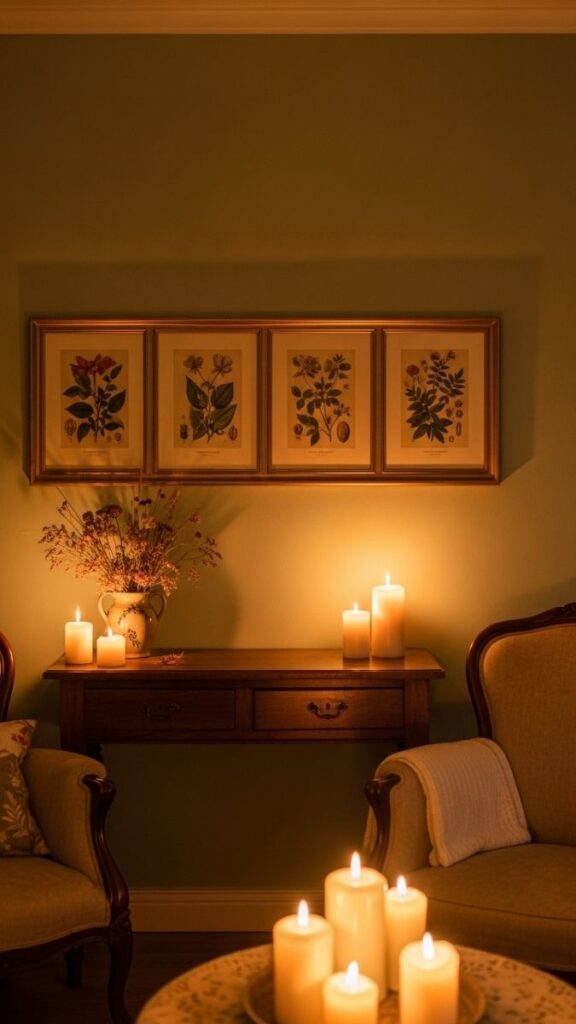
Matching frames actually work harder than mixed ones when the prints themselves carry the vintage character. Four to five botanical illustrations, pressed flower studies, fern plates, hand-drawn herbarium prints in identical gilded frames create a display that reads as a collection rather than random art. Space them evenly and hang them at a single consistent height.
This arrangement works on both wide and narrow walls, and the botanical subject matter naturally complements earthy, neutral, or deep-tone wall colors. If you have a wall color leaning toward sage, forest green, or terracotta, this combination is particularly well-suited; the gold frame ties both elements together without competing for attention.
A Large Vintage Clock as the Room’s Focal Statement
A substantial vintage wall clock 70 to 90 centimeters across, roman numerals, in aged iron or distressed wood works as wall decor the same way a painting would, but with built-in dimension. Centered on a plain wall between windows or above a console table, it creates a clear visual anchor for the room without requiring any additional styling around it. This is a practical solution for people who want a focal point but aren’t interested in committing to art curation. The three-dimensional face casts a slight shadow that changes throughout the day, keeping the wall visually alive even in a minimal setup.
Stacked Vintage Books as Wall-Integrated Shelving Decor
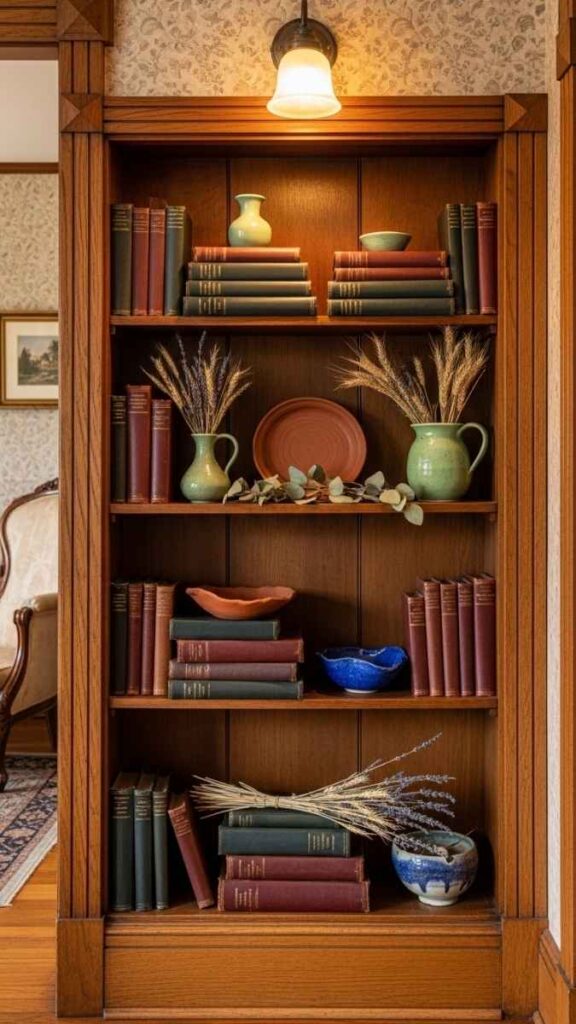
Vintage books are arranged on floating shelves not stacked for aesthetics, but organized by spine color and size so the display has actual visual rhythm and adds warmth and vertical interest to any wall. Use muted tones faded burgundy, sand, olive, and cream spines read as genuinely aged rather than deliberately arranged. The arrangement works especially well flanking a fireplace or television, turning a functional storage decision into something that feels like a personal library. Unlike purely decorative elements, this approach solves a storage problem at the same time which makes it one of the more practical entries on this list.
Read More About: 23 Antique Home Decor Ideas That Make Any Room Feel Collected, Not Cluttered
Black-and-White Photography Arranged in a Salon-Style Hang
A floor-to-ceiling salon-style hang frame of varying sizes covering most of a wall from about knee height upward creates the kind of visual richness usually associated with older, character-filled homes. The key to making it work rather than looking accidental is to anchor the arrangement with a few larger pieces, then fill gaps with smaller ones. Black-and-white photography in mix-finished frames (matte black, dark walnut, thin silver) keeps the overall look cohesive even when the individual frames are different. This is best suited to walls adjacent to seating, not opposite it the visual density is better experienced up close than from across the room.
A Vintage Tapestry as a Low-Profile Statement Piece
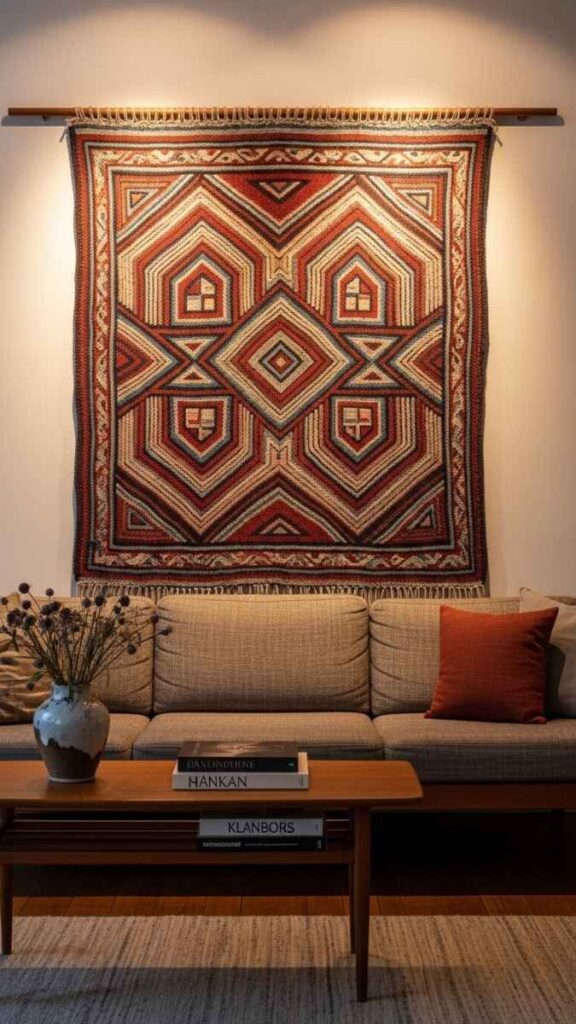
A woven tapestry hung on a wooden dowel not framed, just suspended is one of the more underused approaches in living room decor. Choose one with a faded, complex pattern, kilim-inspired geometry, Arts-and-Crafts motifs, or abstract weaves in terracotta, navy, and sand. The textile scale fills large walls without the visual formality of framed art, and it works especially well behind low-profile sofas in rooms with high ceilings. The hanging method itself (visible dowel, exposed cord or leather strap) becomes part of the display rather than something to hide.
Exposed Plaster or Limewash Texture as the Wall Itself
Honestly, sometimes the most effective vintage wall treatment isn’t something you hang, it’s the wall finish itself. A limewash or exposed plaster accent wall creates an organic, aged quality that photographs can’t replicate. The texture shifts throughout the day as light moves across it, and even a minimal arrangement of frames reads differently against that surface compared to painted drywall. This is a more committed option (and unavailable to renters without landlord permission), but in living rooms where the furniture is already strong, a single limewashed wall behind the sofa can do more than any art collection.
A Curated Display of Vintage Plates
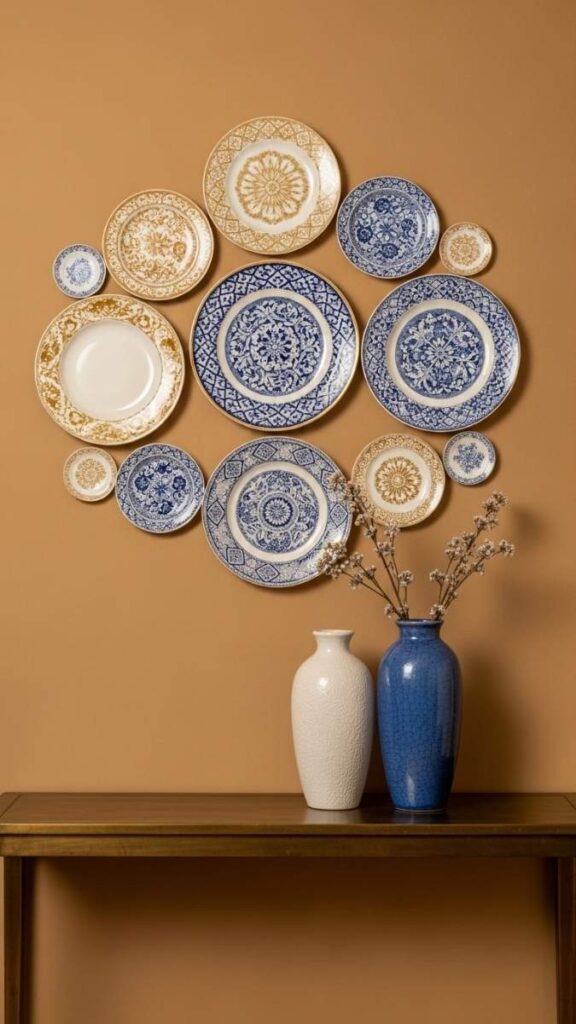
Arranging decorative vintage plates, the kind found at estate sales or antique markets, mismatched in pattern but unified by a color palette on a wall brings a domestic, slightly formal quality that feels distinctly old-world. For a cohesive look, limit the palette to two or three colors: cream, cobalt, and gold work well together, as do terracotta, sage, and cream. Arrange in a loose circle or staggered grid rather than a rigid line. The three-dimensional surface catches light differently than flat prints and gives the wall actual presence without taking up any floor space useful in rooms that are already full.
A Pair of Large Landscape Oil Prints Flanking the Fireplace
Symmetry reads as intentional, and two matching vintage-style landscape prints oil painting reproductions in wide ornate frames placed at equal height on either side of a fireplace or chimney breast deliver strong visual balance. The width of the frame matters here; a 3 to 4-inch frame adds visual mass that thinner frames can’t deliver. Choose landscapes with muted, naturalistic color palettes fog, water, rolling terrain rather than vibrant scenes that compete with the room. This setup solves the common problem of narrow, awkward walls on either side of a fireplace that feel too small for individual focal points but too significant to leave bare.
A Vintage Chalkboard or Framed Blackboard
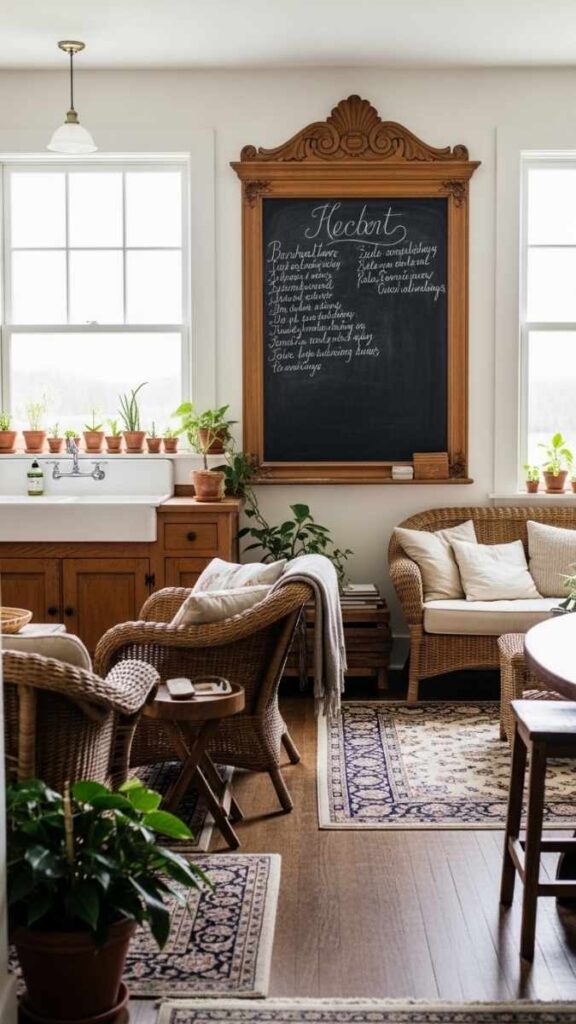
A large ornate-framed chalkboard brings a kind of functional vintage charm that’s more interesting than purely decorative options. The key is the frame: a wide, heavily carved or distressed wooden surround gives a utilitarian surface genuine visual weight. In open-plan living rooms adjacent to kitchens or dining areas, this bridges the two zones without feeling forced. The chalk surface itself adds muted gray texture even when blank, and it’s a practical solution for households that want flexibility in what the wall communicates over time.
A Reclaimed Wood Panel Behind the Sofa
Installing a horizontal panel of reclaimed wood planks behind the sofa floor to ceiling, or wainscoting-height creates a warm, tactile backdrop that frames the entire seating area. The variation in plank width, tone, and weathering gives the wall a complexity that painted surfaces simply can’t achieve. This works particularly well in rooms with neutral or cool-toned furniture because the wood introduces warmth without requiring additional textiles or accessories. For renters, a floor-to-ceiling arrangement isn’t viable, but a wainscoting-height panel (about half the wall) can achieve a similar grounding effect with fewer installation commitments.
Read More About: 27 High End Bedroom Decor Ideas That Make Your Space Feel Like a Luxury Hotel
Antique Mirrors in a Vertical Stack
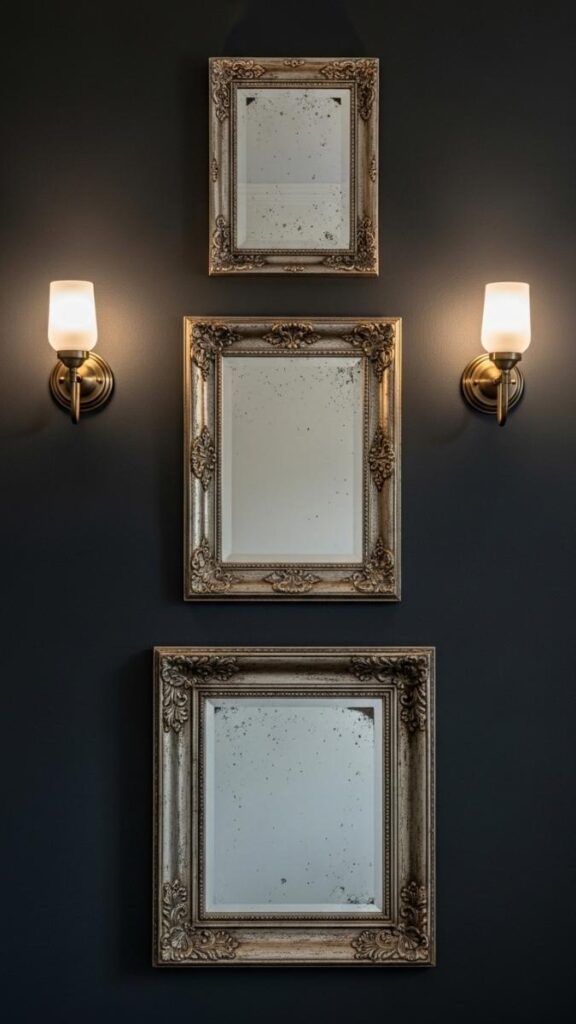
Three antique-style mirrors of varying sizes hung in a vertical line on a narrow wall or in a hallway-adjacent space solve a layout problem that horizontal arrangements can’t the tall, narrow wall that feels too thin for a gallery spread. Choose frames in the same finish family (mixed tarnished silver and aged gold work together) but vary the shapes slightly oval, arched, rectangular. Each mirror bounces light at a different angle, and the overall effect is layered without being busy. This is especially practical in living rooms where one wall is cut by a door or window on one side, limiting the available width.
Pressed Botanical Specimens Under Glass
Framed pressed botanicals actual dried specimens under glass rather than printed illustrations are having a real moment in 2026, appearing across minimal Scandinavian-influenced and vintage-cottage interiors alike. The appeal is specific: the depth of an actual three-dimensional object preserved behind glass gives each piece a quiet, almost scientific presence that prints don’t replicate. Hang four in a two-by-two arrangement with minimal spacing about two inches between frames so the group reads as a single display. Works best on white or very pale walls where the delicate coloring of the plants can register clearly.
A Ledge Shelf with Leaning Vintage Prints
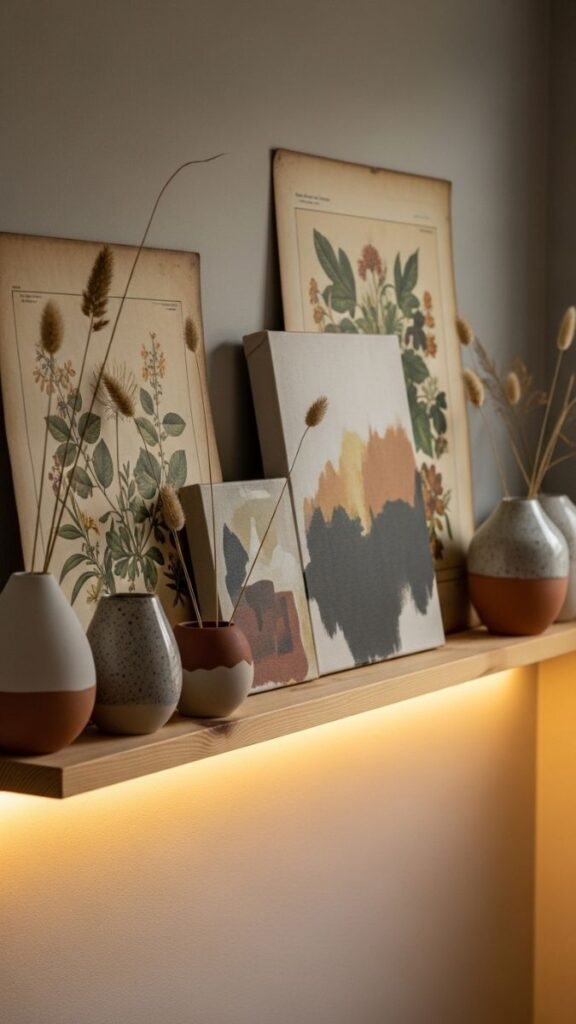
A narrow picture ledge running along the wall at roughly eye height or just below loaded with leaning vintage prints of varying sizes is one of the most flexible approaches here. Because nothing is nailed in position, the display can be rearranged, rotated, or updated without leaving additional holes. Mix framed pieces with unframed canvases; prop a small ceramic object or dried botanical between them to break the visual rhythm. This works particularly well in rental apartments because the total wall damage is limited to the two bracket screws for the shelf. In my experience, this layout tends to feel more personal than a fixed gallery wall partly because its casual nature reads as genuinely curated rather than installed.
Vintage Window Frame Repurposed as Wall Feature
An old window frame salvaged from a demolished building, still carrying its original layers of peeling paint mounted directly to the wall as a sculptural piece is one of those ideas that sounds odd until you see it working in a room. It introduces an architectural scale that most wall art can’t match, and the layered paint history gives it a material richness that can’t be manufactured. Hang it above a sofa or console at the same height you’d hang a large painting. The frame’s depth casts a shadow that shifts with the light, making it one of the more dynamic wall elements on this list.
A Curated Vintage Map Collection Behind a Console Table
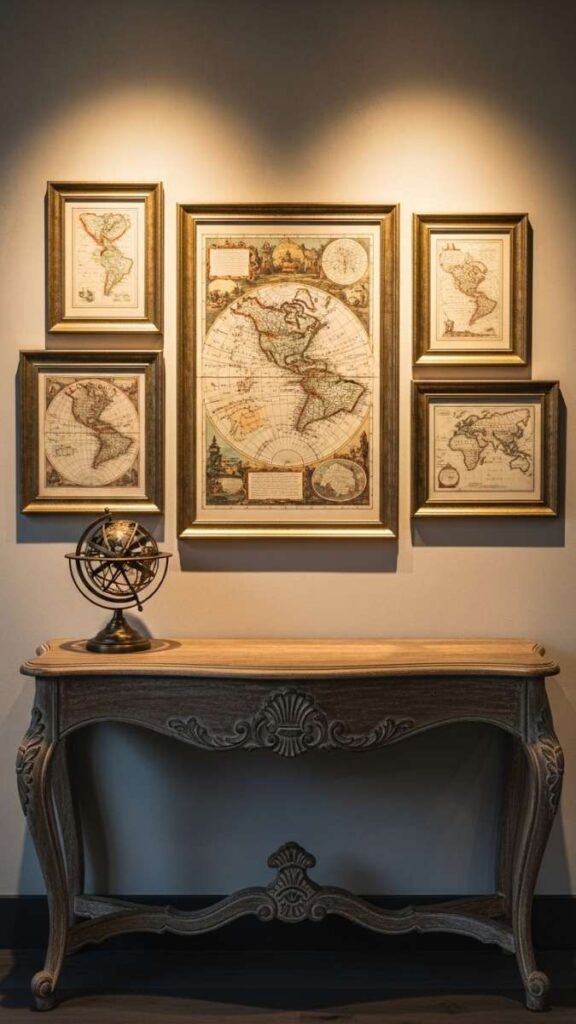
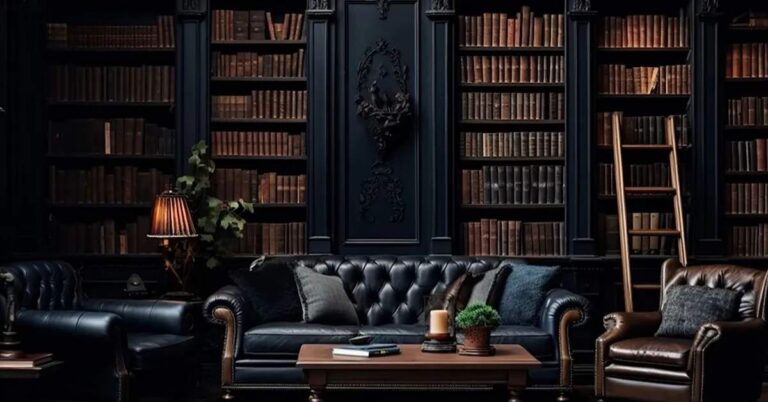
Grouping five or more vintage-style maps of different regions, different scales, but unified by a faded sepia or ochre color palette above a console creates a thematic display that has real depth of interest. Unlike general gallery walls, a map collection has an implied narrative of the world, explored and documented over time. Use frames that vary slightly in width but match in finish (aged brass or dark walnut), and allow the grouping to span at least 70% of the console’s width so it reads as anchored to the furniture below rather than floating independently. This is especially strong in living rooms with a library or study-adjacent aesthetic.
A Single Large Vintage Portrait as a Statement Piece
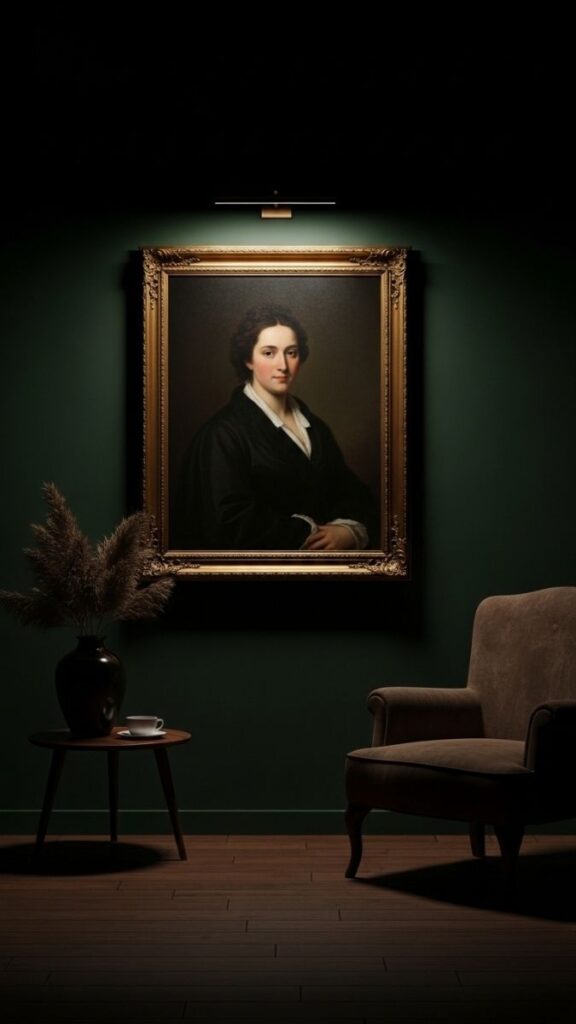
A single oversized vintage portrait either an authentic oil painting, a reproduction, or a high-quality print in a genuinely heavy ornate frame used as the room’s sole piece of wall art makes a completely different statement from everything else on this list. There’s no cluster, no layering, no collection. Just one painting commanding the wall. In a room with strong furniture and layered textiles already, this is often all the wall needs. A picture light mounted above it adds museum-level drama and keeps the rest of the wall calm. This works best in rooms with a clear color story, deep green, charcoal, or warm white walls where the painting becomes the anchor for everything else.
What Actually Makes These Vintage Wall Decor Ideas Work
The through-line across every idea above is this vintage wall decor works when it introduces visual depth that contemporary rooms tend to strip out. Flat walls, uniform finishes, and perfectly matched art sets feel controlled but they don’t feel inhabited.
Materiality over matching.
The most effective vintage setups work because they mix materials that have genuine history: real aged wood, tarnished metal, pressed specimens, worn textiles. When a room has multiple surface types with different light-absorption qualities, the eye finds more to settle on.
Scale is frequently underestimated.
A common mistake is choosing art or mirrors that are technically in the right location but too small for the wall. Vintage frames, mirrors, and architectural salvage tend to run large, which is one of the reasons they read more naturally at the scale of a real room than contemporary minimal pieces.
The negative space has to work too.
Especially in gallery wall arrangements, the gaps between frames are part of the composition. Vintage layouts that look effortless usually have irregular but considered spacing not mathematically even, but not random either. The arrangement should have visual rhythm, not visual noise.
Vintage Living Room Wall Decor Layout vs. Visual Impact
| Idea | Best Wall Type | Room Size | Primary Benefit | Difficulty |
| Mismatched ornate frame cluster | Wide blank wall | Any | Creates collected, layered feel | Medium |
| Single large vintage mirror | Above sofa | Small–medium | Light reflection, visual height | Easy |
| Botanical prints in gilt frames | Narrow or wide | Any | Cohesive, polished display | Easy |
| Salon-style photography hang | Large accent wall | Medium–large | Dramatic richness | Hard |
| Vintage tapestry on dowel | Behind sofa | Medium–large | Textile depth, warmth | Easy |
| Architectural salvage | Feature wall | Any | Material authenticity, sculptural impact | Medium |
| Plate display | Console or dining-adjacent wall | Any | Tactile, old-world domestic feel | Medium |
| Leaning prints on ledge | Any | Small–medium | Flexible, rental-friendly | Easy |
| Reclaimed wood panel | Sofa wall | Medium–large | Background warmth, no art needed | Hard |
| Single large portrait | Clear focal wall | Any | Statement anchor, minimal setup | Easy |
Common Vintage Wall Decor Mistakes That Make Your Space Feel Cluttered or Off
Hanging everything at the same height.
A row of frames all centered at the same point creates a rigid line that feels more like signage than a curated display. Vintage arrangements work because they have varied heights, some pieces lower, some higher even within a tightly grouped cluster.
Using frames that are too small for the wall.
A 30x40cm print on a wall above a three-seater sofa will disappear. Vintage frames in particular need to be large enough to read from the natural viewing distance, which in most living rooms is across the room, not up close. If in doubt, go bigger.
Overcrowding without an anchor.
Gallery walls fail most often when there’s no single largest or most prominent piece holding the arrangement together. The eye needs something to settle on first before it moves through the rest. Choose one dominant piece and arrange everything else around it.
Matching the decor instead of complementing it.
Vintage wall elements don’t need to match the furniture. In fact, slight tension between an ornate frame and a clean-lined sofa often looks more considered than a perfectly matched set. The goal is complementary contrast, not full coordination.
Ignoring the furniture below.
Wall decor rarely lives in isolation; it almost always relates visually to a sofa, console, or shelf below it. A large arrangement hung too high above the furniture creates a gap that disconnects the wall from the room. Keep the bottom edge of any arrangement within 6 to 10 inches of whatever sits below it.
FAQ’s
What is vintage wall decor for a living room?
Vintage wall decor refers to decorative wall elements that incorporate aged, antique, or historically styled materials, ornate frames, old maps, botanical prints, salvaged architectural pieces, and woven textiles. The defining quality is a sense of material history, whether authentic or styled to evoke it. It’s typically distinguished from contemporary decor by heavier frames, patinated finishes, and layered rather than minimal arrangements.
How do I arrange vintage frames on a wall without making it look messy?
Start with your largest or most prominent piece and center it at eye level typically around 57 to 60 inches from the floor to the center of the frame. Build the rest of the arrangement outward from that anchor, keeping all pieces within a loose rectangular boundary. Cut paper templates of each frame and tape them to the wall before committing to holes.
Can vintage wall decor work in a small living room?
It works well, but scale discipline matters. A single large vintage mirror or one oversized portrait will add depth without crowding the wall. Avoid dense gallery walls in rooms under 150 square feet; the visual complexity can make the room feel smaller rather than more interesting.
What’s the difference between a gallery wall and a salon-style hang?
A gallery wall typically uses fewer, more deliberately spaced pieces at eye level. A salon-style hang is denser, runs from lower on the wall toward the ceiling, and tends to mix many different frame sizes and orientations in a tighter arrangement. Salon-style hangs require more planning and look best in larger rooms with higher ceilings.
Do vintage wall decor pieces need to be antiques to look authentic?
Not at all. Reproduction botanical prints, mass-market ornate frames with aged finishes, and vintage-inspired tapestries all read as vintage in context. What matters more than authenticity is material quality: a heavy frame, genuine texture, and aged-looking color palettes will always look more convincing than cheap prints in thin modern frames, regardless of actual age.
Is it better to use one large vintage piece or several smaller ones?
Depends on the wall and what the room already has. If the space is already visually complex, patterned rug, textured sofa, varied furniture one large statement piece keeps the wall from competing. If the room is spare and neutral, a layered arrangement of smaller pieces adds the warmth and interest the room needs. Neither is universally better.
How do I make vintage wall decor work in a rental apartment?
Focus on a picture ledge shelf (minimal nail holes), a large single mirror or tapestry on a single hook, or adhesive hanging strips rated for the frame weight. A leaning arrangement of large frames propped against the wall or on a ledge requires no holes at all. The vintage aesthetic is one of the most renter-friendly because the casual, collected feel it aims for actually benefits from less rigid installation.
Conclusion
Vintage wall decor works in living rooms because it solves the right problem: walls that feel too blank, too sterile, or too recently moved-into. The ideas in this list from a single commanding portrait to a layered textile hang to an architectural salvage arrangement all approach that problem differently, which means there’s a practical entry point regardless of your space, budget, or how much you want to commit.
Not every idea here will fit every room, and that’s the point. The key is finding what works for your wall scale, your furniture, and how much you want the wall to do. Start with one or two ideas that fit the space you actually have, not the room you’re imagining. A good vintage arrangement often starts with a single piece, and builds from there.