72+ Home Color Schemes That Actually Work in Real Rooms
Color schemes are one of those topics where most advice stops at “try terracotta” or “go neutral” without explaining the underlying logic. But how colors interact with your specific light, your flooring,Color Schemes and your furniture scale matters far more than any trend list. If your space leans minimal, cozy, or neutral or if you’re working with a tricky north-facing room or an awkward open-plan layout this guide will help you think through combinations that hold up in real conditions.
For anyone trying to figure out what color direction will actually work before committing to paint or new furniture, this list covers a wide range of setups from renter-friendly approaches to full-room palettes across multiple room types and budgets.
Warm White Walls With Aged Brass and Warm Wood Tones
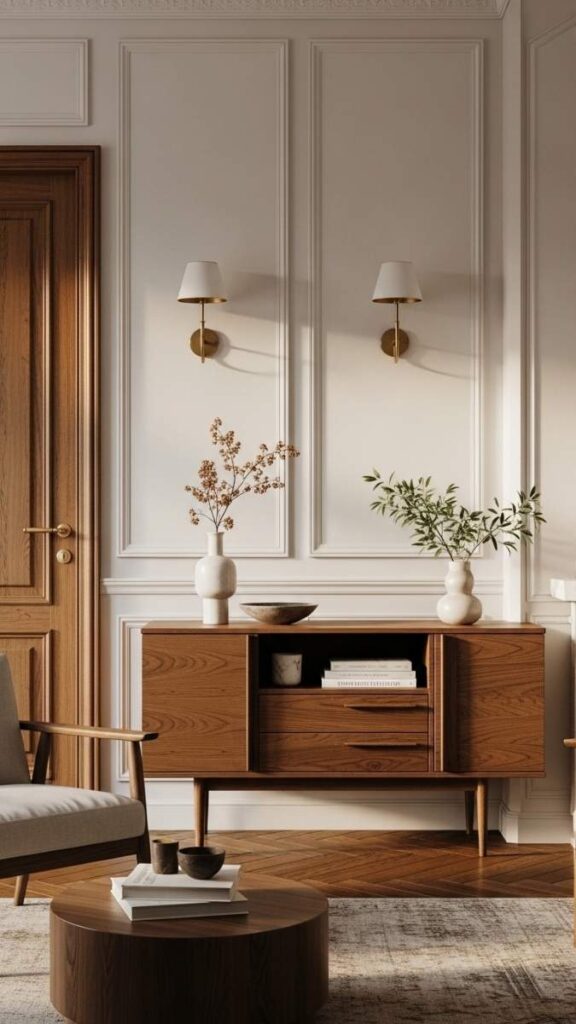
Warm white is not the same as cool white and that difference changes everything about how the room reads. A warm white like Benjamin Moore’s White Dove or Sherwin-Williams Alabaster has a slight ivory undertone that keeps it from feeling clinical.
Pair it with aged brass fixtures (pendant lights, cabinet hardware, picture frames) and a warm-toned wood like walnut or oak, and you get a color relationship that feels layered without being complicated.
The wall color holds back just enough to let the metal and wood tones do the work. This combination works especially well in rooms with southern or western exposure where the warm light amplifies the undertones in a north-facing room, go slightly warmer in the white to avoid reading gray.
Sage Green and Terracotta With a Linen Base
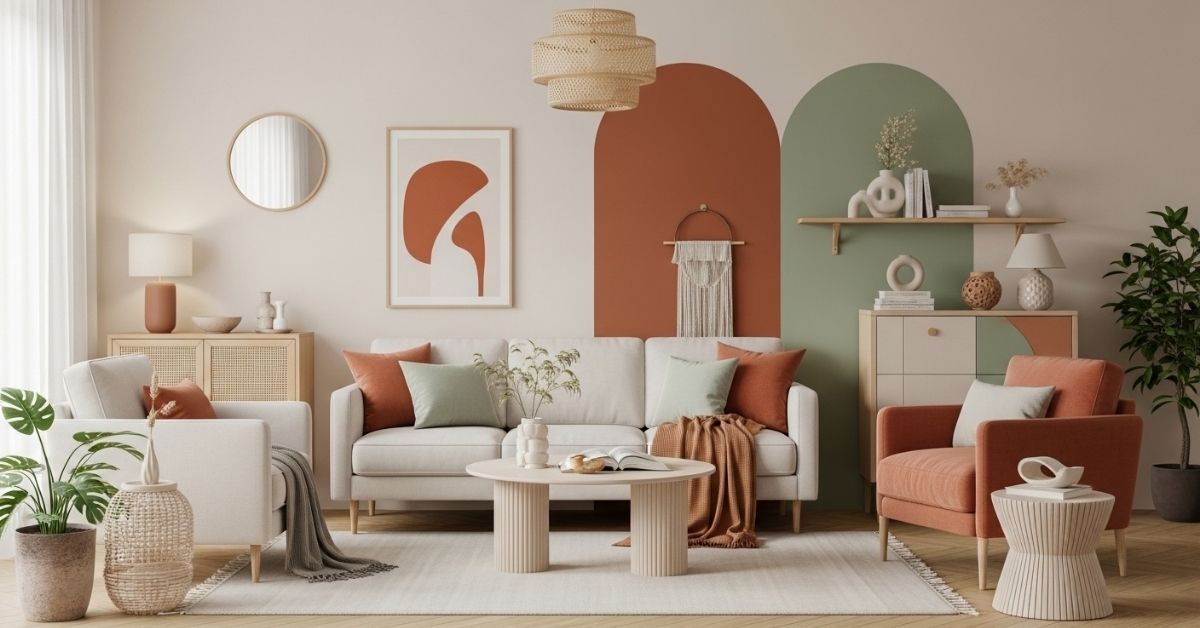
This pairing sits on opposite ends of the warm-cool spectrum in a way that shouldn’t work on paper but in practice, it creates a grounded, earthy warmth that feels both calm and lived-in.
Sage green anchors the walls without the sharpness of a true green, while terracotta as an accent (think throw pillows, a single ceramic lamp, a blanket folded over a chair) adds warmth without overwhelming.
The linen in between on bedding, upholstery, or roman shades acts as the visual bridge. This scheme is ideal for bedrooms and works particularly well if you’re fighting an overly stark or cold aesthetic. It’s one I’d actually recommend trying first if you’ve been circling earthy palettes but aren’t sure how to commit.
Navy and Warm Cream in a Living Room With Natural Light
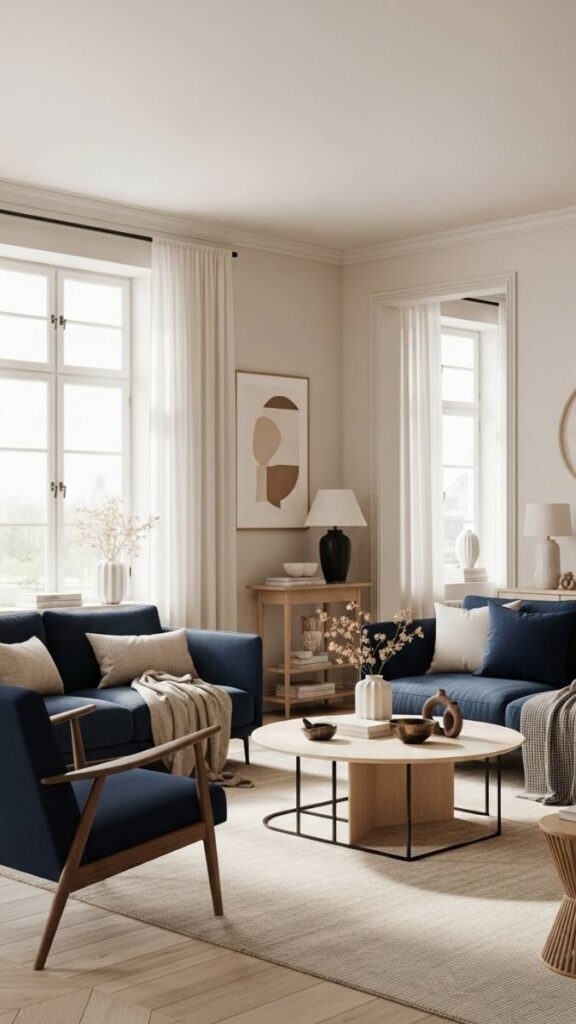
The Navy reads very differently depending on what surrounds it. Against cool whites or gray, it can feel heavy and corporate. But set it next to warm cream on a sofa, roman blinds, or area rug and it shifts into something considerably warmer and more residential.
The key is keeping the cream genuinely warm (ivory undertones, not pure white) so it pulls the navy in the same direction. One navy wall rather than all four keeps the drama without shrinking the room visually.
A brass floor lamp or warm-bulb pendant completes the palette without adding a new color. This setup works best in rooms that get decent natural light for at least part of the day in low-light rooms, substituting dusty blue for the navy to keep the scheme from feeling flat.
All-White Room With Texture as the Color
When someone says “white room” and it looks flat, the problem is almost always that every white is the same white.
An all-white or near-white palette works when the whites have different undertones: a warm linen duvet next to cooler white walls, a creamy rug under a crisp white sofa and when texture carries the visual weight.
Rattan chairs, chunky knit throws, linen curtains, and a jute rug create contrast without introducing any new hue.
The room doesn’t need color if the material contrast is rich enough. This is one of the most renter-friendly approaches since nothing is painted, and it’s highly adaptable across seasons by swapping out textiles.
Warm Gray and Blush Pink With Matte Black Accents
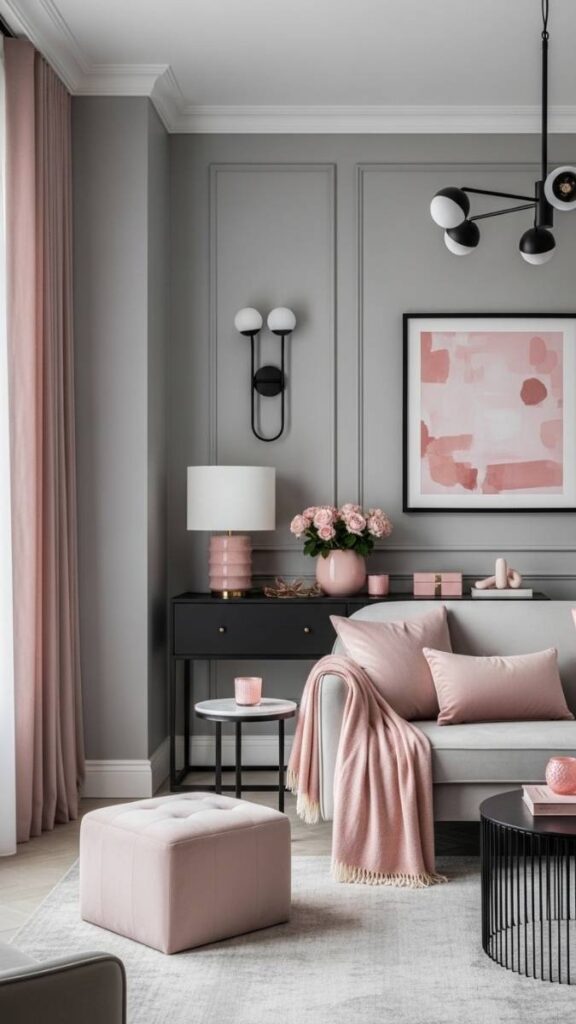
Warm gray is the ceiling; it keeps the palette sophisticated and stops the blush from reading as a nursery. Blush here should be faded and muted rather than saturated (think dusty rose, not candy pink), used on large surfaces like curtains or bedding.
Matte black as a third element in a pendant light, picture frames, or furniture legs adds definition and stops the palette from going too soft.
This combination is particularly effective in bedrooms where you want the room to feel cocooning without being dark. The gray absorbs the light and evening mood better than white walls would, making the blush tones feel richer as natural light changes throughout the day.
Read More About: 71+ Furniture Layout Ideas That Make Any Room Feel Bigger, Balanced
Deep Olive Green as a Statement Wall With Warm Neutrals
Olive green is one of the more misunderstood shades; lighter olives can drift yellow, while darker ones can go flat or murky.
The version that works is a mid-to-deep olive with strong warm undertones, ideally seen in late afternoon light before committing. Against a beige linen sofa and warm-toned wood furniture, it creates a palette with real depth and a distinctly current feel.
The green reads as a grounded, earthy anchor while the neutrals keep the room from feeling heavy. This works particularly well as a single feature wall; the three remaining walls in a warm white or pale sand let the room breathe.
For small rooms, the contrast between the deep wall and lighter surrounding space can actually make the room feel more defined rather than smaller.
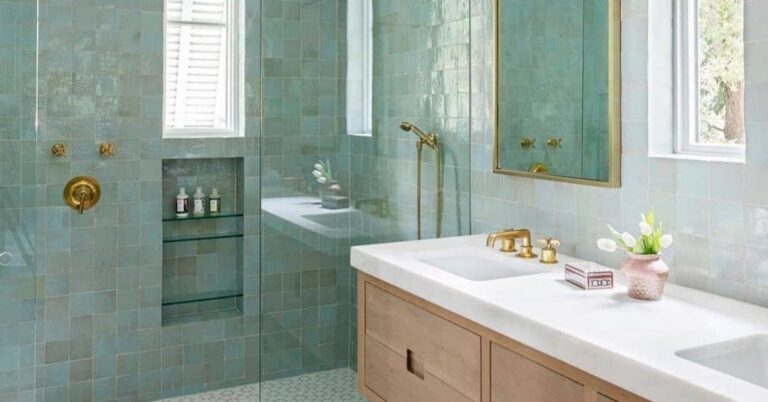
Pale Blue Gray and Natural Oak in a Kitchen or Bathroom
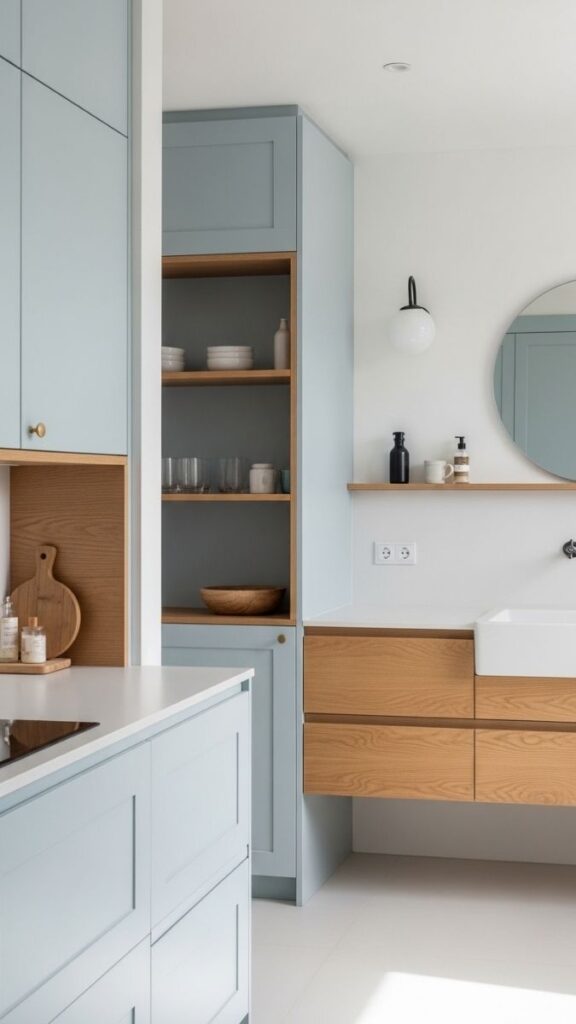
Pale blue-gray cabinetry has become one of the more enduring choices in kitchen and bathroom design and it’s held up because it works across lighting conditions in a way many trendy colors don’t.
The slight blue keeps it fresh; the gray grounds it. Natural oak open shelving or countertop trim adds organic warmth that stops the scheme from reading cold or clinical. White or pale marble as the backsplash material ties the two tones together without introducing a competing color.
In a bathroom, this combination reads clean and calm; in a kitchen, it pairs naturally with brass or chrome hardware depending on which direction you want to push the warmth.
Raed More About: 11+ Lighting Ideas That Actually Change How Your Home Feels Not Just How It Looks
Rust, Cream, and Warm Wood in an Open-Plan Space
Open-plan spaces present a specific challenge: if you pick too many colors, the space feels chaotic; too few and it reads empty. A rust-toned sofa, cream walls, and warm wood dining furniture give you three elements that feel intentional together without needing a fourth.
The rust reads differently from terracotta (deeper, slightly more saturated) which is useful in larger rooms where a muted version might get lost. Cream walls let both the rust and wood read clearly without competing with them.
A wool rug in a complementary tone tan, a warm oatmeal, or even a subtle pattern that includes all three colors anchors the furniture grouping and makes the two zones (living and dining) feel visually connected.
Black and White With One Saturated Accent
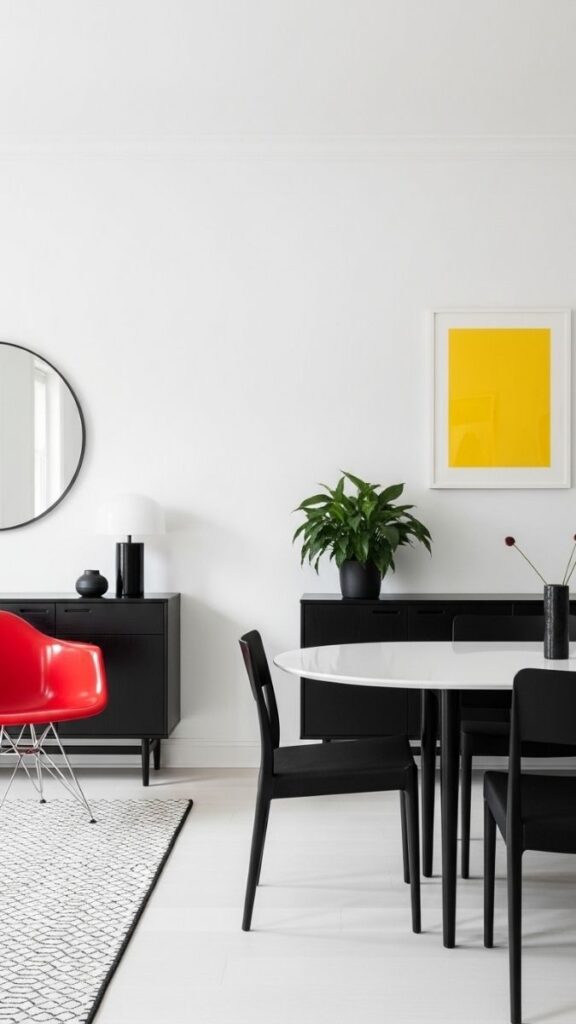
The most common mistake with black-and-white rooms is leaving them at black and white. The palette feels graphic and intentional in editorial photos and flat in most real homes without a third element that adds warmth or interest.
One saturated accent, a deep forest green velvet chair, a cobalt blue vase grouping, and a mustard yellow pillow set breaks the binary without complicating the palette.
The key is committing to one color and repeating it in two or three small placements so it reads as deliberate rather than random. This is a good scheme for people who want something clean and bold but find all-neutral rooms too quiet.
Moody Blue Green Teal Adjacent With Warm Brass and Cognac Leather
This combination appears in a lot of design inspiration boards and for good reason it’s one of the few dark schemes that works across multiple room types.
The teal-green absorbs light and creates an enveloping quality that works especially well in home offices or reading rooms where you actually want to feel contained rather than expansive. Brass as the metal choice keeps the scheme warm; cognac leather adds a material richness that navy or forest green alone don’t generate.
In smaller rooms this combination works best on all four walls (rather than one accent wall) because the wrap-around effect makes the space feel deliberate rather than half-finished.
Warm Beige and Caramel Tones From Floor to Ceiling
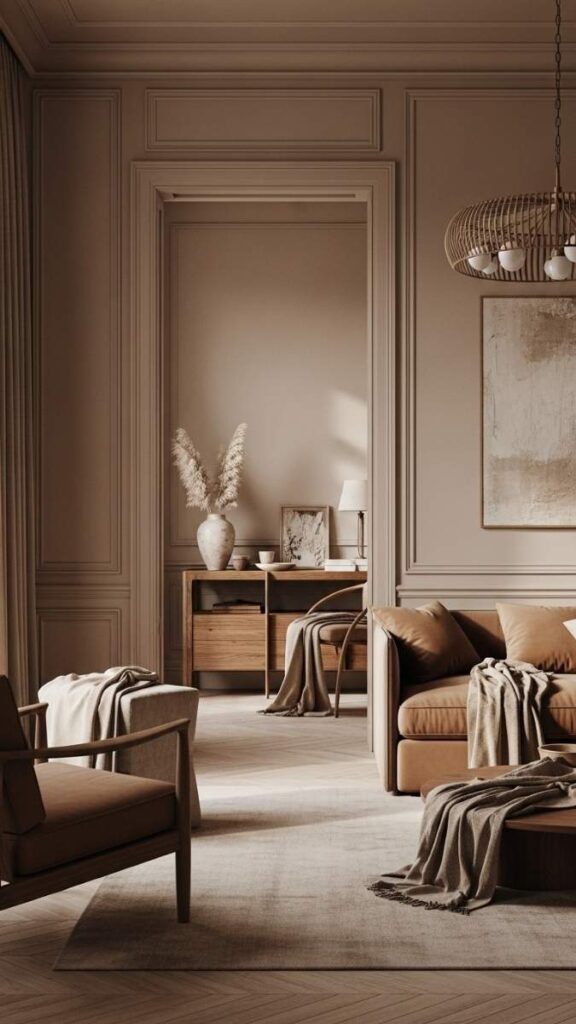
Monochromatic warm beige rooms work because the absence of contrast creates a calm, cocoon-like atmosphere that reads as restful rather than boring provided the tones are varied in value. A caramel leather sofa reads darker than the walls; a sand-colored linen curtain reads lighter.
The variation in shade creates the visual interest that a contrasting accent color would otherwise provide. Material mixing is critical here: smooth leather, rough jute, soft wool, and matte-painted walls all read differently even in the same color family.
This scheme solves the problem of rooms that feel visually overloaded; a tonal palette quiets everything down without removing personality.
Forest Green and White With Natural Stone Details
Forest green cabinetry became mainstream a few years ago but has matured considerably; the versions that still look current in 2026 are the ones that pair with genuine natural materials rather than synthetic alternatives. White walls and ceilings keep the green from feeling heavy.
Natural stone (a light limestone countertop, a marble-adjacent tile) adds organic variation in tone that pulls the green toward something more grounded and less corporate. Brass hardware completes the palette without introducing a new color.
This works best in kitchens and bathrooms where the cabinetry color is seen against fixed material choices which means getting the green undertone right relative to your existing flooring or tile is worth testing before committing.
Dusty Mauve With Warm Whites and Natural Textures
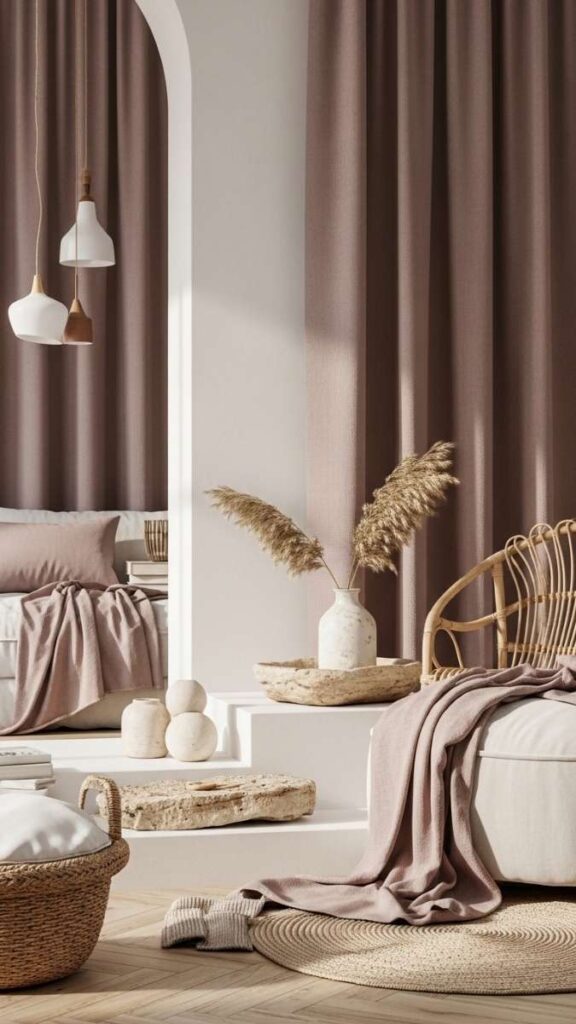
Mauve gets avoided because it has a reputation for reading dated or overly feminine but the muted, dusty version of it (more gray-purple than pink-purple) reads very differently from what most people picture.
Against warm white bedding and natural textures like rattan, linen, and jute, it creates a palette that’s calm and slightly unexpected. The key is keeping everything else in the room warm-toned so the mauve doesn’t drift cool.
This is especially effective in bedrooms where you want something with more personality than a standard neutral but without the commitment of a deep or saturated color.
Charcoal and Warm Terracotta in a Dining Room
Dining rooms are often the one space in a home where dark walls make sense if you’re in the room for contained periods, lighting is typically atmospheric, and the furniture is usually central enough that the room doesn’t feel closed-in by dark walls.
Charcoal works here because it absorbs the surrounding candlelight and warm overhead fixtures in a way that creates intimacy.
Terracotta as the accent in a pendant shade, table ceramics, or chair upholstery adds warmth that prevents the scheme from reading cold or formal. Natural wood in the dining table keeps the palette grounded.
Read More About: 68+ Budget Decor Ideas That Make Your Home Look Intentional Not Cheap
Pale Yellow and Soft White in a Kitchen or East-Facing Room
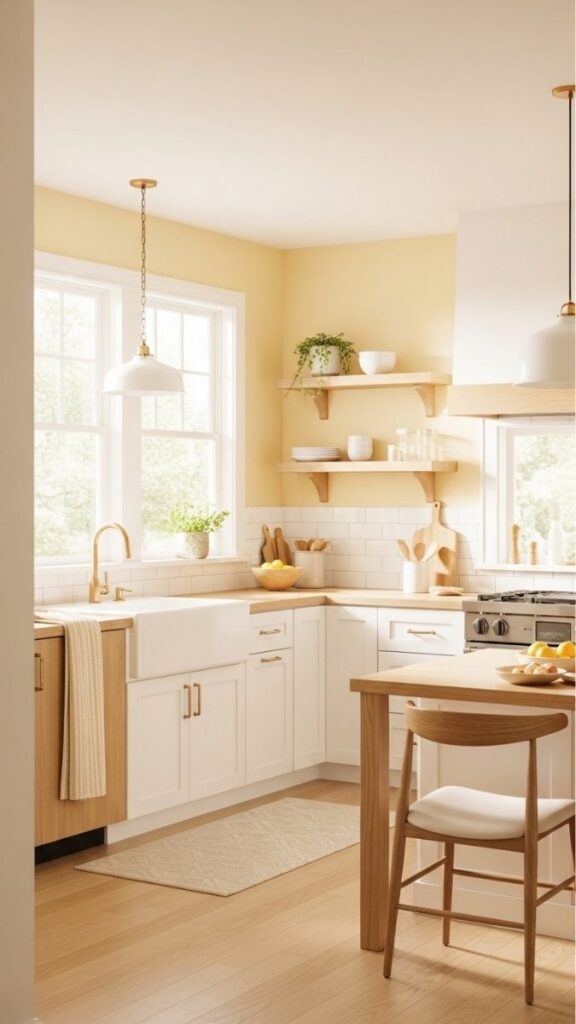
Pale yellow is one of those colors that’s highly dependent on light direction. In an east-facing kitchen that gets strong morning sun, a warm pale yellow amplifies that light and makes the space feel genuinely energizing without going bright or aggressive.
In a north-facing room without much natural light, the same color can look greenish or flat; use a warmer, more cream-adjacent yellow if that’s your situation. White cabinetry and warm wood accents keep it from reading retro or dated. This is a practical scheme for kitchens because the color responds well to the task lighting that most kitchens have, brightening as the day goes on.
Warm Greige and Muted Gold Tones in a Living Room
Greige, the blend of gray and beige, works in more rooms than most people realize, but the warm version (more beige than gray) reads considerably softer than the cool version that dominated interiors about a decade ago.
Paired with muted gold accents not shiny or yellow-gold, but aged, brushed, or antique gold it creates a palette that feels quiet and considered. The combination suits living rooms well because it’s flexible enough to work across styles, from contemporary to transitional, and it doesn’t date quickly the way more trend-led colors do.
Deep Burgundy or Wine as an Accent Against Soft Cream
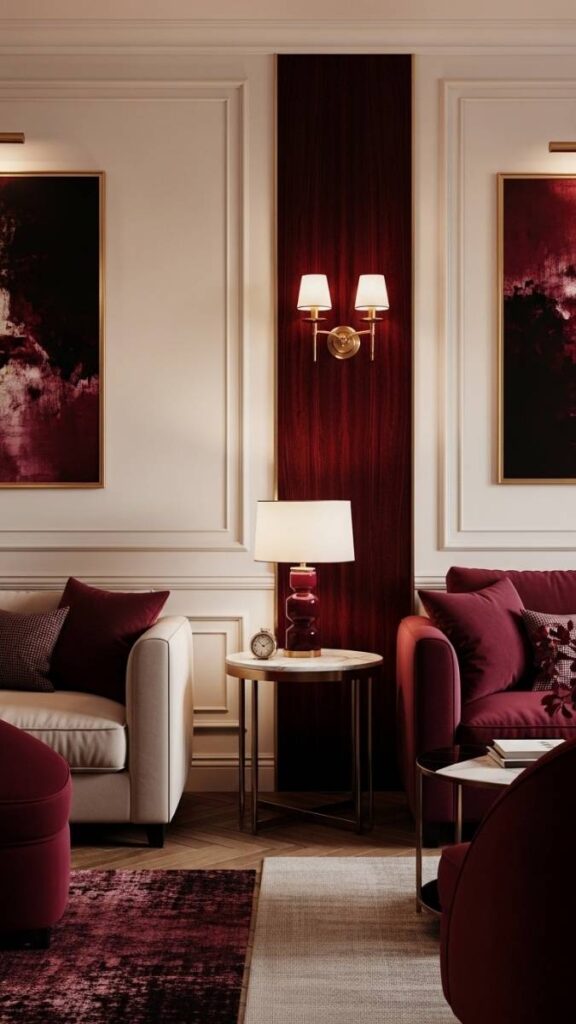
The key is using them as an accent rather than wall color in most residential rooms (unless you have very good natural light and a large room).
Against soft cream walls and upholstery, a few deep burgundy pillows, a wool throw, or a velvet accent chair creates a scheme that feels rich and seasonal but not heavy. It solves the problem of rooms that feel competent but lack warmth or a point of interest.
White, Natural Linen, and Soft Blush for a Bedroom
This is a palette that works almost universally in bedrooms with decent natural light. It’s forgiving in terms of furniture choices and flexible enough to be updated seasonally with small textile changes.
The white gives you maximum light reflection. The linen adds a natural, organic texture that keeps the room from feeling sterile. The blush used sparingly, on pillowcases or a single throw adds warmth without shifting the room’s overall tone.
In my experience, this scheme works best when the linen and blush are very close in value so they blend rather than contrast.
Cadet Blue and Sand Tones for a Coastal Adjacent Look Without the Clichés
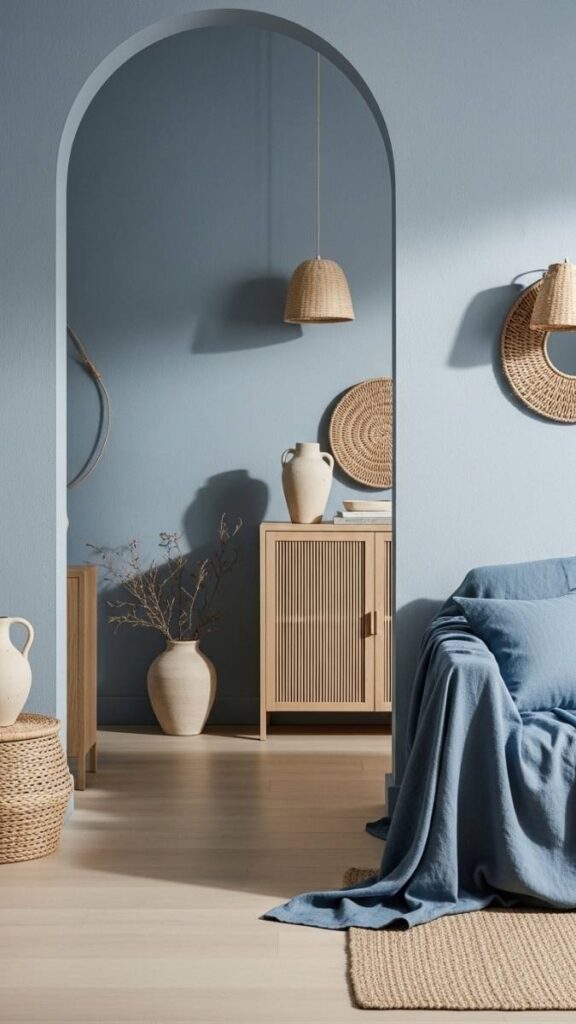
The typical coastal palette (bright white, nautical navy, aqua accents) reads more like a themed hotel room than an actual home. Cadet blue, a muted, almost gray-blue used on walls alongside sand-toned upholstery and natural materials, creates a palette that references coastal light and calm without leaning into the obvious clichés.
The muting of the blue is what makes it work; the slightly grayed quality prevents it from reading as a theme. This setup works well in living rooms and bedrooms in rooms with good natural light where the cadet blue can shift and change throughout the day.
Warm Brown and Cream With Metallic Bronze Details
Warm brown in furniture, in a painted wall, in flooring used with cream creates a palette that’s genuinely grounded without reading dark or heavy. Bronze or antique brass as a metallic detail (rather than polished chrome or gold) reinforces the warmth without adding a new color.
This is a particularly good scheme for renters or anyone working with furniture they already own warm brown and cream work with most existing wood tones and fabric colors, making it easy to pull together from what you have. Layering textiles in slightly different warm tones (tan, caramel, soft copper) adds depth.
Soft Sage and Off White in a Small Bathroom
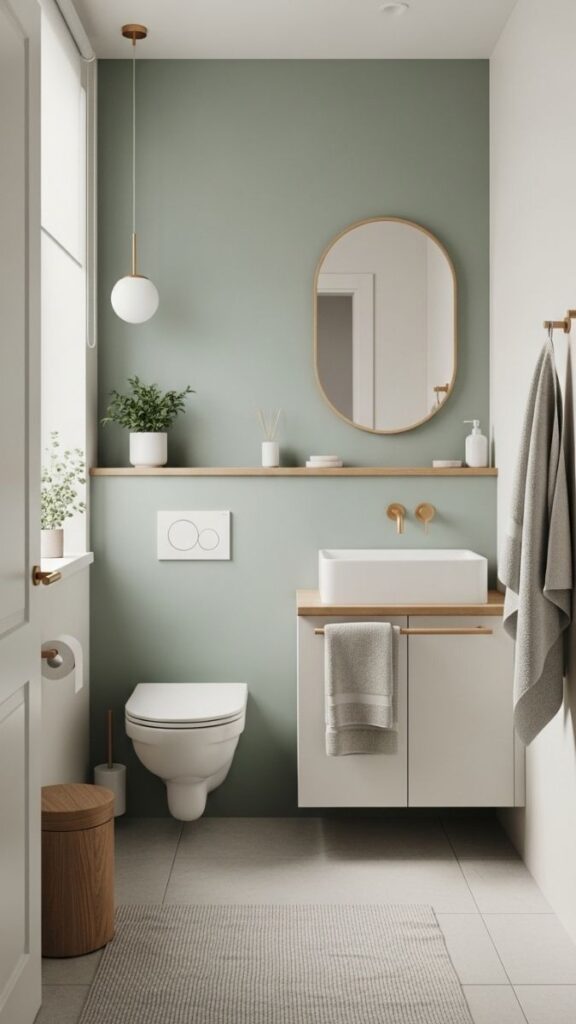
Small bathrooms benefit from soft, low-saturation colors that create a sense of calm without making the space feel smaller.
Soft sage, particularly a muted, gray-adjacent sage rather than a bright or yellow-tinted green works because it has enough color presence to feel intentional but enough restraint to avoid overwhelming a small room.
Off-white tile keeps the palette light; a wood shelf or stool adds warmth. This is one of those combinations that photographs better than it looks on a paint chip. It’s worth testing a sample on the wall before ruling it out.
Warm Charcoal With Natural Linen and Gold Undertones
Warm charcoal differs from cool gray in one important way: it has enough brown undertone that it reads warm under warm lighting rather than cold. This makes it significantly more livable as a wall color than a pure cool gray.
Against linen upholstery and aged gold accents, it creates a palette that’s sophisticated and works particularly well in evening-use rooms like living rooms or dining areas where warm lighting dominates. The linen keeps the scheme from feeling too formal; it softens the contrast between the dark wall and lighter upholstery.
Terracotta Walls With a Plaster or Limewash Finish
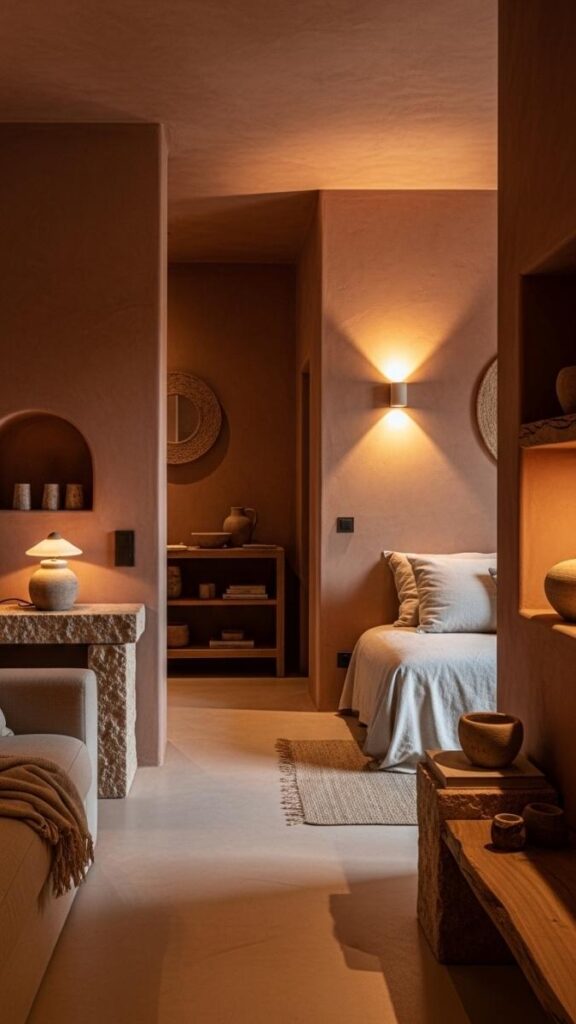
Terracotta has been circulating in interiors long enough that some people consider it dated but the version that continues to feel current is the one with a textured finish rather than a flat painted surface. A limewash or plaster-effect paint adds depth and variation that makes the color feel organic rather than applied.
Against minimal furniture and natural textures (jute, wood, unbleached linen), the room reads warm and tactile in a way that a smooth-painted version doesn’t quite achieve. This is a commitment in terms of wall preparation but it’s one of the few wall treatments that genuinely changes how a room feels rather than just how it looks.
Navy, White, and Natural Cane for a Modern Traditional Living Room
Navy on a sofa rather than a wall is a different proposition: the furniture absorbs the depth of the color while the white walls keep the room feeling open. Adding natural cane in a chair or side table brings a light, textural element that modernizes what could otherwise read as a traditional scheme.
This combination works across a wide range of room sizes and natural light levels; the white walls maintain brightness while the navy adds weight and grounding. It’s particularly effective in rooms where you want something that feels put-together without being trend-dependent.
Soft Green and Warm Wood Tones Throughout an Open-Plan Space
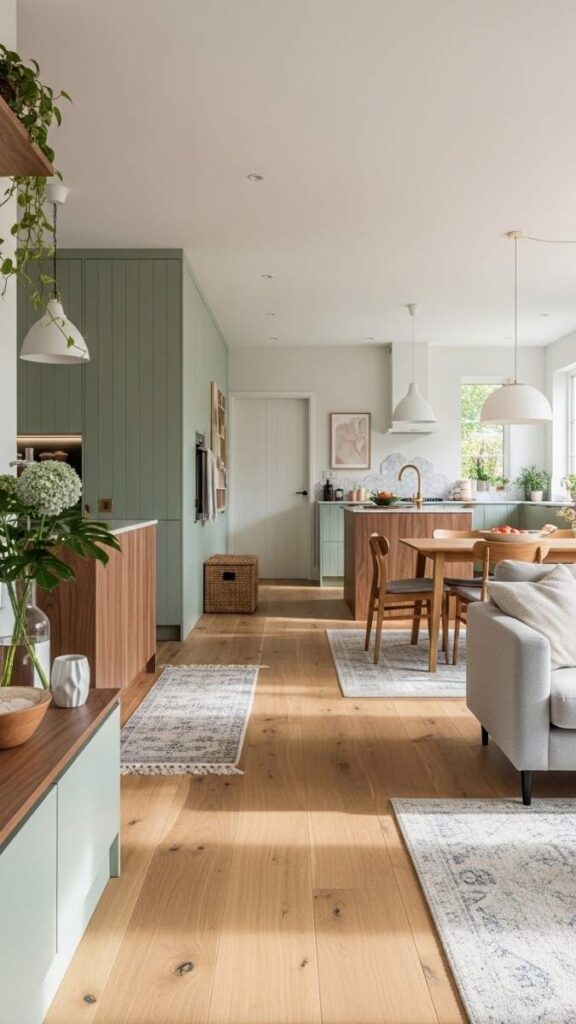
In open-plan spaces, running one consistent color direction throughout rather than treating each zone as separate creates cohesion. Soft green used in kitchen cabinetry and repeated in a few living area accents (a plant-heavy shelf, a cushion, a woven basket) ties the two zones together without needing a complete color match.
Warm wood flooring that runs throughout does the same job structurally. Cream upholstery keeps the scheme from going too dark or heavy. The result is a space that feels considered and continuous rather than assembled from separate rooms.
Cream and Warm Stone Tones in a Neutral Bedroom
Stone tones muted beiges that have a slightly sandy, mineral quality work in bedrooms because they read as neither too warm nor too cool. Against cream walls, they create a layered neutral palette that’s restful without being stark.
The key distinction from a standard beige room is that stone tones have a slight complexity, a hint of taupe, a touch of warmth that prevents the palette from reading flat.
This is particularly effective for people who find themselves drawn to the idea of an all-neutral room but concerned it will look unfinished.
Rust, Black, and Warm White in a Statement Living Room
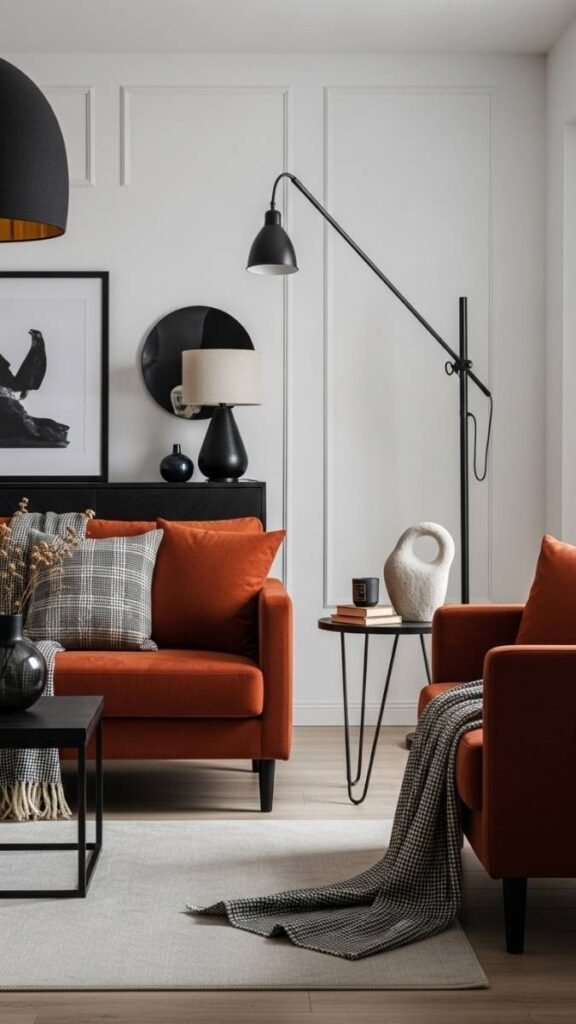
Rust as a wall color (not terracotta rust is slightly darker, with more red) reads very differently from the lighter earthy tones. Against black furniture frames and warm white on the remaining walls, it creates a scheme that’s bold but warm which is harder to achieve than it sounds.
The black anchors the rust and prevents it from reading orange; the warm white lets the room breathe between the two stronger colors. This is a better setup for a partial accent wall than an all-four-walls approach in most residential rooms, though a compact, well-lit room can carry the full treatment. Honestly, it’s one of the more underused combinations in residential design right now.
What Actually Makes These Color Schemes Work
Beyond specific combinations, there are a few underlying principles that determine whether a color scheme holds up in a real room versus only looking good in photos.
Undertone consistency matters more than the color itself.
Every color has an undertone: warm (yellow, orange, red) or cool (blue, green, purple). When the undertones in your palette align, the room feels coherent even if the colors are quite different. When they conflict a warm beige wall next to a cool gray sofa against a warm wood floor the room feels unsettled without it being immediately obvious why.
Natural light changes the game.
The same paint color reads entirely differently under north-facing flat daylight versus warm afternoon western sun. Test paint samples through different times of day before committing, and factor your room’s dominant light direction into your undertone choices.
The 60-30-10 proportion framework is worth understanding, not following rigidly.
The general principle roughly 60% of the room in a dominant color, 30% in a secondary, 10% in an accent isn’t a rule so much as a way of checking whether any one color is taking up too much visual space. A room that reads chaotic often has two colors fighting for the 60% role.
Texture creates contrast when colors don’t.
In tonal or monochromatic schemes, the visual interest comes from material contrast: smooth against rough, matte against sheen, woven against flat. Without enough material variation, even a well-chosen color scheme can feel flat in person.
Color Scheme Quick Reference Guide
| Scheme | Room Type | Light Direction | Mood | Commitment Level |
| Warm white + brass + walnut | Living room, bedroom | Any | Warm, layered | Low – paint only |
| Sage + terracotta + linen | Bedroom, living room | Any | Earthy, calm | Low – textiles-led |
| Navy + warm cream | Living room | Good natural light | Classic, grounded | Medium – accent wall |
| All-white with texture | Any room | Any | Minimal, airy | Low – no paint |
| Forest green cabinetry | Kitchen, bathroom | Any | Fresh, grounded | High – cabinetry |
| Deep olive accent wall | Living room | Any | Earthy, modern | Medium – accent wall |
| Charcoal + terracotta | Dining room | Warm/artificial | Intimate, rich | High – dark walls |
| Moody teal + brass | Office, library | Any | Enveloping, focused | Medium-high |
| Terracotta limewash | Bedroom, living room | Warm preferred | Organic, textural | High – finish |
| Rust + black + warm white | Living room, studio | Good natural light | Bold, warm | Medium |
Common Color Scheme Mistakes That Make Rooms Feel Off
Mixing warm and cool undertones without intention.
This is the most common issue in rooms that feel unsettled. Warm gray flooring + cool white walls + warm wood furniture creates a constant low-level visual conflict. The fix isn’t matching everything, it’s choosing a temperature direction and letting a few elements serve as bridges.
Choosing colors from swatches alone.
A paint chip in a hardware store under fluorescent light tells you almost nothing about how the color will behave on your walls. Test samples at large scale (at least A4 size) on the actual wall, and view them at different times of day.
Using too many accent colors.
Three accent colors in a living room is almost always one too many. One strong accent used in two or three places reads as deliberate; three different accents read as indecisive. Restraint in the number of colors lets each one register clearly.
Ignoring the floor and ceiling as part of the palette.
Many people pick wall colors without accounting for the flooring they already have or the ceiling they’re not planning to paint. Warm pine floors pull warm; gray stone tiles pull cool. The ceiling, even if white, affects how the wall color reads. Work with what’s fixed rather than against it.
Going too safe when the room can handle more.
A lot of rooms that look beige and uninspired could carry a more considered neutral or a soft color; they’ve just defaulted to a flat off-white because it felt safe. In my experience, rooms with good natural light and reasonable-sized windows consistently handle more color than their owners think they can.
FAQ’s
What is the most versatile color scheme for a living room?
Warm whites or soft neutrals (greige, warm beige) paired with natural wood tones and one grounded accent color like sage green, dusty navy, or muted terracotta work across the widest range of furniture styles, light conditions, and budgets. They’re adaptable and don’t date quickly.
How do I choose a color scheme if I’m renting and can’t paint?
Focus on textiles, furniture, and accessories. A cream or oatmeal-colored sofa, warm-toned rugs, and a consistent metal finish in your light fixtures and frames can create a cohesive color direction without touching the walls. Curtains that reach floor to ceiling also dramatically shift how a room feels color-wise.
What’s the difference between warm gray and cool gray, and why does it matter?
Warm gray has yellow or brown undertones; cool gray has blue or purple undertones. Under warm artificial lighting, cool grays tend to look purple or lilac, which is often unintended. Under natural light, cool grays can read clearly but feel cold. If you’re unsure, go warm. It reads better under the lighting conditions most rooms have for most of the day.
How many colors should a room have?
Most well-balanced rooms operate on three colors: a dominant color (walls, flooring roughly 60% of visual space), a secondary color (large furniture, curtains roughly 30%), and an accent (accessories, cushions, art roughly 10%). You can work slightly outside these proportions, but when a room feels chaotic, it’s usually because two colors are competing for the dominant role.
Is an all-neutral color scheme outdated?
No but a flat, low-variation neutral scheme often reads as unfinished rather than minimal. The neutral rooms that look intentional work because of strong material contrast (different textures, finishes, and materials) even within a tight color range. If all your neutrals are the same texture and value, the room will feel empty rather than calm.
Should walls always be lighter than the furniture?
Not necessarily. Dark walls with lighter furniture can create an enveloping, well-defined quality that’s particularly effective in dining rooms, home offices, and bedrooms. The rule about light walls is really about making small rooms feel larger if space isn’t the priority, there’s no reason to default to light walls.
What colors work in a room with very little natural light?
Warm whites (not cool whites, which will read gray), warm neutrals, and gentle warm tones like peach or pale caramel tend to work better in low-light rooms than cooler colors. Avoid deep or saturated colors unless you have very strong artificial lighting. Mirrors and reflective surfaces make a bigger impact than paint in genuinely dark rooms.
Conclusion
A good color scheme isn’t about following a trend or picking the “right” neutral, it’s about understanding the relationship between your light conditions, your existing fixed elements (flooring, cabinetry, architectural details), and the mood you’re actually trying to create. Even small adjustments, swapping a cool white for a warm white, adding one consistent metal finish throughout, or committing to a single accent color instead of three can shift how a room reads significantly.
Start with one idea from this list that fits your actual space: your light direction, your furniture, your budget. Test it before committing. The key is finding what works for your specific room rather than what works in someone else’s.