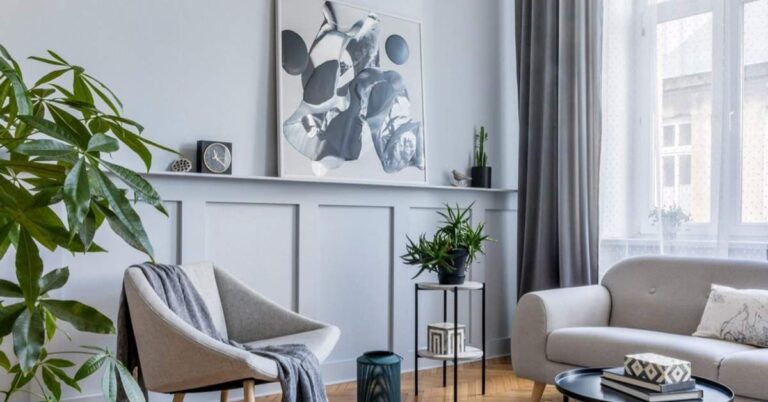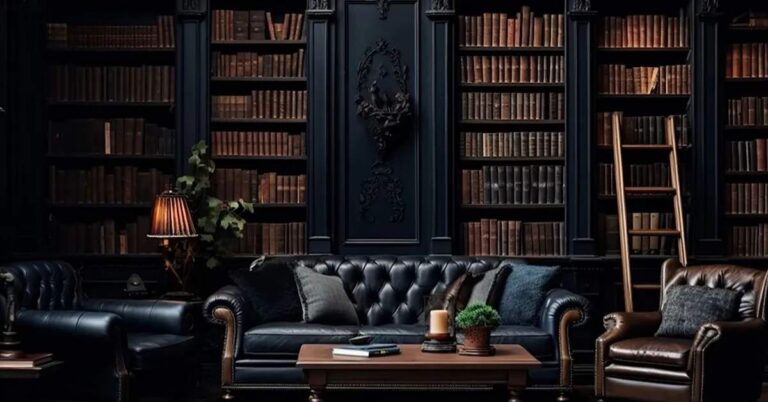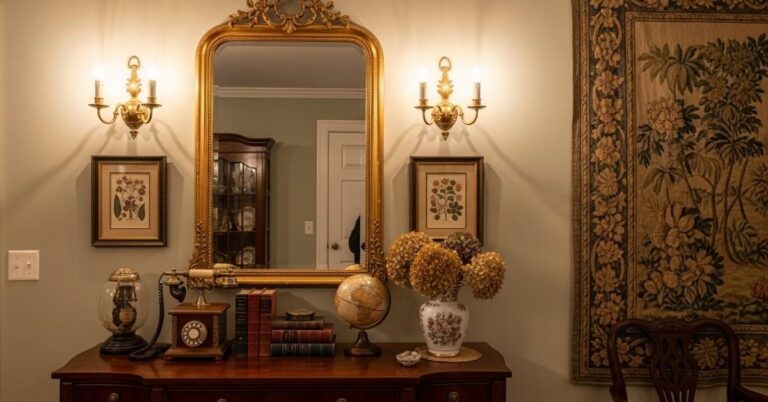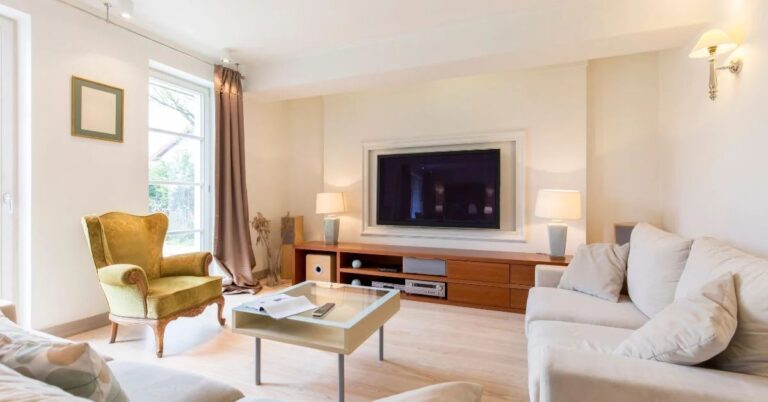
77+ Japandi Living Room Design Ideas That Balance Calm, Function
There’s a specific kind of quiet that well-designed rooms have, not empty, not sparse, just settled. Japandi living rooms do that better than almost any other interior approach right now, Japandi Living Room Design and it’s not just because they look good in photos. The style works because it’s built around two philosophies Japanese wabi-sabi and Scandinavian hygge that both prioritize how a space feels to live in, not just how it looks from a distance.
If your living room tends to feel cluttered, unfinished, or slightly off-balance no matter what you try, Japandi design gives you a framework that actually solves those problems. It’s especially useful in smaller apartments, rented spaces, and open-plan rooms that double as work and living areas anywhere that needs calm without losing warmth.
This list covers 27 genuinely usable Japandi living room ideas, from furniture arrangement to material layering to lighting. Whether you’re starting from scratch or just refining what you already have, there’s something here worth keeping.
A Low Profile Sofa in Warm Linen Facing Natural Light
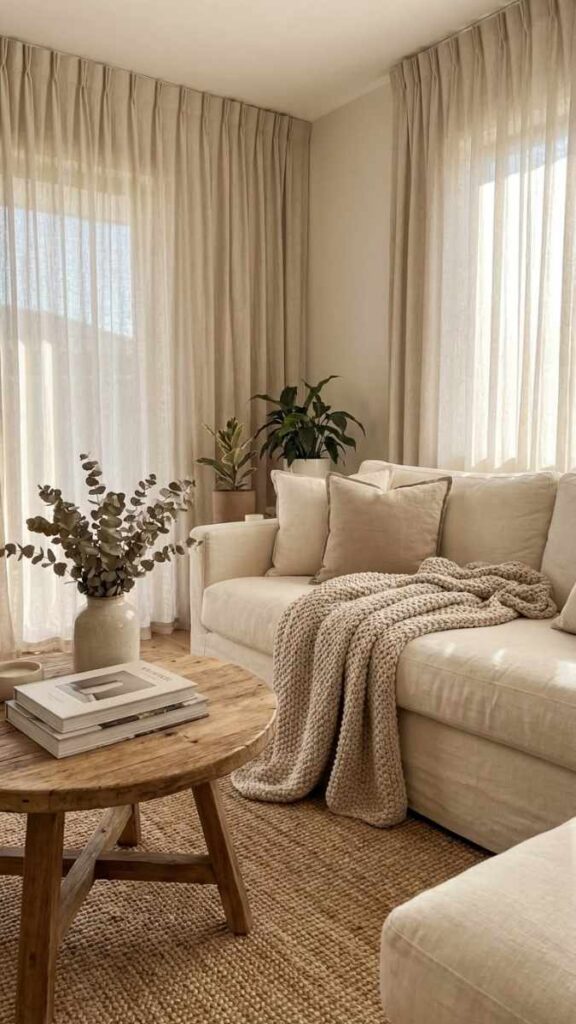
Starting with the sofa it sets the visual floor of the room. A low-profile platform sofa in warm linen or textured cotton immediately brings the eye down and makes ceilings read higher than they are.
Position it to face your best natural light source, ideally with the sofa back toward a wall rather than floating in the center. The practical logic here is simple: low furniture gives small rooms more breathing room visually, and orienting toward light makes the space feel open without requiring more square footage.
This works especially well in apartments where ceiling height is fixed and you can’t change the architecture but you can change what the eye lands on first.
A Walnut or Ash Wood Coffee Table as the Visual Anchor
In Japandi interiors, the coffee table often does more visual work than any other piece. A solid walnut or ash table particularly one with visible grain and clean joinery grounds the room with warmth while staying functional.
Round versions reduce the feeling of hard corners in small rooms; rectangular ones work better when your sofa arrangement is linear. Avoid glass or lacquered finishes here; the whole point is natural material honesty. In my experience, this is the piece worth spending on if you’re going to invest anywhere. It sets the material tone for everything else in the room.
Muted Earthy Palette Warm Greige, Clay, and Soft Black
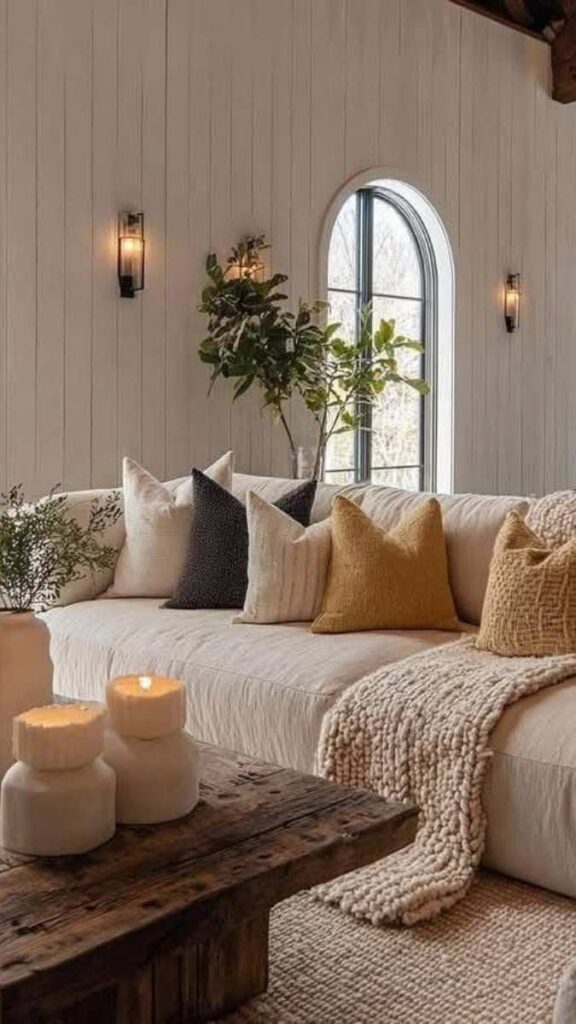
Japandi color doesn’t mean cold gray or stark white. The palette leans warm greige walls (a warm mix of gray and beige), clay or terracotta in small doses through cushions or ceramics, and soft matte black as an accent rather than a dominant tone
What this combination does spatially is create visual cohesion the eye moves around the room without catching on contrast points. For renters who can’t repaint, focus the palette on textiles and objects. A neutral sofa cover, two clay-toned cushions, and a black side table will do most of the heavy lifting without touching the walls.
Shoji-Inspired Panels or Linen Curtains for Diffused Light
Japandi lighting philosophy is about softening, not brightening. Shoji-inspired panels or floor-length linen curtains in cream or warm white filter direct sunlight into a soft glow that makes the whole room feel more cohesive.
Harsh direct light creates hot spots and heavy shadows diffused light flattens those out and makes materials like linen, wool, and natural wood read more richly.
This works in any size room but is especially effective in south-facing spaces where afternoon sun tends to overpower everything. For budget setups, IKEA’s linen-blend curtain panels get surprisingly close to the effect without the custom price.
Open Shelving in Natural Wood With Intentional Negative Space
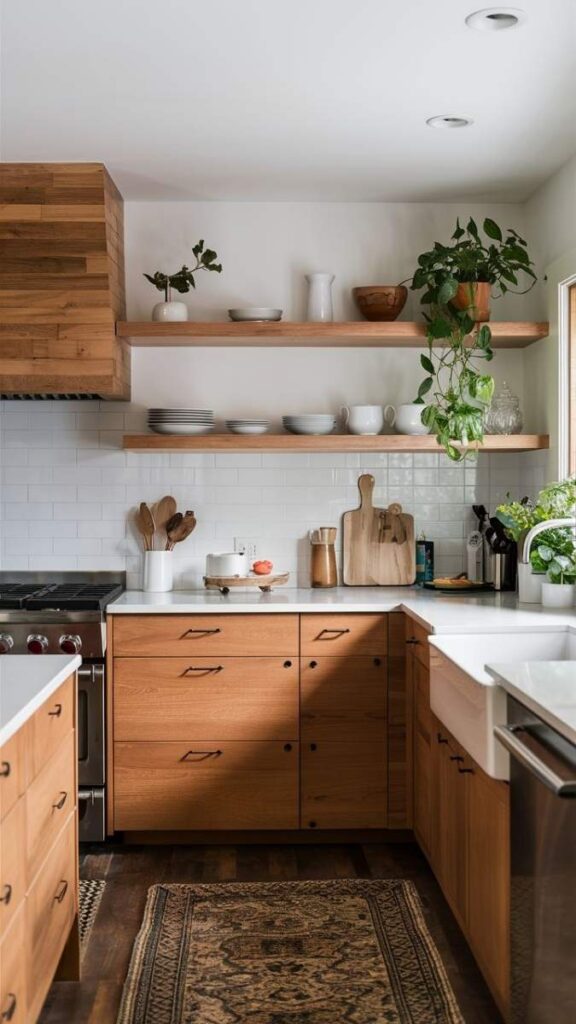
Japandi shelving is about restraint, not display. A few well-spaced objects, a ceramic bowl, one small plant, a couple of books laid flat with deliberate empty space between them. That negative space isn’t emptiness; it’s part of the composition.
The practical benefit is that it’s also easier to keep clean and reduces visual clutter dramatically. Wall-mounted floating shelves in oak or ash work best here, kept at eye level or slightly above. If you’re used to filling every shelf, start by removing two-thirds of what’s there and see how the room breathes differently.
Read More About: 76+ Modern Coastal Decor Ideas That Actually Work in Real Homes
A Tatami-Tone Area Rug to Define the Seating Zone
A flat-weave jute, sisal, or wool rug in natural tan or oatmeal tones does two things at once: it defines the seating zone without a hard border, and it adds tactile texture that balances out harder materials like wood and ceramic.
Thick high-pile rugs tend to fight the clean sightlines Japandi relies on; flat weaves or low-pile wool rugs maintain the visual calm while still adding warmth underfoot. Size matters a lot. Go large enough that at least the front legs of your sofa and chairs sit on the rug. A too-small rug makes the seating arrangement look unmoored.
Washi Paper or Rattan Pendant Lights for Warm Ambiance
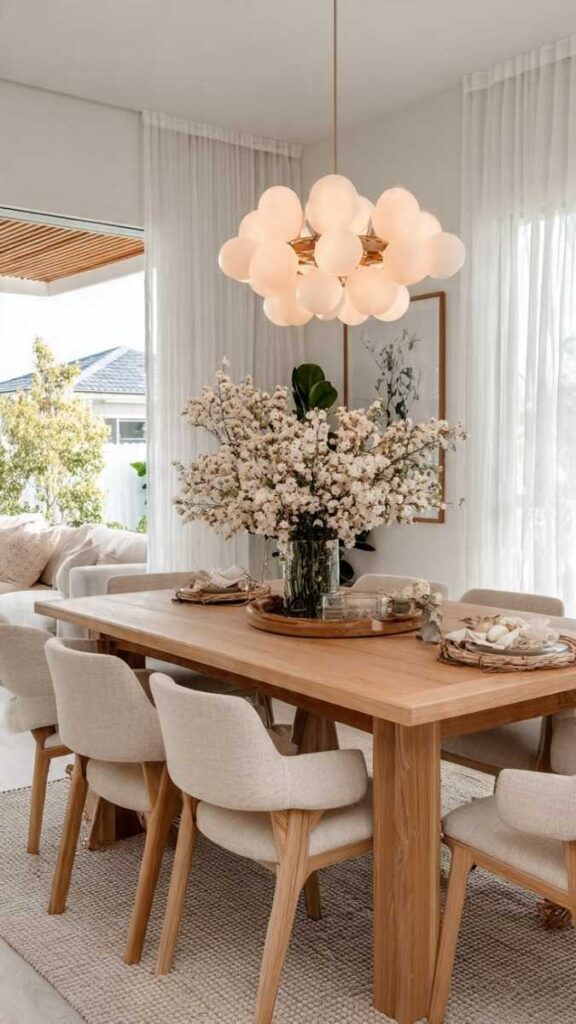
Overhead lighting in Japandi rooms should feel like it’s coming from the room itself, not imposed on it. Washi paper pendants or rattan globe lights cast a warm, diffused glow that fills the room with texture-aware light meaning you can actually see the grain in your wood furniture and the weave in your textiles.
Hung at a low-to-medium height over the coffee table (around 5–6 feet from the floor), they create an intimate zone that makes the seating arrangement feel deliberate. This is one of the higher-impact changes you can make for under $100. The right pendant light changes the entire mood of an evening.
A Minimal Boucle or Wool Armchair as a Side Seat
One well-chosen armchair adds a layer of function and visual balance without cluttering the room. Go for a low-profile design in boucle, textured wool, or natural linen the material should feel tactile but soft, not formal.
Placement matters position it at a slight angle to the sofa rather than perfectly parallel, which makes the seating arrangement feel natural and conversational rather than showroom-stiff.
This setup works particularly well in living rooms that also need a reading corner, one chair, one small table, one floor lamp creates a functional pocket without sectioning the room.
Indoor Plants as Structural Elements, Not Decoration
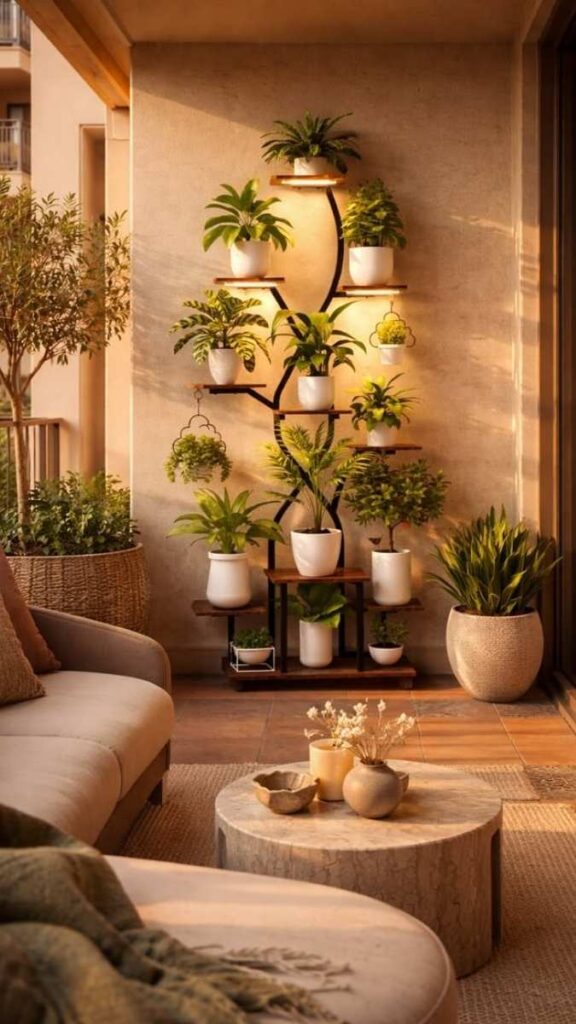
In Japandi design, plants are structural; they fill vertical space, add organic contrast to geometric furniture, and bring a sense of living material into the room. A tall fiddle leaf fig or snake plant in a simple ceramic planter in a corner creates height variation and draws the eye upward.
I’ve noticed this style works best when you limit yourself to one or two larger plants rather than a collection of small ones. Multiple small pots tend to read as clutter, while one well-placed large plant reads as intention. Matte ceramic planters in earthy tones (sand, clay, deep charcoal) keep the palette consistent.
A Minimalist Media Console With Closed Storage
Cable clutter and visible electronics are the fastest way to break the calm of a Japandi room. A low media console with closed-door storage handles the functional reality of modern living without exposing it.
Look for clean-line designs in walnut veneer or matte black lacquer, no ornate hardware, no visible handles if possible (push-to-open mechanisms maintain the clean face). Keeping the console low also avoids blocking sightlines across the room, which matters most in smaller spaces where you need to maintain the visual connection from the entry to the far wall.
Layered Textile Warmth Wool Throw, Linen Cushions, Cotton Knit
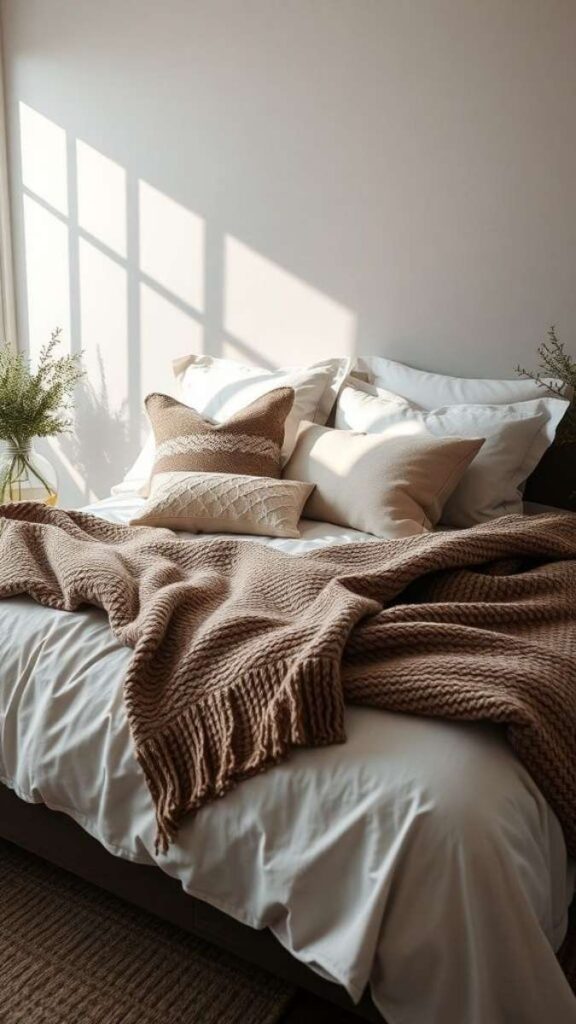
Japandi warmth comes from layering natural textiles rather than adding more objects. A wool throw draped casually over one end of the sofa, two linen cushions in warm neutral tones, and one slightly heavier knit cushion creates textural depth that makes the seating area feel genuinely inviting.
The key is keeping the color palette tight all within two to three tones of each other so the layering reads as texture rather than pattern. Mixing materials (wool, linen, cotton) is part of the wabi-sabi influence; it’s about honest, natural fabrics in combination, not a matched set.
Read More About: 75+ Farmhouse Lighting Ideas That Make Every Room Feel Warm
Wabi-Sabi Ceramics and Organic Objects on Surfaces
Wabi-sabi styling means choosing objects that have visible making in them: a hand-thrown ceramic bowl with uneven edges, a smooth river stone, a small vase with a subtle glaze variation. These aren’t decorations in the conventional sense; they’re material anchors that ground the room in the physical world.
On a coffee table, limit yourself to three objects maximum, arranged with considered spacing. The imperfection is the point it signals that the room is lived in rather than staged, which paradoxically makes it feel more designed, not less.
A Neutral Gallery Wall With Ink or Botanical Prints
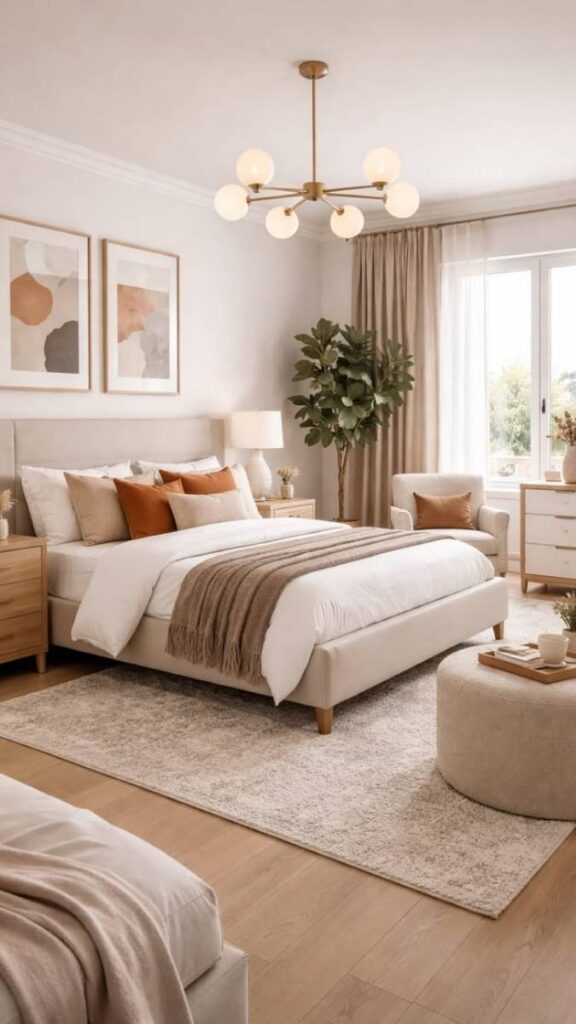
Wall art in Japandi spaces should feel quiet but present. Three to four framed ink prints, simple botanical illustrations, or minimal line drawings in thin black or natural wood frames work well without competing with the room’s calm palette.
Arrange them with consistent spacing either symmetrically for a more formal setup or in a loose horizontal grouping at eye level. Avoid large colorful prints or oversized single-piece artwork, which tend to break the visual balance. Unmatted prints in simple frames also keep the budget manageable; a grid of four A4 prints can cover a large wall for very little.
Built-In or Freestanding Bookshelf With Sparse Styling
A bookshelf in a Japandi room works when it’s curated, not filled. Mix books stored horizontally and vertically, use a few objects between groupings, and leave at least 20–30% of each shelf as empty space. A matte black or natural wood frame keeps the piece integrated rather than dominant.
This setup solves the storage problem while maintaining the visual calm the books themselves add organic color and texture variation without requiring any additional decor. For renters, a freestanding shelf in the right proportions can also function as a subtle room divider between a living and dining area.
Stone, Concrete, or Terrazzo Side Tables for Texture Contrast
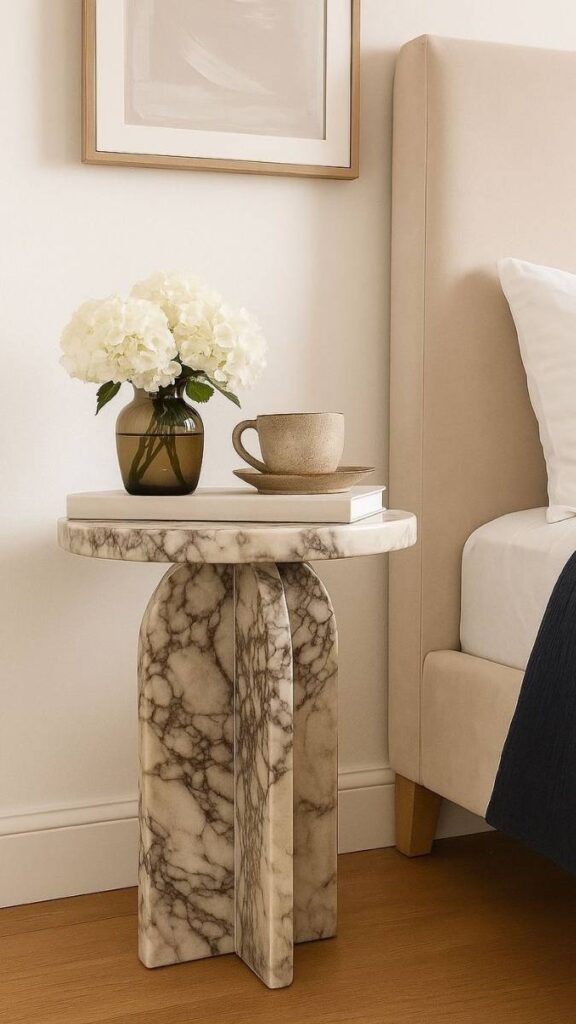
Material contrast is one of the core visual tools in Japandi interiors. Placing a stone, concrete, or terrazzo side table next to soft upholstered seating creates the kind of tactile dialogue that makes a room feel considered. The rough, cool quality of stone against warm wool or linen is visually interesting without introducing color contrast.
They work because they’re different in texture and weight, not in hue. Small round side tables in these materials are widely available at accessible price points and carry a lot of weight (pun intended) in the overall composition.
A Shoji Screen or Bamboo Room Divider for Partial Separation
In open-plan apartments or studio layouts, a shoji screen or slatted bamboo divider creates a soft boundary between zones without closing the space off. The translucent quality of shoji panels allows light to pass through while creating visual separation which means the room feels defined without feeling boxed in.
This is particularly useful if your living area also functions as a workspace; a screen between the sofa zone and the desk creates a psychological separation that a rug or furniture arrangement alone can’t fully achieve. It also adds an architectural element to rooms that otherwise lack structure.
Floor Level Seating Cushions for Flexible Functional Space
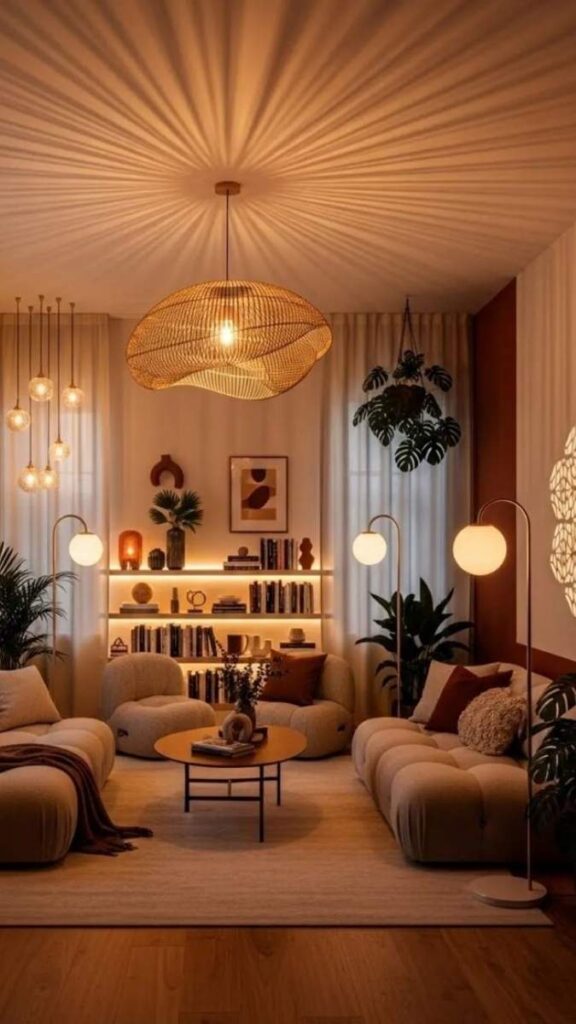
Low floor cushions or zabuton-style seating around the coffee table add functional flexibility without permanent furniture. In smaller rooms, this approach means the “seating area” can be reconfigured based on casual seating, extra guests, or even a yoga or meditation space.
Large floor cushions in natural linen or cotton canvas in earthy tones stay within the Japandi palette and collapse flat for storage when not in use. This is one of the more budget-friendly ways to extend the seating capacity of a small living room while reinforcing the low-profile aesthetic that defines the style.
Matte Black Hardware and Fixtures as Quiet Accents
Matte black in Japandi design acts as a quiet underlining; it defines edges and adds contrast without introducing color. A matte black floor lamp, thin black shelf brackets, black picture frames, and a black media console handle create cohesion across the room in a way that feels deliberate without being heavy.
The matte finish is critical here; glossy black reads as contemporary-modern, which clashes with the warmth of the natural materials. IMO this is the detail that separates a well-executed Japandi room from one that just happens to have neutral furniture.
A Zen-Inspired Corner With Pebbles, Moss, or a Small Water Feature
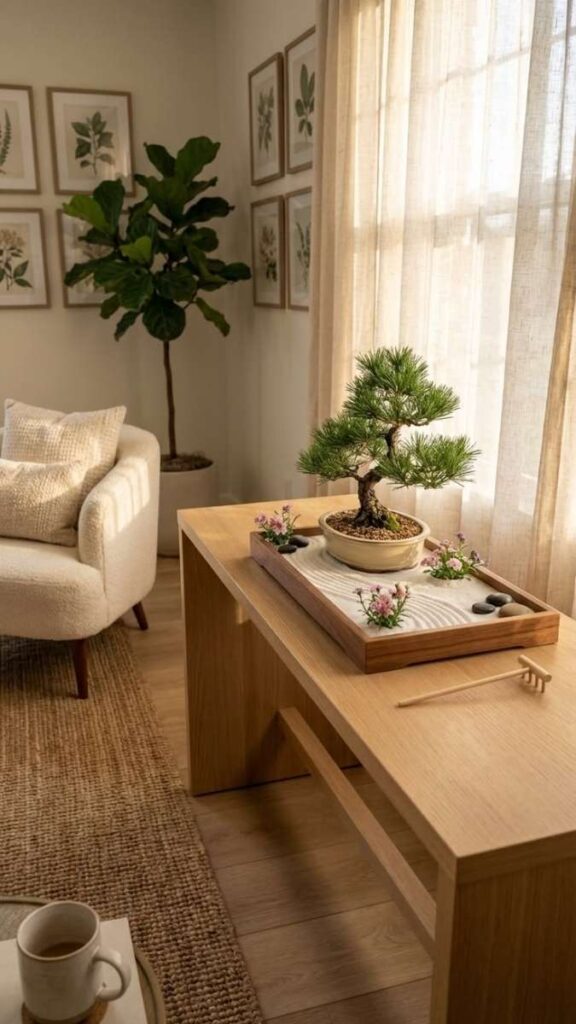
A dedicated corner with a small composition of natural objects, smooth river pebbles in a shallow tray, a piece of preserved moss, or even a minimalist tabletop water feature creates a focal point that invites stillness.
This is a specifically Japanese influence in the Japandi blend, the idea that one intentional arrangement carries more meaning than a surface full of objects. It works best in a corner that would otherwise go unused, adding purpose to dead space without requiring furniture. The ambient sound of a small water feature also does measurable things to how calm a room feels, worth trying if you’re sensitive to noise in your environment.
Limewash or Textured Plaster Walls for Organic Depth
If you own your space (or have a landlord who’s open to it), limewash paint or textured plaster on one wall adds a depth of surface that flat paint can’t replicate. The organic variation in limewash slightly lighter here, slightly deeper there responds differently to morning and evening light, giving the room a quality that changes through the day.
In Japandi interiors, this wall treatment replaces the need for heavy artwork or pattern; the wall itself becomes the texture. Clay, pale gray-green, or warm white are the tones that sit most naturally within the palette.
Natural Fiber Storage Baskets for Functional Concealment
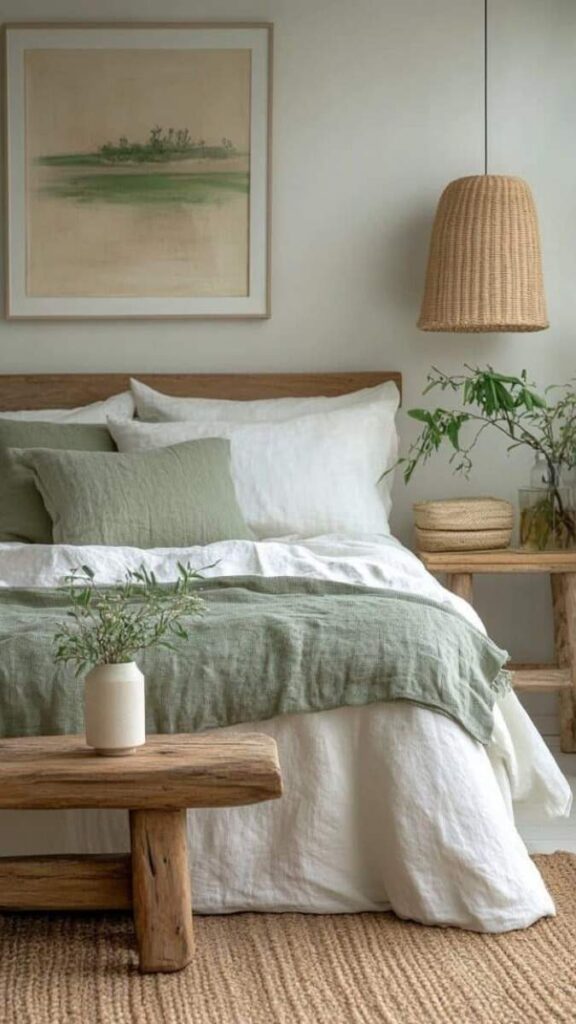
Storage in Japandi rooms should be invisible or beautiful, ideally both. Natural fiber baskets in seagrass, rattan, or woven cotton conceal the everyday reality of blankets, remotes, and magazines while adding warm texture to the floor or lower shelf level.
Choosing baskets in natural, undyed materials keeps them integrated rather than decorative. One large basket beside the sofa for throws, two smaller ones on a lower shelf for miscellaneous items, it’s a genuinely functional setup that requires no particular skill to implement and makes an immediate difference to how organized the room looks.
A Single Statement Floor Lamp With a Paper or Linen Shade
A single well-placed floor lamp does more for Japandi atmosphere than any number of small accent lights. A tall arc lamp positioned over one end of the sofa or beside an armchair creates a warm pool of light that makes the seating area feel separate from the rest of the room in the evening.
Paper or linen shades cast the warmest, most diffused light; avoid plastic or synthetic shades, which have a cooler, flatter quality. This is also one of the most effective tools for making a living room feel smaller and more intimate in the evenings, even in larger spaces.
Read More About: Coastal Bathroom Ideas That Actually Work in Real Homes
Organic Shaped Mirrors to Expand Space Without Hard Geometry
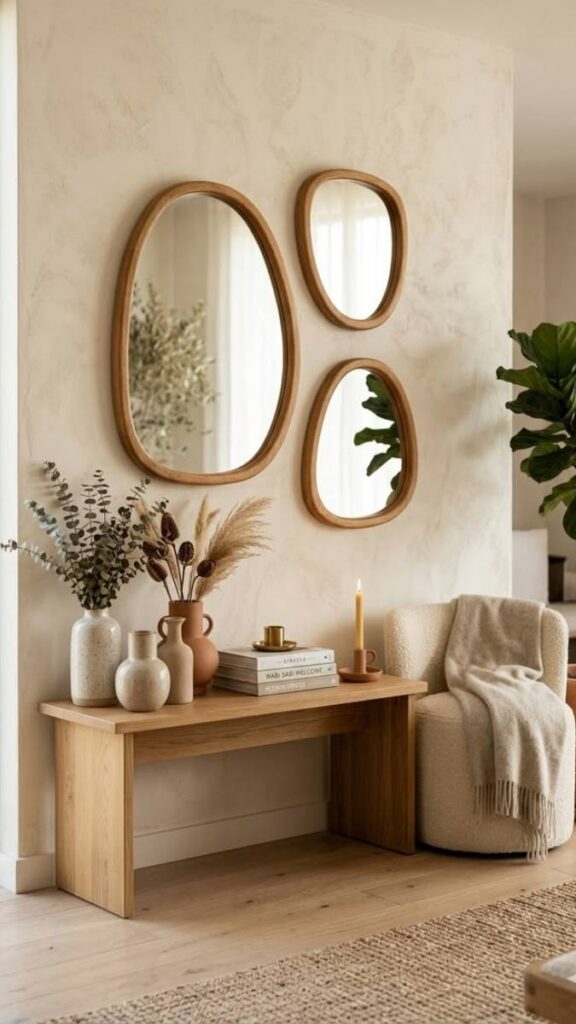
Mirrors in Japandi rooms work best when they avoid the conventional rectangular format. An organic or subtly irregular shape in a thin natural wood or matte black frame adds visual interest while reflecting light further into the room.
Positioning it to catch natural light from a window rather than facing a wall, the goal is to extend the light source, not just to create the appearance of depth. In small living rooms, a well-placed mirror of this kind can make the room feel noticeably more open without adding any furniture or changing the layout.
A Neutral Entryway-to-Living Room Flow With Uninterrupted Sightlines
How your living room looks from the entry point of the apartment matters more than most people account for. A clear sightline from the front door to the far end of the room, no furniture blocking the path, no visual clutter breaking the line creates an immediate sense of spaciousness when you walk in.
In Japandi terms, this is about creating an arrival experience that feels calm from the first moment. Practically, it means being disciplined about what sits in the center path furniture should define the edges of the room, not interrupt its center. Even in small apartments, this one adjustment changes how the space is perceived.
Bonsai or Pruned Indoor Plants for Deliberate Organic Form
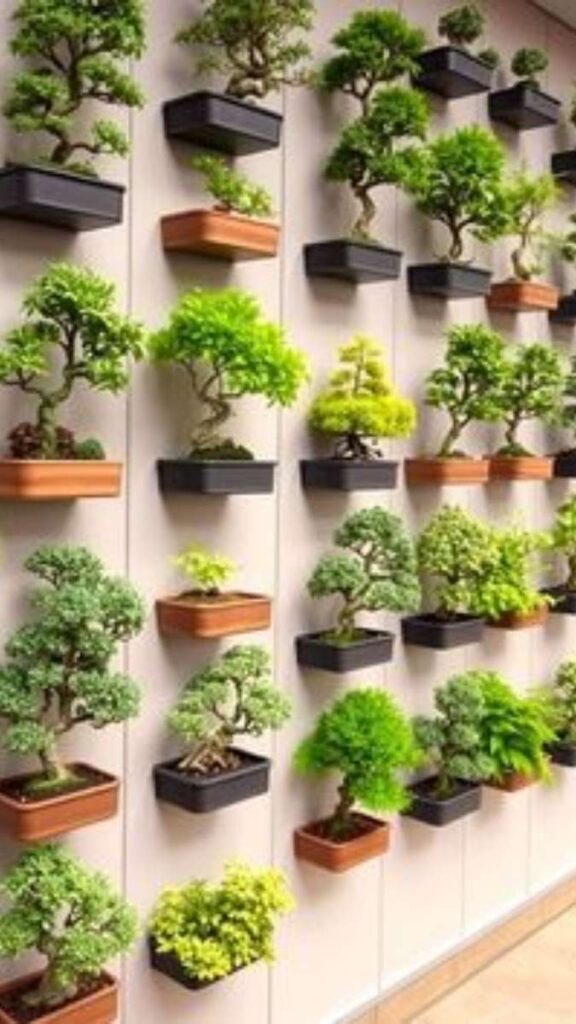
A bonsai or carefully shaped indoor plant is one of the most Japandi-specific styling choices you can make. The deliberate form of a bonsai shaped by time and intention embodies the wabi-sabi principle of finding beauty in impermanence and organic process.
On a low side table or shelf, it functions as a living sculpture, something to notice slowly rather than glance at. Beyond aesthetics, it also solves the “what do I put here” problem in a way that a candle or a book can’t.
A Minimalist Fireplace or Bio-Ethanol Flame as Focal Point
In rooms that lack an architectural focal point, a minimalist fireplace whether real or bio-ethanol gives the layout something to organize around.
A wall-mounted bio-ethanol unit in a matte black or concrete surround creates a focal point that justifies the furniture arrangement facing it, without the installation complexity of a gas or wood-burning fireplace.
The warm, flickering light it casts in the evening also reinforces the atmosphere that Japandi interiors are built for. This is one of the more significant investments on the list, but for rooms that feel directionless, it solves a layout problem that styling alone can’t.
Negative Space as a Design Element, Not an Absence
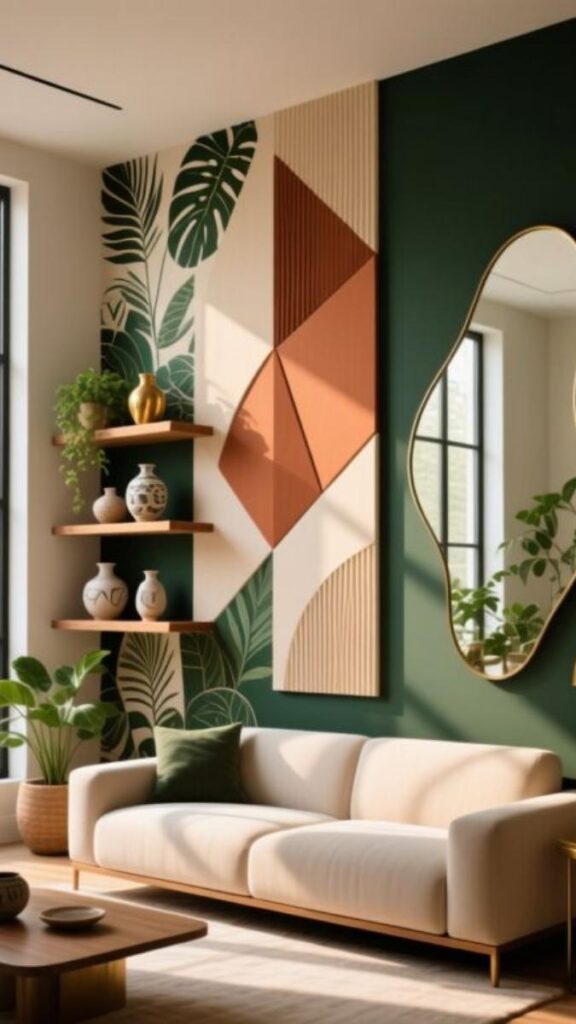
The hardest thing to commit to in Japandi design and the one that makes the biggest difference is intentional empty space. An unfilled corner, a bare section of wall, a surface with nothing on it. In Western interior design, empty space tends to feel unfinished; in Japandi, it’s the equivalent of a pause in music.
It gives the eye somewhere to rest and makes the objects that are present feel more considered. This isn’t a passively achieved outcome; it requires actively choosing not to fill things. Start by clearing one surface or one corner completely, and live with it for a week before deciding whether to add anything back.
What Actually Makes Japandi Living Room Design Work
Most Japandi rooms fail not because of the wrong furniture, but because of proportional imbalance, too many elements competing at the same visual height, or a palette that’s technically neutral but reads as cold rather than warm.
The underlying structure that makes Japandi work is this low furniture sets the visual floor, natural materials provide the warmth, negative space provides the calm, and one or two organic elements (a plant, a ceramic, a natural wood grain) provide life. Remove any one of those four and the room tips either toward cold minimalism or toward generic neutral-toned decorating.
Scale is the other hidden factor. Japandi furniture tends to be lower and slightly smaller than conventional Western proportions. A sofa that sits at 70–75cm seat height rather than the standard 80–85cm changes how the whole room feels. Similarly, coffee tables should sit no higher than the sofa seat; many standard tables are actually too tall for the low-seating aesthetic to work properly.
Lighting deserves special attention. The style depends on warm-temperature light sources (2700–3000K) positioned at lower levels floor lamps, pendant lights, and candles rather than overhead ceiling fixtures. Recessed spotlights and fluorescent lighting actively undermine the atmosphere even when everything else is right. If you can’t change your ceiling lights, counterbalance them with warm floor-level sources that dominate in the evenings.
Japandi Living Room Design Setup Guide by Room Type
| Setup | Best Room Type | Primary Benefit | Main Problem Solved | Difficulty |
| Low sofa + floor cushions | Small studio / apartment | Opens vertical space | Cramped, low ceiling feel | Easy |
| Open wood shelving + negative space | Any size room | Visual calm, storage | Clutter on surfaces | Easy |
| Shoji screen + zone division | Open-plan / studio | Defines spaces softly | Lack of separation | Medium |
| Bio-ethanol fireplace as focal point | Directionless rooms | Organizes layout | No architectural anchor | Investment |
| Limewash wall + minimal furniture | Owned spaces | Adds depth and warmth | Flat, lifeless walls | Medium |
| Washi pendant + floor lamp layering | Any room | Warm atmosphere | Harsh overhead lighting | Easy |
| Bonsai / large plant as structure | Corner or side space | Organic height variation | Dead space / bare corners | Easy |
Common Japandi Living Room Mistakes That Undermine the Style
Using a palette that’s neutral but cold.
There’s a big difference between warm neutrals (greige, clay, warm white) and cool neutrals (cool gray, blue-white, stark white). Japandi requires the former. Rooms that read as Scandinavian-clinical rather than Japandi-warm usually have the wrong temperature in their base palette.
Filling every shelf and surface.
Japandi restraint is structural, not aspirational. The negative space has to be there by design. A room where you’ve added Japandi objects to an already-full room will never read as Japandi Something has to go before something new comes in.
Choosing furniture that’s too tall.
Standard Western sofa and coffee table proportions actively work against the low-horizon aesthetic. If you’re buying new, prioritize seat height and table height over everything else. Furniture that sits lower changes how the ceiling, the walls, and the room’s overall volume are perceived.
Over-accessorizing with “Japandi-adjacent” objects.
Not every natural-material object belongs in a Japandi room. Driftwood arrangements, macramé wall hangings, and boho-style rattan chairs don’t belong here; they have a different material language. The discipline is in choosing objects with simple forms and honest materials, not just organic-looking ones.
Ignoring light temperature.
Warm LED bulbs (2700K) are non-negotiable. Cool white bulbs (4000K+) flatten the visual warmth of wood, linen, and ceramic and make the room feel clinical regardless of how it’s styled. This is a $10 fix that most people overlook entirely.
FAQ’s
What is Japandi living room design?
Japandi is a hybrid interior design style combining Japanese minimalism and Scandinavian hygge. It focuses on natural materials, warm neutral palettes, functional simplicity, and deliberate negative space to create living rooms that feel calm, warm, and thoughtfully organized.
What colors work best in a Japandi living room?
The most effective Japandi palettes use warm neutrals greige, clay, sand, and warm white anchored with matte black or deep charcoal accents. Cool grays and stark whites tend to push the room toward cold minimalism rather than the warmth Japandi depends on. Small doses of earthy terracotta or sage green can be added through ceramics or textiles.
How do I make a small living room work with Japandi design?
Choose low-profile furniture to keep sightlines open, limit furniture to essential pieces only, and use a flat-weave rug to define the seating zone without adding visual bulk. A shoji screen or slatted divider can create zone separation in studio apartments without closing off the space. The key in small rooms is consistently choosing pieces that sit lower and lighter than you might instinctively pick.
Japandi vs. Wabi-Sabi What’s the difference?
Wabi-sabi is a Japanese philosophy that finds beauty in imperfection and impermanence. It’s a worldview as much as an aesthetic. Japandi is a design style that draws on wabi-sabi principles (valuing natural, organic, imperfect materials) while incorporating Scandinavian functionality and warmth. Wabi-sabi spaces can feel rougher and more rawly organic; Japandi spaces tend to be more livable and structured.
What furniture is essential for a Japandi living room?
The core pieces are a low-profile sofa in natural fabric, a solid wood coffee table, one or two organic-material side tables, and a storage console with concealed storage. Beyond that, a well-chosen floor lamp, one large indoor plant, and a flat-weave area rug cover most of the compositional work. Start with those before adding anything else.
Is Japandi design budget-friendly?
It can be. Because the style depends on having fewer pieces and more negative space, you don’t need a large furniture budget, you need the right pieces. IKEA’s natural wood and matte black lines cover a lot of the furniture basics. The investment areas are the sofa (quality upholstery reads better long-term) and a good pendant light. The style also benefits from removing things you already own, which costs nothing.
How do I add warmth to a Japandi room without losing the minimal look?
Layer natural textiles: a wool throw, linen cushions, a cotton knit in tones that are close to each other in the palette. Switch to warm-temperature bulbs (2700K) in all fixtures. Add one large plant and one or two hand-made ceramic objects. These changes add warmth through material and light, not through more objects or more patterns.
Conclusion
Japandi living room design works because it’s built on real principles, not just a look, but a logic. Low furniture, natural materials, deliberate restraint, and warm light create rooms that feel different to be in, not just different to look at. The changes aren’t always large, but they’re consistent and every decision points in the same direction.
Start with one or two ideas that fit your actual space and budget: swapping your light bulbs to 2700K, clearing a shelf down to three objects, or simply moving your sofa closer to the window. Japandi isn’t about achieving a perfect room all at once. It’s about making each decision slightly more considered than the last.