87+ Apartment Decor Ideas That Make Small Spaces Feel Bigger
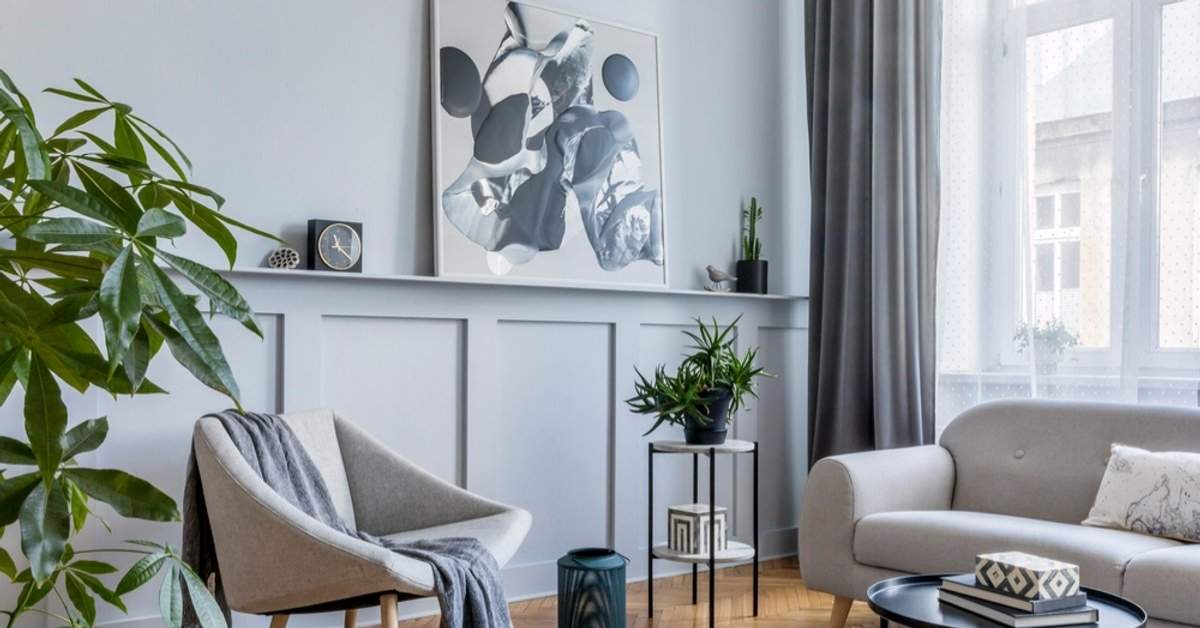
There’s a specific frustration that comes with decorating an apartment: you want the space to feel like yours, but you’re working with white walls, Apartment Decor Ideas minimal square footage, and a lease that won’t let you do half the things you’d actually want to try. The result is often a space that feels fine but never quite settled.
The ideas below are built for exactly that situation. Whether you’re in a studio, a one-bedroom with awkward proportions, or a compact rental that needs more personality than a basic IKEA setup can offer, these are layouts and approaches that actually hold up in real apartments, not just in staged photoshoots.
If your space needs to work for both living and occasional work-from-home, or if your budget is more “thoughtful spending” than “full renovation,” you’ll find setups here worth trying.
Position Your Sofa Away From the Wall to Define the Living Zone
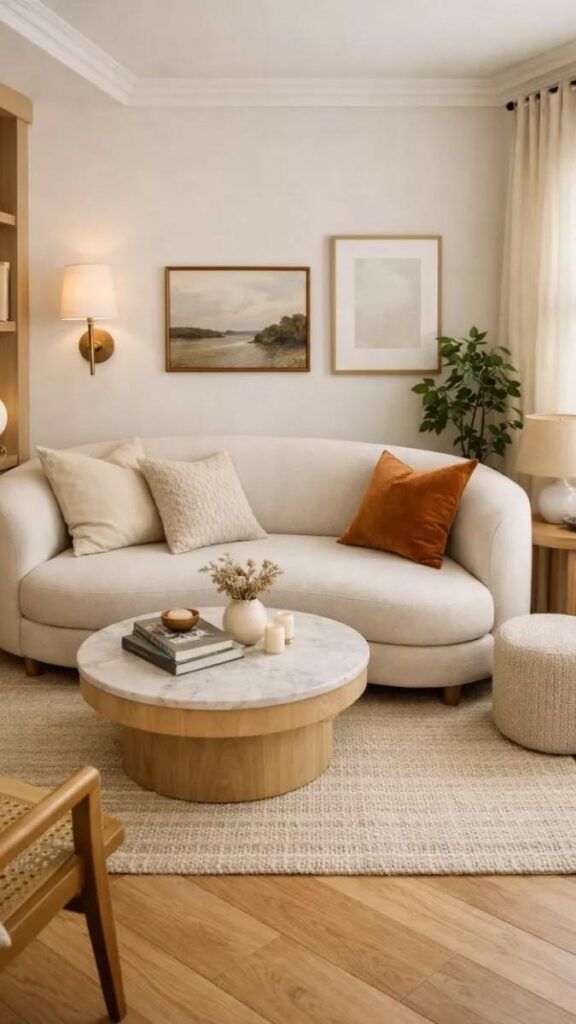
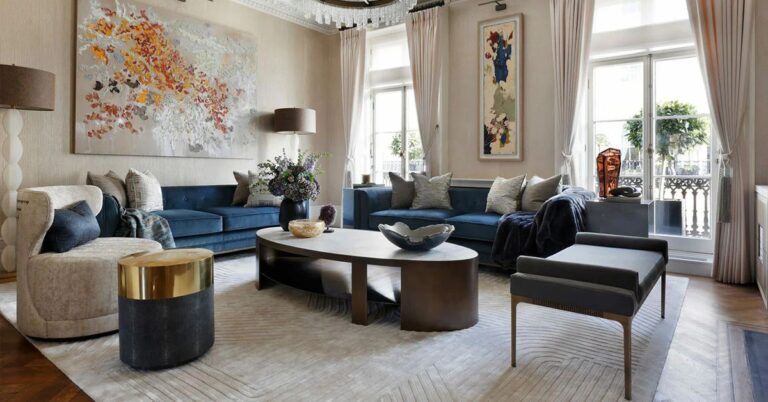
Most people push the sofa against the wall thinking it creates more space. In practice, floating it 10–14 inches inward does the opposite; it visually carves out a defined living zone, which makes the room feel intentional rather than like furniture pushed to the edges. Behind the sofa, that narrow gap is where a slim console table or a floor lamp earns its place.
This works especially well in open-plan apartments where the living area and kitchen share one continuous room. Without some kind of spatial boundary, the space reads as one long corridor. Floating the sofa creates a room within a room with no walls required.
Use a Large Rug to Anchor the Seating Area Instead of a Small One
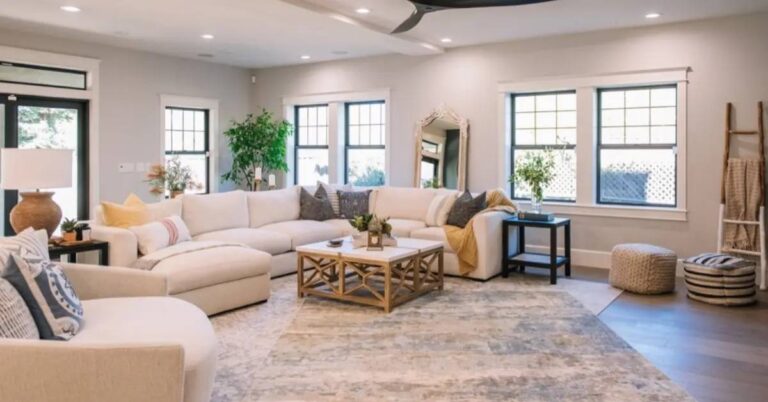
Undersized rugs are one of the most common reasons an apartment living room looks unfinished. When the rug barely fits under the coffee table and stops well short of the sofa, the furniture looks like it’s floating on tile disconnected and too small for the space.
A rug that extends under at least the front two legs of all main seating ties the arrangement together and gives the room a center. In a 10×12 living room, that usually means a 8×10 rug. The scale shift is significant. I’ve noticed this single change does more to make a space look “decorated” than almost anything else at a comparable price point.
Layer Two Light Sources in Every Room Instead of Relying on the Overhead
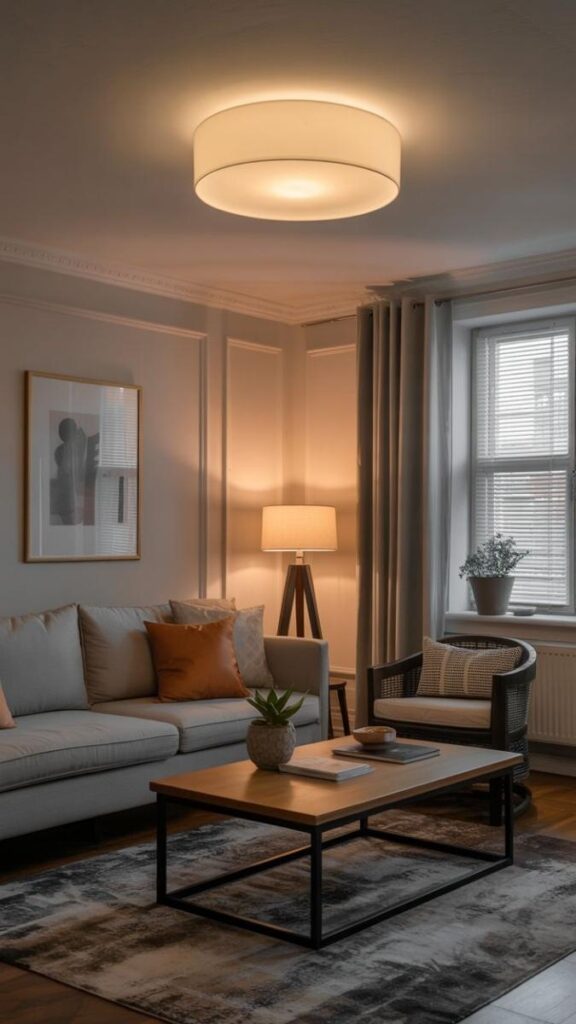
Overhead lighting in most apartments is either too harsh or positioned awkwardly, often a single ceiling fixture in the center of the room that casts flat, shadowless light. The fix isn’t a new fixture (which may not be an option for renters), it’s adding a second layer at a lower height.
A floor lamp in the corner of a living room and a table lamp on a side table creates depth through light. The room has warm zones and shadows, which reads as cozy rather than clinical. Bedrooms especially benefit: a low-wattage bedside lamp changes the entire atmosphere of the room after 7 PM.
Mount Curtains Close to the Ceiling and Wider Than the Window Frame
This is one of the few visual tricks that actually works the way people say it does. When curtain rods are mounted 4–6 inches below the ceiling and the panels extend 6 inches beyond each side of the window frame, the window reads as taller and wider than it actually is.
For renters, tension rods or command strips that hold curtain rods are a workable alternative to drilling. The key is using floor-length panels even on shorter windows stopping the curtain at the window sill cuts the vertical line and undoes the whole effect.
Build a Reading Nook Using a Compact Armchair and a Clip On or Floor Lamp
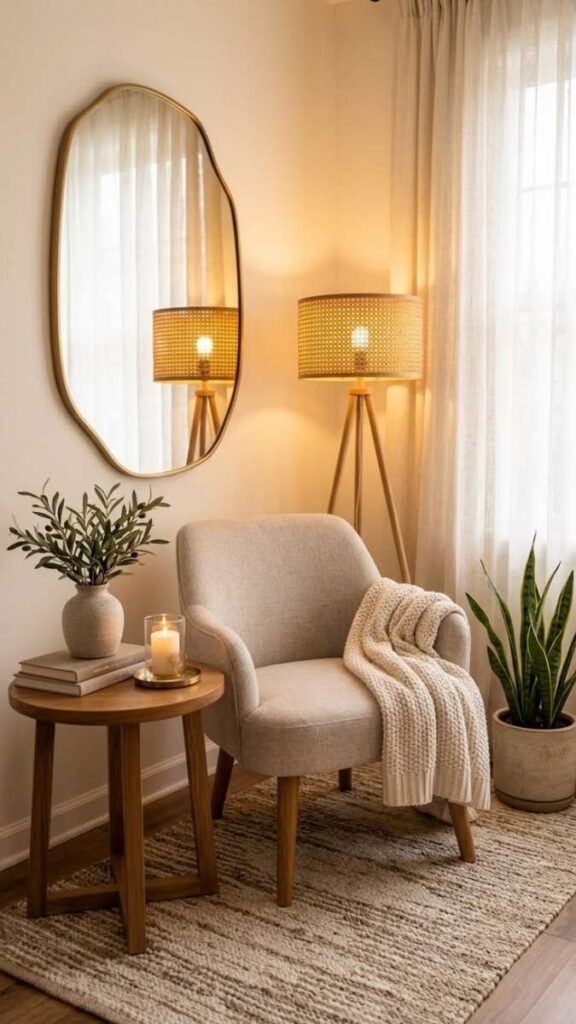
In apartments without a dedicated office or spare room, corners are underused. A compact armchair (look for ones under 30 inches wide) paired with a clip-on or arc floor lamp creates a functional zone without blocking foot traffic.
The chair doesn’t need to face a TV or another seat angled toward a window or a bookshelf. What makes this feel like a nook rather than a chair in a corner is one additional element: a small side table or a thin wall-mounted shelf for a drink and a book. That’s the detail that turns a piece of furniture into a place.
Read More About: 85+ DIY Home Decor Ideas That Actually Work in Real Rooms
Use Open Shelving in the Kitchen or Living Room to Add Storage Without Closing Off Space
In tight spaces, adding a cabinet creates more storage but less room to breathe visually and physically. Open shelving solves for both: it adds functional storage while keeping the wall plane light and open. In a galley kitchen, a single shelf above the counter is often all you need for frequently used items.
The discipline required is real; the shelf needs to be edited, not stacked but a well-arranged open shelf also functions as casual decor. Grouping items by material (all glass together, wood cutting boards stacked, ceramics in a cluster) creates order without needing a designer’s eye.
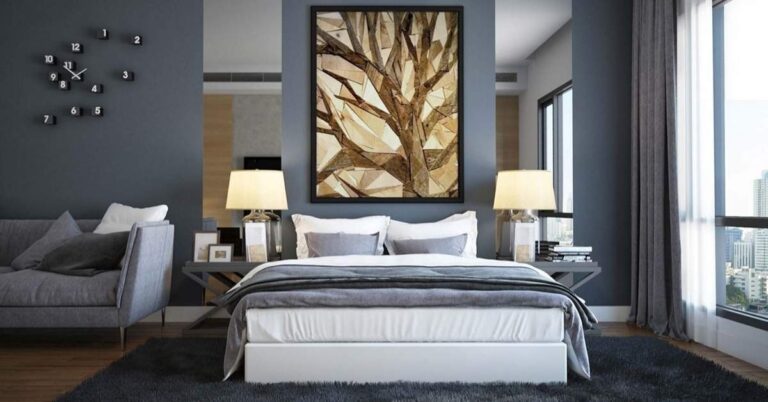
Create a Visual Headboard With Paint, Fabric, or Tapestry in Rental Bedrooms
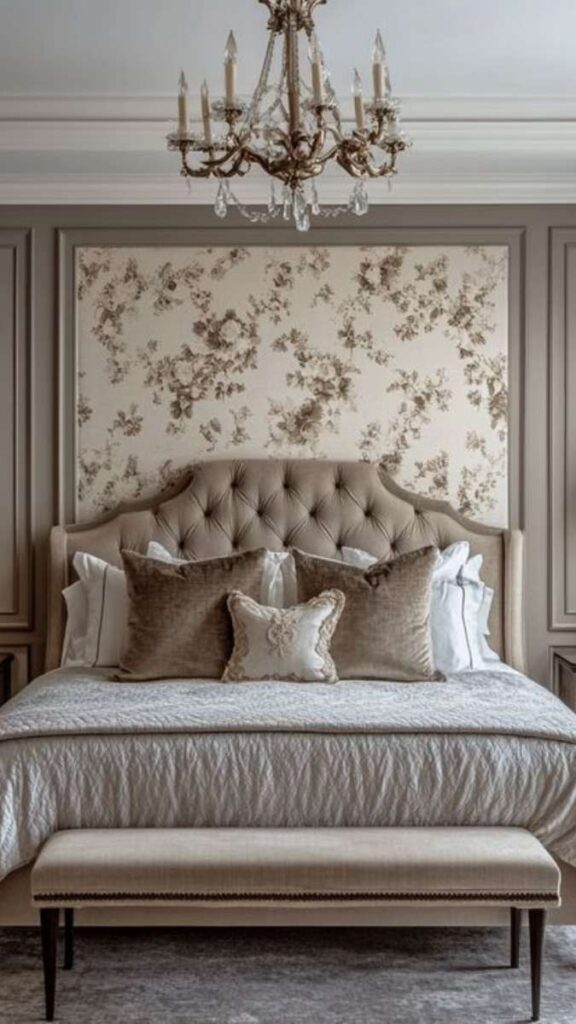
Not every apartment bedroom comes with a headboard, and buying one can mean figuring out assembly, dimensions, and what to do with it when you move. An alternative: use the wall space above the bed as a visual anchor instead.
A large tapestry or macramé wall piece mounted above the bed creates the same visual weight a headboard would, something that grounds the bed in the room and closes off the wall behind it. Hung slightly higher than a standard headboard would sit (about 24–30 inches above the mattress), it also makes the ceiling read as taller. This is one I’d actually recommend trying first before investing in a frame.
Add a Gallery Wall Using Frames of Similar Scale Rather Than Mixed Sizes
Gallery walls go wrong most often when the frames are too varied in size; a mix of tiny prints and large canvases creates a busy, unresolved look. A simpler approach: choose one frame size and repeat it.
A row of five or seven matching 8×10 or 11×14 frames creates a clean, cohesive panel that reads like a designed choice rather than a collection of things that didn’t fit anywhere else. Black or thin natural wood frames work well against white rental walls. Spacing matters more than most people expect: 2–3 inches between frames keeps the grouping tight and intentional.
Use a Bookshelf as a Room Divider in Open-Plan or Studio Spaces
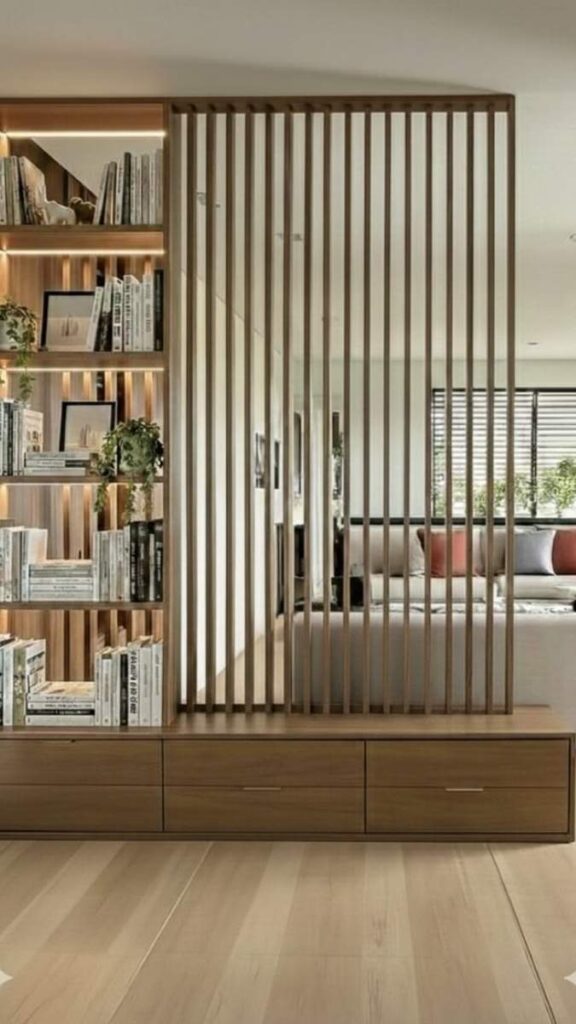
In a studio or large open-plan apartment, the challenge isn’t space it’s definition. Without walls, every function (sleeping, eating, working, relaxing) competes for the same visual territory. A tall bookshelf placed perpendicular to the wall creates a soft division between zones without adding a physical barrier that blocks light or movement.
Open-back shelves work best for this; they let light pass through while still creating a visual edge. A shelf between a sleeping area and a living room also gives both sides something to face: the bedroom side can hold quieter objects, the living room side holds books and larger decor pieces.
Read More About: 86+ DIY Hidden Storage Ideas That Keep Your Home Clean, Calm,
Hang Mirrors on Walls Opposite Light Sources, Not Just on Walls With Light
Mirror placement matters more than mirror size. A large mirror on the same wall as the window doesn’t pick up and reflect light; it just hangs there. A mirror placed directly across from the window catches daylight and bounces it back into the room, which brightens the space without any additional lighting.
In narrow rooms or those with only one window, this technique makes a meaningful difference to how the room feels during daylight hours. Round mirrors read softer and work in more contexts than rectangular ones; they don’t compete with the room’s existing rectangular shapes (doors, windows, furniture).
Build a Functional Entryway in Apartments That Don’t Have One
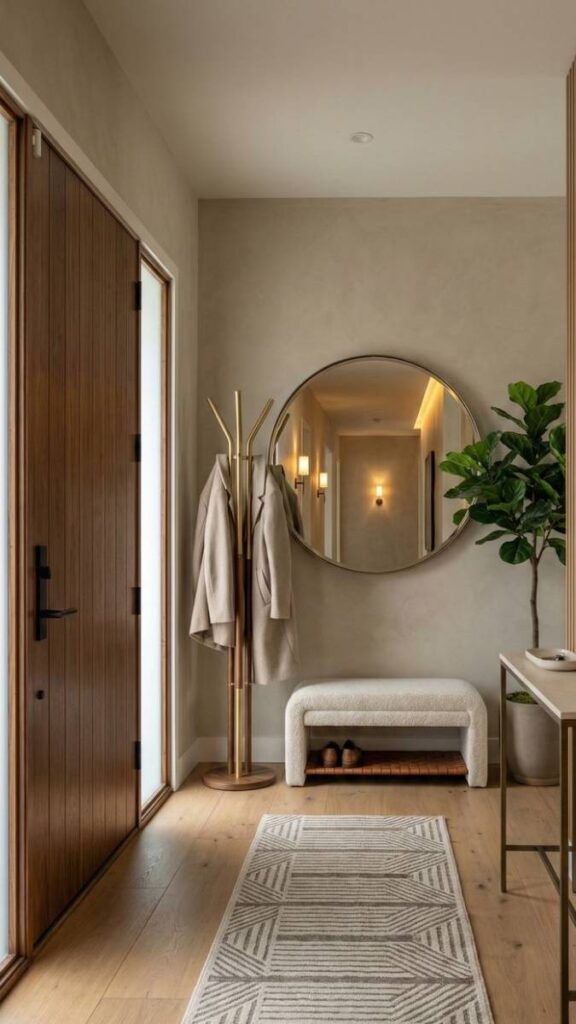
Many apartments open directly into the living room, which means shoes, bags, and keys end up wherever you drop them. A designated entry zone, even a narrow one solves this. A slim console table (look for ones under 10 inches deep) against the wall nearest the door, a few wall hooks above it, and a small mirror creates the function of an entryway without needing a dedicated foyer.
Below the console, a basket or low tray handles shoes without them migrating into the living area. Lighting matters here too: even a small plug-in wall sconce or a lamp on the table shifts the entryway from a threshold you pass through to a space that says the home has started.
Choose Multi-Functional Furniture as the Foundation, Not as an Afterthought
In an apartment, every piece of furniture should justify its square footage. A standard coffee table takes up floor space and does one thing. An ottoman with internal storage takes the same footprint, adds seating, and holds extra blankets or items that would otherwise create clutter.
The same logic applies to beds with drawers, benches with lift-up storage, and sofa-beds in studios. The key is building the multi-functional layer first before adding decorative pieces so the room has real capacity before you start layering in style.
Use Vertical Space With Tall Shelving Units That Reach Near the Ceiling
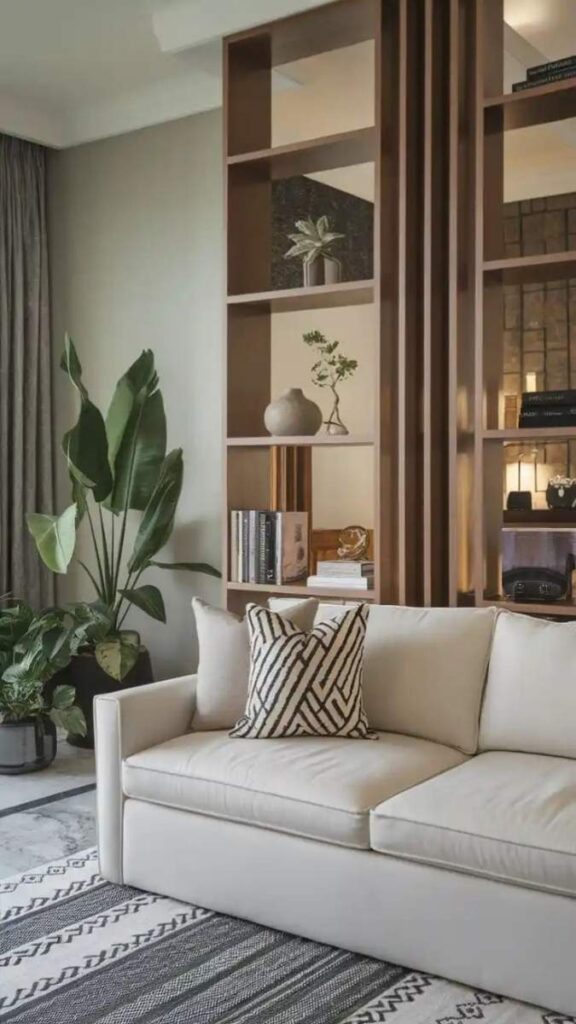
Most apartment furniture sits below the five-foot mark, which means the upper two to three feet of every wall is completely unused. Tall shelving units that reach seven feet or higher draw the eye upward and make rooms feel taller in the process.
They also add substantial storage capacity without increasing floor footprint. In a living room, a tall narrow unit in the corner holds books, plants, and objects across multiple levels. The styling logic: keep the upper shelves simple (one or two larger objects, a trailing plant) and use the lower shelves for the denser, more practical storage.
Read More About: 84+ DIY Room Decor Ideas for Teens That Actually Look Good and Work in Real Spaces
Add Texture to a Neutral Room Through Throws, Cushions, and Natural Materials
A room that’s all one tone, even a thoughtful neutral can feel flat if every surface has the same finish and weight. Texture solves this without adding color or pattern. A linen sofa, a chunky knit throw, a jute rug, and a wooden coffee table all sit in a similar neutral range but create completely different sensory impressions.
The contrast between rough, smooth, matte, and woven surfaces is what gives a room visual interest. This is especially useful in rentals where you’re working with white walls and whatever flooring came with the apartment.
Create Height Variation in Decor Arrangements Rather Than Lining Everything Up
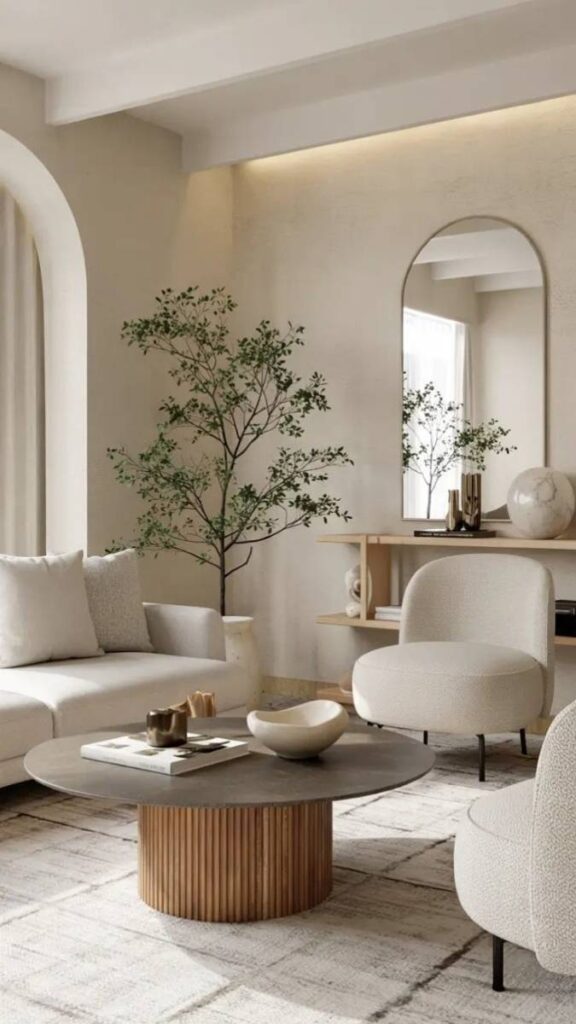
When objects on a shelf or tabletop are all the same height, the arrangement looks like a lineup orderly but static. Creating variation in a tall vase next to a medium plant next to a low stack of books gives the eye somewhere to move.
This principle works on mantels, bookshelves, side tables, and console tables. The simplest version: choose a tall element, a medium element, and something low or flat. Three points of different height is enough to create the feel of a curated arrangement.
Use Dark Paint or Wallpaper in a Small Room Intentionally, Not Reluctantly
The instinct in small rooms is always to go lighter to make the space feel bigger. That logic holds for rooms that lack natural light. But in a room with decent daylight, going dark on one wall or even all four creates an enclosure that reads as intimacy rather than claustrophobia.
A deep navy, warm charcoal, or sage green bedroom feels more deliberate and finished than a white room where nothing \quite lands. For renters, peel-and-stick wallpaper now offers enough quality and variety that a temporary accent wall is a realistic option.
Use Kitchen Counter Space Strategically by Keeping One Zone Completely Clear
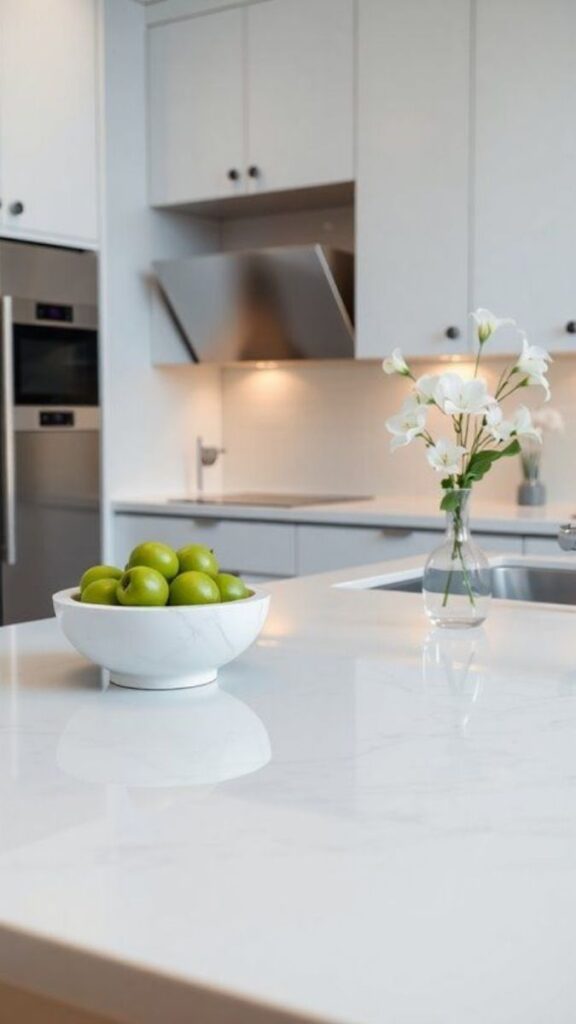
Kitchen counters in apartments are almost always smaller than needed, and the instinct is to use every inch. The result is a counter that’s permanently cluttered and harder to cook in. A more practical approach: designate one end or section of the counter as permanently clear the prep zone.
Everything else (coffee setup, toaster, canisters) lives in its own assigned area on the opposite end. This creates visual order without requiring a larger kitchen or additional storage, and it makes everyday cooking noticeably smoother.
Bring in Plants to Add Life, Air Quality, and Organic Shape
Plants do something in a space that no decor object quite replicates; they add scale variation, living color, and irregular organic shapes that contrast with the rectangles of furniture and walls.
A large floor plant in the corner of a living room (fiddle leaf fig, monstera, or rubber plant) adds a vertical element that reads like furniture in terms of spatial presence. Shelf plants and trailing varieties (pothos, devil’s ivy) soften the edges of shelving and add a sense of layering. In experience, the single most impactful “decor” addition in a neutral apartment is one large plant in the right corner.
Designate a Work From Home Zone That Can Visually “Close” After Hours
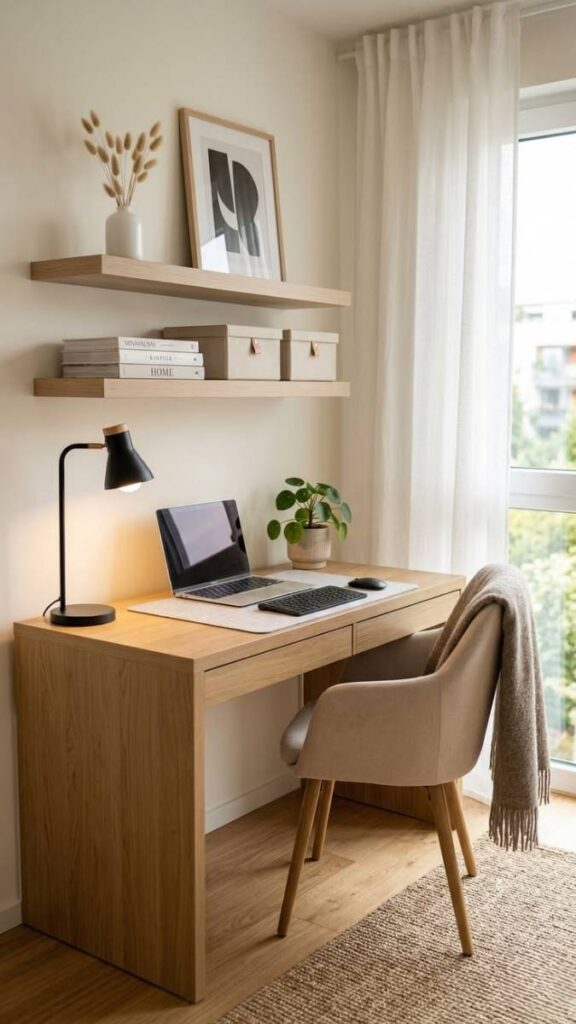
For apartments doubling as home offices, one of the bigger quality-of-life improvements is creating a work zone that doesn’t bleed into the living space at the end of the day. A wall-mounted fold-down desk takes zero floor space when closed.
Alternatively, a small desk tucked beside a bookshelf (rather than the main sofa arrangement) creates enough physical separation that closing your laptop and walking past the bookshelf feels like leaving work. The visual cue, even a partial one makes a difference.
Layer Bedding to Create Visual Depth on a Simple Bed Frame
A bed covered with just a duvet looks like a hotel room. Layering a fitted sheet, duvet, euro shams (positioned upright, not flat), and a folded throw draped at the foot gives the bed visual complexity that reads as finished and considered.
The throw at the foot is especially useful; it adds a third layer of color or texture without making the bed feel busy. For small bedrooms, keeping the bedding palette within two or three tones keeps the bed from dominating the room visually.
Use Scent and Lighting Together to Create Atmosphere, Not Just Aesthetics
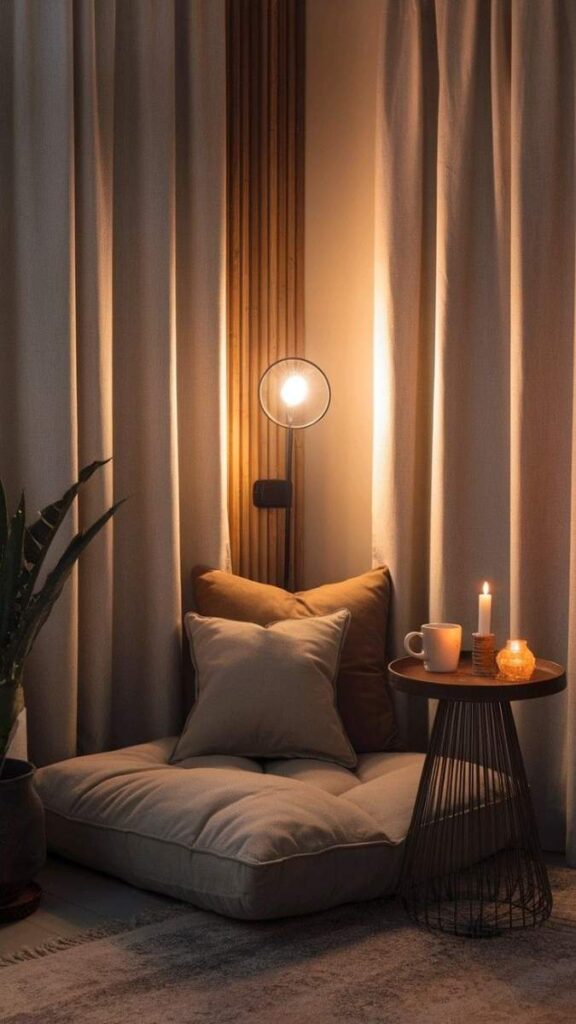
The atmosphere is partly visual and partly sensory and apartments that feel particularly good to be in usually attend to both. Warm lighting below eye level (table and floor lamps rather than overheads) combined with a candle or reed diffuser creates an evening environment that feels intentionally calm.
This isn’t about aesthetics for the sake of aesthetics, it’s about the apartment actually functioning as a place to decompress after a day outside of it. For small apartments especially, where the whole space is visible from almost any point, the mood of one room is the mood of the whole apartment.
Place a Console Table Behind the Sofa for Function and Definition
When the sofa is floated away from the wall (see idea 1), the gap behind it is an opportunity rather than a problem. A narrow console table 10 to 12 inches deep fits cleanly in that space and adds a surface for a lamp, small plants, or framed pieces.
It also functions as a soft room divider if the sofa is separating a living zone from a dining or entry zone. Importantly, it gives the back of the sofa something to face and grounds the arrangement without using additional floor space elsewhere.
Invest in One Statement Piece Rather Than Multiple Mid-Range Items
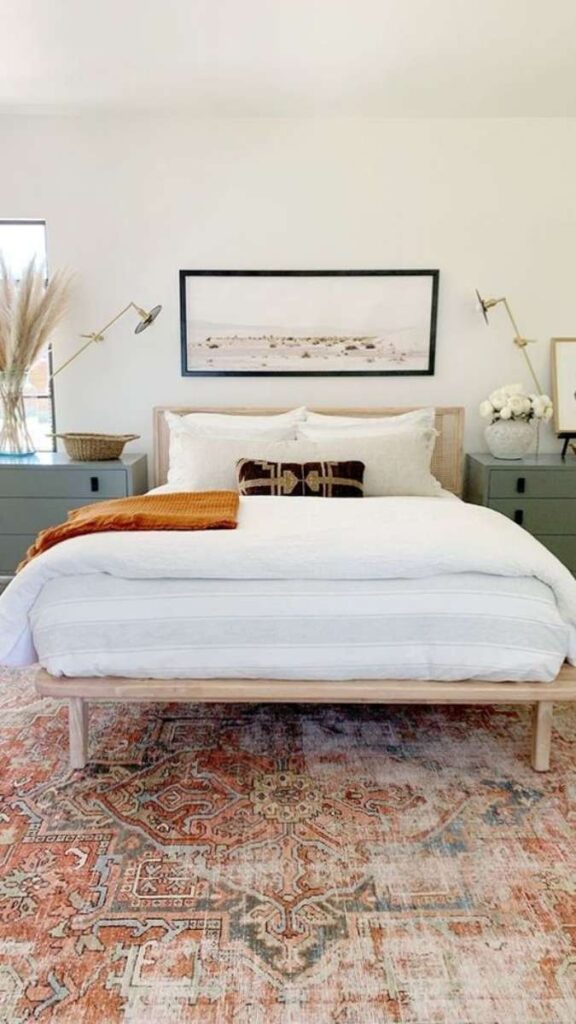
The budget spread thin across many pieces results in a room full of items that don’t quite work hard enough individually. One considered investment a large artwork, a well-made sofa, an interesting light fixture anchors the room and makes everything around it look more intentional by association.
The other pieces don’t need to be expensive if they’re simple and well-edited. Honestly, a room with one genuinely good thing and several quiet, inexpensive things often looks more designed than a room where everything is mid-range and competing for attention.
Use Baskets and Bins to Corral Clutter Without Hiding It in Closed Storage
Closed storage is valuable, but not every item warrants a cabinet. Blankets, extra pillows, chargers, and magazines don’t need to disappear, they need to be organized. A woven basket on a lower shelf or beside the sofa handles this without the contents looking chaotic.
The basket becomes part of the decor through material rattan, jute, and cotton rope all read as warm, natural, and intentional. In a small apartment where storage is limited, every object earns its visual presence, and a well-chosen basket is doing double duty.
Mount a TV on the Wall and Build Around It Rather Than Treating It as the Room’s Center
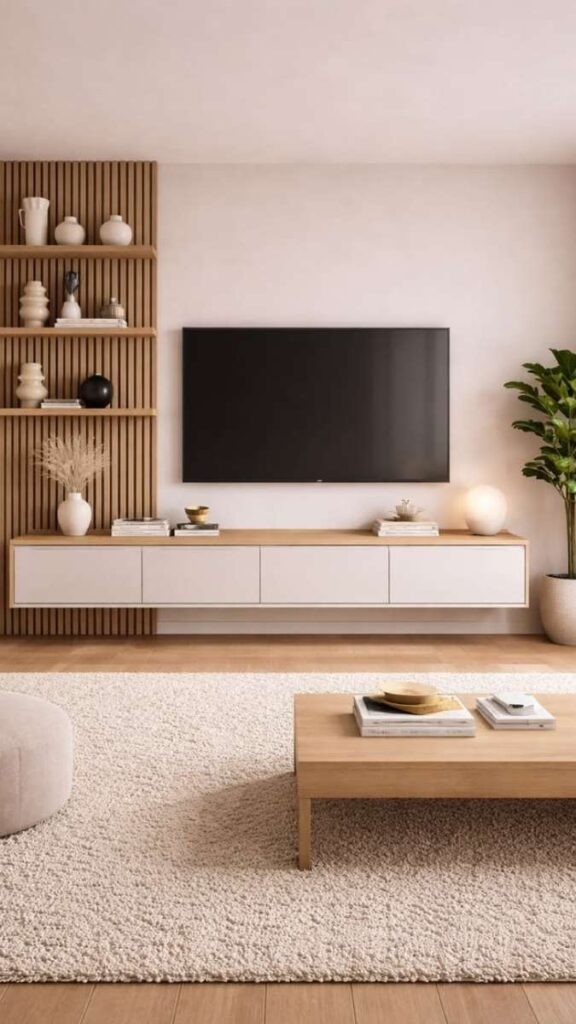
A TV on a stand tends to pull the entire room’s arrangement toward it by default every seat angles toward the screen, and the rest of the decor becomes secondary. Wall mounting at eye level when seated (typically 42–48 inches from floor to center of screen) frees up the floor space a stand occupies and makes the.
TV a panel on the wall rather than a piece of furniture. Floating shelves on either side create visual symmetry and hold speakers, plants, or books. The room can then be arranged with the TV as one element rather than the organizing principle.
Create a Dining Zone in an Open-Plan Apartment With a Rug and Pendant Light
In apartments without a separate dining room, the dining area often floats ambiguously in the space between the kitchen and the living room. Defining it is straightforward: a rug under the table (at least large enough to allow chair movement without slipping off the edge) and a pendant light directly above it creates a zone that reads as intentional.
A round table in this context is usually the better choice; it takes up less perimeter space, allows for easier movement around it, and softens what might otherwise be a corner of competing rectangles.
Edit Regularly the Best Decorated Apartments Have Less in Them, Not More
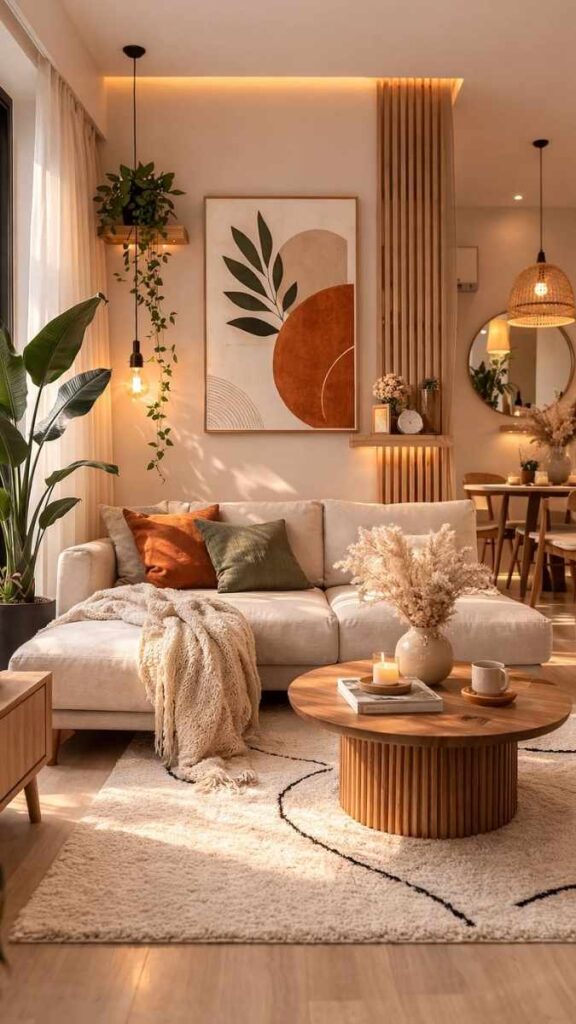
Decoration isn’t just about what you add, it’s about what you remove. Apartments that feel well-designed typically have more breathing room between objects, fewer things on surfaces, and a cleaner floor plane than apartments that feel cluttered.
The practical version of this: once a month, take one thing off each surface. If the room looks better without it, it probably didn’t need to be there. In experience, most apartments are one edit session away from feeling significantly more considered than one purchase away.
What Actually Makes These Apartment Decor Ideas Work
Apartment decorating tends to fail in one of three ways: the scale is wrong (furniture too small or too large for the space), the lighting is flat (relying entirely on overhead fixtures), or the layout is reactive (furniture pushed to walls rather than arranged for how the room is actually used).
The ideas above address all three. Most of them don’t require significant spending, floating a sofa, layering lighting, or editing a surface costs nothing. The ones that do involve money (a large rug, a statement piece, quality curtains) are typically the places where the investment shows most clearly.
The underlying logic is consistent throughout: define zones, create layers, give every object a reason to be where it is.
Apartment Decor Setup Guide by Space Type
| Space Type | Best Setup Approach | Key Problem Solved | Top Priority |
| Studio apartment | Zone division with rugs + shelving divider | Sleeping/living blur | Visual separation without walls |
| Small 1-bedroom | Float furniture, layer lighting | Room feels pushed to edges | Depth and definition |
| Open-plan layout | Distinct rugs per zone, pendant lights above dining | No sense of separate rooms | Zone identity |
| Rental (no drilling) | Tension rods, command strips, peel-and-stick | Can’t modify walls | Style without damage |
| Work-from-home setup | Fold-down or tucked desk, visual separator | Work bleeds into living | After-hours closure |
| Low budget | Edit first, invest in rug + lighting second | Too much clutter | Remove before buying |
Common Apartment Decor Mistakes That Make Spaces Feel Smaller or Cluttered
Hanging artwork too high.
Gallery walls and single pieces both suffer when mounted too high. Eye-level for artwork is typically 57–60 inches from floor to center which often feels lower than expected, especially in rooms with high ceilings.
Using too many accent colors.
Apartments feel more cohesive when the color palette is limited to two or three tones, with texture doing the variation work. More than three distinct colors usually creates visual competition that makes a room feel restless.
Ignoring the floor plane.
The area between furniture and the amount of visible floor has a significant effect on how spacious a room feels. Leggy furniture (sofas on legs, chairs with visible floor beneath them) create more perceived space than furniture that sits flush to the floor.
Buying furniture before measuring.
This is the most common and the most preventable. A sofa that’s six inches too wide for the wall it sits against changes the entire room’s movement flow often making it functionally unusable without awkward repositioning.
Treating every wall as display space.
One wall with a gallery arrangement reads as intentional. Four walls with different things on all of them reads as a storage facility. Leave at least two walls bare or near-bare; the emptiness is part of the composition.
FAQ’s
What’s the most impactful apartment decor change for a small budget?
Add a large area rug and layer your lighting. These two changes do more to make an apartment feel decorated and cohesive than almost anything else. A rug grounds the furniture arrangement; low-level lamps create warmth and depth that overhead lighting can’t replicate.
How do I make my apartment look more expensive without spending much?
Edit aggressively before buying anything new. Remove items from surfaces and shelves until the room feels sparse, then add back only what earns its place. Clutter reads as lower-effort regardless of how expensive individual items are. Then focus spending on one or two items with good material quality: a textured throw, a real plant, linen curtains.
What furniture works best in a studio apartment?
Multi-functional pieces first: a sofa bed or daybed if you need sleeping flexibility, an ottoman with internal storage instead of a coffee table, a fold-down wall desk if you work from home. Round or oval dining tables take up less perimeter space and allow better traffic flow than rectangular ones in tight rooms.
How do I create zones in an open-plan apartment?
Use rugs to define each area one under the living room seating arrangement, a different one under the dining table. A bookshelf placed perpendicular to the wall creates a soft barrier between sleeping and living zones in studios. Pendant lighting above the dining table is particularly effective: it ties the zone together vertically even when there’s no wall to contain it.
Should I use dark or light colors in a small apartment?
Light colors work better in rooms with limited natural light; they reflect what light exists and prevent the space from feeling dim. In rooms with good daylight, darker tones can be used intentionally (especially on a single feature wall or in a bedroom) to create depth and a more finished feeling. The mistake is assuming all small rooms need white walls.
How do I decorate an apartment bedroom without drilling holes?
Use tension rods for curtains, adhesive hooks (rated for the weight) for wall hangings, and leaning frames or propped artwork instead of mounted pieces. Peel-and-stick wallpaper is now viable for renters; it removes cleanly from most rental walls if applied correctly and creates significant visual impact, especially behind a bed as an alternative headboard.
What’s the biggest layout mistake in apartment living rooms?
Pushing all the furniture against the walls. It feels like it creates space but actually leaves an awkward dead zone in the middle while making each piece of furniture feel isolated. Floating the sofa 10–12 inches from the wall and grouping furniture closer together creates a more functional seating arrangement and makes the room feel more purposeful.
Conclusion
Small adjustments make the biggest difference in apartments and most of them are about arrangement and layering, not about buying more. Getting the rug size right, adding a second light source, floating the sofa off the wall: these are free or low-cost changes that alter how a space actually feels to live in.
Start with one or two ideas that fit your specific situation: a renter’s solution if you can’t drill, a zone-defining setup if you’re in a studio, a lighting layer if the room feels flat in the evenings. Build from there. The goal isn’t a finished look all at once; it’s a space that gets clearer and more comfortable in stages.