45+ Wall Decor Ideas That Make Every Room Feel More Intentional
Bare walls don’t just look unfinished; they throw off the entire balance of a room. The furniture might be great, the rug might be perfect, but if the walls are empty, the space never quite comes together. In 2026, Wall Decor Ideas the shift in wall decor ideas is moving away from random fills and gallery walls that exist just to fill square footage and toward intentional, layered setups that actually support the way a room feels and functions.
If you’re working with a rental, a small apartment, or just a room that never seems to look right no matter what you do, this list is built for you. These aren’t just ideas to pin, they’re setups that work in real homes, with real constraints.
A Single Large Scale Art Piece Centered Behind the Sofa
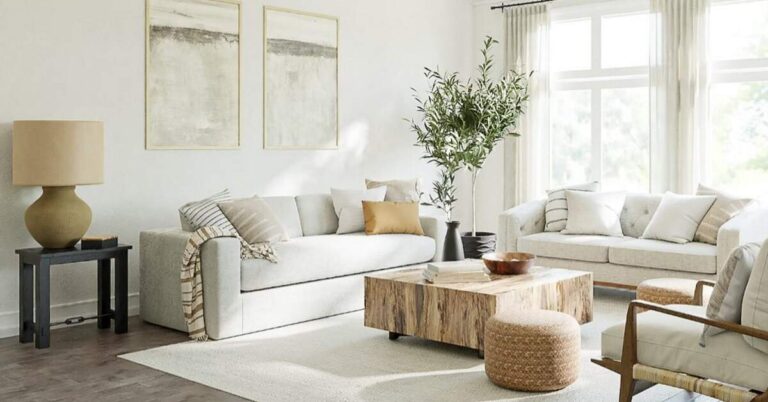
Most people hang art too small and too high. One large canvas, 40 inches wide or bigger placed a few inches above a sofa, creates an anchor that makes the entire wall feel deliberate. The scale does the work. You don’t need anything else on that wall.
This works best in living rooms where the sofa sits against the wall, and it’s especially effective in rooms with lower ceilings because the vertical height of the canvas draws the eye up without adding visual clutter. The problem it solves is the “disconnected” feeling when art floats on a wall with no relationship to the furniture beneath it.
Floating Shelves With Layered Objects, Not Just Books
Three floating shelves don’t have to mean three rows of books. The setups that look most considered use a mix of heights: a short stack of books, a taller vase, a small leaning print, a trailing plant. The layering creates depth on a flat wall. In my experience, this works best when you limit yourself to two or three colors across the entire shelf it keeps the display from feeling like a cluttered collection. This is a strong option for renters because it adds personality without permanent changes, and it creates functional storage at the same time.
A Grid of Black and White Photography in Matching Frames
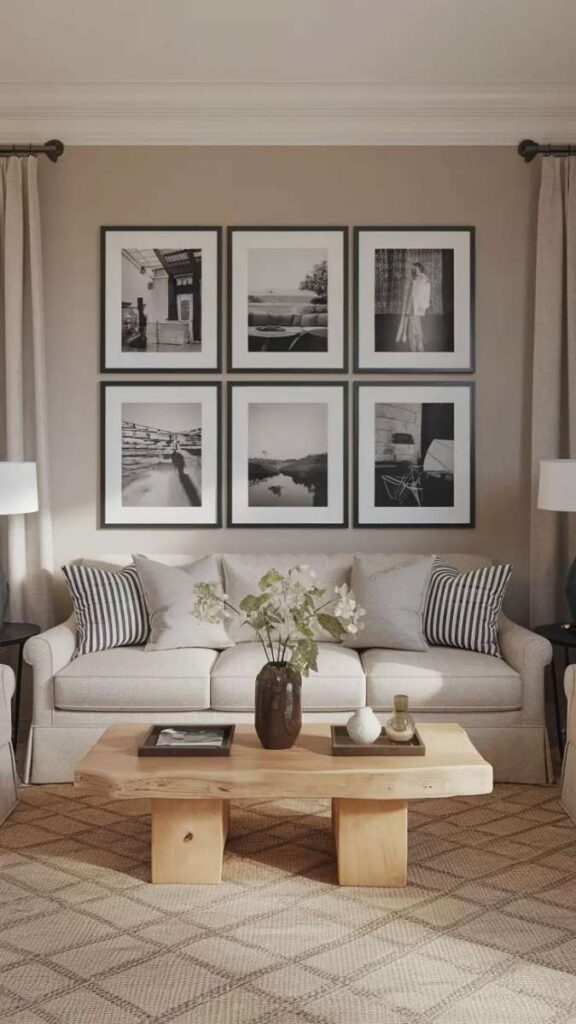
A 3×3 or 2×4 grid of black-and-white photos in identical frames has a quiet, editorial quality that works across almost any aesthetic. The consistency of the frames removes visual noise; your eye reads it as one cohesive unit rather than individual pieces.
It works well in hallways, dining rooms, and bedroom walls where you want presence without color competition. The key is consistent spacing: four to six inches between each frame. Too little and it looks cramped; too much and the grid loses cohesion.
A Large Mirror Positioned to Reflect Natural Light
A well-placed mirror is one of the most practical wall decor ideas for small rooms. Positioned directly across from or at an angle to a window, it reflects light back into the space and makes the room feel noticeably deeper.
Arch mirrors and oval frames are having a real moment in 2026 they soften the geometry of square rooms. This setup works especially well in dark rooms or north-facing spaces where natural light is limited. It’s not about creating an illusion, it’s about maximizing the light that’s already there.
Textured Wall Panels as a Headboard Alternative
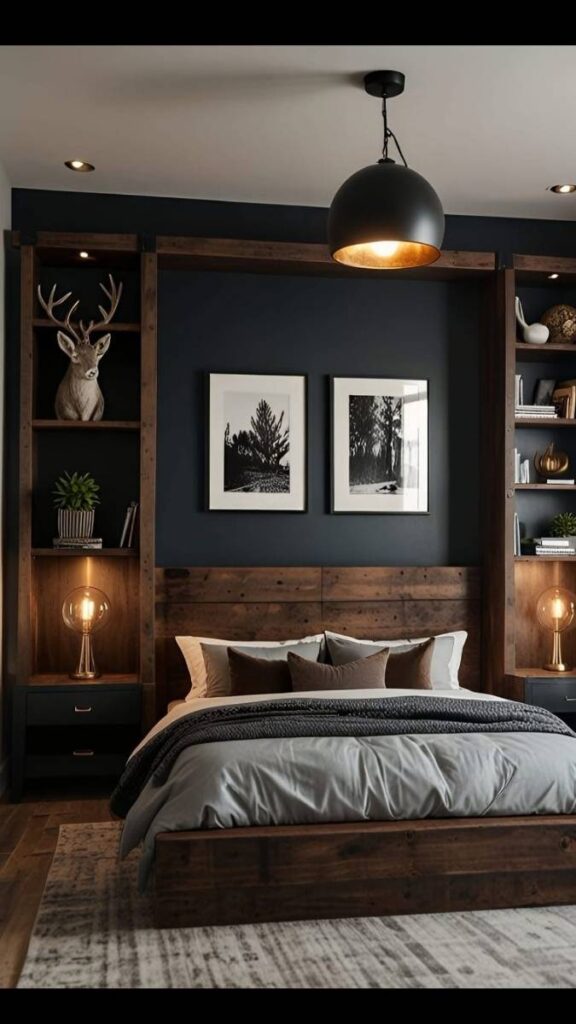
Slatted wood panels or fabric wall panels create a built-in feel without any construction. A panel installed directly behind the bed, the same width as the mattress or slightly wider, grounds the bed to the wall in a way that a floating headboard rarely does.
The texture also adds acoustic softness, which matters in rooms with hard floors and minimal furniture. This is one I’d actually recommend trying first if you’re in a rental and can’t mount a headboard; most panel systems use adhesive strips or lean against the wall with minimal contact.
Read More About: 18+ Dollar Store Decor Ideas That Actually Look Good in a Real Home
A Vertical Plant Wall or Mounted Planter Row
Mounted planters bring the room down from “decorated” to “lived-in,” which is actually a harder effect to achieve than it sounds. A row of three ceramic planters at staggered heights not uniform on a kitchen wall or near a window creates movement and organic texture.
Trailing plants like pothos, string of pearls, or philodendron soften the wall visually and work well in spots that don’t get direct sun. The plants themselves become the decor, which means this setup evolves and changes over time instead of looking static.
A Statement Tapestry as a Soft Wall Anchor
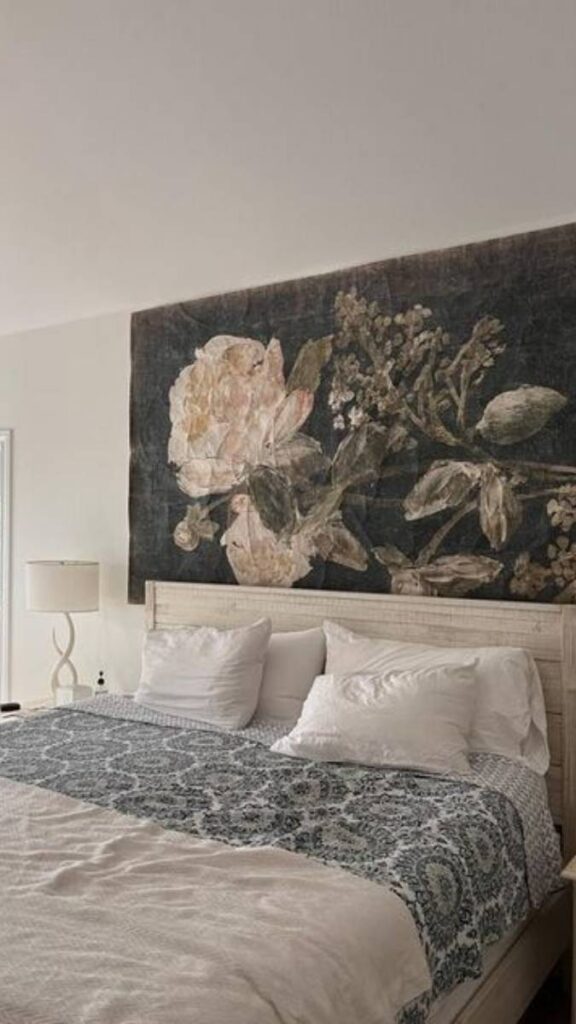
Tapestries work well in rooms where you want warmth but don’t want the rigidity of framed art. They absorb sound, add texture, and are easy to swap out seasonally. A large tapestry hung above a bed or sofa close to the ceiling so it fills the vertical space functions as a soft architectural element.
This setup is especially effective in rooms with white or light-gray walls where the space feels too flat. The woven texture catches light differently throughout the day, which keeps the wall from looking like a static backdrop.
A Gallery Wall With a Structured, Not Random, Layout
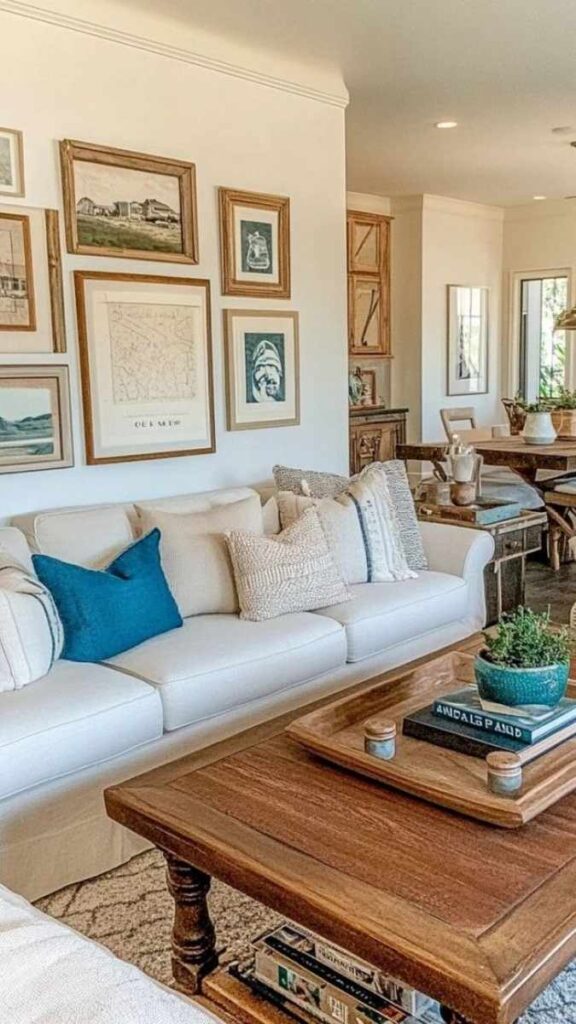
Honest opinion: most gallery walls fail because the outer edges are uneven. The key to a gallery wall that reads as intentional is treating the outer boundary as a shape a rough rectangle or square and keeping the perimeter consistent even if the interior arrangement varies.
Mix frame sizes but keep to one or two finishes (all black, all brass, all natural wood). This works in dining rooms, living rooms, and stairwells. Lay it out on the floor first, photograph it, and use painter’s tape to map the positions on the wall before you start nailing.
A Chalkboard or Dry Erase Wall Panel in a Kitchen or Office
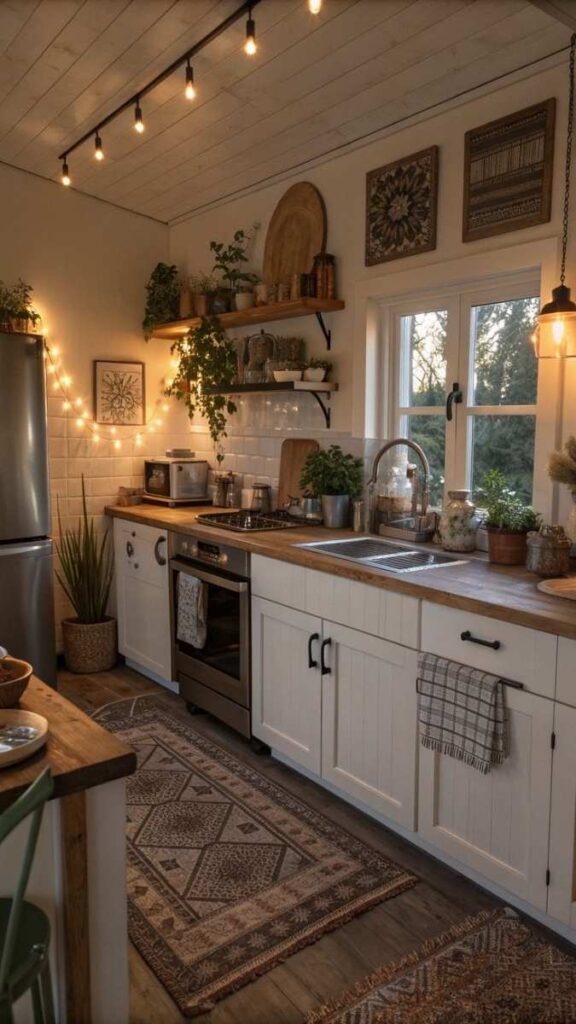
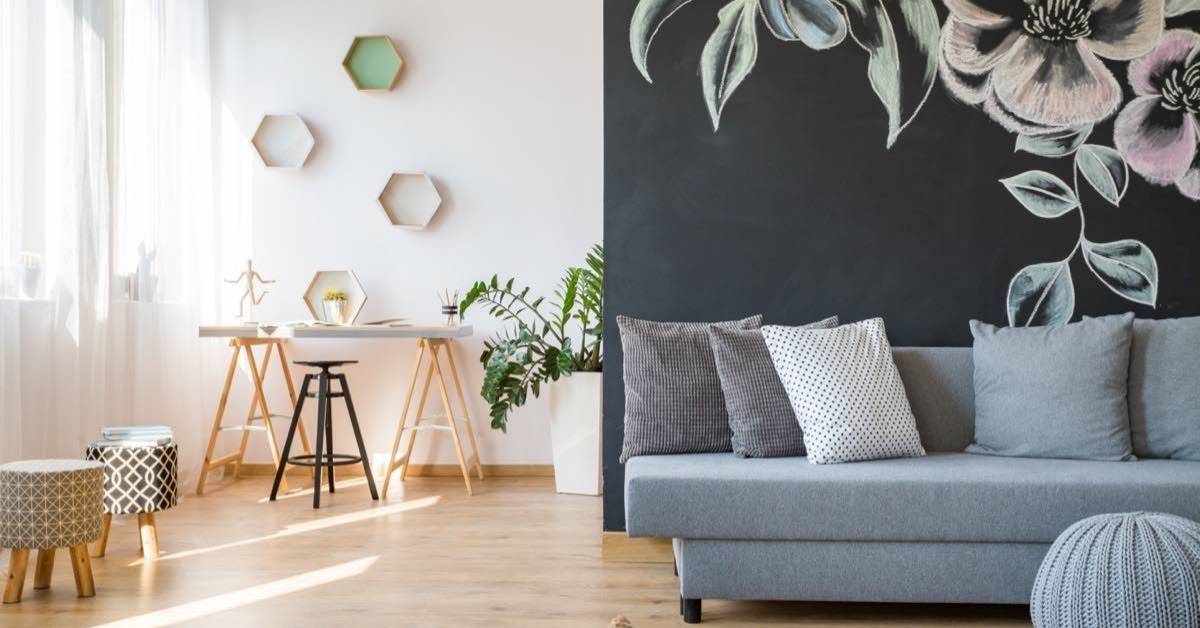
Functional wall decor is underrated. A chalkboard panel in a kitchen or home office setup gives you a surface for notes, menus, or to-do lists that actually looks good while it’s being used. The contrast of dark slate against a light kitchen wall is a strong visual anchor.
This is especially useful in small homes where a separate office isn’t practical; a chalkboard section in the kitchen creates a workspace signal without requiring a dedicated room.
Read More About: 16+ Home Decor Ideas That Actually Work in Real Rooms
Wainscoting or Board and-Batten for Lower Wall Structure
Adding vertical paneling to the lower half of a wall changes the proportions of a room without adding furniture. Board-and-batten, specifically vertical strips of wood attached to drywall creates a cottage or craftsman feel depending on the paint color above it. In entry hallways, it makes a narrow space feel more finished and less like a passageway.
In bedrooms, it adds architectural interest without taking up floor space. Renters can replicate this with adhesive trim strips, which have improved significantly in quality over the last few years.
A Ledge Shelf for Rotating Art Displays
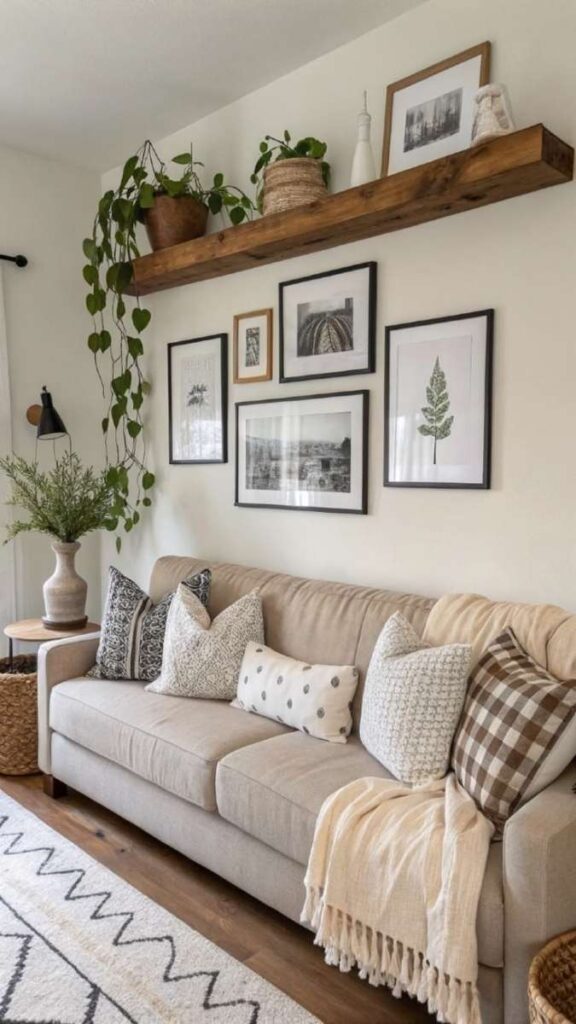
A picture ledge of a shallow shelf about three to four inches deep lets you lean art against the wall instead of hanging it. The main advantage is flexibility: you can swap pieces, add objects, or change the entire display without patching holes.
A single ledge at about 60 inches from the floor (eye level for most people) works well in living rooms and hallways. Two stacked ledges at different heights create more display surface in larger spaces. This setup is ideal for people who collect art but aren’t ready to commit to permanent placement.
An Oversized Wall Clock as a Sculptural Element
A clock over 20 inches wide stops reading as functional and starts reading as sculptural. The right placement is a wall where it has breathing room not surrounded by other items. Minimalist designs in metal, wood, or matte black work across most aesthetics.
This is a useful wall decor idea for awkward walls that are too small for art but too large to leave completely bare, like the wall above a TV console or beside a doorway. The functional element also means it earns its wall space in a way purely decorative pieces don’t.
Macramé or Fiber Art for Organic Texture
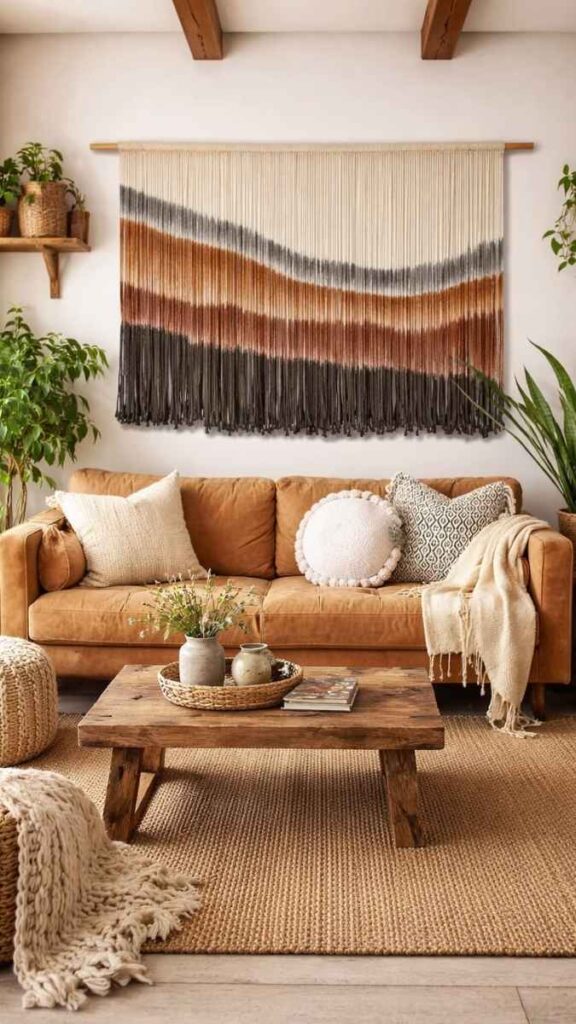
Woven fiber art adds a layer of texture that painted walls and framed prints simply can’t replicate. A large macramé piece, especially one with fringe or dimensional knotting creates shadow and depth as light moves across it.
This works best in rooms with otherwise smooth surfaces: plaster walls, leather sofas, glass coffee tables. The contrast between the soft, organic weave and harder materials around it is what makes it work. Hung high with enough wall clearance to see the full piece, it also adds vertical height to rooms with standard eight-foot ceilings.
A Built In Bookshelf That Frames a Doorway
Framing a doorway with tall shelving either true built-ins or freestanding units placed flush on either side turns a functional opening into an architectural moment. The wall space that typically sits unused beside a door becomes storage and display.
This setup works best in living rooms where a doorway interrupts what could otherwise be a long unbroken wall. The shelving also draws attention away from awkward proportions, like low ceilings or off-center windows, by creating a new vertical focal point.
Botanical Prints in a Horizontal Row Above a Console Table
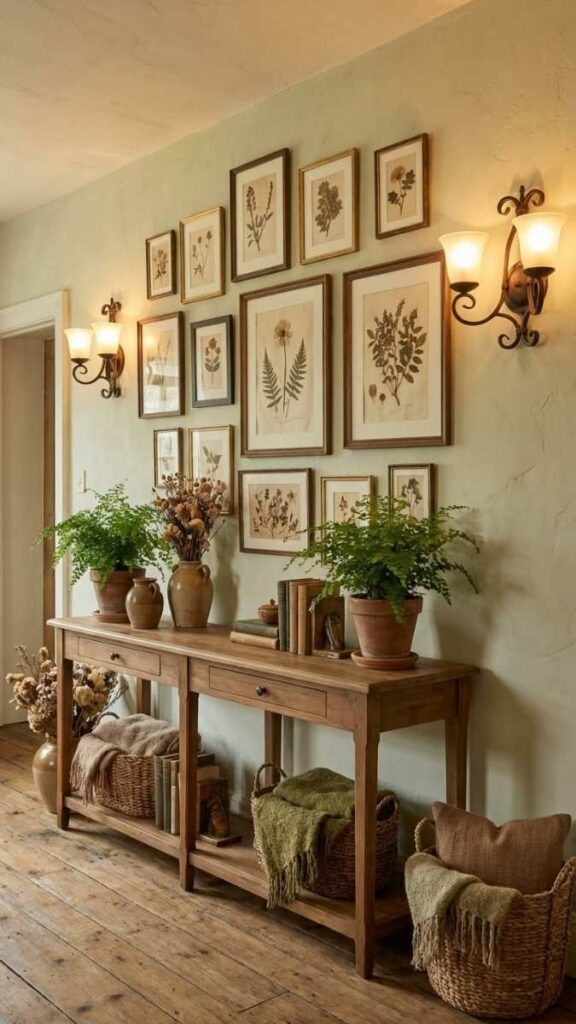
Three matching prints hung in a tight horizontal row about two inches apart above a console table create a cohesive, composed look without requiring large-format art. Botanical illustrations work particularly well because they have enough visual detail to be interesting close-up but read clearly from across a room.
This setup solves the common problem of entry tables that look furnished but the wall above feels unresolved. The horizontal arrangement also reinforces the horizontal line of the table beneath it, tying the two elements together visually.
Read More About: 15+ DIY Aesthetic Decor Ideas That Actually Look Good in Real Homes
A Pegboard Wall for Organized, Visible Storage
Pegboard has moved well past its garage connotations. Painted in the same color as the wall behind it, or in a contrasting matte tone, a pegboard section creates storage that’s also visual; everything on display becomes part of the decor.
In kitchens, this means utensils, small pots, and herbs. In home offices, it holds cables, supplies, and reference materials. The practical value is that you’re not hiding storage inside a cabinet; it’s accessible and organized on the wall where you use it.
A Mural or Wallpaper Accent Panel on One Wall
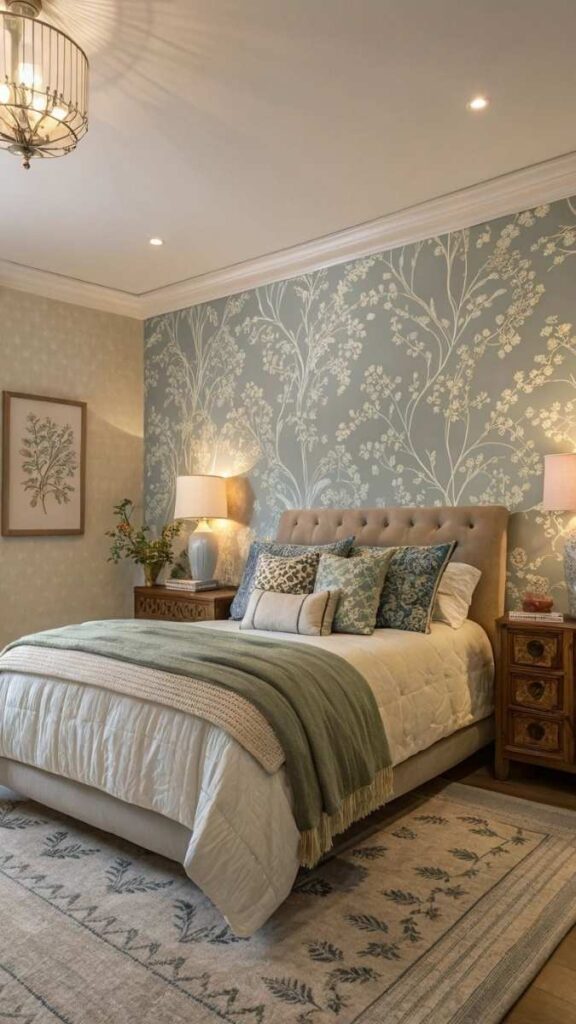
A single papered or painted mural wall one of four creates a focal point without the commitment or visual weight of papering an entire room. Deep-toned botanical patterns, geometric prints, or abstract murals work well on the wall behind a bed, a dining table, or a desk setup.
This is one of the strongest wall decor ideas for renters who choose removable peel-and-stick wallpaper, which has improved considerably in texture and adhesion quality. The key is scale: a pattern that’s too small on a large wall looks busy; larger-scale designs read better from across the room.
Shadow Box Displays for Personal Objects and Collections
Shadow boxes let you display three-dimensional objects: pressed flowers, travel mementos, small tools, hardware pieces in a framed, wall-mounted format. A collection of four to six shadow boxes arranged in a loose grid creates a personal display that tells a specific story.
The depth of each box naturally creates interest because objects cast small shadows depending on the light direction. This works in any room but is especially effective in studies or spare bedrooms where the space should feel personal rather than styled.
A Long Horizontal Canvas in a Dining Room
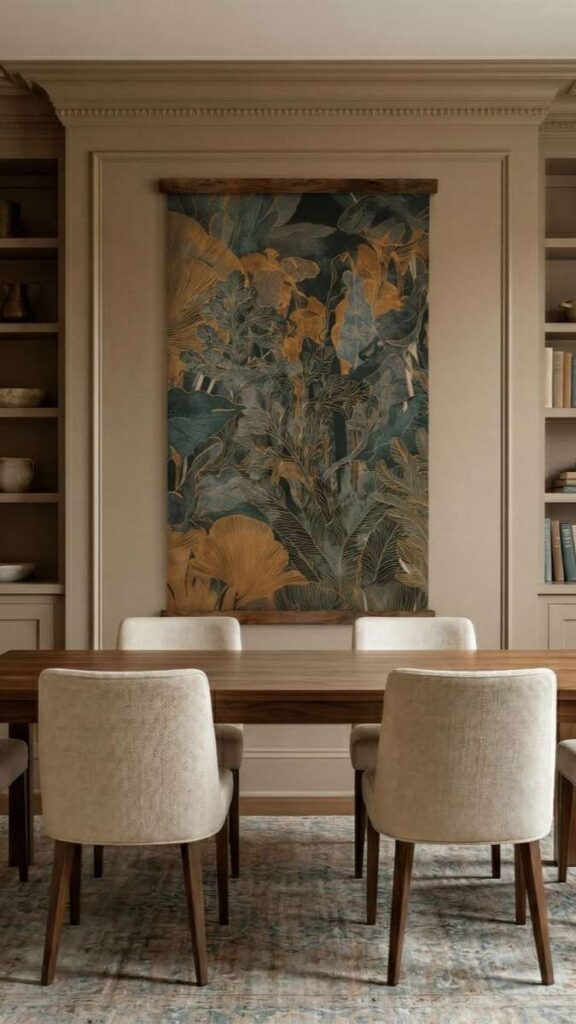
Dining rooms are often overlooked for wall decor beyond generic prints. A canvas that spans 60 inches or more ideally the same width as the sideboard or table beneath it creates a proportional, grounded feel.
Abstract works in earthy or muted tones are particularly effective because they add color without competing with whatever’s on the table. The horizontal format also reinforces the horizontal line of dining furniture, giving the room a composed, low-to-the-ground stability.
A Wall-Mounted Lighting Fixture as Decor
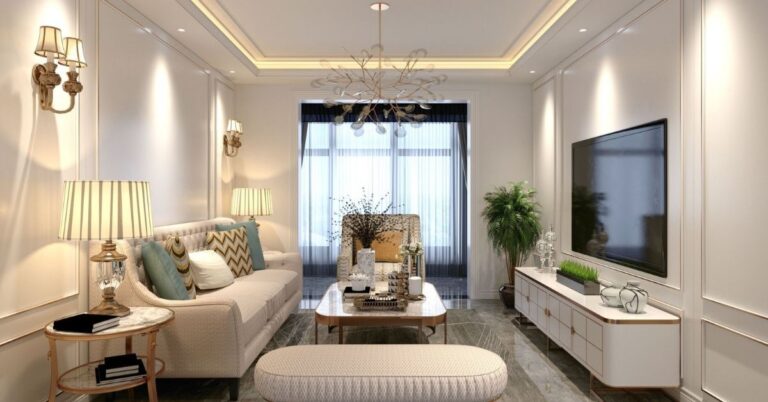
Wall-mounted lighting sconces, plug-in swing-arm lamps, or architectural uplights is technically wall decor that also functions. A well-chosen sconce on either side of a bed or flanking a mirror adds light and visual weight to a wall without requiring any art.
In 2026, sculptural sconces in curved brass or matte black ceramic are becoming the statement piece in a room; the fixture itself is the decor. This solves the specific problem of walls adjacent to furniture where you want warmth and visual interest but don’t have the surface space for shelving or framing.
A Corkboard or Linen Pinboard for a Home Office Wall
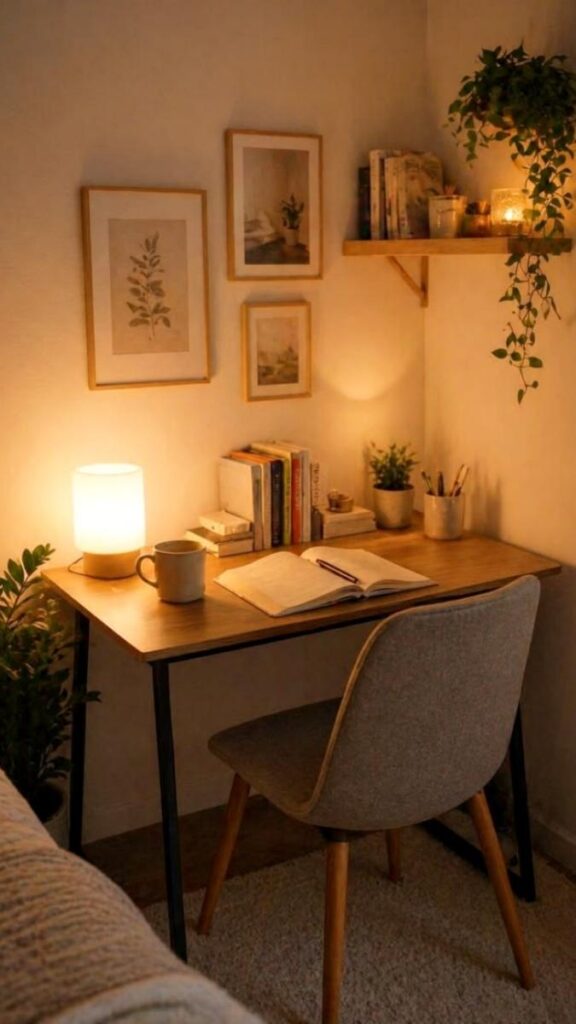
A framed corkboard or linen pinboard in a home office wall gives you a functional surface that also looks intentional when kept organized. The difference between a pinboard that looks like a cluttered mess and one that looks like a considered mood wall is editing: limit it to printed images, a few handwritten notes, and items you’re actively using.
A linen or fabric cover upgrades the texture significantly over standard cork. Mounted at eye level with a frame that matches your desk setup, it becomes a purposeful element rather than an afterthought.
A Floating Nightstand With a Wall-Mounted Reading Lamp Combo
Combining a floating nightstand with a mounted reading lamp treats the bedside wall as a cohesive functional zone rather than a spot to hang something. The floating shelf clears floor space, the lamp eliminates a table lamp and frees the surface, and a single framed print above the lamp completes the wall without overcrowding it.
This setup works exceptionally well in small bedrooms where every square foot of floor matters. The vertical arrangement of nightstand, lamp, and print creates a composed column that makes the wall feel considered.
Raw or Painted Brick Exposed as a Feature Wall
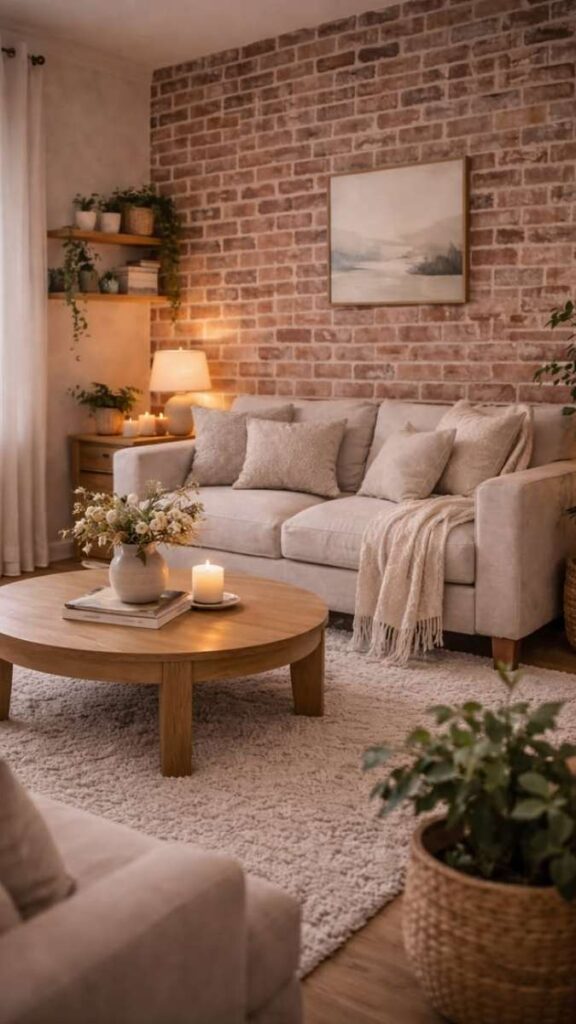
If your space has brick even painted brick leaving it exposed and treating it as a feature rather than a problem is often the right call. Exposed brick already has texture, color, and depth that most wall decor tries to replicate.
Keep the furniture in front of it simple and low: a low sofa, a bench, or an open shelving unit that doesn’t block the surface. Warm lighting, amber bulbs, angled floor lamps bring out the texture of the mortar and create a warmth that painted walls can’t replicate.
An Oversized Framed Map or Architectural Print
Large-format maps, architectural drawings, or topographic prints have a graphic quality that works in home offices and studies where you want visual weight without being purely decorative.
A city map of a place with personal significance where you grew up, traveled, or lived adds meaning alongside visual interest. The graphic lines of a map also work better in offices than in bedrooms because the detail rewards close inspection, and these are rooms where you actually spend time looking at walls.
A Staircase Wall Turned Into a Photo Story
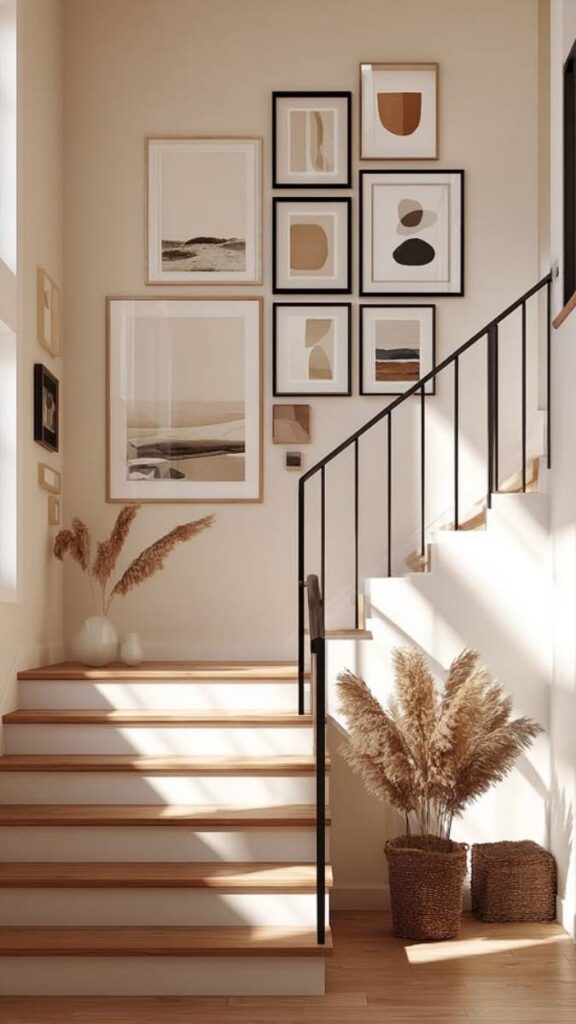
Staircase walls are underused in most homes. A collection of framed photos that follows the diagonal of the staircase ascending as the stairs ascend turns an awkward surface into one of the most personal areas of a home.
The trick is to keep the visual center of each frame parallel to the stair angle rather than perfectly level, which is the common mistake. Consistent frame styles with varying print sizes make the display feel cohesive without being repetitive.
Wicker or Rattan Wall Baskets in a Layered Arrangement
Woven baskets mounted on a wall create texture and warmth in a way that’s hard to achieve with flat art. A cluster of five to seven baskets in varying sizes, some round, some oval arranged in a loose organic grouping looks layered without being heavy.
The natural material works particularly well against plaster, shiplap, or white-painted walls. This is also one of the more budget-conscious wall decor ideas because individual baskets can be collected gradually and the arrangement can expand over time.
A Minimalist Line Drawing or Single Subject Print in an Oversized Frame
An oversized frame 24×30 or larger holding a small print with a wide mat creates a composition that feels more considered than any print in a frame that fits it exactly. The negative space of the mat becomes part of the piece.
Continuous line drawings, botanical silhouettes, and simple abstract forms work best in this format. The large frame gives the wall visual weight while the minimal subject keeps it light. This is one of the cleanest approaches to wall decor for bathrooms, where you want the space to feel calm and finished without adding visual noise.
What Actually Makes These Wall Decor Ideas Work in Real Rooms
The difference between wall decor that works and wall decor that just fills space comes down to a few consistent principles worth understanding before you start.
Scale is the first thing to get right.
The most common mistake is hanging art that’s too small for the wall. As a general rule, art or groupings should fill about two-thirds to three-quarters of the horizontal width of the furniture below them. A 24-inch canvas above a 72-inch sofa will always look undersized, no matter how good the piece is.
Relationship to furniture matters more than the wall itself.
Art and wall decor don’t exist in isolation; they’re in conversation with what’s in front of them. A piece hung too high disconnects from the furniture below it. The standard guideline is to hang the center of a piece at 57 to 60 inches from the floor, but this adjusts based on what’s underneath. If there’s a sofa or console, the bottom of the frame should sit about six to eight inches above the furniture’s top.
Lighting changes everything.
A piece hung in a dark corner will never look as good as the same piece with a directed light source, a picture light, an angled floor lamp, or well-placed recessed lighting. Ambient room light flattens everything on a wall. Directional light creates depth and shadow that makes the wall feel dimensional.
Negative space is not wasted space.
Leaving significant clear wall space around a piece or arrangement isn’t a mistake, it’s often what makes the piece feel more important. The instinct to fill every inch of wall works against most interiors.
Wall Decor Ideas by Space and Setup
| Idea | Best Room | Space Type | Problem It Solves | Difficulty |
| Large-scale art above sofa | Living room | Any size | Disconnected, unanchored wall | Low |
| Floating shelves with layers | Living room, bedroom | Small–medium | Bare walls, no storage | Low–Medium |
| Grid of photography | Hallway, dining room | Narrow or wide | Empty vertical walls | Medium |
| Mirror for light | Bedroom, small living room | Small or dark rooms | Poor light, shallow space | Low |
| Textured wall panels | Bedroom | Rental-friendly | No headboard, flat walls | Medium |
| Mounted planters | Kitchen, sunroom | Window-adjacent spaces | Empty wall near natural light | Low |
| Statement tapestry | Bedroom, boho living room | Any | Cold, flat walls | Low |
| Structured gallery wall | Dining room, staircase | Any | Multiple small pieces to display | Medium |
| Chalkboard panel | Kitchen, home office | Multi-use rooms | No functional wall surface | Low |
| Wainscoting | Hallway, bedroom | Any height ceiling | Unfinished lower wall | Medium–High |
| Picture ledge shelf | Living room, hallway | Small–medium | Commitment-free art display | Low |
| Oversized clock | Living room, kitchen | Awkward or small walls | Unresolved wall beside furniture | Low |
| Macramé fiber art | Bedroom, living room | Any | Flat, textureless surfaces | Low |
| Built-in bookshelf framing | Living room, hallway | Rooms with doorways | Unused flanking wall space | High |
| Botanical print row | Entryway | Narrow, above console | Unresolved wall above furniture | Low |
| Pegboard wall | Office, kitchen | Functional spaces | No accessible storage | Low–Medium |
| Mural or wallpaper panel | Bedroom, dining room | Any | Lacks focal point or depth | Low (peel-and-stick) |
| Shadow boxes | Study, bedroom | Personal spaces | Meaningful objects with no display | Low |
| Long horizontal canvas | Dining room | Medium–large | Wall above sideboard feels empty | Low |
| Sculptural sconces | Bedroom, living room | Beside furniture | Dark corner, no wall art space | Medium |
| Linen pinboard | Home office | Functional workspaces | Scattered reference materials | Low |
| Floating nightstand + lamp combo | Bedroom | Small rooms | Limited floor space at bedside | Medium |
| Exposed brick wall | Living room, bedroom | Homes with brick | Underused architectural feature | Low |
| Large map or architectural print | Office, study | Work-focused rooms | Purely decorative walls in work areas | Low |
| Staircase photo story | Stairwell | Diagonal wall space | Awkward ascending wall surface | Medium |
| Rattan wall baskets | Living room, boho spaces | Any | Texture-lacking walls | Low |
| Oversized frame with minimal print | Bedroom, bathroom | Small rooms | Wall feels bare but space is calm | Low |
Common Wall Decor Mistakes That Make Rooms Feel Off
Hanging everything at the same height.
When every piece in a room hangs at 60 inches regardless of size or what it’s near, the wall reads as uniform and disconnected. Vary height relative to the furniture below each piece.
Using too many small pieces on large walls.
A large wall covered in multiple small frames or objects creates fragmentation. The eye has nowhere to land. Consolidate or go larger.
Ignoring the relationship between wall decor and room lighting.
Art hung in front of a window gets backlit; you see the frame but not the piece. Art in a dark corner disappears. Consider the light source before the placement.
Mixing too many frame finishes without intention.
Two finishes (black and brass, black and wood) can work together. Four or five different finishes in one room creates visual noise that no amount of cohesive art will fix.
Over-filling every wall.
Not every wall in a room needs something on it. One strong wall treatment in a room often works better than four walls each with something different happening.
Frequently Asked Questions
What’s the easiest wall decor idea to start with?
A single large framed print or canvas above your sofa or bed. It has the highest visual impact for the least effort, and it solves the most common problem: a wall that looks underscaled immediately. Get the size right first: when in doubt, go bigger than you think you need.
How do I choose wall decor for a small room?
Prioritize pieces that do more than one thing: a mirror that also bounces light, shelves that also store, a mounted lamp that also decorates. Avoid overcrowding small walls with multiple small pieces; one or two well-chosen items that are appropriately scaled will look better than five smaller ones fighting for attention.
What’s the right height to hang wall decor?
The center of a piece should sit at 57 to 60 inches from the floor when hanging without reference to furniture. When hanging above furniture, the bottom of the frame should be six to eight inches above the top of what’s beneath it. This is the most consistently misunderstood aspect of wall placement.
Gallery wall vs. single statement piece which works better?
For smaller rooms and rentals, a single statement piece is more forgiving. Gallery walls require careful planning and the right balance of scales done poorly, they look chaotic. A single large piece is harder to get wrong and creates a stronger visual impact in rooms under 200 square feet.
Can wall decor make a room feel bigger?
Strategically, yes. A large mirror placed across from a window can significantly deepen how a room reads. Vertical decor, tall panels, floor-to-ceiling shelves, vertical art draws the eye upward and makes ceilings feel higher. Keeping decor to one feature wall rather than all four also reduces the visual compression that makes rooms feel smaller.
Is it okay to mix art styles in one room?
Yes, as long as you establish cohesion through another element: consistent frame finishes, a unified color palette across the art, or a consistent mood (all calm and minimal, all bold and graphic). Mixing styles with no unifying thread creates a gallery-without-a-curator problem.
What wall decor works best for renters?
Leaning art, picture ledge shelves, removable peel-and-stick wallpaper, plug-in sconces, and woven tapestries. All create significant visual impact without permanent wall modifications. Adhesive strips (Command hooks and similar) have become reliable enough for most lightweight-to-medium art.
Conclusion
Getting wall decor right doesn’t require a complete room overhaul. The rooms that feel most composed usually have one or two genuinely considered wall setups, not every surface filled, but the key walls given real thought around scale, placement, and relationship to the furniture in front of them. Small changes in those areas make a disproportionate difference to how a room feels overall.
Start with the wall that bothers you most, the one that feels unfinished or off-balance and work from what’s already in front of it. Match the scale to the furniture, get the height right, and let one idea do its job before adding more. The goal isn’t a finished room on a deadline; it’s a space that feels more like yours each time you adjust it.