Living Room Curtain Ideas to Transform Any Space 2026 Complete Guide
Curtains do more than cover windows. The right living room curtains can completely change how a room looks and feels. They add color, texture, warmth, and style all at once. And yet most people rush this decision or pick the first thing they see at the store.
Natural light control is one of the biggest factors when choosing living room curtains. The right window treatments can improve privacy, soften harsh sunlight, enhance insulation, and make a room feel larger. Whether you’re redesigning a whole room or just refreshing one wall, this guide covers every living room curtain idea you need organized by style, fabric, color, window type, and more. Let’s get into it.
Best Living Room Curtain Ideas for Every Design Style
Your design style should drive every curtain decision you make. From the fabric weight to the curtain rods, everything should work together as a complete picture. Think of drapes for living room spaces not as an afterthought but as one of the first things you plan.
Proper curtain width, length, and rod placement are essential for achieving a polished, designer-inspired living room. Getting these basics right means your curtains will look intentional not like something you threw up at the last minute. Below, you’ll find the best curtain styling ideas for every popular design style in American homes today.
Modern Living Room Curtain Ideas
Modern curtains are all about clean lines and simplicity. You want minimalist curtains that don’t fight with the rest of your room’s design. Think solid colors, crisp fabrics, and hardware that feels intentional not decorative for the sake of it.
The best choices for a modern living room are grommet curtains and floor-length curtains in white, charcoal, warm gray, or deep jewel tones. Pair them with matte black or brushed nickel curtain rods to keep things sleek. Linen and polyester blends work especially well because they hang straight without looking stiff.
| Best Curtain Choices for Modern Rooms | Why It Works |
| Grommet panels in solid neutrals | Clean, structured look |
| Floor-length linen curtains | Relaxed but refined |
| Matte black curtain rods | Cohesive with modern hardware |
| Sheer white panels | Keeps rooms bright and airy |
Farmhouse Living Room Curtain Ideas
Farmhouse curtains are warm, textured, and casual. They feel lived-in and comfortable which is exactly the point. Think of the kind of window decor you’d find in a renovated barn home or a cozy countryside retreat.
Linen curtains are the top pick here. Cotton muslin and check pattern curtains also work beautifully. Pair them with wrought iron or rustic wood curtain rods for that authentic farmhouse look. Stick to a color palette of creamy whites, warm grays, sage green, or deep barn red accents. The textures do the heavy lifting here keep patterns simple and fabrics natural.
Cottage Living Room Curtain Ideas
Cottage curtains are all about light and airiness. This style leans into softness, ruffled edges, soft florals, and fabrics that move with the breeze. Sheer curtains are a natural fit because they let in natural light without sacrificing privacy.
Light filtering curtains made from soft cotton or voile work perfectly in cottage-style rooms. Pair them with painted wood furniture, whitewashed finishes, and vintage curtain rods to complete the look. Pastels blush pink, soft lavender, sky blue feel perfectly at home here. Keep things loose and romantic rather than structured and formal.
Read More About: 25+ Apartment Living Room Ideas to Make Any Small Space Feel Bigger
Traditional Living Room Curtain Ideas
Traditional living room design calls for richness and formality. This is where luxury drapes shine, think velvet curtains, pinch pleat headers, and ceiling to floor curtains that make a grand architectural statement.
Custom curtains in deep jewel tones like burgundy, hunter green, or sapphire blue are classic choices. Pair them with ornate curtain rods featuring brass rings and decorative finials. The key to pulling off traditional drapes for living room spaces is going all the way no half measures. Full, heavy panels with proper lining make the biggest impact.
| Traditional Curtain Essentials | Details |
| Fabric | Velvet, silk, heavyweight cotton |
| Header style | Pinch pleat or goblet pleat |
| Colors | Burgundy, forest green, navy, gold |
| Hardware | Brass or antique bronze rods with finials |
| Length | Floor-to-ceiling or puddled |
Curtain Styles That Elevate a Living Room
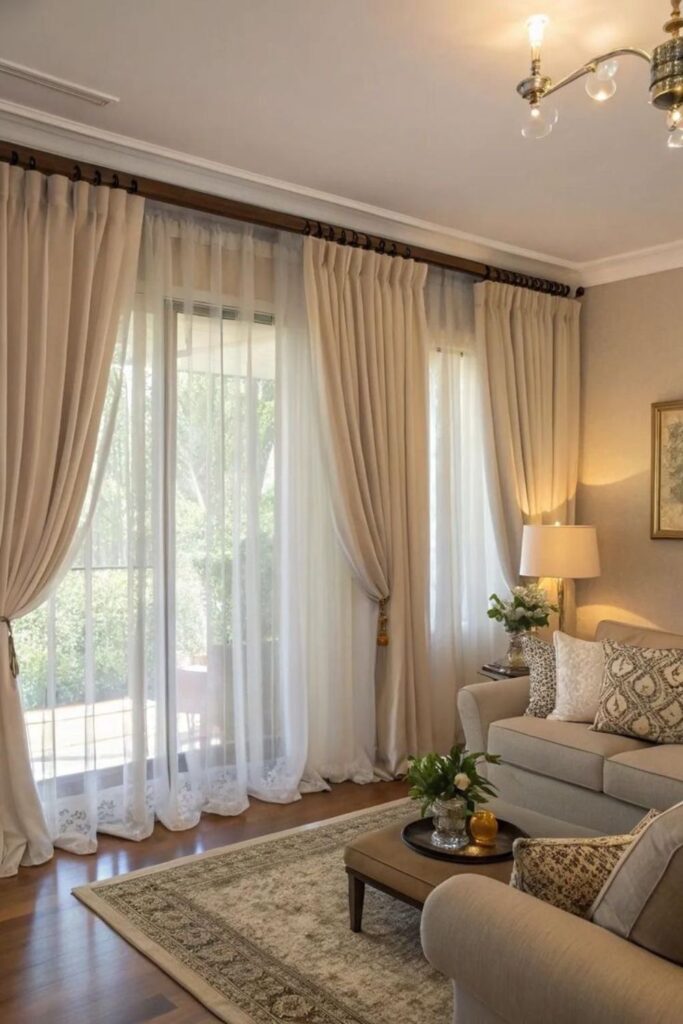
The heading style how a curtain is attached to the rod changes the entire character of a room. It affects how the fabric hangs, how much fullness you get, and how formal or casual the overall look feels. Choosing the right style for your curtain panels is just as important as choosing the right color.
Color coordination with walls, furniture, and rugs helps create a cohesive design, while patterned curtains can serve as a focal point. The curtain style you choose will either reinforce your room’s aesthetic or work against it. Here’s a breakdown of the most popular options and when to use each one.
Pinch Pleat Curtains
Pinch pleat curtains have a tailored, formal look that never goes out of style. The fabric is gathered at the top into neat clusters of pleats, which creates a structured silhouette. They work best in traditional and transitional living room design styles.
For the best results, you want your curtain panels to be 2 to 2.5 times the width of your window. This gives you the fullness that makes pinch pleat curtains look so luxurious. Velvet curtains and silk fabrics are the top choices for this style. Hang them with ring clips or sew-on hooks for a truly polished finish.
Grommet Curtains
Grommet curtains are the go-to for modern curtains and contemporary window treatments. The metal rings at the top slide easily along the rod, creating smooth, even folds. They’re one of the most practical and low-maintenance curtain styles available.
These work beautifully with linen curtains, canvas, and polyester blends. The grommet size matters more than most people realize larger grommets feel more contemporary and bold, while smaller grommets look more refined. Choose a grommet color that matches your curtain rods for a seamless, intentional finish.
Floor-Length Curtains
Floor-length curtains are the standard for living rooms because they make every space look more polished and proportional. They visually raise ceiling height, which is a massive bonus in rooms that feel low or boxy.
There are three ways floor-length curtains can end: grazing (just touching the floor), breaking (pooling slightly), or puddling (several inches of extra fabric on the floor). For most living rooms, a clean graze is the most practical and stylish choice. Always measure from the rod to the floor not from the window frame to get the right curtain length.
Puddled Curtains
Puddled curtains are dramatic. They’re the kind of decorative drapes you see in magazine spreads and high-end model homes. Extra fabric pools on the floor in a soft, deliberate cascade that looks deeply luxurious.
This style works best in rooms with high ceilings and formal furniture. You’ll need 6 to 16 extra inches of fabric beyond your floor measurement depending on how dramatic you want the puddle to be. Velvet curtains and silk are the top fabric choices because they puddle beautifully without looking messy. This is not a practical choice for homes with pets or young kids but it’s gorgeous when it works.
Single Curtain Panel Designs
A single curtain panel is an editorial, asymmetrical choice that works beautifully in modern and eclectic spaces. Instead of flanking the window with two matching panels, you hang one bold panel to one side.
To make this work, you need either a rich fabric texture or a striking pattern, something with enough visual weight to hold the room on its own. Extend your curtain rod well past the window frame so the panel can sweep open to fully expose the glass. This is one of the most underused curtain styling ideas in residential home decor ideas.
Best Curtain Fabrics for Living Rooms
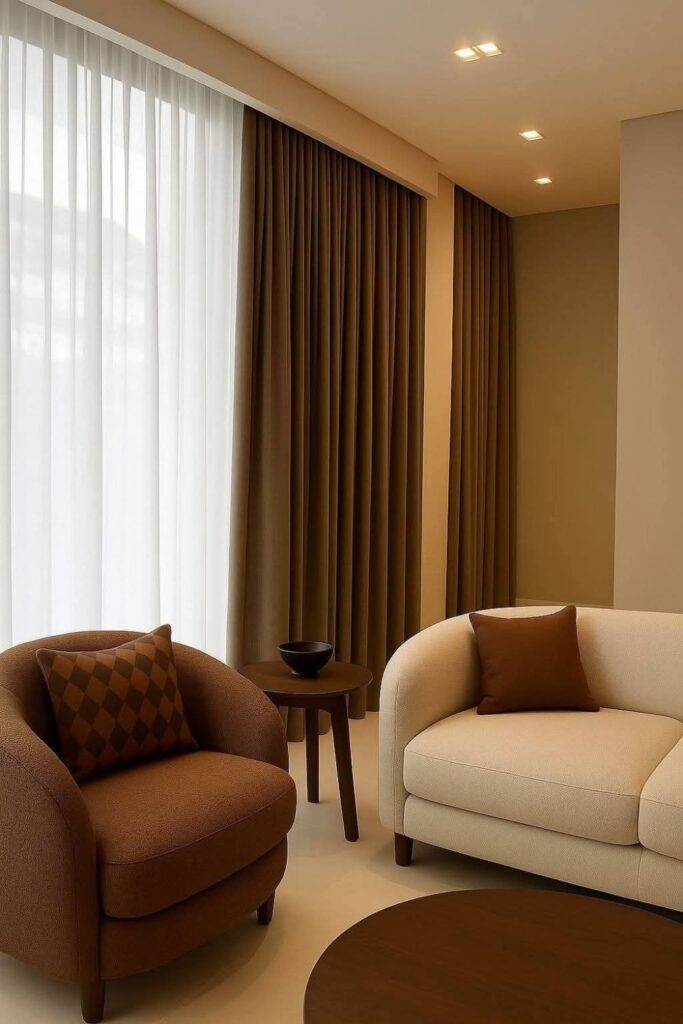
Linen fabrics add texture and a relaxed look, whereas velvet drapes bring warmth and luxury. The fabric you choose determines how light behaves in your room, how the curtain hangs, how warm it feels, and how long it lasts. Choosing the right curtain fabrics is genuinely one of the most important decisions in the whole process.
Every fabric has a personality. Some are breezy and informal. Others are heavy and formal. Knowing which fabric suits your lifestyle and your room saves you from expensive mistakes. Here’s what you need to know about the most popular curtain fabrics on the market.
Read More About: Farmhouse Living Room Ideas: 27 Cozy, Modern & Rustic Designs for Every Home
Linen Curtains
Linen curtains are the most popular curtain fabrics for American living rooms right now and for good reason. They’re breathable, beautifully textured, and effortlessly casual. They suit farmhouse, coastal, Scandinavian, and boho styles equally well.
Linen wrinkles easily, but that’s part of its charm. The relaxed, slightly rumpled look is intentional in most design contexts. For a cleaner appearance, look for linen-cotton blends, which wrinkle less. Linen curtains work in almost any color, but they look especially beautiful in natural oat tones, soft whites, and earthy greens.
Sheer Curtains
Sheer curtains are the best choice when you want natural light without losing privacy. They filter sunlight softly, casting a warm glow across the room without harsh shadows or glare. They’re a staple of cottage curtains and romantic, airy interior decorating styles.
Light filtering curtains made from sheer voile or linen gauze are ideal for layering under heavier curtain panels. During the day, you can close the sheers for privacy while still enjoying plenty of natural light control. At night, close the heavier outer curtains for full coverage. This layered system is one of the smartest curtain layering ideas you can use
Velvet Curtains
Velvet curtains are pure luxury. They’re heavy, rich, and visually stunning. They also happen to be excellent at blocking light and absorbing sound, two big practical bonuses in open-plan living rooms.
The weight of velvet makes it one of the best energy efficient curtains available because it naturally insulates windows. Deep colors in velvet emerald, sapphire, burgundy, burnt orange look absolutely spectacular. One important care note: most velvet curtains are dry-clean only, so factor that into your decision before buying.
Blackout Curtains
Blackout curtains block nearly 100% of incoming light. They’re the right choice for media rooms, west-facing windows that get blinding afternoon sun, or any room where you want to sleep past sunrise. They’re also one of the most effective room darkening curtains you can buy.
Good news: blackout curtains don’t have to look institutional or boring anymore. They come in dozens of colors, textures, and styles. Many room darkening curtains today look just like regular decorative drapes but with serious light-blocking power behind them. You can also add a blackout lining to almost any curtain fabric for a DIY light filtering upgrade.
| Curtain Fabric Comparison | Light Control | Insulation | Best Style | Care |
| Linen | Light filtering | Moderate | Farmhouse, coastal | Machine wash |
| Sheer | Minimal | Low | Cottage, romantic | Delicate wash |
| Velvet | Full block | Excellent | Traditional, glam | Dry clean |
| Blackout | 95–100% | Excellent | Media rooms, modern | Machine wash |
| Cotton | Light filtering | Moderate | Any style | Machine wash |
Living Room Curtain Color Ideas
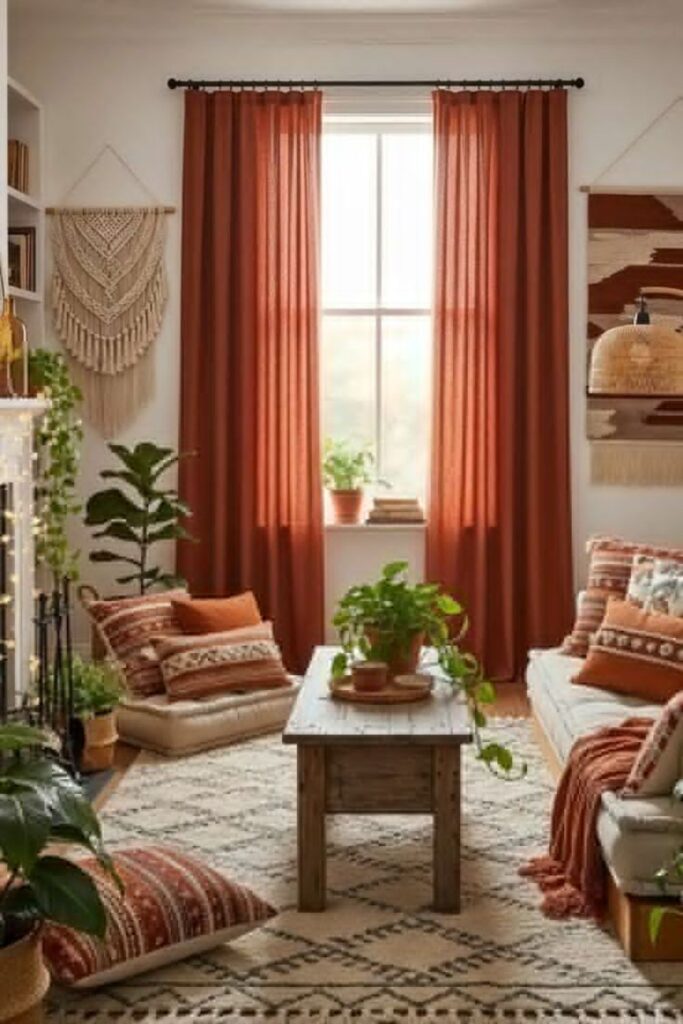
Color is where curtain styling ideas get personal. The right curtain colors can warm up a cold room, brighten a dark one, or pull a scattered design palette together into something that feels intentional and cohesive. Getting color right is the difference between curtains that simply cover windows and curtains that define a room.
Color coordination with walls, furniture, and rugs helps create a cohesive design. Always consider the undertones in your existing paint colors and furniture before choosing curtain colors. Warm undertones pair with warm colors; cool undertones with cool. Here’s a look at the most popular color directions for American living rooms in 2026.
Neutral Beige Curtains
Neutral curtains in beige are the safest and most versatile option in home decor ideas. They work with virtually every wall color, wood tone, and furniture finish. They don’t compete, they complement. And they never go out of style.
Not all beiges are the same. Warm honey beige has yellow or orange undertones that suit rooms with warm wood furniture. Cool greige, a blend of gray and beige works better in rooms with white or gray walls. Linen curtains in natural oat tones are a particularly popular version of neutral beige for living room design today.
Green Curtains for Living Rooms
Green is having a massive moment in interior decorating right now and it shows no signs of stopping in 2026. From soft sage to deep forest green, this color palette brings the outside in and makes rooms feel grounded and alive.
Sage green curtain panels pair beautifully with natural wood furniture, rattan accents, and terracotta accessories. Deeper forest green works better in larger rooms where you want bold, dramatic window decor. Emerald green in velvet curtains is one of the most stunning choices available for traditional or glam living room design.
Navy Blue Curtains
Navy blue is a design classic for a reason. It’s bold enough to anchor a room without being overwhelming. Navy curtain panels work in both modern and traditional spaces which makes them one of the most versatile curtain colors you can choose.
Pair navy with white walls and brass curtain rods for a crisp, nautical-inspired look. Or combine it with warm wood tones and cream upholstery for a cozier, more traditional feel. Velvet curtains in navy are especially stunning in formal living rooms with high ceilings.
Earth-Tone Curtains
Terracotta, rust, camel, and chocolate brown are all having a major moment in home decor ideas and for good reason. Earth-tone curtains add warmth and depth to rooms that feel cold or sterile. They work especially well in spaces with cream walls, jute rugs, and natural fiber furniture.
These tones align perfectly with 2026 interior design trends, which are moving away from cool grays and stark whites toward warmer, more organic color palettes. Pair rust curtain panels with sage green accents and warm walnut furniture for a look that feels deeply current and completely timeless.
Pink Living Room Curtains
Pink in living rooms isn’t as surprising as it used to be. Dusty rose, blush, and moody mauve have all entered the mainstream of interior decorating and they look genuinely sophisticated in the right context.
Blush linen curtains work beautifully in romantic, airy living rooms with light wood furniture and white walls. Deeper berry and mauve tones suit maximalist or eclectic living room design styles. Pair pink curtain panels with warm gold curtain rods and neutral gray upholstery for a balanced, refined look.
Patterned Curtain Ideas That Add Personality
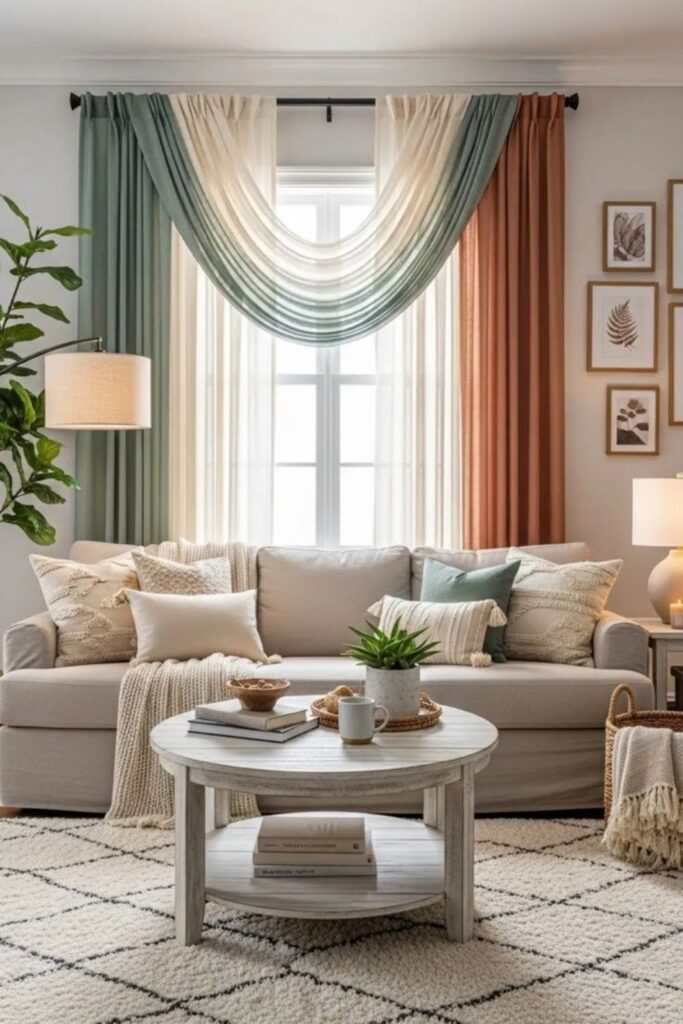
A bold pattern can do something that paint and furniture simply cannot. It adds movement, depth, and a clear focal point that draws the eye and gives a room a story to tell. Patterned curtains are one of the most powerful tools in interior decorating and one of the most underused in everyday American homes.
The key rule with pattern is scale. Large-scale patterns work in large rooms; small-scale prints suit smaller spaces. And when you use patterned curtains, keep the rest of the room’s textiles relatively calm. Let the curtains be the star. Here are the most popular pattern directions to consider for your window treatments.
Floral Curtains
Floral curtains are a staple of cottage and maximalist living room design. A bold botanical print in a large living room can function like a piece of art, something that draws the eye and anchors the entire color palette of the space.
Scale is everything with florals. Large-scale blooms suit bigger rooms with high ceilings. Smaller, tighter floral patterns work better in compact living rooms where you want patterns without visual chaos. Always pull one color from your floral curtain panels and repeat it in throw pillows or a rug to tie the room together.
Striped Curtains
Stripes are one of the most versatile patterns in window decor. Vertical stripes draw the eye upward, which makes them one of the best tricks for rooms with low ceilings. Horizontal stripes add the illusion of width in narrow rooms.
Striped curtains work in modern, coastal, farmhouse, and traditional styles depending on the colors and scale of the stripe. A bold black-and-white stripe feels contemporary. A soft tonal stripe in cream and sand reads as relaxed and coastal. A wide cabana stripe brings summer energy into any room.
Read More About: Best Awkward Living Room Layout Ideas: 25 Smart Ways to Fix Challenging
Check Pattern Curtains
Buffalo check is the farmhouse gold standard and it continues to dominate farmhouse curtains in American homes. The oversized black-and-white or red-and-white grid pattern is instantly warm and recognizable.
But check pattern curtains go beyond buffalo check. Windowpane check is preppy and tailored perfect for traditional interior decorating. Gingham check in small scales reads as cottage and country. The rule of thumb is simple: match the scale of your check pattern to the size of your room. Bigger room, bigger check.
Graphic Print Curtains
Graphic and abstract print curtain panels make a bold design statement. These are the curtains that stop guests in their tracks and make a living room feel curated and deliberate rather than default.
Geometric prints work beautifully in contemporary and mid-century modern living room design. Abstract watercolor prints suit eclectic and bohemian styles. When you go graphic, keep everything else in the room simple. You want the pattern to sing, not compete. Great sources for graphic custom curtains include Spoonflower and Society6.
Layered Curtain Ideas for Depth and Privacy
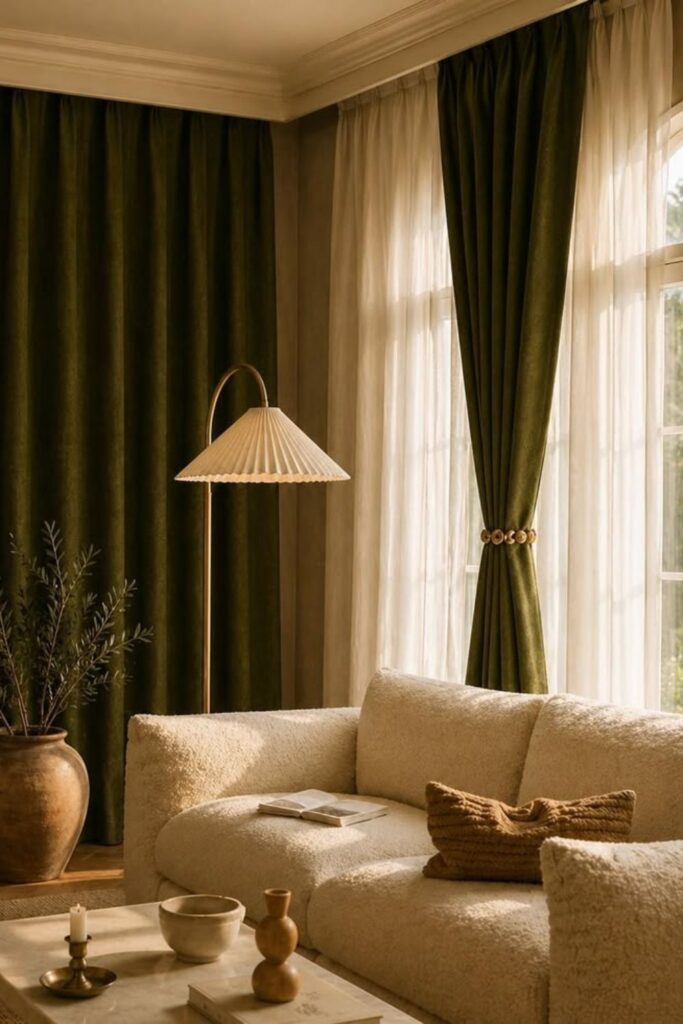
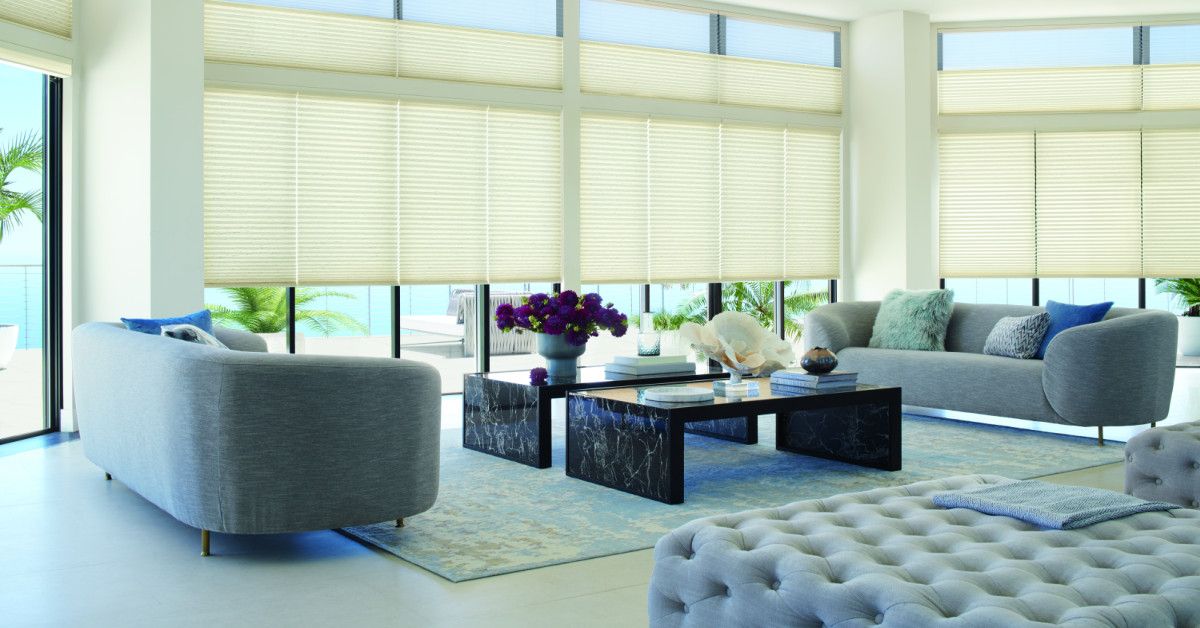
Layering curtains with blinds or shades offers flexibility for light management throughout the day. It’s one of the most functional and beautiful things you can do with window treatments and it’s how interior designers approach almost every living room window they work with.
Layering gives you complete control. You can let in full sun, filter it softly, or block it entirely all using different combinations of the same window treatments. It also adds visual depth and warmth to a room that single curtain panels simply can’t achieve on their own. Here are the three most popular curtain layering ideas to try.
Sheer and Blackout Curtain Combinations
This is the classic layered look. Sheer curtains hang closest to the window on an inner rod. Blackout curtains hang on an outer rod. During the day, open the blackout panels and let the sheers do the work filtering natural light beautifully while maintaining privacy. At night, close both layers for complete darkness.
You’ll need a double curtain rod to pull this off cleanly. These are widely available at Target, Amazon, and IKEA. This curtain layering idea works in virtually every living room design style from modern to traditional.
Curtains With Shades
Pairing floor-length curtains with Roman shades is a timeless and sophisticated window treatment combination. The shade sits inside the window frame for clean, precise light control. The curtains frame the window from outside the frame, adding softness and height.
Roman shades in a fabric that matches or complements your curtain panels create a layered look that feels deliberate and designed. Cellular shades underneath add significant energy efficiency by trapping insulating air between window and room. This is one of the most functional curtain layering ideas available.
Curtains With Blinds
Faux wood blinds paired with linen curtains is one of the most popular curtain layering ideas in American homes and it works because it’s both practical and beautiful. The blinds handle precise light control. The curtains handle softness, framing, and warmth.
To avoid a busy, overwhelming look, keep your curtain panels in a solid neutral that doesn’t compete with the blind color. Make sure the blinds sit inside the window frame for a clean, layered appearance. Venetian blinds work especially well in modern and industrial living room design styles.
Window-Specific Living Room Curtain Ideas
Not every window is a standard rectangle and the trickier the window, the more important it is to approach it with a plan. Bay windows, arched windows, and French door curtains all require slightly different thinking than a flat, single-pane window. Getting window-specific curtain ideas right makes a real difference in how finished a room looks.
The cardinal rule for unusual windows: work with the architecture, not against it. Never cover what makes a window interesting. Arches should stay visible. Bay windows should feel embraced by their curtains, not hidden by them. Here’s how to handle the most common non-standard windows in American living rooms.
Bay Window Curtain Ideas
Bay window curtains give you three options. You can treat the entire bay as one large unit with a single dramatic sweep of fabric. You can hang individual curtain panels on each facet of the bay. Or you can use a curved rod that follows the bay’s shape for a clean, continuous look.
Floor-length curtains on each facet of the bay create the most luxurious result; they make the bay feel like a private retreat within the larger room. Curved bay window rods are available at Pottery Barn and several specialty window treatments retailers. Always choose panels long enough to puddle or just graze the floor.
Bow Window Curtain Ideas
Bow windows are similar to bay windows but with a gentler, more curved profile. A curved traverse rod that follows the bow’s shape is the cleanest solution. Sheer curtains inside the curve allow natural light to flood in while maintaining the beautiful arch of the window.
Keep curtain length consistent across all panels in a bow window inconsistent lengths look messy and unfinished. For the outer layer, choose floor-length curtains in a fabric that drapes well, like linen curtains or lightweight cotton. This is one of the most beautiful window-specific curtain ideas when done well.
Arched Window Curtain Ideas
Arched windows are architectural features that treat them that way. The best approach is to hang a straight curtain rod at the base of the arch and let the arch itself show above. This keeps the architectural detail visible while still giving you light control below the arch.
If you must cover the arch for light control or privacy reasons a custom fabric shade that fills the arched shape is the cleanest option. Whatever you do, don’t hang straight curtain panels over the arch and try to force them to look curved. It never works. Let the arch breathe.
French Door Curtains
French door curtains are functional first. They can’t block the door swing or get caught when the door opens. The best options are tension rods mounted directly on each door pane, holding lightweight panels that move with the door. Alternatively, use side panels that tie back far enough to clear the door swing completely.
Keep curtain length on French door curtains short ending just below the door handle is the sweet spot. Sheer curtains and lightweight linen curtains are the best fabric choices here because they don’t add bulk. Heavy velvet curtains or blackout curtains are not practical for French doors.
Corner Window Curtains
Corner windows are stunning but tricky. The cleanest solution is two separate curtain rods that meet at the corner one for each wall. Keep both sets of curtain panels matching in fabric, color, and curtain length to create visual unity across the corner.
Floor-length curtains in a solid neutral are the most forgiving choice for corner windows because they let the unusual geometry of the space speak for itself. Avoid heavy patterns near corners; they can make the junction between the two rods look busy and unresolved.
Small Living Room Curtain Ideas That Make Rooms Look Bigger
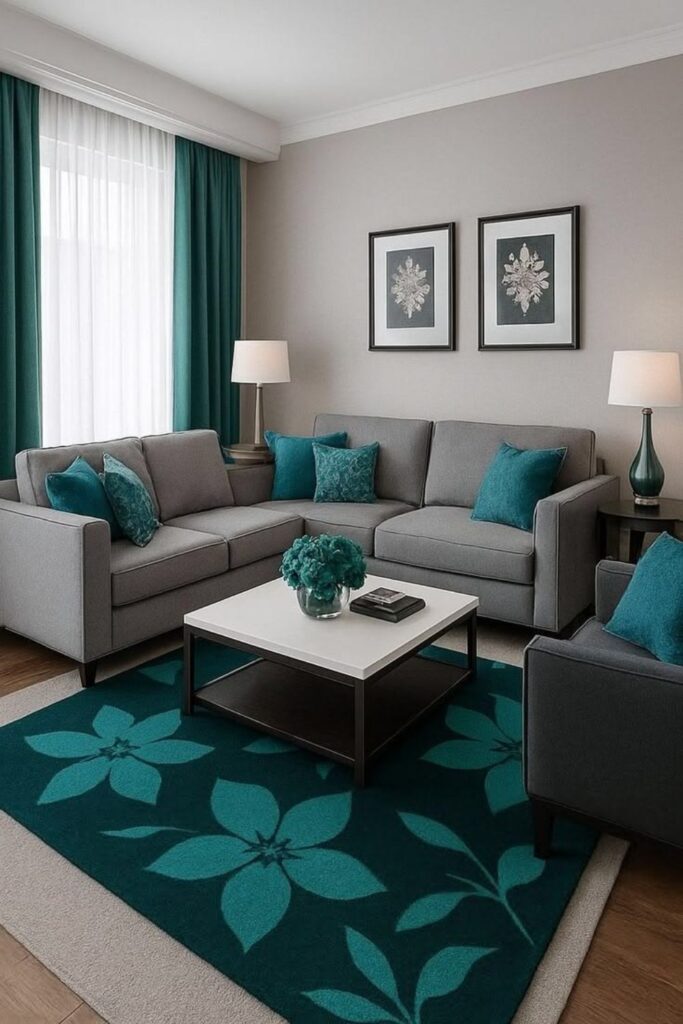
Small living rooms don’t have to feel small. The right living room curtain ideas can visually expand a space dramatically making ceilings feel taller, walls feel farther apart, and rooms feel airier and more open. Floor-to-ceiling drapes create the illusion of taller ceilings, while sheer panels keep spaces bright and airy. These aren’t design tricks. They’re fundamental principles of visual perception.
The secret is in three things: where you hang the rod, how wide you go, and which fabrics you choose. Get all three right and a small living room can feel surprisingly spacious. Here are the three most impactful changes you can make in a compact living room.
Hang Curtains Higher for Height
Mount your curtain rods 4 to 6 inches above the window frame or better yet, right at the ceiling line. This single change is the most powerful visual trick in all of interior decorating. The eye follows the curtain upward and reads the ceiling as much higher than it actually is.
This technique works in every style and budget. It costs nothing extra you just move where you drill the bracket. The only thing you’ll need to check is your curtain length. Hanging rods higher means you need longer curtain panels than standard measurements would suggest. Always measure after deciding on rod height.
Use Full-Wall Curtains
Full-wall curtains extend the curtain rod from one wall to the other, not just around the window itself. This makes the window look much larger than it actually is and fills the wall with the soft texture of fabric.
This is one of the most dramatic and beautiful living room curtain ideas for small spaces. It works especially well in rooms where the window is undersized relative to the wall. Choose light filtering curtains in soft neutrals for the best result. Heavy fabrics or dark colors will make the room feel enclosed rather than expansive.
Choose Light-Filtering Fabrics
In small living rooms, light filtering curtains are almost always the right call. Sheer curtains and lightweight linen curtains keep the room feeling open and connected to the outside which naturally makes it feel larger.
Avoid blackout curtains or heavy velvet curtains in very small living rooms unless you have a specific reason for needing a full light block. And always match your curtain colors to your wall color or go slightly lighter contrasting dark curtains on light walls will visually shrink the room by breaking it into competing zones.
Living Room Curtain Ideas for High Ceilings
High ceilings are a gift but only if you dress them properly. Hanging standard 84-inch curtain panels in a room with 12-foot ceilings is one of the most common interior decorating mistakes in American homes. The curtains end up looking like they’re floating awkwardly in space, which draws attention to the gap rather than the grandeur.
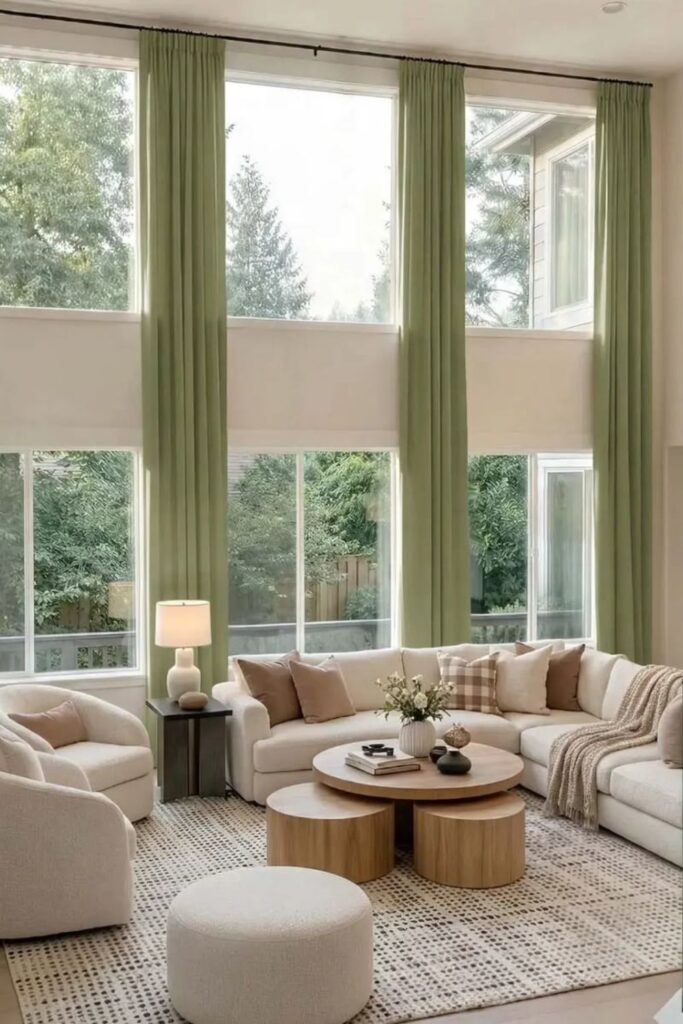
Scale everything up. Taller ceilings need taller curtain panels, longer drops, and more generous fullness to look proportional. This is where extra long curtains and ceiling to floor curtains truly earn their place in living room design. Here’s how to get it right.
Extra-Tall Curtain Panels
Standard curtain panels top out at 96 inches. For rooms with 10-foot or higher ceilings, you need extra long curtains 108 inches, 120 inches, or even custom lengths. These are more readily available than most people think.
You can find extra long curtains at Pottery Barn, West Elm, and H& Home. Many of these retailers offer panels in multiple lengths so you can choose exactly what you need. Never try to make standard-length panels work in a tall room; the proportions will always look off.
| Ceiling Height | Recommended Curtain Length |
| 8 feet | 84–96 inches |
| 9 feet | 96–108 inches |
| 10 feet | 108–120 inches |
| 12+ feet | Custom or 120+ inch panels |
Ceiling-to-Floor Drapery
Ceiling to floor curtains are the single most impactful window treatment you can install in a room with high ceilings. Mount the curtain rods directly at the ceiling line and let the fabric fall all the way to the floor or puddle slightly for extra drama.
Ceiling to floor curtains fill the vertical space with richness and texture. They make a room feel designed from top to bottom rather than decorated only at eye level. The best fabrics for this application are linen curtains, velvet curtains, and heavyweight cotton because they have enough body to hang properly over long distances. Adding a pelmet or cornice board above the rod gives the finished look an ultra-professional edge.
Energy Efficient Curtains That Reduce Heat and Glare
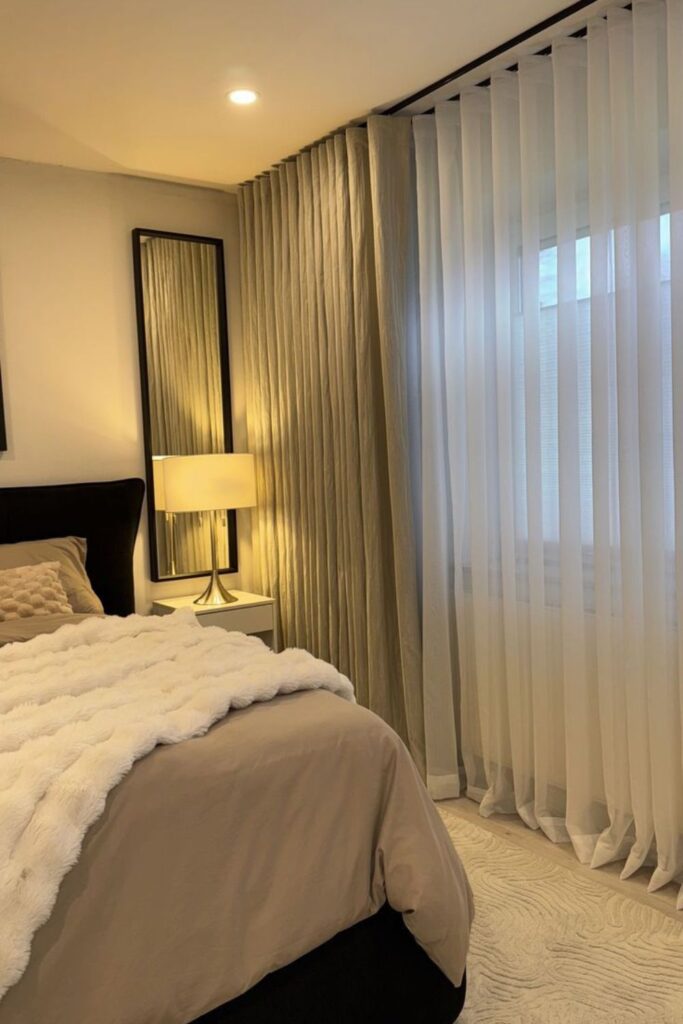
Your curtains can actually cut your energy bill. That’s not marketing language, it’s physics. The U.S. The Department of Energy estimates that energy efficient curtains can reduce heat loss through windows by up to 25%. In states with extreme summer heat or winter cold, that adds up to real savings.
The right window treatments can improve privacy, soften harsh sunlight, enhance insulation, and make a room feel larger. Energy efficient curtains check every one of those boxes. Here’s what to look for when choosing curtains with real thermal performance.
Thermal Insulated Curtains
Thermal insulated curtains work by creating a layer of trapped air between the window and the room. This air barrier slows the transfer of heat in summer and cold in winter. The best thermal insulated curtains use triple-weave construction or a foam backing to maximize this effect.
Top brands for thermal insulated curtains in the US market include Eclipse, Sun Zero, and Deconovo all widely available on Amazon and in major home goods stores. Look for curtains specifically labeled “thermal” or “insulated” rather than just “room darkening.” The construction is different and the performance is significantly better.
Room-Darkening Options
Room darkening curtains and true blackout curtains are not exactly the same thing. Room darkening curtains block between 85% and 99% of incoming light which is enough for most living rooms. True blackout curtains block 99 to 100% and are better suited to bedrooms or dedicated media rooms.
For most living rooms, room darkening options strike the perfect balance. They provide serious light control without the total blackness of full blackout. Pair them with sheer curtains on an inner rod for a layered system that gives you complete flexibility from morning to night.
Designer Tricks for Choosing the Right Curtain Length and Width
The two most common curtain mistakes in American homes are choosing the wrong curtain length and hanging panels that are too narrow. Both instantly make a room look less polished and both are completely avoidable with a few simple guidelines. Proper curtain width, length, and rod placement are essential for achieving a polished, designer-inspired living room.
This curtain length guide gives you exactly the information you need to measure correctly and choose confidently. No guesswork, no second-guessing your choices at the store.
Standard Curtain Lengths Explained
| Curtain Length | Floor Effect | Best Used For |
| 63 inches | Sill length | Kitchens, bathroom windows |
| 84 inches | Just off the floor | Standard 8-ft ceiling living rooms |
| 96 inches | Floor grazing | Modern rooms with 9-ft ceilings |
| 108 inches | Slight break | Transitional rooms with 10-ft ceilings |
| 120 inches + | Puddle / pool | Formal rooms, high ceilings, dramatic look |
Always measure from the curtain rod to the floor not from the window sill or window frame. The rod is where the curtain actually starts, and that’s the only measurement that matters for curtain length.
How Wide Should Curtains Be?
Curtain width is where most people make their biggest mistakes. Panels that are too narrow look skimpy and flat. The fullness of the gathered fabric is what creates that luxurious, layered look.
The standard rule: your total curtain width should be 2 to 2.5 times the width of your curtain rod. So if your rod spans 60 inches, you need 120 to 150 inches of total fabric. This usually means two or three panels per window depending on panel width. For a flatter, more modern look, 1.5x is the minimum anything less looks like you ran out of fabric.
How to Match Curtains With Wall Colors and Furniture
Matching curtains to your existing room is part science, part intuition. The science is in undertones: warm goes with warm, cool goes with cool. The intuition is in knowing when to match closely and when to contrast boldly. Getting this right is what separates a living room design that looks designed from one that just looks decorated.
Color coordination with walls, furniture, and rugs helps create a cohesive design, while patterned curtains can serve as a focal point. Here are the two main strategies for pulling curtain colors and room elements together.
Matching Curtains to Paint Colors
Tonal matching choosing curtain panels one shade lighter or darker than your wall color creates a calm, cohesive look that makes a room feel intentional and restful. This is the approach most interior designers default to in neutral or minimalist spaces.
Contrast matching is bolder. Choose curtain colors that sit opposite your wall on the color wheel and you get a vibrant, energetic result. Navy curtains on warm white walls. Terracotta panels on sage green walls. This approach works best when the curtain is meant to be a focal point, a statement piece rather than a background element.
| Wall Color | Tonal Curtain Match | Contrast Option |
| White / Cream | Warm beige, linen | Navy, forest green |
| Gray | Charcoal, silver | Blush, terracotta |
| Sage green | Deeper olive | Dusty rose, cream |
| Navy blue | Slate, charcoal | Warm white, gold |
| Warm white | Oat, sand | Deep teal, rust |
Coordinating Accent Colors
The 60-30-10 rule is the most useful framework in interior decorating for pulling colors together. 60% of the room should be a dominant neutral (usually walls and large furniture). 30% should be a secondary color (usually rugs, upholstery, and larger accessories). 10% should be an accent color and that’s where your curtain panels can live beautifully.
Pull one color from your sofa fabric, your rug pattern, or a piece of artwork and use it as the basis for your curtain colors. Don’t exactly complement it. A rug with terracotta accents doesn’t need terracotta curtains. It needs rust, or warm camel, or a burnt orange that sings the same warm note in a different key.
2026 Interior Design Trends for Living Room Curtains
Interior design trends move fast but the best ones stick around because they reflect something real about how people want to live. The 2026 interior design trends for living room curtains are moving toward warmth, texture, sustainability, and layered softness. Gone are the days of stark minimalism and cold gray palettes dominating every showroom.
This year, the most exciting curtain styling ideas blend practicality with beauty in ways that feel genuinely livable. Here’s what’s trending right now across American home decor ideas and interior decorating spaces.
Trending Curtain Colors
Warm terracotta and rust tones are leading the color charge in 2026. These earthy, sunbaked tones bring instant warmth to living rooms and pair beautifully with natural wood and rattan furniture. Sage green and deeper forest green continue to hold strong the connection to nature that these colors bring is more appealing than ever.
Warm off-white and oat tones are replacing stark white across the board. Moody midnight blue is gaining ground in more formal living rooms. And perhaps most surprisingly, soft blush and dusty mauve are appearing in sophisticated adult spaces in ways that feel genuinely elevated rather than feminine or frivolous.
Popular Fabric Trends
Linen curtains remain the dominant fabric trend in 2026 textured, natural, and relaxed in a way that synthetic fabrics simply can’t replicate. Boucle and boucle-inspired weave patterns are making a strong move into drapery, bringing the cozy, cloud-like texture that dominated upholstery into window decor.
Layered sheer curtains are at an all-time high in residential interior decorating. Sustainable curtain fabrics, organic cotton, recycled polyester, and natural linen are gaining serious traction as more American homeowners consider the environmental footprint of their home decor ideas. And velvet curtains are making a refined comeback in jewel tones that feel luxurious without being stuffy.
Frequently Asked Questions About
How High Should I Hang Curtains?
As high as possible. That’s the honest, direct answer. The ideal placement for curtain rods is at ceiling height or 4 to 6 inches above the window frame at minimum. This makes ceilings feel taller, windows feel larger, and the entire room feel more designed.
The only exception is in rooms with very low ceilings (under 8 feet) where mounting too close to the ceiling can make the space feel compressed. In those cases, 2 to 3 inches above the window frame is the right call. Always mount curtain rods higher than you think you need to, you can always adjust down, but you can’t undo holes in the wall.
Can Curtains Help Reduce Energy Use?
Yes significantly. The U.S. Department of Energy reports that energy efficient curtains can reduce window heat loss by up to 25%. South-facing and west-facing windows benefit the most because they receive the most direct sunlight throughout the day.
Thermal insulated curtains with triple-weave or foam-backed construction perform best for energy efficiency. In summer, close curtains on south and west windows during peak afternoon hours to block solar heat gain. In winter, open them during the day to let in passive solar warmth and close them at night to keep the heat in.
What Color Curtain Rod Should I Use?
Match your curtain rod finish to the other metal tones in your room light fixtures, cabinet hardware, picture frames, and decorative objects. Consistency in metal finish is one of the details that separates a professionally designed room from a self-assembled one.
Matte black rods suit modern, industrial, and contemporary interior decorating styles. Brass and gold rods work beautifully in traditional, glam, and warm contemporary rooms. Brushed nickel is the right call for transitional and cool-toned modern spaces. Wood rods in oak, walnut, or painted white are the perfect finishing touch for farmhouse, Scandinavian, and bohemian living room design.
Conclusion
The right living room curtain ideas do far more than cover windows. They define your style, control your light, insulate your space, and tie your entire room together into something cohesive and beautiful. Natural light control is one of the biggest factors when choosing living room curtains but so is color, fabric, fit, and the way everything works together as a complete system.
Whether you’re drawn to dramatic ceiling to floor curtains in deep velvet, breezy sheer curtains tied back in a sun-filled cottage room, or clean grommet curtains in crisp white linen, the best choice is the one that genuinely fits your space and your life. Start with one change, hang the rod higher, swap to a layered system, or finally commit to that color you’ve been eyeing. Even one small shift can transform how a room feels. Your living room is ready for it.