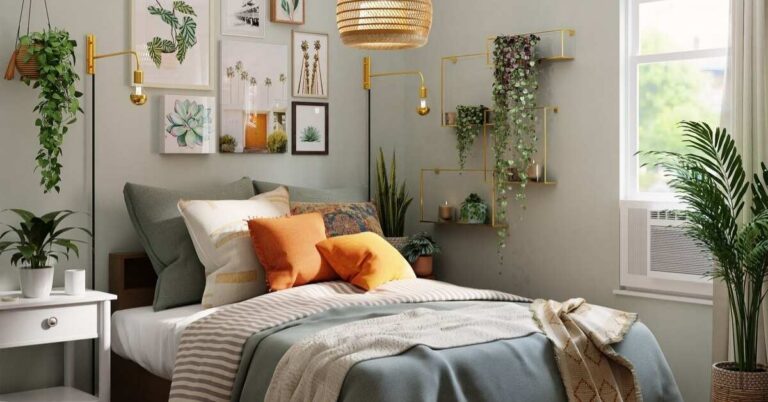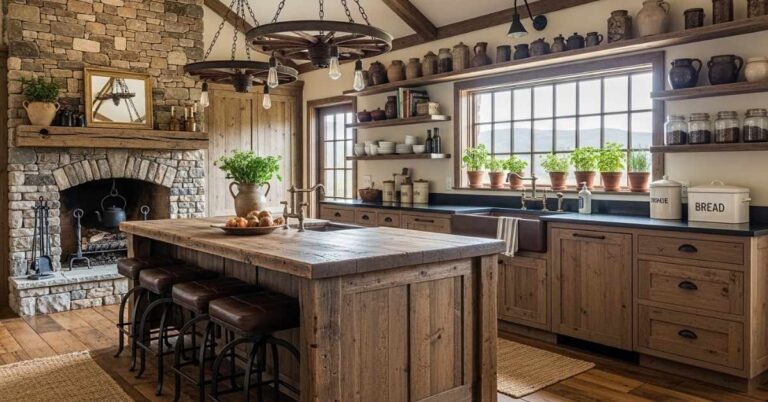
68+ Budget Decor Ideas That Make Your Home Look Intentional Not Cheap
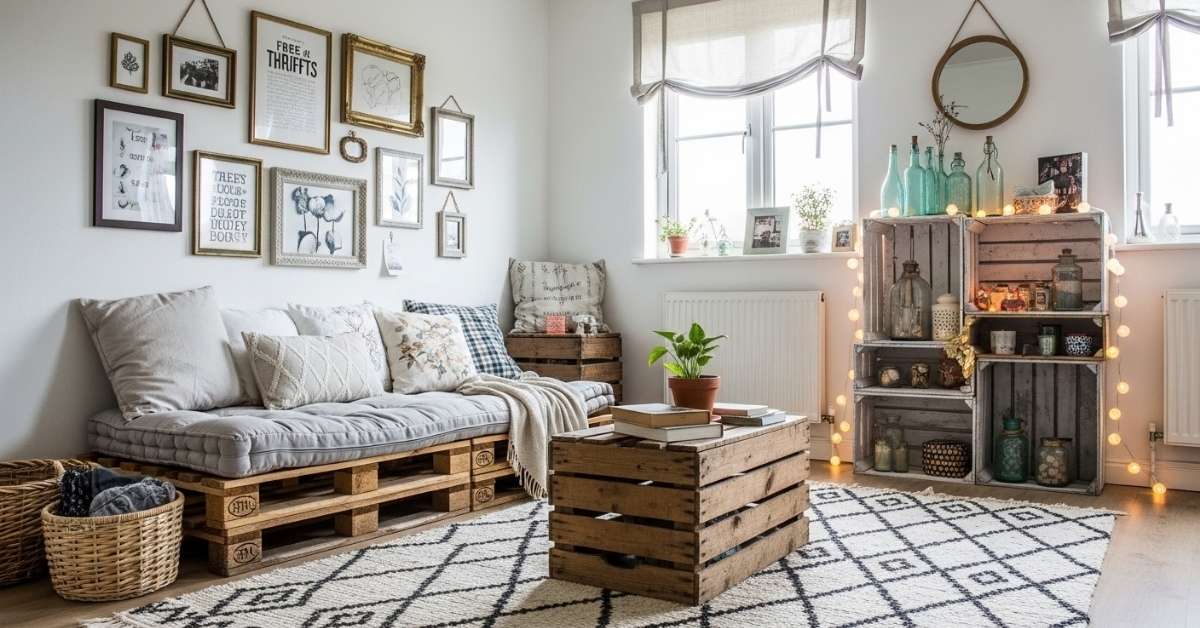
Decorating on a budget doesn’t mean settling for a space that looks like it was pulled together in a hurry. The real challenge isn’t money, it’s knowing which changes actually move the needle and which ones Budget Decor Ideas just add clutter. Most rooms don’t need more stuff. They need the right arrangement, better lighting, and a few well-placed details that give the space a sense of purpose.
If you’re working with a tight budget but want your home to feel cohesive and considered, these ideas are built around that exact goal. No major purchases. No renovation required. Just practical, visual shifts that work in real apartments, small rooms, and rented spaces.
Rearrange Before You Redecorate
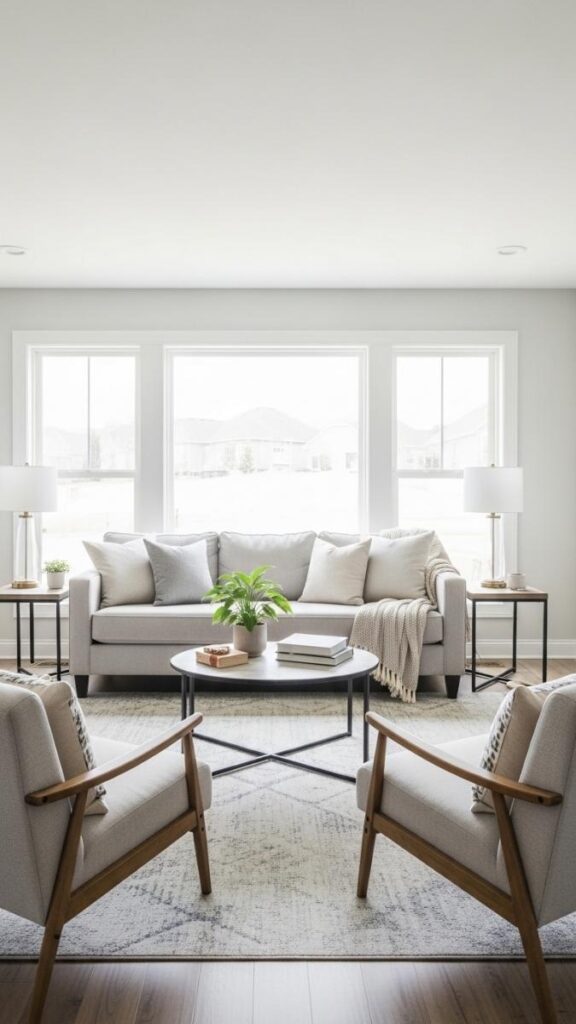
Most rooms feel off not because of what’s in them, but because of where things are placed. Before spending anything, pull your sofa away from the wall even 4 to 6 inches and center your coffee table relative to the seating, not the TV.
This creates a defined zone that reads as intentional rather than default. Floating furniture like this makes a room feel larger because it allows light and sightlines to travel through the space instead of being blocked at the edges. Works especially well in rectangular living rooms where furniture tends to line the perimeter and leave a dead zone in the middle.
Swap Overhead Lighting for Layered Lamps
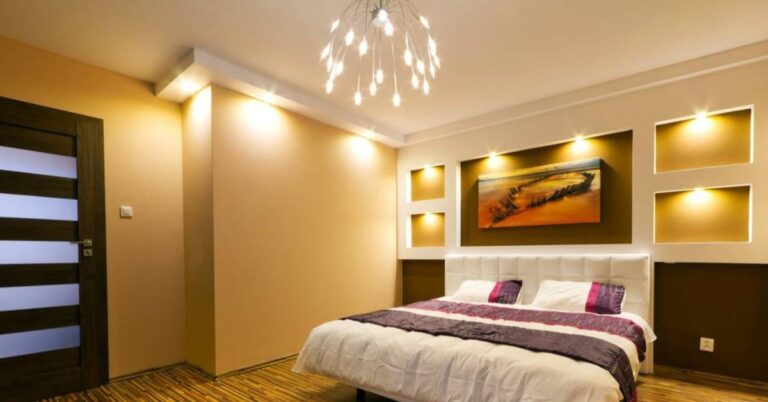
Overhead lighting flattens a room. It eliminates shadow and depth, which is exactly what makes spaces feel cold and unfinished. Two or three lamps placed at different heights, a floor lamp in a corner, and a table lamp on a side table create pools of warm light that give the room a layered, lived-in quality.
You don’t need expensive fixtures. A basic arc floor lamp from any budget retailer does the job. The key is switching to warm-toned bulbs (2700K range) and turning off the overhead entirely in the evenings. In my experience, this single switch does more for a room’s atmosphere than most decor purchases combined.
Use a Large Rug to Define the Seating Area
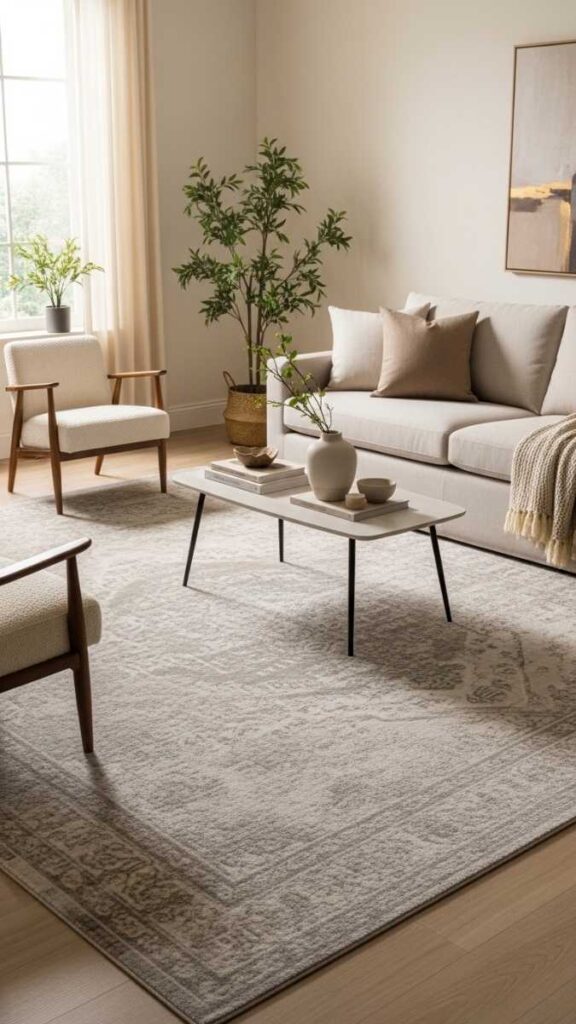
A rug that’s too small makes furniture look like it’s floating without context. Going one size up so at least the front legs of your sofa and chairs rest on it grounds the entire seating area and makes the room feel more complete.
Rugs don’t have to be expensive to be effective; flatweave options in jute or cotton are affordable and hold up well in high-traffic areas. The spatial effect is significant: a properly sized rug visually expands the room by creating a clear boundary between the seating zone and the surrounding floor. This works in both small apartments and larger open-plan spaces where defining separate zones matters.
Lean Art Instead of Hanging It
Hanging art requires commitment holes, measuring, and the anxiety of getting it wrong. Leaning large prints or frames against a wall, especially stacked in layers, creates a relaxed, gallery-like feel that’s actually very current in 2026 interior styling.
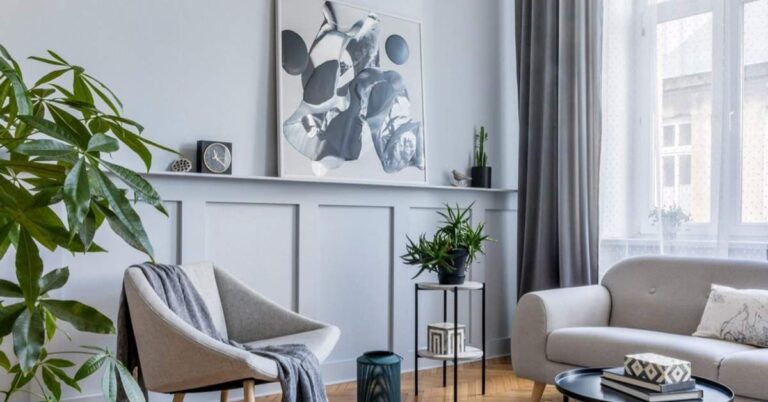
Place a larger piece behind a dresser or console table and lean a smaller frame in front for depth. The layering adds dimension without permanence. This approach is ideal for renters and anyone who hasn’t fully committed to a layout yet. It also makes it easy to swap pieces seasonally without repainting walls.
Add a Throw Blanket with Actual Texture
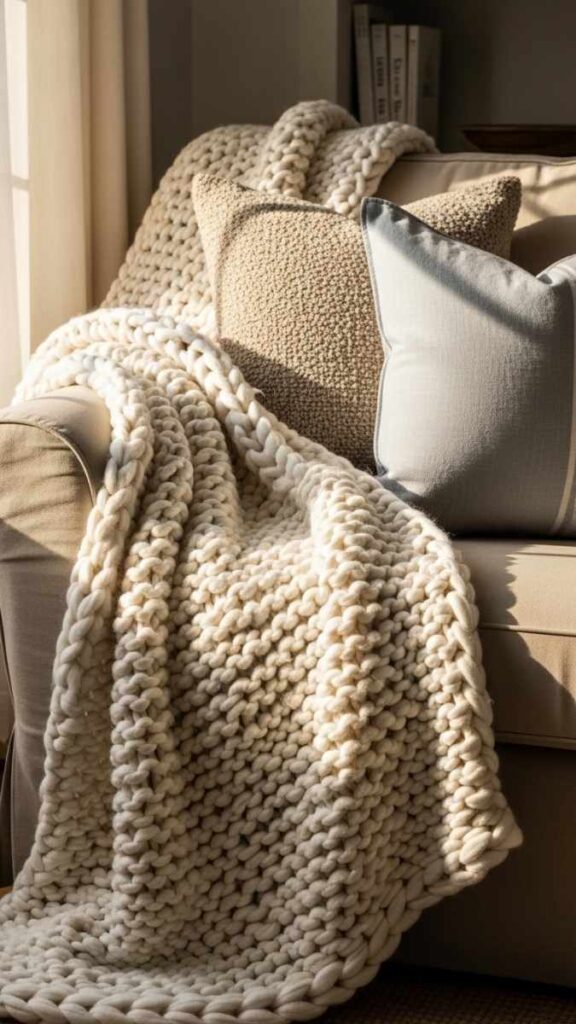
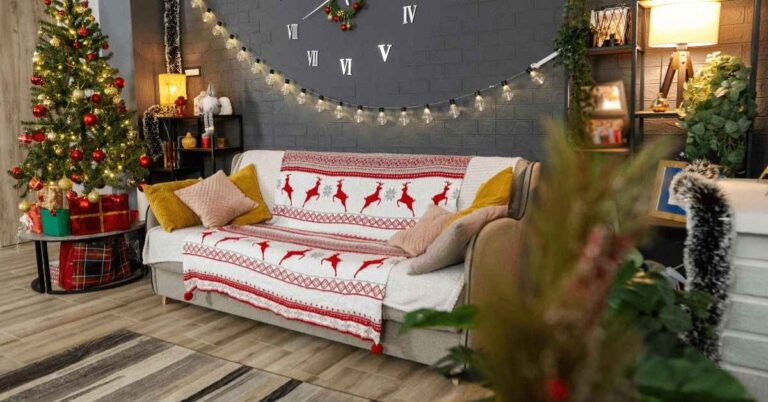
A throw blanket only works if the texture is doing something. Thin, synthetic throws in generic patterns tend to look like an afterthought. A chunky knit, a waffle-weave cotton, or a loose-weave linen draped casually over the arm of a sofa adds genuine tactile contrast to smooth upholstery.
The visual effect is warmth and softness without adding bulk to the room. It’s not about looking cozy, it’s about the material contrast making the space feel more considered. Go for one with weight and an interesting weave, and keep the color within your existing palette.
Read More About: 67+ DIY Decor Ideas That Actually Work in Real Homes No Craft Store Overwhelm Required
Paint One Wall in a Deep, Grounded Tone
You don’t need to repaint the whole room. One wall ideally behind a bed headboard or a sofa in a deep tone like forest green, warm terracotta, or charcoal creates a focal point that makes the rest of the room feel more designed.
Dark colors on a single wall don’t shrink the space; they actually add depth by creating contrast with lighter walls, which visually pushes the back of the room further away. A single quart of paint costs very little and covers one wall easily. This is one I’d actually recommend trying first if you want a high-impact change with minimal investment.
Replace Builder Grade Hardware in the Kitchen
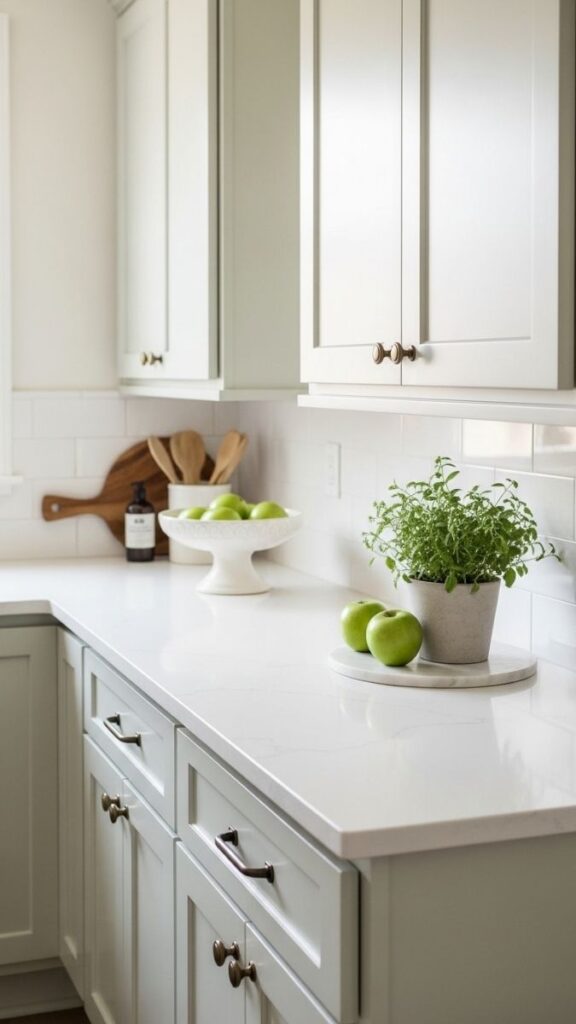
Cabinet hardware is one of those details that nobody notices when it’s right but everyone notices when it’s wrong. Default brass or chrome knobs from builder-grade kitchens date a space significantly. Replacing them with matte black bar pulls, antique brass knobs, or brushed nickel handles is a straightforward swap that requires only a screwdriver.
The visual shift is disproportionate to the cost. For renters, keep the originals in a bag so you can reinstall them before moving. This works best when you commit to a single finish across all cabinets rather than mixing.
Style Shelves with the Rule of Three
Empty shelves look unfinished. Overcrowded shelves look cluttered. The fix is grouping items in odd numbers typically threes with variation in height, material, and scale within each group. A stack of books, a small plant, and a ceramic object at different heights creates visual rhythm without looking decorated.
Avoid lining items up in a single row at the same height; that reads flat. Depth matters too slightly, staggering objects forward and backward on the shelf adds dimension. Honestly, this is one of those techniques that looks simple but completely changes how a shelf reads.
Use Curtains Hung High and Wide
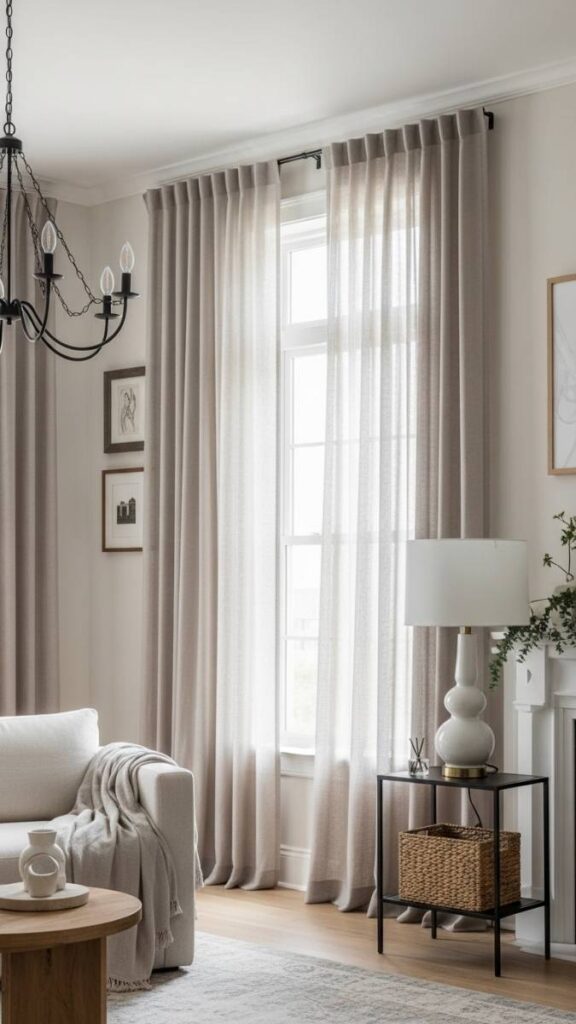
Curtains hung at the window frame make ceilings feel low and windows feel small. Mounting the rod 6 to 8 inches above the frame or close to the ceiling and extending it 10 to 12 inches past each side of the window dramatically changes the sense of height and light in the room. The curtain panels, when open, sit beside the glass rather than covering it, which keeps the window unobstructed.
Lightweight linen or cotton in off-white or natural tones work in nearly any space. This single adjustment makes rooms feel taller and better lit without touching the actual window.
Introduce a Tray to Contain Clutter
A tray turns random objects into a curated grouping. On a coffee table, it corrals remotes, candles, and small objects so they read as intentional rather than scattered. On a dresser or entryway console, it does the same for keys, sunglasses, and daily items.
The visual effect is a cleaner surface with fewer visual interruptions, even if the number of objects hasn’t changed. Wooden trays, woven rattan, or marble-effect resin all work well depending on your existing palette. This is a budget fix that solves a genuine organization problem without requiring storage furniture.
Read More About: 66+ Storage and Organization Ideas That Actually Work in Real Homes
Add a Full Length Mirror to a Narrow Space
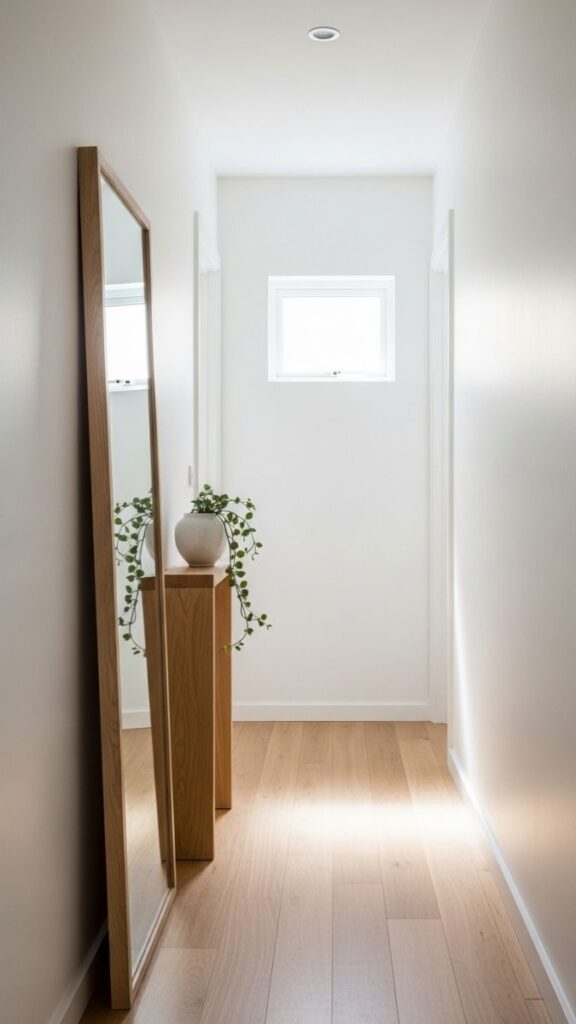
A full-length mirror in a narrow hallway, small bedroom, or compact entryway does two practical things: it reflects light back into the space and creates the visual impression of more depth. Learning it rather than hanging it is faster and looks relaxed rather than formal.
Position it across from or at an angle to a window to maximize the light reflection. Avoid placing it directly opposite a door; it interrupts the entry flow. A large mirror is one of the most effective spatial tools available at a low price point, and it works in nearly every room type.
Declutter by Category, Not by Room
Budget decorating is partly addition but it’s mostly subtraction. Rooms often feel unfinished because there’s too much visual noise competing for attention. Going through a space category by category (books, objects, plants, textiles) rather than surface by surface makes it easier to see what’s actually earning its place.
Removing 30% of the objects in a room often does more than adding anything new. Leave breathing room between items on shelves, clear off surfaces that have become default drop zones, and edit before you add. This costs nothing and changes how the entire room reads.
Style Your Entryway with One Functional Hook System
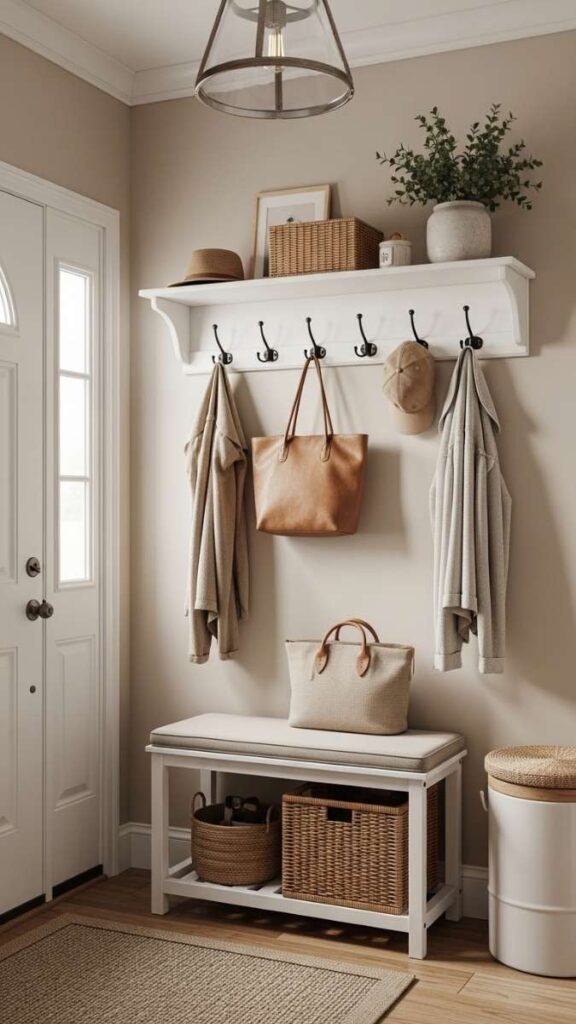
Entryways that function well feel better to come home to. A simple hook rail, even just three evenly spaced hooks mounted at a usable height, gives coats, bags, and keys a defined place. Pair it with a shallow basket below for shoes or dog leashes and a small plant or framed print above to make it feel finished.
The functionality reduces the daily pile-up that makes entries feel chaotic, and the visual coherence makes even a 3-foot entryway feel like an intentional space rather than a default drop zone.
Use Books as Decor in a Thoughtful Way
Books stacked horizontally rather than lined vertically on a coffee table or shelf change the visual texture of a surface. A stack of three or four with a small object on top a candle, a stone, a plant creates height variation and interest.
Grouping books by color on a visible shelf creates a subtle gradient effect that reads as designed without being precious about it. This works best when you’re not hiding the books but genuinely incorporating them as part of the room’s visual layer. It’s practical decor in the truest sense, functional objects doing double duty.
Bring in One Statement Plant
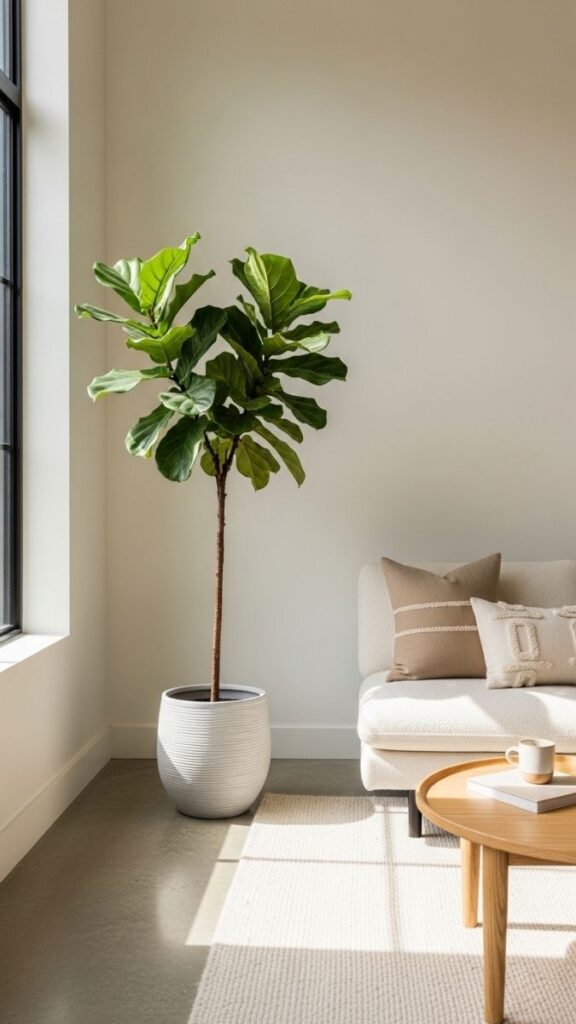
One large plant in the right corner does more than a collection of small ones scattered around. A fiddle leaf fig, monstera, or olive tree placed in a corner where it gets indirect light adds verticality, organic texture, and a sense of life without competing with the rest of the room.
The visual effect is height and softness, both things that make a space feel more comfortable and complete. Choose a simple pot in a neutral matte finish (white, cream, or terracotta) that doesn’t fight the plant for attention. This is especially effective in rooms that feel flat or boxy.
Style Your Bed with Layered Neutrals
A well-made bed is the most visual anchor in a bedroom, and it doesn’t require expensive bedding to look pulled together. The key is layering a simple white or neutral duvet as the base, a textured throw or blanket folded at the foot, and a mix of pillow sizes (two sleeping pillows, two euro shams, one or two smaller throw pillows).
The mix of scale and texture creates depth without visual chaos. Keep everything within a two or three-tone neutral range and the overall effect is calm and intentional. In my experience, this works better than patterned bedding in most small or low-ceiling bedrooms.
Create a Reading Corner with a Chair and Lamp
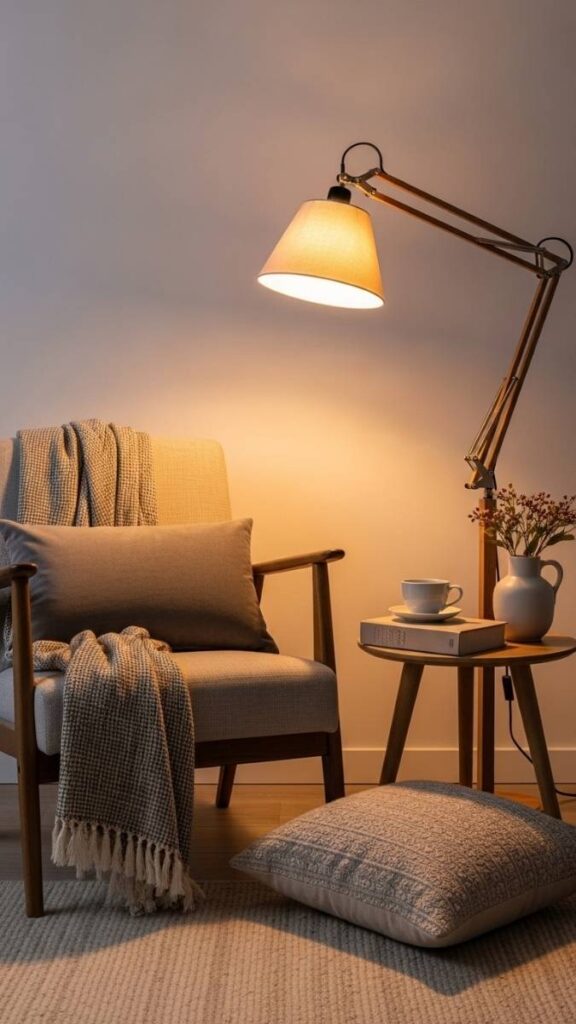
A chair and a lamp in a corner, even a compact armchair and a simple arc lamp create a defined secondary zone in a bedroom or living room. The spatial value is that it breaks up a single-function room and gives the eye somewhere else to land. It also signals how the space is used, which makes it feel more intentional.
Functionally, it gives you a place to sit that isn’t the sofa or the bed. The lamp should position close enough to light the chair directly. This setup works in rooms with at least 8 to 9 feet in one direction to spare without feeling cramped.
Frame Inexpensive Prints from Free Art Sites
A frame matters more than the print inside it. Choosing a consistent frame style all thin black, all natural wood, all white across a wall or surface creates visual cohesion regardless of what’s inside. Sites like Unsplash, The Met’s open access collection, or free Canva art downloads offer high-quality images you can print at home or through an inexpensive print service.
Three or four matching frames in a horizontal line or asymmetric cluster give a wall genuine presence without gallery prices. The consistency of the frames is what makes it look considered rather than random.
Add a Second Textile Layer to Windows
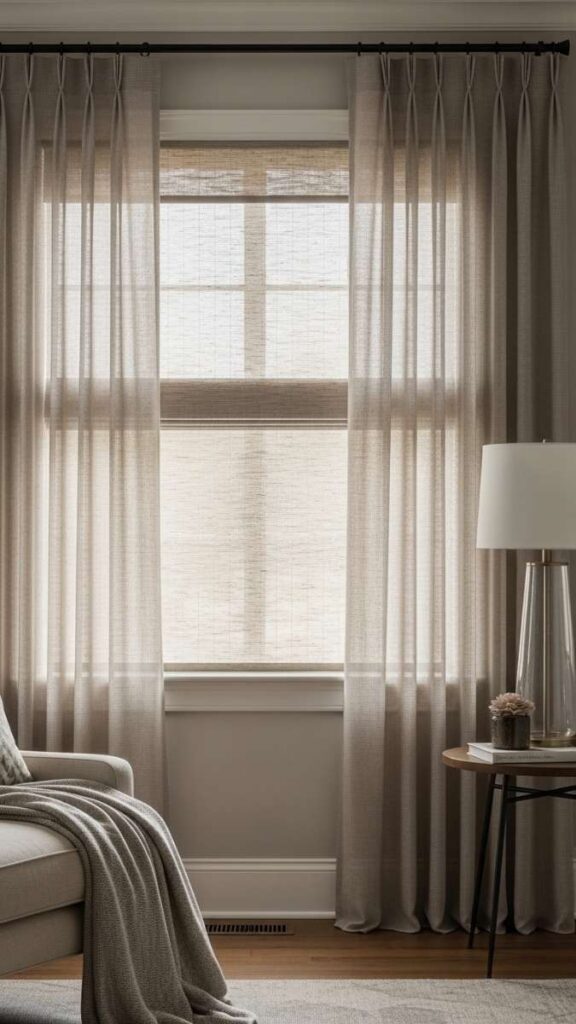
Most budget window treatments go with a single panel, which tends to look thin and unfinished. Layering a shear under a heavier linen or cotton curtain adds depth and gives you practical light control shear during the day for softness, and a heavier panel closed for privacy at night.
The visual effect is a window treatment that looks more considered and complete. This doesn’t require matching sets; a basic white sheer from any budget retailer under an existing curtain works well. The layering effect also makes windows appear taller and better-dressed without replacing your existing curtains entirely.
Use Matching Storage Baskets for Open Shelves
Open shelving looks chaotic when storage is mismatched. Replacing random boxes, bags, and bins with two or three matching baskets in the same material woven seagrass, cotton rope, or simple linen creates immediate visual order on lower shelves.
The practical benefit is obvious: things have a home. But the visual benefit is equally significant: your eye reads the row of matching baskets as a single cohesive element rather than individual distractions. This works especially well in living rooms, nurseries, and home offices where functional storage and aesthetics have to coexist.
Read More About: 10+ Luxury Decor Ideas That Make Any Room Feel More Elevated Without the Designer Price Tag
Add a Narrow Console Table to a Bare Wall
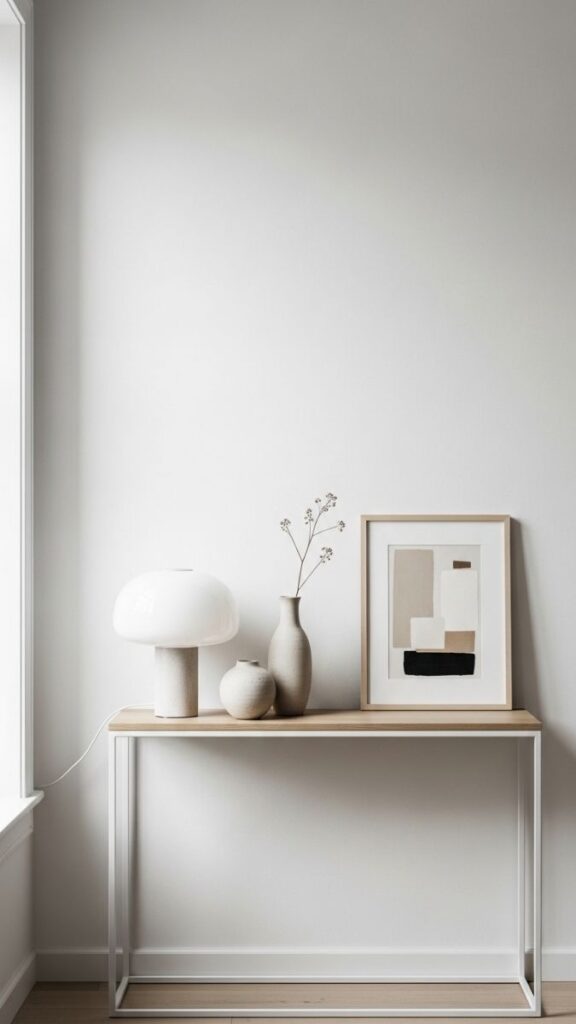
A blank wall with nothing against it makes a room feel incomplete, but not every wall can support a large piece of furniture. A narrow console table 10 to 12 inches deep fits against most walls without interrupting traffic flow. Styled with a lamp, a small vase, and a framed print above, it creates a complete vignette that gives the wall context.
This is particularly useful in hallways, dining rooms, and living room walls that face seating. The visual effect is a room that looks fully considered rather than partially decorated. Slim tables from budget retailers or secondhand finds work just as well as anything new.
Decant Everyday Items into Simple Containers
Decanting pantry staples coffee, sugar, cotton rounds, dish soap into simple matching containers removes the visual noise of branded packaging from your countertops. The effect is a cleaner, quieter surface that reads as organized rather than just functional.
Ceramic canisters, clear glass jars, or matte plastic dispensers all work depending on your kitchen’s palette. This is less about aesthetics for its own sake and more about reducing the visual complexity that makes small kitchens and bathrooms feel cluttered. It solves a real daily annoyance while improving how the space looks.
Introduce Warmth with Wooden Accents
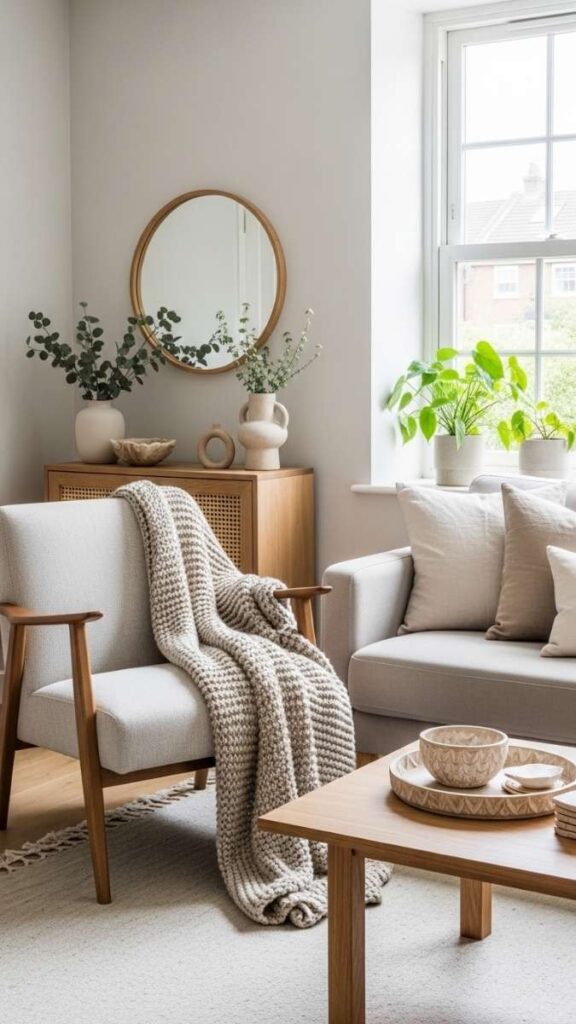
When a room skews too cool lots of white, grey, or black it tends to feel clinical. Adding wooden elements in small doses: a tray, a picture frame, a side table, a cutting board displayed in the kitchen introduces warmth without changing the overall palette.
The contrast between cool neutrals and warm wood tones is one of the most reliable combinations in residential interiors precisely because it feels natural rather than decorated. You don’t need to match wood tones exactly; mixing light oak with walnut-toned pieces actually reads more interesting than a single tone throughout.
Use a Room Divider or Curtain to Define Zones
In studio apartments and open-plan spaces, undefined zones make the whole layout feel chaotic. A sheer curtain on a ceiling-mounted track, a tall open bookshelf, or a simple room divider creates a visual boundary between sleeping, working, and living areas without closing off light or airflow.
The practical value is significant zone definition reduces the mental load of being in a multifunctional space. The spatial effect is also positive defined areas feel larger individually than one ambiguous open room. This is one of the most underused budget solutions for studio and open-plan living.
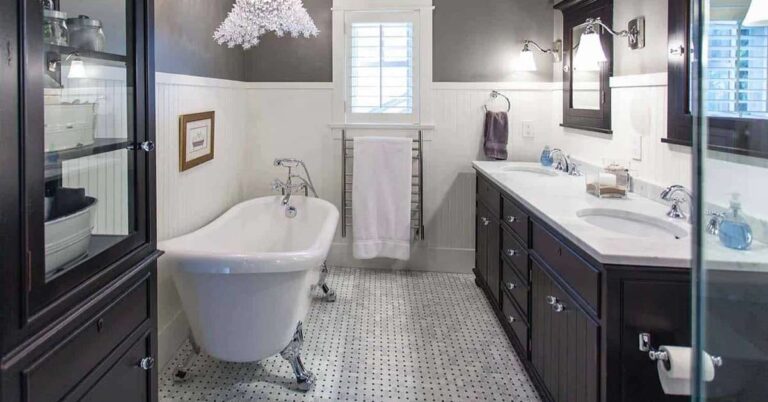
Style a Bathroom Vanity Like a Small Vignette
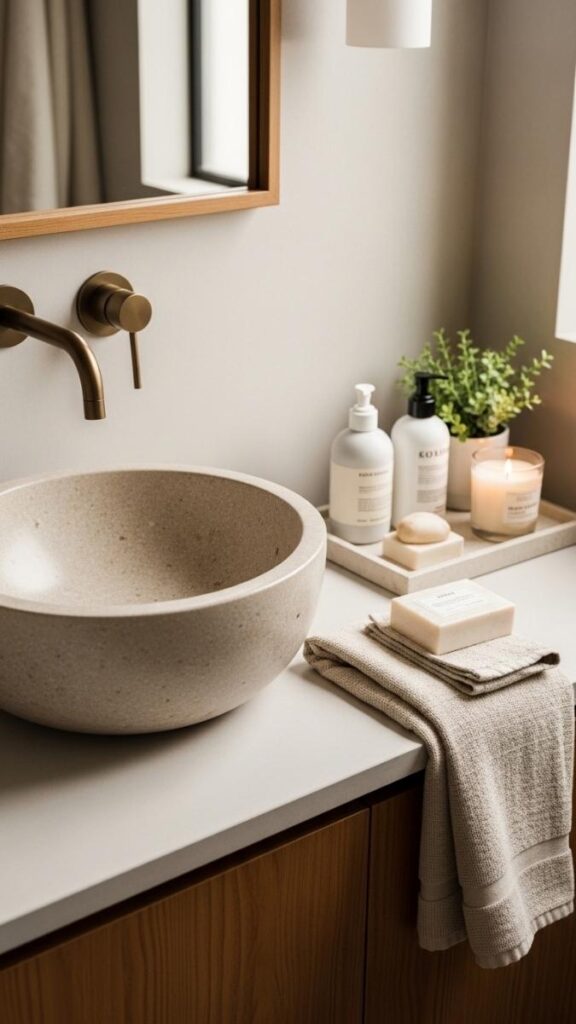
Bathrooms are often the last space to get any decorative attention, which is a missed opportunity; they’re used multiple times daily and a well-styled vanity genuinely changes how the room feels.
A small plant (pothos works well in low light), a refillable soap dispenser, a candle, and neatly folded hand towels styled on the counter create a complete and calm surface. The key is keeping everything to one side so the functional counter space remains usable. This costs very little but adds a sense of care that elevates the entire bathroom’s feel.
Add a Pegboard for Functional Wall Storage
A pegboard painted the same color as the wall behind it becomes part of the room rather than a utilitarian interruption. In a home office, it holds charging cables, scissors, notebooks, and small plants without requiring a single drawer.
In a kitchen, it frees up counter and cabinet space for pans, utensils, and spice jars. The functional payoff is real, everything visible, accessible, and organized. The visual payoff is equally strong when the pegboard color matches the wall it looks like an intentional design element rather than a workshop add-on.
Curate a Single Cohesive Shelf as a Focal Point
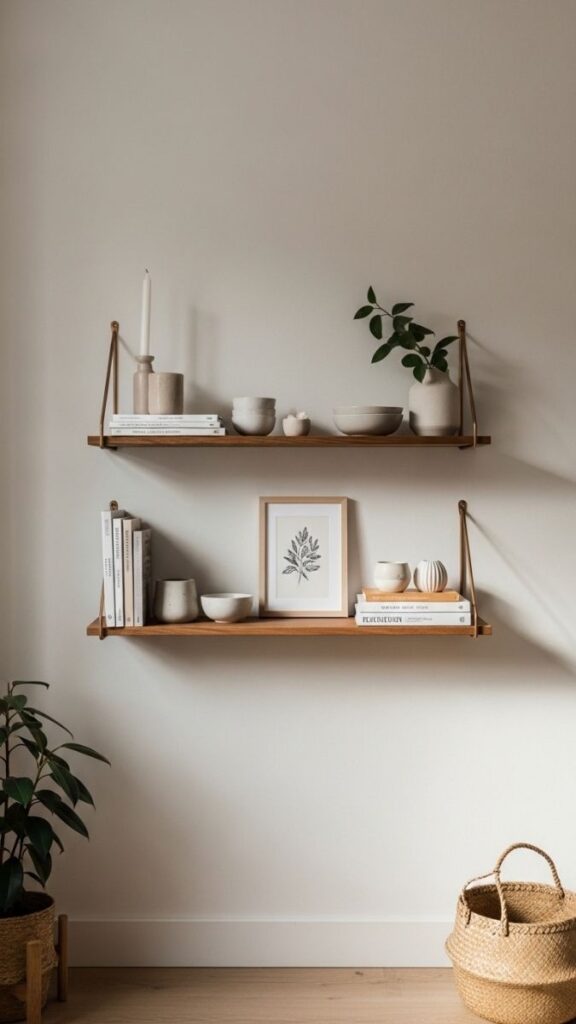
Rather than trying to style every surface, pick one shelf or ledge and make it excellent. A mix of height (tall books upright, shorter objects, a trailing plant), material variety (ceramic, wood, glass), and genuine negative space between items creates a shelf that reads as curated rather than crowded. In rooms where the walls are otherwise simple, a well-styled shelf becomes the visual anchor. I
‘ve noticed this approach works particularly well in living rooms and home offices where you want personality without overwhelming the space. One excellent shelf outperforms six mediocre ones every time.
What Actually Makes Budget Decor Ideas Work
The difference between a room that looks cheap and one that looks intentional usually comes down to three things: scale, repetition, and restraint.
Scale means your furniture and decor are proportioned correctly for the room. A small rug under a large sectional, tiny art on a large wall, or a delicate floor lamp in a double-height space all make a room feel mismatched not because of quality but because of proportion. Getting scale right costs nothing.
Repetition means using the same finish, tone, or material across multiple elements so the room feels coherent. Two matte black lamp bases, matching frames, baskets in the same weave these repetitions create visual rhythm that reads as intentional. Random one-offs, even expensive ones, rarely land as well.
Restraint is the hardest one. More is almost never better in a small or medium-sized room. The budget instinct is to fill empty corners, cover bare walls, and add more textiles for warmth but most rooms improve most by removing things, not adding them. A surface with three considered objects looks better than one with nine random ones.
Budget Decor Ideas Space and Impact Guide
| Idea | Space Type | Primary Benefit | Difficulty | Estimated Cost |
| Rearrange furniture | Any | Spatial flow | Easy | Free |
| Layered lamps | Living room / bedroom | Atmosphere | Easy | Low |
| Oversized rug | Living / dining | Zone definition | Easy | Medium |
| Leaning art | Any | Visual depth | Easy | Free–Low |
| Curtains hung high | Any | Height + light | Easy | Low |
| Accent wall paint | Bedroom / living | Focal point | Medium | Low |
| Cabinet hardware swap | Kitchen / bathroom | Instant refresh | Easy | Low |
| Pegboard storage | Office / kitchen | Function + order | Medium | Low |
| Room divider | Studio / open plan | Zone definition | Easy | Low–Medium |
| Full-length mirror | Narrow / small spaces | Light + depth | Easy | Low–Medium |
Common Budget Decorating Mistakes That Make Your Space Feel Cluttered or Unfinished
Buying too small.
The most frequent spatial mistake is undersized furniture: a rug that barely fits under the coffee table, a sofa that floats in the middle of a large room, art hung at eye level on a wall that needs something twice the size. Bigger, properly scaled pieces almost always read better than smaller ones, even in compact spaces.
Mixing too many tones without a uniform.
Budget decorating often pulls from multiple sources a sale here, a hand-me-down there which leads to rooms where nothing visually connects. Picking one or two anchor tones (a warm neutral, a wood finish, a repeated accent color) and filtering all new purchases through them prevents this.
Treating lighting as functional, not atmospheric.
Most budget rooms rely entirely on overhead lighting, which is the least flattering source for any living space. Layering in floor and table lamps, even inexpensive ones, changes how the room feels by evening, which is when most people actually use their homes.
Styling surfaces instead of editing them.
Adding decorative objects to a cluttered surface doesn’t help; it just adds more visual noise. The better move is removing 60 to 70 percent of what’s there, then styling the remainder with intention.
Ignoring the entryway.
The entry sets the tone for the rest of the home. A chaotic or blank entryway undermines the effect of a well-designed interior. Even a hook rail, a small mirror, and a plant dramatically changes how the entire home feels on arrival.
Frequently Asked Questions
What are the best budget decor ideas that make the biggest visual impact?
Lighting changes, curtain placement, and furniture rearrangement give you the most return with the least cost. These three together layered lamps, curtains hung high and wide, and furniture pulled away from walls change the spatial feel of a room more than most decorative additions.
How do I make a rented apartment look more designed without permanent changes?
Focus on learning art instead of hanging, using removable hooks, upgrading textiles (curtains, throws, rugs), and adding lighting. None of these require permanent fixtures and all of them can move with you.
What is the rule of three in home decor?
The rule of three suggests grouping objects in sets of three for visual balance typically varying in height, material, and scale. A tall vase, a medium-height candle, and a small object create more visual interest than two or four items. It applies to shelves, coffee tables, and any styled surface.
How do I make a small room look bigger on a budget?
Use a large rug that anchors the furniture properly, hang curtains close to the ceiling, add a full-length mirror opposite a light source, and remove excess furniture or objects that interrupt movement flow. Color-wise, keeping walls and large furniture within a light neutral range keeps the space feeling open.
Is it worth painting just one wall as an accent?
Yes especially in bedrooms and living rooms where a focal point is needed. A single wall in a deep, grounded tone (green, terracotta, navy) creates depth and draws the eye without making the room feel heavy. One quart of paint covers most accent walls and costs a fraction of full-room paint.
How many decorative objects should be on a shelf?
Less than you think. A well-edited shelf with 5 to 7 items across multiple levels reads better than one packed with 15 to 20. Aim for variety in height and material, group in odd numbers, and leave visible space between groups so each element has room to register.
What’s the difference between a room that looks cheap and one that looks budget-conscious?
Proportion, cohesion, and restraint. Cheap rooms have mismatched scales, too many competing elements, and surfaces that are either too empty or too full. Budget-conscious rooms use fewer, better-placed things that relate to each other through a shared tone, finish, or material and they don’t try to fill every gap.
Conclusion
A well-decorated room isn’t a product of a high budget, it’s a product of intentional choices. Scale, cohesion, and restraint do more work than any single purchase. The ideas in this list are built around that logic, small adjustments with real spatial reasoning behind them, not decor for the sake of decor.
Start with one or two ideas that fit your space and what’s already in it; rearranging your furniture costs nothing, and switching your lighting takes an evening. From there, add in layers. The key is making changes that solve an actual problem in the room, whether that’s clutter, poor light, awkward layout, or bare walls. That’s where the real improvement lives.